
Simplifying Multiplying Rationalizing Radicals Homework Radical Worksheet Perfect



- Slides: 40
Simplifying, Multiplying, & Rationalizing Radicals Homework: Radical Worksheet
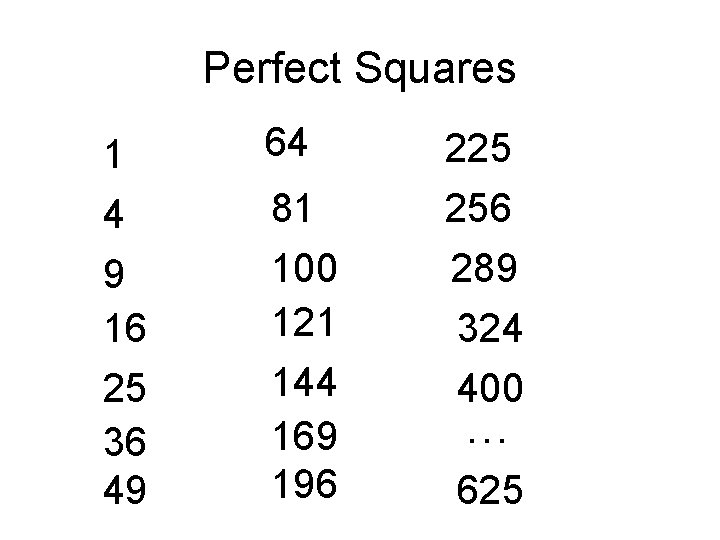
Perfect Squares 1 4 9 16 25 36 49 64 225 81 100 121 144 169 196 256 289 324 400 … 625
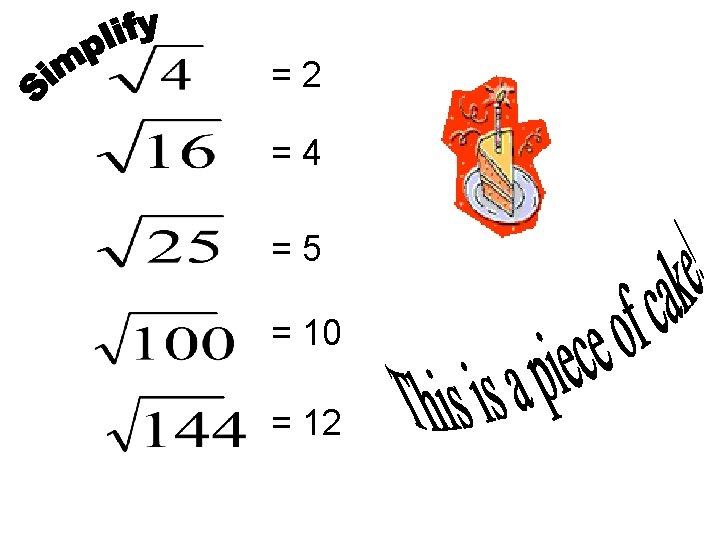
= 2 = 4 = 5 = 10 = 12
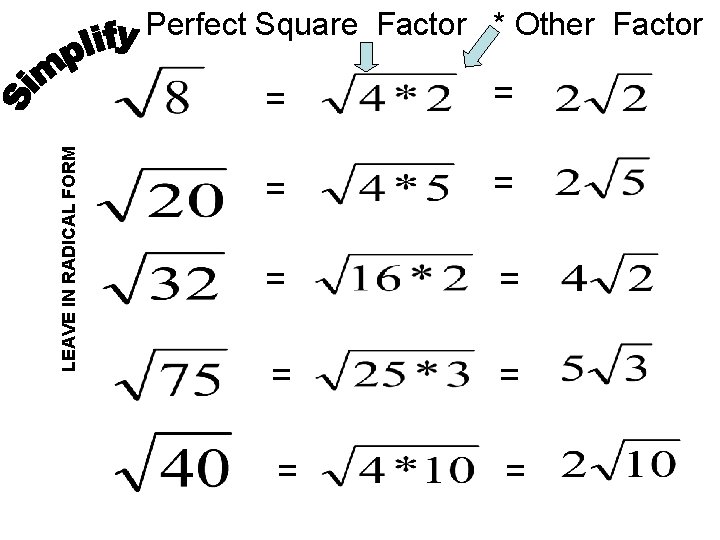
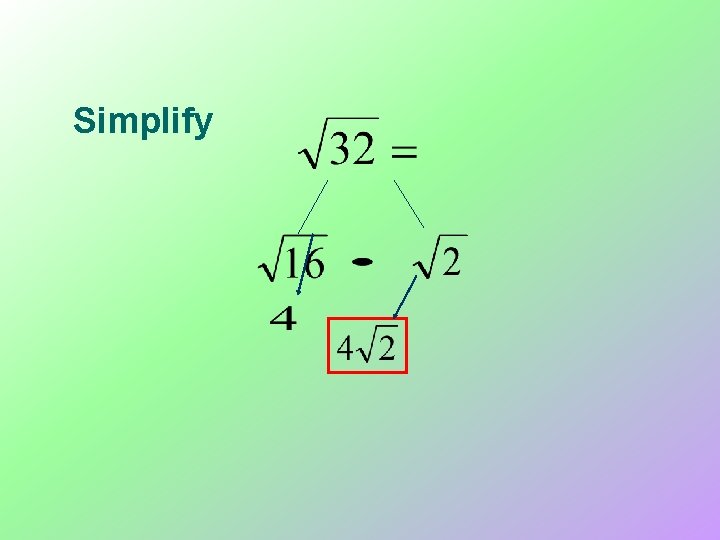
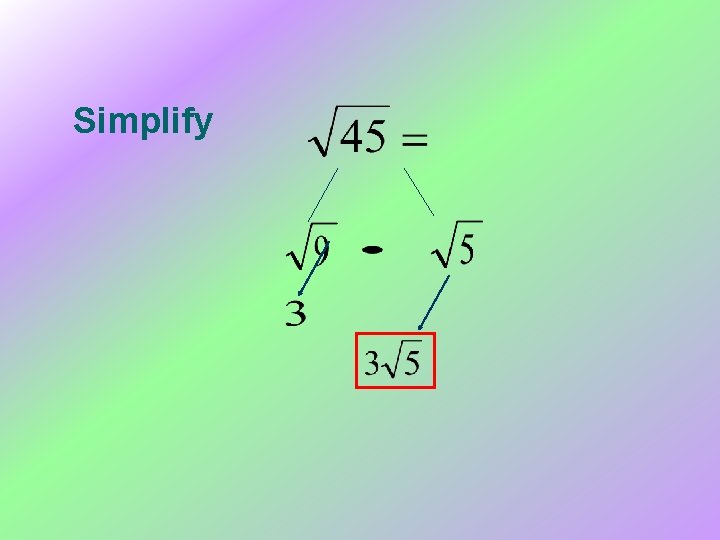
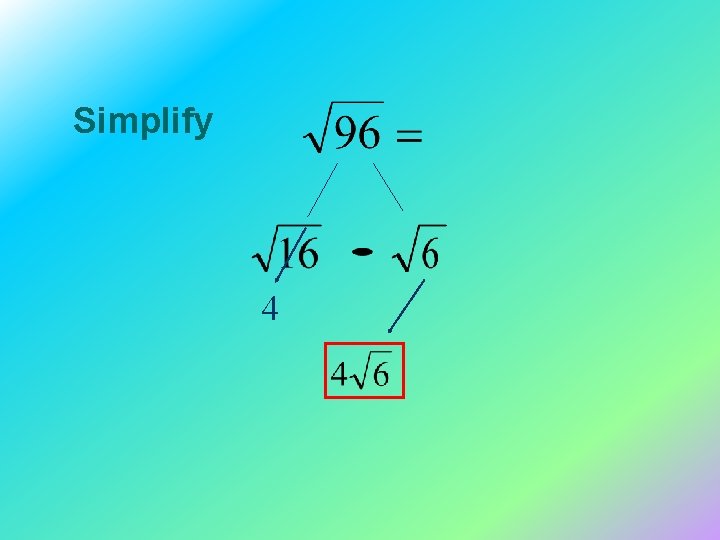
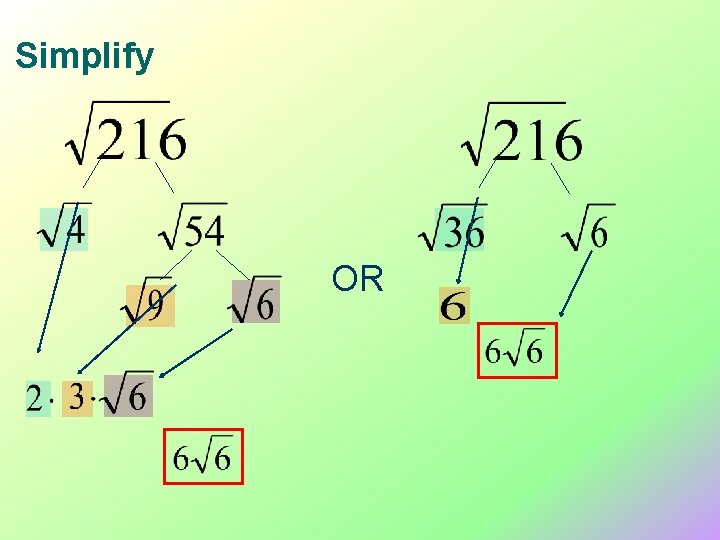
LEAVE IN RADICAL FORM Perfect Square Factor * Other Factor = = = = = = =
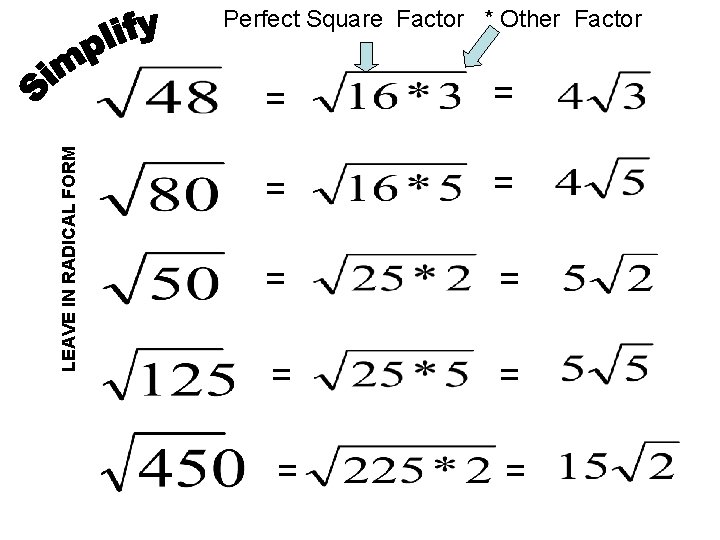
LEAVE IN RADICAL FORM Perfect Square Factor * Other Factor = = = = = = =
Simplify
Simplify
Simplify 4
Simplify OR
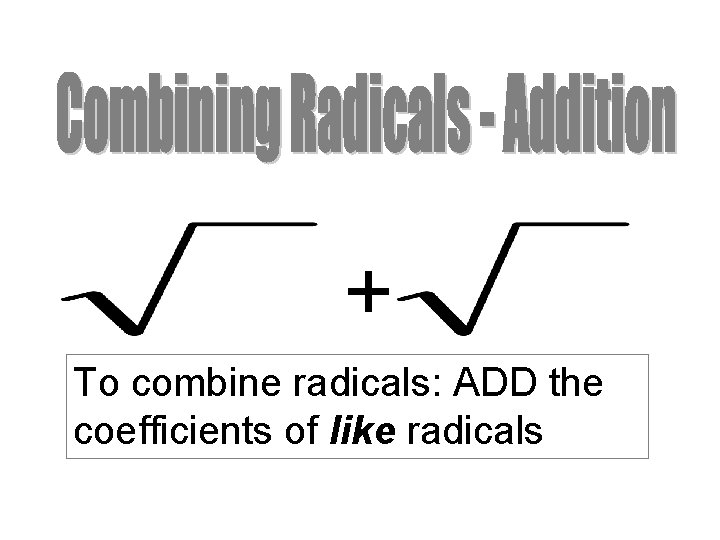
+ To combine radicals: ADD the coefficients of like radicals
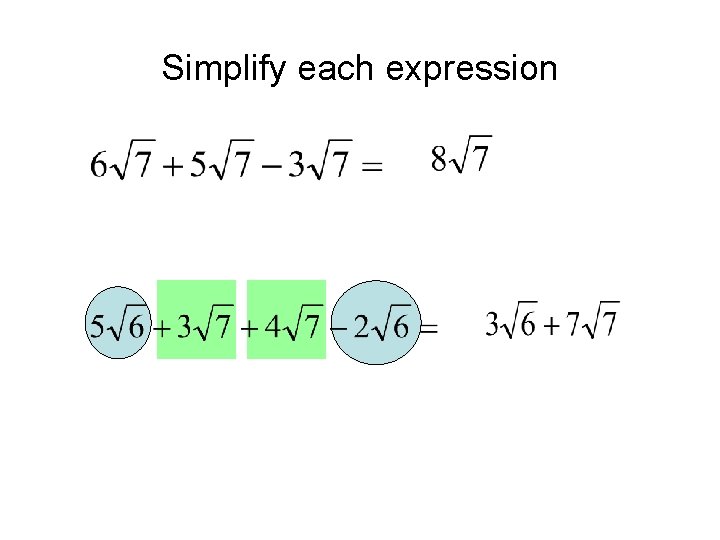
Simplify each expression
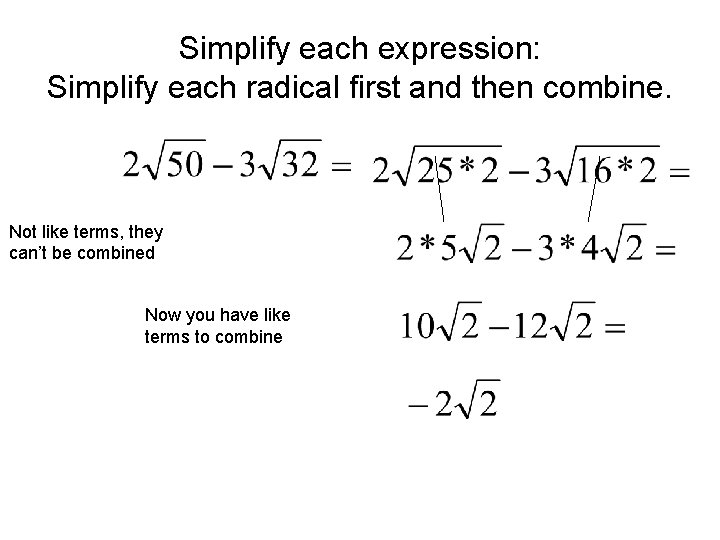
Simplify each expression: Simplify each radical first and then combine. Not like terms, they can’t be combined Now you have like terms to combine
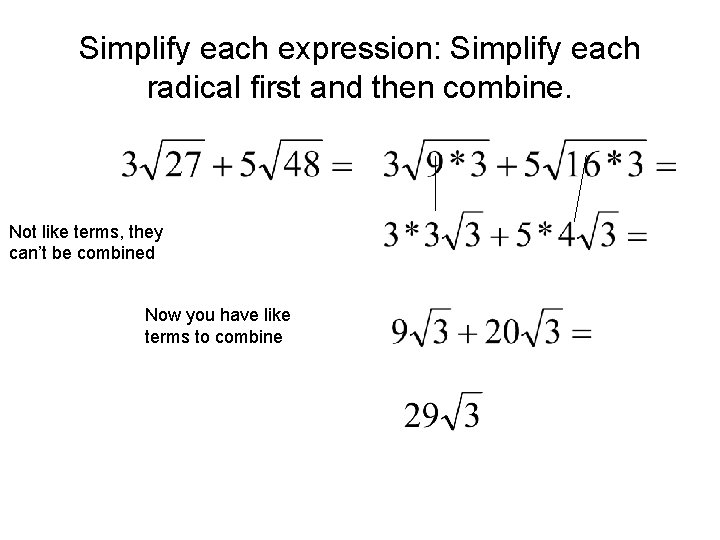
Simplify each expression: Simplify each radical first and then combine. Not like terms, they can’t be combined Now you have like terms to combine
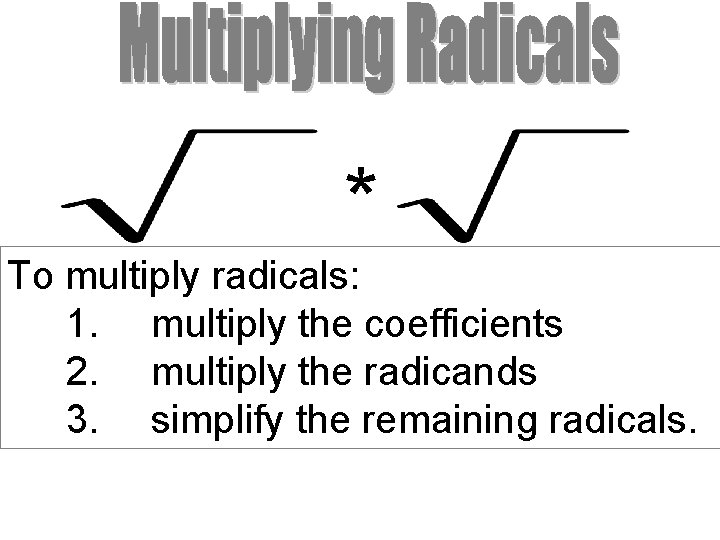
* To multiply radicals: 1. multiply the coefficients 2. multiply the radicands 3. simplify the remaining radicals.
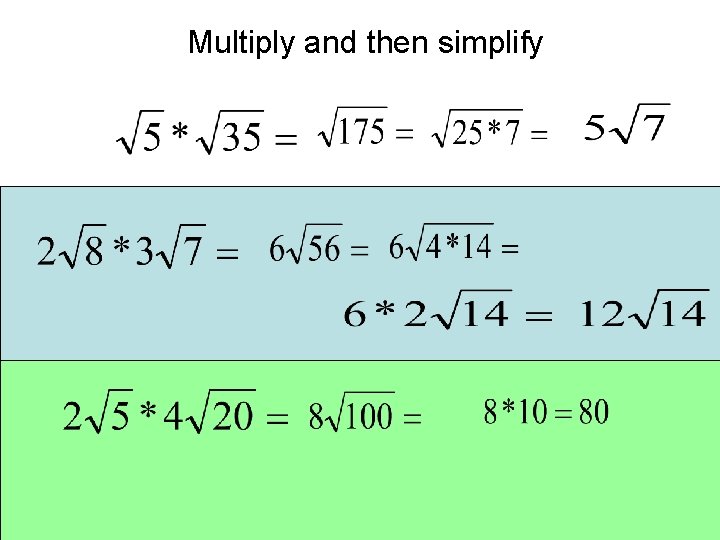
Multiply and then simplify
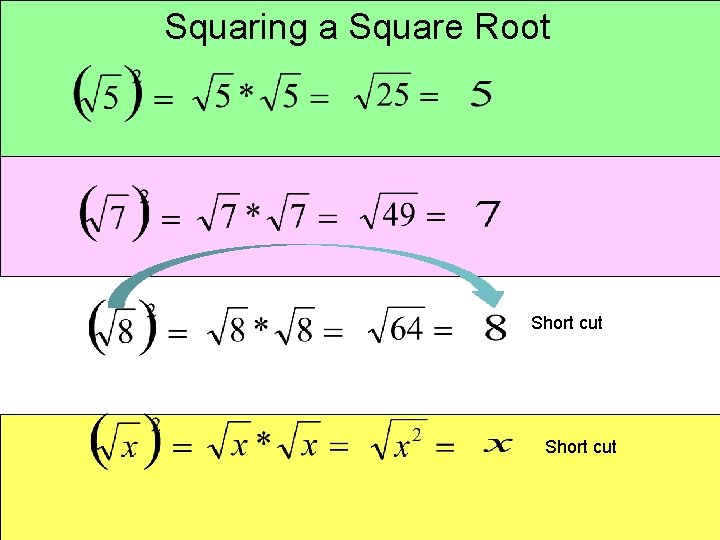
Squaring a Square Root Short cut
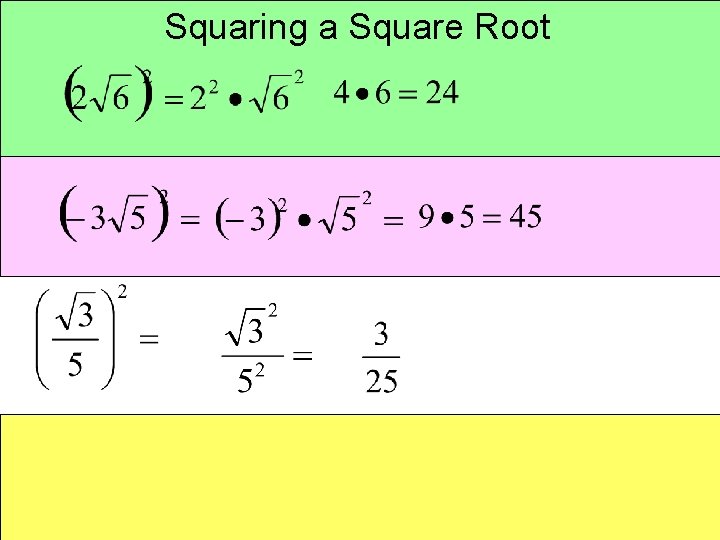
Squaring a Square Root
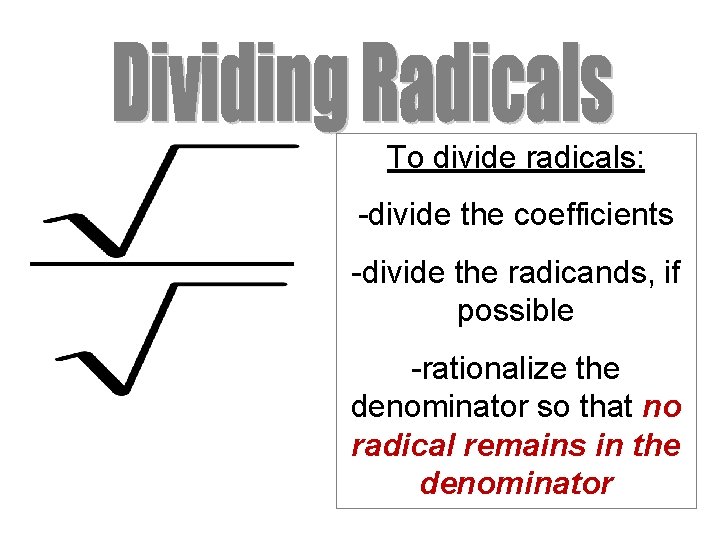
To divide radicals: -divide the coefficients -divide the radicands, if possible -rationalize the denominator so that no radical remains in the denominator
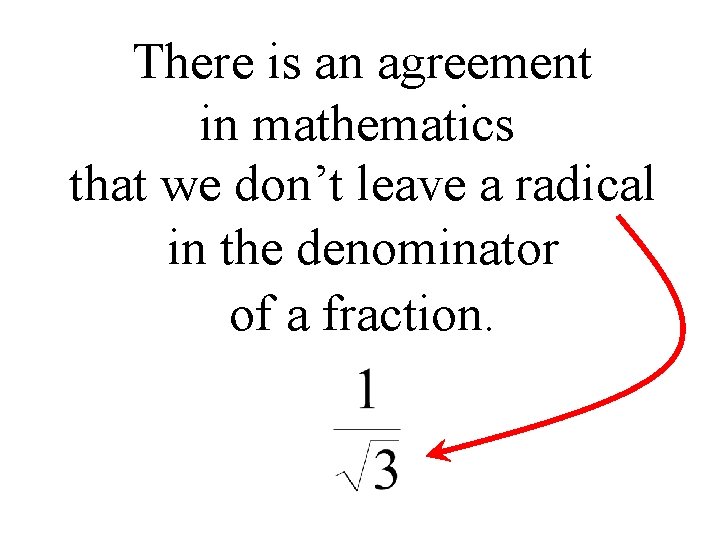
There is an agreement in mathematics that we don’t leave a radical in the denominator of a fraction.
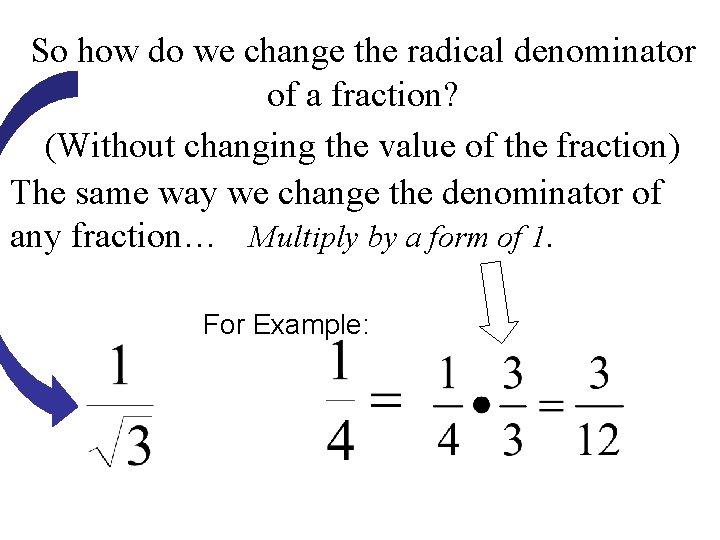
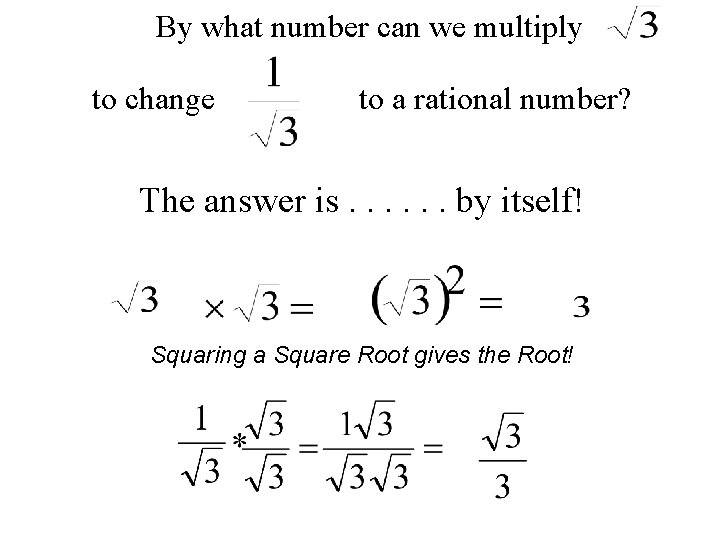
So how do we change the radical denominator of a fraction? (Without changing the value of the fraction) The same way we change the denominator of any fraction… Multiply by a form of 1. For Example:
By what number can we multiply to change to a rational number? The answer is. . . by itself! Squaring a Square Root gives the Root!
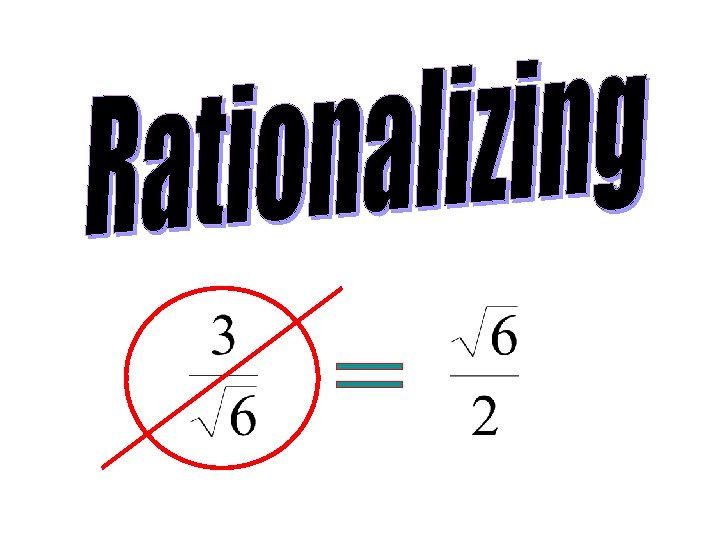
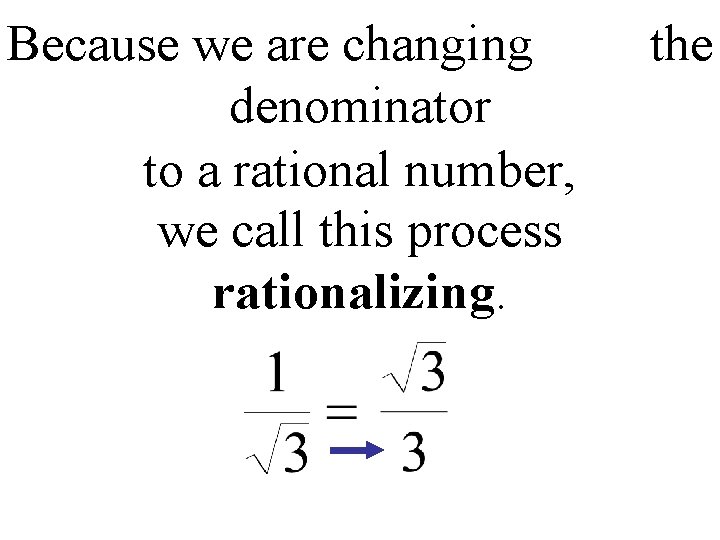
Because we are changing denominator to a rational number, we call this process rationalizing. the
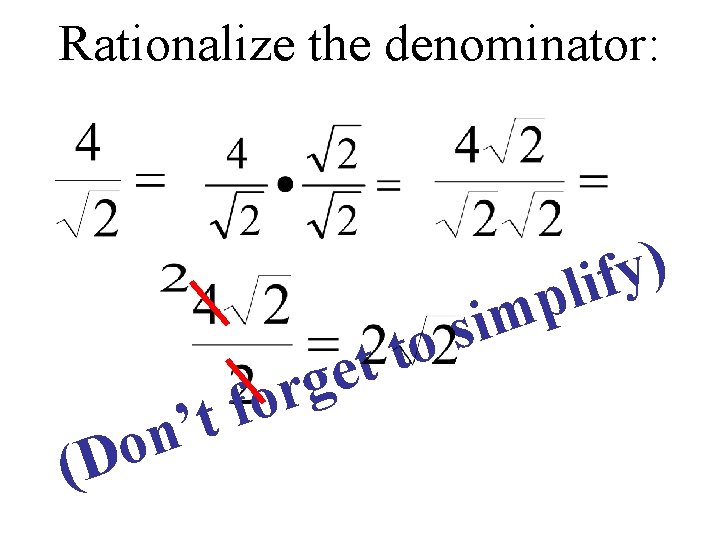
Rationalize the denominator: o (D t e g r o f t ’ n m i s to ) y f i l p
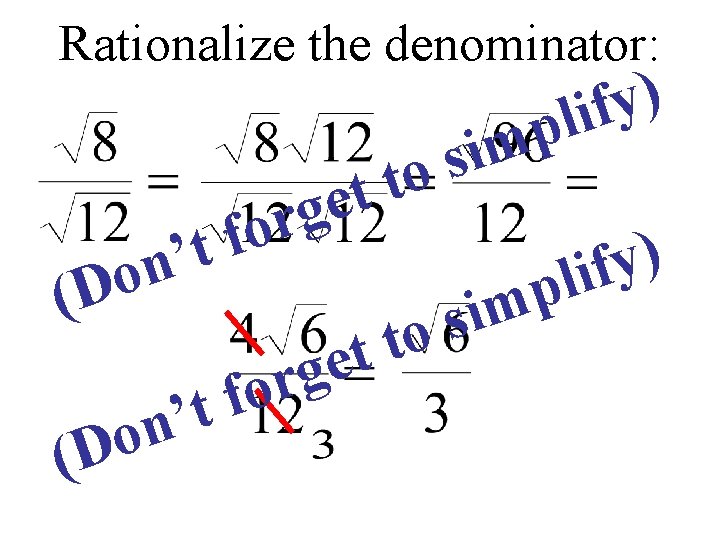
Rationalize the denominator: t e g r o f t ’ n o (D m i s to t t e g r o f t ’ n o (D ) y f i l p m i s o
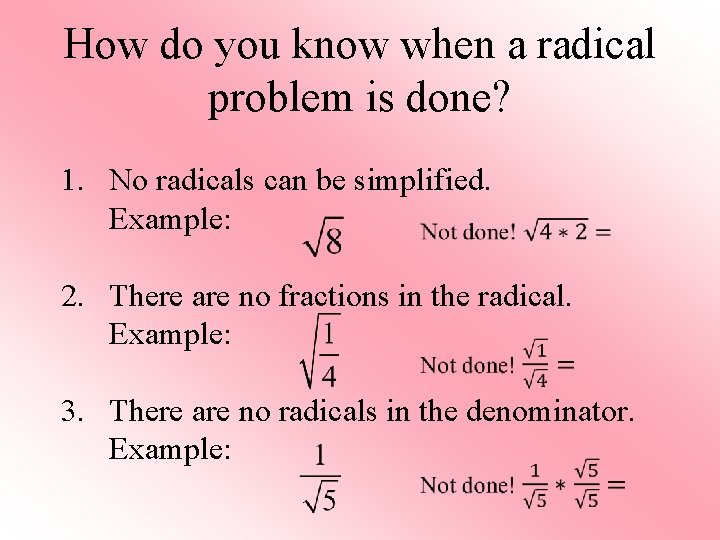
How do you know when a radical problem is done? 1. No radicals can be simplified. Example: 2. There are no fractions in the radical. Example: 3. There are no radicals in the denominator. Example:
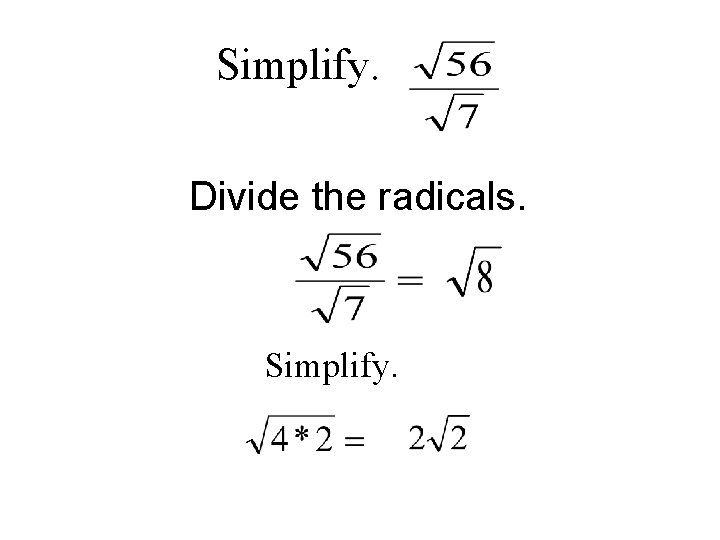
Simplify. Divide the radicals. Simplify.
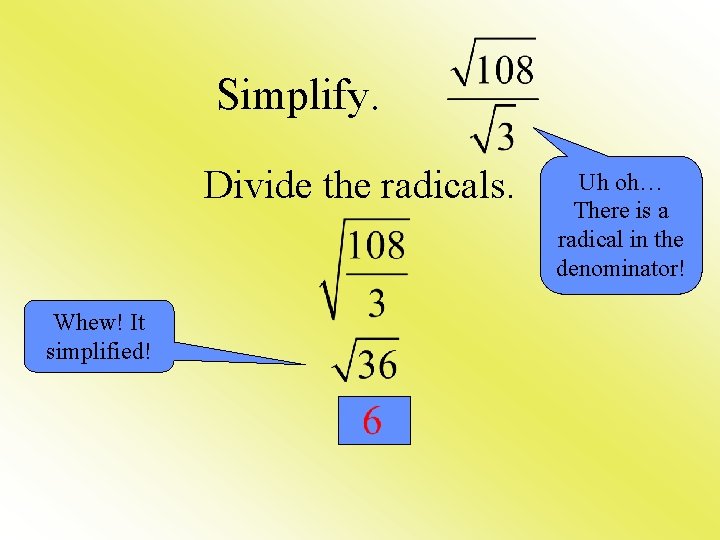
Simplify. Divide the radicals. Whew! It simplified! Uh oh… There is a radical in the denominator!
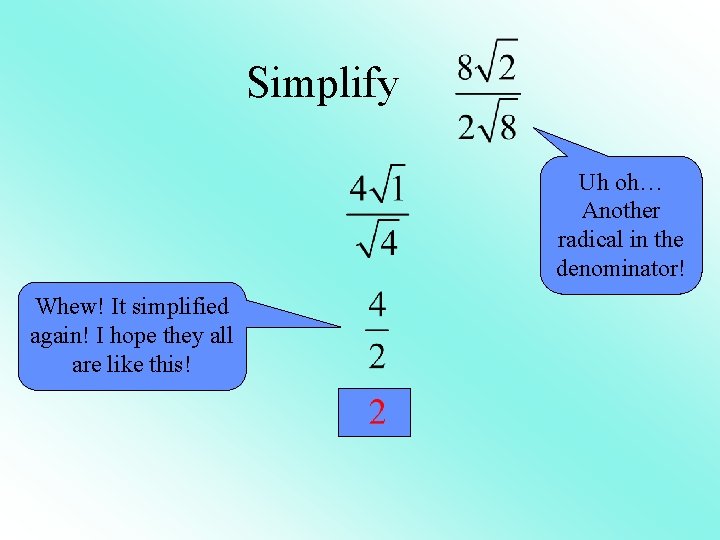
Simplify Uh oh… Another radical in the denominator! Whew! It simplified again! I hope they all are like this!
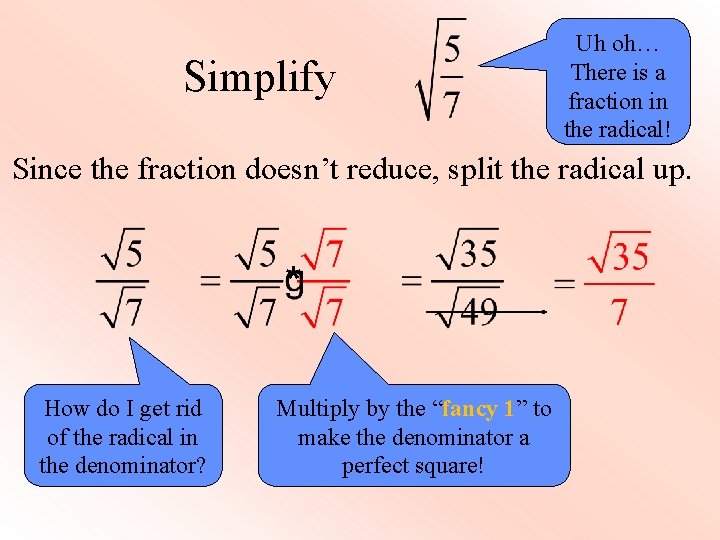
Simplify Uh oh… There is a fraction in the radical! Since the fraction doesn’t reduce, split the radical up. * How do I get rid of the radical in the denominator? Multiply by the “fancy 1” to make the denominator a perfect square!
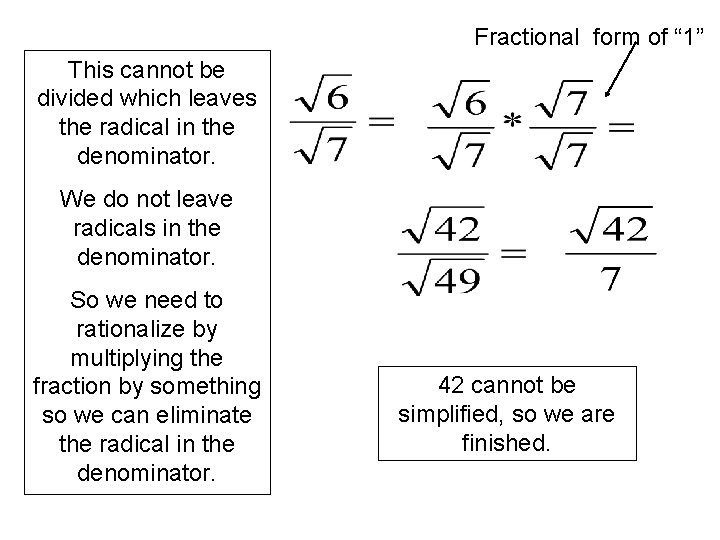
Fractional form of “ 1” This cannot be divided which leaves the radical in the denominator. We do not leave radicals in the denominator. So we need to rationalize by multiplying the fraction by something so we can eliminate the radical in the denominator. 42 cannot be simplified, so we are finished.
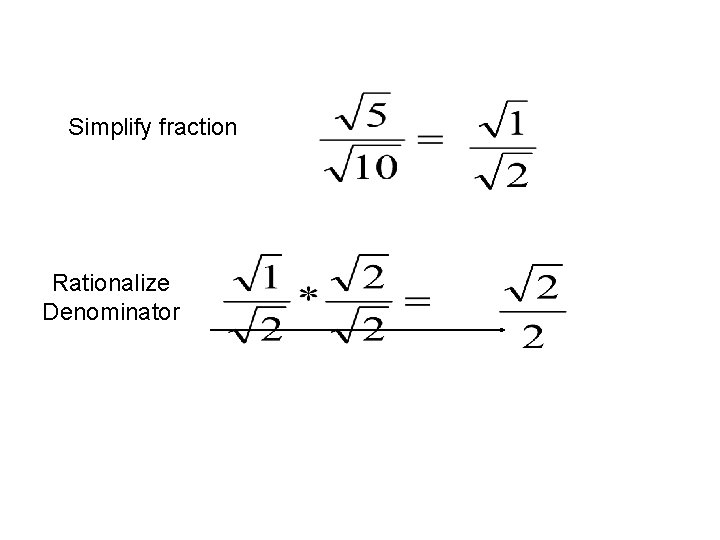
Simplify fraction Rationalize Denominator
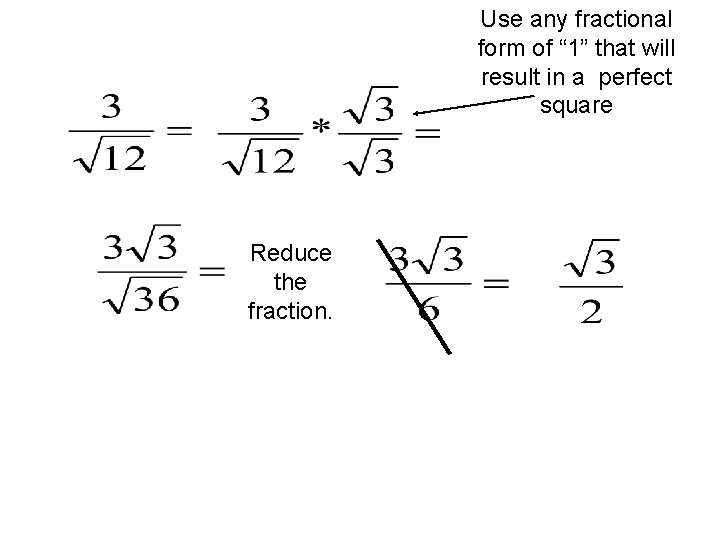
Use any fractional form of “ 1” that will result in a perfect square Reduce the fraction.
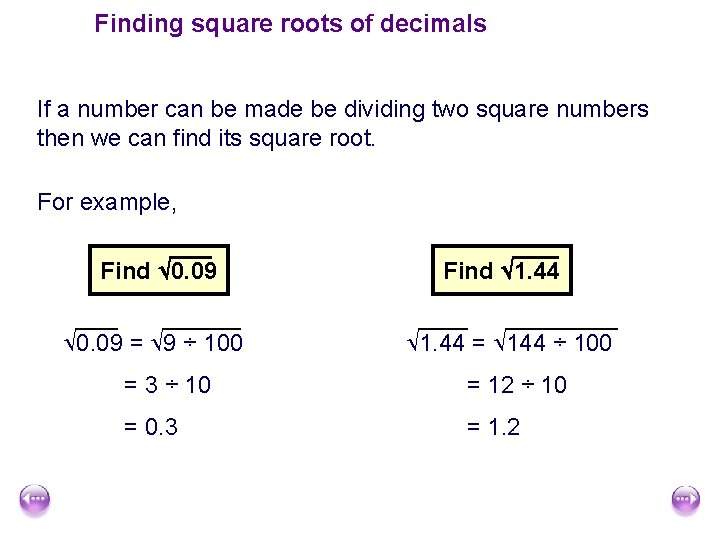
Finding square roots of decimals If a number can be made be dividing two square numbers then we can find its square root. For example, Find 0. 09 = 9 ÷ 100 Find 1. 44 = 144 ÷ 100 = 3 ÷ 10 = 12 ÷ 10 = 0. 3 = 1. 2
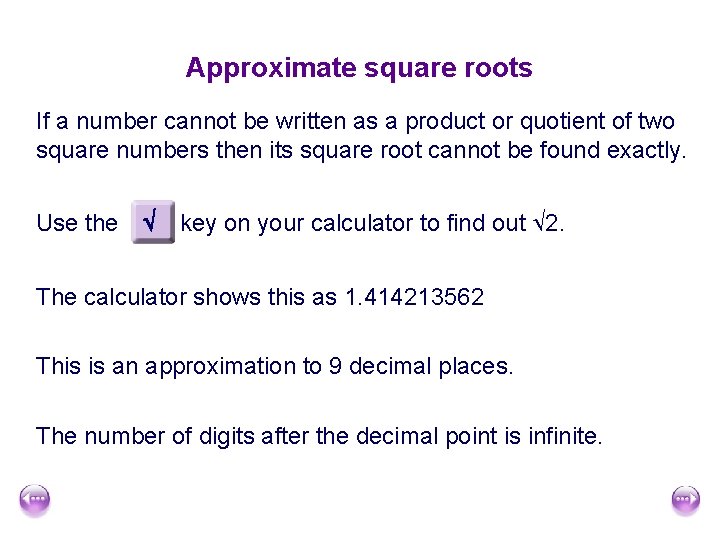
Approximate square roots If a number cannot be written as a product or quotient of two square numbers then its square root cannot be found exactly. Use the key on your calculator to find out 2. The calculator shows this as 1. 414213562 This is an approximation to 9 decimal places. The number of digits after the decimal point is infinite.
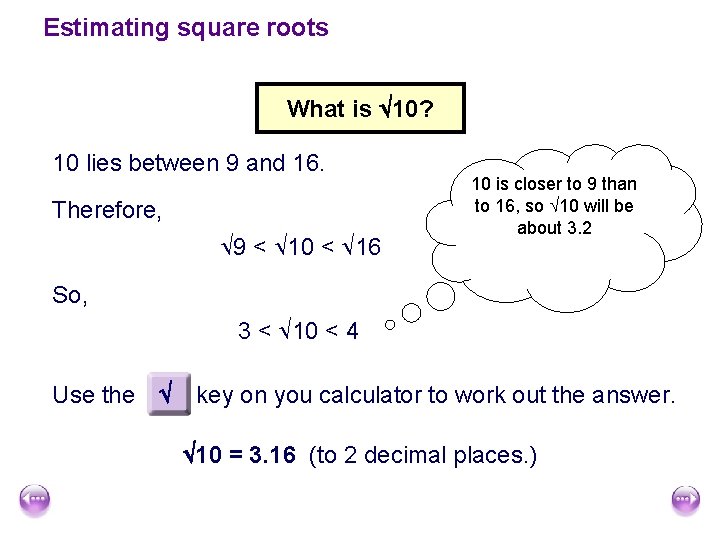
Estimating square roots What is 10? 10 lies between 9 and 16. Therefore, 9 < 10 < 16 10 is closer to 9 than to 16, so 10 will be about 3. 2 So, 3 < 10 < 4 Use the key on you calculator to work out the answer. 10 = 3. 16 (to 2 decimal places. )
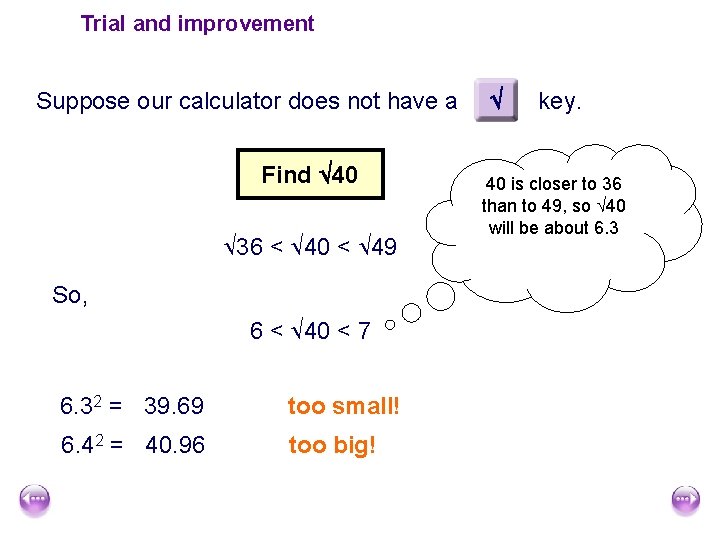
Trial and improvement Suppose our calculator does not have a key. Find 40 36 < 40 < 49 So, 6 < 40 < 7 6. 32 = 39. 69 too small! 6. 42 = 40. 96 too big! 40 is closer to 36 than to 49, so 40 will be about 6. 3
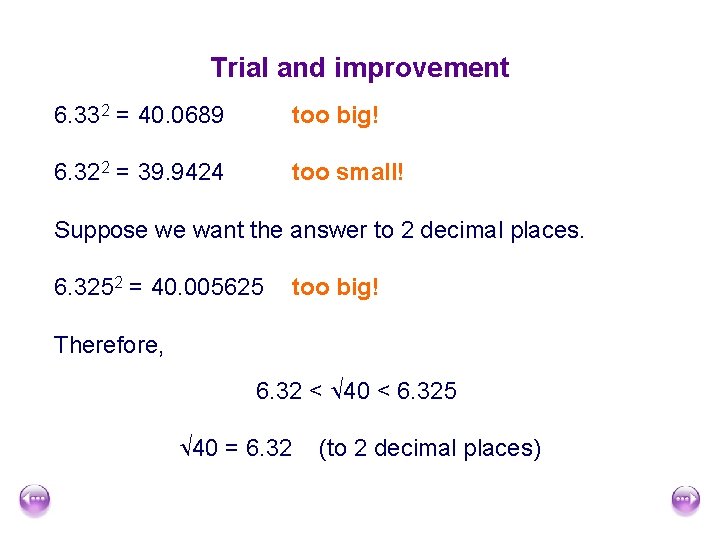
Trial and improvement 6. 332 = 40. 0689 too big! 6. 322 = 39. 9424 too small! Suppose we want the answer to 2 decimal places. 6. 3252 = 40. 005625 too big! Therefore, 6. 32 < 40 < 6. 325 40 = 6. 32 (to 2 decimal places)