
Simple radio communications system Electric field around elements


- Slides: 20
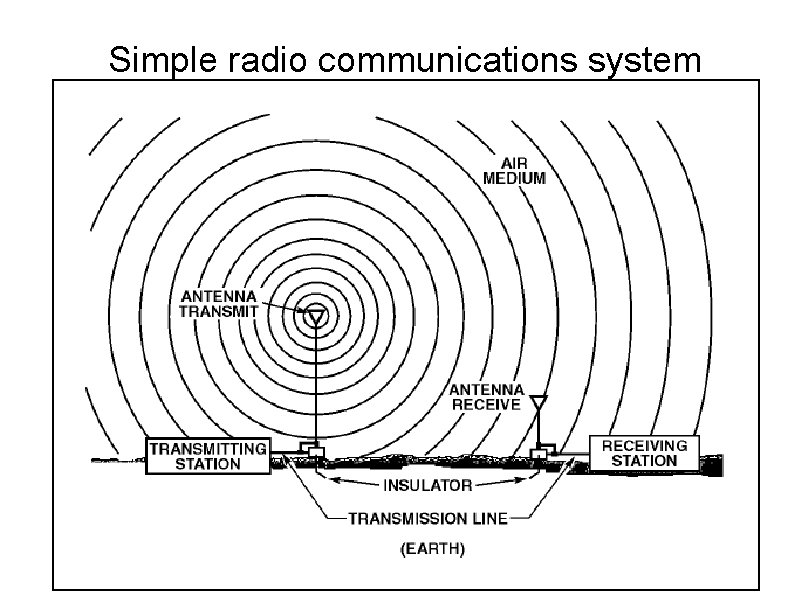
Simple radio communications system
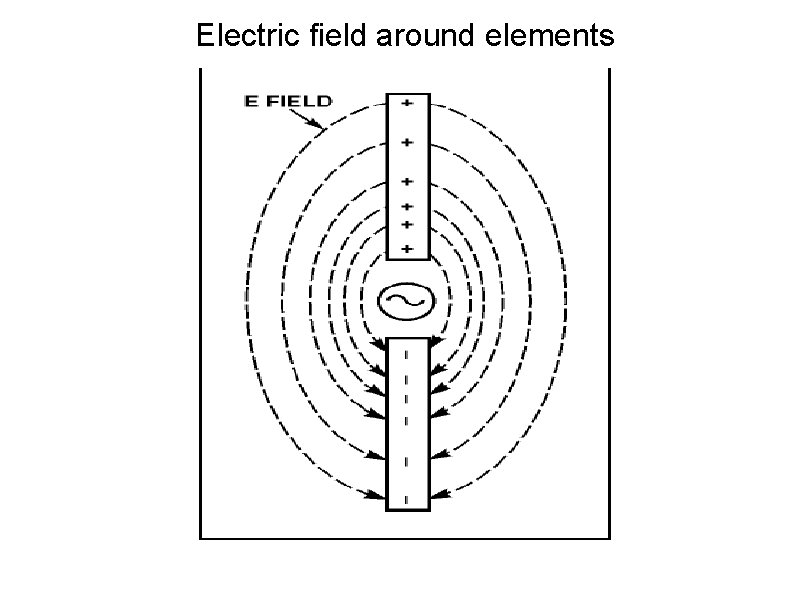
Electric field around elements
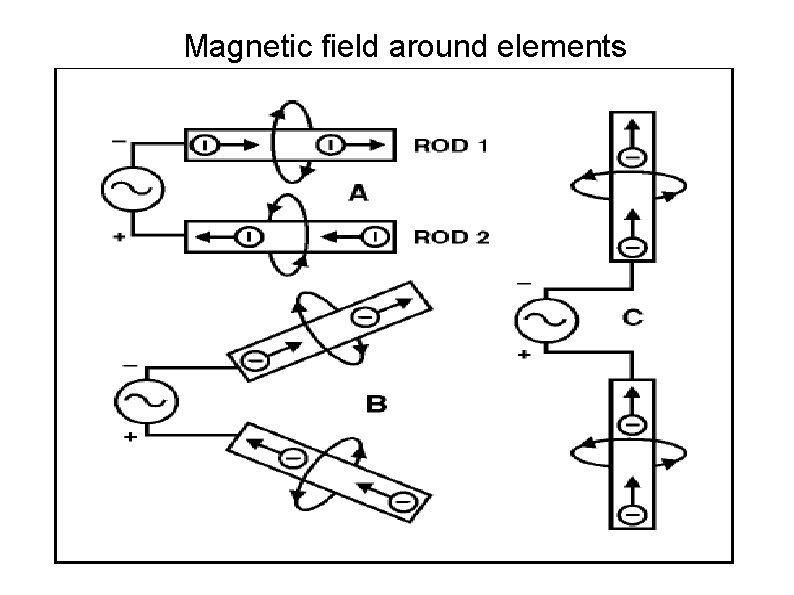
Magnetic field around elements
Relation between electric and magnetic fields
Horizontally polarized antenna The most common, and perhaps the simplest, antenna is the half-wave dipole antenna. As the name suggests, it measures close to one half wavelength from one end of the antenna to the other. A simple dipole mounted so the conductor is parallel to the Earth's surface is a horizontally polarized antenna. (T 9 A 03) The direction that radiation is strongest from a half -wave dipole antenna in free space is broadside to the antenna. (T 9 A 10)
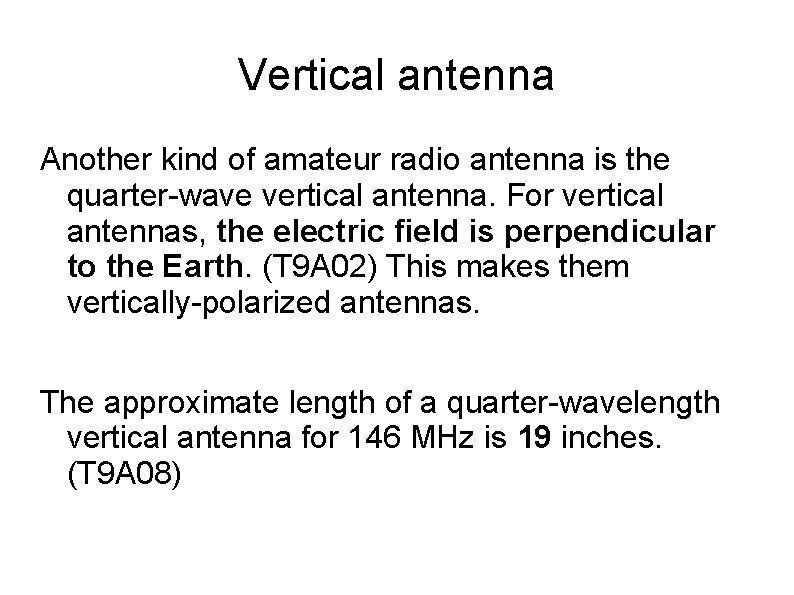
Vertical antenna Another kind of amateur radio antenna is the quarter-wave vertical antenna. For vertical antennas, the electric field is perpendicular to the Earth. (T 9 A 02) This makes them vertically-polarized antennas. The approximate length of a quarter-wavelength vertical antenna for 146 MHz is 19 inches. (T 9 A 08)
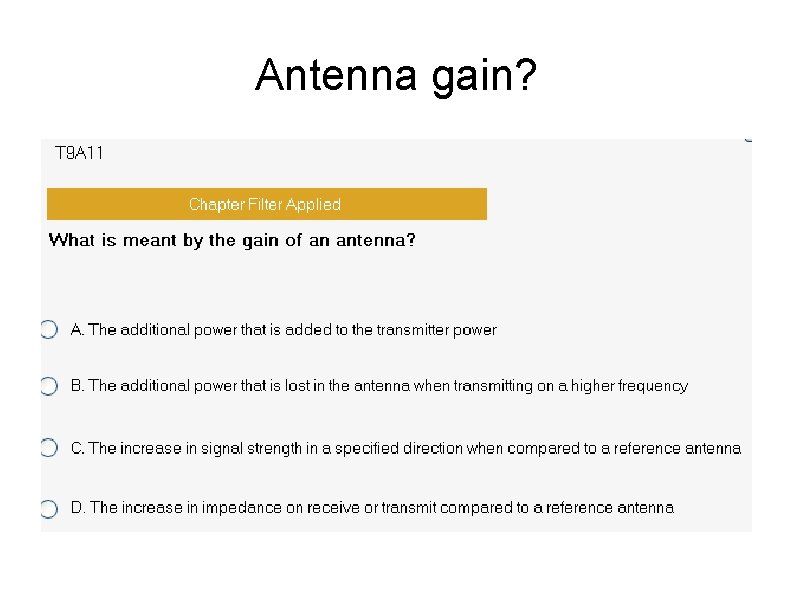
Antenna gain?
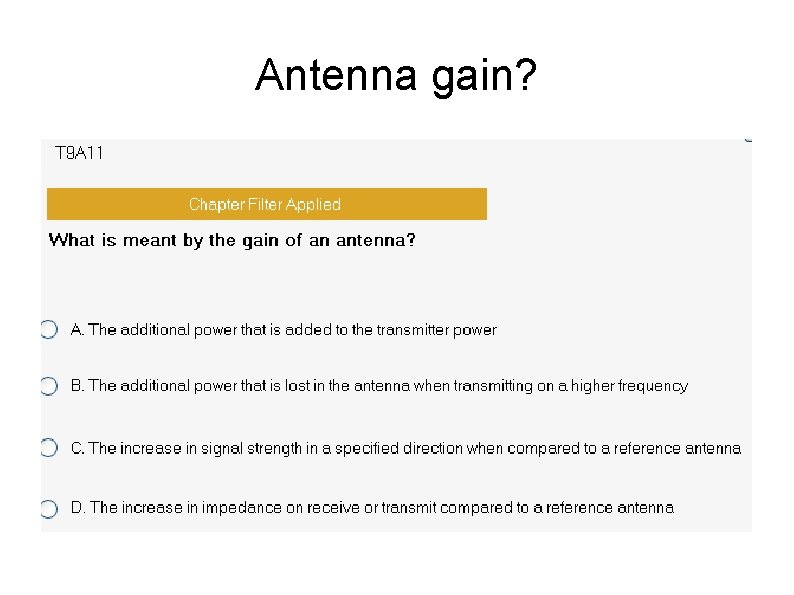
Antenna gain?
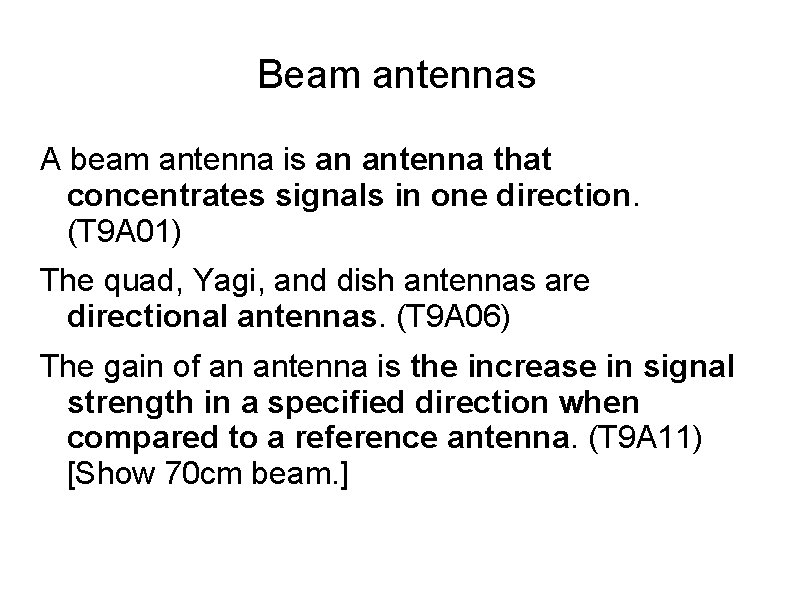
Beam antennas A beam antenna is an antenna that concentrates signals in one direction. (T 9 A 01) The quad, Yagi, and dish antennas are directional antennas. (T 9 A 06) The gain of an antenna is the increase in signal strength in a specified direction when compared to a reference antenna. (T 9 A 11) [Show 70 cm beam. ]
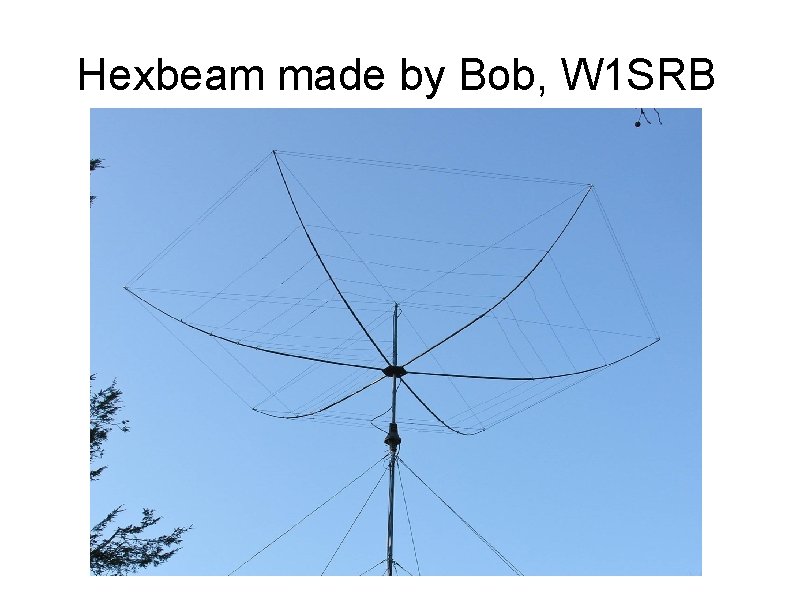
Hexbeam made by Bob, W 1 SRB
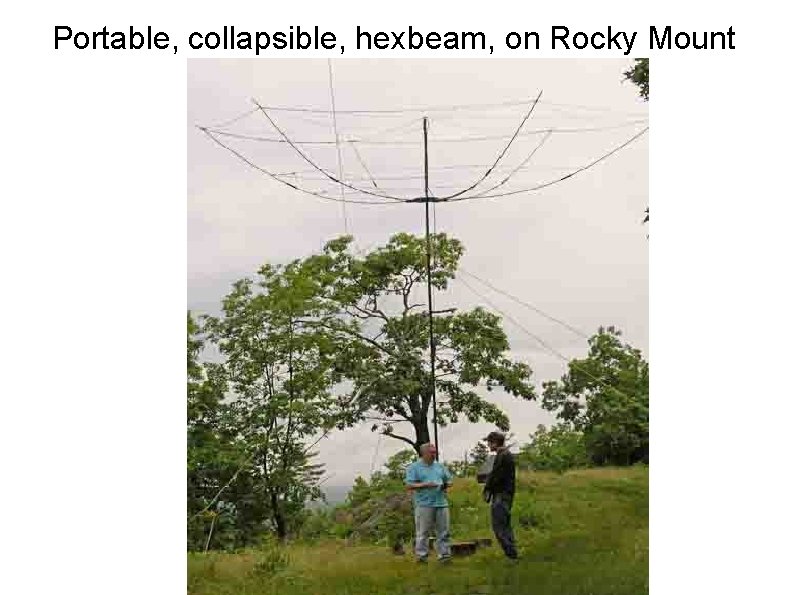
Portable, collapsible, hexbeam, on Rocky Mount
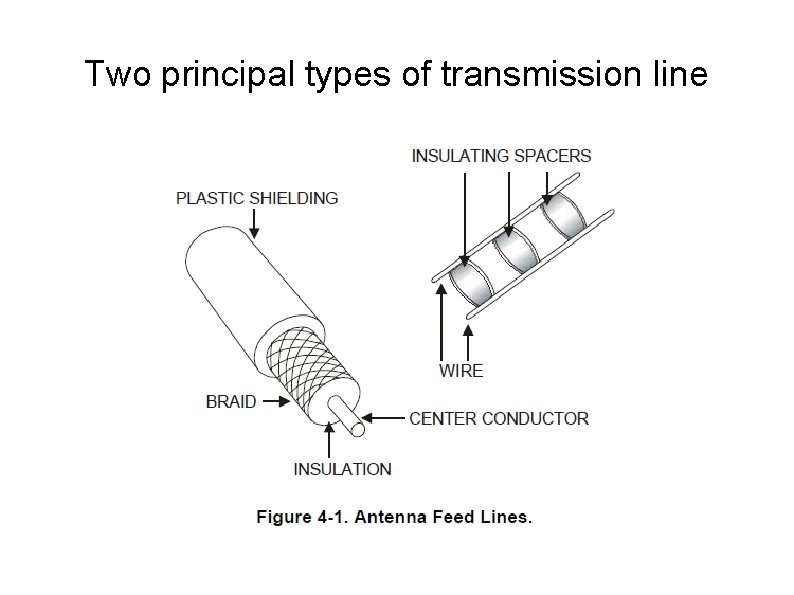
Two principal types of transmission line
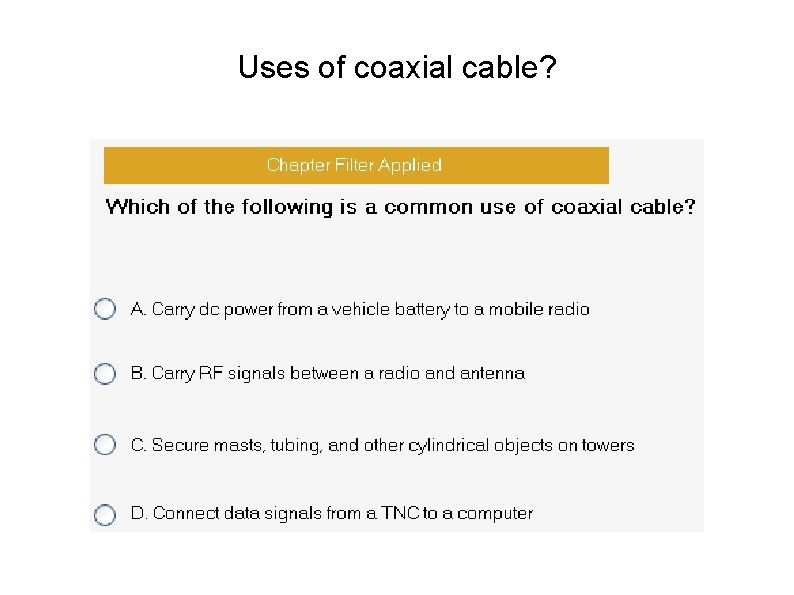
Uses of coaxial cable?
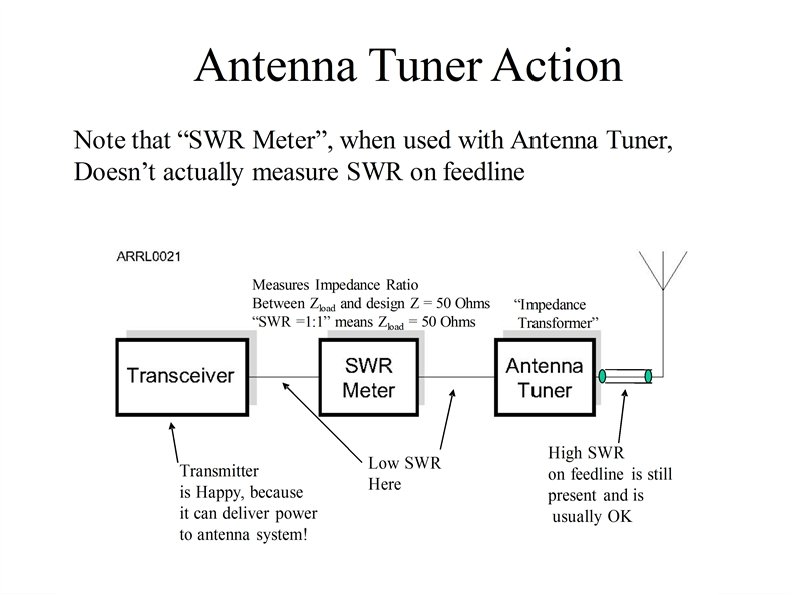
Reflected energy - SWR In general terms, standing wave ratio (SWR) is a measure of how well a load is matched to a transmission line. (T 7 C 03) The reason it is important to have a low SWR in an antenna system that uses coaxial cable feedline is to allow the efficient transfer of power and reduce losses. (T 9 B 01) [This answer is incomplete. It ignores the possible re-reflection by a tuner, as well as the built-in power reducing circuits in modern radios where no tuner is at work. ] Power lost in a feedline is converted into heat. (T 7 C 07)
SWR- Good, Bad, Dangerous! 1 to 1 is the reading on an SWR meter indicates a perfect impedance match between the antenna and the feedline. (T 7 C 04) 2 to 1 is the approximate SWR value above which the protection circuits in most solid-state transmitters begin to reduce transmitter power. (T 7 C 05) [Bad] An SWR reading of 4: 1 means that there is an impedance mismatch. (T 7 C 06) [Dangerous] [Again, the answer is misleading. Any SWR not 1: 1 shows some mismatch. ]
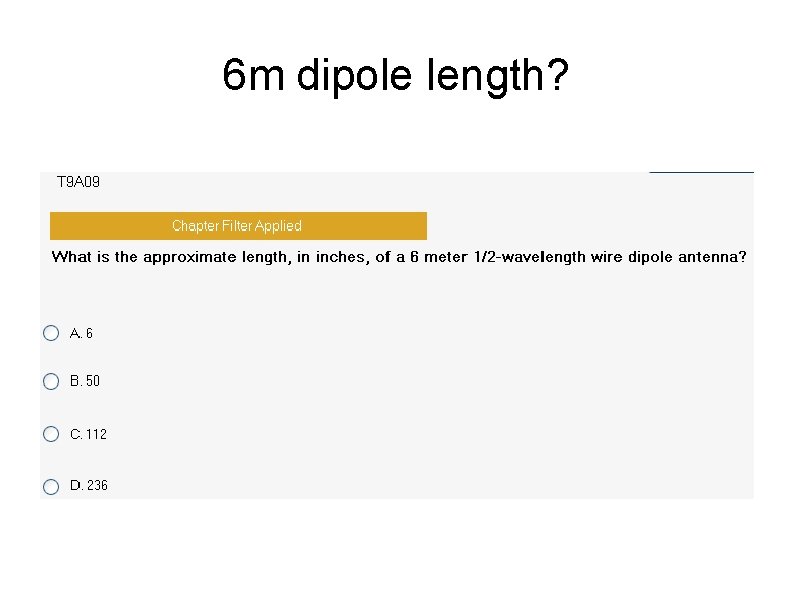
6 m dipole length?
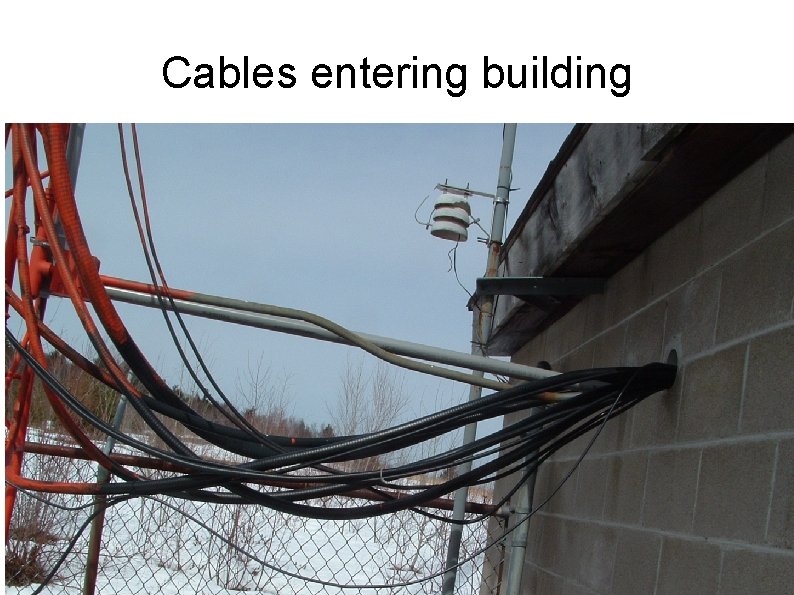
Cables entering building
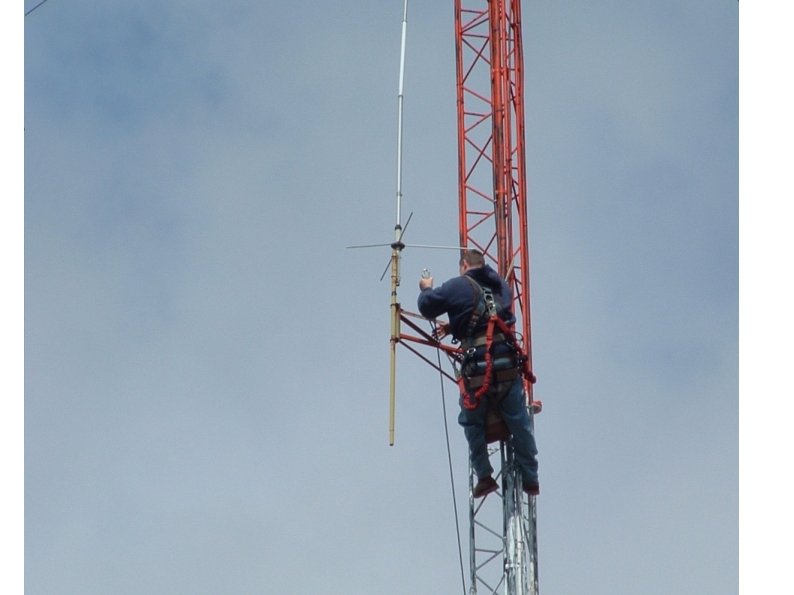
Professional climber changing coax