
Simple Machines Work in A simple machine uses
- Slides: 30
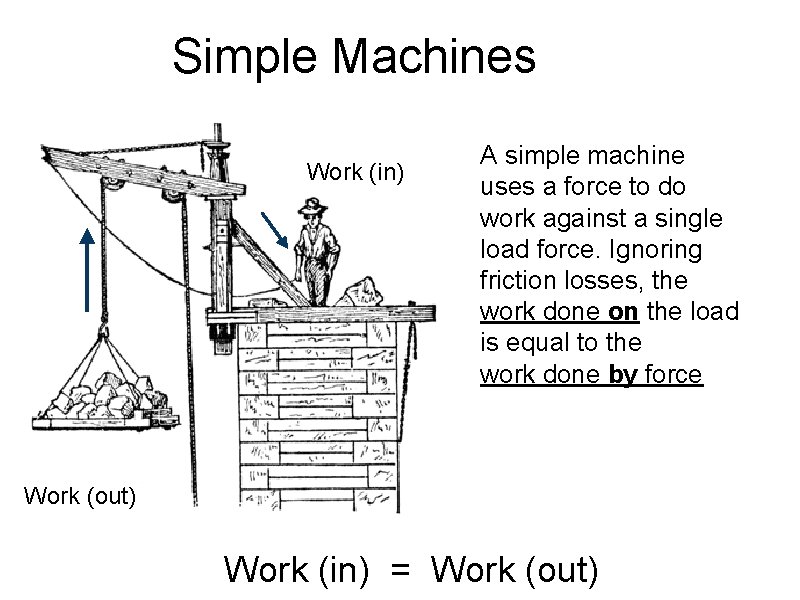
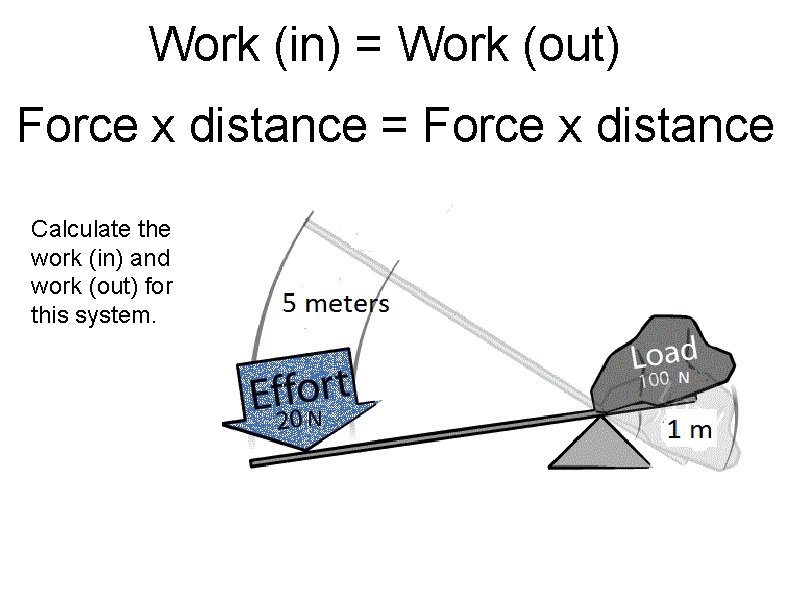
Simple Machines Work (in) A simple machine uses a force to do work against a single load force. Ignoring friction losses, the work done on the load is equal to the work done by force Work (out) Work (in) = Work (out)
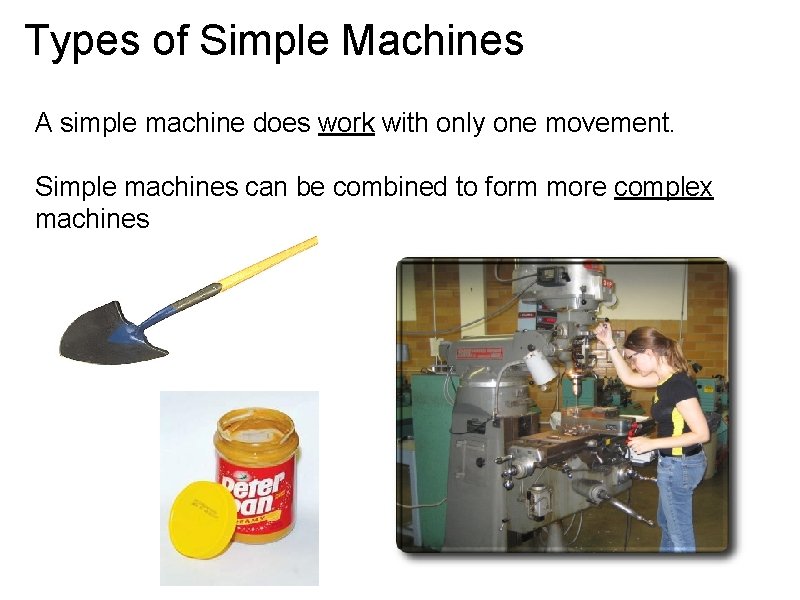
Types of Simple Machines A simple machine does work with only one movement. Simple machines can be combined to form more complex machines
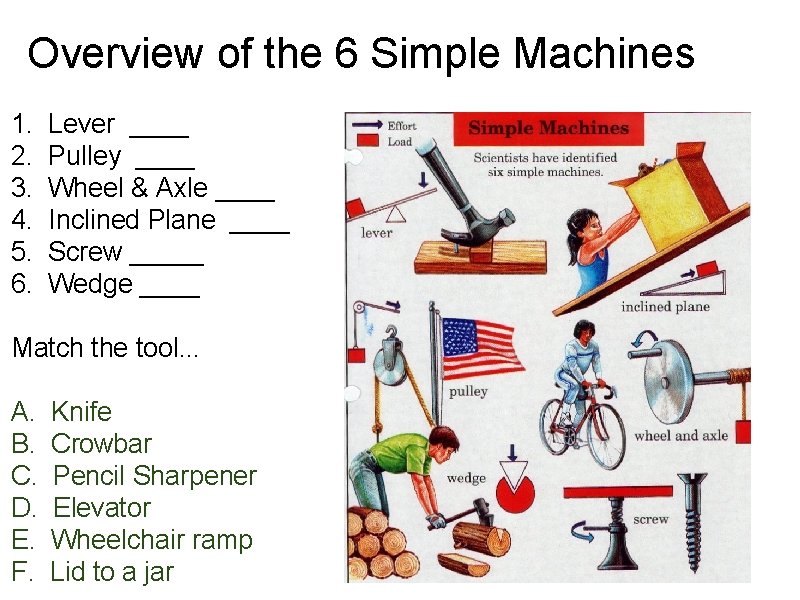
Overview of the 6 Simple Machines 1. 2. 3. 4. 5. 6. Lever ____ Pulley ____ Wheel & Axle ____ Inclined Plane ____ Screw _____ Wedge ____ Match the tool. . . A. B. C. D. E. F. Knife Crowbar Pencil Sharpener Elevator Wheelchair ramp Lid to a jar
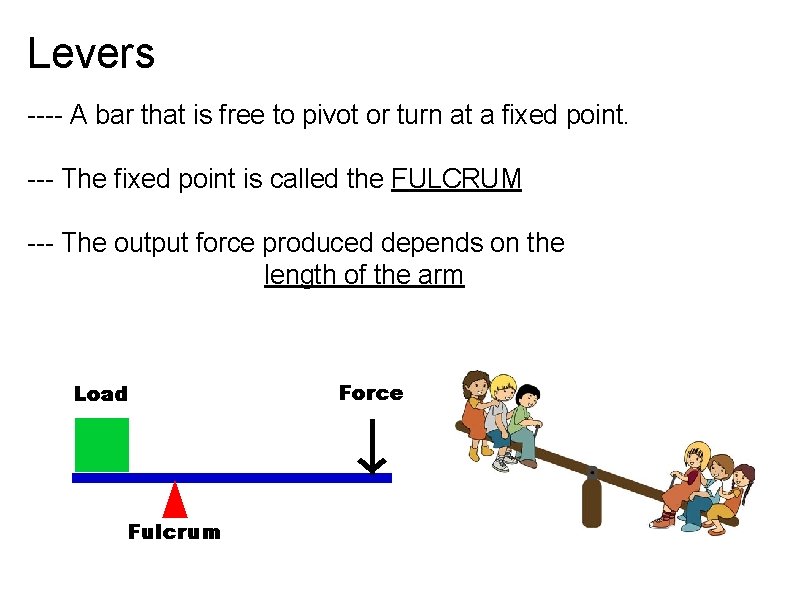
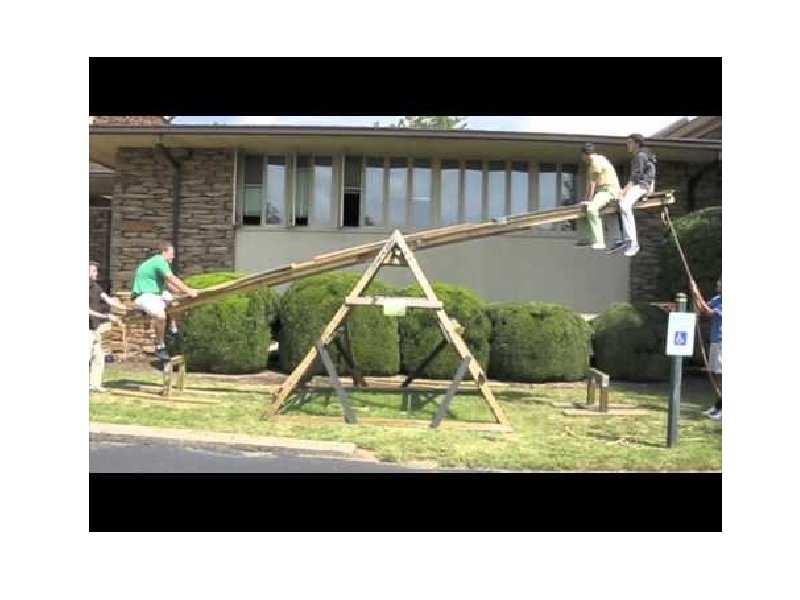
Levers ---- A bar that is free to pivot or turn at a fixed point. --- The fixed point is called the FULCRUM --- The output force produced depends on the length of the arm
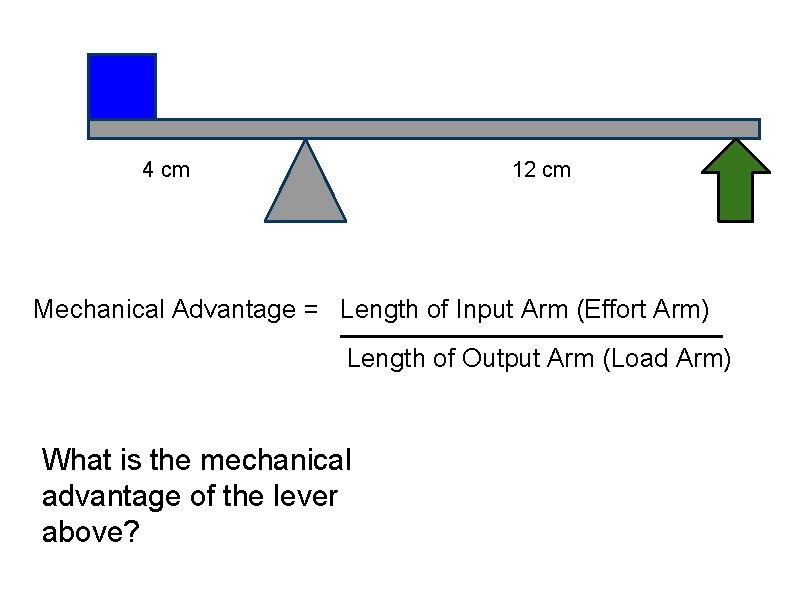
4 cm 12 cm Mechanical Advantage = Length of Input Arm (Effort Arm) Length of Output Arm (Load Arm) What is the mechanical advantage of the lever above?
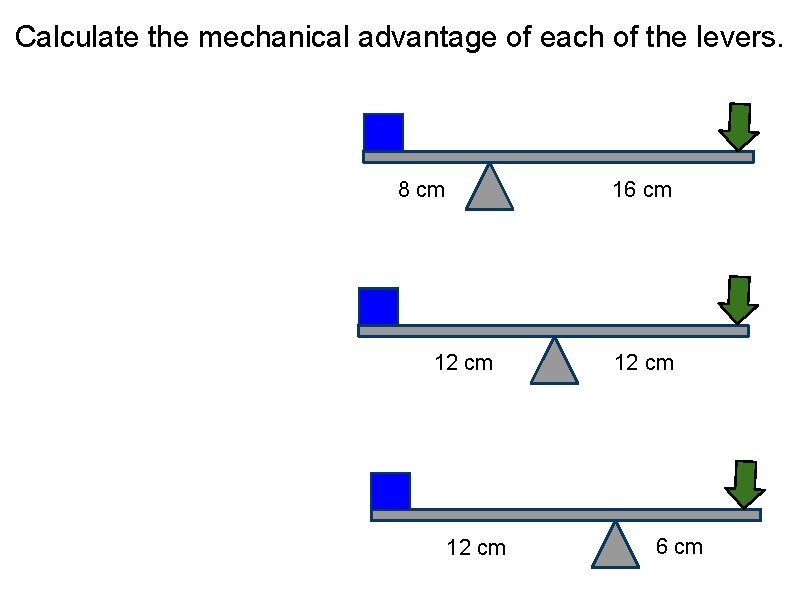
Calculate the mechanical advantage of each of the levers. 8 cm 16 cm 12 cm 6 cm
Work (in) = Work (out) Force x distance = Force x distance Calculate the work (in) and work (out) for this system.
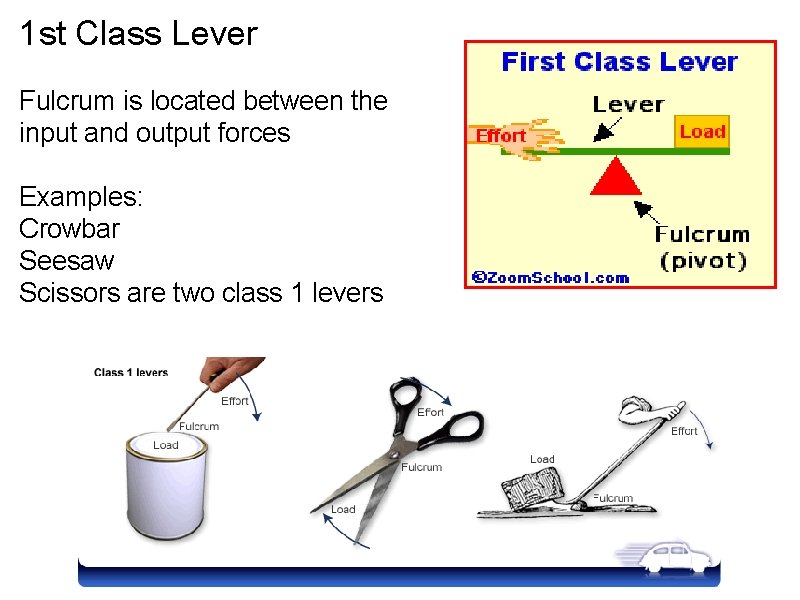
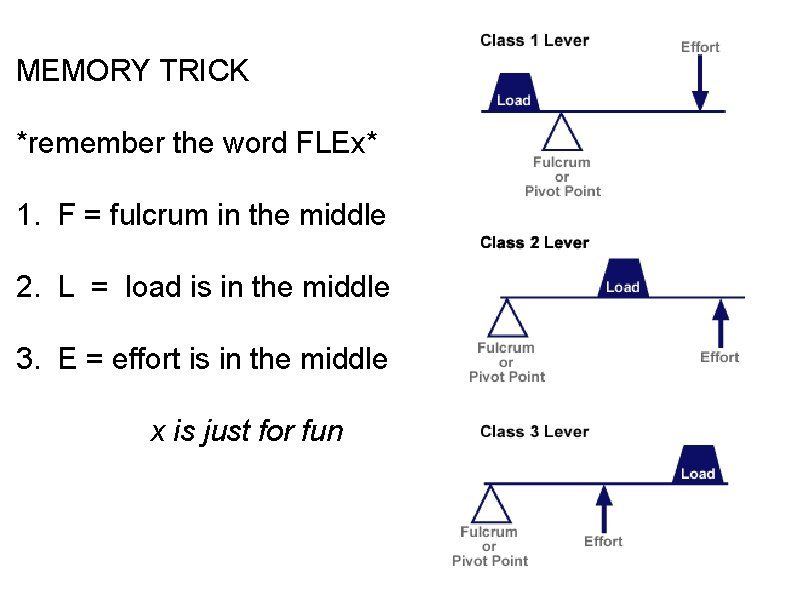
1 st Class Lever Fulcrum is located between the input and output forces Examples: Crowbar Seesaw Scissors are two class 1 levers
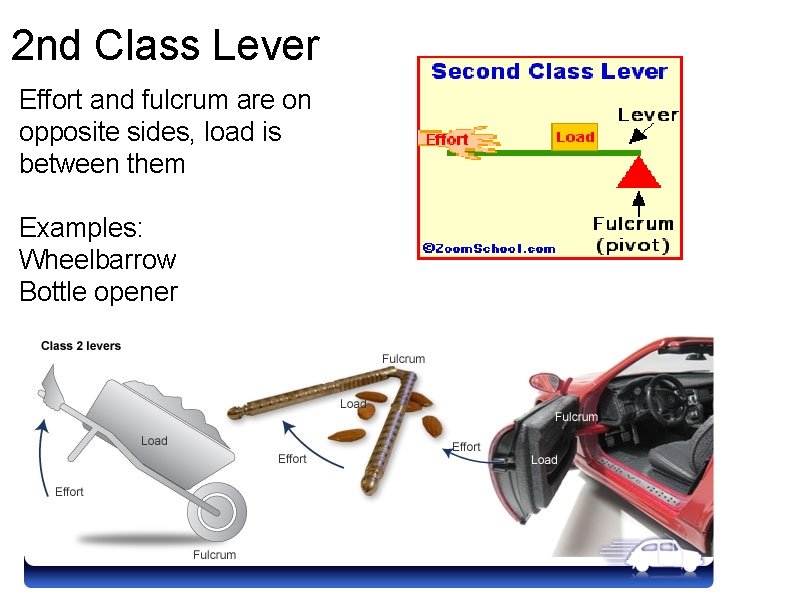
2 nd Class Lever Effort and fulcrum are on opposite sides, load is between them Examples: Wheelbarrow Bottle opener
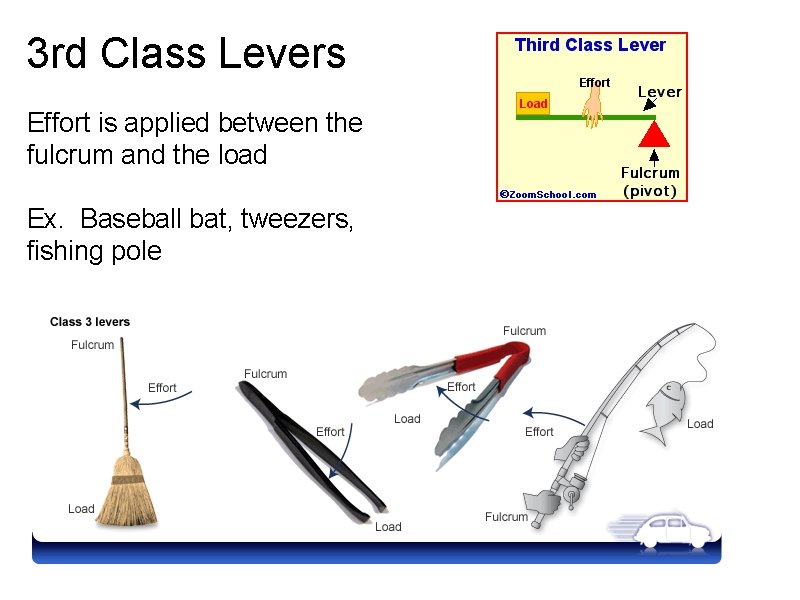
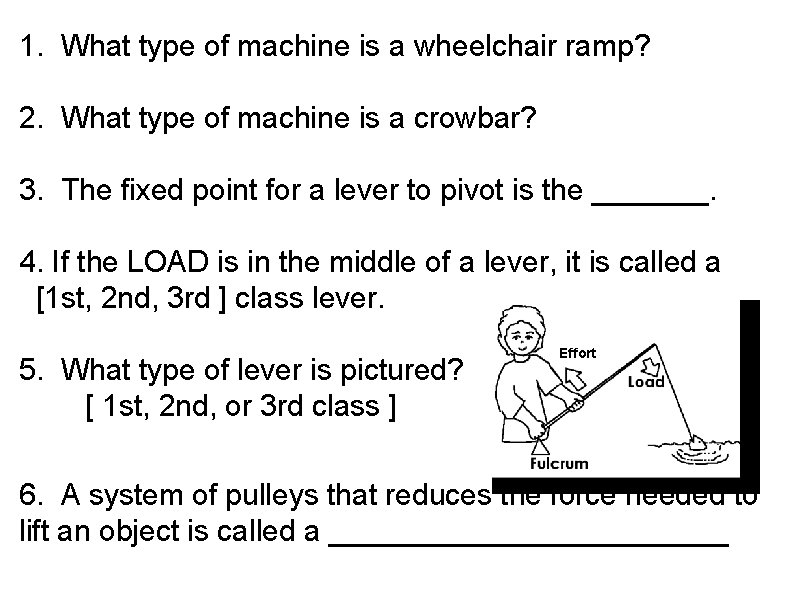
3 rd Class Levers Effort is applied between the fulcrum and the load Ex. Baseball bat, tweezers, fishing pole
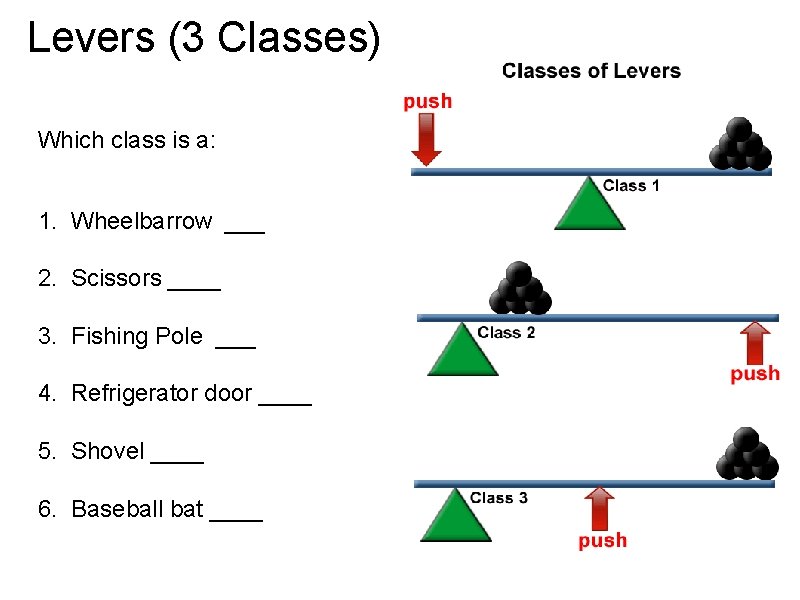
Levers (3 Classes) Which class is a: 1. Wheelbarrow ___ 2. Scissors ____ 3. Fishing Pole ___ 4. Refrigerator door ____ 5. Shovel ____ 6. Baseball bat ____
MEMORY TRICK *remember the word FLEx* 1. F = fulcrum in the middle 2. L = load is in the middle 3. E = effort is in the middle x is just for fun
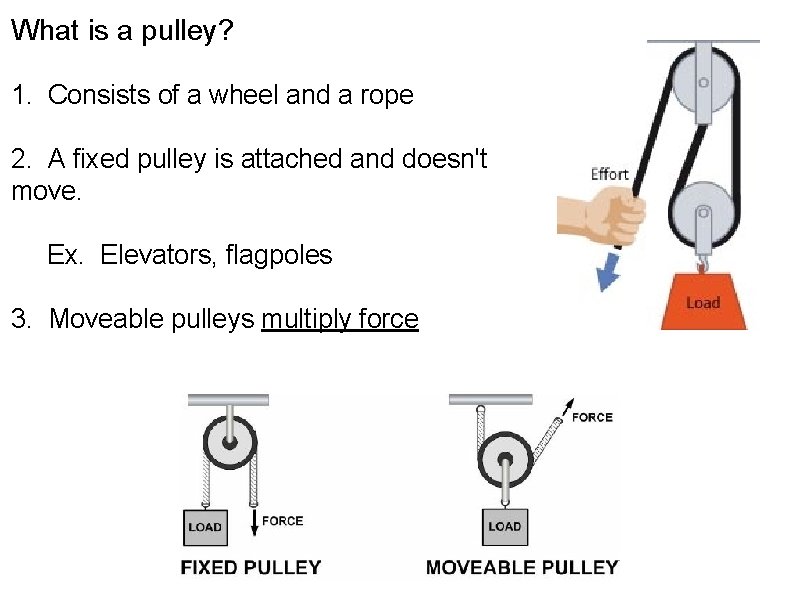
What is a pulley? 1. Consists of a wheel and a rope 2. A fixed pulley is attached and doesn't move. Ex. Elevators, flagpoles 3. Moveable pulleys multiply force
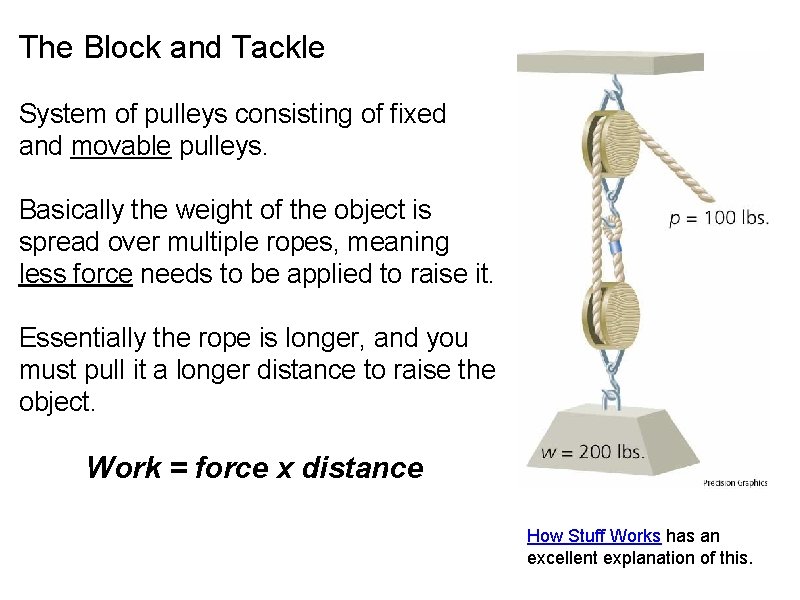
The Block and Tackle System of pulleys consisting of fixed and movable pulleys. Basically the weight of the object is spread over multiple ropes, meaning less force needs to be applied to raise it. Essentially the rope is longer, and you must pull it a longer distance to raise the object. Work = force x distance How Stuff Works has an excellent explanation of this.
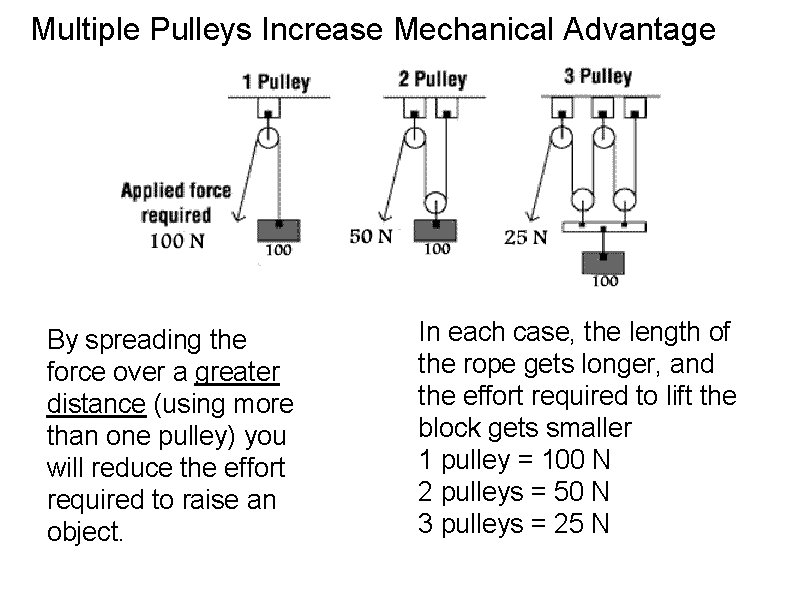
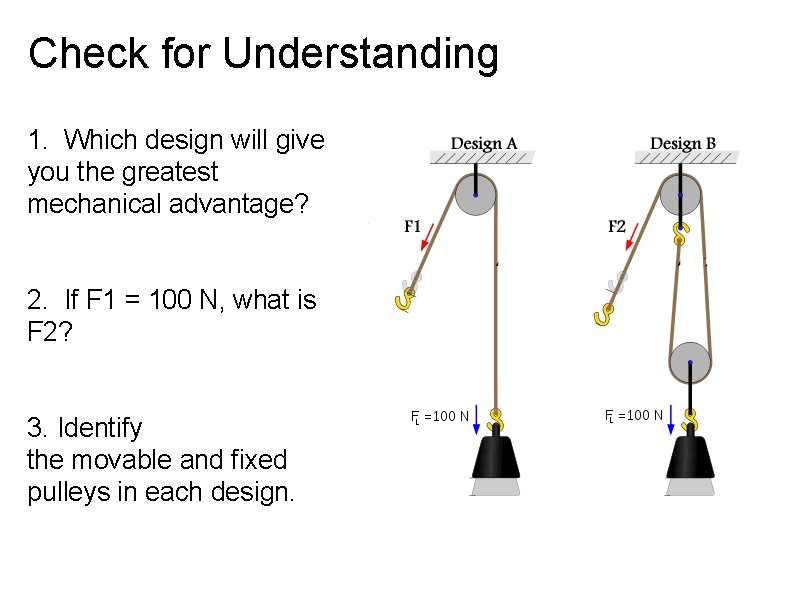
Multiple Pulleys Increase Mechanical Advantage By spreading the force over a greater distance (using more than one pulley) you will reduce the effort required to raise an object. In each case, the length of the rope gets longer, and the effort required to lift the block gets smaller 1 pulley = 100 N 2 pulleys = 50 N 3 pulleys = 25 N
Check for Understanding 1. Which design will give you the greatest mechanical advantage? 2. If F 1 = 100 N, what is F 2? 3. Identify the movable and fixed pulleys in each design.
Work (in) = Work (out) …. still! The effort is spread over a longer distance. W = force x distance
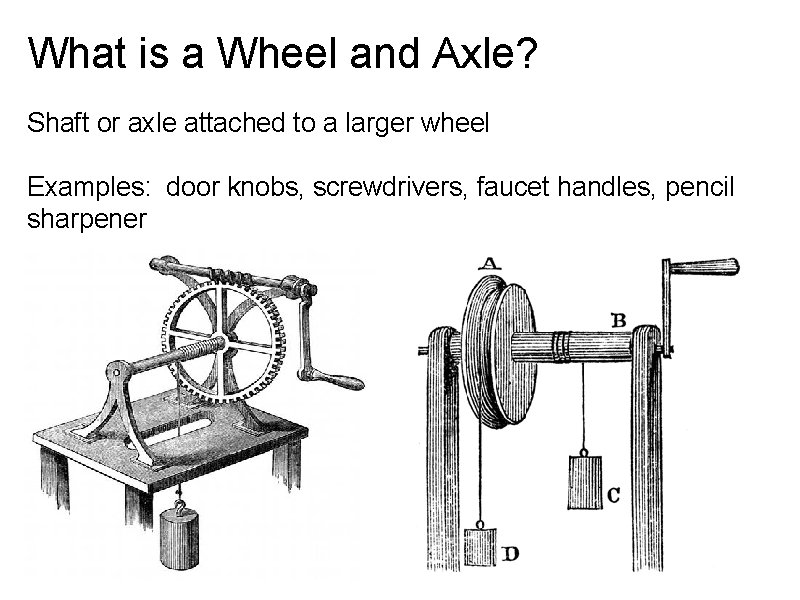
What is a Wheel and Axle? Shaft or axle attached to a larger wheel Examples: door knobs, screwdrivers, faucet handles, pencil sharpener
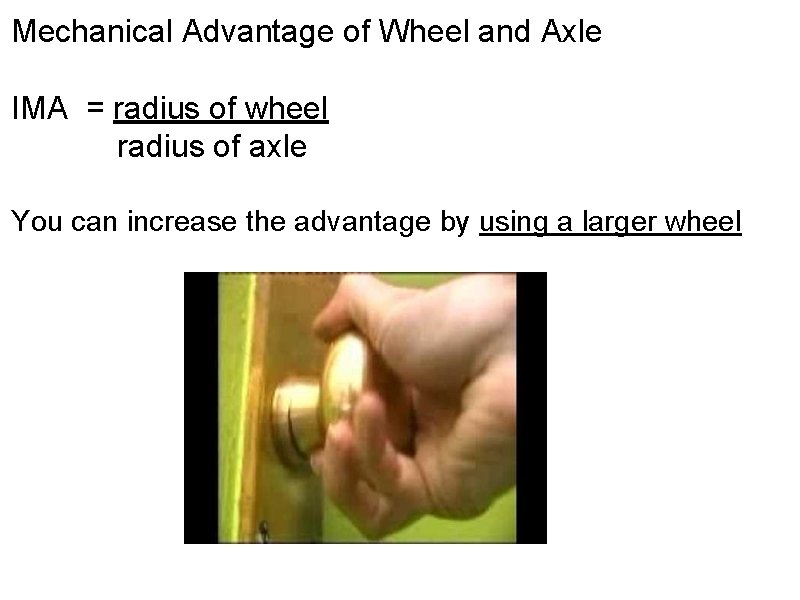
Mechanical Advantage of Wheel and Axle IMA = radius of wheel radius of axle You can increase the advantage by using a larger wheel
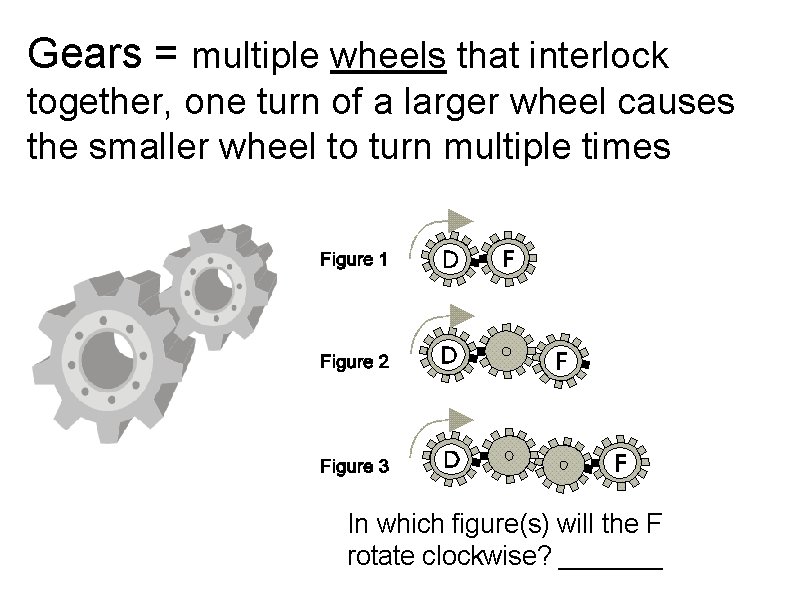
Gears = multiple wheels that interlock together, one turn of a larger wheel causes the smaller wheel to turn multiple times In which figure(s) will the F rotate clockwise? _______
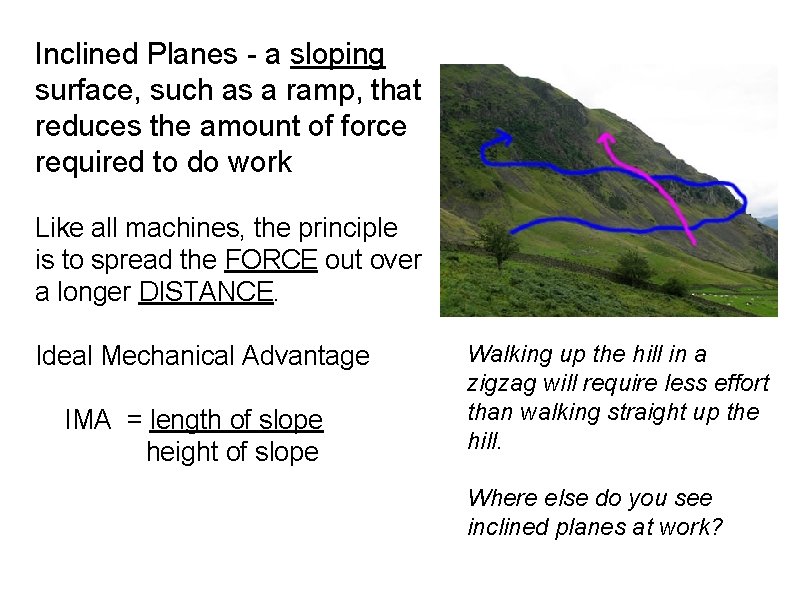
Inclined Planes - a sloping surface, such as a ramp, that reduces the amount of force required to do work Like all machines, the principle is to spread the FORCE out over a longer DISTANCE. Ideal Mechanical Advantage IMA = length of slope height of slope Walking up the hill in a zigzag will require less effort than walking straight up the hill. Where else do you see inclined planes at work?
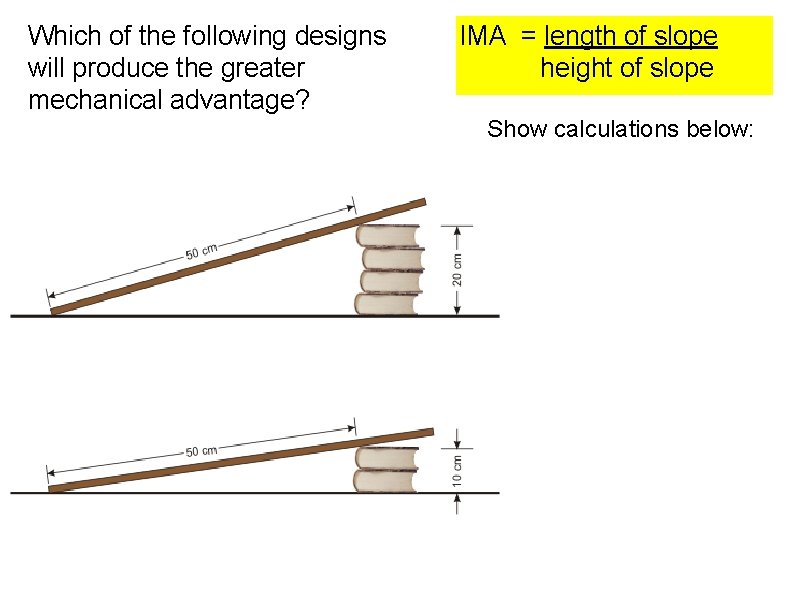
Which of the following designs will produce the greater mechanical advantage? IMA = length of slope height of slope Show calculations below:
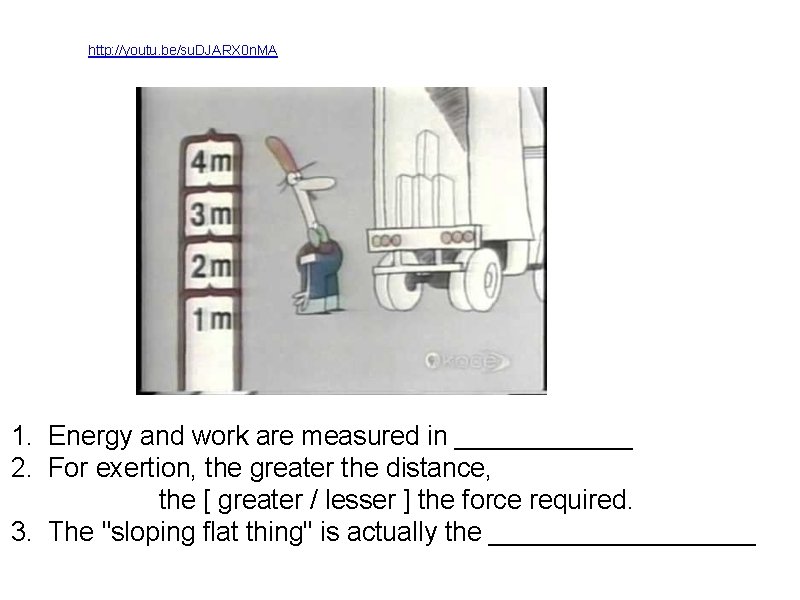
http: //youtu. be/su. DJARX 0 n. MA 1. Energy and work are measured in ______ 2. For exertion, the greater the distance, the [ greater / lesser ] the force required. 3. The "sloping flat thing" is actually the _________
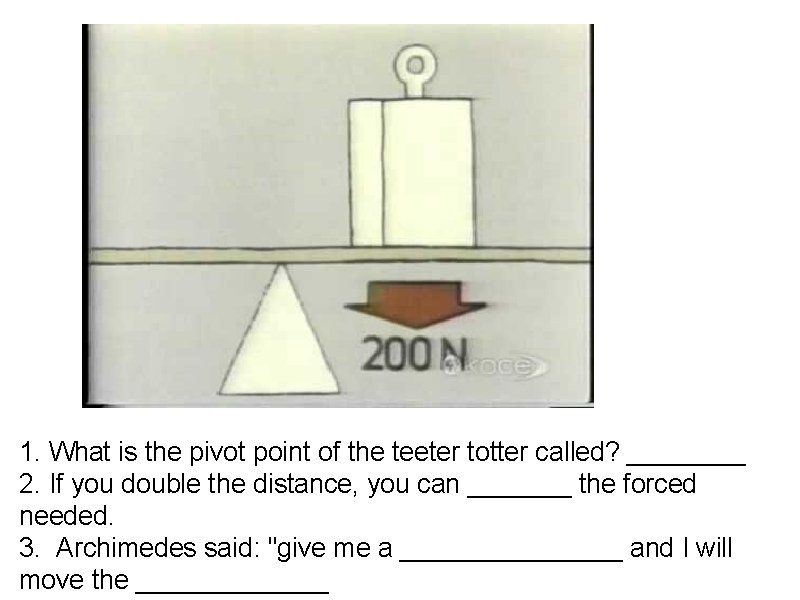
1. What is the pivot point of the teeter totter called? ____ 2. If you double the distance, you can _______ the forced needed. 3. Archimedes said: "give me a ________ and I will move the _______
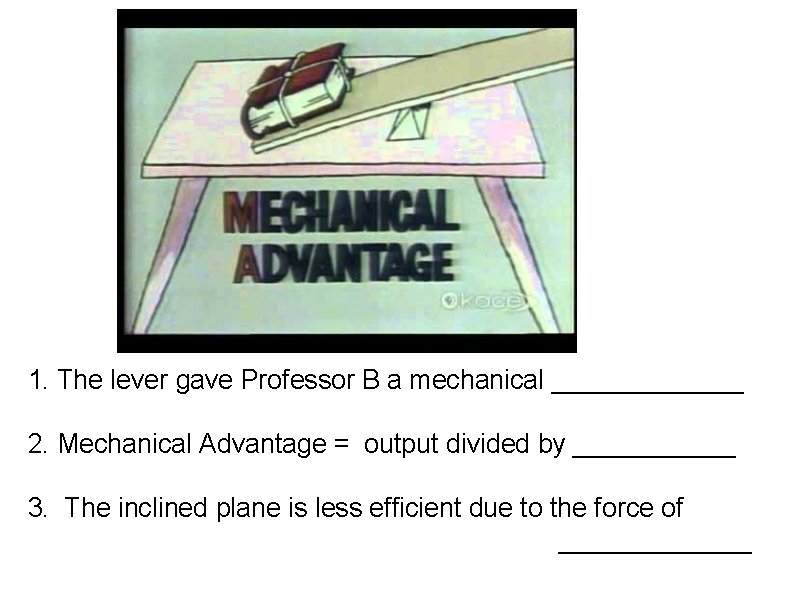
1. The lever gave Professor B a mechanical _______ 2. Mechanical Advantage = output divided by ______ 3. The inclined plane is less efficient due to the force of _______
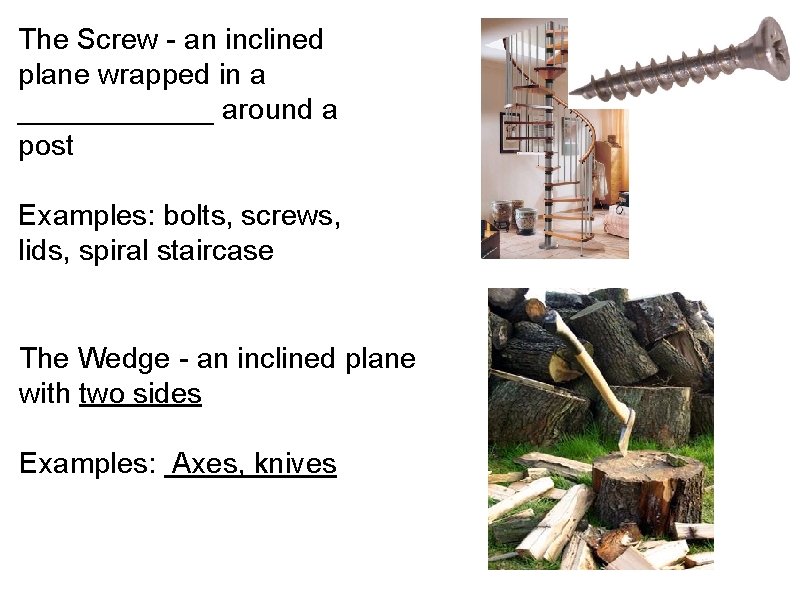
The Screw - an inclined plane wrapped in a ______ around a post Examples: bolts, screws, lids, spiral staircase The Wedge - an inclined plane with two sides Examples: Axes, knives
QUIZ TIME!
1. What type of machine is a wheelchair ramp? 2. What type of machine is a crowbar? 3. The fixed point for a lever to pivot is the _______. 4. If the LOAD is in the middle of a lever, it is called a [1 st, 2 nd, 3 rd ] class lever. 5. What type of lever is pictured? [ 1 st, 2 nd, or 3 rd class ] Effort 6. A system of pulleys that reduces the force needed to lift an object is called a ____________
7. Give an example of a wheel and axle: ___ 8. How can you increase the mechanical advantage of a wheel and axle? _____ 9. A ____ consists of multiple wheels that interlock 10. A wedge is an ___________ with two sides.