
Simple Machines Physics Mrs Coyle What are some

- Slides: 24
Simple Machines Physics Mrs. Coyle
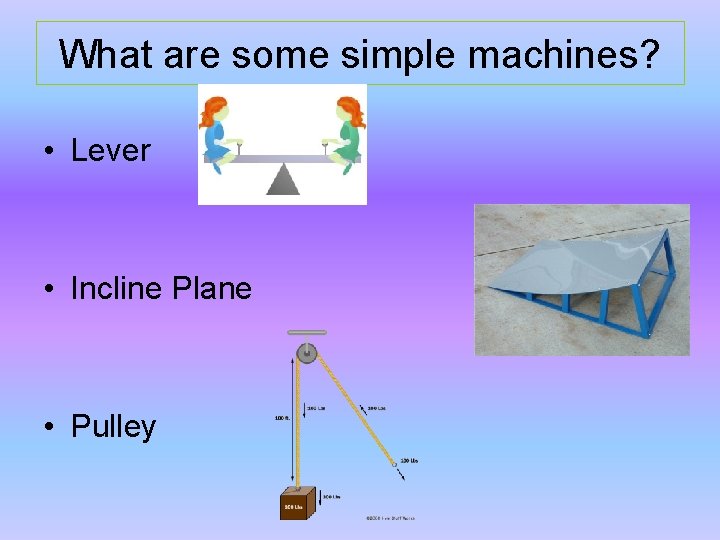
What are some simple machines? • Lever • Incline Plane • Pulley
Simple Machines • Multiply the effort force (allows you to use a smaller effort force to raise a heavier object). • Change the direction of the force. • Do not reduce the work input.
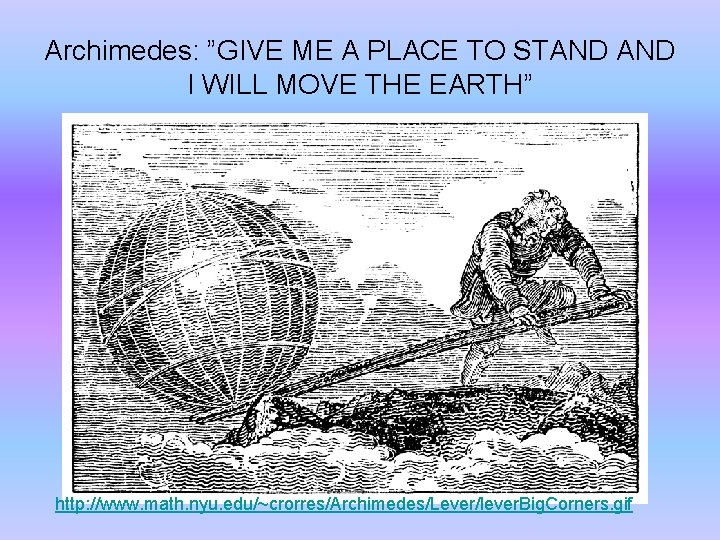
Archimedes: ”GIVE ME A PLACE TO STAND I WILL MOVE THE EARTH” http: //www. math. nyu. edu/~crorres/Archimedes/Lever/lever. Big. Corners. gif
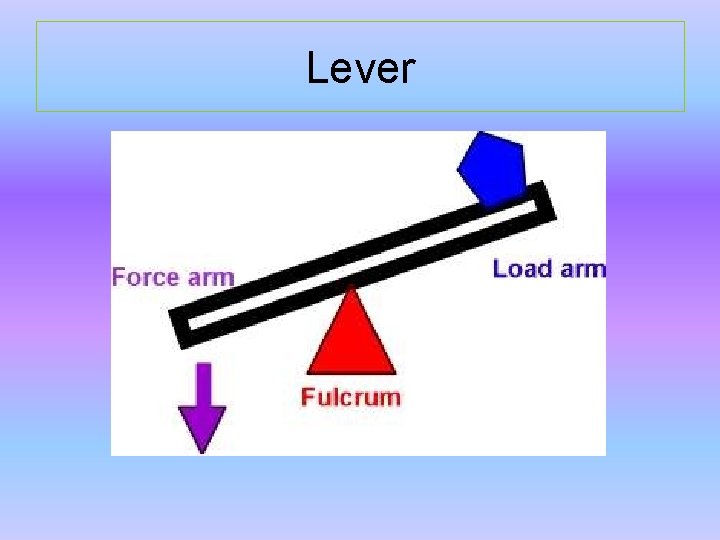
Lever
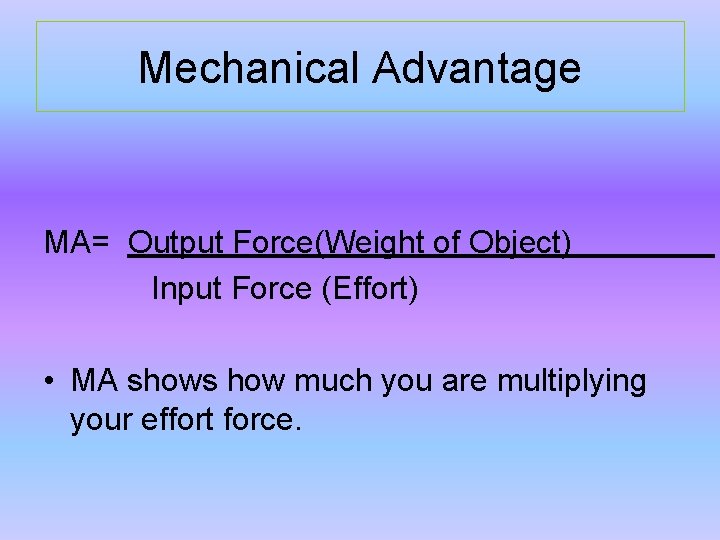
Mechanical Advantage MA= Output Force(Weight of Object) Input Force (Effort) • MA shows how much you are multiplying your effort force.
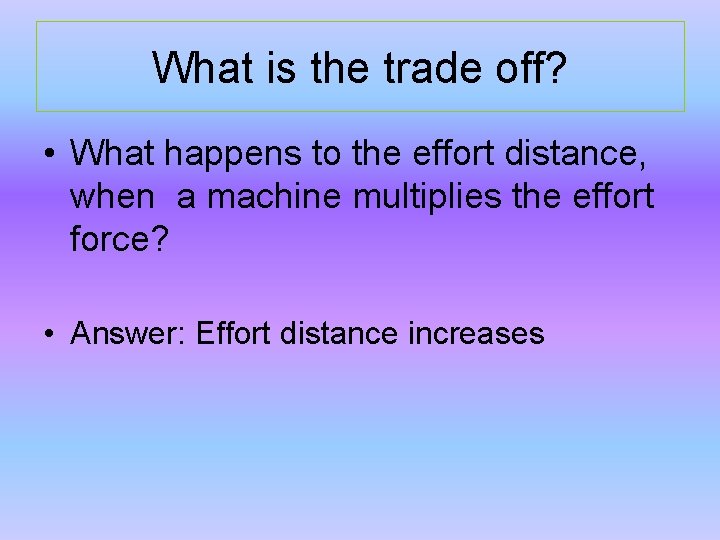
What is the trade off? • What happens to the effort distance, when a machine multiplies the effort force? • Answer: Effort distance increases
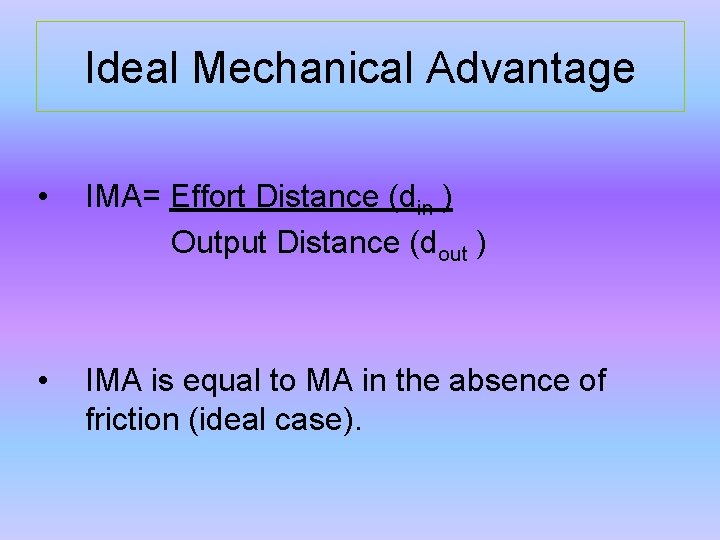
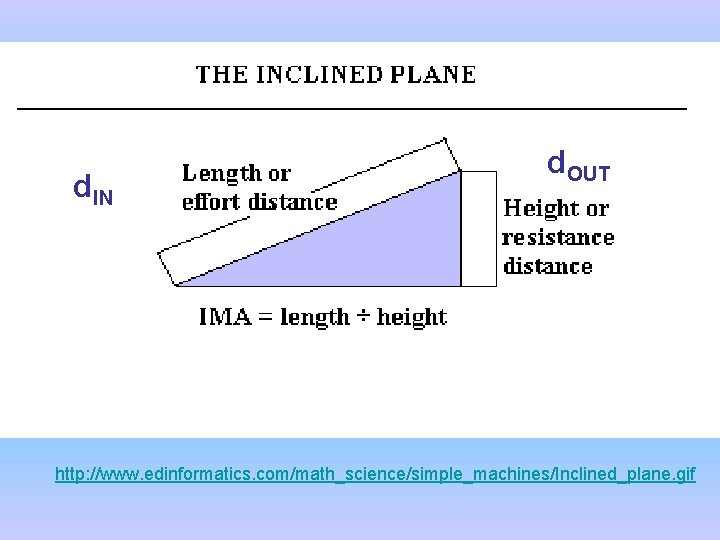
Ideal Mechanical Advantage • IMA= Effort Distance (din ) Output Distance (dout ) • IMA is equal to MA in the absence of friction (ideal case).
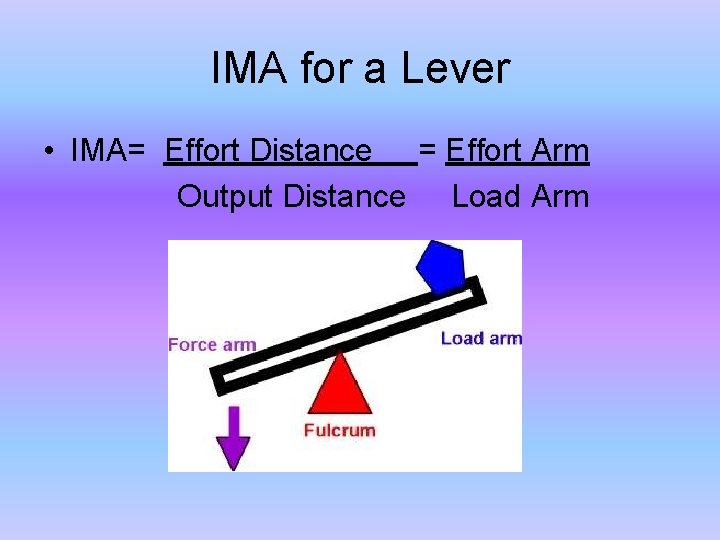
IMA for a Lever • IMA= Effort Distance = Effort Arm Output Distance Load Arm
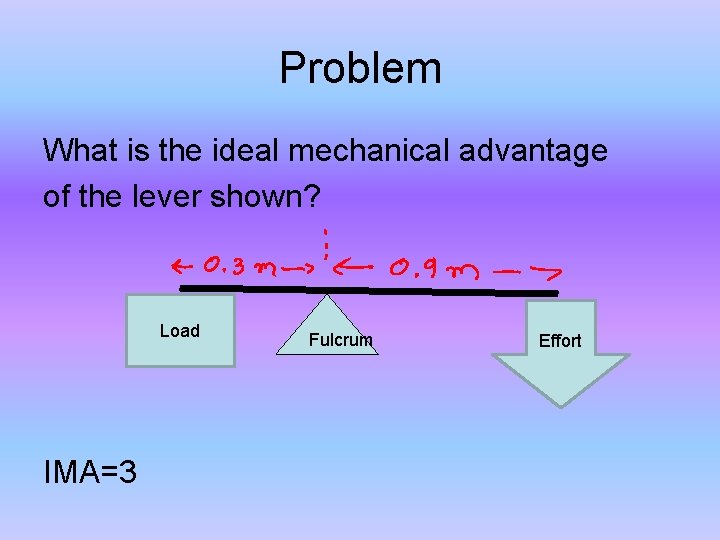
Problem What is the ideal mechanical advantage of the lever shown? Load IMA=3 Fulcrum Effort
Lever • http: //www. walter-fendt. de/ph 11 e/lever. htm
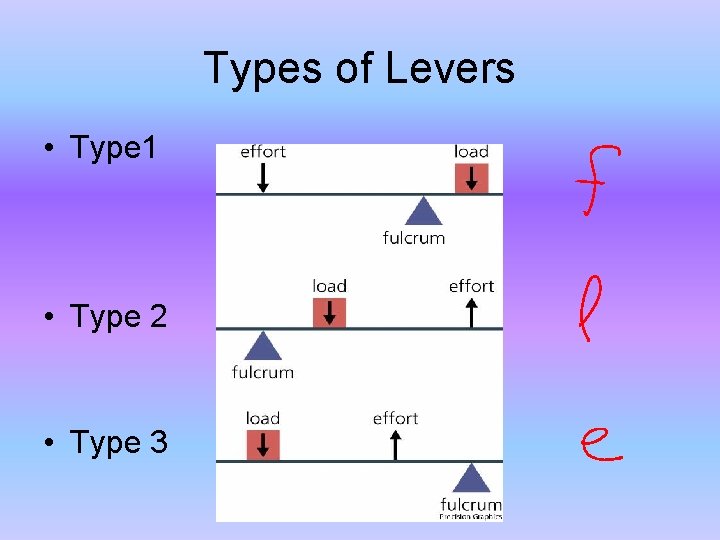
Types of Levers • Type 1 • Type 2 • Type 3
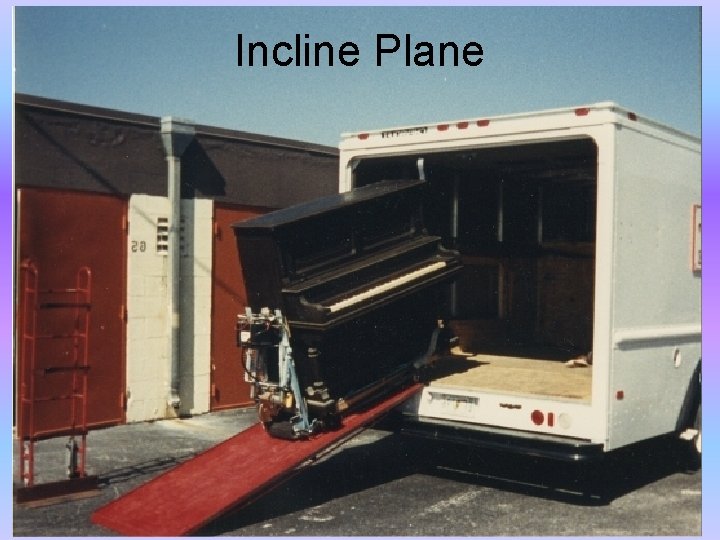
Incline Plane
d. IN d. OUT http: //www. edinformatics. com/math_science/simple_machines/Inclined_plane. gif
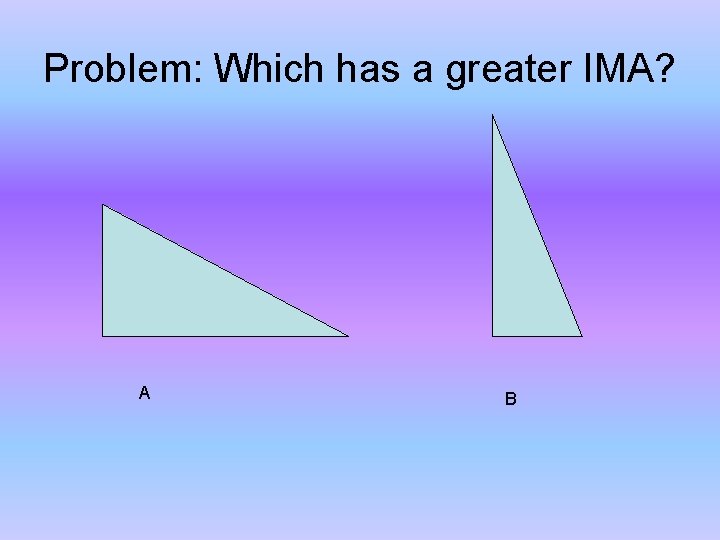
Problem: Which has a greater IMA? A B
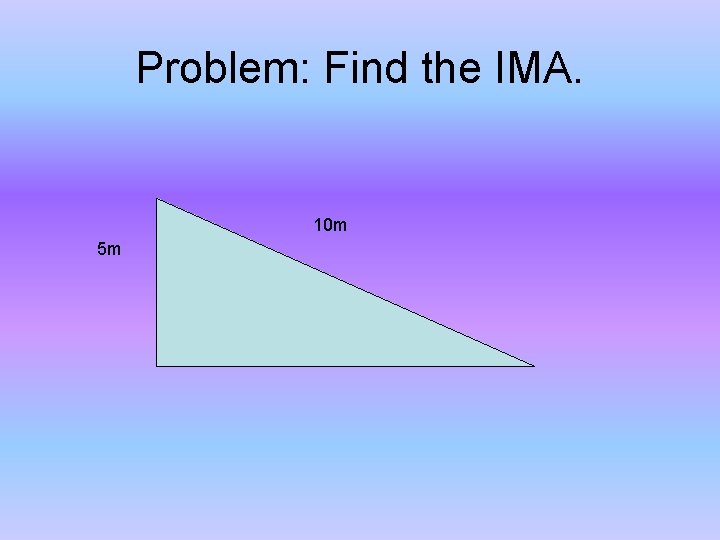
Problem: Find the IMA. 10 m 5 m
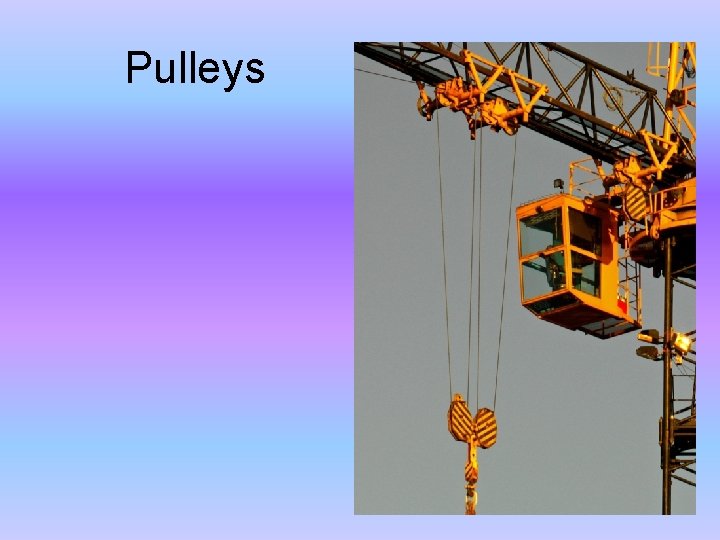
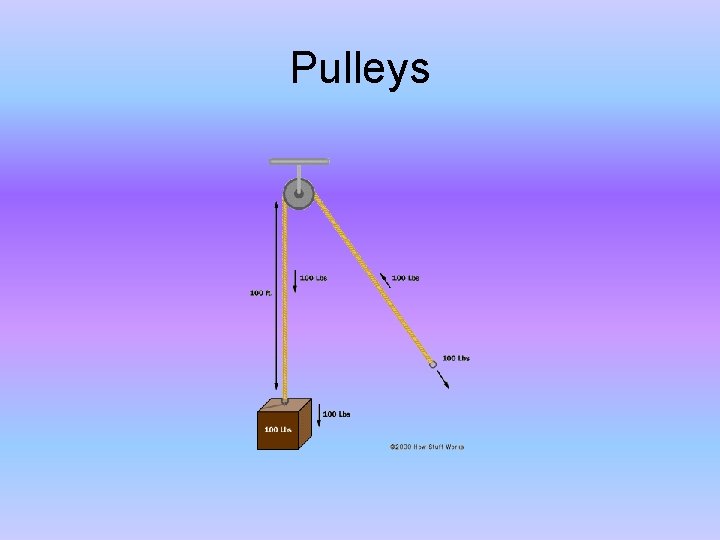
Pulleys
Pulleys
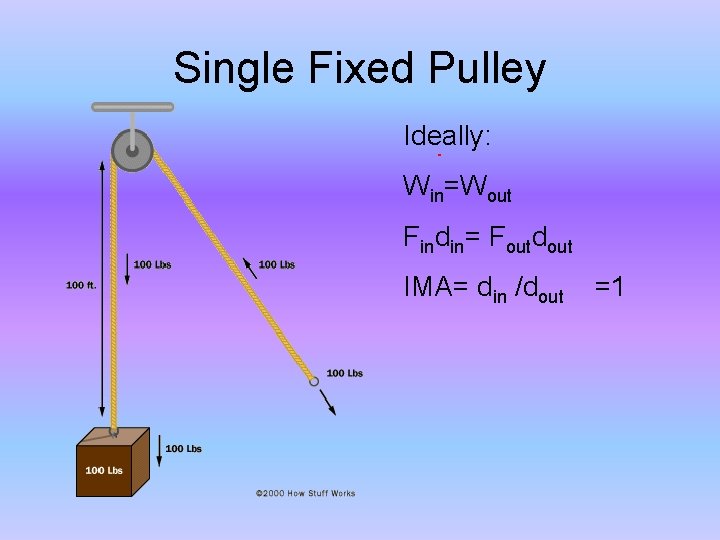
Single Fixed Pulley Ideally: Win=Wout Findin= Foutdout IMA= din /dout =1
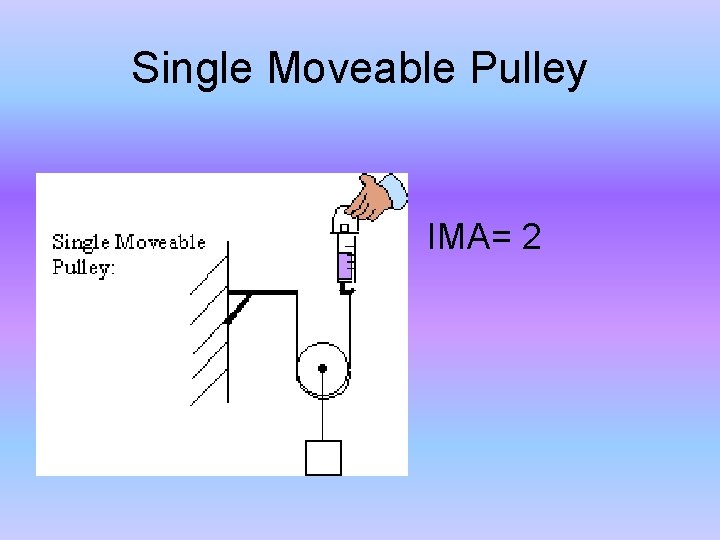
Single Moveable Pulley IMA= 2
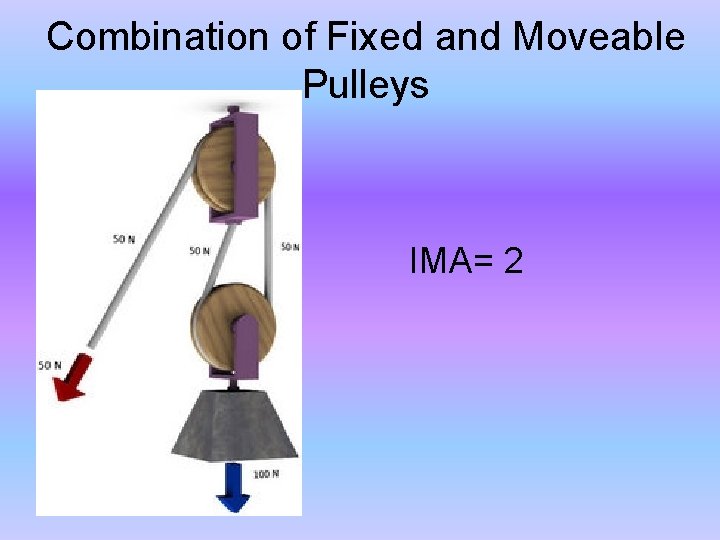
Combination of Fixed and Moveable Pulleys IMA= 2
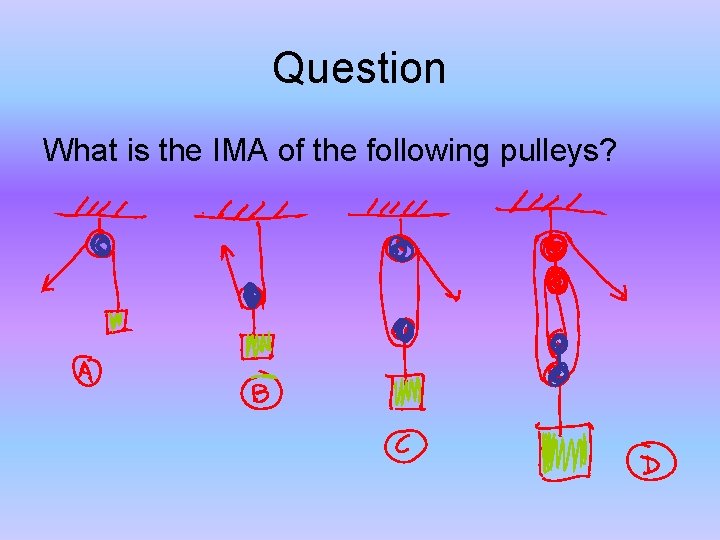
IMA for Pulleys • The IMA of pulleys can quickly be found by counting the number of lifting strands.
Question What is the IMA of the following pulleys?
Efficiency • Efficiency indicates the percentage of the input work that was converted to useful work and not lost to friction. • % eff = (Wout / Win) x 100 % • % eff = (MA / IMA) x 100 %