
Simple Machines Mr Charles G Mallonee III Franklin





- Slides: 30
Simple Machines Mr. Charles G. Mallonee, III Franklin High School Technology Education
Simple Machines • Simple machines change the amount, speed, or direction of a force • Simple machines provide a mechanical advantage; they multiply the force or the distance we put into work
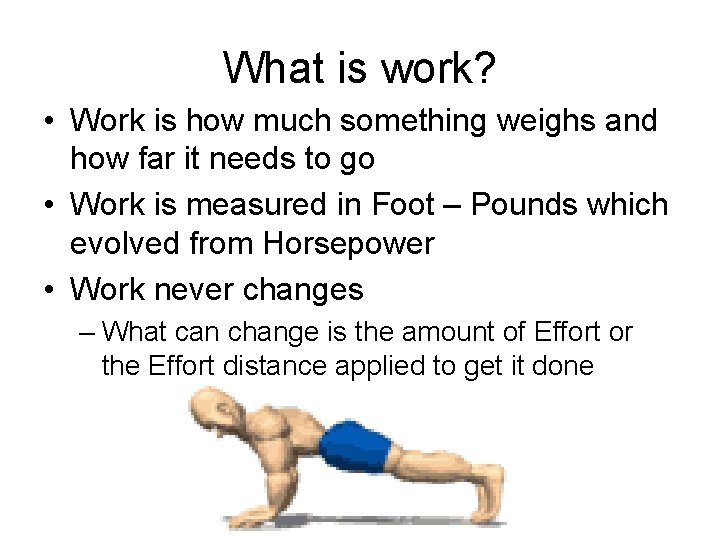
What is work? • Work is how much something weighs and how far it needs to go • Work is measured in Foot – Pounds which evolved from Horsepower • Work never changes – What can change is the amount of Effort or the Effort distance applied to get it done
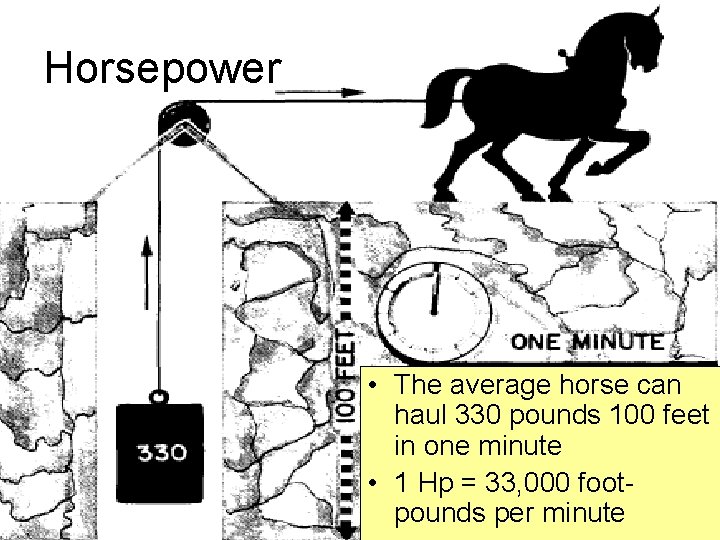
Horsepower • The average horse can haul 330 pounds 100 feet in one minute • 1 Hp = 33, 000 footpounds per minute
What is Effort? • Effort is the amount of force needed to overcome resistance • Effort can vary based on the individual’s abilities and size • Effort can be changed both to provide more effort AND less effort
Distance, the other variable • Distance affects Effort • Generally speaking, the greater the distance, the less effort is required • Conversely, the greater the required effort the more distance is achieved
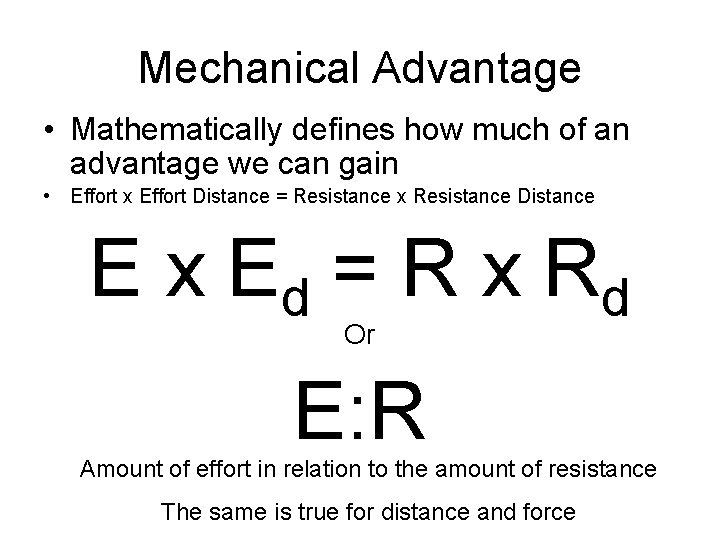
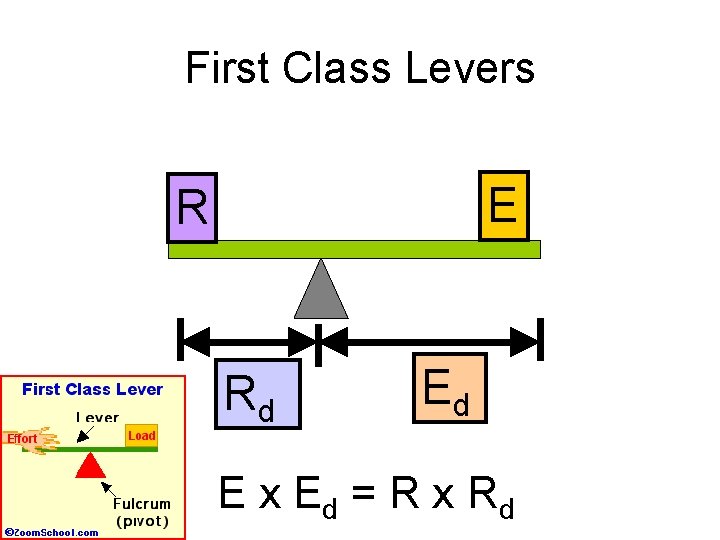
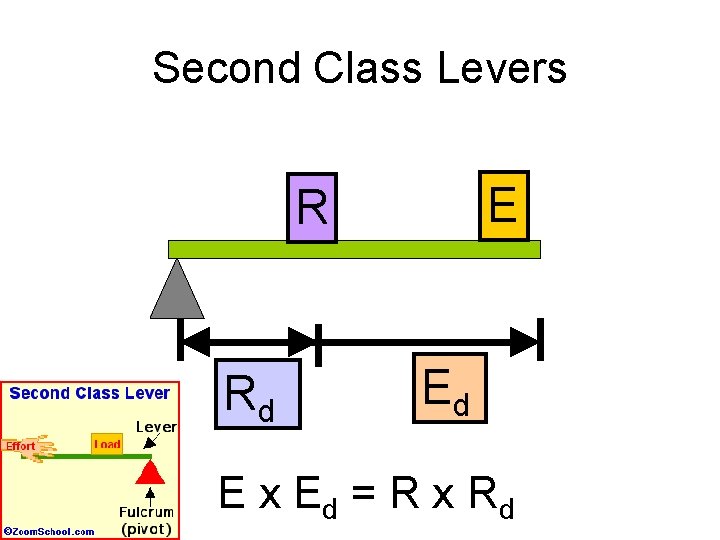
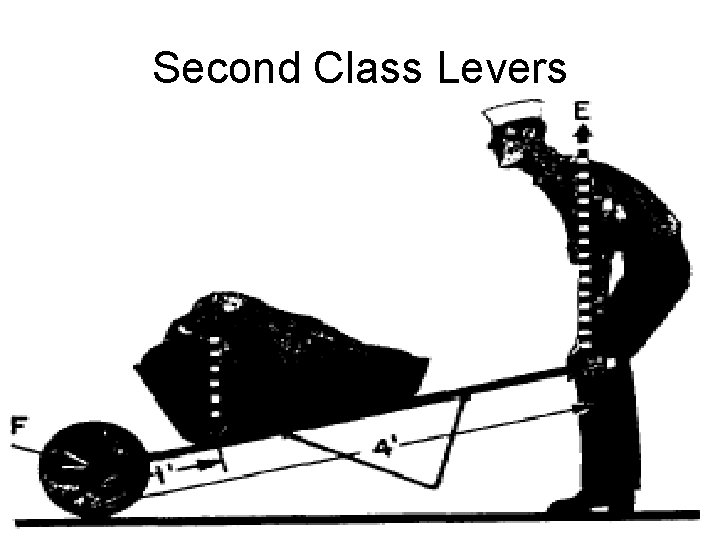
Mechanical Advantage • Mathematically defines how much of an advantage we can gain • Effort x Effort Distance = Resistance x Resistance Distance E x Ed = R x Rd Or E: R Amount of effort in relation to the amount of resistance The same is true for distance and force
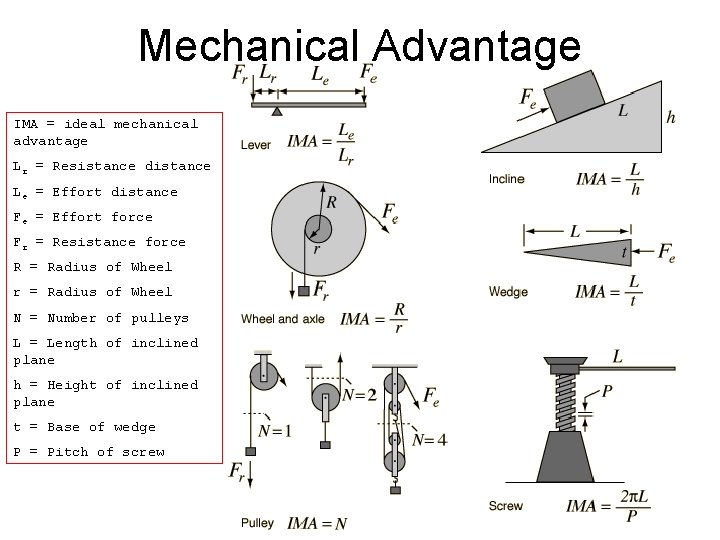
Mechanical Advantage IMA = ideal mechanical advantage Lr = Resistance distance Le = Effort distance Fe = Effort force Fr = Resistance force R = Radius of Wheel r = Radius of Wheel N = Number of pulleys L = Length of inclined plane h = Height of inclined plane t = Base of wedge P = Pitch of screw
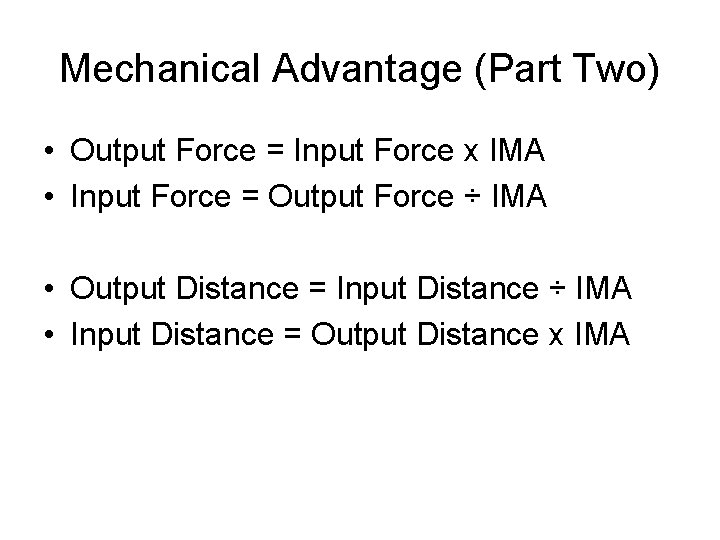
Mechanical Advantage (Part Two) • Output Force = Input Force x IMA • Input Force = Output Force ÷ IMA • Output Distance = Input Distance ÷ IMA • Input Distance = Output Distance x IMA
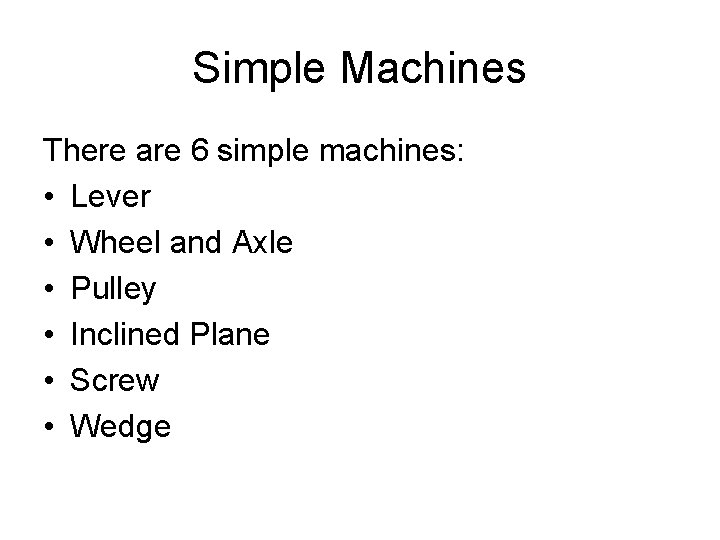
Simple Machines There are 6 simple machines: • Lever • Wheel and Axle • Pulley • Inclined Plane • Screw • Wedge
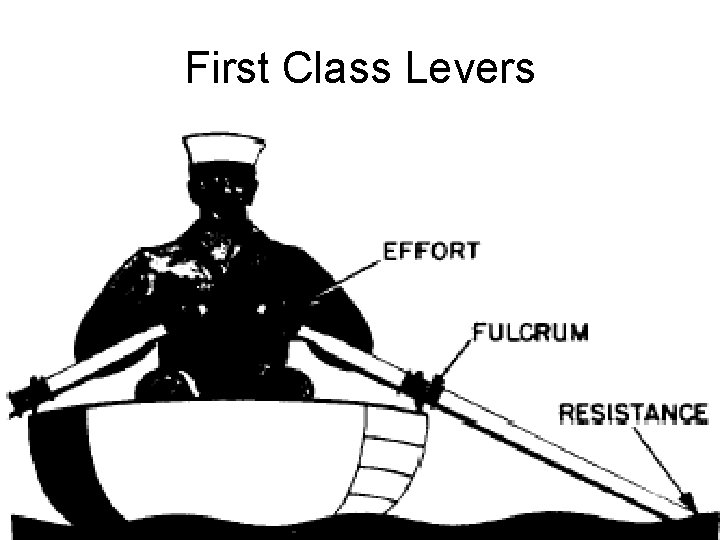
Levers… • A bar resting on a FULCRUM (pivot point) • Are totally dependent on the strength of the material of the bar • Mechanical Advantage is determined by distance and effort • There are 3 Classes of Levers
First Class Levers E R Rd Ed E x Ed = R x Rd
First Class Levers
Second Class Levers E R Rd Ed E x Ed = R x Rd
Second Class Levers
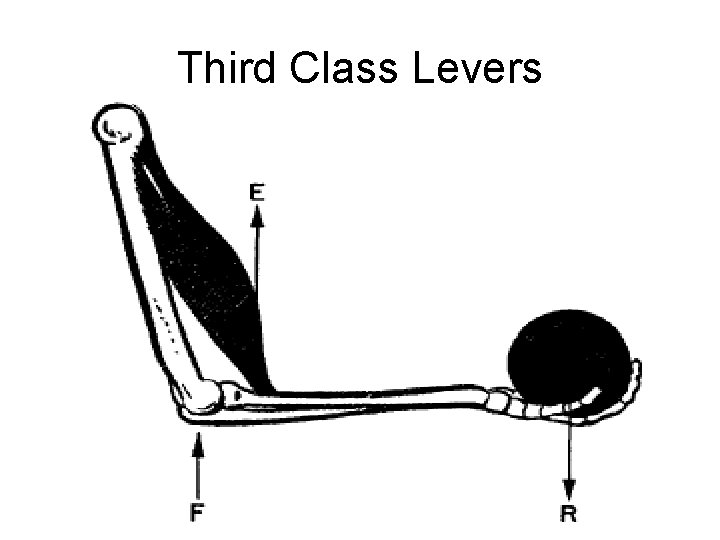
Third Class Levers R E Ed Rd E x Ed = R x Rd
Third Class Levers
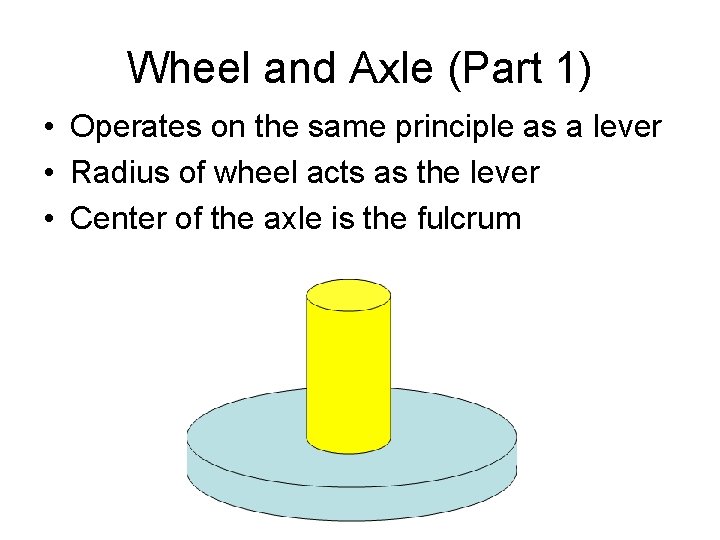
Wheel and Axle (Part 1) • Operates on the same principle as a lever • Radius of wheel acts as the lever • Center of the axle is the fulcrum
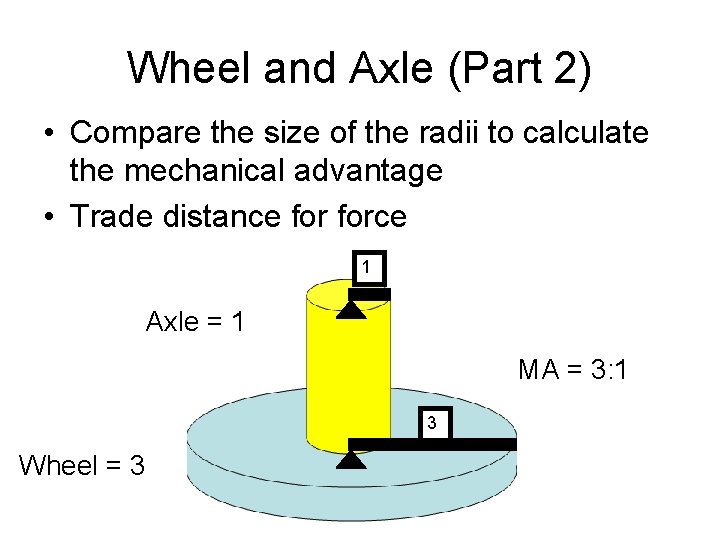
Wheel and Axle (Part 2) • Compare the size of the radii to calculate the mechanical advantage • Trade distance force 1 Axle = 1 MA = 3: 1 3 Wheel = 3
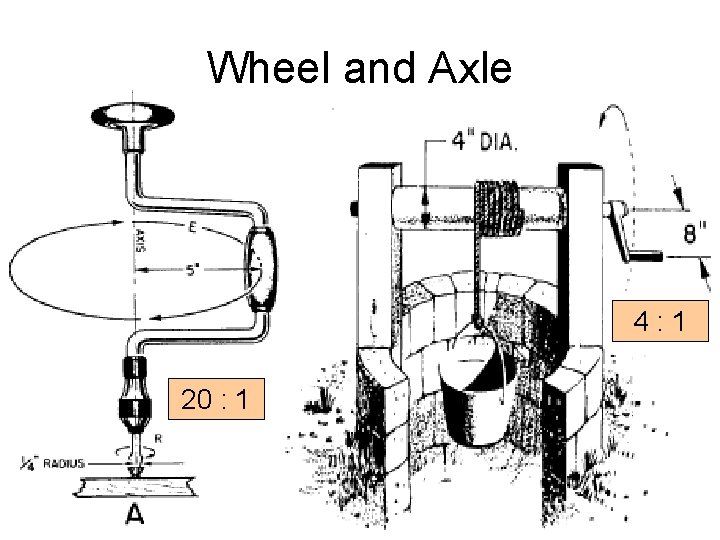
Wheel and Axle 4: 1 20 : 1
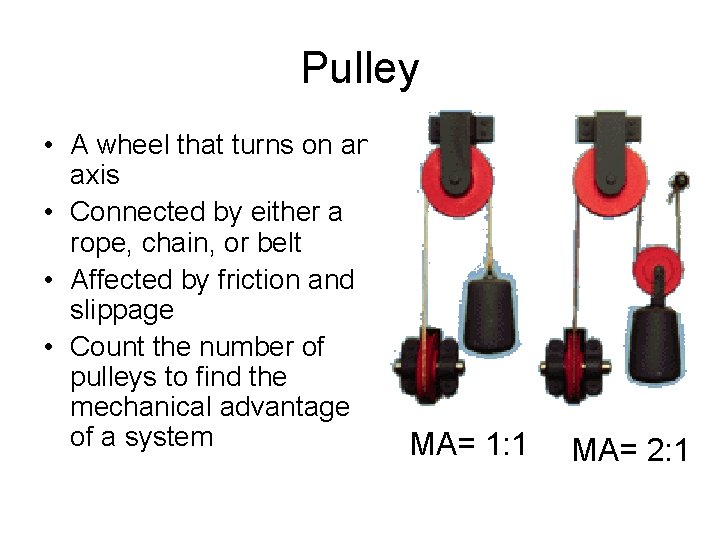
Pulley • A wheel that turns on an axis • Connected by either a rope, chain, or belt • Affected by friction and slippage • Count the number of pulleys to find the mechanical advantage of a system MA= 1: 1 MA= 2: 1
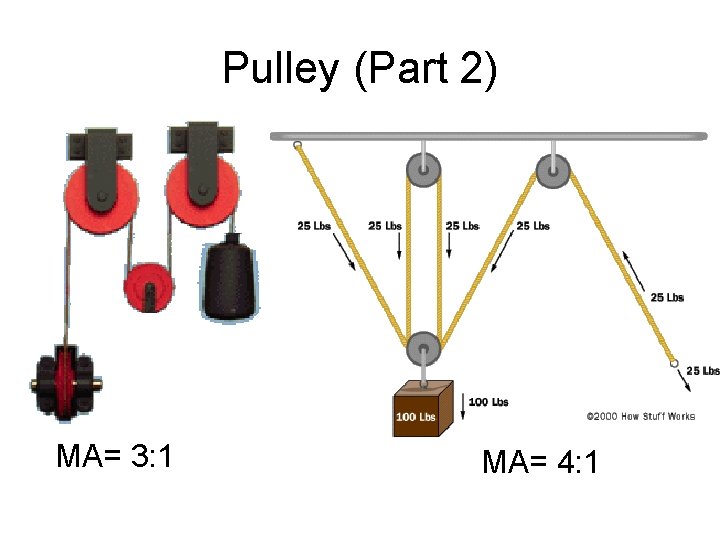
Pulley (Part 2) MA= 3: 1 MA= 4: 1
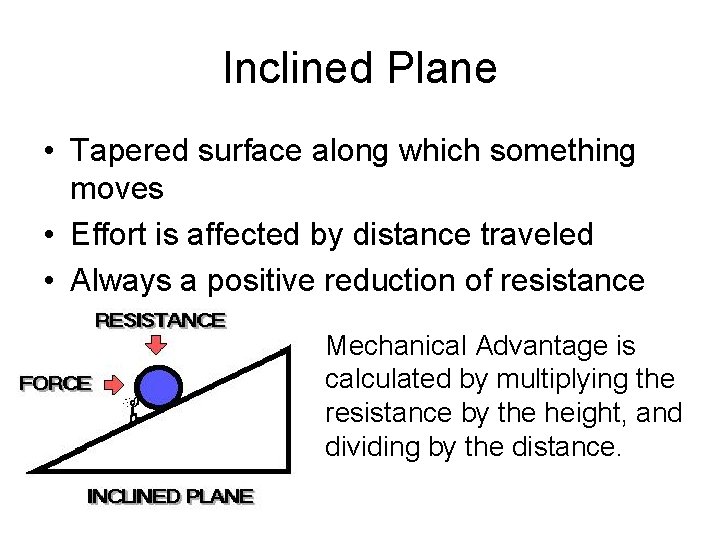
Inclined Plane • Tapered surface along which something moves • Effort is affected by distance traveled • Always a positive reduction of resistance Mechanical Advantage is calculated by multiplying the resistance by the height, and dividing by the distance.
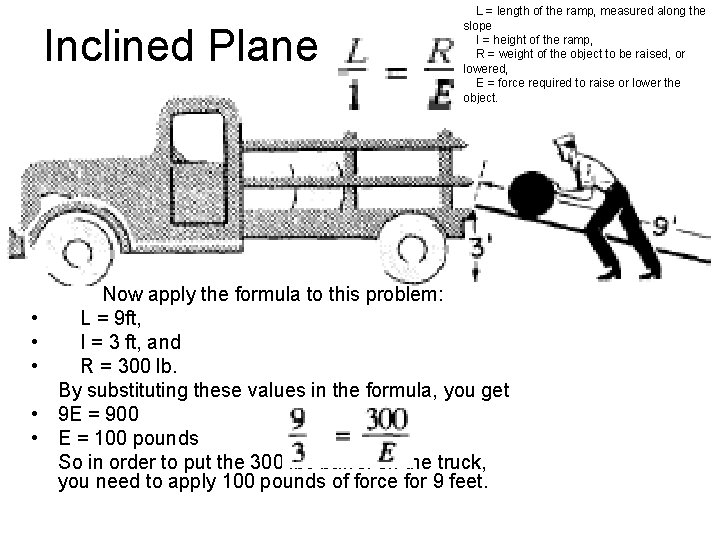
Inclined Plane • • • L = length of the ramp, measured along the slope I = height of the ramp, R = weight of the object to be raised, or lowered, E = force required to raise or lower the object. Now apply the formula to this problem: L = 9 ft, I = 3 ft, and R = 300 lb. By substituting these values in the formula, you get 9 E = 900 E = 100 pounds So in order to put the 300 lbs barrel on the truck, you need to apply 100 pounds of force for 9 feet.
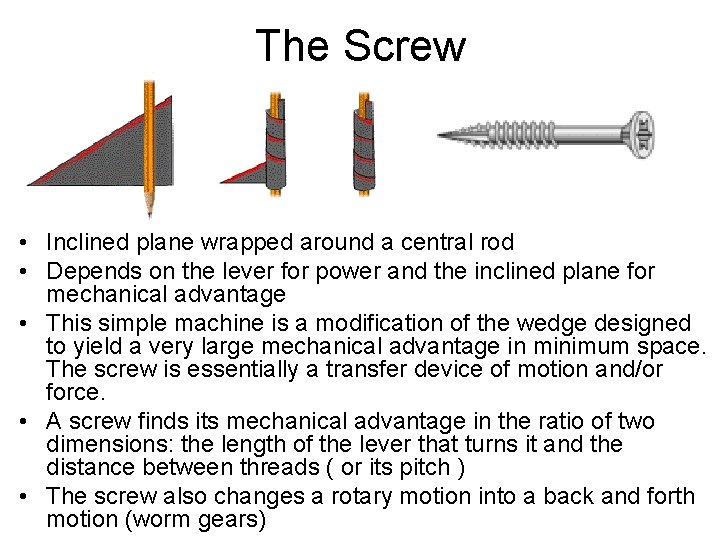
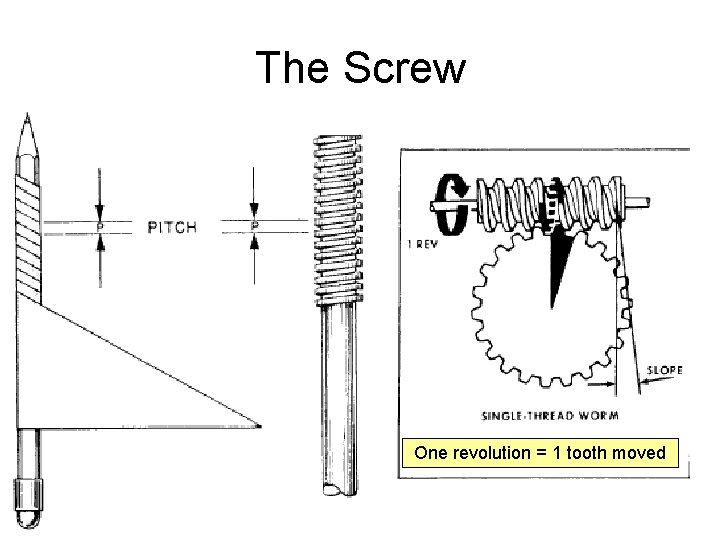
The Screw • Inclined plane wrapped around a central rod • Depends on the lever for power and the inclined plane for mechanical advantage • This simple machine is a modification of the wedge designed to yield a very large mechanical advantage in minimum space. The screw is essentially a transfer device of motion and/or force. • A screw finds its mechanical advantage in the ratio of two dimensions: the length of the lever that turns it and the distance between threads ( or its pitch ) • The screw also changes a rotary motion into a back and forth motion (worm gears)
The Screw One revolution = 1 tooth moved
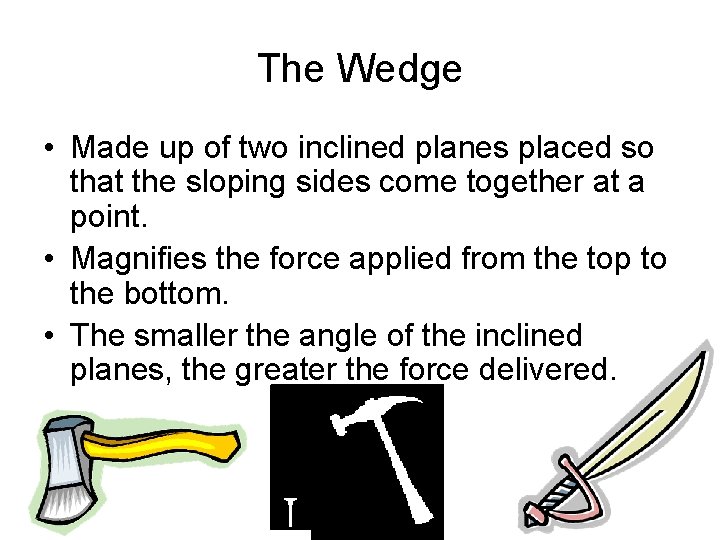
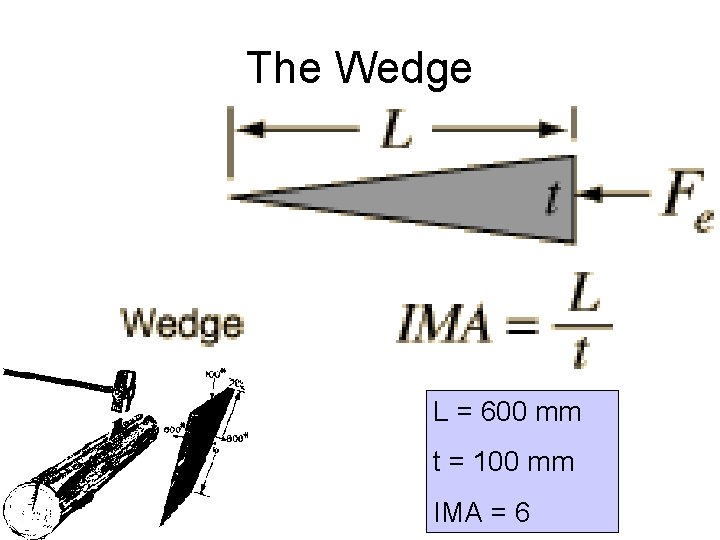
The Wedge • Made up of two inclined planes placed so that the sloping sides come together at a point. • Magnifies the force applied from the top to the bottom. • The smaller the angle of the inclined planes, the greater the force delivered.
The Wedge L = 600 mm t = 100 mm IMA = 6
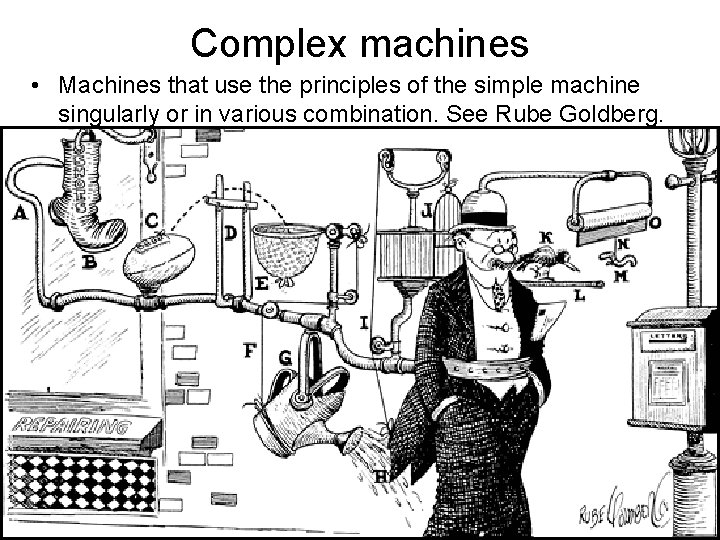
Complex machines • Machines that use the principles of the simple machine singularly or in various combination. See Rube Goldberg. • • Rube Goldberg gets caught in a revolving door and becomes dizzy enough to dope out an idea to keep you from forgetting to mail your wife's letter. As you walk past cobbler shop, hook (A) strikes suspended boot (B), causing it to kick football (C) through goal posts (D). Football drops into basket (E) and string (F) tilts sprinkling can, (G) causing water to soak coat tails (H). As coat shrinks, cord (I) opens door (J) of cage, allowing bird (K) to walk out on perch (L) and grab worm (M) which is attached to string (N). This pulls down window shade (O) on which is written, "YOU SAP, MAIL THAT LETTER. " A simple way to avoid all this trouble is to marry a wife who can't write.
Citations • http: //www. enchantedlearning. com/physics /machines/Levers. shtml • http: //www. tpub. com/machines/1 a. htm • http: //www. mikids. com/Smachines. htm • http: //www. howstuffworks. com/pulley. htm • http: //www. brainpop. com/ • http: //www. rube-goldberg. com/