
Simple Machines DO WORK WITH ONE MOVEMENT Six



- Slides: 21
Simple Machines * DO WORK WITH ONE MOVEMENT
Six Types: - Inclined plane Wedge Screw Lever Wheel and axle Pulley
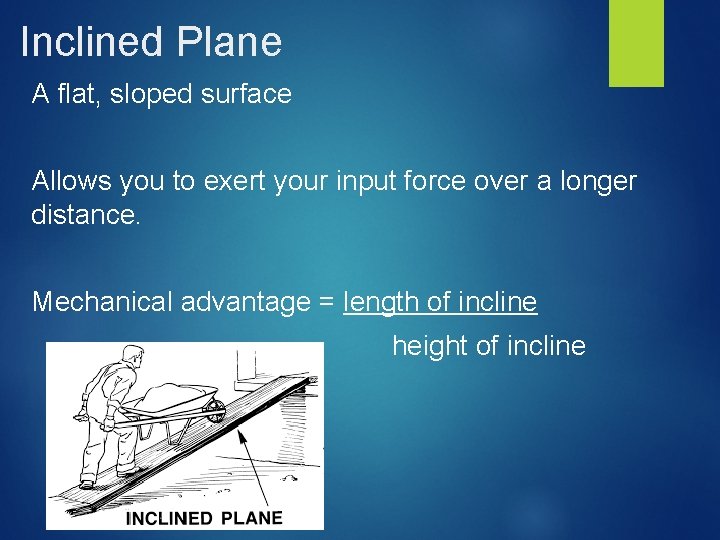
Inclined Plane A flat, sloped surface Allows you to exert your input force over a longer distance. Mechanical advantage = length of incline height of incline
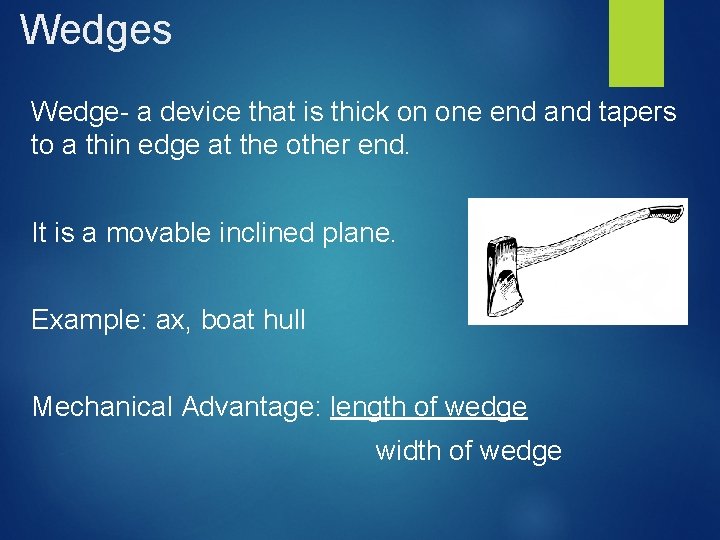
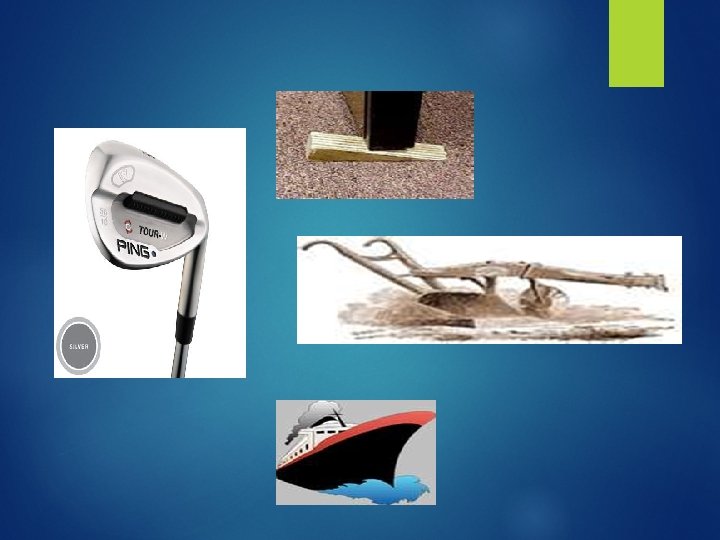
Wedges Wedge- a device that is thick on one end and tapers to a thin edge at the other end. It is a movable inclined plane. Example: ax, boat hull Mechanical Advantage: length of wedge width of wedge
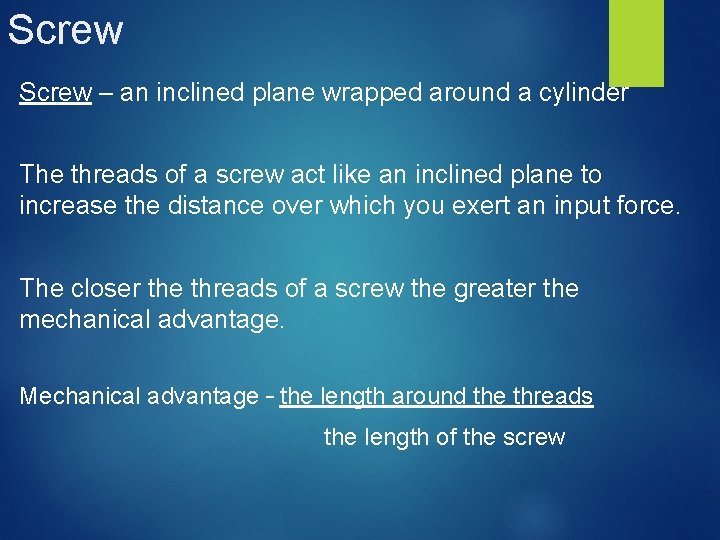
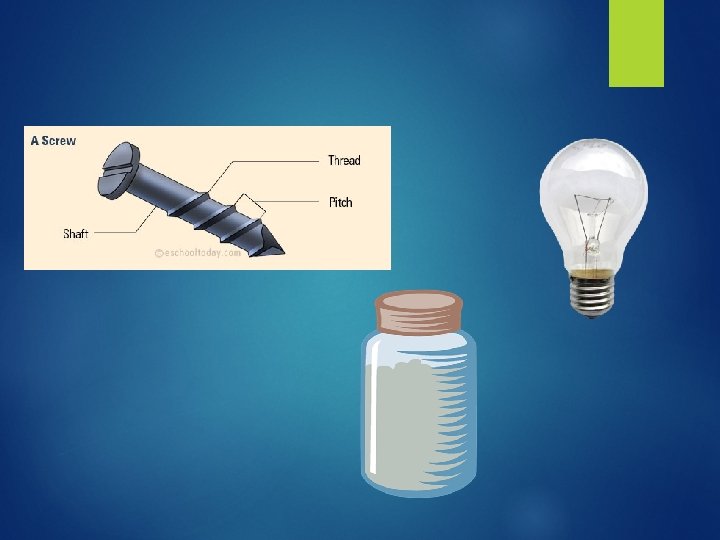
Screw – an inclined plane wrapped around a cylinder The threads of a screw act like an inclined plane to increase the distance over which you exert an input force. The closer the threads of a screw the greater the mechanical advantage. Mechanical advantage – the length around the threads the length of the screw
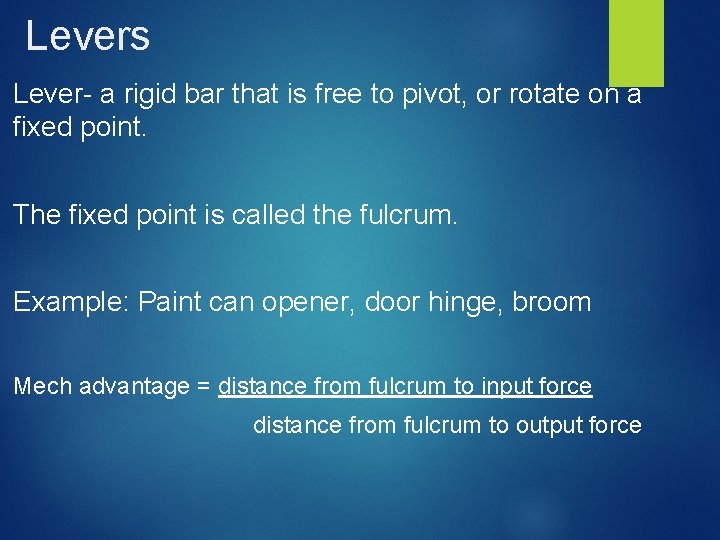
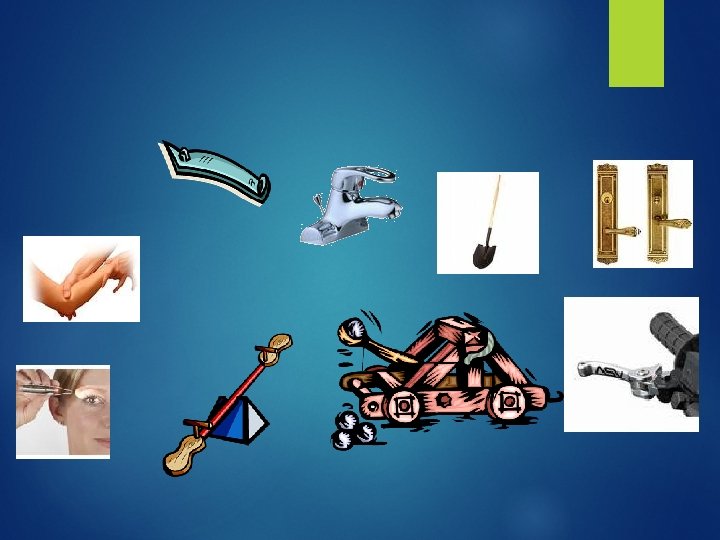
Levers Lever- a rigid bar that is free to pivot, or rotate on a fixed point. The fixed point is called the fulcrum. Example: Paint can opener, door hinge, broom Mech advantage = distance from fulcrum to input force distance from fulcrum to output force
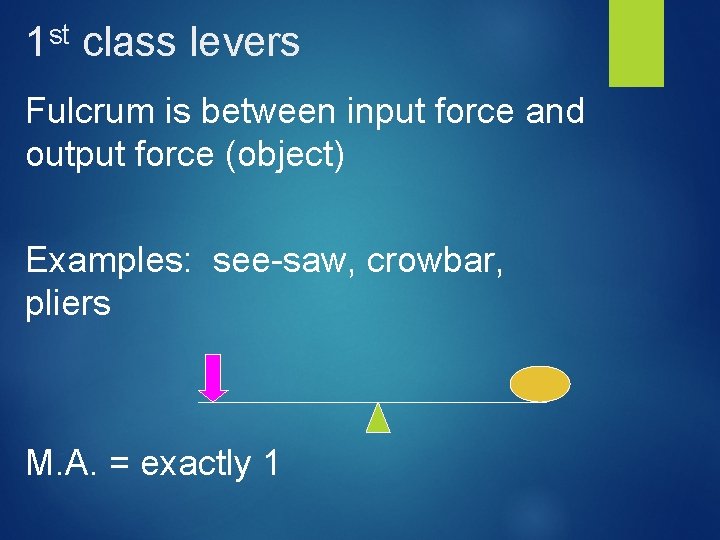
st 1 class levers Fulcrum is between input force and output force (object) Examples: see-saw, crowbar, pliers M. A. = exactly 1
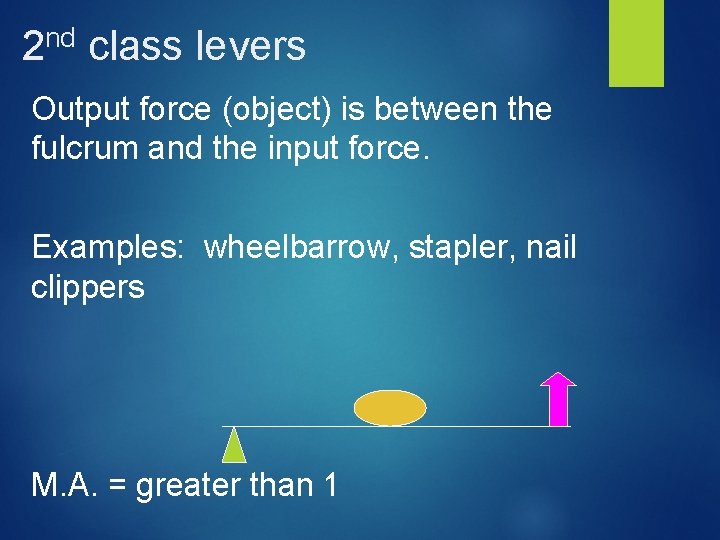
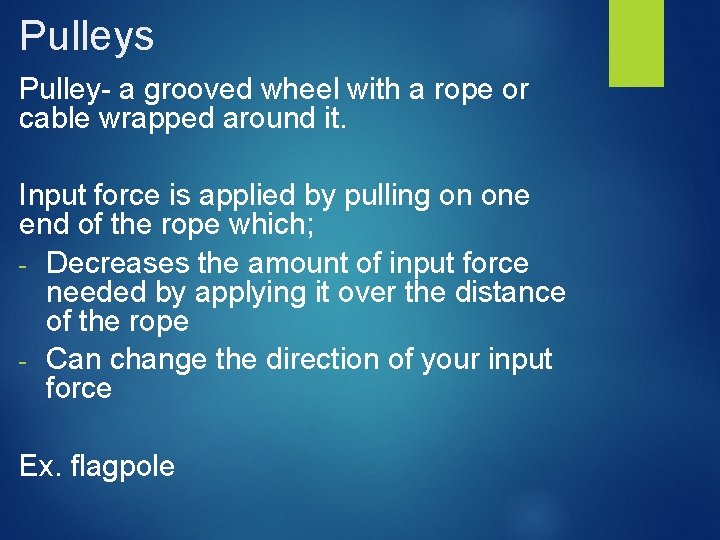
2 nd class levers Output force (object) is between the fulcrum and the input force. Examples: wheelbarrow, stapler, nail clippers M. A. = greater than 1
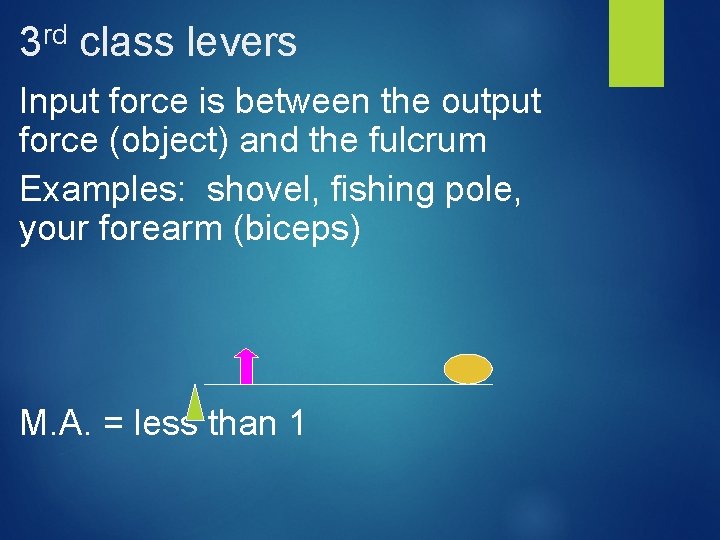
rd 3 class levers Input force is between the output force (object) and the fulcrum Examples: shovel, fishing pole, your forearm (biceps) M. A. = less than 1
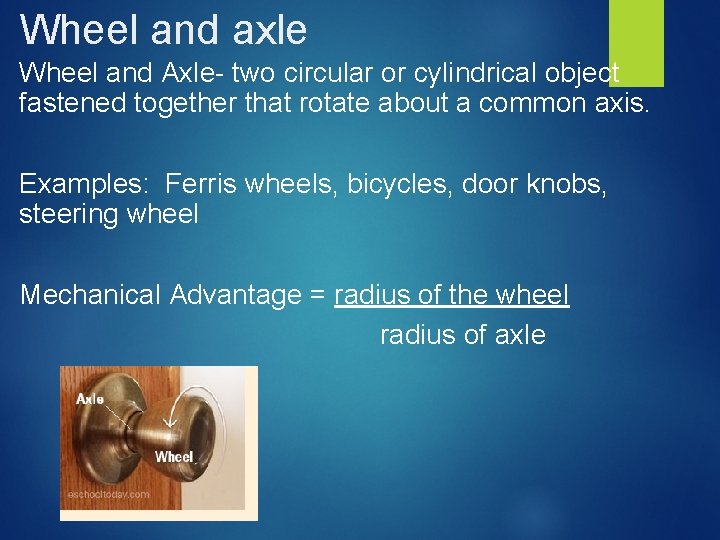
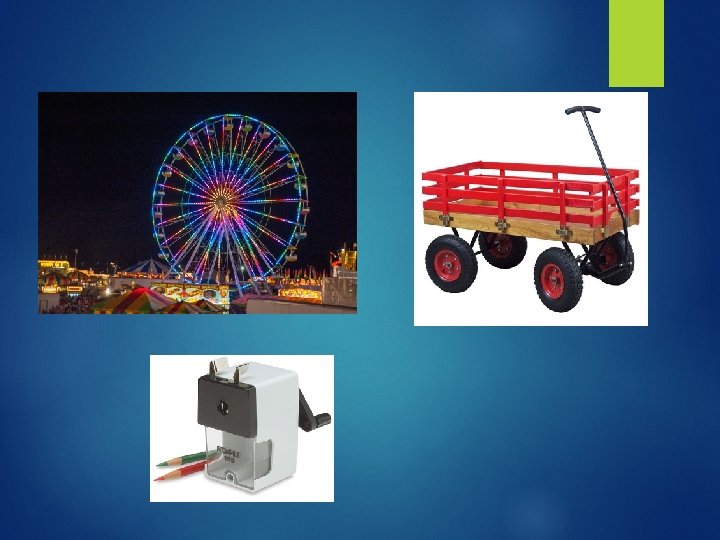
Wheel and axle Wheel and Axle- two circular or cylindrical object fastened together that rotate about a common axis. Examples: Ferris wheels, bicycles, door knobs, steering wheel Mechanical Advantage = radius of the wheel radius of axle
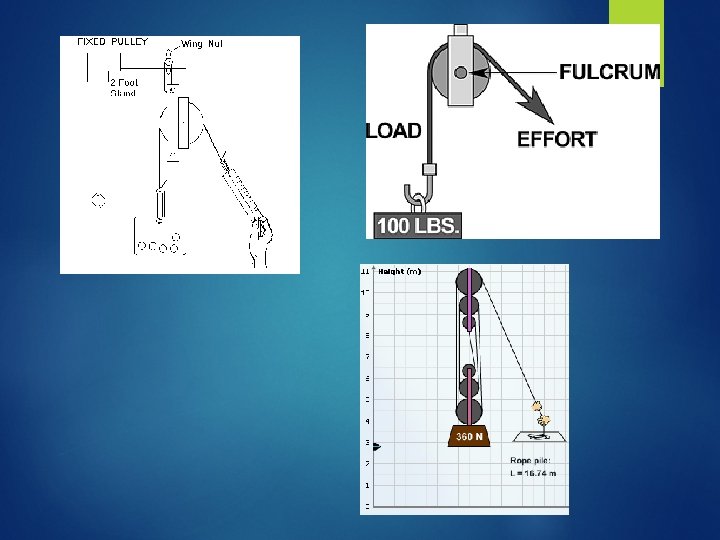
Pulleys Pulley- a grooved wheel with a rope or cable wrapped around it. Input force is applied by pulling on one end of the rope which; - Decreases the amount of input force needed by applying it over the distance of the rope - Can change the direction of your input force Ex. flagpole
Types of Pulleys Fixed pulley – a pulley attached to a stationary structure; only changes direction of the force Mechanical Advantage = 1 Movable pulley – multiplies input force, but does not change direction Mechanical Advantage greater than 1 Block and Tackle – system made up of fixed and moveable pulleys
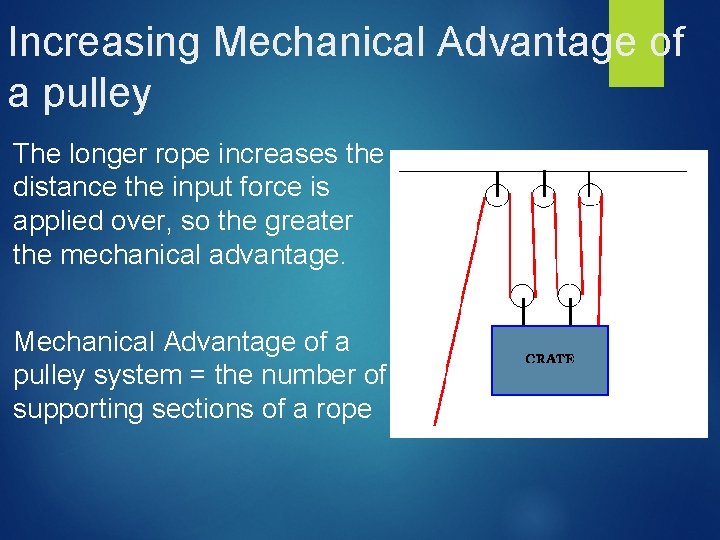
Increasing Mechanical Advantage of a pulley The longer rope increases the distance the input force is applied over, so the greater the mechanical advantage. Mechanical Advantage of a pulley system = the number of supporting sections of a rope
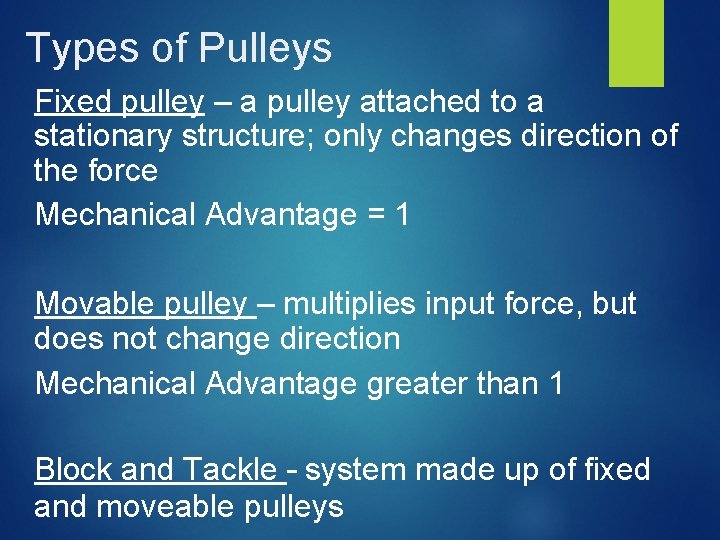
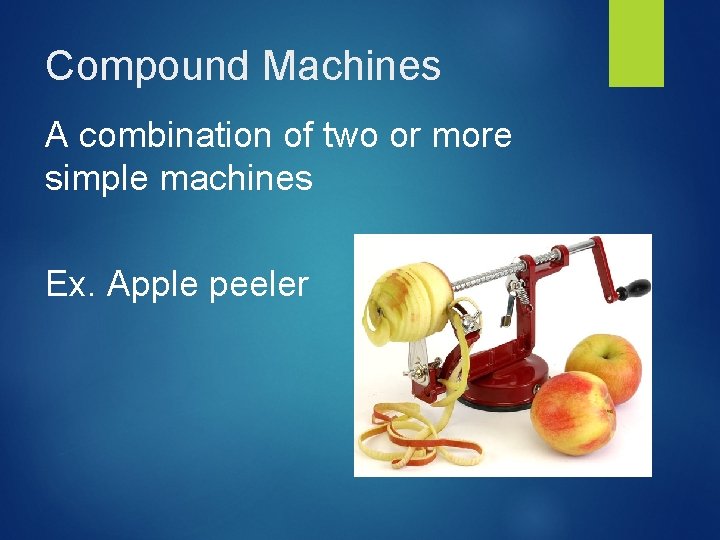
Compound Machines A combination of two or more simple machines Ex. Apple peeler