
SIMPLE MACHINES Chapter 9 INCLINED PLANES Inclined Plane
- Slides: 20
SIMPLE MACHINES Chapter 9
INCLINED PLANES
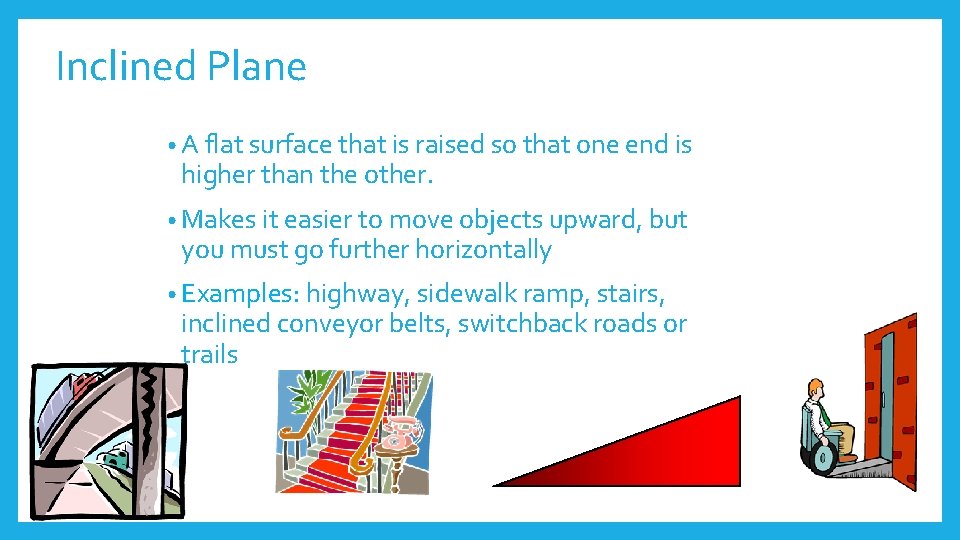
Inclined Plane • A flat surface that is raised so that one end is higher than the other. • Makes it easier to move objects upward, but you must go further horizontally • Examples: highway, sidewalk ramp, stairs, inclined conveyor belts, switchback roads or trails
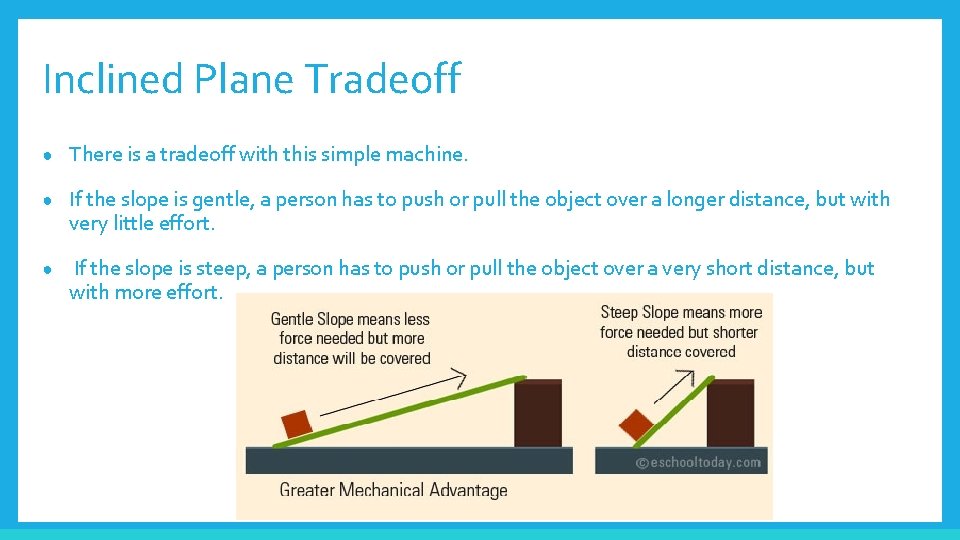
Inclined Plane Tradeoff ● There is a tradeoff with this simple machine. ● If the slope is gentle, a person has to push or pull the object over a longer distance, but with very little effort. ● If the slope is steep, a person has to push or pull the object over a very short distance, but with more effort.
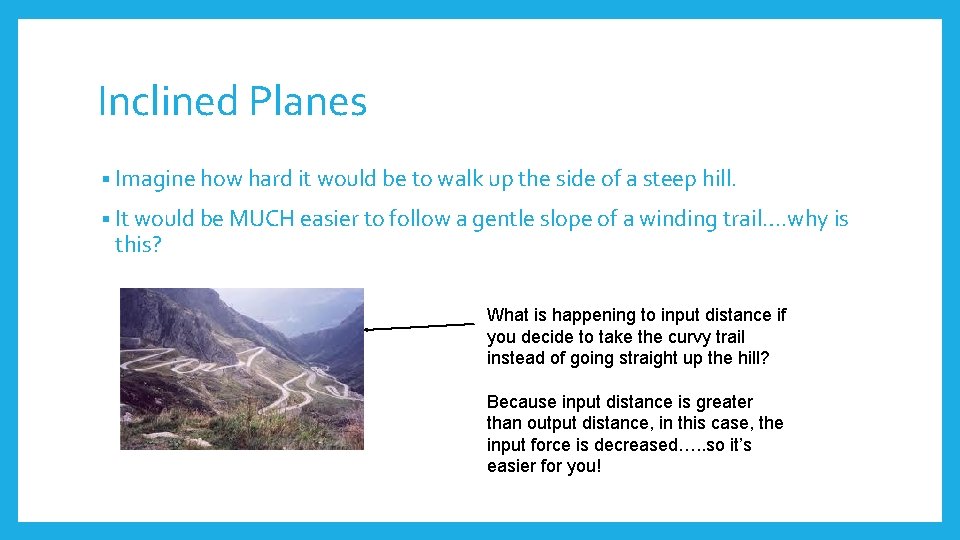
Inclined Planes § Imagine how hard it would be to walk up the side of a steep hill. § It would be MUCH easier to follow a gentle slope of a winding trail…. why is this? What is happening to input distance if you decide to take the curvy trail instead of going straight up the hill? Because input distance is greater than output distance, in this case, the input force is decreased…. . so it’s easier for you!
SCREW
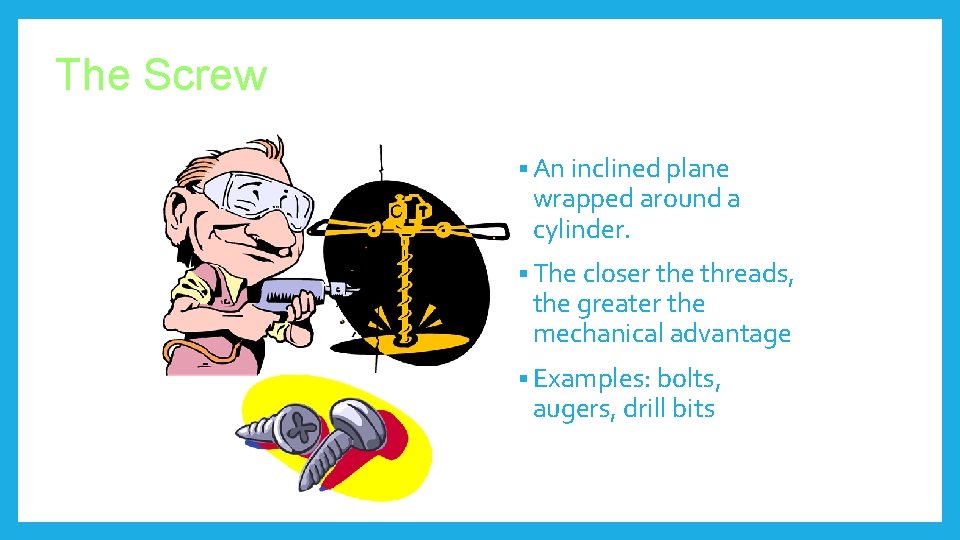
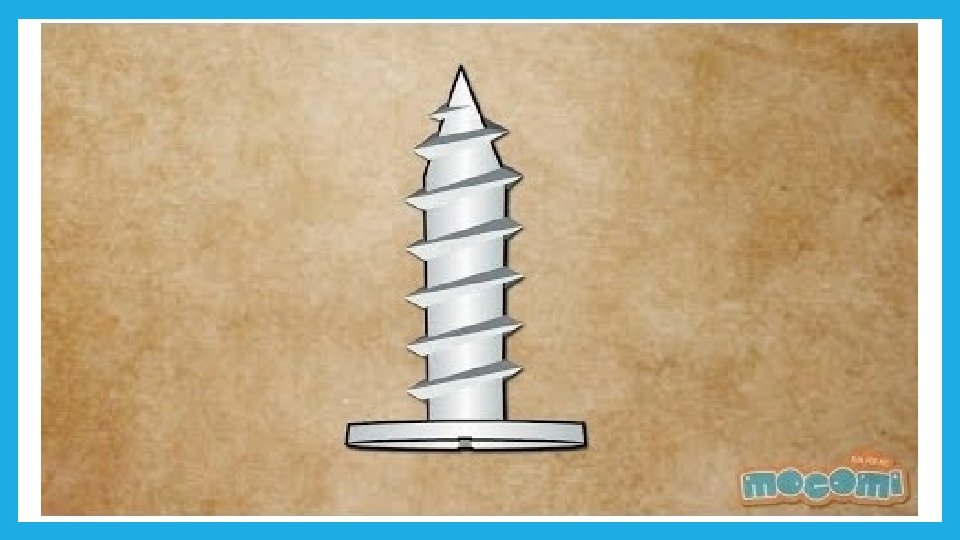
The Screw § An inclined plane wrapped around a cylinder. § The closer the threads, the greater the mechanical advantage § Examples: bolts, augers, drill bits
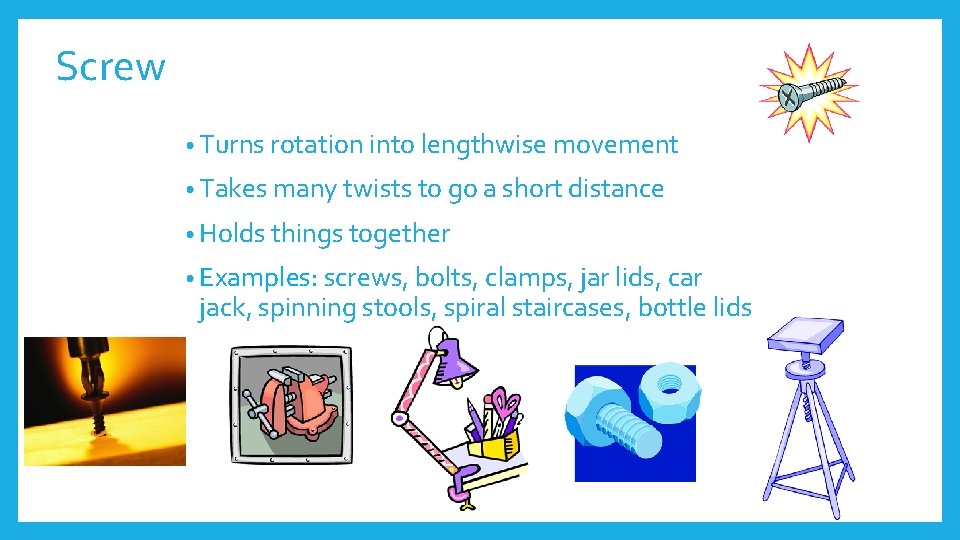
Screw • Turns rotation into lengthwise movement • Takes many twists to go a short distance • Holds things together • Examples: screws, bolts, clamps, jar lids, car jack, spinning stools, spiral staircases, bottle lids
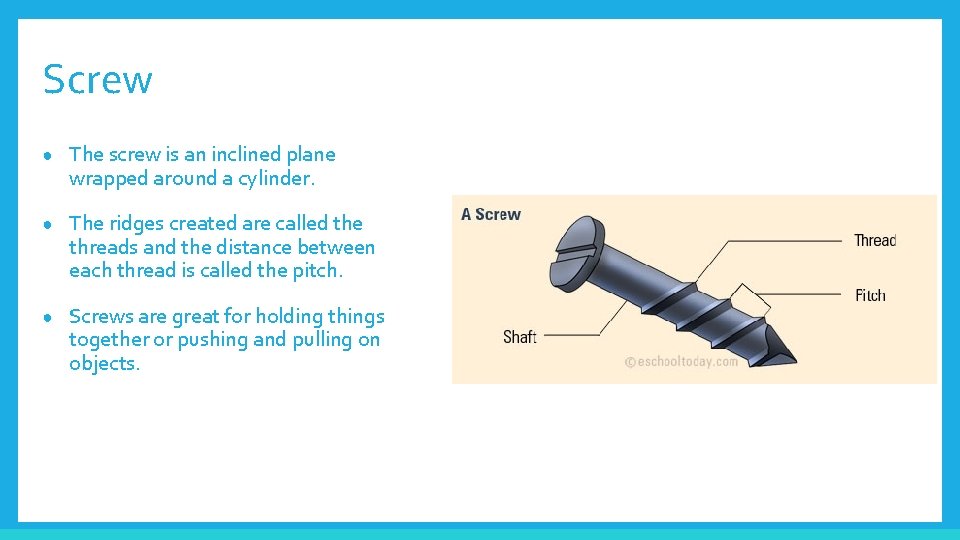
Screw ● The screw is an inclined plane wrapped around a cylinder. ● The ridges created are called the threads and the distance between each thread is called the pitch. ● Screws are great for holding things together or pushing and pulling on objects.
Screws Greatest Mechanical Advantage The Tradeoff Mechanical advantage depends on the space between the threads and the length (and thickness) of the screw. The closer the threads are, the greater the mechanical advantage. It is easier to drive a screw into an object if the thread spacing is smaller. This takes less effort but more turns. If the spaces are wider, it is harder to drill the screw into an object. It takes more effort but fewer turns.
WEDGE
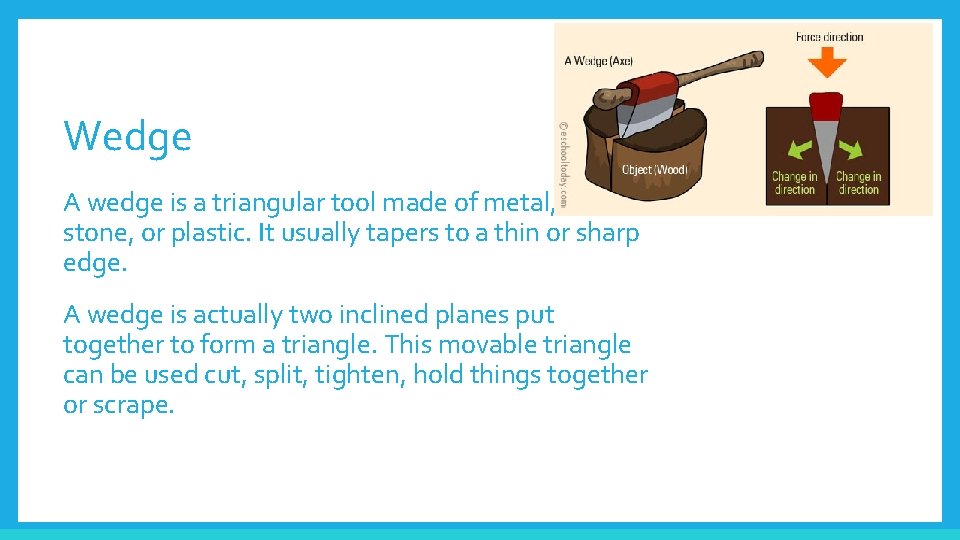
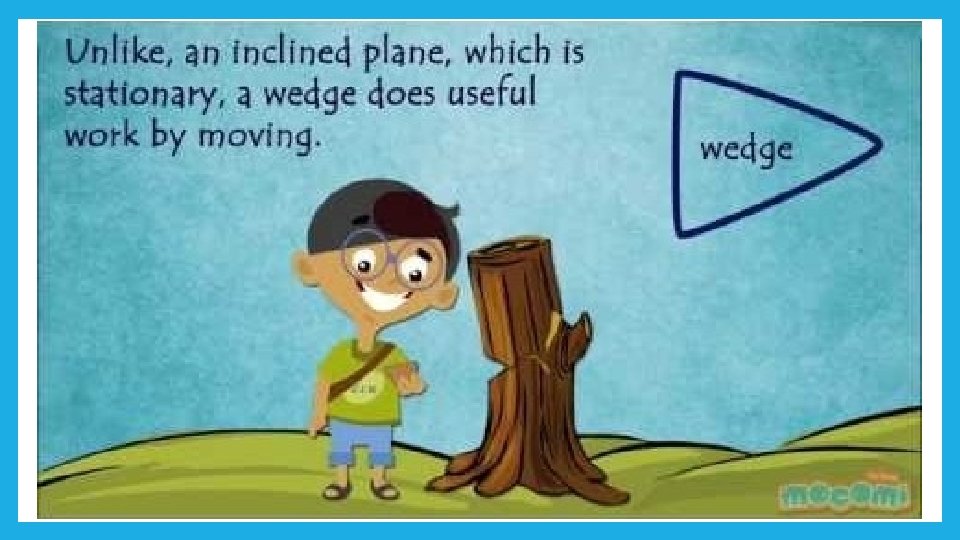
Wedge A wedge is a triangular tool made of metal, wood, stone, or plastic. It usually tapers to a thin or sharp edge. A wedge is actually two inclined planes put together to form a triangle. This movable triangle can be used cut, split, tighten, hold things together or scrape.
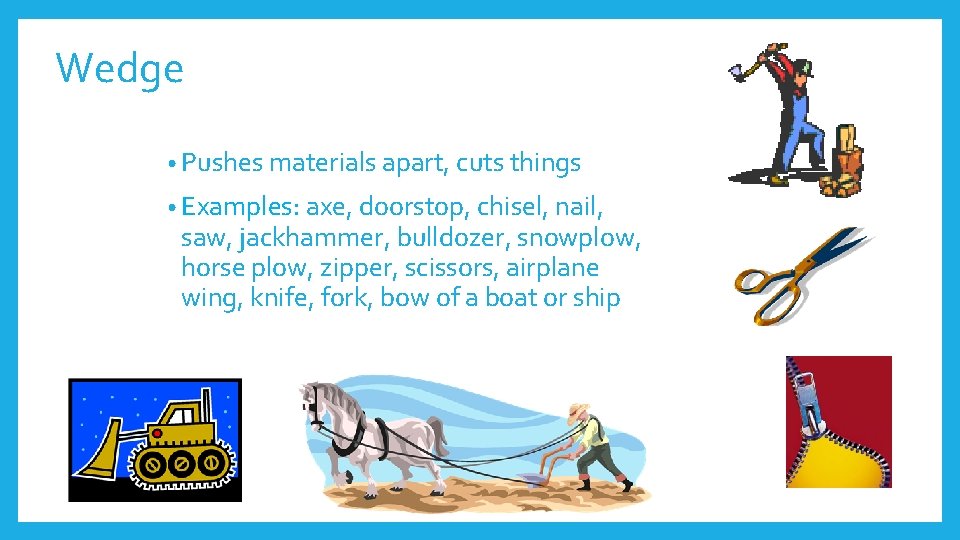
Wedge • Pushes materials apart, cuts things • Examples: axe, doorstop, chisel, nail, saw, jackhammer, bulldozer, snowplow, horse plow, zipper, scissors, airplane wing, knife, fork, bow of a boat or ship
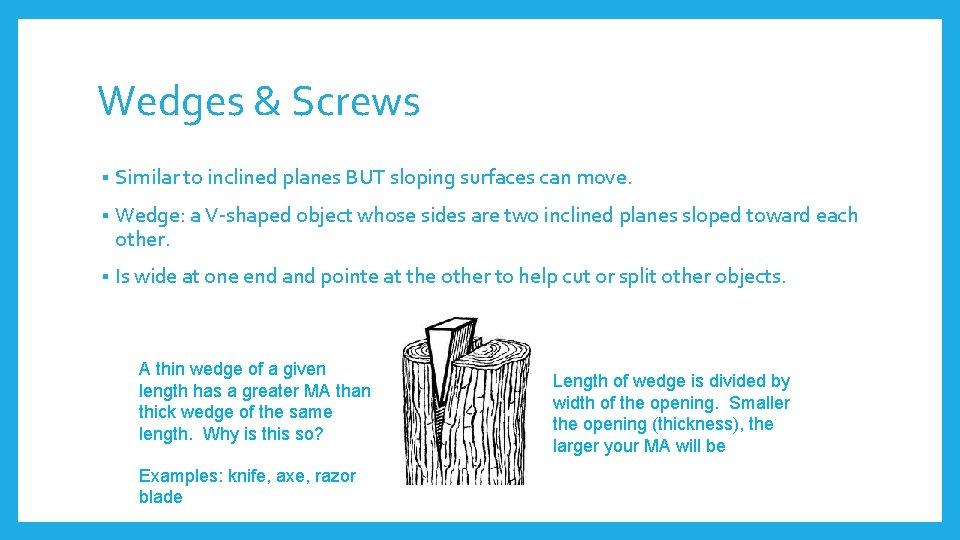
Wedges & Screws § Similar to inclined planes BUT sloping surfaces can move. § Wedge: a V-shaped object whose sides are two inclined planes sloped toward each other. § Is wide at one end and pointe at the other to help cut or split other objects. A thin wedge of a given length has a greater MA than thick wedge of the same length. Why is this so? Examples: knife, axe, razor blade Length of wedge is divided by width of the opening. Smaller the opening (thickness), the larger your MA will be
Wedges work by changing the direction and force applied to it. When force is directed into the thick edge of the wedge and driven downwards, the thin edge forces sideways the object. Tradeoff The longer and thinner a wedge is (sharper), the more work it does with little effort. If the wedge is shorter and has a wider angle at the tip, one needs more force to do the work.
THE END! • Next week we will finish simple machines with pulleys and wheel and axles.