
Simple Machines Chapter 8 Section 3 Essential Questions

- Slides: 16
Simple Machines Chapter 8 – Section 3
Essential Questions ® What are the six types of simple machines? ® What mechanical advantage is provided by each simple machine? ® What simple machines make up a compound machine?
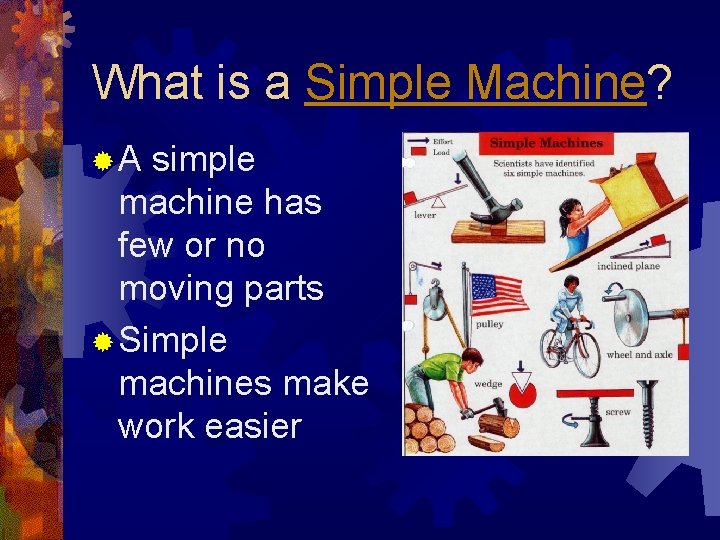
What is a Simple Machine? ®A simple machine has few or no moving parts ® Simple machines make work easier
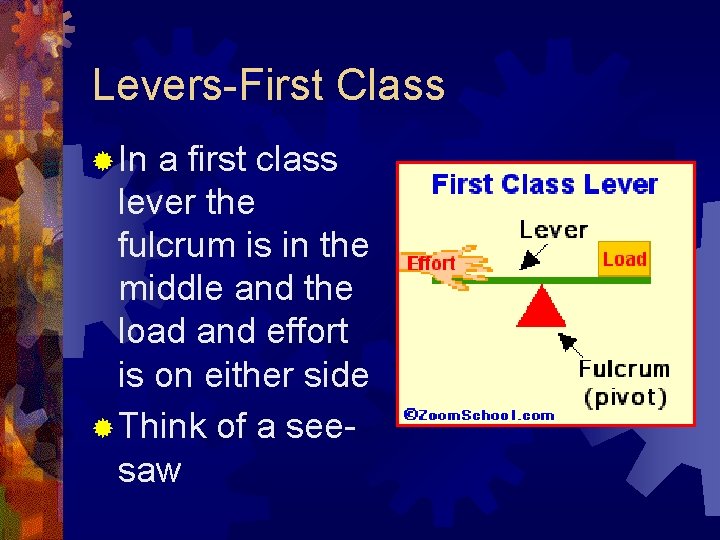
Levers-First Class ® In a first class lever the fulcrum is in the middle and the load and effort is on either side ® Think of a seesaw
Levers-Second Class ® In a second class lever the fulcrum is at the end, with the load in the middle ® Think of a wheelbarrow
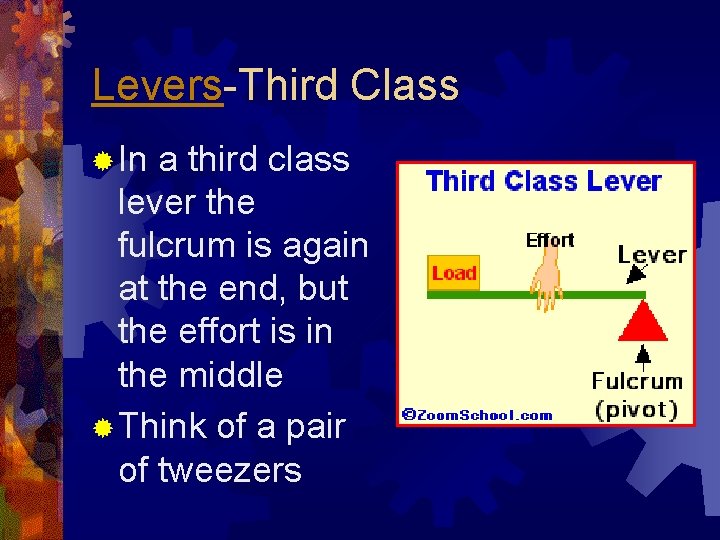
Levers-Third Class ® In a third class lever the fulcrum is again at the end, but the effort is in the middle ® Think of a pair of tweezers
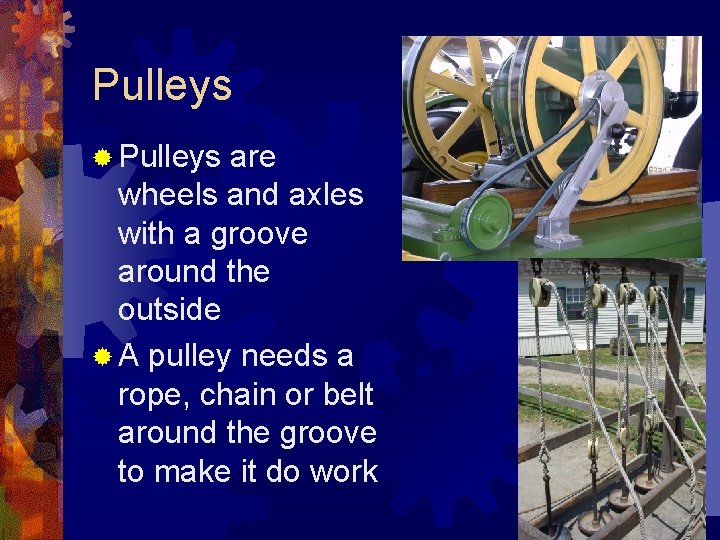
Pulleys ® Pulleys are wheels and axles with a groove around the outside ® A pulley needs a rope, chain or belt around the groove to make it do work
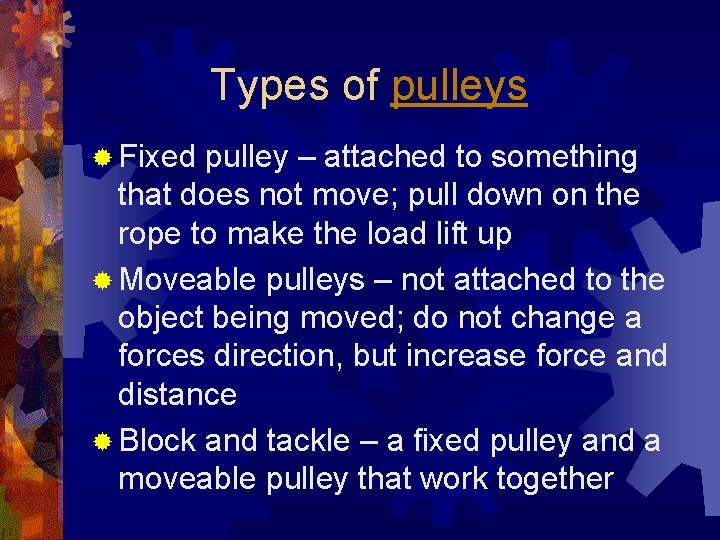
Types of pulleys ® Fixed pulley – attached to something that does not move; pull down on the rope to make the load lift up ® Moveable pulleys – not attached to the object being moved; do not change a forces direction, but increase force and distance ® Block and tackle – a fixed pulley and a moveable pulley that work together
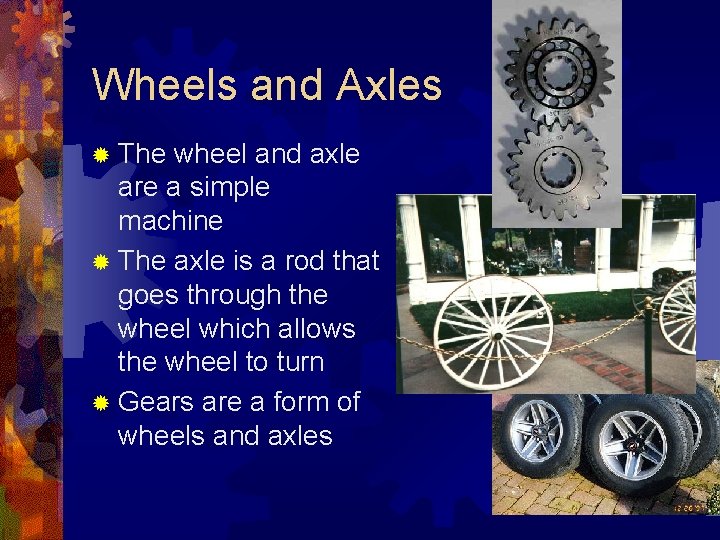
Wheels and Axles ® The wheel and axle are a simple machine ® The axle is a rod that goes through the wheel which allows the wheel to turn ® Gears are a form of wheels and axles
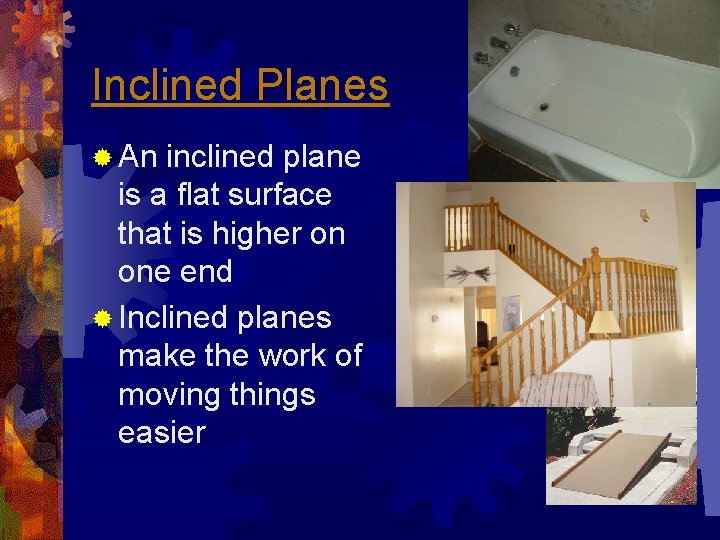
Inclined Planes ® An inclined plane is a flat surface that is higher on one end ® Inclined planes make the work of moving things easier
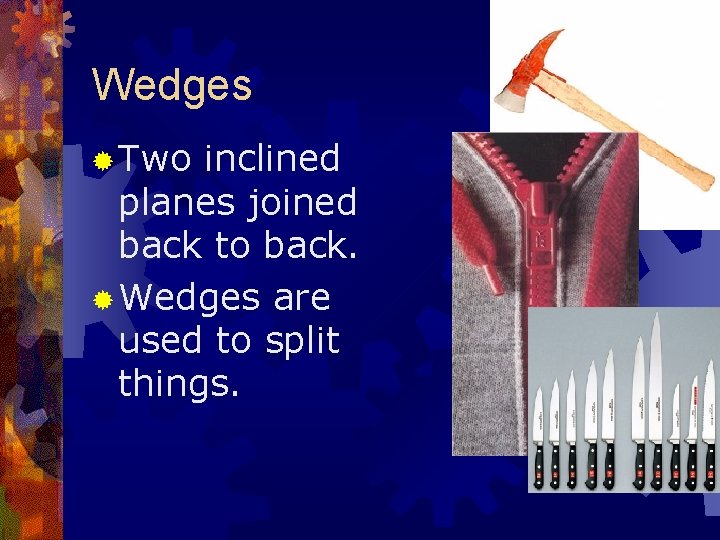
Wedges ® Two inclined planes joined back to back. ® Wedges are used to split things.
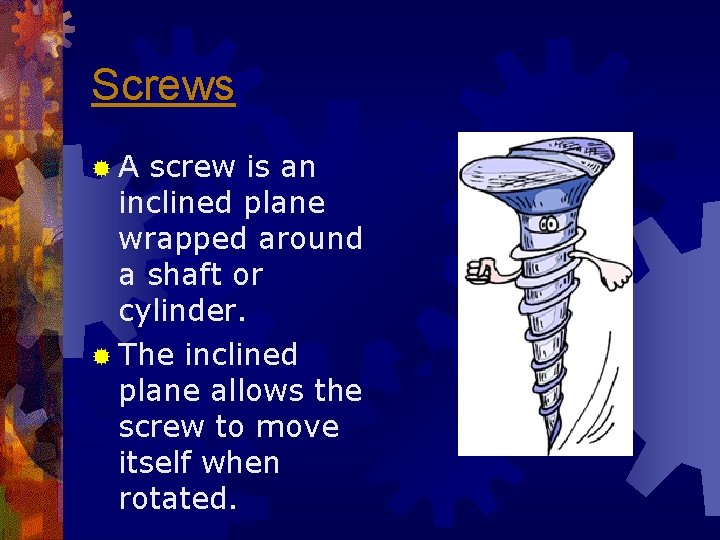
Screws ®A screw is an inclined plane wrapped around a shaft or cylinder. ® The inclined plane allows the screw to move itself when rotated.
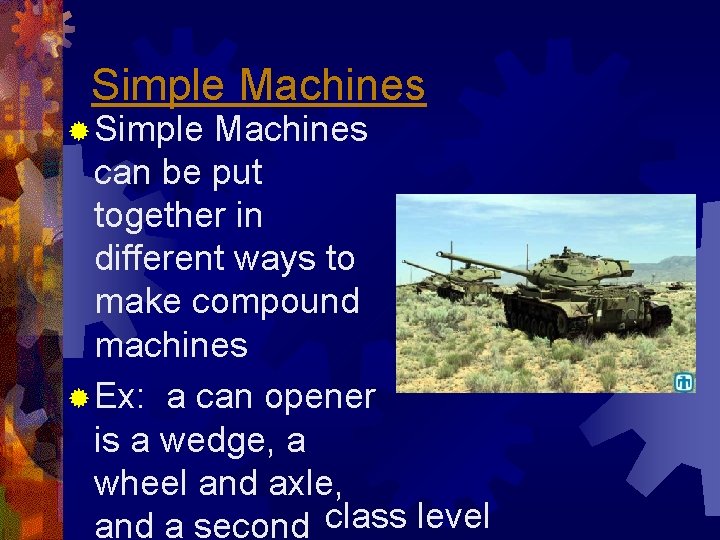
Simple Machines ® Simple Machines can be put together in different ways to make compound machines ® Ex: a can opener is a wedge, a wheel and axle, and a second class level
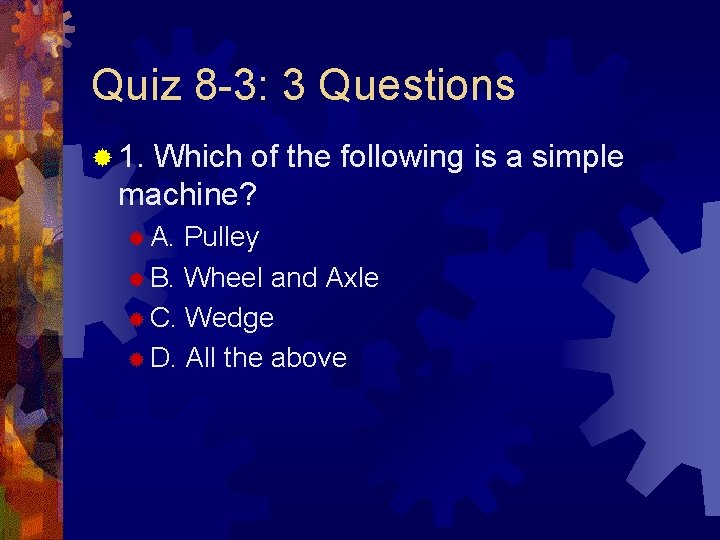
Quiz 8 -3: 3 Questions ® 1. Which of the following is a simple machine? ® A. Pulley ® B. Wheel and Axle ® C. Wedge ® D. All the above
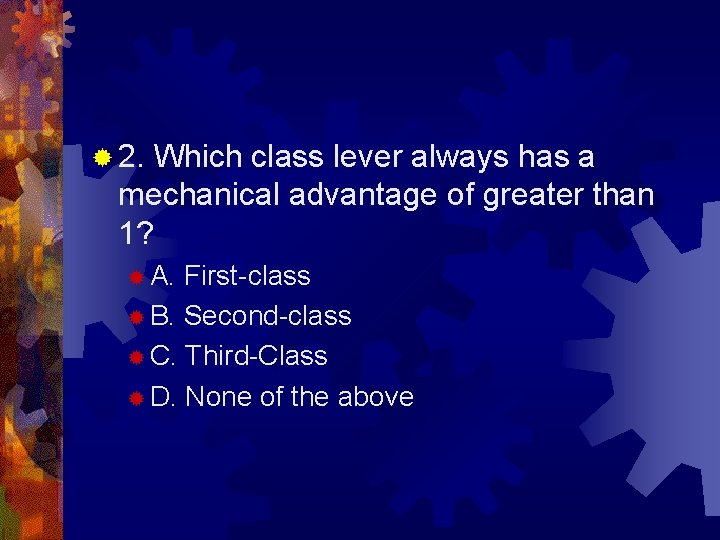
® 2. Which class lever always has a mechanical advantage of greater than 1? ® A. First-class ® B. Second-class ® C. Third-Class ® D. None of the above
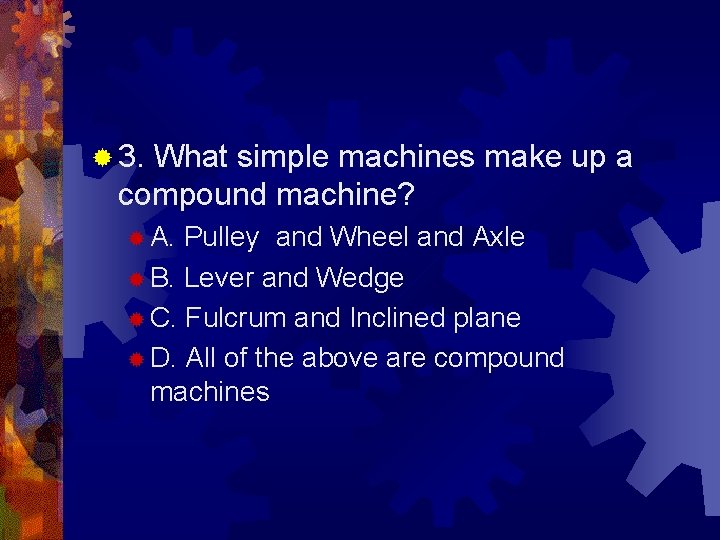
® 3. What simple machines make up a compound machine? ® A. Pulley and Wheel and Axle ® B. Lever and Wedge ® C. Fulcrum and Inclined plane ® D. All of the above are compound machines