
Simple Complex Compound Sentences MiniGrammar Unit I Dependent
- Slides: 14
Simple, Complex, & Compound Sentences Mini-Grammar Unit I
Dependent & Independent Clauses To distinguish between simple, complex, and compound sentences it is important to know what dependent and independent clauses are. Independent clause: Can stand on its own as a sentence. Example: Jim studied in the coffee shop for his chemistry quiz.
Dependent & Independent Clauses Dependent clauses: Cannot stand on its own as a sentence. Example: When Jim studied in the coffee shop for his chemistry quiz… (What happened when he studied? The thought is incomplete. )
Dependent Marker Word – A word added to the beginning of an independent clause that makes it into a dependent clause. Example: When Jim studied in the coffee shop for his chemistry quiz, it was very noisy.
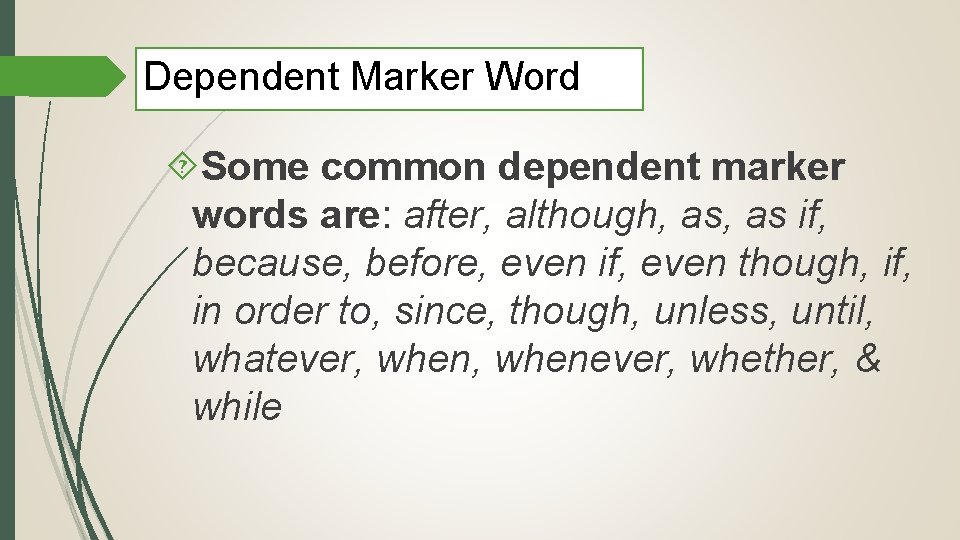
Dependent Marker Word Some common dependent marker words are: after, although, as if, because, before, even if, even though, if, in order to, since, though, unless, until, whatever, whenever, whether, & while
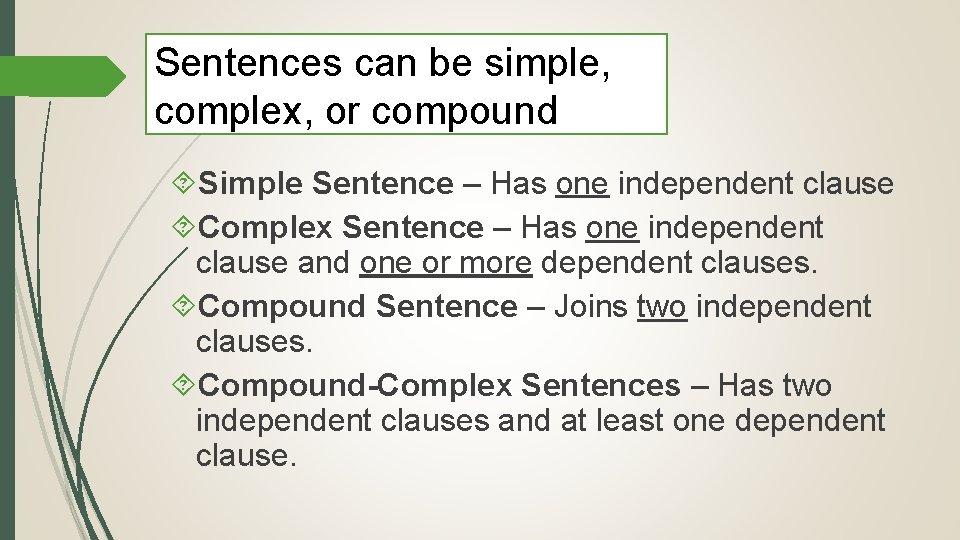
Sentences can be simple, complex, or compound Simple Sentence – Has one independent clause Complex Sentence – Has one independent clause and one or more dependent clauses. Compound Sentence – Joins two independent clauses. Compound-Complex Sentences – Has two independent clauses and at least one dependent clause.
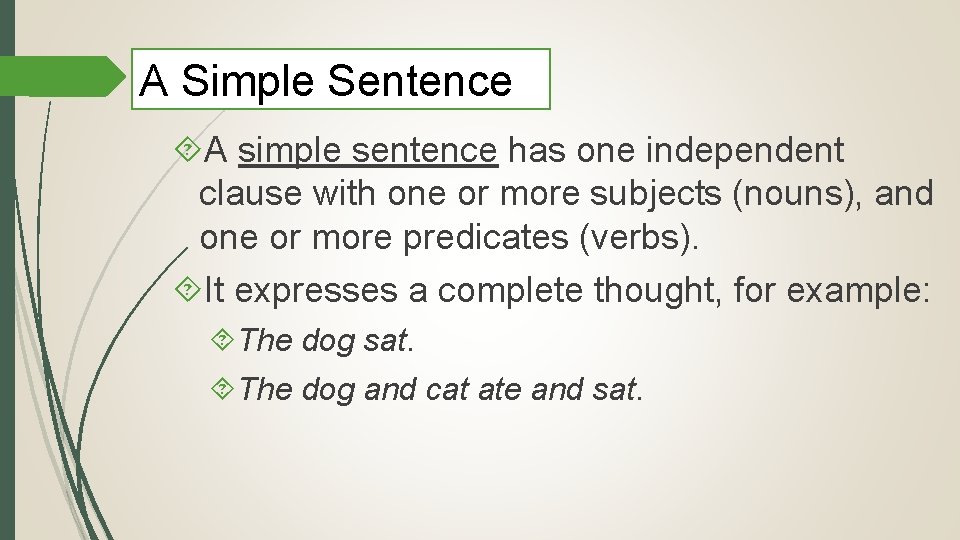
A Simple Sentence A simple sentence has one independent clause with one or more subjects (nouns), and one or more predicates (verbs). It expresses a complete thought, for example: The dog sat. The dog and cat ate and sat.
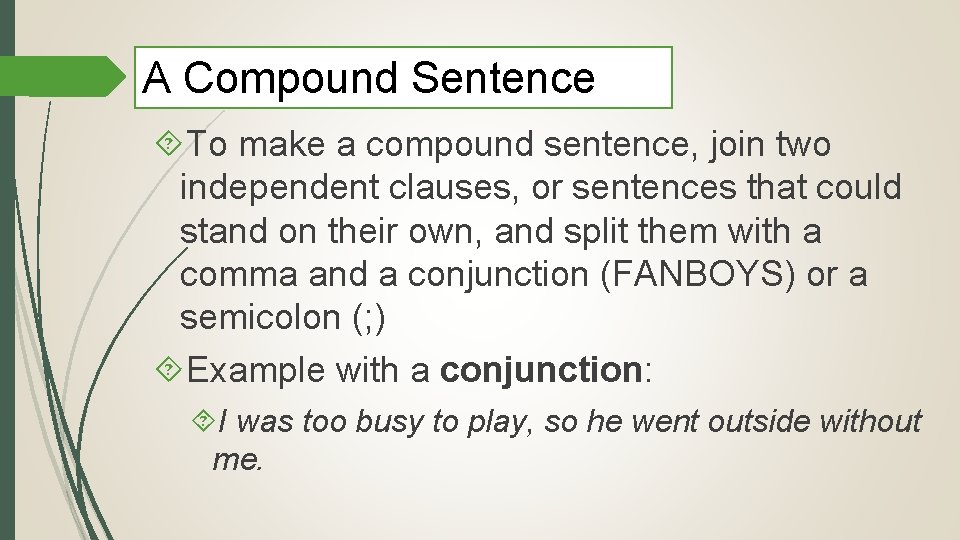
A Compound Sentence To make a compound sentence, join two independent clauses, or sentences that could stand on their own, and split them with a comma and a conjunction (FANBOYS) or a semicolon (; ) Example with a conjunction: I was too busy to play, so he went outside without me.
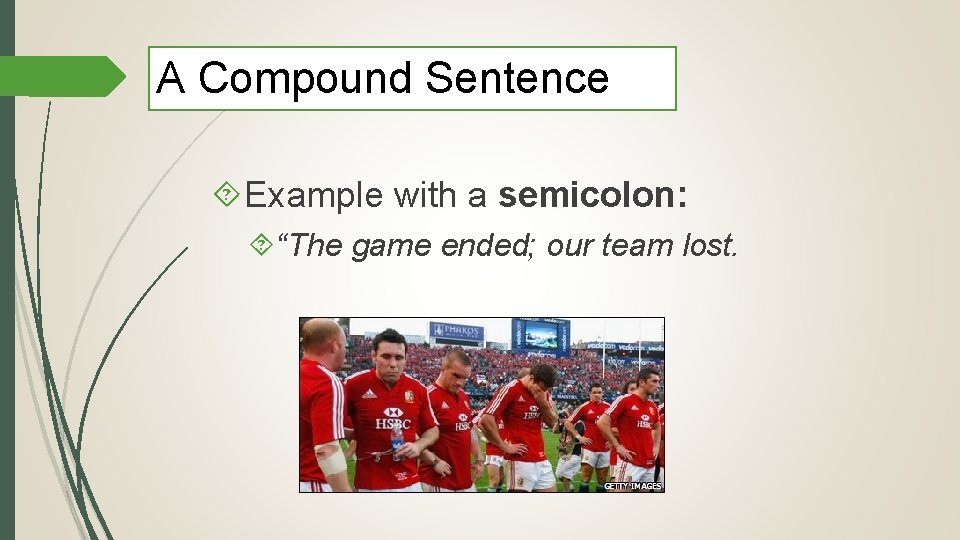
A Compound Sentence Example with a semicolon: “The game ended; our team lost.
A Complex Sentence Has one independent clause which can stand on its own as a sentence AND one or more dependent clauses which cannot stand on their own. A complex sentence always has a subordinator, e. g. as, because, since, after, although, when OR Relative pronouns, e. g. who, that, which
A Complex Sentence Example: When I walked downstairs, I had a big surprise. Which is the independent clause and which is the dependent clause? I had a big surprise… is the independent clause because it could stand on its own. When I walked down stairs… is the dependent clause because it is not a complete sentence on its own.
A Complex Sentence Here a couple more examples of complex sentences. Read each sentence and identify the independent and dependent clauses. 1. After the big storm destroyed the neighborhood, the neighbors helped pick up branches. 1. After the big storm destroyed the neighborhood (dependent clause), the neighbors helped pick up branches (independent clause).
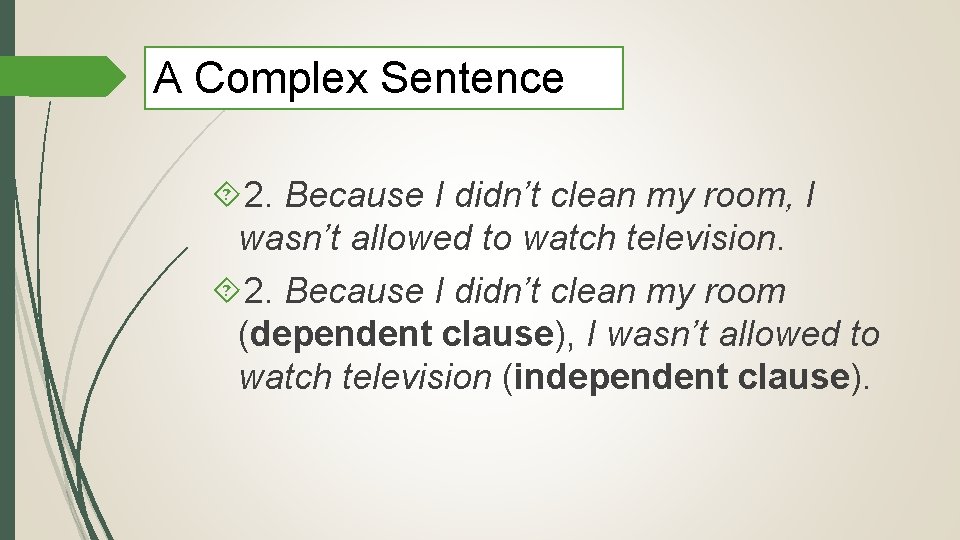
A Complex Sentence 2. Because I didn’t clean my room, I wasn’t allowed to watch television. 2. Because I didn’t clean my room (dependent clause), I wasn’t allowed to watch television (independent clause).
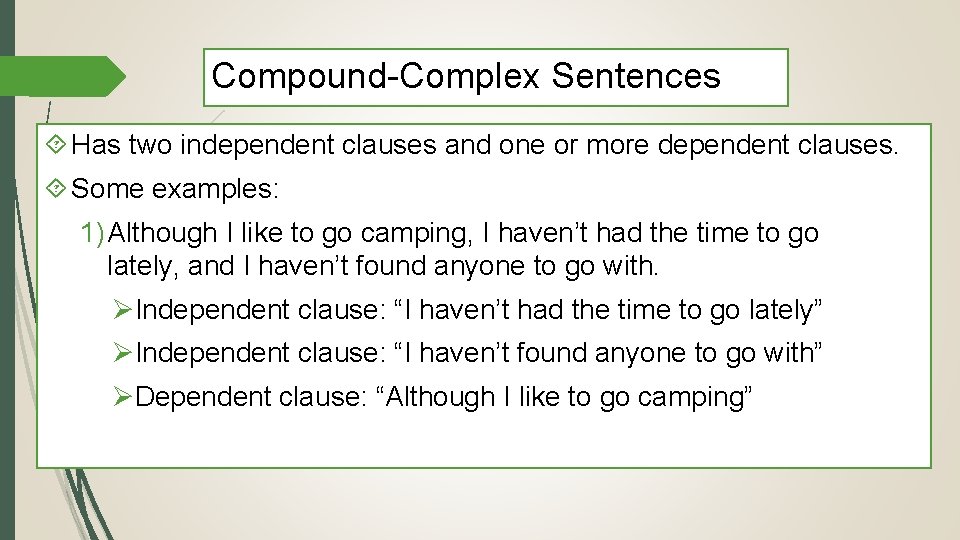
Compound-Complex Sentences Has two independent clauses and one or more dependent clauses. Some examples: 1) Although I like to go camping, I haven’t had the time to go lately, and I haven’t found anyone to go with. ØIndependent clause: “I haven’t had the time to go lately” ØIndependent clause: “I haven’t found anyone to go with” ØDependent clause: “Although I like to go camping”