
Simple body machines It include 1 Levers 2

Simple body machines It include: 1 - Levers. 2 - Pullys. 3 - Wheel and axle.
Why study a Simple Machine? ØSimple Machines make work easier by giving the user a mechanical advantage. ØThere are many examples of simple machines inside the body. ØSimple machines must be well known to determine the level of performance of athletic player. ØAs a result, it will help the biomechanists to improve the players’ performance
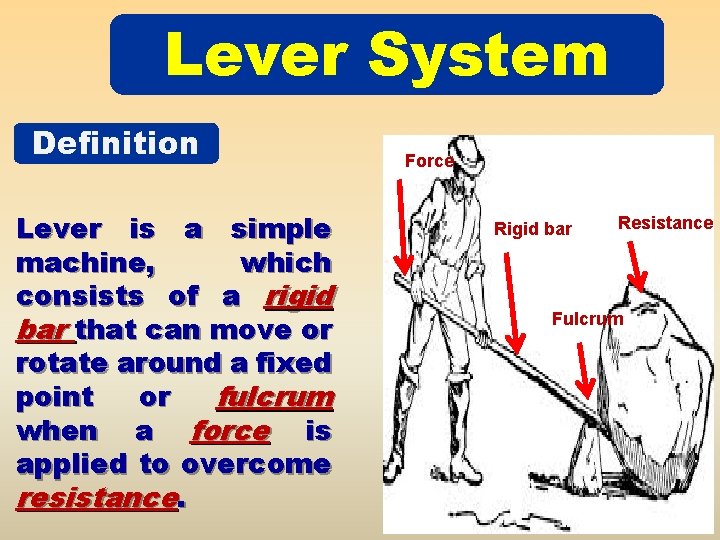
Lever System Definition Lever is a simple machine, which consists of a rigid bar that can move or rotate around a fixed point or fulcrum when a force is applied to overcome resistance. Force Rigid bar Resistance Fulcrum
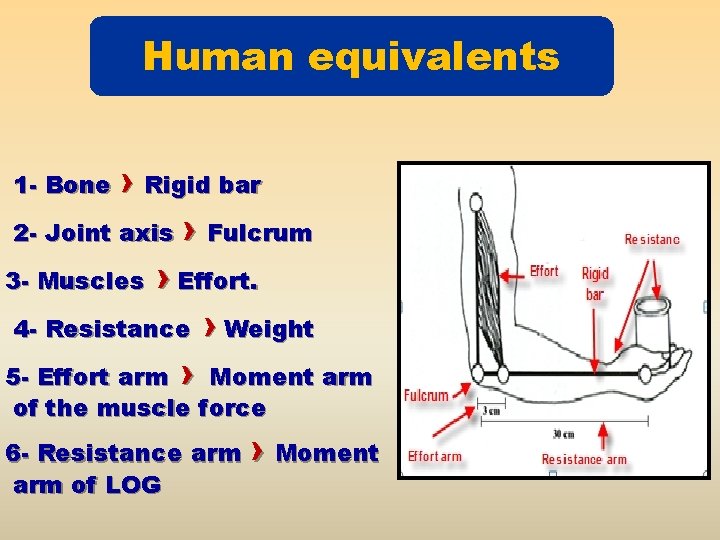
Human equivalents › Rigid bar 2 - Joint axis › Fulcrum 3 - Muscles › Effort. 4 - Resistance › Weight 5 - Effort arm › Moment arm 1 - Bone of the muscle force 6 - Resistance arm of LOG › Moment

Mechanical Advantage (MA) Definition It is the way to measure the efficiency of this machine that means the ability of the machine to magnify force or to increase the output in relation to the input. Mechanical advantage of the lever = Effort Arm Resistance Arm
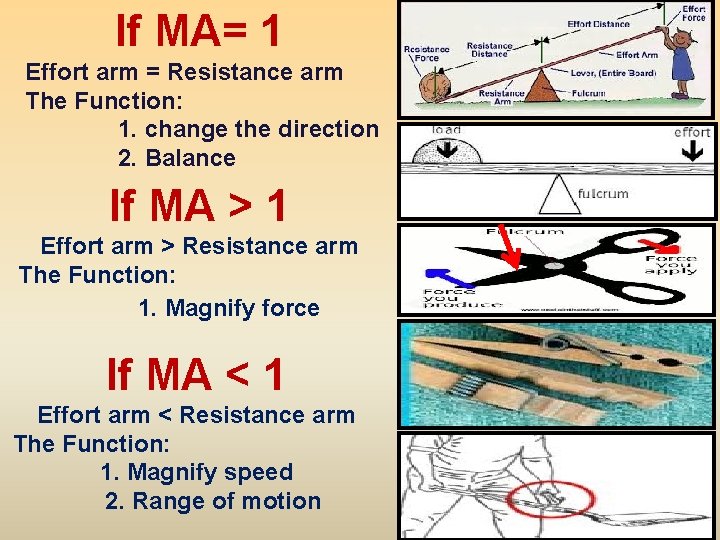
If MA= 1 Effort arm = Resistance arm The Function: 1. change the direction 2. Balance If MA ˃ 1 Effort arm ˃ Resistance arm The Function: 1. Magnify force If MA ˂ 1 Effort arm ˂ Resistance arm The Function: 1. Magnify speed 2. Range of motion
Classification of Lever 1. First class of lever 2. Second class of lever 3. Third class of lever
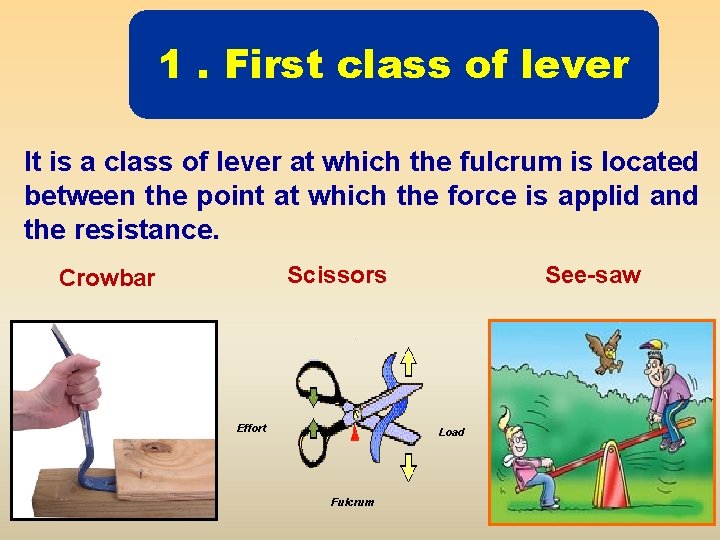
1. First class of lever It is a class of lever at which the fulcrum is located between the point at which the force is applid and the resistance. Scissors Crowbar Effort See-saw Load Fulcrum
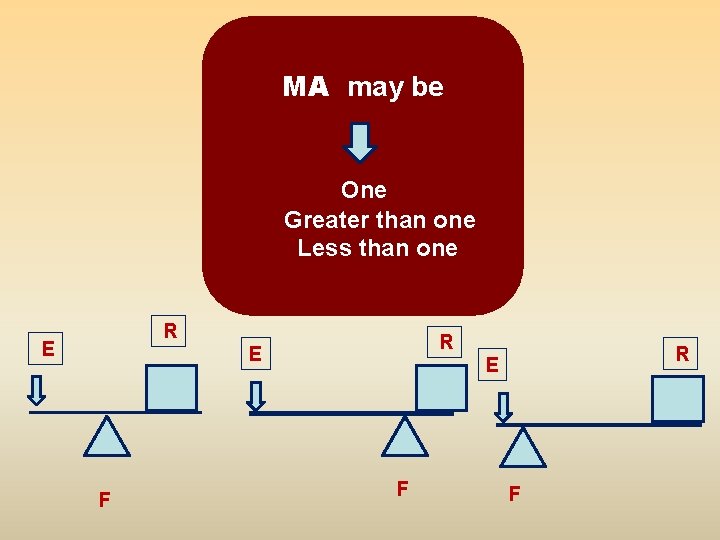
MA may be One Greater than one Less than one R E F F
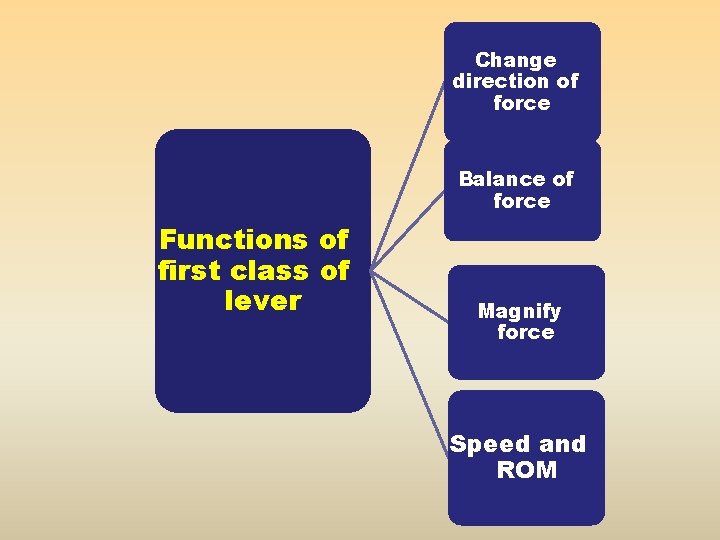
Change direction of force Balance of force Functions of first class of lever Magnify force Speed and ROM
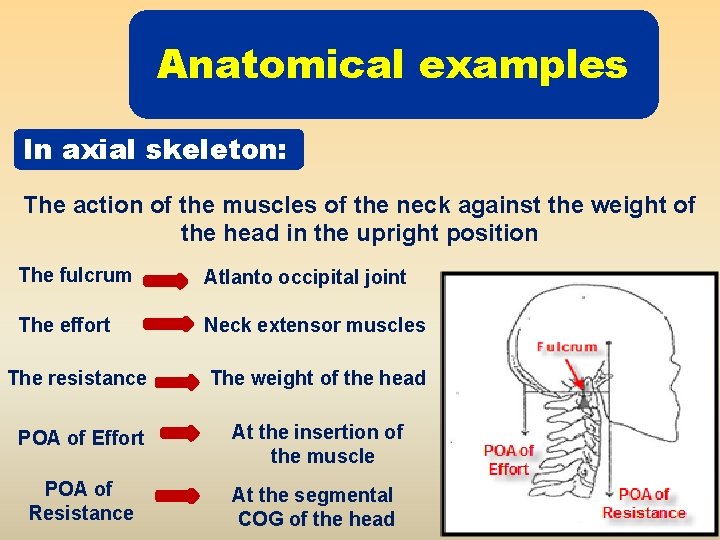
Anatomical examples In axial skeleton: The action of the muscles of the neck against the weight of the head in the upright position The fulcrum Atlanto occipital joint The effort Neck extensor muscles The resistance The weight of the head POA of Effort At the insertion of the muscle POA of Resistance At the segmental COG of the head
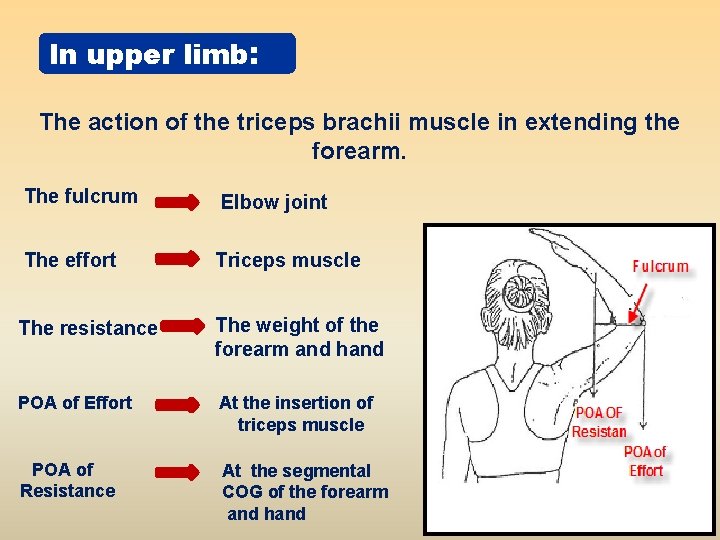
In upper limb: The action of the triceps brachii muscle in extending the forearm. The fulcrum Elbow joint The effort Triceps muscle The resistance The weight of the forearm and hand POA of Effort At the insertion of triceps muscle POA of Resistance At the segmental COG of the forearm and hand
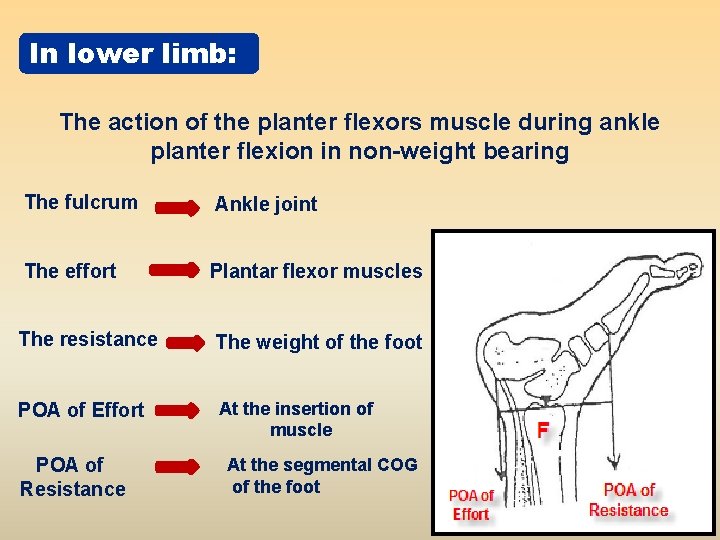
In lower limb: The action of the planter flexors muscle during ankle planter flexion in non-weight bearing The fulcrum Ankle joint The effort Plantar flexor muscles The resistance The weight of the foot POA of Effort At the insertion of muscle POA of Resistance At the segmental COG of the foot

Within the human body the action of agonists and antagonist muscle groups is considered first class of lever
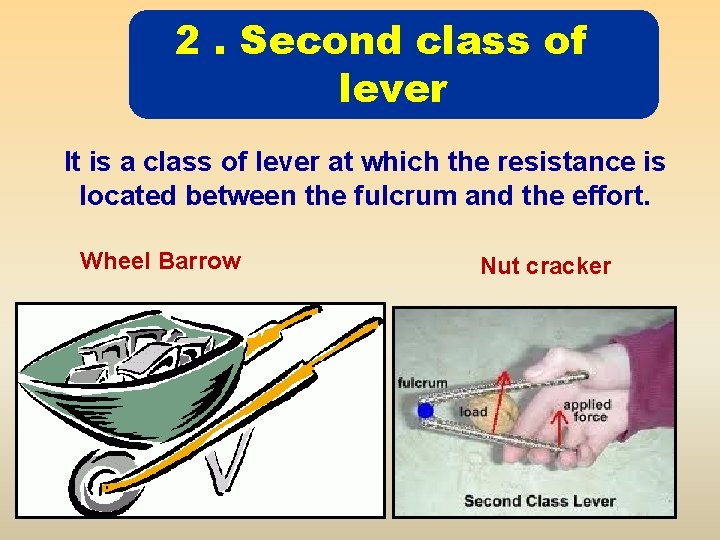
2. Second class of lever It is a class of lever at which the resistance is located between the fulcrum and the effort. Wheel Barrow Nut cracker
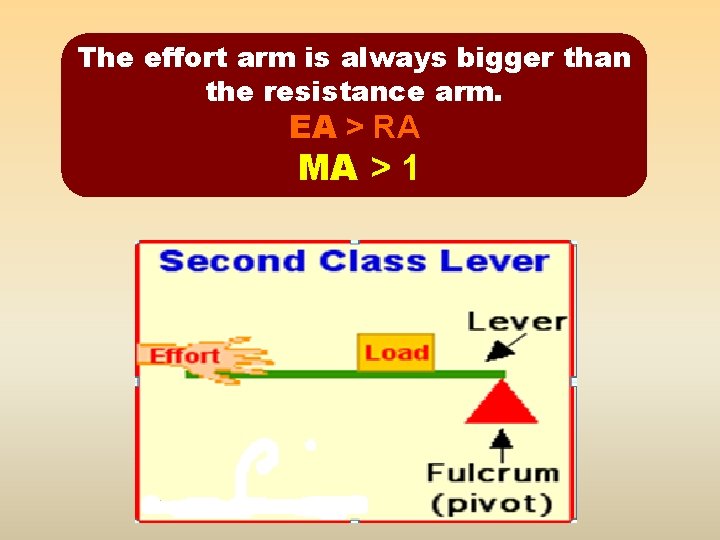
The effort arm is always bigger than the resistance arm. EA ˃ RA MA ˃ 1
Functions of second class of lever Magnify force Conserve energy
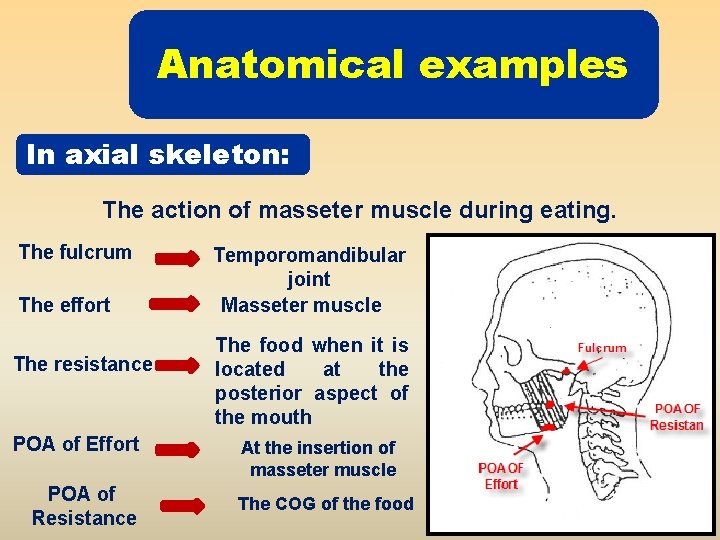
Anatomical examples In axial skeleton: The action of masseter muscle during eating. The fulcrum The effort The resistance POA of Effort POA of Resistance Temporomandibular joint Masseter muscle The food when it is located at the posterior aspect of the mouth At the insertion of masseter muscle The COG of the food
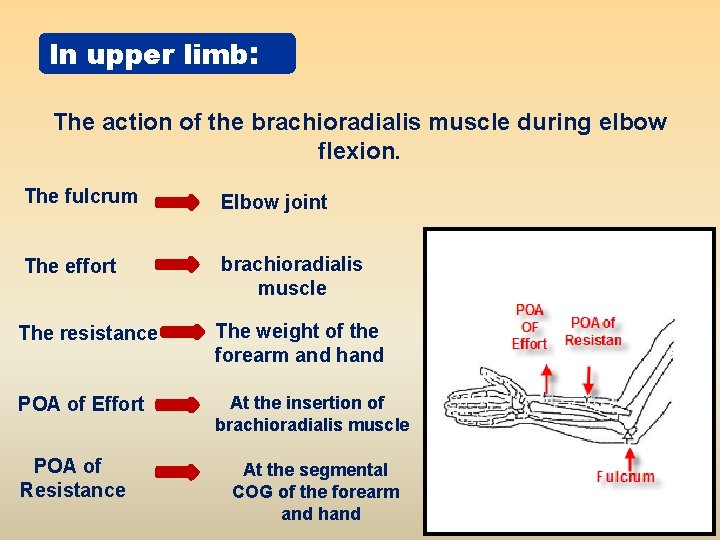
In upper limb: The action of the brachioradialis muscle during elbow flexion. The fulcrum Elbow joint The effort brachioradialis muscle The resistance The weight of the forearm and hand POA of Effort At the insertion of brachioradialis muscle POA of Resistance At the segmental COG of the forearm and hand
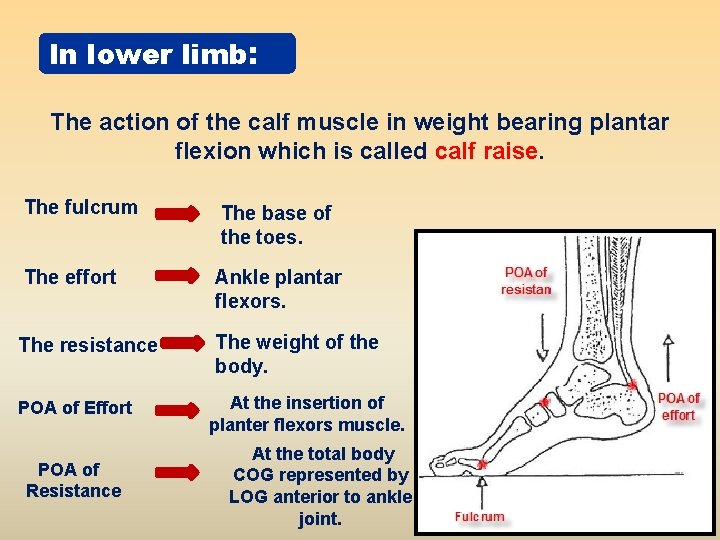
In lower limb: The action of the calf muscle in weight bearing plantar flexion which is called calf raise. The fulcrum The base of the toes. The effort Ankle plantar flexors. The resistance The weight of the body. POA of Effort POA of Resistance At the insertion of planter flexors muscle. At the total body COG represented by LOG anterior to ankle joint.
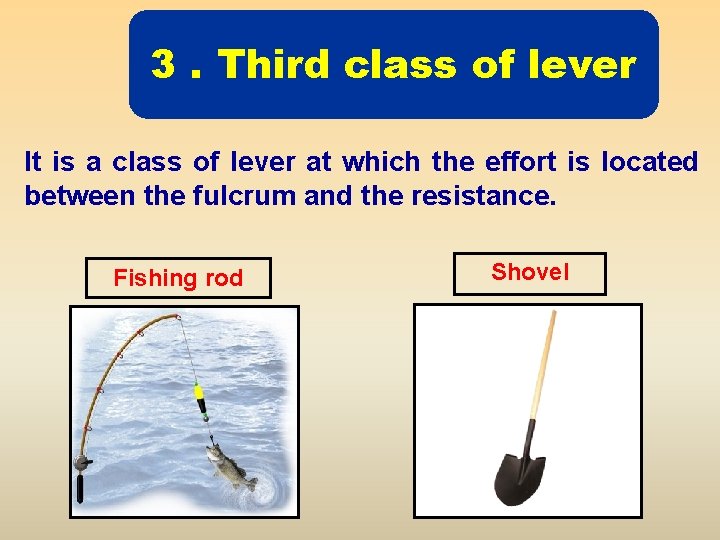
3. Third class of lever It is a class of lever at which the effort is located between the fulcrum and the resistance. Fishing rod Shovel
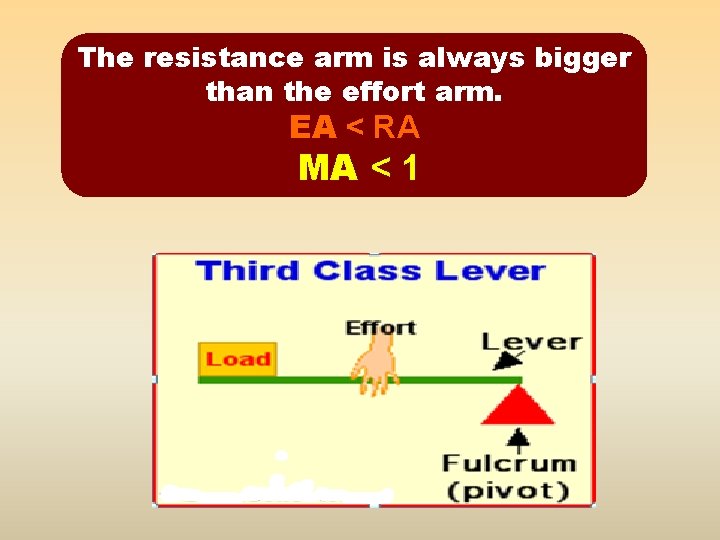
The resistance arm is always bigger than the effort arm. EA ˂ RA MA ˂ 1
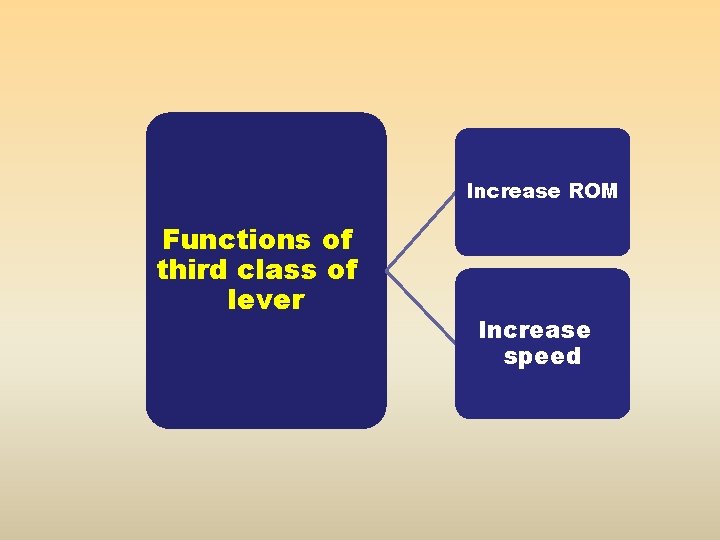
Increase ROM Functions of third class of lever Increase speed
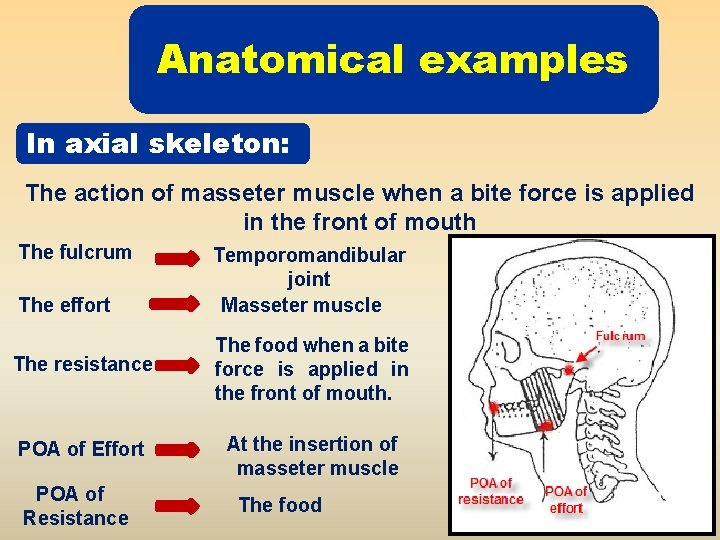
Anatomical examples In axial skeleton: The action of masseter muscle when a bite force is applied in the front of mouth The fulcrum The effort Temporomandibular joint Masseter muscle The resistance The food when a bite force is applied in the front of mouth. POA of Effort At the insertion of masseter muscle POA of Resistance The food
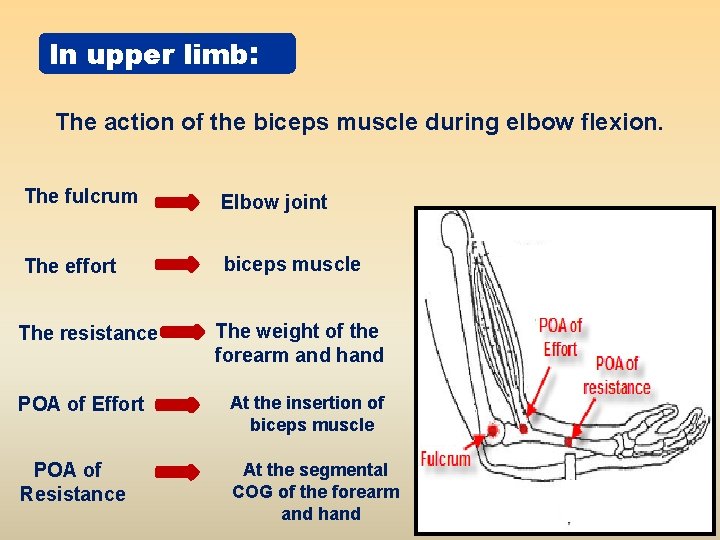
In upper limb: The action of the biceps muscle during elbow flexion. The fulcrum Elbow joint The effort biceps muscle The resistance The weight of the forearm and hand POA of Effort At the insertion of biceps muscle POA of Resistance At the segmental COG of the forearm and hand
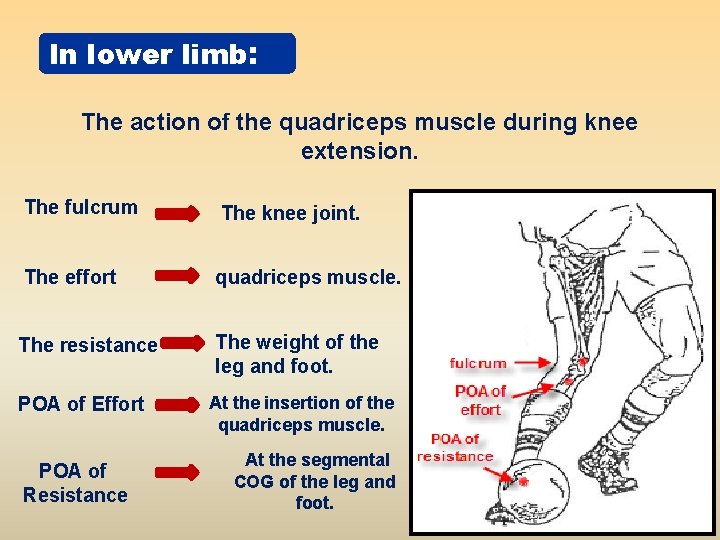
In lower limb: The action of the quadriceps muscle during knee extension. The fulcrum The knee joint. The effort quadriceps muscle. The resistance The weight of the leg and foot. POA of Effort POA of Resistance At the insertion of the quadriceps muscle. At the segmental COG of the leg and foot.
The class of lever involved in most of sports activities is third one, as these activities require great speed and RON. For example : in tennis players and football players.
For example: ØThrowing a ball involves levers shoulder, elbow, & wrist joints at Ø The longer the lever, the more effective it is in imparting velocity ØA tennis player can hit a tennis ball harder with a straight-arm drive than with a bent elbow because the lever (including the racket) is longer & moves at a faster speed
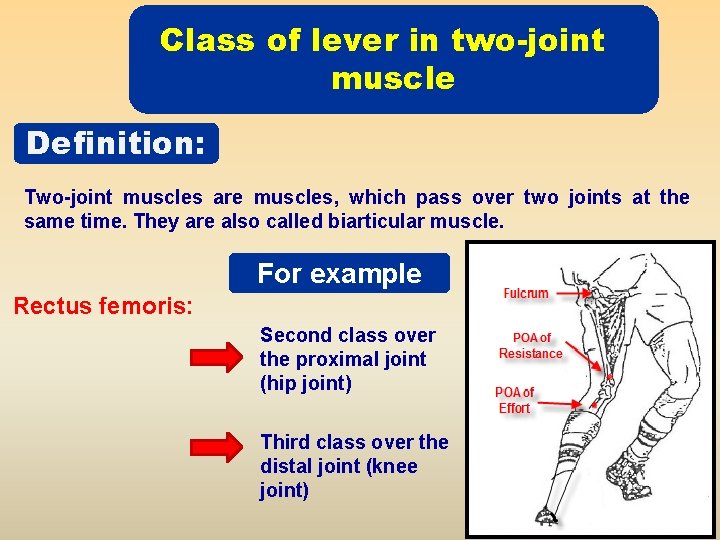
Class of lever in two-joint muscle Definition: Two-joint muscles are muscles, which pass over two joints at the same time. They are also called biarticular muscle. For example Rectus femoris: Second class over the proximal joint (hip joint) Third class over the distal joint (knee joint)
Remember A mechanical advantage less than one doesn’t mean a machine isn’t useful. It just means that instead of multiplying force, the machine multiplies distance.
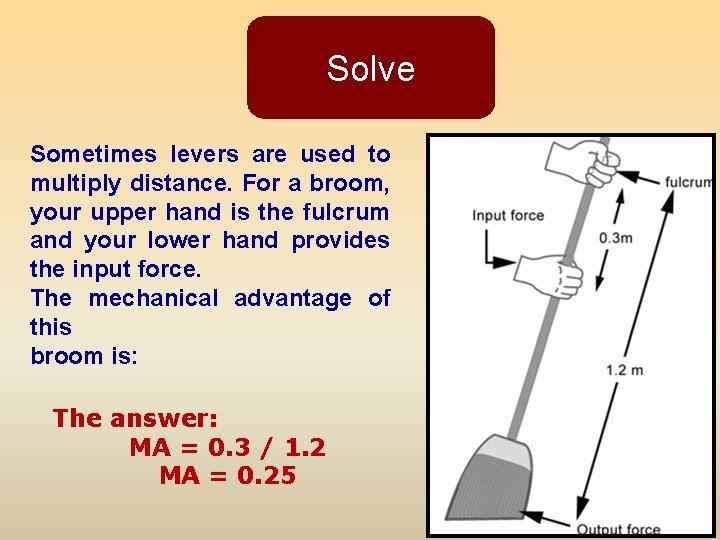
Solve Sometimes levers are used to multiply distance. For a broom, your upper hand is the fulcrum and your lower hand provides the input force. The mechanical advantage of this broom is: The answer: MA = 0. 3 / 1. 2 MA = 0. 25
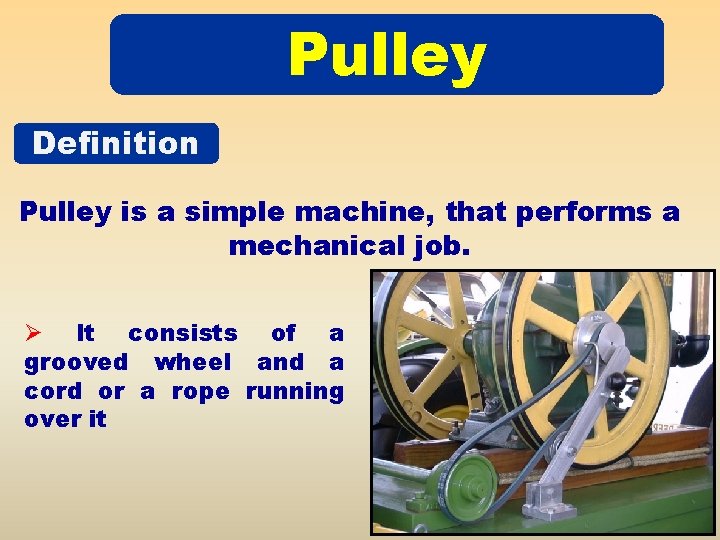
Pulley Definition Pulley is a simple machine, that performs a mechanical job. Ø It consists of a grooved wheel and a cord or a rope running over it
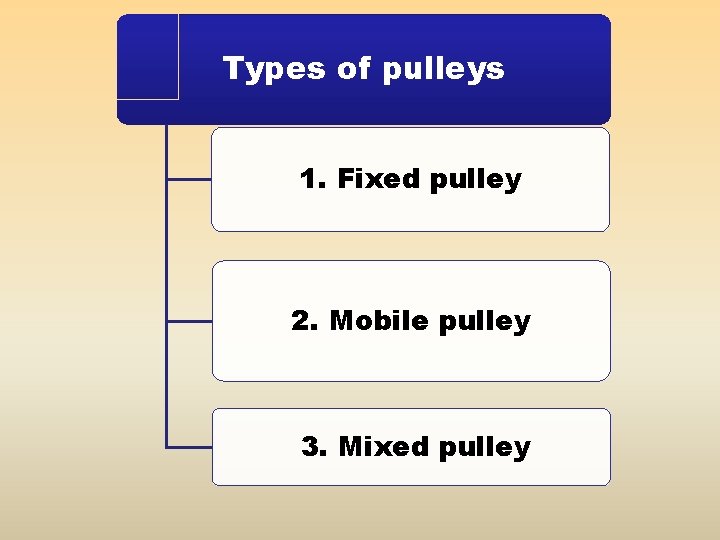
Types of pulleys 1. Fixed pulley 2. Mobile pulley 3. Mixed pulley
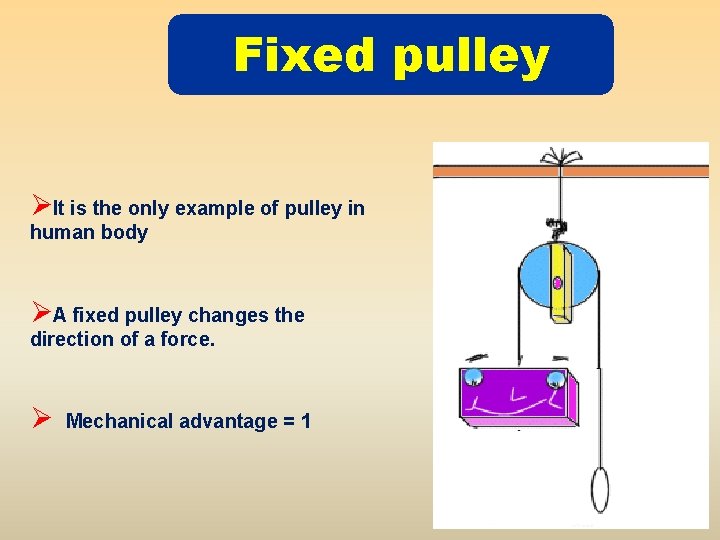
Fixed pulley ØIt is the only example of pulley in human body ØA fixed pulley changes the direction of a force. Ø Mechanical advantage = 1
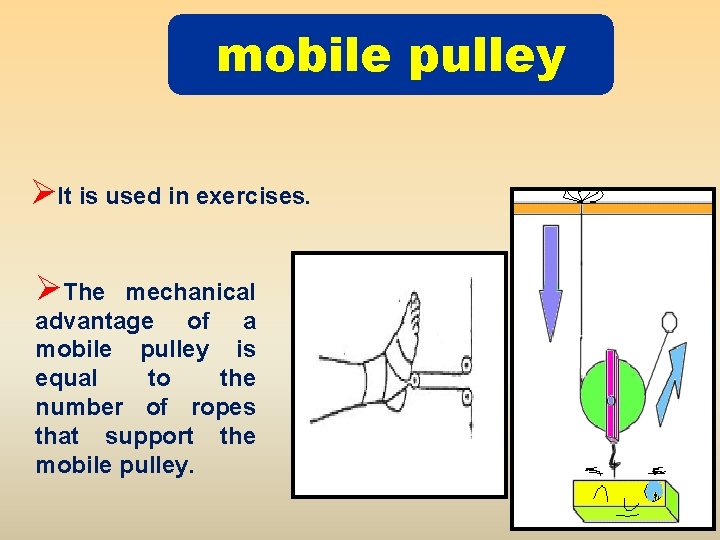
mobile pulley ØIt is used in exercises. ØThe mechanical advantage of a mobile pulley is equal to the number of ropes that support the mobile pulley.
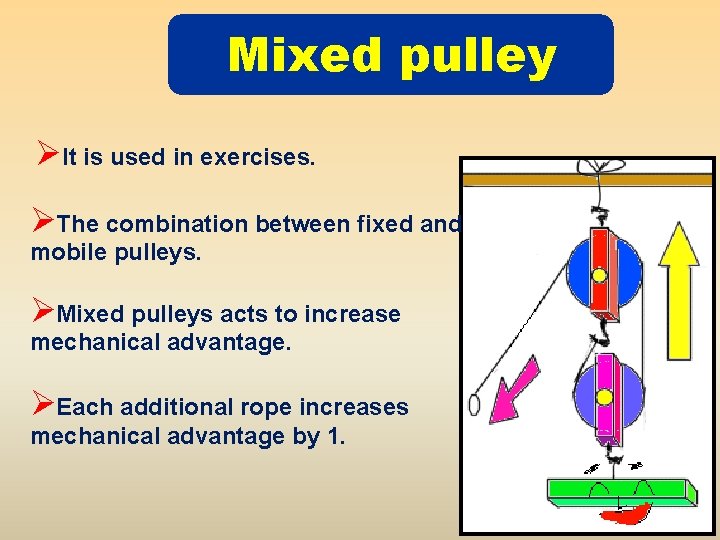
Mixed pulley ØIt is used in exercises. ØThe combination between fixed and mobile pulleys. ØMixed pulleys acts to increase mechanical advantage. ØEach additional rope increases mechanical advantage by 1.
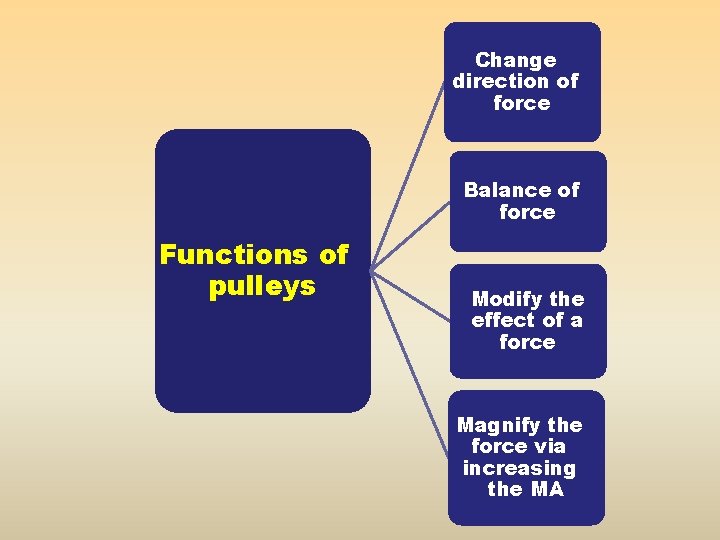
Change direction of force Balance of force Functions of pulleys Modify the effect of a force Magnify the force via increasing the MA
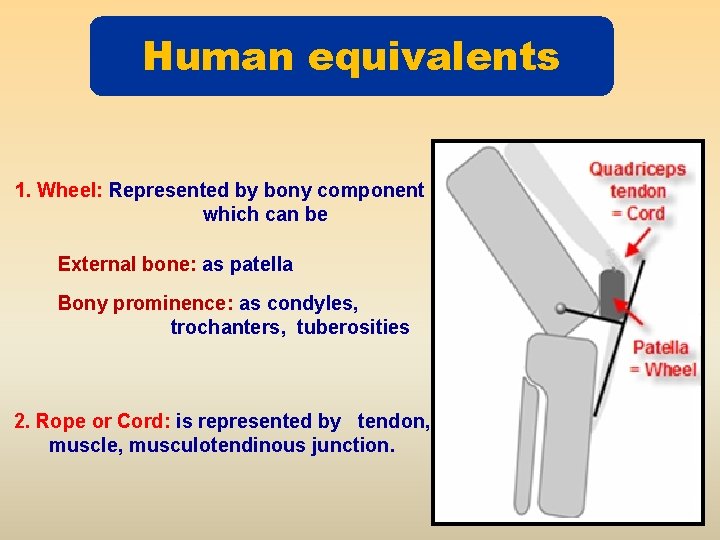
Human equivalents 1. Wheel: Represented by bony component which can be External bone: as patella Bony prominence: as condyles, trochanters, tuberosities 2. Rope or Cord: is represented by tendon, muscle, musculotendinous junction.
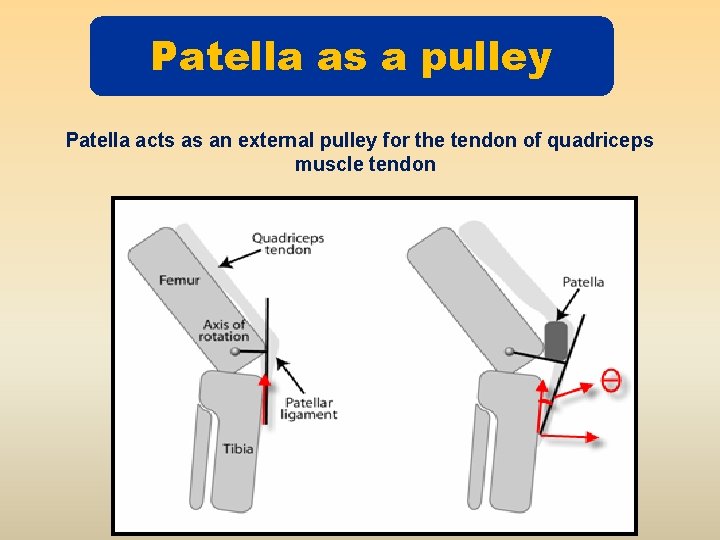
Patella as a pulley Patella acts as an external pulley for the tendon of quadriceps muscle tendon
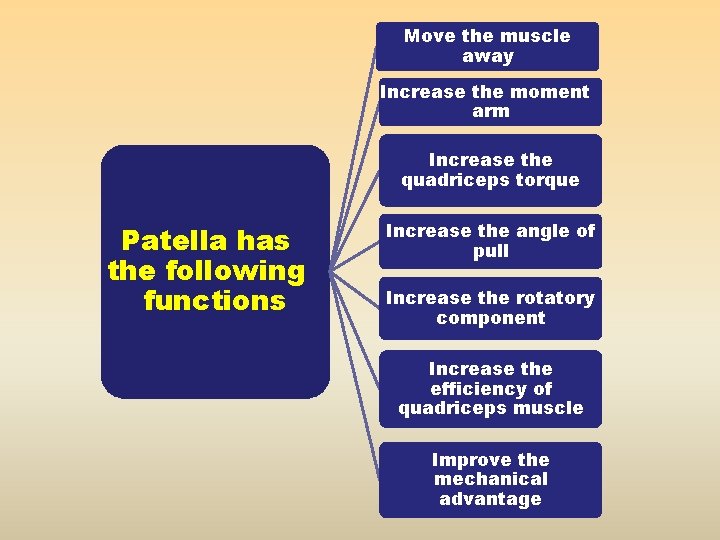
Move the muscle away Increase the moment arm Increase the quadriceps torque Patella has the following functions Increase the angle of pull Increase the rotatory component Increase the efficiency of quadriceps muscle Improve the mechanical advantage

Lateral malleolus bone as a pulley Ø lateral malleolus acts as a pulley around which tendon of peroneus longus runs. ØAs peroneus longus contracts, it pulls toward it belly (toward the knee). ØUsing the lateral malleolus as a pulley, force is transmitted to plantar aspect of foot resulting in eversion/plantarflexion.
- Slides: 42