
Simple Balloon Physics June 13 2014 Phil Eberspeaker
“Simple” Balloon Physics June 13, 2014 Phil Eberspeaker 1
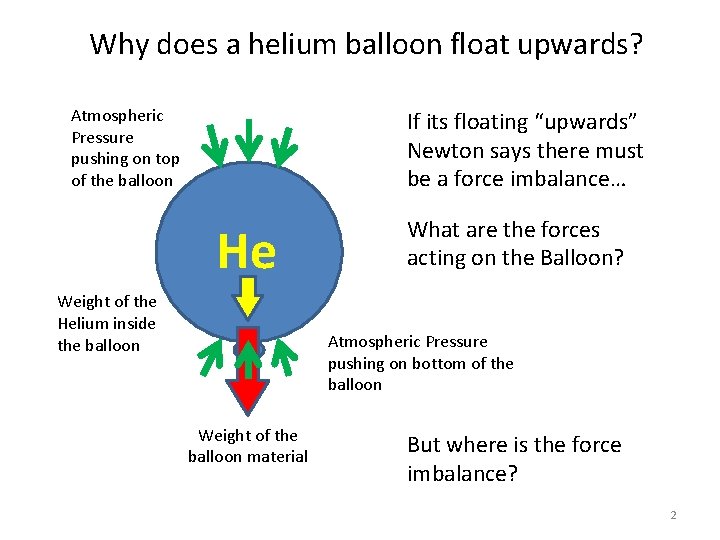
Why does a helium balloon float upwards? Atmospheric Pressure pushing on top of the balloon If its floating “upwards” Newton says there must be a force imbalance… He Weight of the Helium inside the balloon What are the forces acting on the Balloon? Atmospheric Pressure pushing on bottom of the balloon Weight of the balloon material But where is the force imbalance? 2
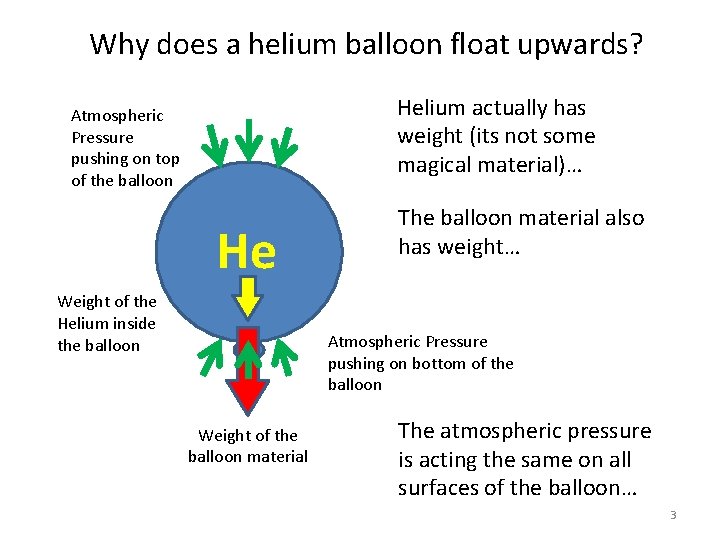
Why does a helium balloon float upwards? Helium actually has weight (its not some magical material)… Atmospheric Pressure pushing on top of the balloon He Weight of the Helium inside the balloon The balloon material also has weight… Atmospheric Pressure pushing on bottom of the balloon Weight of the balloon material The atmospheric pressure is acting the same on all surfaces of the balloon… 3
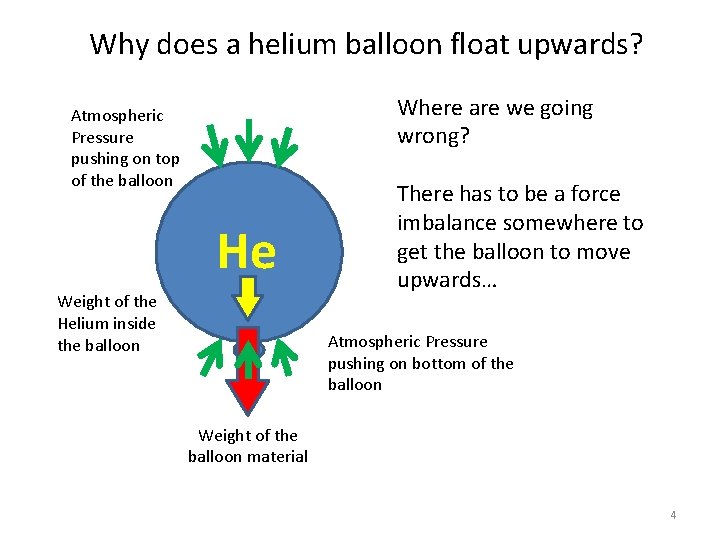
Why does a helium balloon float upwards? Where are we going wrong? Atmospheric Pressure pushing on top of the balloon He Weight of the Helium inside the balloon There has to be a force imbalance somewhere to get the balloon to move upwards… Atmospheric Pressure pushing on bottom of the balloon Weight of the balloon material 4
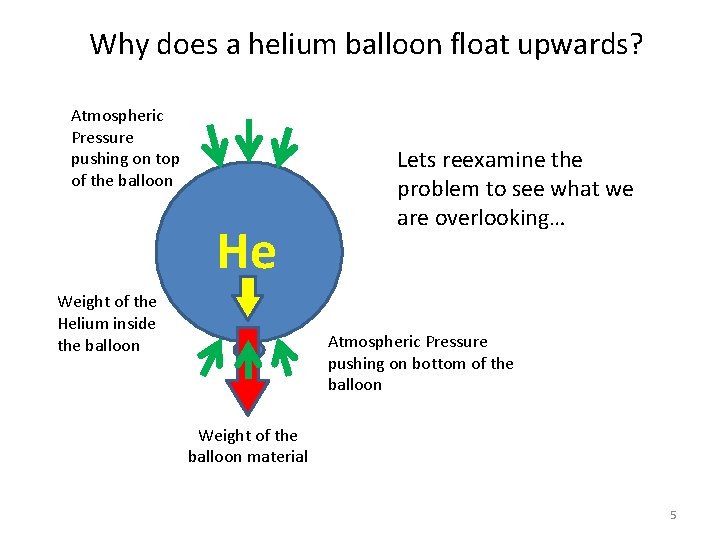
Why does a helium balloon float upwards? Atmospheric Pressure pushing on top of the balloon He Weight of the Helium inside the balloon Lets reexamine the problem to see what we are overlooking… Atmospheric Pressure pushing on bottom of the balloon Weight of the balloon material 5
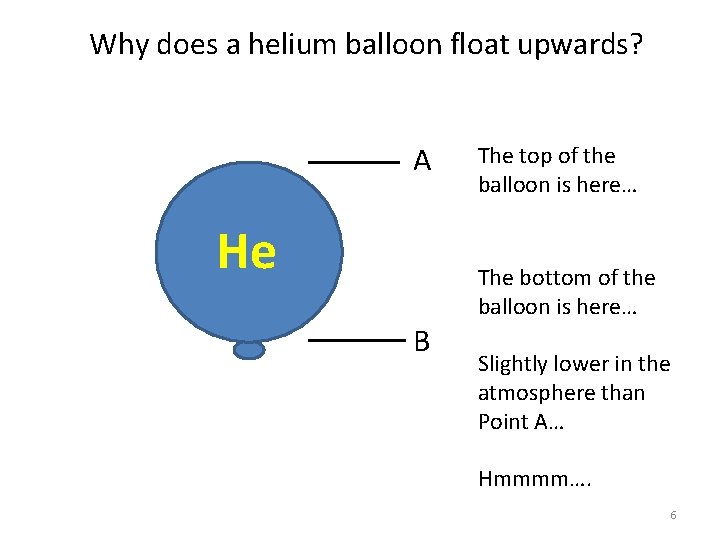
Why does a helium balloon float upwards? A He The top of the balloon is here… The bottom of the balloon is here… B Slightly lower in the atmosphere than Point A… Hmmmm…. 6
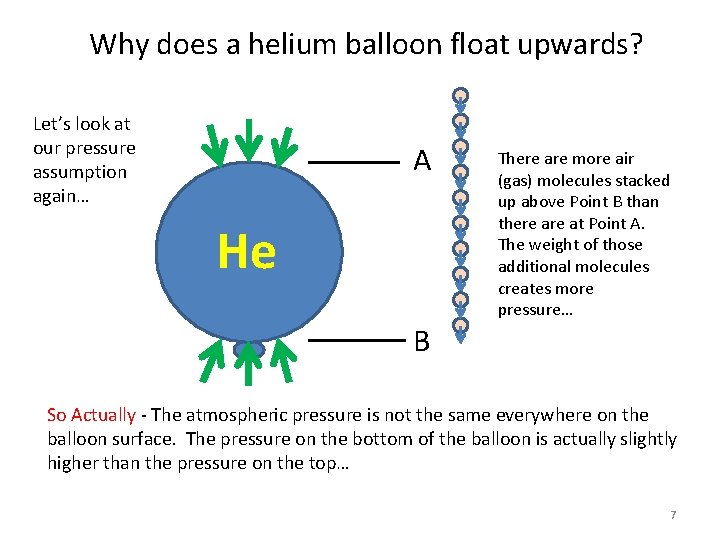
Why does a helium balloon float upwards? Let’s look at our pressure assumption again… A He There are more air (gas) molecules stacked up above Point B than there at Point A. The weight of those additional molecules creates more pressure… B So Actually - The atmospheric pressure is not the same everywhere on the balloon surface. The pressure on the bottom of the balloon is actually slightly higher than the pressure on the top… 7
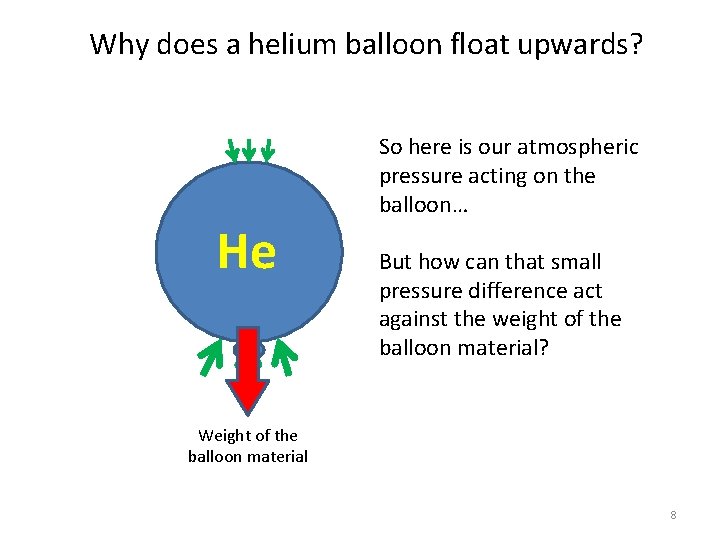
Why does a helium balloon float upwards? He So here is our atmospheric pressure acting on the balloon… But how can that small pressure difference act against the weight of the balloon material? Weight of the balloon material 8
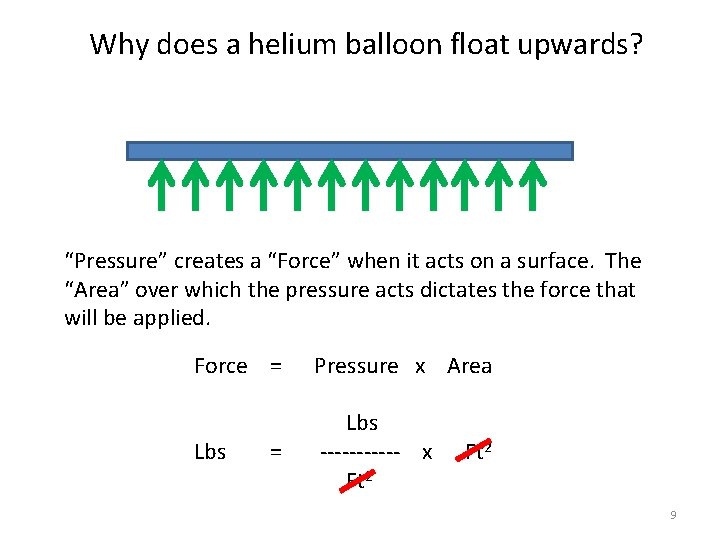
Why does a helium balloon float upwards? “Pressure” creates a “Force” when it acts on a surface. The “Area” over which the pressure acts dictates the force that will be applied. Force = Pressure x Area Lbs ------ x Ft 2 = Ft 2 9
Why does a helium balloon float upwards? So, if we can make the balloon bigger, we can increase the upward force acting on it… But there is a problem. As we make the balloon bigger there is more balloon material and there is more air mass contained within it… This is where the Helium comes into play. We can greatly reduce the mass of the “contained” material if we use a much lighter gas. By using Helium (or Hydrogen) it is possible to increase the surface area of the balloon such that the air pressure imbalance can create enough force to overcome the weight of the balloon material. 10
Did I say “simple” balloon physics? 11
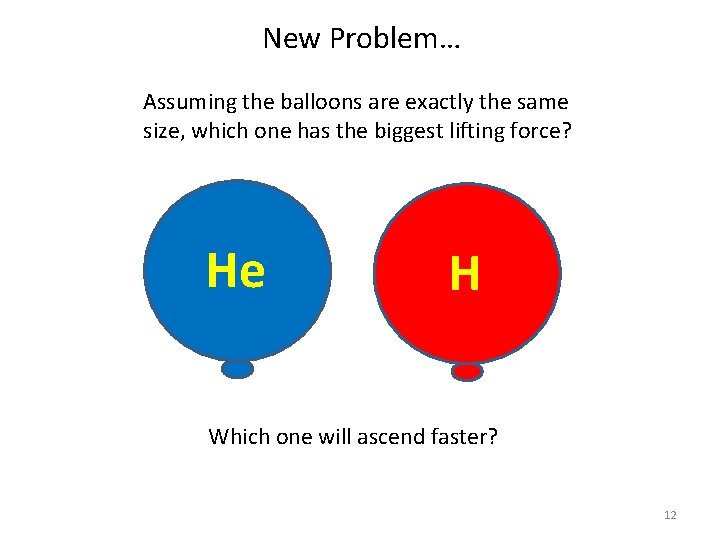
New Problem… Assuming the balloons are exactly the same size, which one has the biggest lifting force? He H Which one will ascend faster? 12
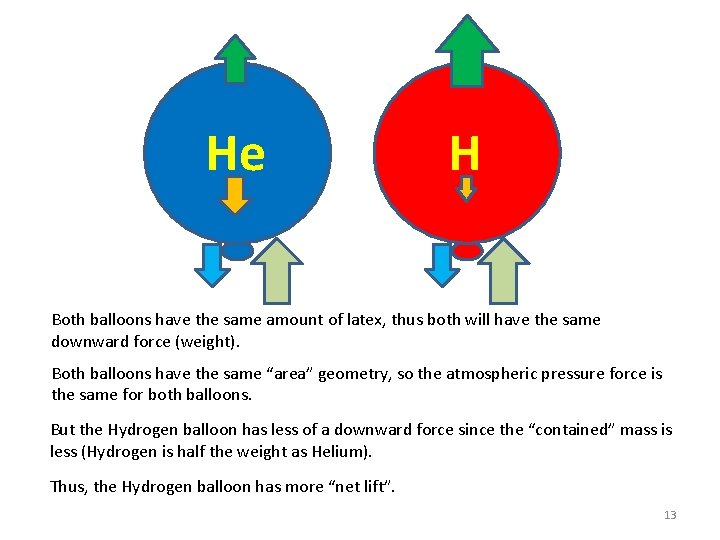
He H Both balloons have the same amount of latex, thus both will have the same downward force (weight). Both balloons have the same “area” geometry, so the atmospheric pressure force is the same for both balloons. But the Hydrogen balloon has less of a downward force since the “contained” mass is less (Hydrogen is half the weight as Helium). Thus, the Hydrogen balloon has more “net lift”. 13
As for ascent speed… F=Ma says the Hydrogen balloon will rise faster because there is more lifting force and less mass… 14
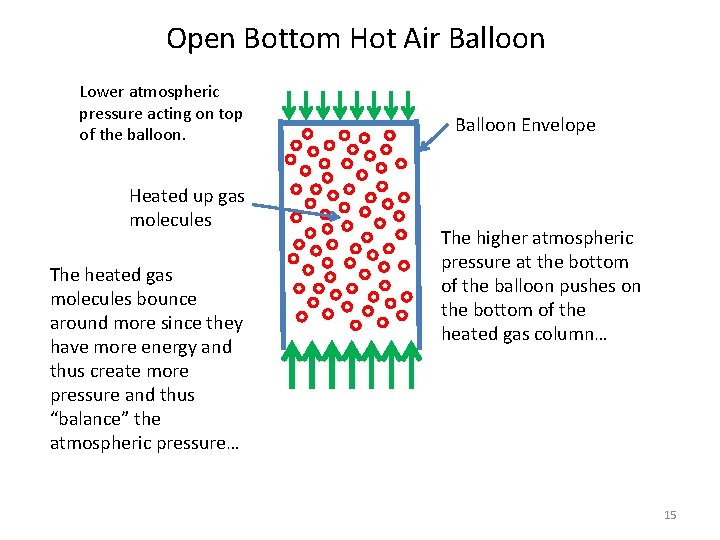
Open Bottom Hot Air Balloon Lower atmospheric pressure acting on top of the balloon. Heated up gas molecules The heated gas molecules bounce around more since they have more energy and thus create more pressure and thus “balance” the atmospheric pressure… Balloon Envelope The higher atmospheric pressure at the bottom of the balloon pushes on the bottom of the heated gas column… 15
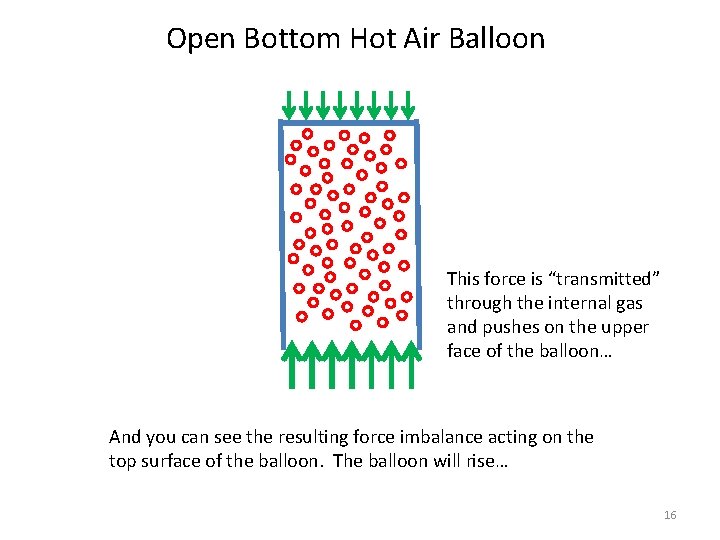
Open Bottom Hot Air Balloon This force is “transmitted” through the internal gas and pushes on the upper face of the balloon… And you can see the resulting force imbalance acting on the top surface of the balloon. The balloon will rise… 16
Will a balloon rise “forever”? As a balloon rises, the pressure forces cause the balloon to expand. If the balloon is not strong enough it will burst… Even if the balloon survives, the decrease in air pressure will eventually reduce the lifting force and the balloon will reach “float”. Float is the condition where the buoyant forces are exactly balanced by the weight of the balloon… 17
Lets make the balloon physics even more complicated… What happens to a helium balloon inside a car when you jam on the accelerator? 18
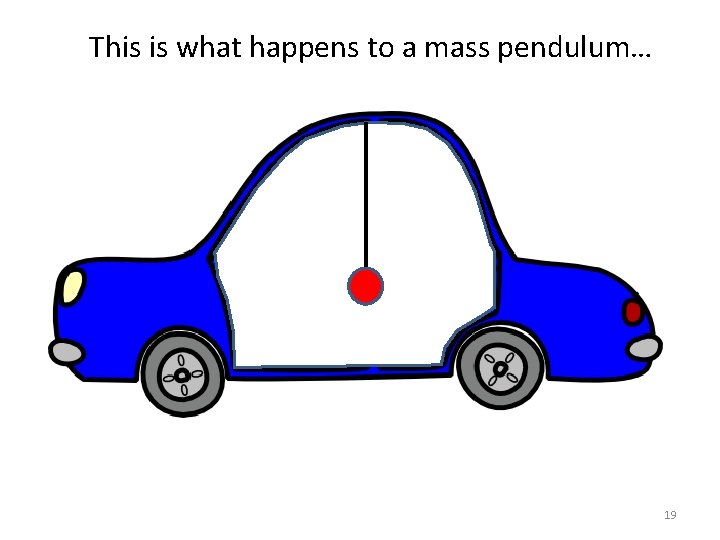
This is what happens to a mass pendulum… 19
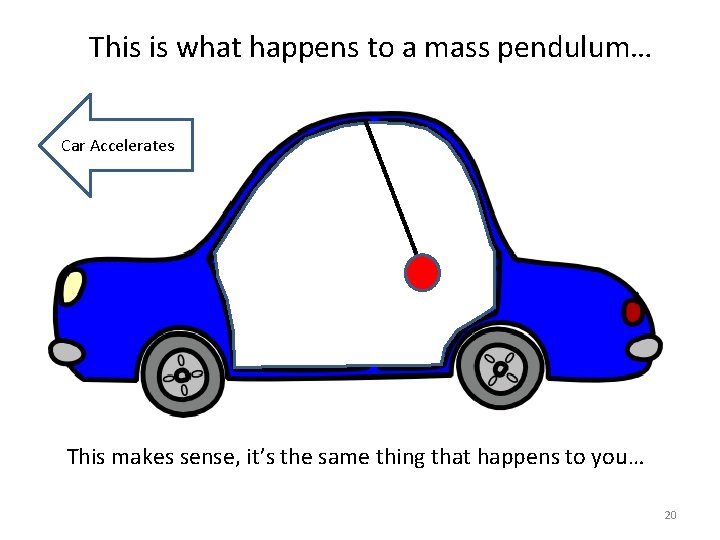
This is what happens to a mass pendulum… Car Accelerates This makes sense, it’s the same thing that happens to you… 20
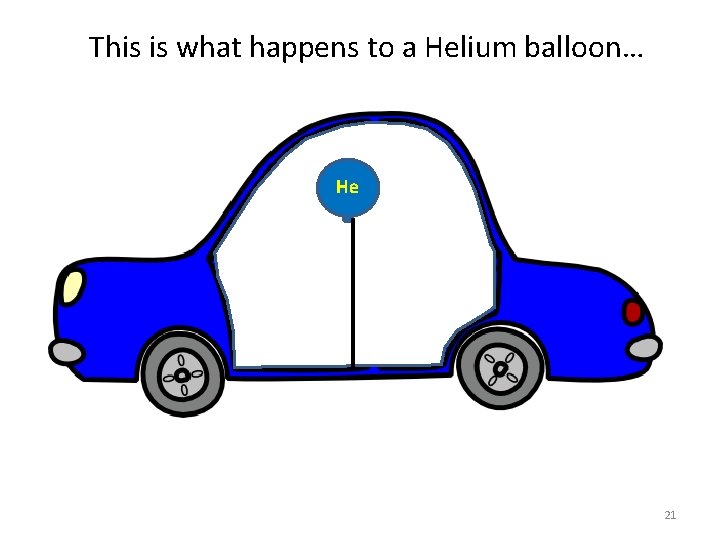
This is what happens to a Helium balloon… He 21
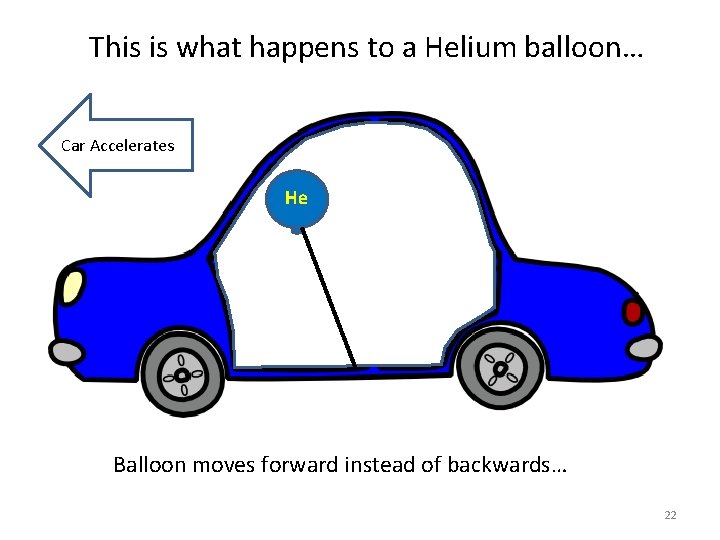
This is what happens to a Helium balloon… Car Accelerates He Balloon moves forward instead of backwards… 22
What’s up with that? Lots of debate on the internet on this one. Lots of debate within the Sounding Rocket Program Office as well… Of course, we can blame it on Newton… As the car accelerates from a dead stop, the air inside the car doesn’t want to move – The “body at rest” thing… The air actually “bunches up” at the back of the car and causes an ever so slight pressure increase in the back… And for exactly the same reason that the helium balloon wants to move upward, the balloon moves forward, away from the higher pressure. Put another way, it “floats” forward… 23
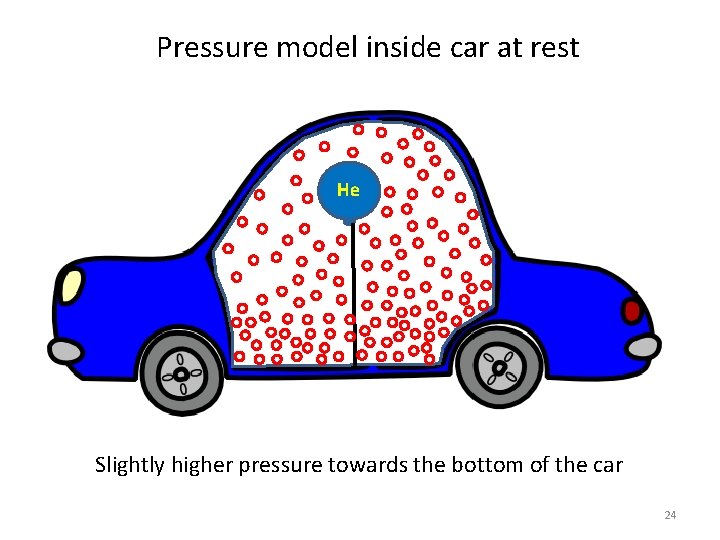
Pressure model inside car at rest He Slightly higher pressure towards the bottom of the car 24
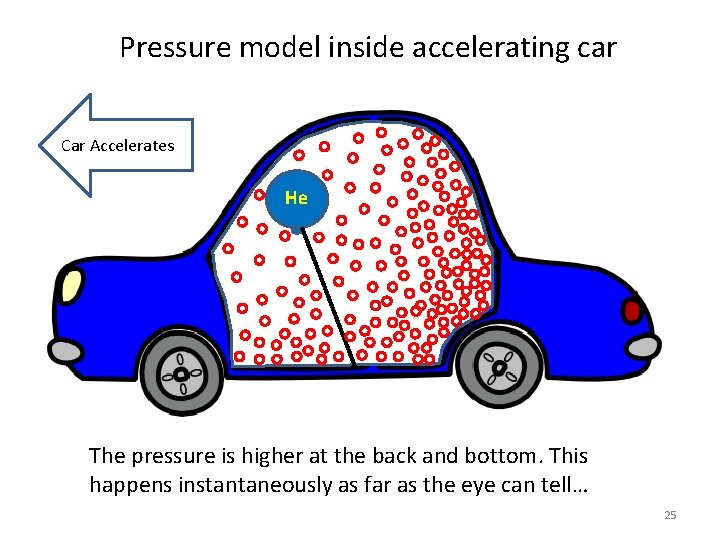
Pressure model inside accelerating car Car Accelerates He The pressure is higher at the back and bottom. This happens instantaneously as far as the eye can tell… 25
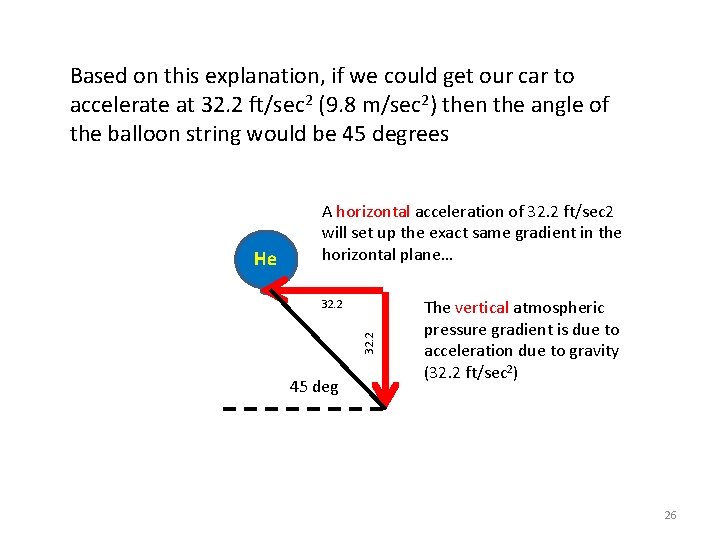
Based on this explanation, if we could get our car to accelerate at 32. 2 ft/sec 2 (9. 8 m/sec 2) then the angle of the balloon string would be 45 degrees 32. 2 He A horizontal acceleration of 32. 2 ft/sec 2 will set up the exact same gradient in the horizontal plane… 45 deg The vertical atmospheric pressure gradient is due to acceleration due to gravity (32. 2 ft/sec 2) 26
Now isn’t that interesting… Leave it to a rocket scientist to make a kid’s party balloon complicated! 27
Questions? 28
- Slides: 28