
Simics A Full System Simulation Platform Peter S
- Slides: 21
Simics: A Full System Simulation Platform Peter S. Magnusson, Magnus Crhistensson, Jesper Eskilson, Daniel Forsgren, Gustav Hallberg, Johan Högberg, Frederik larsson, Anreas Moestedt. Presented by Eduardo Cuervo
The problem… � Simulation is an important step ◦ Research ◦ Evaluation ◦ Computer Design � Not enough to simulate only user level code ◦ Not accurate enough ◦ Need for Full System Simulation (slower) � Simulation must be able to interface with detailed HW models timely.
Simulation taxonomy � Scope (What is modeled? ) ◦ Full system ◦ User level � Level of abstraction ◦ Functional behavior (what) ◦ Timing behavior (when) � Realistic workloads ◦ Functional: Boot, run unmodified OS, benchmarks ◦ Timing: Support hardware engineering ◦ Fast enough to run real workloads
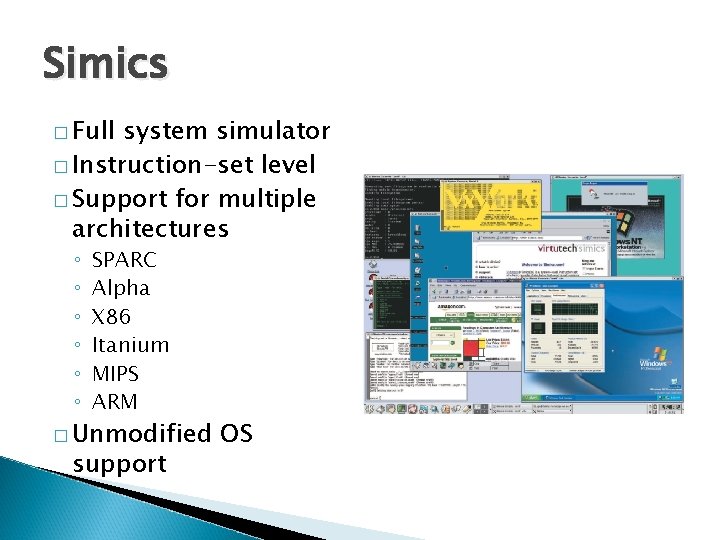
Simics � Full system simulator � Instruction-set level � Support for multiple architectures ◦ ◦ ◦ SPARC Alpha X 86 Itanium MIPS ARM � Unmodified support OS
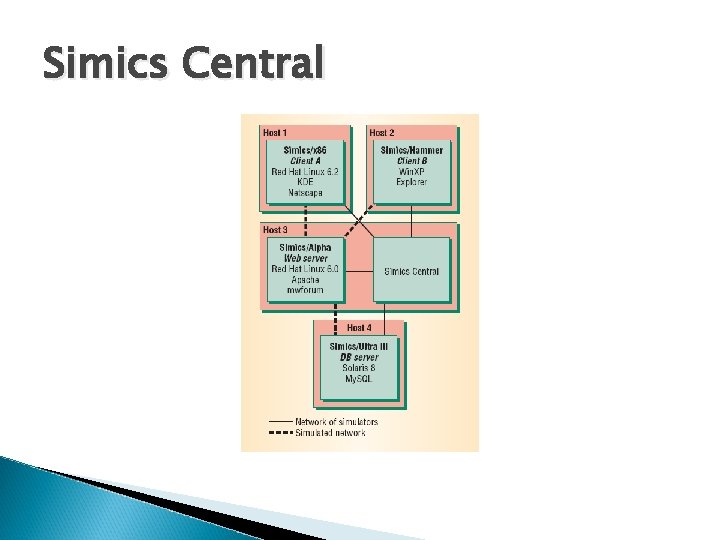
Simics � Processor Models � Device Models ◦ Accurate enough for real drivers and firmware � Simics Central ◦ Creation of full-scale distributed system ◦ Router ◦ Communicates multiple Simics instances �Multiple nodes of the same architecture per instance ◦ Synchronizes instances
Applications � Microprocessor ◦ ◦ design Interaction with memory manager an scheduler Approximate cache and I/O timing models Scalable to full server workloads (TPC-C) Oo. O Support, custom ROB but no pipeline � Memory studies ◦ Memory Spaces Address Spaces ◦ Extendable with timing models � OS Development ◦ Implementation of very specific breakpoints � Debugging
Implementation � Simics Central ◦ Synchronizes virtual time ◦ Simulation speed = speed of the slowest Simics process � Configuration ◦ Object Oriented � Command Line Interface (CLI) and Scripting ◦ Built-in Python runtime environment ◦ Scripts tied to events (TLB misses, I/O operations) � Devices ◦ Timer, floppy, keyboard, mouse, DMA, interrupt, etc.
Simics Central
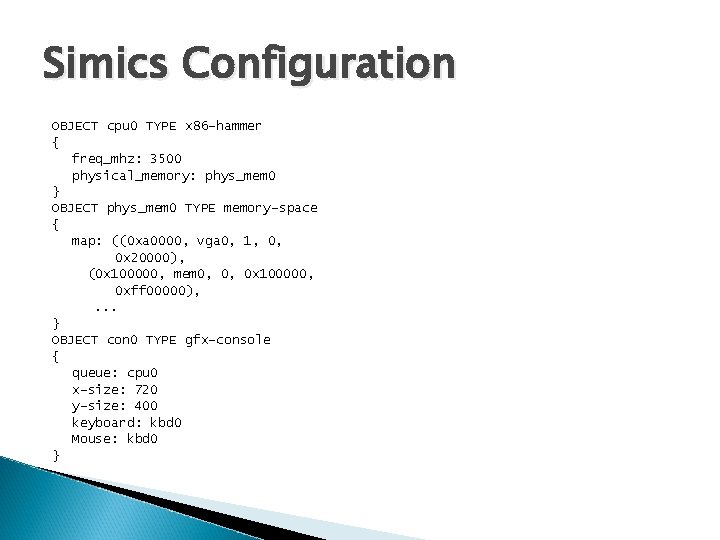
Simics Configuration OBJECT cpu 0 TYPE x 86 -hammer { freq_mhz: 3500 physical_memory: phys_mem 0 } OBJECT phys_mem 0 TYPE memory-space { map: ((0 xa 0000, vga 0, 1, 0, 0 x 20000), (0 x 100000, mem 0, 0, 0 x 100000, 0 xff 00000), . . . } OBJECT con 0 TYPE gfx-console { queue: cpu 0 x-size: 720 y-size: 400 keyboard: kbd 0 Mouse: kbd 0 }
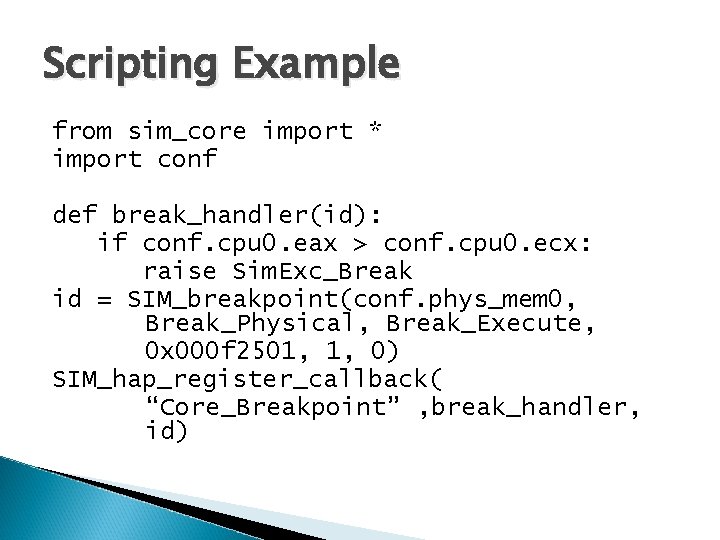
Scripting Example from sim_core import * import conf def break_handler(id): if conf. cpu 0. eax > conf. cpu 0. ecx: raise Sim. Exc_Break id = SIM_breakpoint(conf. phys_mem 0, Break_Physical, Break_Execute, 0 x 000 f 2501, 1, 0) SIM_hap_register_callback( “Core_Breakpoint” , break_handler, id)
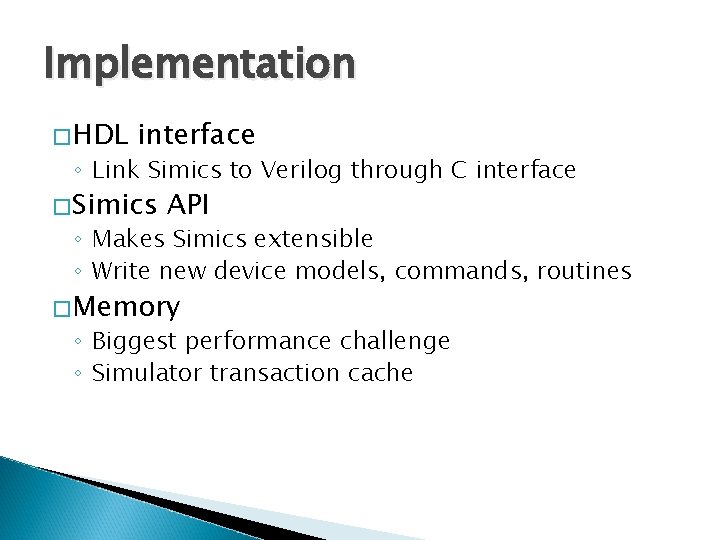
Implementation �HDL interface ◦ Link Simics to Verilog through C interface �Simics API ◦ Makes Simics extensible ◦ Write new device models, commands, routines �Memory ◦ Biggest performance challenge ◦ Simulator transaction cache
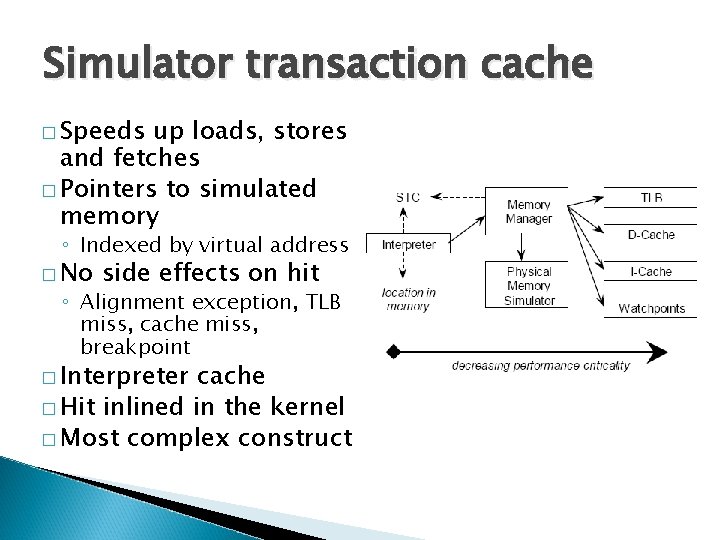
Simulator transaction cache � Speeds up loads, stores and fetches � Pointers to simulated memory ◦ Indexed by virtual address � No side effects on hit ◦ Alignment exception, TLB miss, cache miss, breakpoint � Interpreter cache � Hit inlined in the kernel � Most complex construct
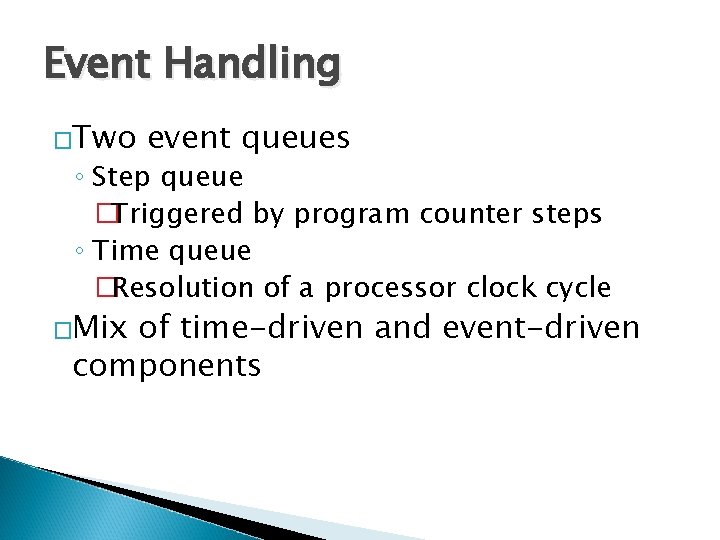
Event Handling �Two event queues ◦ Step queue �Triggered by program counter steps ◦ Time queue �Resolution of a processor clock cycle �Mix of time-driven and event-driven components
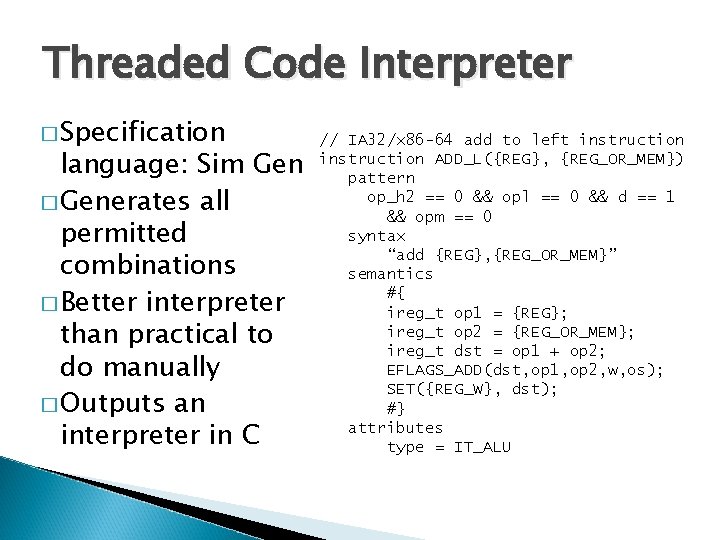
Threaded Code Interpreter � Specification language: Sim Gen � Generates all permitted combinations � Better interpreter than practical to do manually � Outputs an interpreter in C // IA 32/x 86 -64 add to left instruction ADD_L({REG}, {REG_OR_MEM}) pattern op_h 2 == 0 && opl == 0 && d == 1 && opm == 0 syntax “add {REG}, {REG_OR_MEM}” semantics #{ ireg_t op 1 = {REG}; ireg_t op 2 = {REG_OR_MEM}; ireg_t dst = op 1 + op 2; EFLAGS_ADD(dst, op 1, op 2, w, os); SET({REG_W}, dst); #} attributes type = IT_ALU
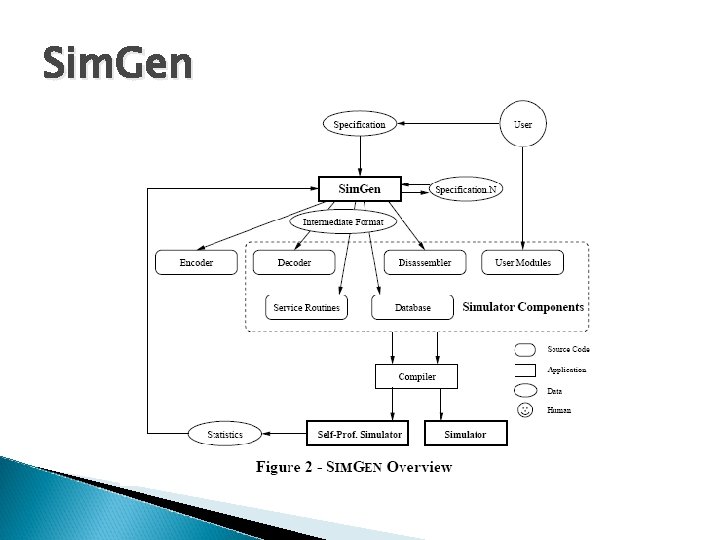
Sim. Gen
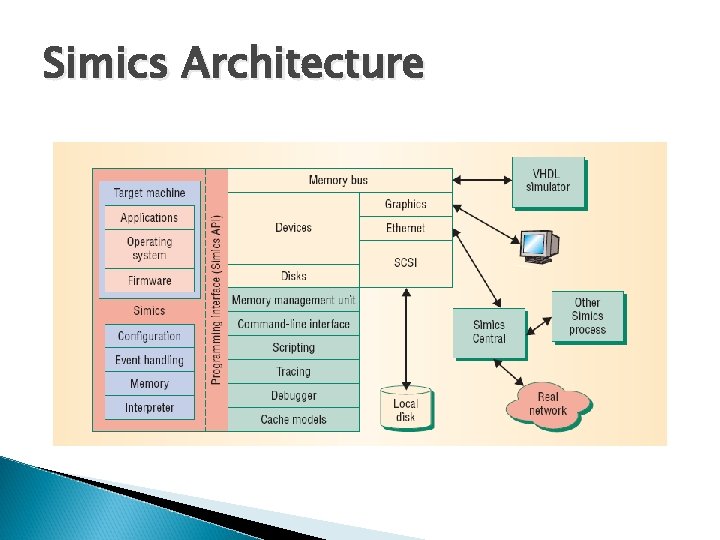
Simics Architecture
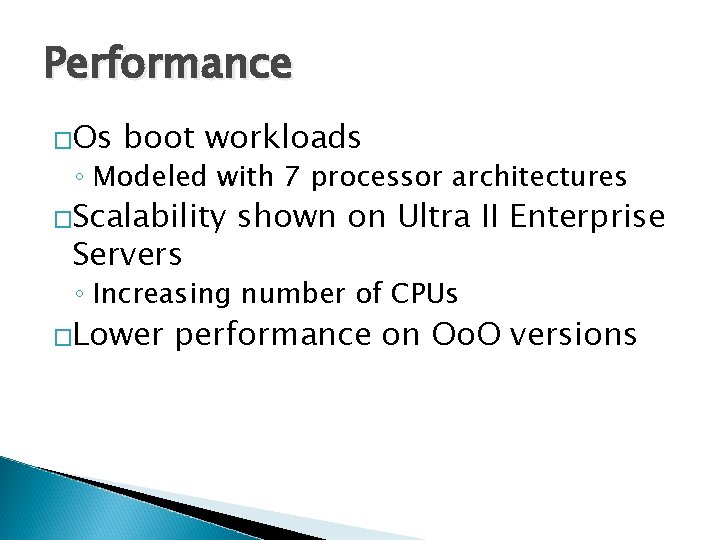
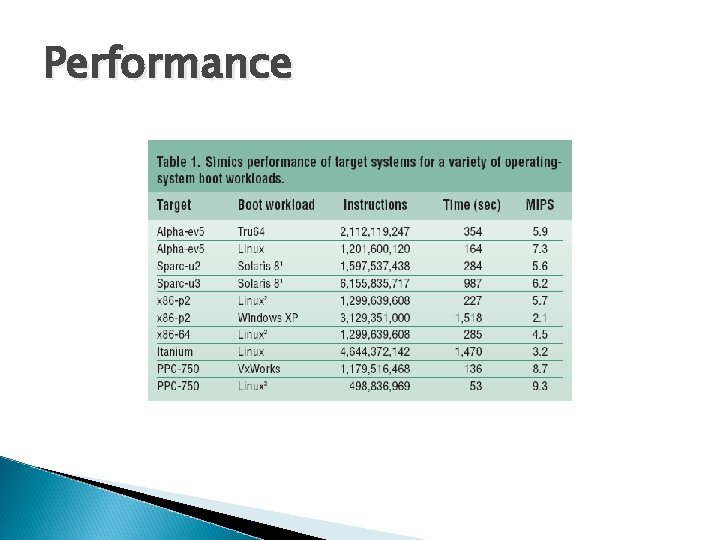
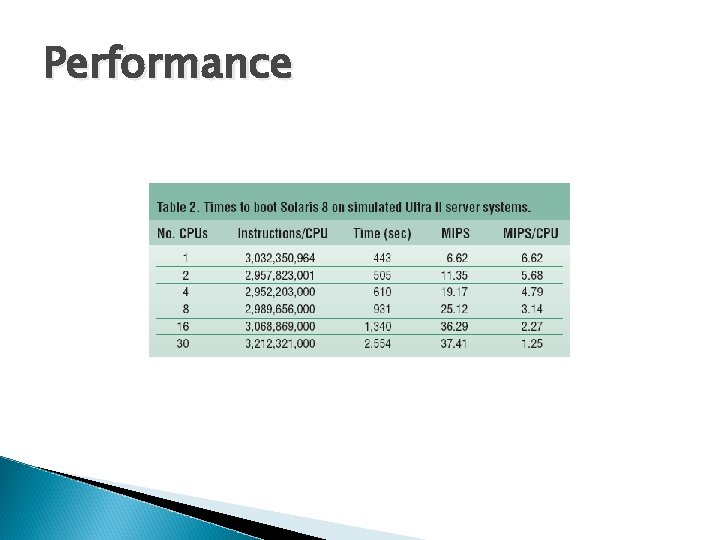
Performance �Os boot workloads ◦ Modeled with 7 processor architectures �Scalability Servers shown on Ultra II Enterprise ◦ Increasing number of CPUs �Lower performance on Oo. O versions
Performance
Performance
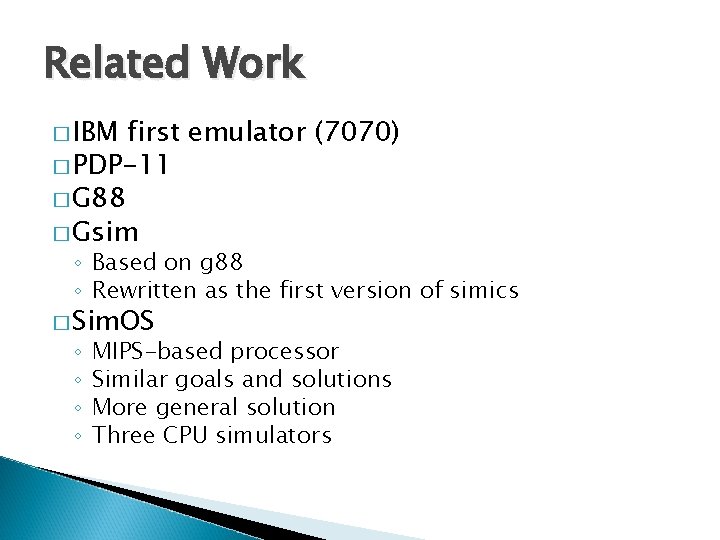
Related Work � IBM first emulator (7070) � PDP-11 � G 88 � Gsim ◦ Based on g 88 ◦ Rewritten as the first version of simics � Sim. OS ◦ ◦ MIPS-based processor Similar goals and solutions More general solution Three CPU simulators
Conclusion �Full system simulation is required for realistic workloads �Simics offers a valuable simulation tool for designing and evaluating HW �Support for scripting, networking, and multiple architectures are a great advantage