
Simbeeotic A Simulator and Testbed for MicroAerial Vehicle
Simbeeotic: A Simulator and Testbed for Micro-Aerial Vehicle Swarm Experiments Bryan Kate, Jason Waterman, Karthik Dantu and Matt Welsh Presented By: Mostafa Uddin 1
Outline • • • Introduction Simulator Design Helicopter Testbed Evaluation Future Works Conclusions 2
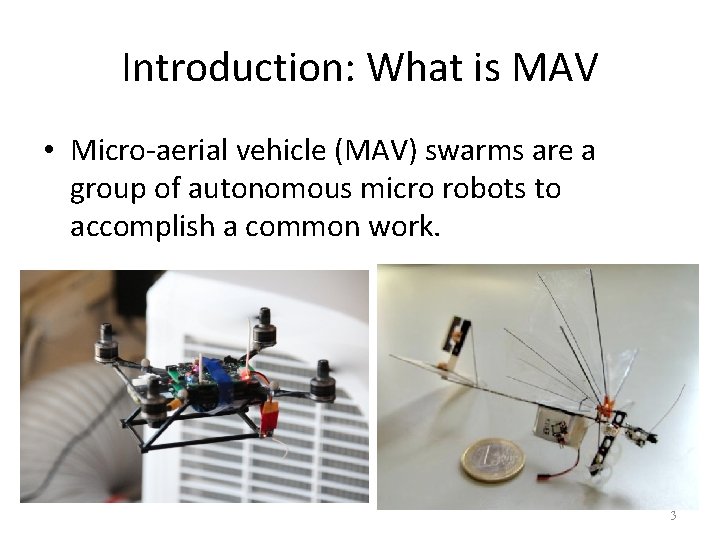
Introduction: What is MAV • Micro-aerial vehicle (MAV) swarms are a group of autonomous micro robots to accomplish a common work. 3
Introduction: Challenges • MAV is concerned with classic robotics challenges: obstacle avoidance, navigation, planning etc. • MAV faces the challenges similar to static sensor network nodes: limited computation, energy scarcity and minimal sensing. • Radio is no longer the primary energy sink- actuation needs more energy. • Duty cycle is not an option for Hardware while flying. • Treating Autonomous Mobility as a first class concern. 4
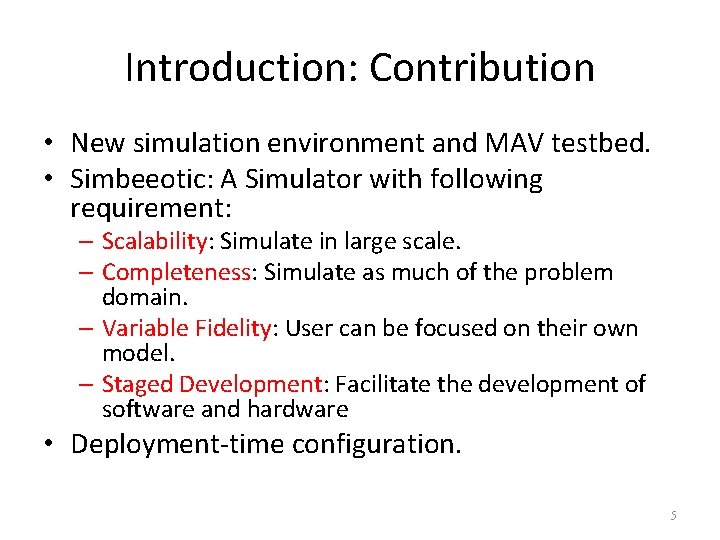
Introduction: Contribution • New simulation environment and MAV testbed. • Simbeeotic: A Simulator with following requirement: – Scalability: Simulate in large scale. – Completeness: Simulate as much of the problem domain. – Variable Fidelity: User can be focused on their own model. – Staged Development: Facilitate the development of software and hardware • Deployment-time configuration. 5
Related Work: • Swarms and MASON: opting for cell-based or 2 D continuous world. • Breve: Domain specific language limit the extension. • Webots: Scalability issue • Play-stage: First order geometric simulator. • GRASP Micro UAV testbed: 6
Simulator Design Simbeeotic: • Discrete event simulator – A simulation execution consists of one or more models that schedule events to occur at a future point in time – Virtual time – moved forward by an executive that get the next event and pass it to the intended recipient • Written in Java programming language – easily learned by neophytes – large repository of high quality, open source libraries • Repeatability • Ease of use 7
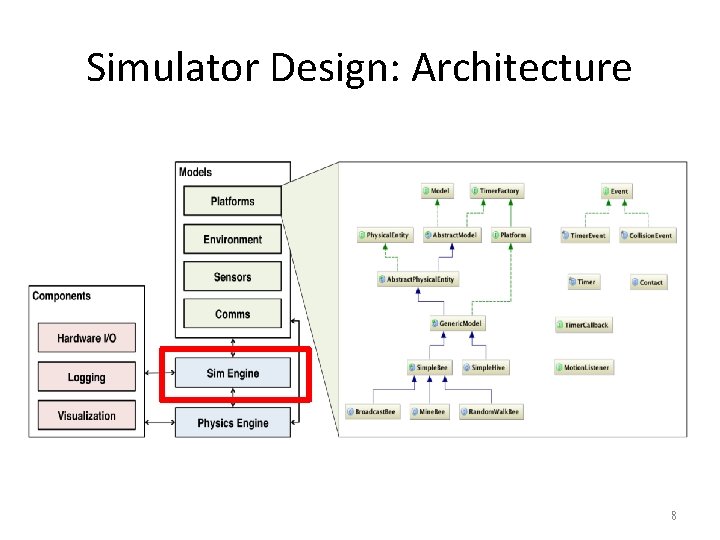
Simulator Design: Architecture 8

Simulation Engine • Manages discrete event queue and dispatches events to model. • Pushing the virtual time forward. • Populates the virtual world from the configuration. • Initializes all the models. • Sim Engine is responsible for answering queries about model population and location. 9
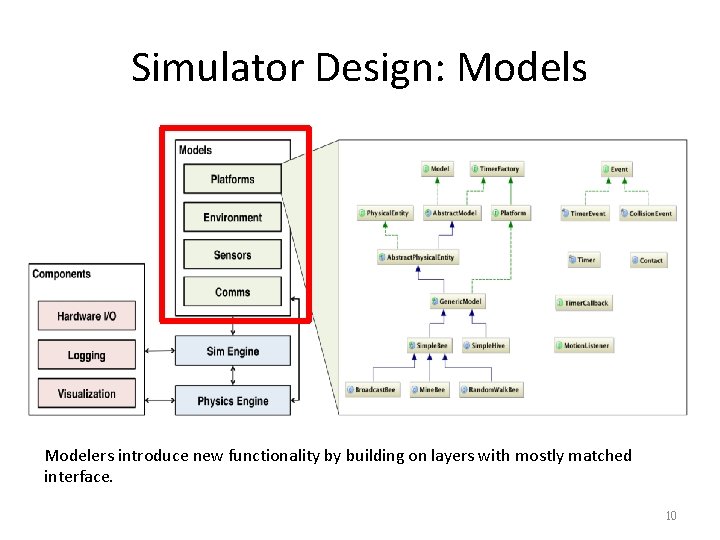
Simulator Design: Models Modelers introduce new functionality by building on layers with mostly matched interface. 10

Simulator Design: Models 11

Simulator Design: Timer 12
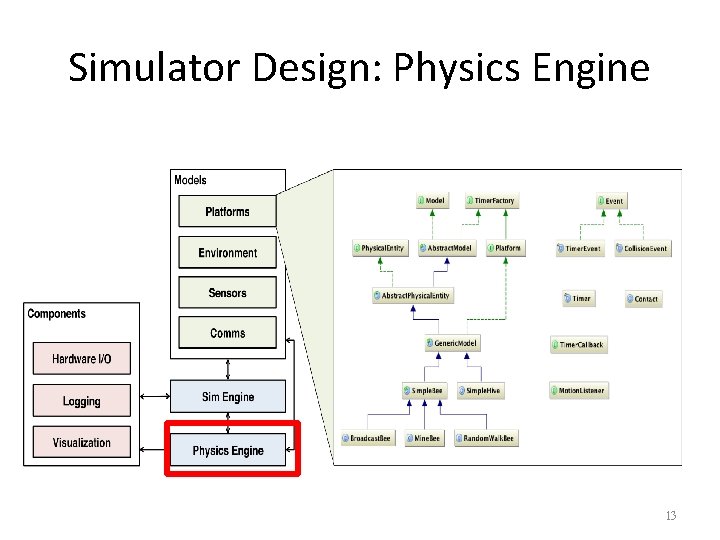
Simulator Design: Physics Engine 13
Simulator Design: Physics Engine Physics engine- JBullet • Rigid Bodies – Simple shapes, complex geometries • Dynamics Modeling – Integrating the forces and torques • 3 D Continuous Collision Detection – Physical interactions between objects • Ray Tracing – Range finders and optical flow 14
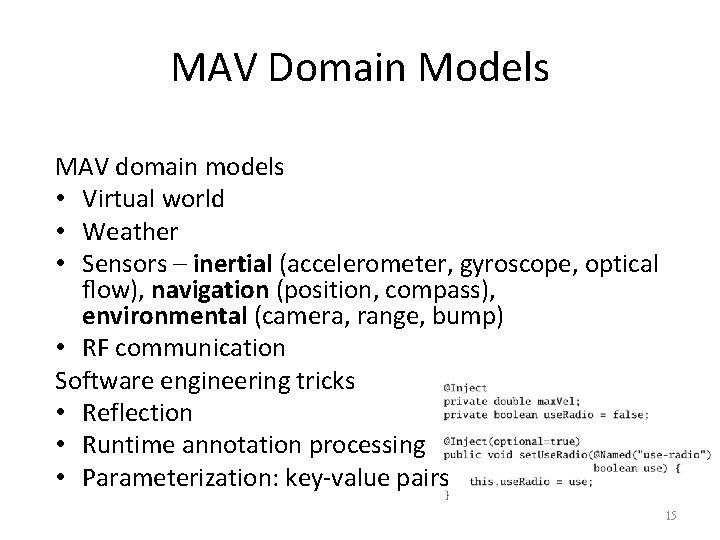
MAV Domain Models MAV domain models • Virtual world • Weather • Sensors – inertial (accelerometer, gyroscope, optical flow), navigation (position, compass), environmental (camera, range, bump) • RF communication Software engineering tricks • Reflection • Runtime annotation processing • Parameterization: key-value pairs 15
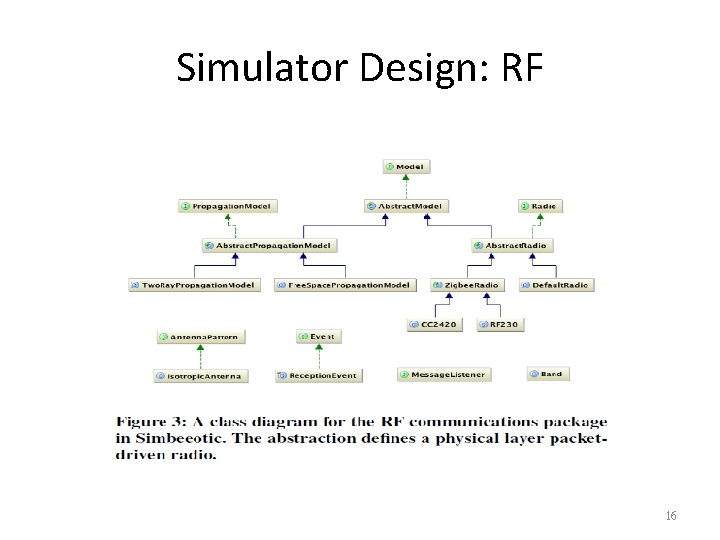
Simulator Design: RF 16
Helicopter Testbed • Indoor MAV testbed • E-flite Blade m. CX 2 RC helicopter – Proprietary control board stabilizes flight (yaw axis only) – Without other processors, sensors, or radios – Not expensive, small V. S. toy Remote control • Using Vicon motion capture system for remote control • Input signal to the helicopter ‘s transmitter – yaw, pitch, roll, and throttle 17
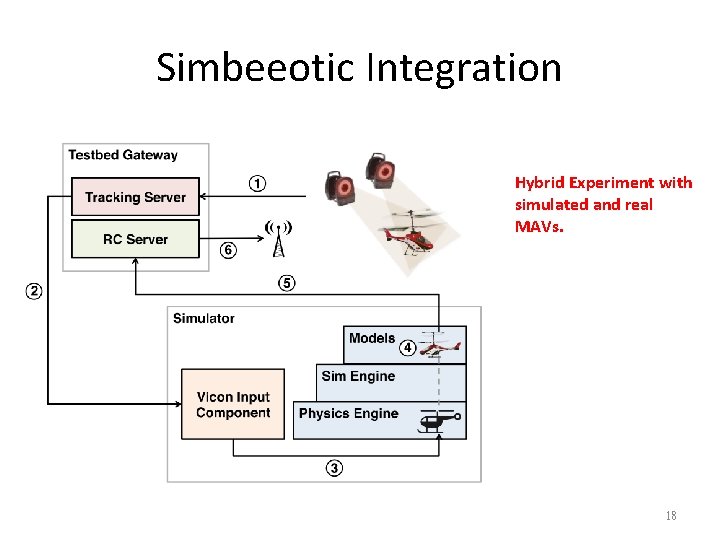
Simbeeotic Integration Hybrid Experiment with simulated and real MAVs. 18
HWIL Discussion Advantages • Fly real vehicles using virtual sensors • Transform laboratory space into an arbitrarily Env. • Test the limits of proposed hardware and software Disadvantages: • Inaccuracy cauesd by Vicon motion capture system • Can’t fly outdoors • Heavy computing resources • Can’t process or sense on helicopter • Latency: processing, transmission, control 19
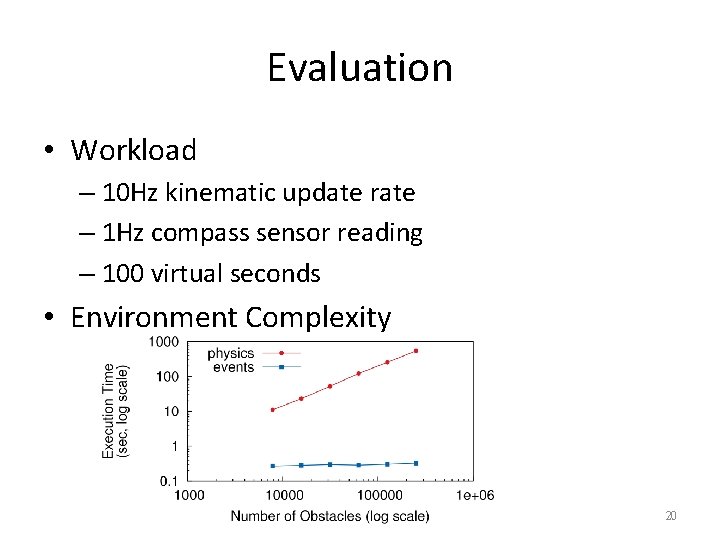
Evaluation • Workload – 10 Hz kinematic update rate – 1 Hz compass sensor reading – 100 virtual seconds • Environment Complexity 20
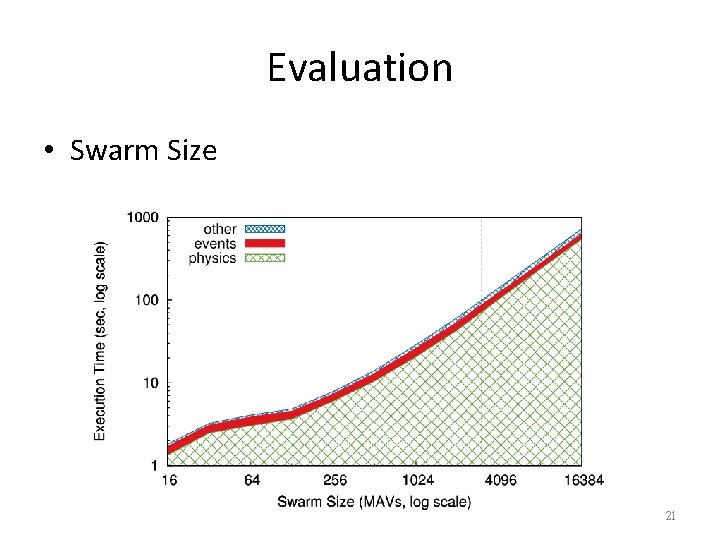
Evaluation • Swarm Size 21
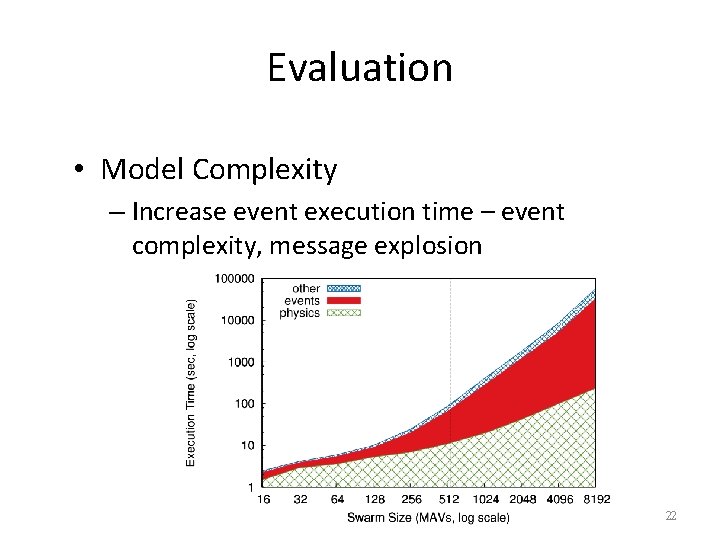
Evaluation • Model Complexity – Increase event execution time – event complexity, message explosion 22
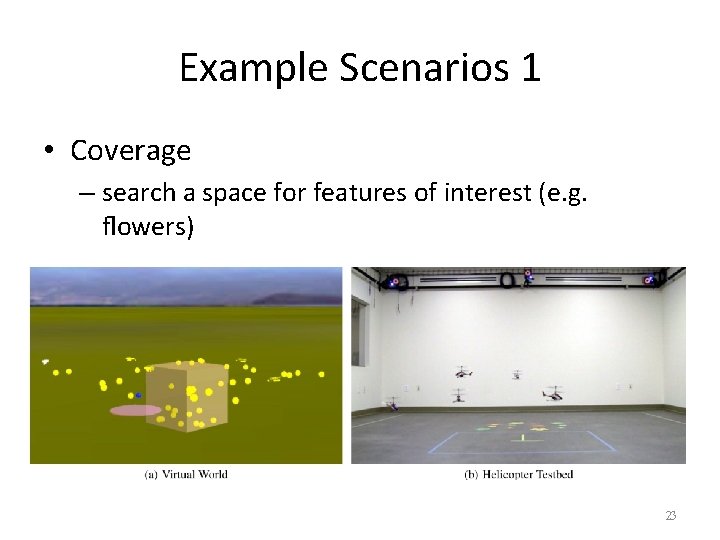
Example Scenarios 1 • Coverage – search a space for features of interest (e. g. flowers) 23
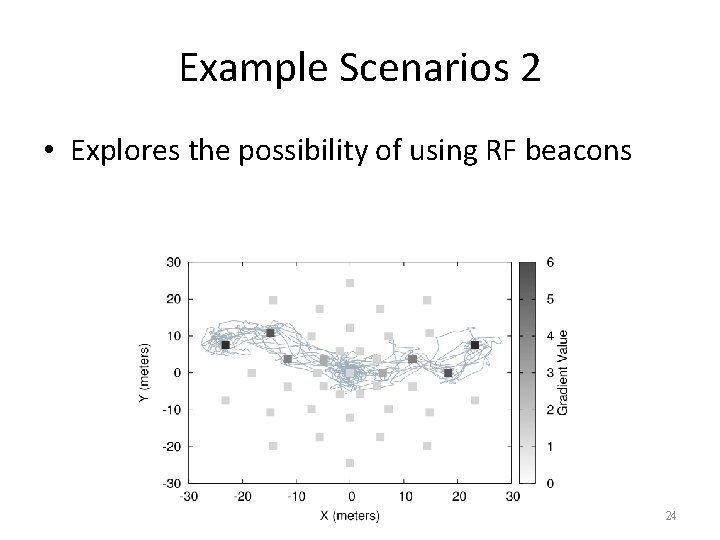
Example Scenarios 2 • Explores the possibility of using RF beacons 24
Conclusions • Provide a feasible way to simulate MAV swarms • Cool, and may be useful in simulation but seems useless now in reality • Too complex to make whole system robust (network, motion capture, robot control) 25
26
- Slides: 26