
Sim Lean Educate A generalised simulation of a
- Slides: 18
Sim. Lean Educate A generalised simulation of a theatre process
Purpose of the Session – To explore common issues that occur within healthcare systems – To understand their impact upon patient flow – To consider ways of improving patient flow Key areas we will explore are: • Managing demand • Using resources effectively • Providing a smooth process for patients and staff 2
A GENERALISED DAY CASE THEATRE PROCESS 3
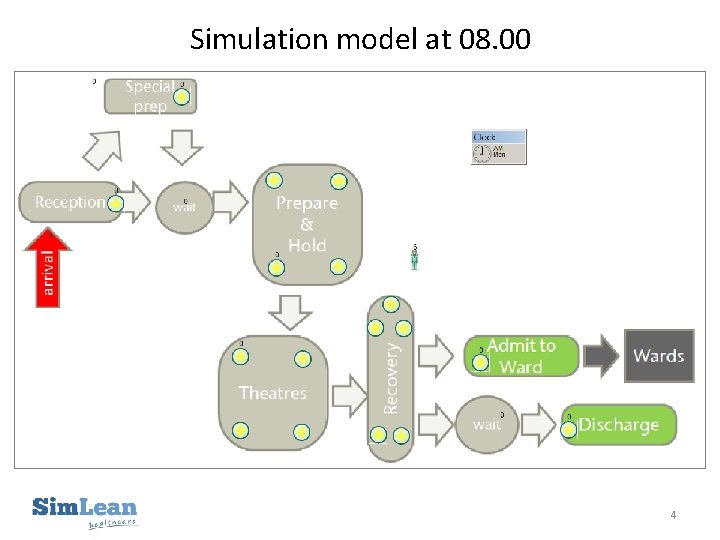
Simulation model at 08. 00 4
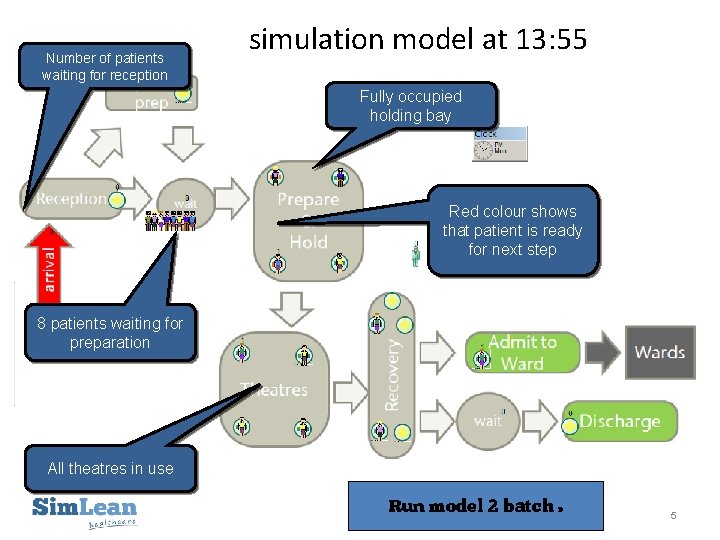
Number of patients waiting for reception simulation model at 13: 55 Fully occupied holding bay Red colour shows that patient is ready for next step 8 patients waiting for preparation All theatres in use Run model 2 batch » 5
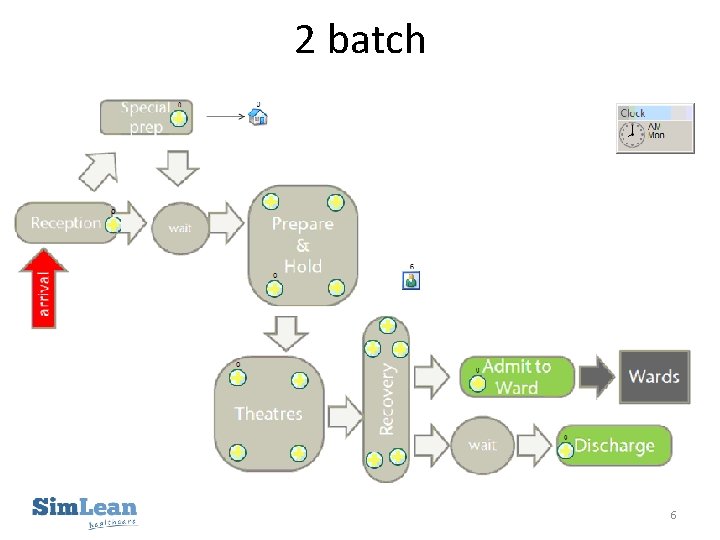
2 batch 6
As the model runs it gathers information about the sizes of queues, the utilisation of resources and the number of activities performed. We can then view these as charts either in the model or later on a spread-sheet. Non-lean practices often produce surges in activity and large queues. There is no benefit to the patient in this and it can cause problems for staff too. 7
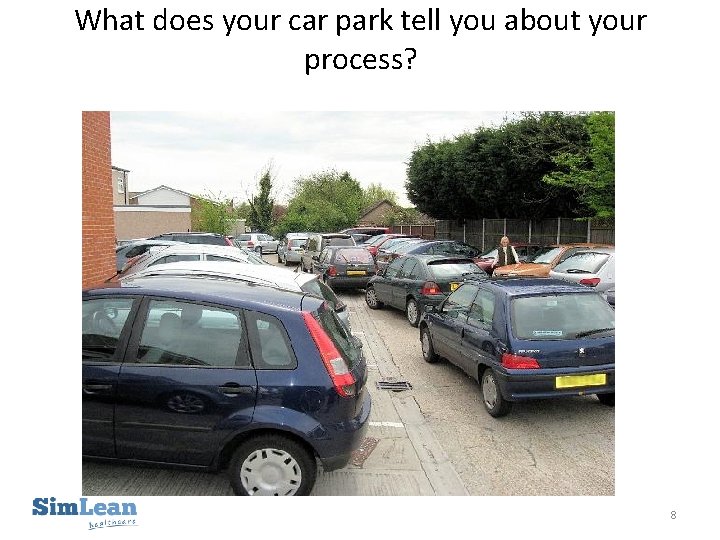
What does your car park tell you about your process? 8
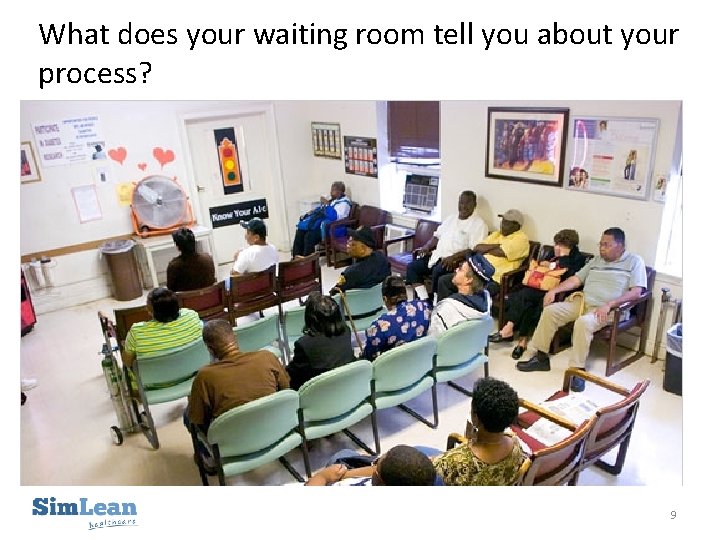
What does your waiting room tell you about your process? 9
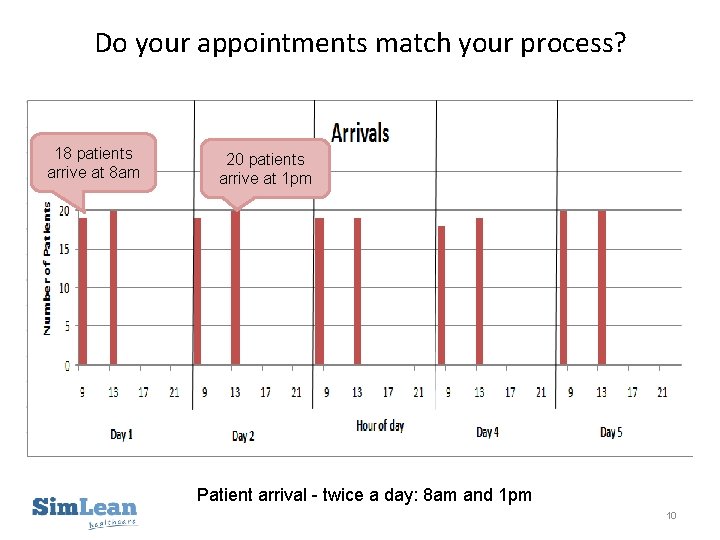
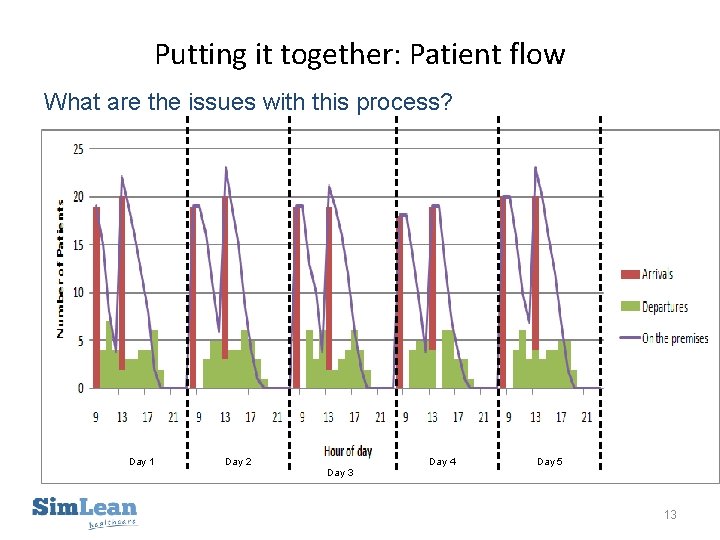
Do your appointments match your process? 18 patients arrive at 8 am 20 patients arrive at 1 pm Patient arrival - twice a day: 8 am and 1 pm 10
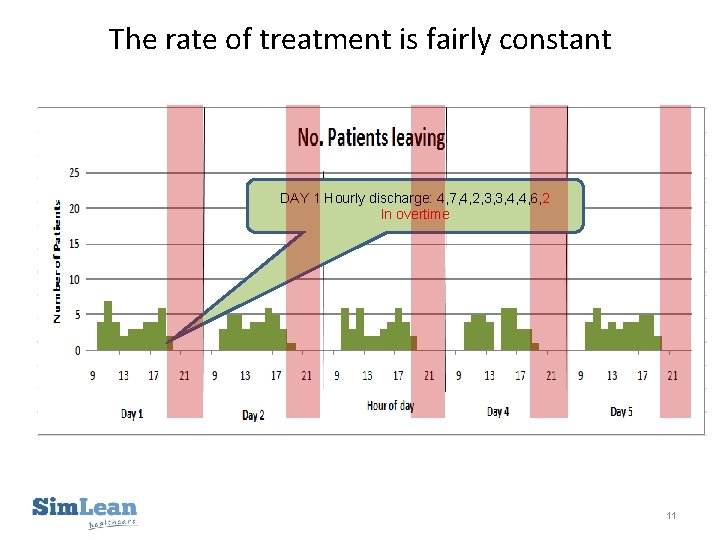
The rate of treatment is fairly constant DAY 1 Hourly discharge: 4, 7, 4, 2, 3, 3, 4, 4, 6, 2 In overtime 11
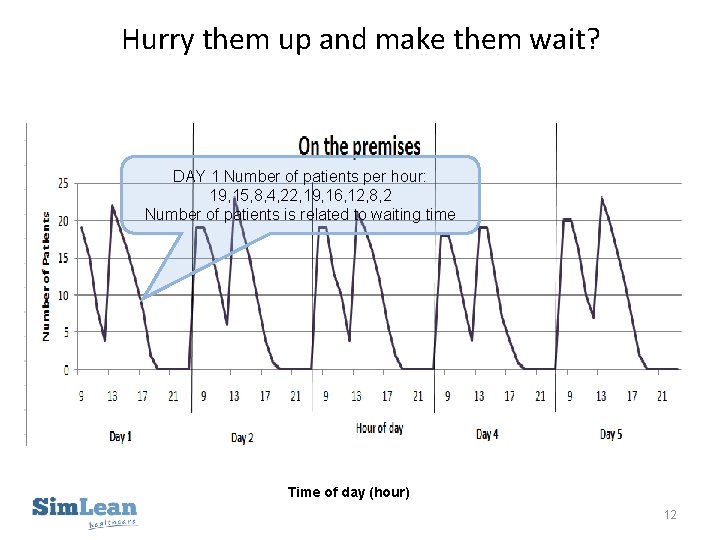
Hurry them up and make them wait? DAY 1 Number of patients per hour: 19, 15, 8, 4, 22, 19, 16, 12, 8, 2 Number of patients is related to waiting time Time of day (hour) 12
Putting it together: Patient flow What are the issues with this process? Day 1 Day 2 Day 4 Day 5 Day 3 13
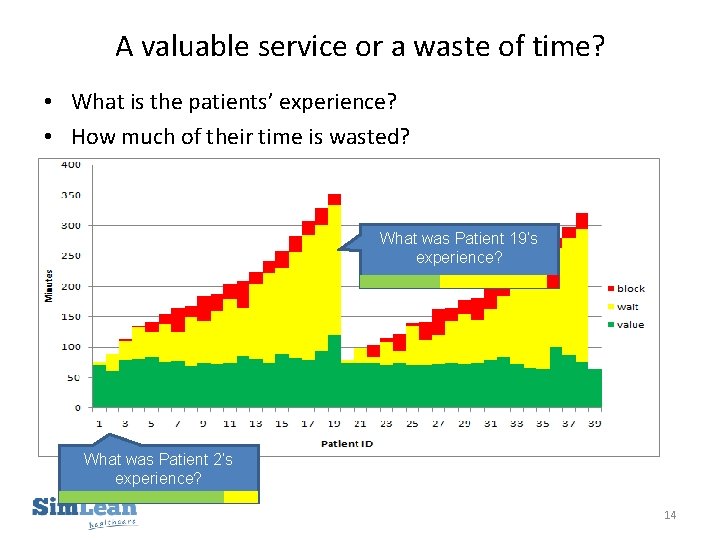
A valuable service or a waste of time? • What is the patients’ experience? • How much of their time is wasted? What was Patient 19’s experience? What was Patient 2’s experience? 14
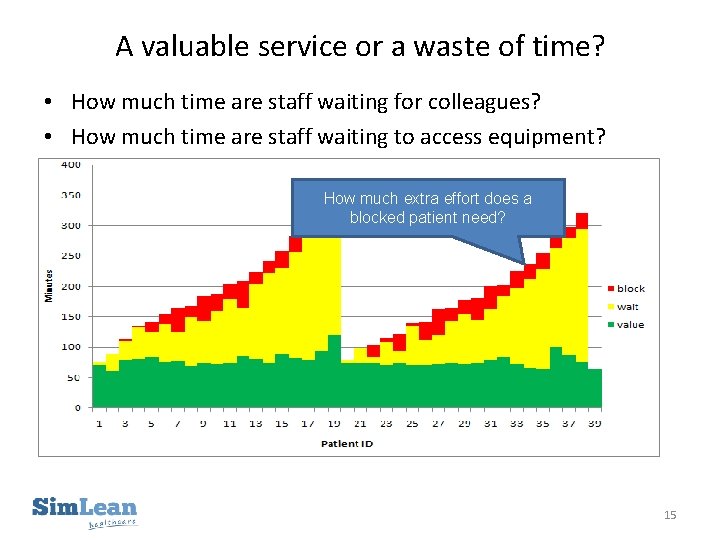
A valuable service or a waste of time? • How much time are staff waiting for colleagues? • How much time are staff waiting to access equipment? How much extra effort does a blocked patient need? 15
Common Problems • We stress the system with large surges of demand. • Queues build up because resources aren’t always ready. • There is little flow in the pathway, many patients just experience stop-start. 16
Vision • Remove the waste and reveal the value. • Find ways of stabilising the process: – Smooth out the demand; – Separate the exceptional from the routine; – Provide the right resources at the right time. • Avoid stressing our people so that they can focus on care and treatment. 17
Educational Interludes 1. Smoothing Demand (Level the Load) – What happens if we move from 2 batches of patient arrivals to 6 batches? 2. Prioritise Patients (Balancing Flow) – The need to balance flow when patients are prioritised 3. Resource shortage (Focus on Value) – What happens when resource availability becomes depleted Each of these can be viewed separately as an ‘interlude’. Please download from www. simlean. org 18