
SILK TRADE ROUTE Facts about the trade network
SILK TRADE ROUTE
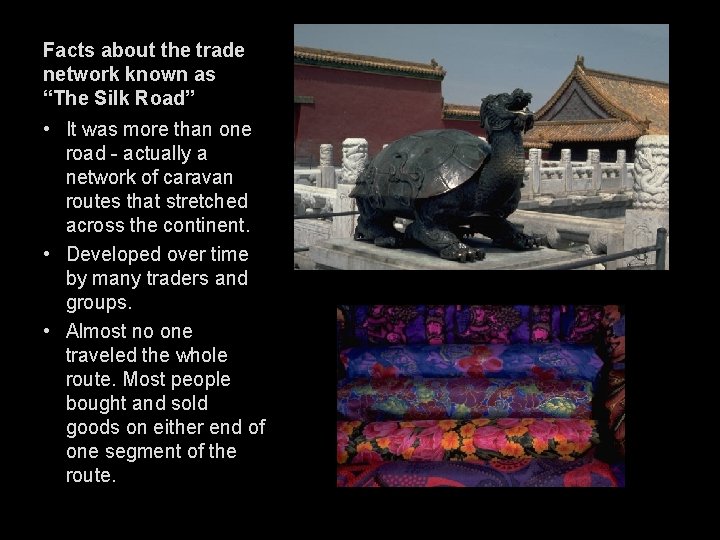
Facts about the trade network known as “The Silk Road” • It was more than one road - actually a network of caravan routes that stretched across the continent. • Developed over time by many traders and groups. • Almost no one traveled the whole route. Most people bought and sold goods on either end of one segment of the route.
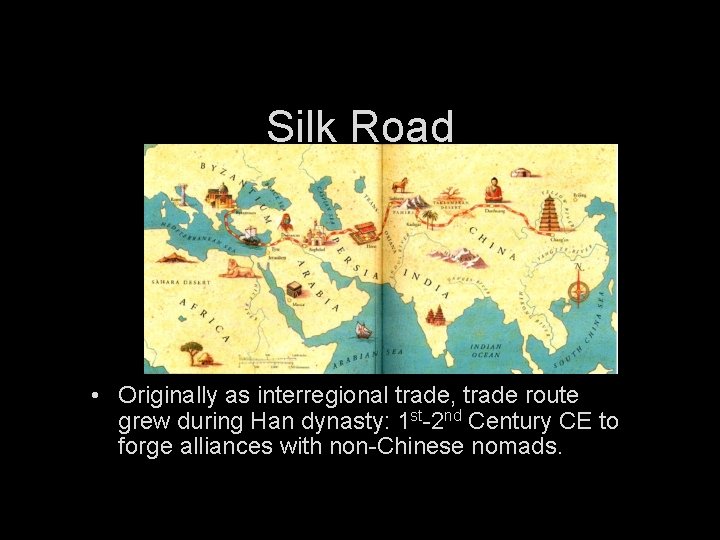
Silk Road • Originally as interregional trade, trade route grew during Han dynasty: 1 st-2 nd Century CE to forge alliances with non-Chinese nomads.
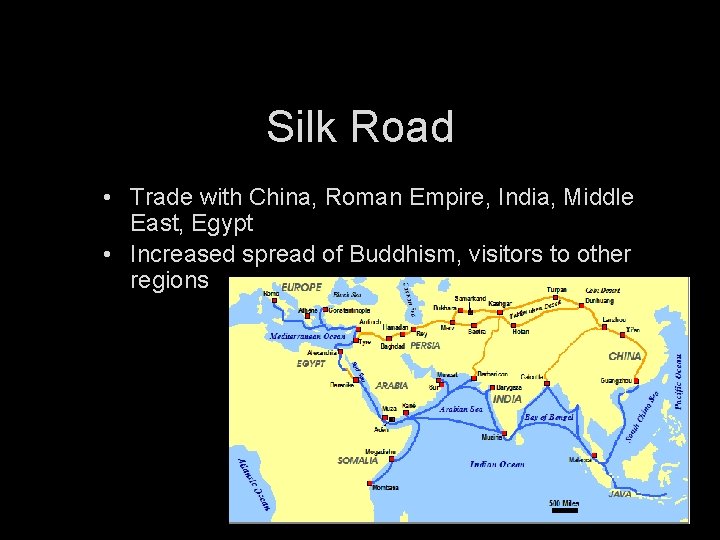
Silk Road • Trade with China, Roman Empire, India, Middle East, Egypt • Increased spread of Buddhism, visitors to other regions
Silk Road As Trade Route Case Study • Trade routes – – • Overland trade routes linked China to Roman empire Sea lanes joined Asia, Africa, and Mediterranean basin into one network Trade goods – – – Silk and spices traveled west Central Asia produced large horses and jade, sold in China Roman empire provided glassware, jewelry, artworks, perfumes, textiles
Silk Road As Trade Route Case Study • Cultural Exchanges Along Silk Road – The spread of Buddhism and Hinduism • Buddhism in central Asia and China – – • First present in oasis towns of central Asia along silk roads Further spread to steppe lands Buddhism and Hinduism in Southeast Asia
Silk Road As Trade Route Case Study • Cultural Exchanges Along Silk Road – The spread of Christianity • Christianity in the Mediterranean basin – – • Missionaries attracted converts Christian communities flourished in Mediterranean basin by late third century C. E. Christianity in Southwest Asia follows the trade routes – – Sizable communities in Mesopotamia and Iran, 2 nd century C. E. Sizable number of converts in southwest Asia until the 7 th century C. E. Nestorians emphasized human nature of Jesus, 5 th C. E. Nestorian communities in central Asia, India, and China by 7 th century C. E.
Silk Road As Trade Route Case Study • Cultural Exchanges Along the Silk Roads – The spread of Manichaeism; • Mani and Manichaeism – Prophet Mani, a Zoroastrian: from Christianity and Buddhism – Dualism: perceived a cosmic struggle between light and darkness, good and evil – Offered means to achieve personal salvation – Ascetic lifestyle and high ethical standards • Spread of Manichaeism; appealed to merchants – Attracted converts first in Mesopotamia and east Mediterranean region – Appeared in all large cities of Roman empire, third century C. E. • Persecuted by Sassanids and Romans but survived in central Asia
Silk Road As Trade Route Case Study • The spread of epidemic disease – Epidemic diseases • Common epidemics in Rome and China: – • • – smallpox, measles, bubonic plague Roman empire: population dropped by a quarter from the first to tenth century C. E. China: population dropped by a quarter from the first to seventh century C. E. Effects of epidemic diseases • • • Both Chinese and Roman economies contracted Small regional economies emerged Epidemics weakened Han and Roman empires
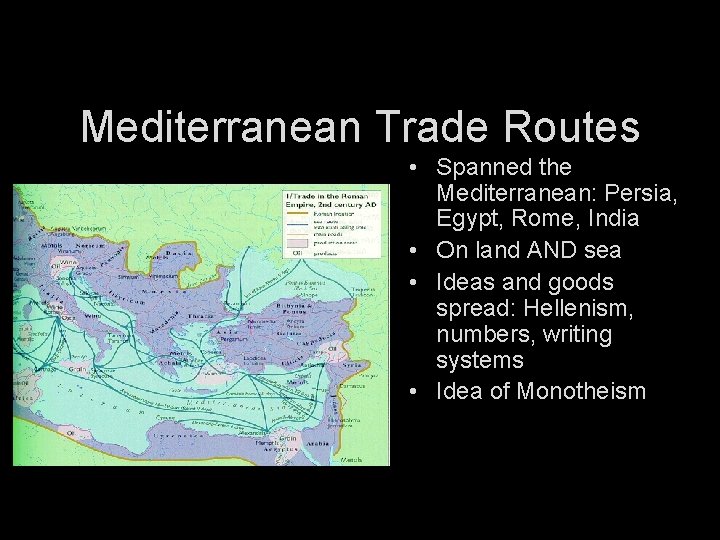
Mediterranean Trade Routes • Spanned the Mediterranean: Persia, Egypt, Rome, India • On land AND sea • Ideas and goods spread: Hellenism, numbers, writing systems • Idea of Monotheism
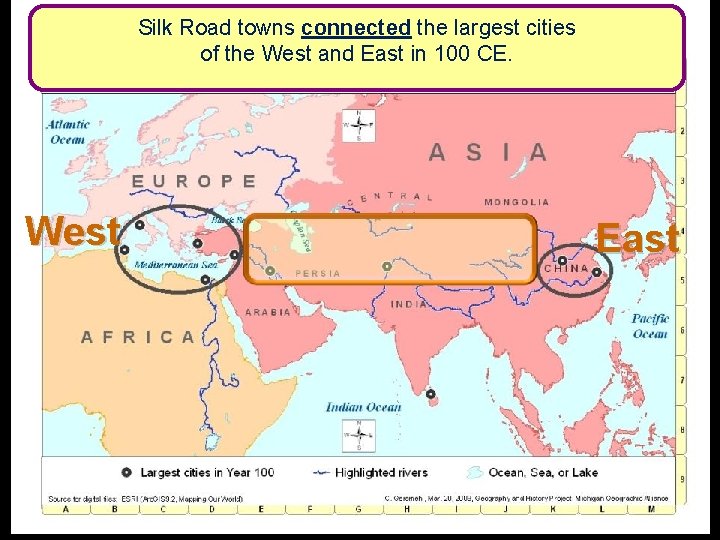
Silk Road towns connected the largest cities of the West and East in 100 CE. West East
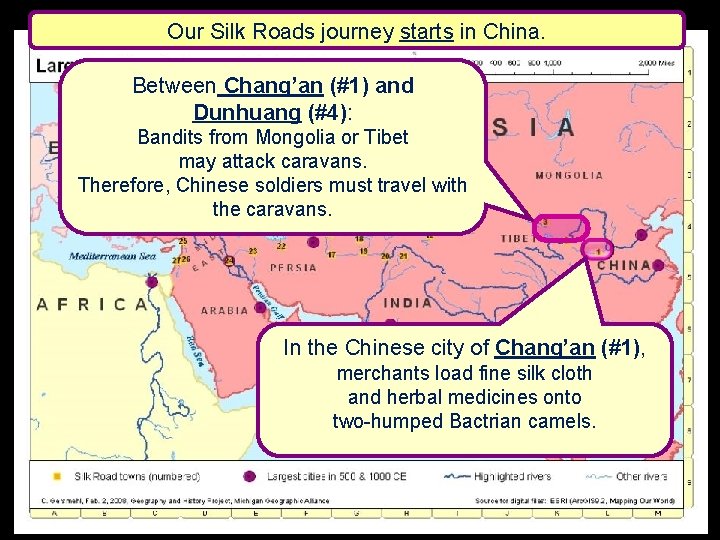
Our Silk Roads journey starts in China. Between Chang’an (#1) and Dunhuang (#4): Bandits from Mongolia or Tibet may attack caravans. Therefore, Chinese soldiers must travel with the caravans. In the Chinese city of Chang’an (#1), merchants load fine silk cloth and herbal medicines onto two-humped Bactrian camels.
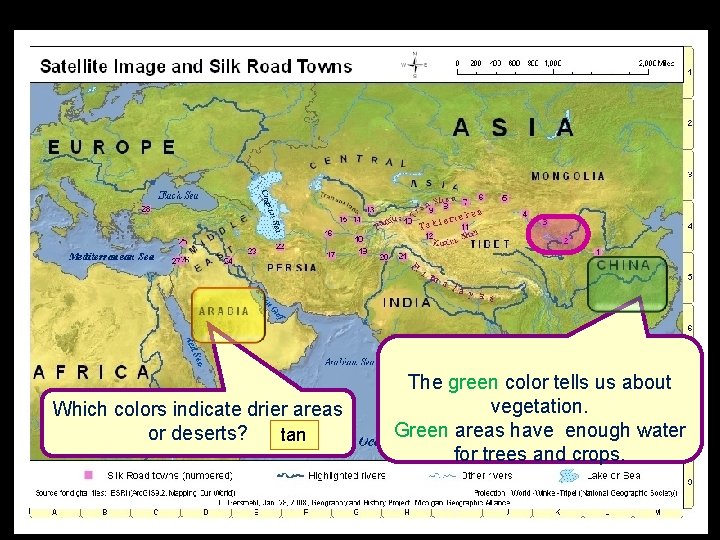
Which colors indicate drier areas or deserts? tan The green color tells us about vegetation. Green areas have enough water for trees and crops.
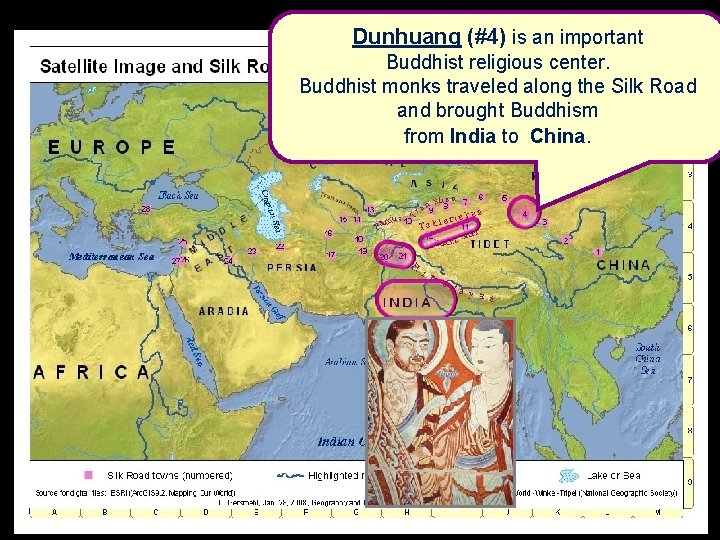
Dunhuang (#4) is an important Buddhist religious center. Buddhist monks traveled along the Silk Road and brought Buddhism from India to China.
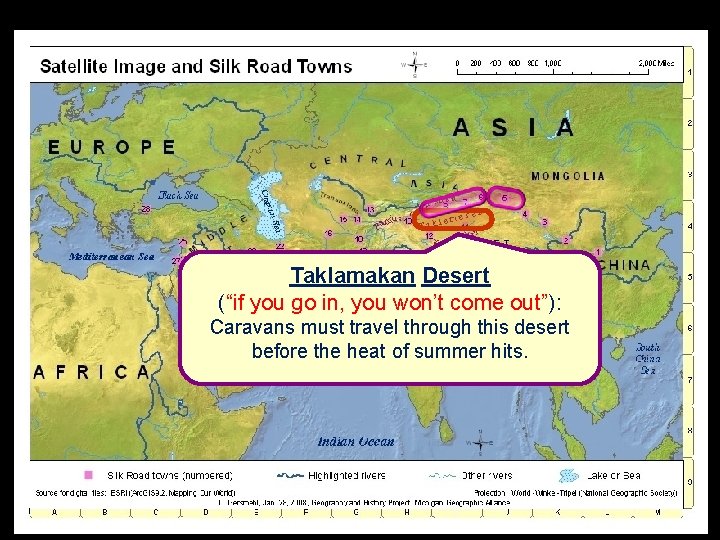
Taklamakan Desert (“if you go in, you won’t come out”): Caravans must travel through this desert before the heat of summer hits.
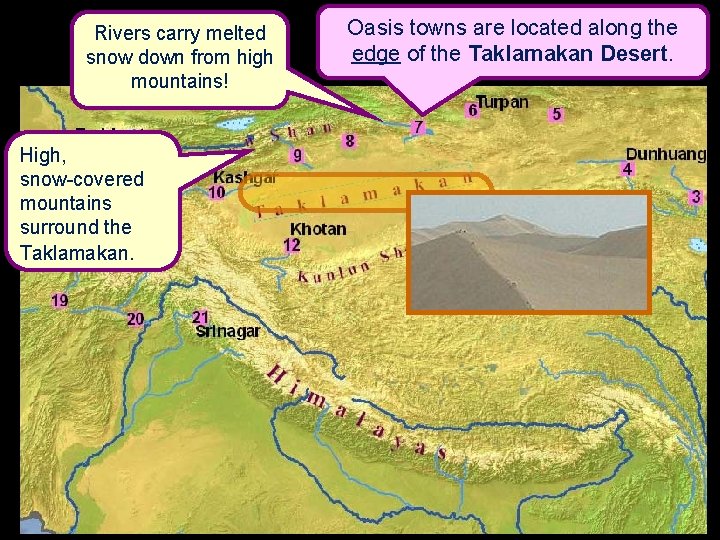
Rivers carry melted snow down from high mountains! High, snow-covered mountains surround the Taklamakan. Oasis towns are located along the edge of the Taklamakan Desert.
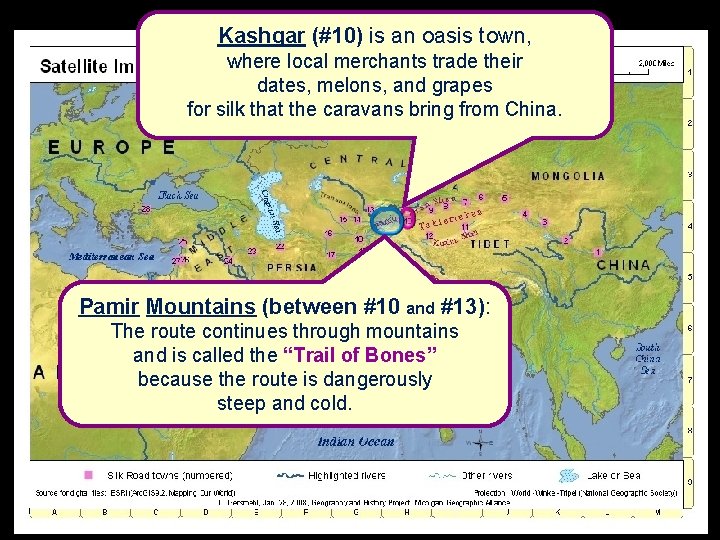
Kashgar (#10) is an oasis town, where local merchants trade their dates, melons, and grapes for silk that the caravans bring from China. Pamir Mountains (between #10 and #13): The route continues through mountains and is called the “Trail of Bones” because the route is dangerously steep and cold.
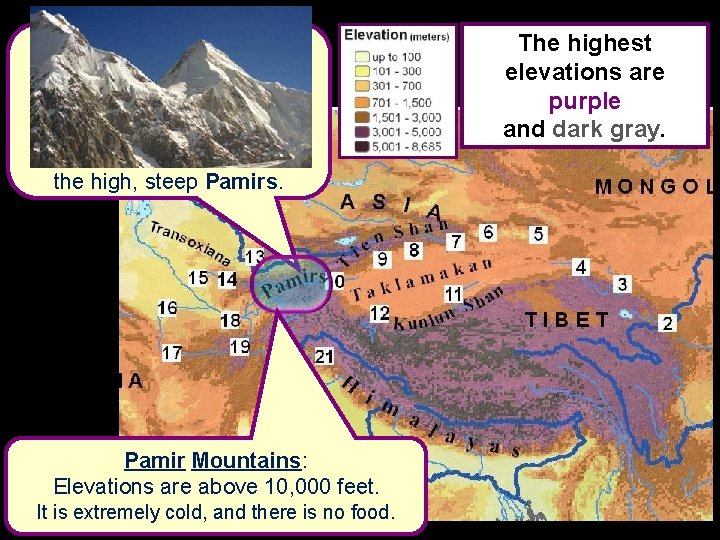
Pamir Mountains: Between Kashgar (#10) and Tashkent (#13), caravans climbed the “Trail of Bones” through the high, steep Pamirs. Pamir Mountains: Elevations are above 10, 000 feet. It is extremely cold, and there is no food. The highest elevations are purple and dark gray.
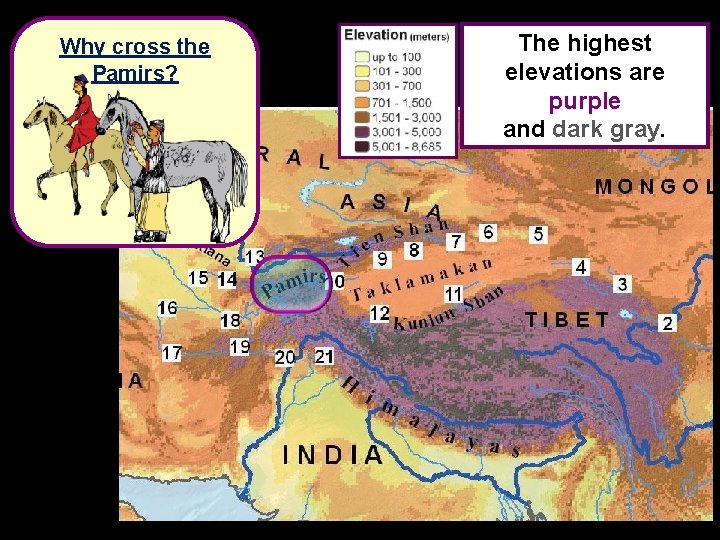
Why cross the Pamirs? The highest elevations are purple and dark gray.
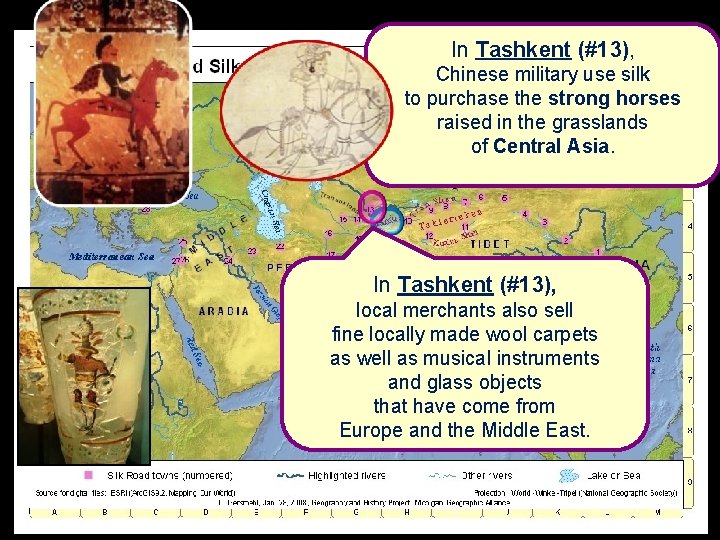
In Tashkent (#13), Chinese military use silk to purchase the strong horses raised in the grasslands of Central Asia. In Tashkent (#13), local merchants also sell fine locally made wool carpets as well as musical instruments and glass objects that have come from Europe and the Middle East.
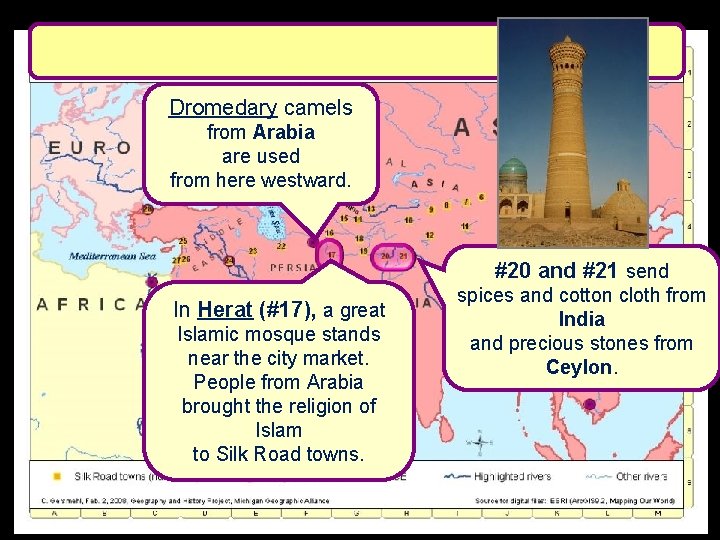
Dromedary camels from Arabia are used from here westward. #20 and #21 send In Herat (#17), a great Islamic mosque stands near the city market. People from Arabia brought the religion of Islam to Silk Road towns. spices and cotton cloth from India and precious stones from Ceylon.
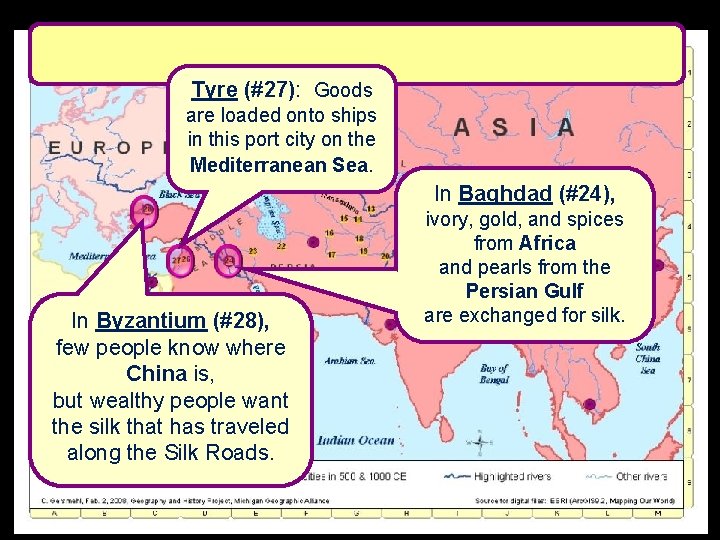
Tyre (#27): Goods are loaded onto ships in this port city on the Mediterranean Sea. In Baghdad (#24), In Byzantium (#28), few people know where China is, but wealthy people want the silk that has traveled along the Silk Roads. ivory, gold, and spices from Africa and pearls from the Persian Gulf are exchanged for silk.
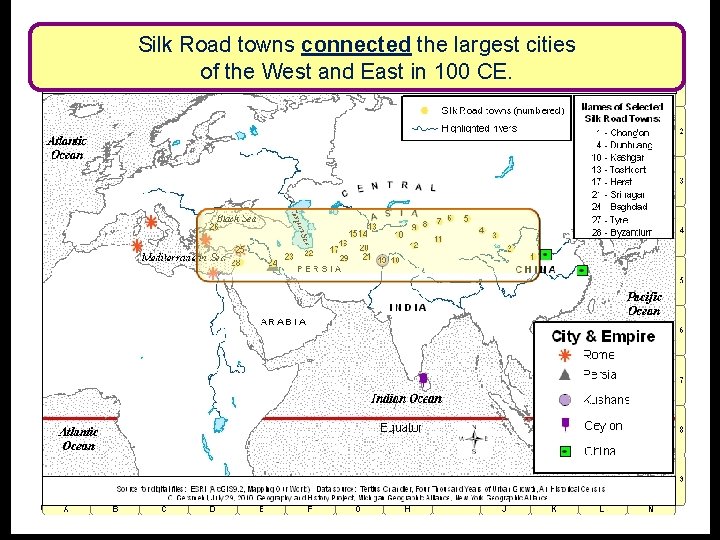
Silk Road towns connected the largest cities of the West and East in 100 CE.
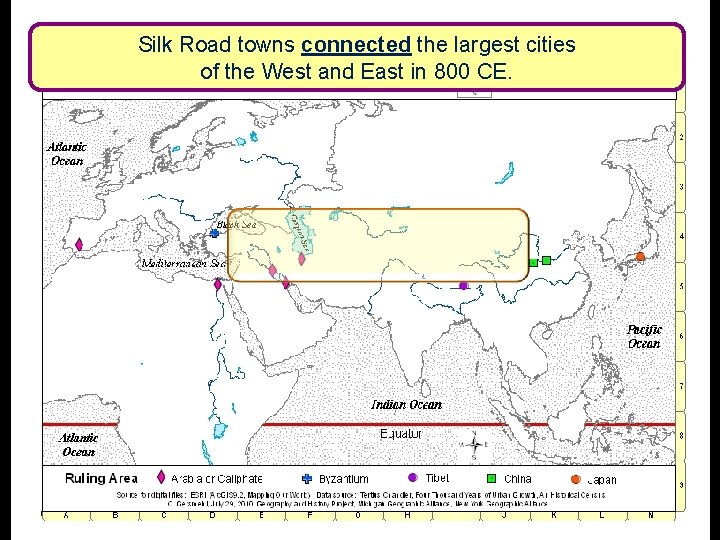
Silk Road towns connected the largest cities of the West and East in 800 CE.
- Slides: 24