
Silica its more than just dust December 2018
Silica it’s more than just dust December, 2018
What topics will be covered What is silica? What are its health hazards? What are the human exposure limits? Where is it used? How can it be controlled? When are respirators needed? Our obligations required by the Silica regulation Washington State Department of Labor & Industries 2
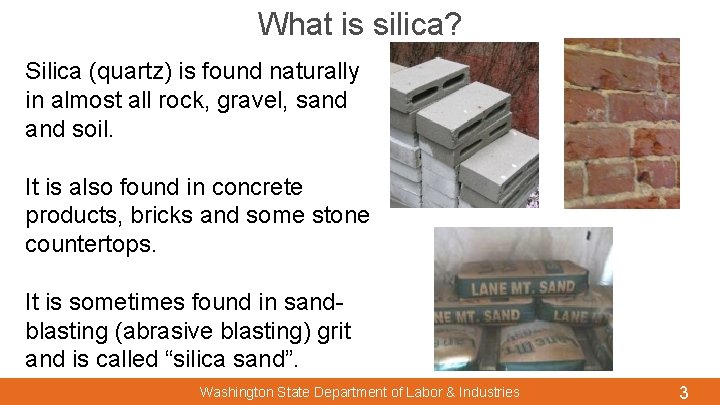
What is silica? Silica (quartz) is found naturally in almost all rock, gravel, sand soil. It is also found in concrete products, bricks and some stone countertops. It is sometimes found in sandblasting (abrasive blasting) grit and is called “silica sand”. Washington State Department of Labor & Industries 3
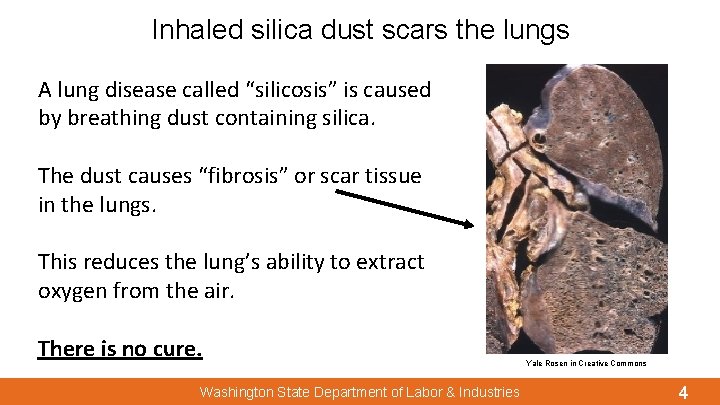
Inhaled silica dust scars the lungs A lung disease called “silicosis” is caused by breathing dust containing silica. The dust causes “fibrosis” or scar tissue in the lungs. This reduces the lung’s ability to extract oxygen from the air. There is no cure. Washington State Department of Labor & Industries Yale Rosen in Creative Commons 4
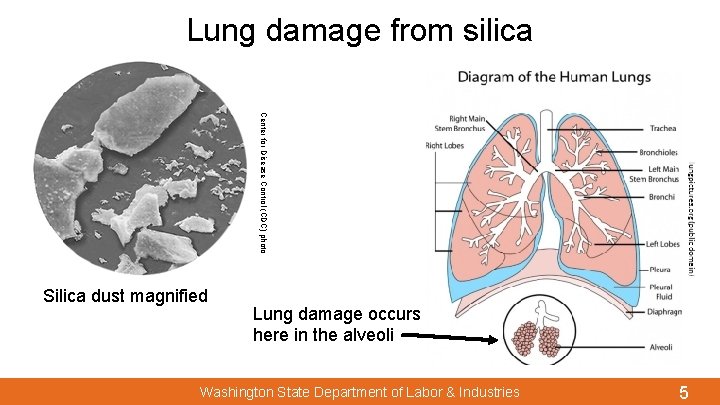
Lung damage from silica Center for Disease Control (CDC) photo Silica dust magnified Lung damage occurs here in the alveoli Washington State Department of Labor & Industries 5
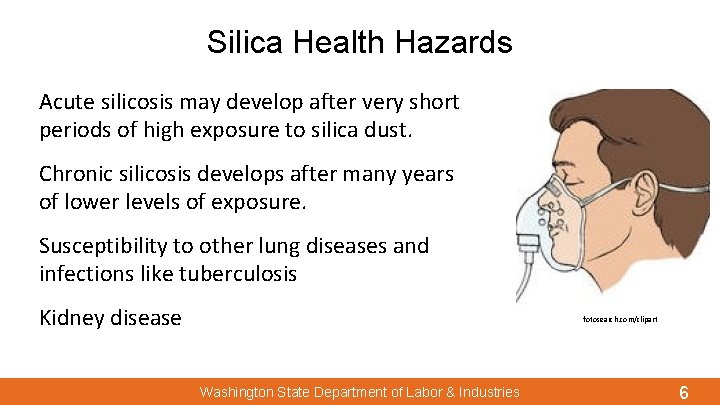
Silica Health Hazards Acute silicosis may develop after very short periods of high exposure to silica dust. Chronic silicosis develops after many years of lower levels of exposure. Susceptibility to other lung diseases and infections like tuberculosis Kidney disease fotosearch. com/clipart Washington State Department of Labor & Industries 6
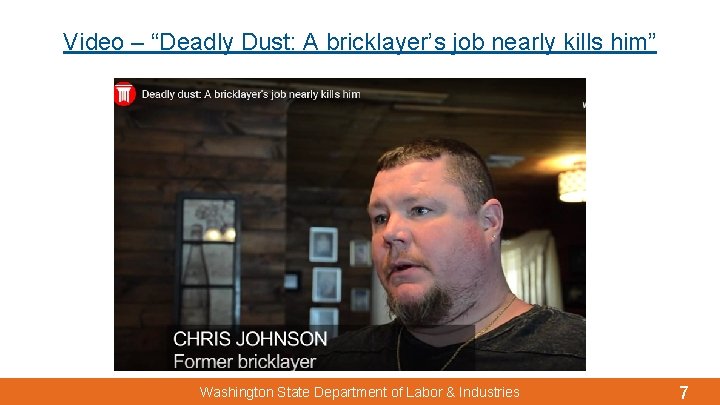
Video – “Deadly Dust: A bricklayer’s job nearly kills him” Washington State Department of Labor & Industries 7
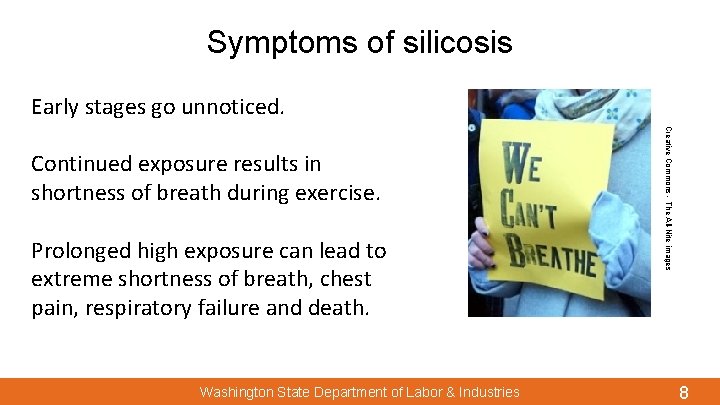
Symptoms of silicosis Early stages go unnoticed. Prolonged high exposure can lead to extreme shortness of breath, chest pain, respiratory failure and death. Washington State Department of Labor & Industries Creative Commons - The All-Nite images Continued exposure results in shortness of breath during exercise. 8
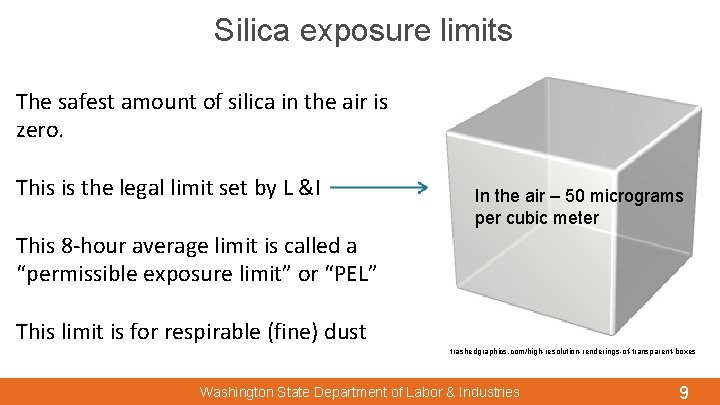
Silica exposure limits The safest amount of silica in the air is zero. This is the legal limit set by L &I In the air – 50 micrograms per cubic meter This 8 -hour average limit is called a “permissible exposure limit” or “PEL” This limit is for respirable (fine) dust trashedgraphics. com/high-resolution-renderings-of-transparent-boxes Washington State Department of Labor & Industries 9
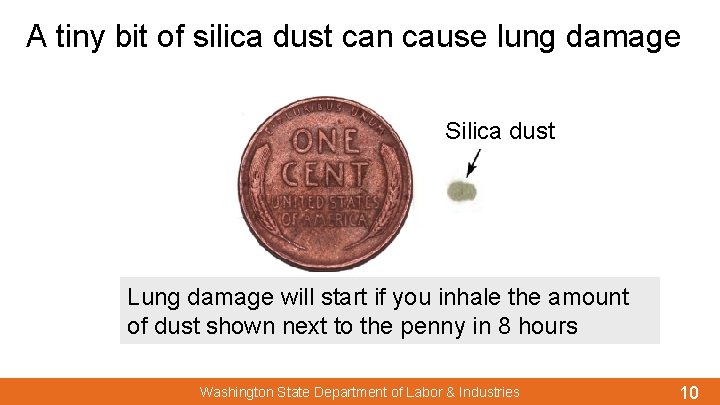
A tiny bit of silica dust can cause lung damage Silica dust Lung damage will start if you inhale the amount of dust shown next to the penny in 8 hours Washington State Department of Labor & Industries 10
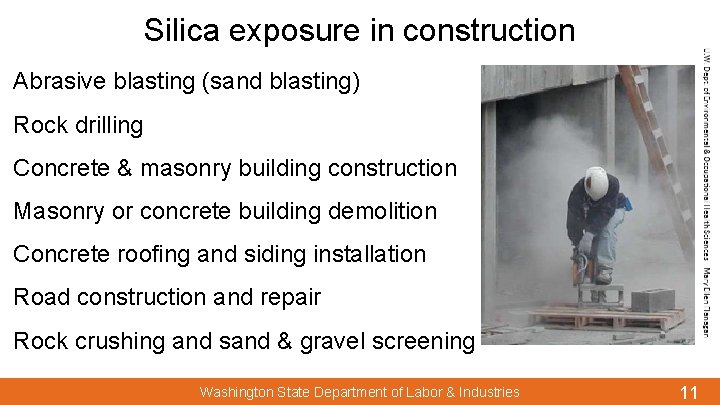
Silica exposure in construction Abrasive blasting (sand blasting) Rock drilling Concrete & masonry building construction Masonry or concrete building demolition Concrete roofing and siding installation Road construction and repair Rock crushing and sand & gravel screening Washington State Department of Labor & Industries 11
The risk of silica exposure When dust is controlled, exposures are low. When dust is uncontrolled, exposures are usually high. Many exposures in construction are for short time periods, but at very high concentrations. Short, high exposure can still exceed permissible limits and cause lung damage. Washington State Department of Labor & Industries 12
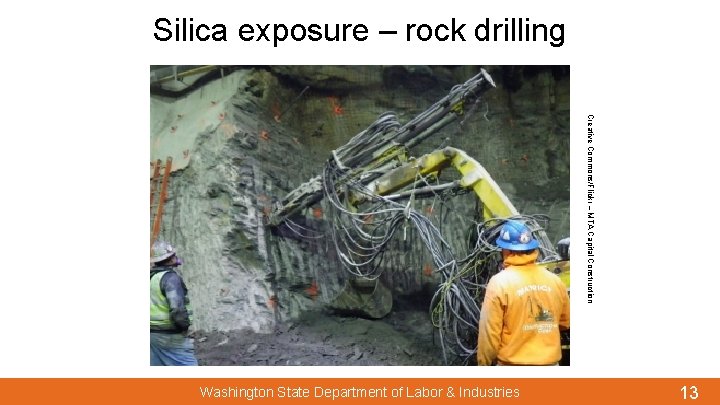
Silica exposure – rock drilling Creative Commons/Flickr – MTA Capital Construction Washington State Department of Labor & Industries 13
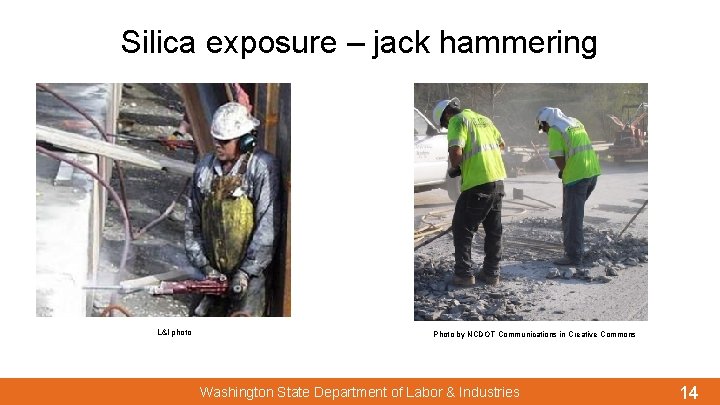
Silica exposure – jack hammering L&I photo Photo by NCDOT Communications in Creative Commons Washington State Department of Labor & Industries 14
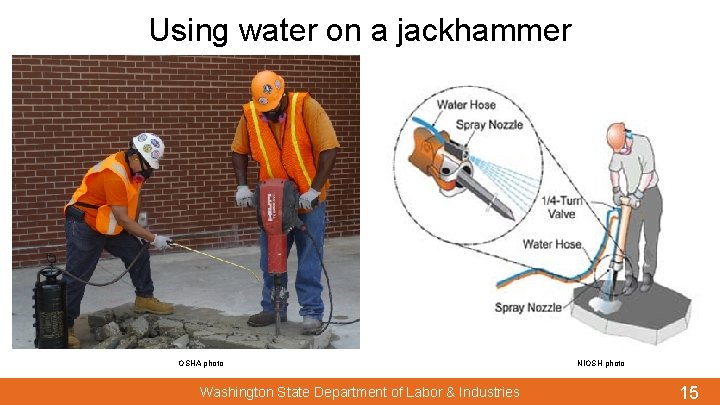
Using water on a jackhammer OSHA photo Washington State Department of Labor & Industries NIOSH photo 15
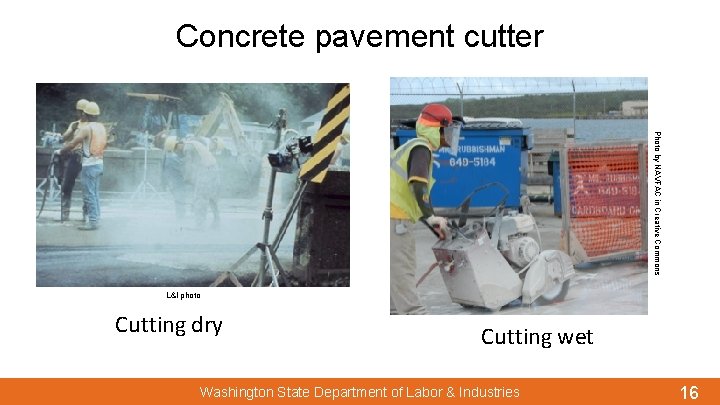
Concrete pavement cutter Photo by NAVFAC in Creative Commons L&I photo Cutting dry Cutting wet Washington State Department of Labor & Industries 16
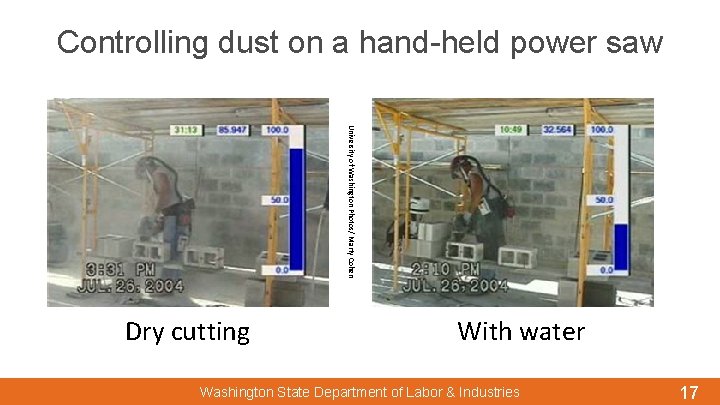
Controlling dust on a hand-held power saw University of Washington Photos/ Marty Cohen Dry cutting With water Washington State Department of Labor & Industries 17
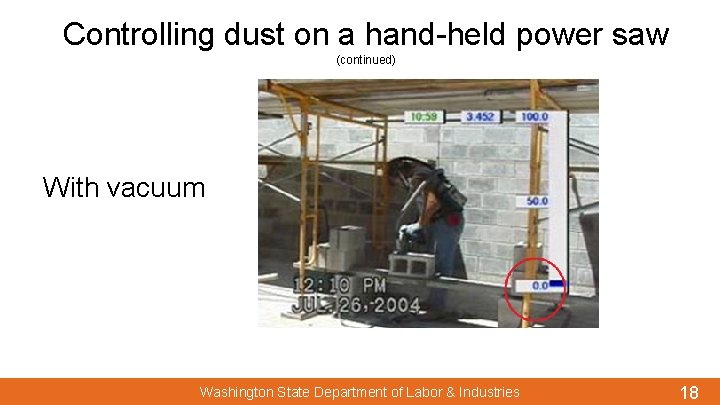
Controlling dust on a hand-held power saw (continued) With vacuum Washington State Department of Labor & Industries 18
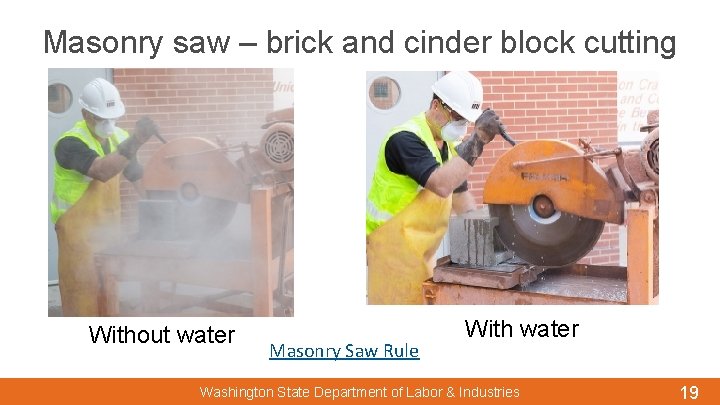
Masonry saw – brick and cinder block cutting Without water Masonry Saw Rule With water Washington State Department of Labor & Industries 19
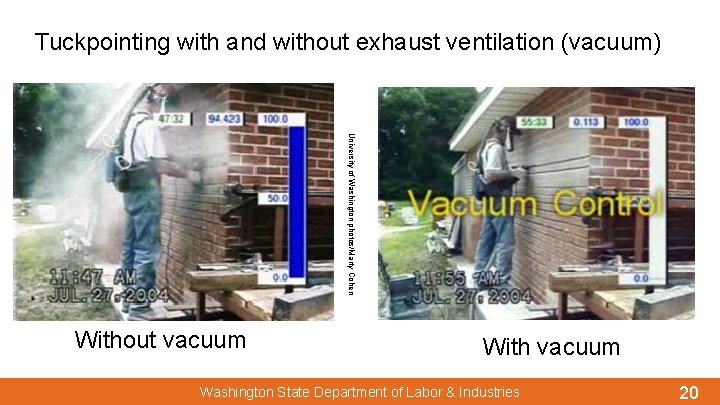
Tuckpointing with and without exhaust ventilation (vacuum) University of Washington photos/Marty Cohen Without vacuum With vacuum Washington State Department of Labor & Industries 20
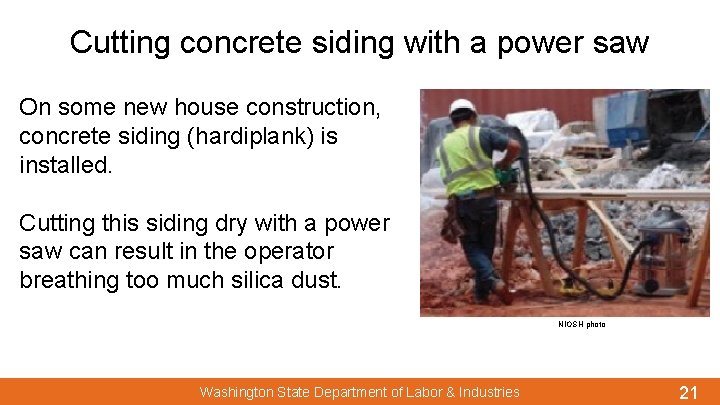
Cutting concrete siding with a power saw On some new house construction, concrete siding (hardiplank) is installed. Cutting this siding dry with a power saw can result in the operator breathing too much silica dust. NIOSH photo Washington State Department of Labor & Industries 21
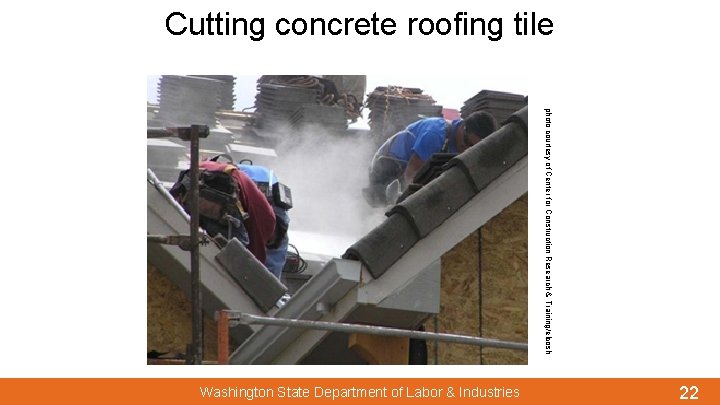
Cutting concrete roofing tile photo courtesy of Center for Construction Research & Training/elcosh Washington State Department of Labor & Industries 22
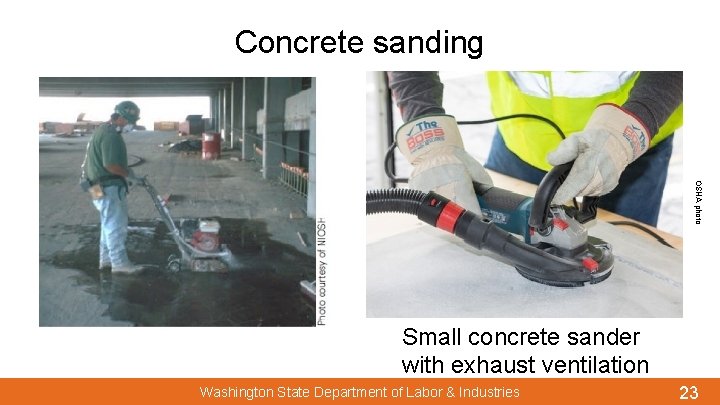
Concrete sanding OSHA photo Small concrete sander with exhaust ventilation Washington State Department of Labor & Industries 23
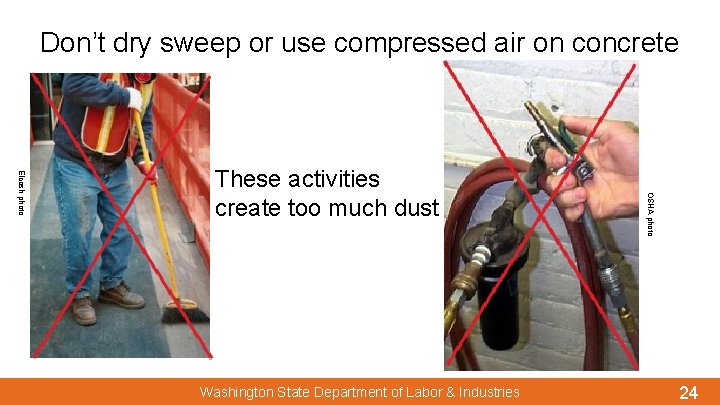
Don’t dry sweep or use compressed air on concrete Washington State Department of Labor & Industries OSHA photo Elcosh photo These activities create too much dust 24
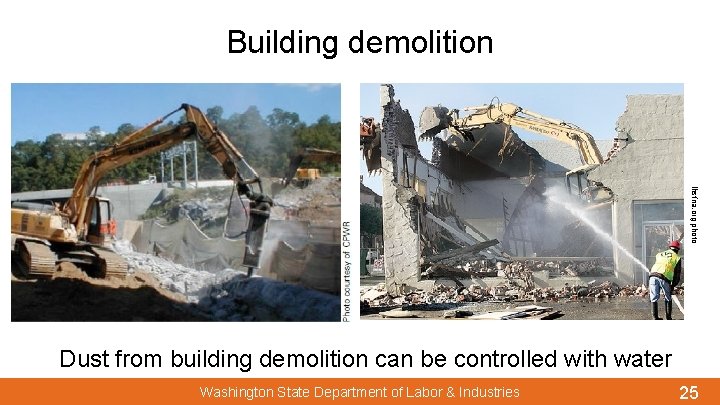
Building demolition Ihsfna. org photo Dust from building demolition can be controlled with water Washington State Department of Labor & Industries 25
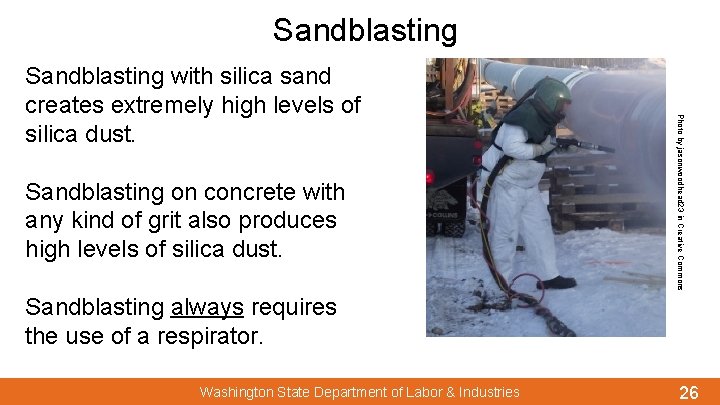
Sandblasting on concrete with any kind of grit also produces high levels of silica dust. Photo by jasonwoodhead 23 in Creative Commons Sandblasting with silica sand creates extremely high levels of silica dust. Sandblasting always requires the use of a respirator. Washington State Department of Labor & Industries 26
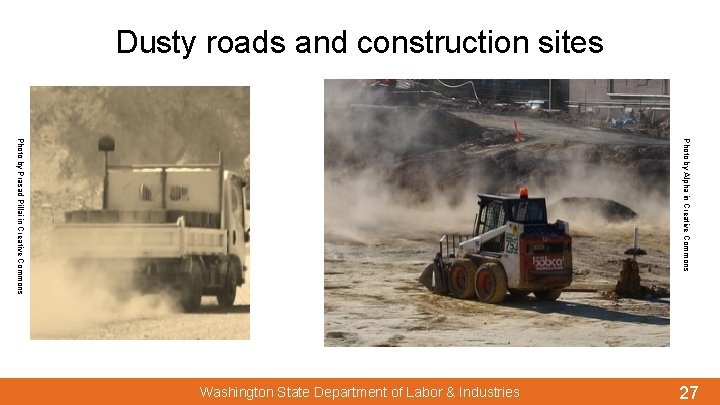
Dusty roads and construction sites Photo by Alpha in Creative Commons Photo by Prasad Pillai in Creative Commons Washington State Department of Labor & Industries 27
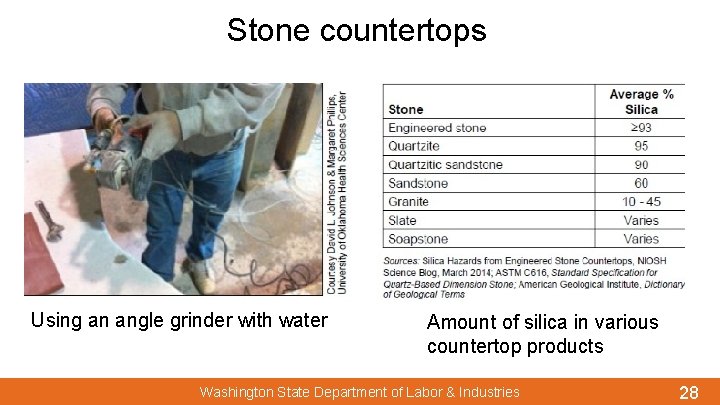
Stone countertops Using an angle grinder with water Amount of silica in various countertop products Washington State Department of Labor & Industries 28
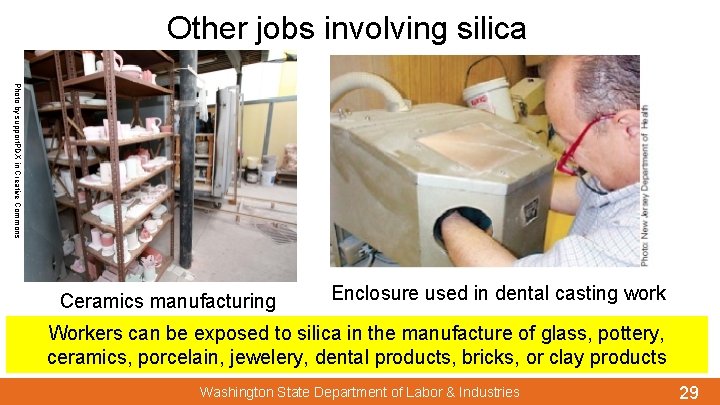
Other jobs involving silica Photo by support. PDX in Creative Commons Ceramics manufacturing Enclosure used in dental casting work Workers can be exposed to silica in the manufacture of glass, pottery, ceramics, porcelain, jewelery, dental products, bricks, or clay products Washington State Department of Labor & Industries 29
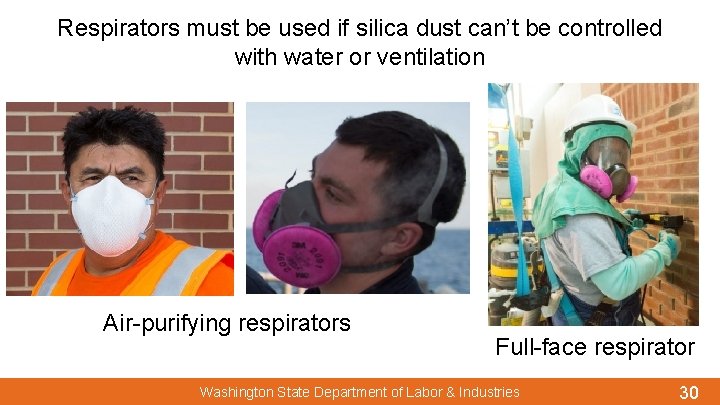
Respirators must be used if silica dust can’t be controlled with water or ventilation Air-purifying respirators Full-face respirator Washington State Department of Labor & Industries 30
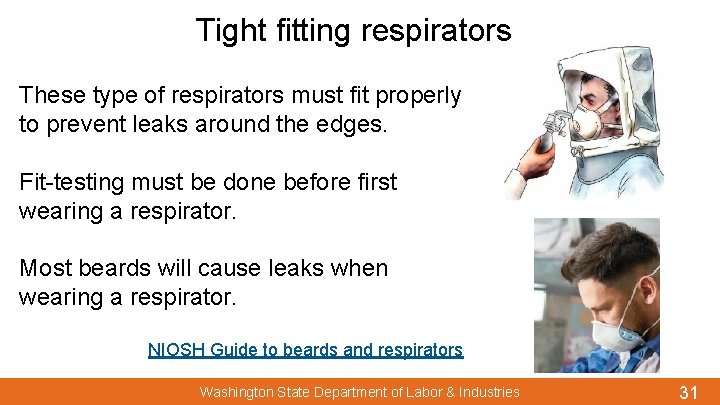
Tight fitting respirators These type of respirators must fit properly to prevent leaks around the edges. Fit-testing must be done before first wearing a respirator. Most beards will cause leaks when wearing a respirator. NIOSH Guide to beards and respirators Washington State Department of Labor & Industries 31
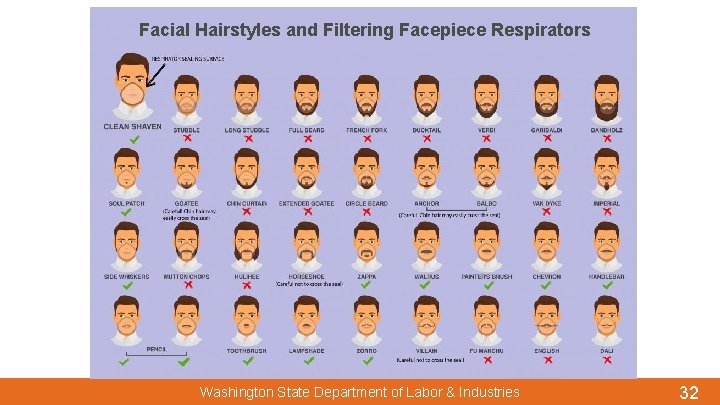
Facial Hairstyles and Filtering Facepiece Respirators Washington State Department of Labor & Industries 32
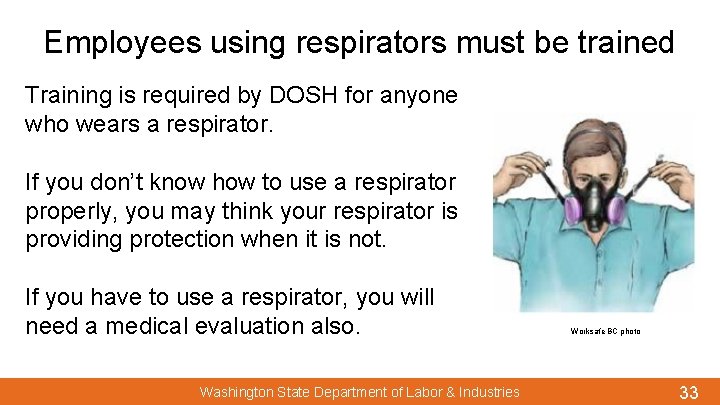
Employees using respirators must be trained Training is required by DOSH for anyone who wears a respirator. If you don’t know how to use a respirator properly, you may think your respirator is providing protection when it is not. If you have to use a respirator, you will need a medical evaluation also. Washington State Department of Labor & Industries Worksafe BC photo 33
Our obligations We are required by L & I – DOSH rules to tell you where you are exposed to silica and how high the levels in the air are. We are also required to control your exposure to silica dust by water or exhaust ventilation (vacuum), which ever works best, or provide you with a respirator if there are no feasible controls. Washington State Department of Labor & Industries 34
More obligations If we cannot control silica levels in the air below the permissible limit, we must: - provide you with respiratory protection, - provide medical surveillance (exams) for you in certain situations - in construction, appoint a “competent person” who can identify silica hazards and conduct regular inspections Washington State Department of Labor & Industries 35
Specific tasks or job duties where you will be exposed to silica dust Washington State Department of Labor & Industries 36
Measures we have taken to protect you from silica exposure Washington State Department of Labor & Industries 37
Our written exposure control plan In construction our “competent person” is: Washington State Department of Labor & Industries 38
![Our medical surveillance program [Optional slide] Washington State Department of Labor & Industries 39](http://slidetodoc.com/presentation_image_h/11fdab97198d90d3deec3631210fb61b/image-39.jpg "Our medical surveillance program [Optional slide] Washington State Department of Labor & Industries 39")
Our medical surveillance program [Optional slide] Washington State Department of Labor & Industries 39
Additional information L & I – DOSH silica webpage Managing silica at construction sites – DOSH Silica Tool Silica hazard alert – Center for Construction Research & Training Washington State Department of Labor & Industries 40
- Slides: 40