
Signs of Safety early help Drawing on the


- Slides: 26
Signs of Safety & early help Drawing on the work of Andrew Turnell, Terry Murphy & Viv Hogg thriving children – strong families 1
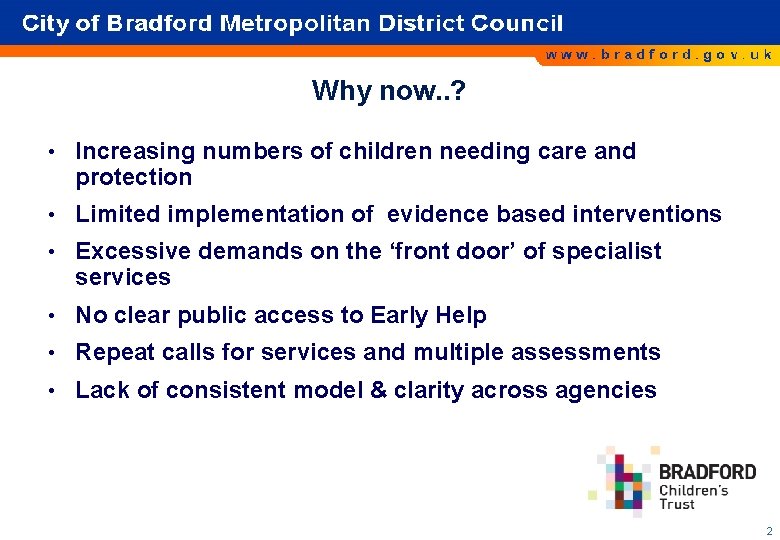
Why now. . ? • Increasing numbers of children needing care and protection • Limited implementation of evidence based interventions • Excessive demands on the ‘front door’ of specialist services • No clear public access to Early Help • Repeat calls for services and multiple assessments • Lack of consistent model & clarity across agencies 2
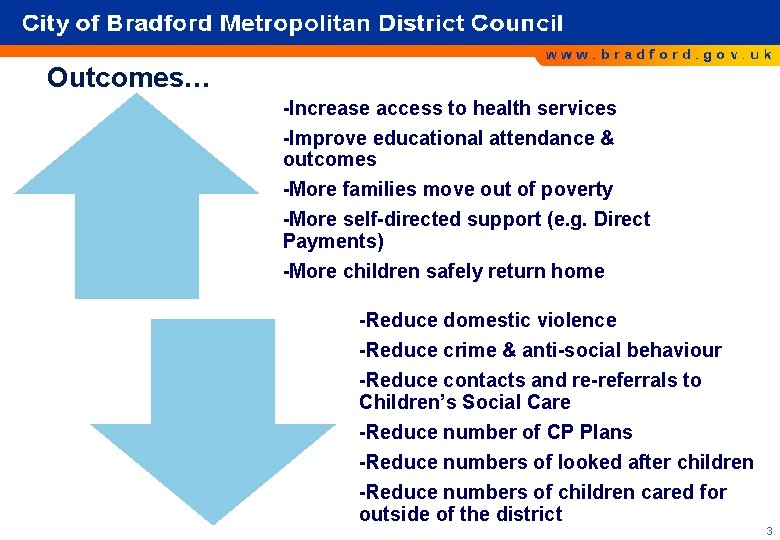
Outcomes… -Increase access to health services -Improve educational attendance & outcomes -More families move out of poverty -More self-directed support (e. g. Direct Payments) -More children safely return home -Reduce domestic violence -Reduce crime & anti-social behaviour -Reduce contacts and re-referrals to Children’s Social Care -Reduce number of CP Plans -Reduce numbers of looked after children -Reduce numbers of children cared for outside of the district 3
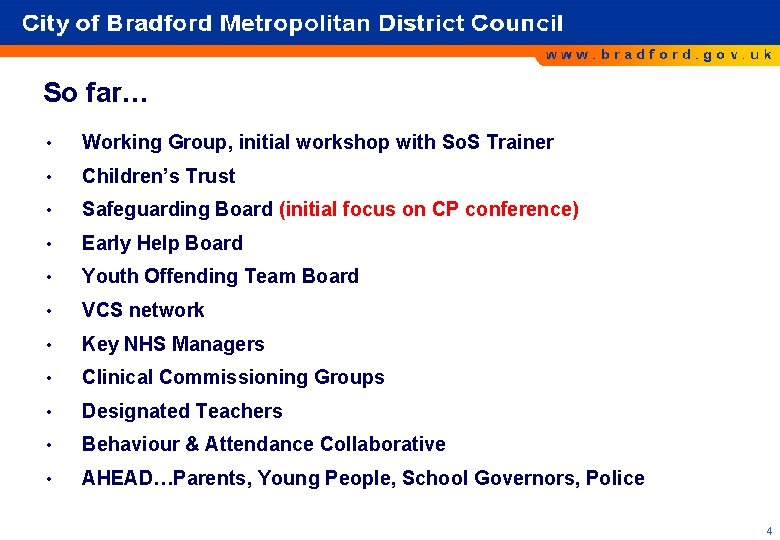
So far… • Working Group, initial workshop with So. S Trainer • Children’s Trust • Safeguarding Board (initial focus on CP conference) • Early Help Board • Youth Offending Team Board • VCS network • Key NHS Managers • Clinical Commissioning Groups • Designated Teachers • Behaviour & Attendance Collaborative • AHEAD…Parents, Young People, School Governors, Police 4
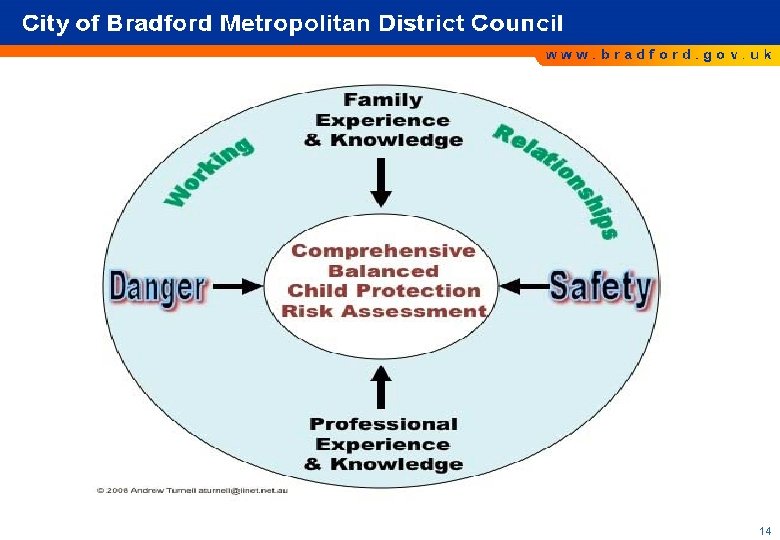
The heart of human change and practice… • Research indicates that the best outcomes for children arise when… 5
…there are constructive working relationships between professionals themselves and between professionals and family members. 6
Early Help • Early Help offer required under ‘Working Together’ • Our local Early Help needs to: • Improve outcomes • Be more focused & assertive • Be better co-ordinated • Provide a single point of access We will build on • Families First & family support services • Better Start (Pilot area alongside Keighley) • Children’s Centres • 7
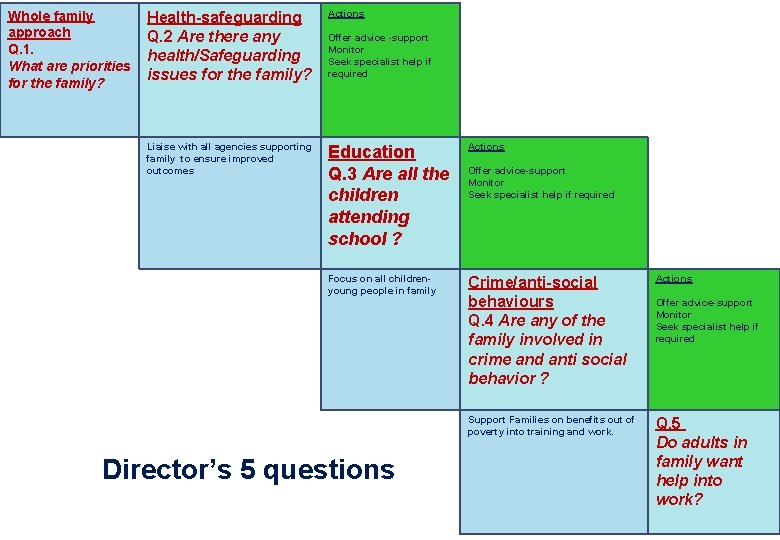
Whole family approach Q. 1. What are priorities for the family? Health-safeguarding Q. 2 Are there any health/Safeguarding issues for the family? Actions Liaise with all agencies supporting family to ensure improved outcomes Education Q. 3 Are all the children attending school ? Actions Focus on all childrenyoung people in family Crime/anti-social behaviours Q. 4 Are any of the family involved in crime and anti social behavior ? Actions Support Families on benefits out of poverty into training and work. Q. 5 Do adults in family want help into work? Offer advice -support Monitor Seek specialist help if required Director’s 5 questions Offer advice-support Monitor Seek specialist help if required
9
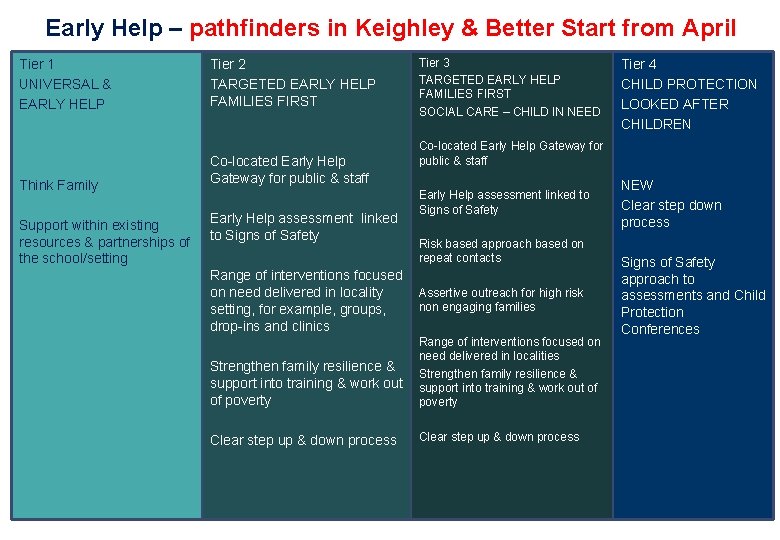
Early Help – pathfinders in Keighley & Better Start from April Tier 1 UNIVERSAL & EARLY HELP Think Family Support within existing resources & partnerships of the school/setting Tier 2 TARGETED EARLY HELP FAMILIES FIRST Co-located Early Help Gateway for public & staff Early Help assessment linked to Signs of Safety Tier 3 TARGETED EARLY HELP FAMILIES FIRST SOCIAL CARE – CHILD IN NEED Tier 4 CHILD PROTECTION LOOKED AFTER CHILDREN Co-located Early Help Gateway for public & staff Early Help assessment linked to Signs of Safety Risk based approach based on repeat contacts Range of interventions focused Assertive outreach for high risk on need delivered in locality non engaging families setting, for example, groups, drop-ins and clinics Strengthen family resilience & support into training & work out of poverty Range of interventions focused on need delivered in localities Strengthen family resilience & support into training & work out of poverty Clear step up & down process NEW Clear step down process Signs of Safety approach to assessments and Child Protection Conferences
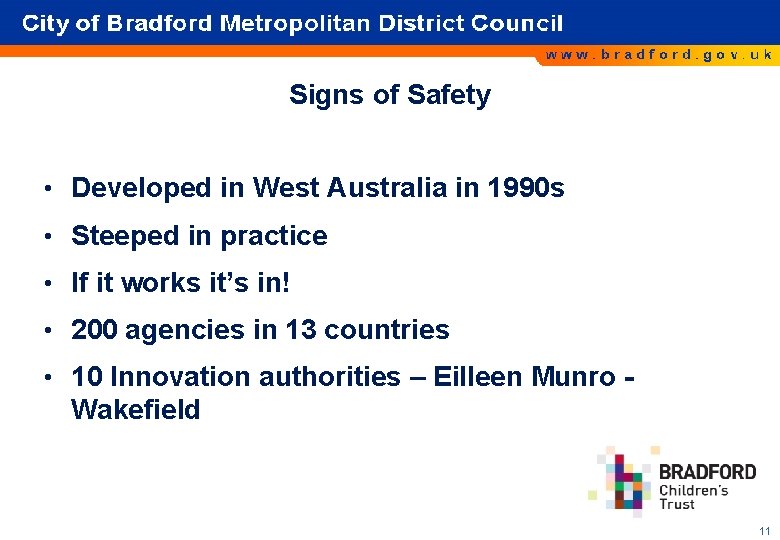
Signs of Safety • Developed in West Australia in 1990 s • Steeped in practice • If it works it’s in! • 200 agencies in 13 countries • 10 Innovation authorities – Eilleen Munro - Wakefield 11
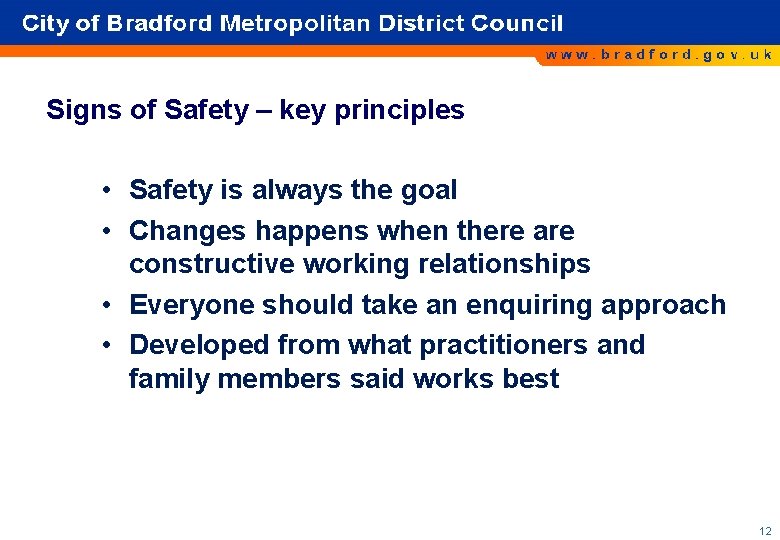
Signs of Safety – key principles • Safety is always the goal • Changes happens when there are constructive working relationships • Everyone should take an enquiring approach • Developed from what practitioners and family members said works best 12
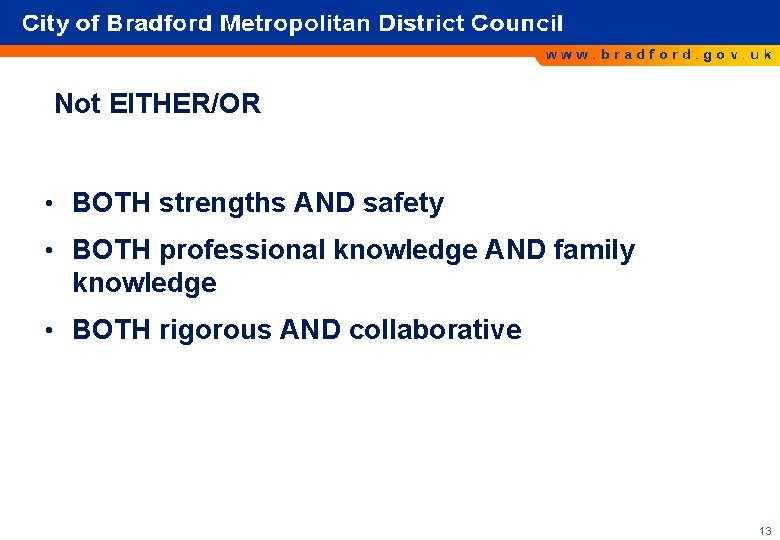
Not EITHER/OR • BOTH strengths AND safety • BOTH professional knowledge AND family knowledge • BOTH rigorous AND collaborative 13
14
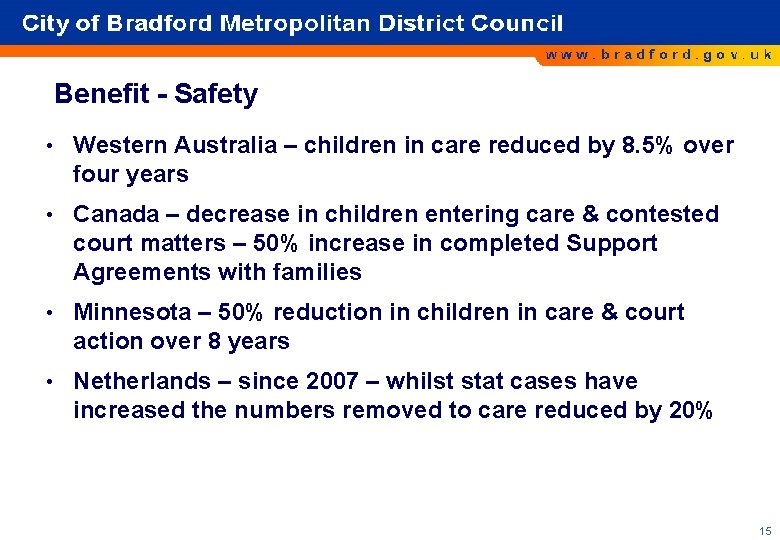
Benefit - Safety • Western Australia – children in care reduced by 8. 5% over four years • Canada – decrease in children entering care & contested court matters – 50% increase in completed Support Agreements with families • Minnesota – 50% reduction in children in care & court action over 8 years • Netherlands – since 2007 – whilst stat cases have increased the numbers removed to care reduced by 20% 15
Benefit - Intensive focus on building child safety • Common language & shared focus • Focus on every day safety for the child • Safety focus skills & tools • Sustained focus on what safer parenting looks like • Plans to get there! • Continuous assess – plan – do – review 16
Benefit - Families more empowered ‘Our worker is really honest and ‘straight up’ with us. ’ ‘We get what people are worried about and what we need to do over the next few months. ’ ‘Our worker took time to get to know us and our children. ’ ‘That meeting did talk about the good things in our family as well as the things which are going wrong. ’ ‘I know why I am looked after or why social workers are in life’. ‘Things are better for me at home. I don’t feel worried like I was before. ’ 17
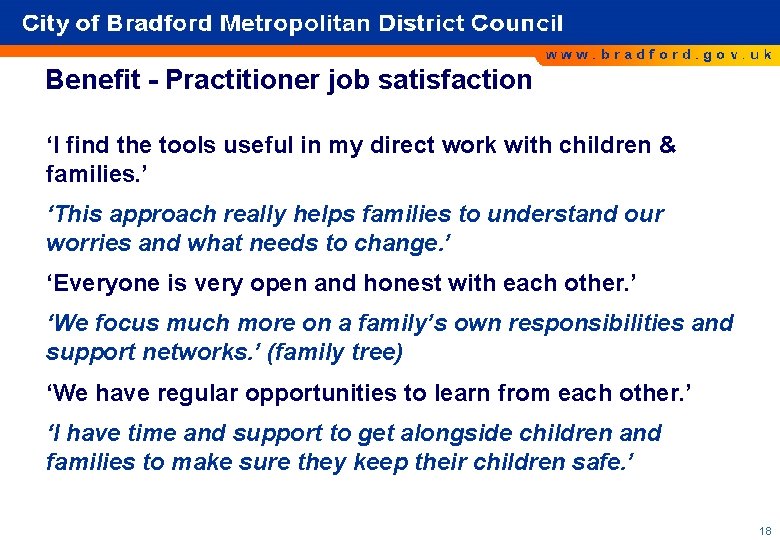
Benefit - Practitioner job satisfaction ‘I find the tools useful in my direct work with children & families. ’ ‘This approach really helps families to understand our worries and what needs to change. ’ ‘Everyone is very open and honest with each other. ’ ‘We focus much more on a family’s own responsibilities and support networks. ’ (family tree) ‘We have regular opportunities to learn from each other. ’ ‘I have time and support to get alongside children and families to make sure they keep their children safe. ’ 18
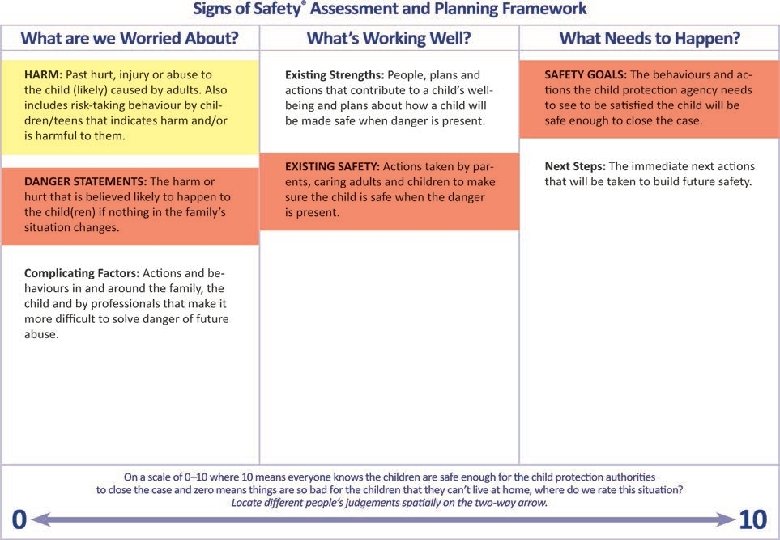
19
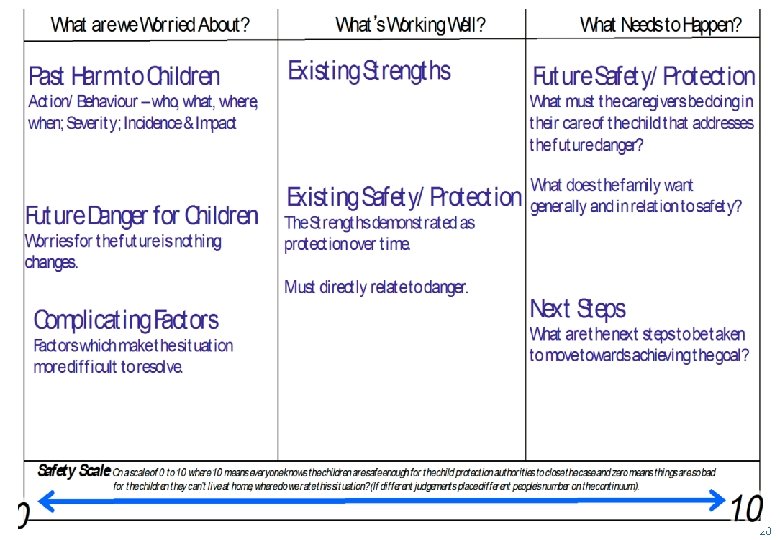
20
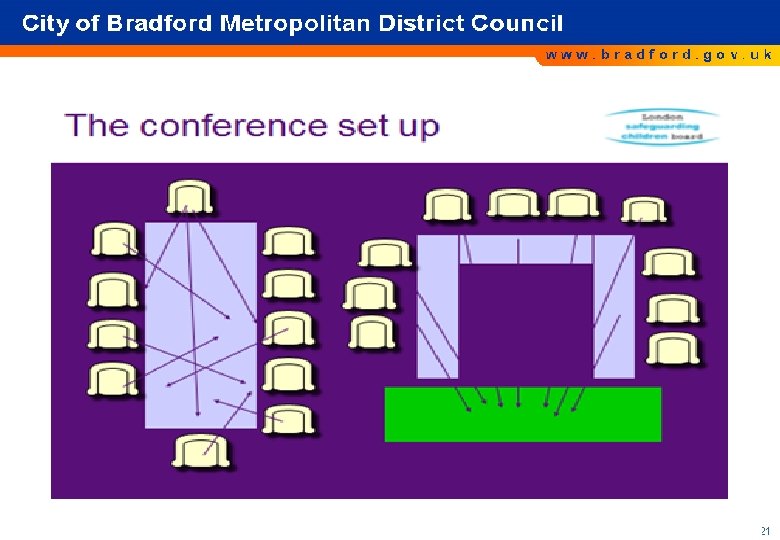
21
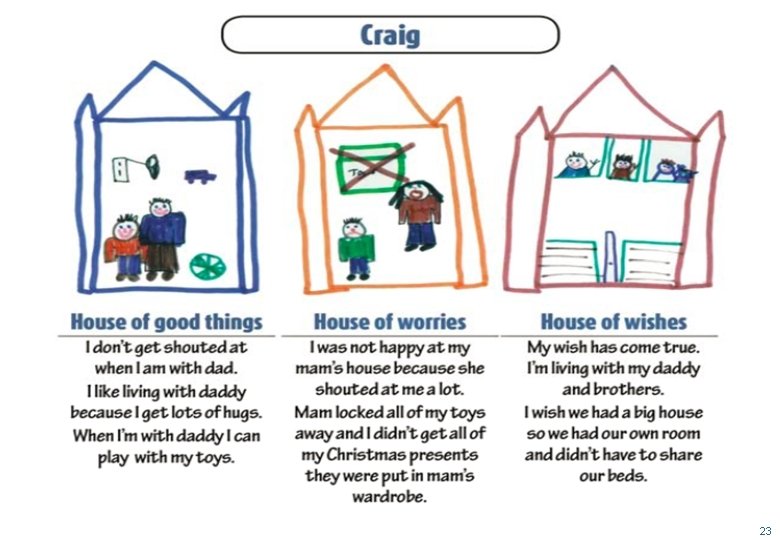
Signs of Safety • Engaging children in assessment and planning: • Three Houses • Fairies & Wizards • Words and pictures tool for explaining what’s happening 22
23
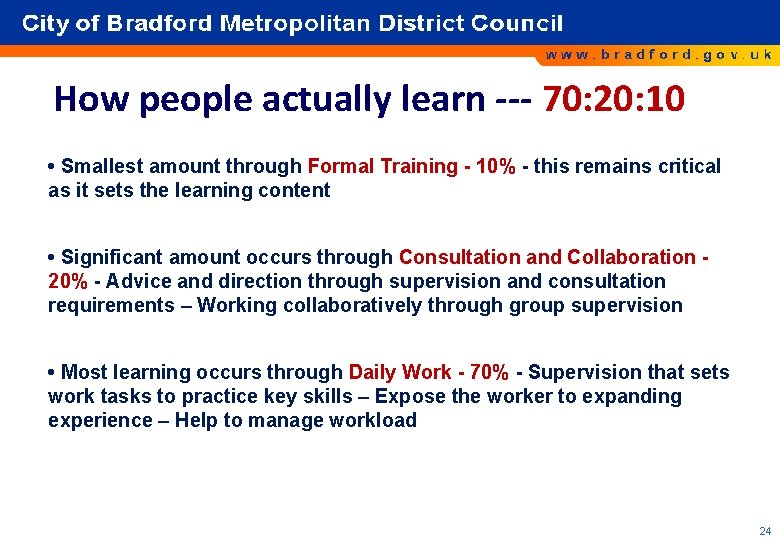
How people actually learn ‐‐‐ 70: 20: 10 • Smallest amount through Formal Training - 10% - this remains critical as it sets the learning content • Significant amount occurs through Consultation and Collaboration 20% - Advice and direction through supervision and consultation requirements – Working collaboratively through group supervision • Most learning occurs through Daily Work - 70% - Supervision that sets work tasks to practice key skills – Expose the worker to expanding experience – Help to manage workload 24
Whole system & long term…DEEP BREATH – 2 -3 YEARS!!!! • We stick with it!!!! • Multi-agency workforce is familiar with the principles, tools, disciplines. We are using them on a daily basis • Supervision is aligned • Arrangements which support continuous learning • Teams reinforce and support practice • Policies, procedures, forms and IT are streamlined and aligned • Leaders and Managers speak the language and use the tools • Multi-agency workforce says that it is supported to work through issues and anxieties 25
26