
Significant Figures Any digit that is not zero
- Slides: 20
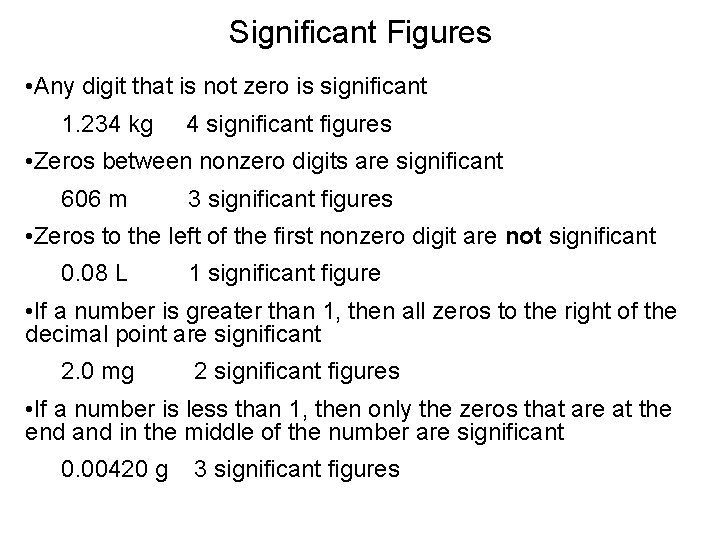
Significant Figures • Any digit that is not zero is significant 1. 234 kg 4 significant figures • Zeros between nonzero digits are significant 606 m 3 significant figures • Zeros to the left of the first nonzero digit are not significant 0. 08 L 1 significant figure • If a number is greater than 1, then all zeros to the right of the decimal point are significant 2. 0 mg 2 significant figures • If a number is less than 1, then only the zeros that are at the end and in the middle of the number are significant 0. 00420 g 3 significant figures
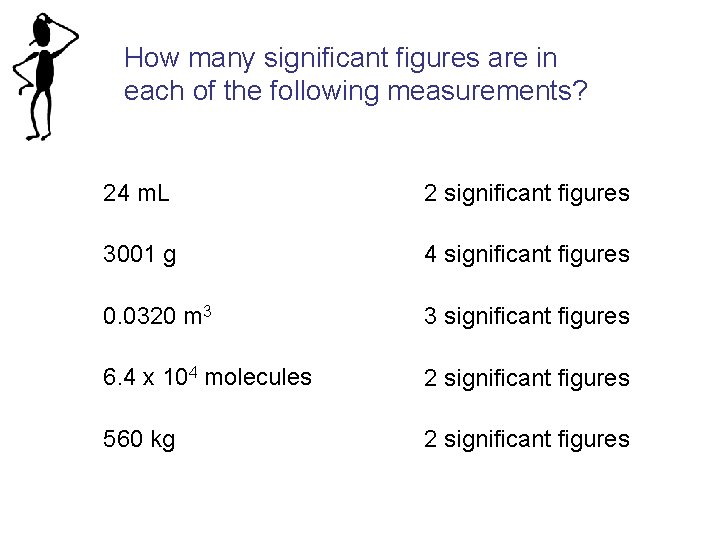
How many significant figures are in each of the following measurements? 24 m. L 2 significant figures 3001 g 4 significant figures 0. 0320 m 3 3 significant figures 6. 4 x 10⁴ molecules 2 significant figures 560 kg 2 significant figures
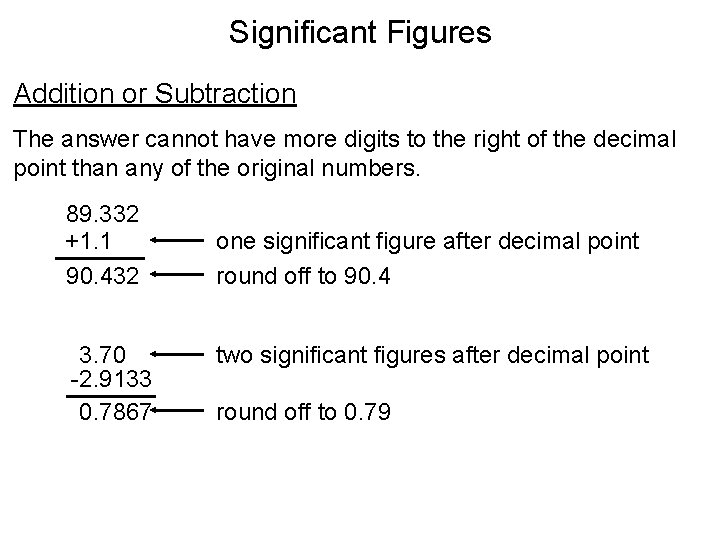
Significant Figures Addition or Subtraction The answer cannot have more digits to the right of the decimal point than any of the original numbers. 89. 332 +1. 1 90. 432 3. 70 -2. 9133 0. 7867 one significant figure after decimal point round off to 90. 4 two significant figures after decimal point round off to 0. 79
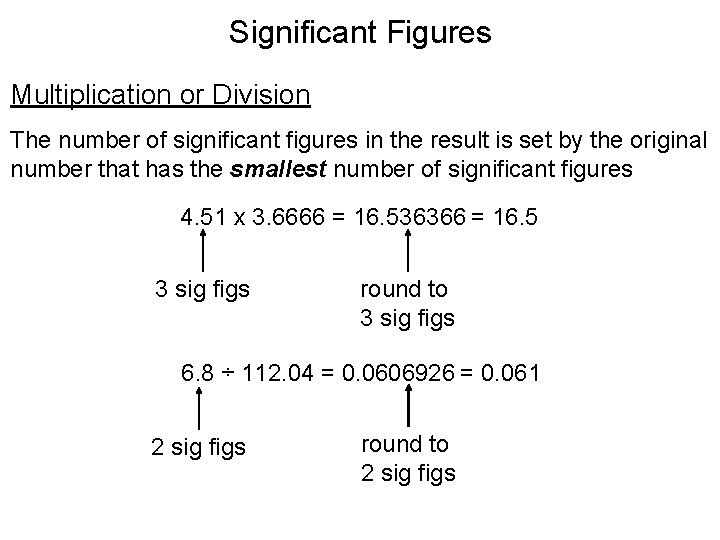
Significant Figures Multiplication or Division The number of significant figures in the result is set by the original number that has the smallest number of significant figures 4. 51 x 3. 6666 = 16. 536366 = 16. 5 3 sig figs round to 3 sig figs 6. 8 ÷ 112. 04 = 0. 0606926 = 0. 061 2 sig figs round to 2 sig figs
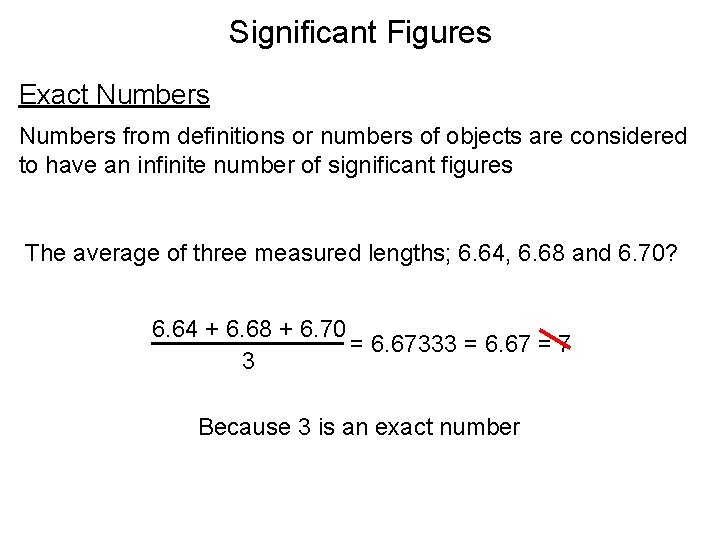
Significant Figures Exact Numbers from definitions or numbers of objects are considered to have an infinite number of significant figures The average of three measured lengths; 6. 64, 6. 68 and 6. 70? 6. 64 + 6. 68 + 6. 70 = 6. 67333 = 6. 67 = 7 3 Because 3 is an exact number
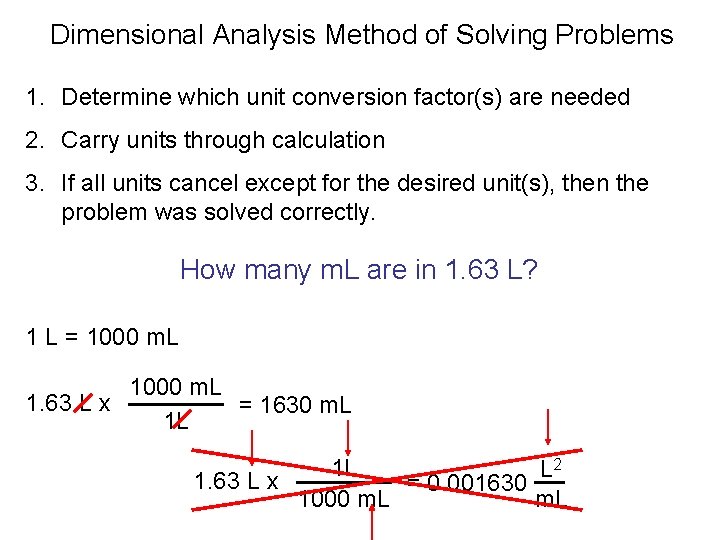
Dimensional Analysis Method of Solving Problems 1. Determine which unit conversion factor(s) are needed 2. Carry units through calculation 3. If all units cancel except for the desired unit(s), then the problem was solved correctly. How many m. L are in 1. 63 L? 1 L = 1000 m. L 1. 63 L x = 1630 m. L 1 L 2 1 L L 1. 63 L x = 0. 001630 1000 m. L
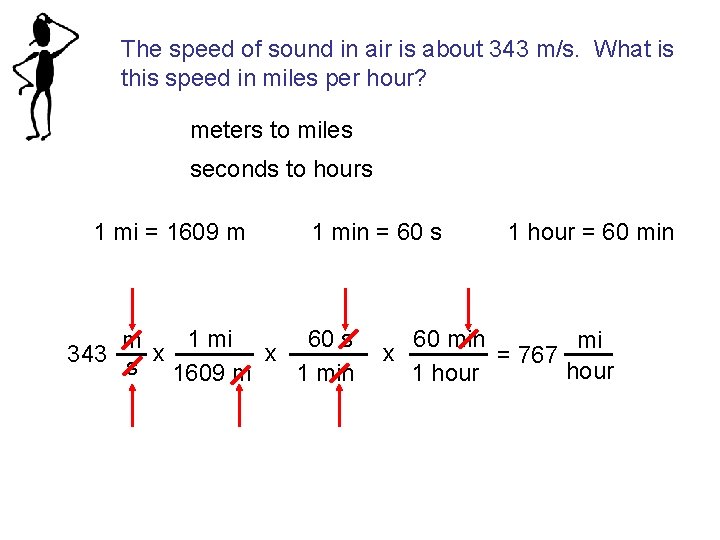
The speed of sound in air is about 343 m/s. What is this speed in miles per hour? meters to miles seconds to hours 1 mi = 1609 m 1 min = 60 s 1 mi 60 s m x x 343 s 1609 m 1 min 1 hour = 60 min mi x = 767 hour 1 hour
Chapter 2 • Development of atomic theory • Atomic structure • Periodic table • Chemical formulas • Naming compounds
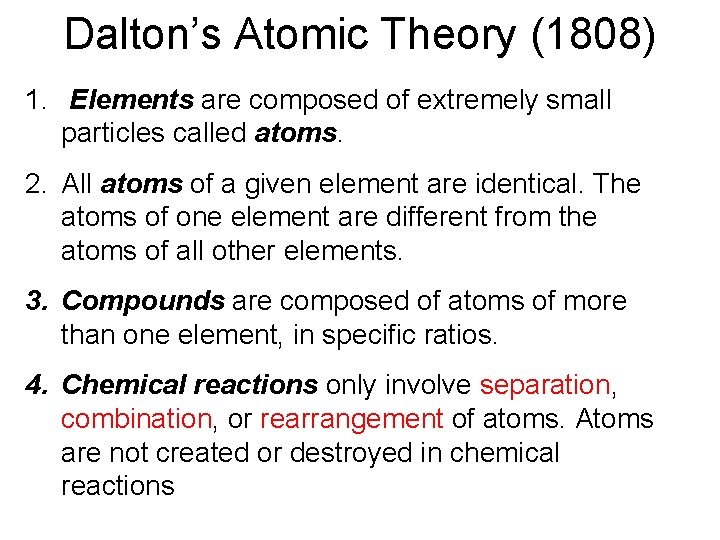
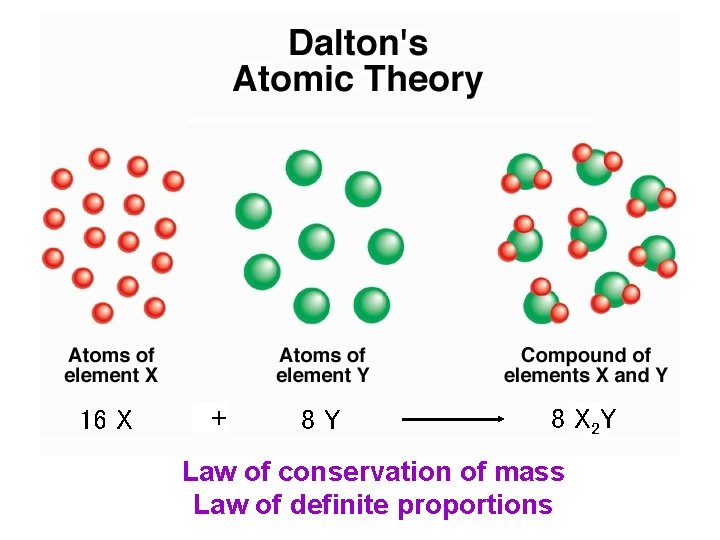
Dalton’s Atomic Theory (1808) 1. Elements are composed of extremely small particles called atoms. 2. All atoms of a given element are identical. The atoms of one element are different from the atoms of all other elements. 3. Compounds are composed of atoms of more than one element, in specific ratios. 4. Chemical reactions only involve separation, combination, or rearrangement of atoms. Atoms are not created or destroyed in chemical reactions
16 X + 8 Y 8 X 2 Y Law of conservation of mass Law of definite proportions
Subatomic particles • Electron • Proton • Neutron
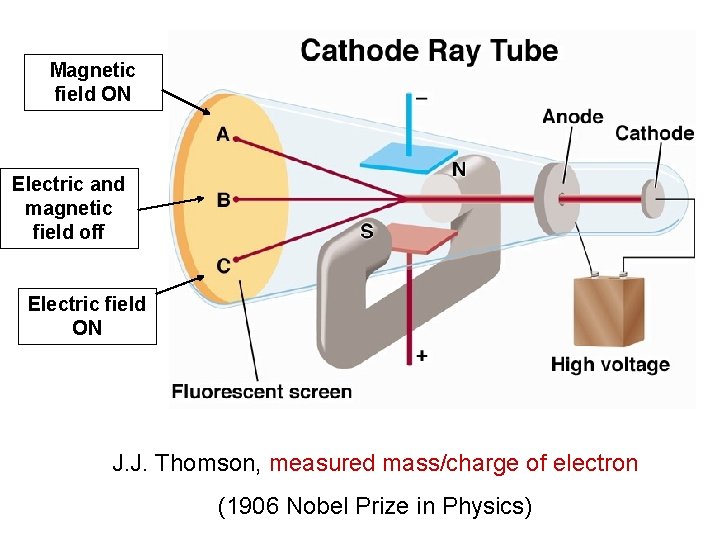
Magnetic field ON Electric and magnetic field off Electric field ON J. J. Thomson, measured mass/charge of electron (1906 Nobel Prize in Physics)
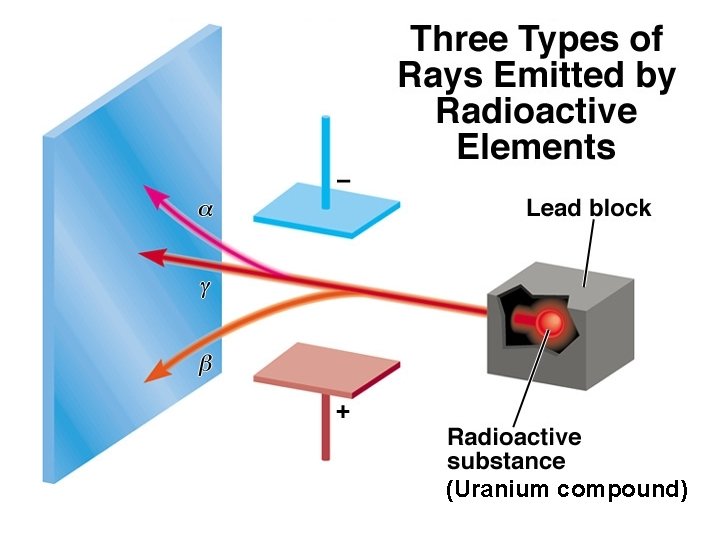
(Uranium compound)
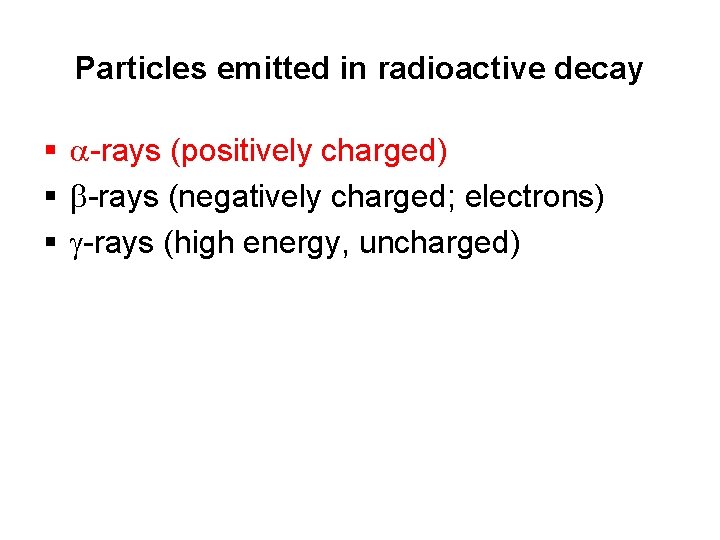
Particles emitted in radioactive decay § a-rays (positively charged) § b-rays (negatively charged; electrons) § g-rays (high energy, uncharged)
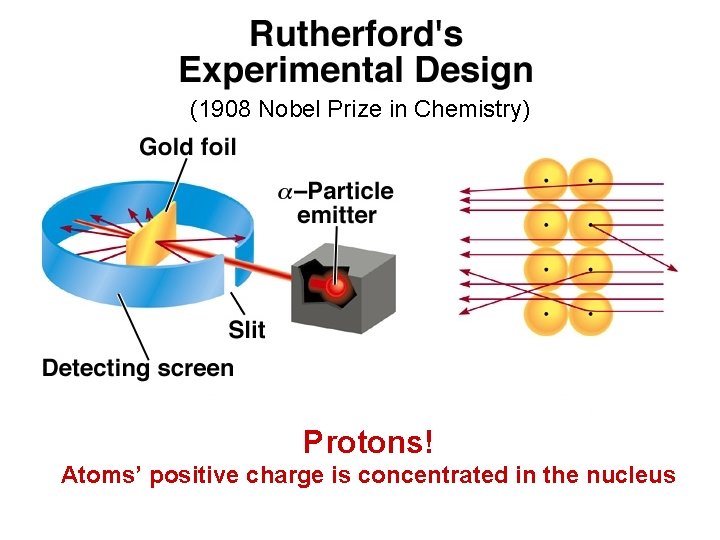
(1908 Nobel Prize in Chemistry) Protons! Atoms’ positive charge is concentrated in the nucleus
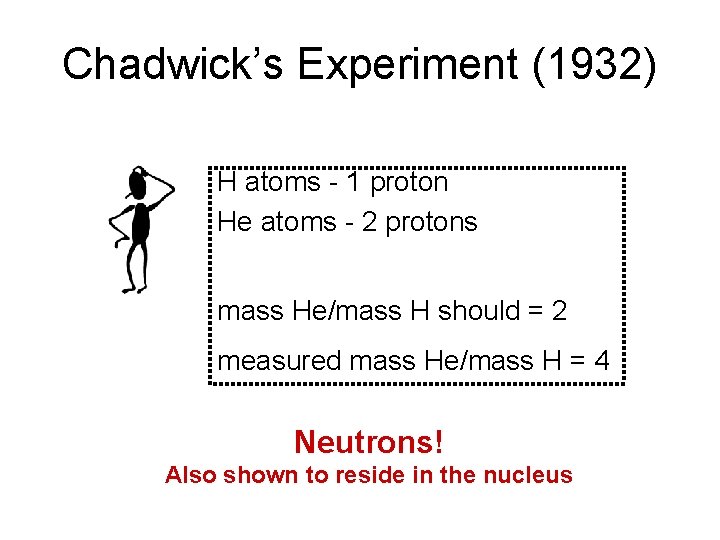
Chadwick’s Experiment (1932) H atoms - 1 proton He atoms - 2 protons mass He/mass H should = 2 measured mass He/mass H = 4 Neutrons! Also shown to reside in the nucleus
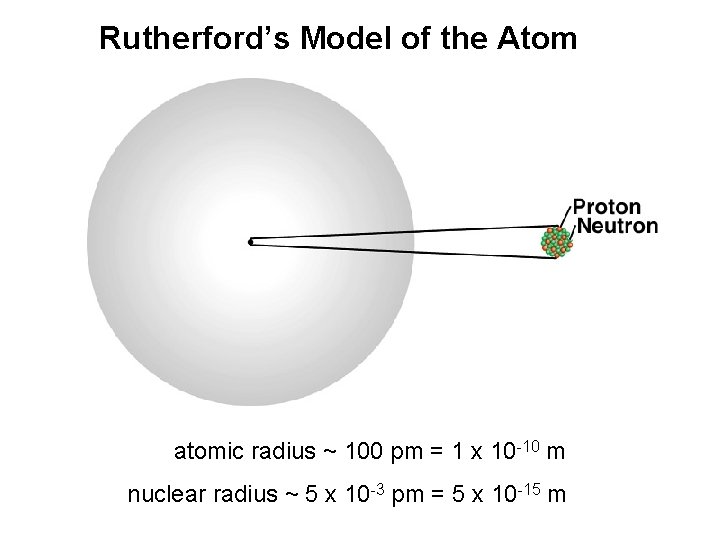
Rutherford’s Model of the Atom atomic radius ~ 100 pm = 1 x 10 -10 m nuclear radius ~ 5 x 10 -3 pm = 5 x 10 -15 m
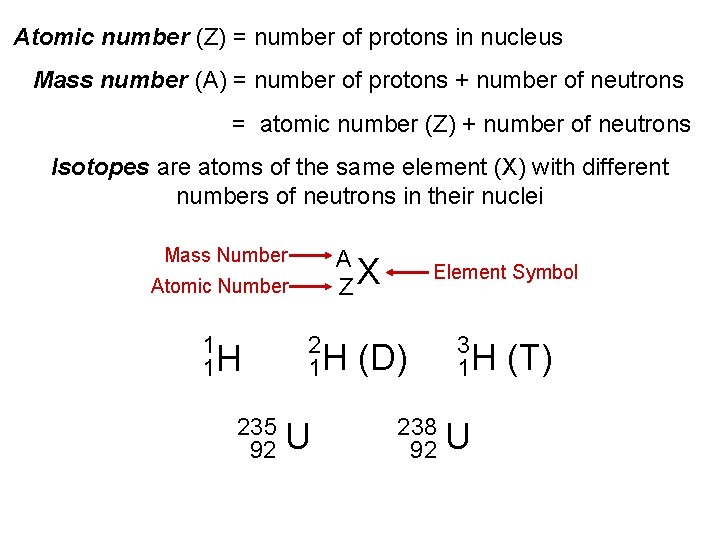
Atomic number (Z) = number of protons in nucleus Mass number (A) = number of protons + number of neutrons = atomic number (Z) + number of neutrons Isotopes are atoms of the same element (X) with different numbers of neutrons in their nuclei Mass Number A ZX Atomic Number 1 1 H 235 92 2 1 H U Element Symbol (D) 238 92 3 1 H U (T)
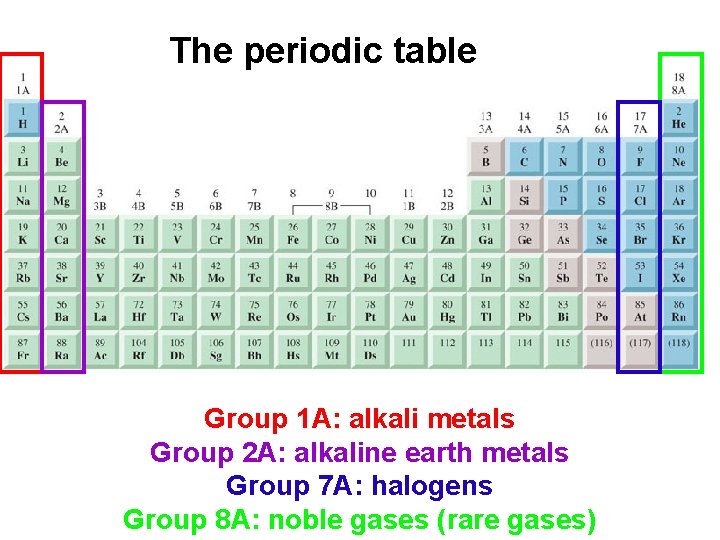
The periodic table Group 1 A: alkali metals Group 2 A: alkaline earth metals Group 7 A: halogens Group 8 A: noble gases (rare gases)