
Significant Figures Any digit in a measurement that
- Slides: 13
Significant Figures Any digit in a measurement that is known with certainty plus one final digit, which is somewhat uncertain or estimated.
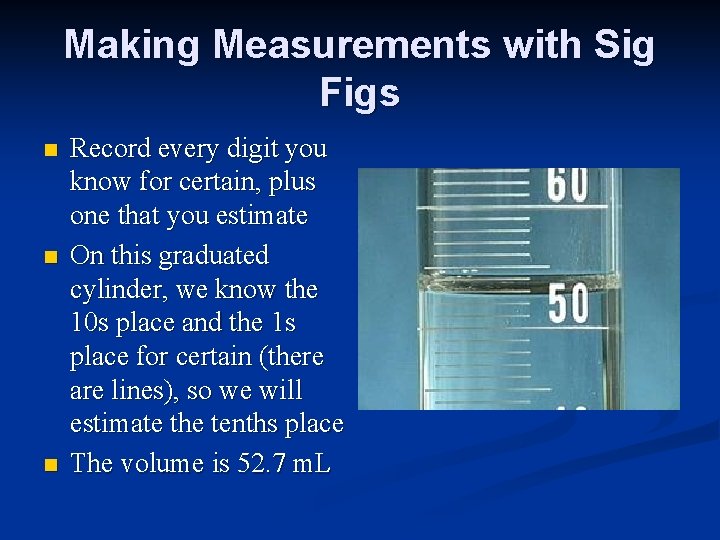
Making Measurements with Sig Figs n n n Record every digit you know for certain, plus one that you estimate On this graduated cylinder, we know the 10 s place and the 1 s place for certain (there are lines), so we will estimate the tenths place The volume is 52. 7 m. L
Rule # 1 All nonzero digits are significant Example: 2. 14 has 3 sig figs
Rule # 2 Zeroes between nonzero digits are significant. Example: 2001 has 4 sig figs
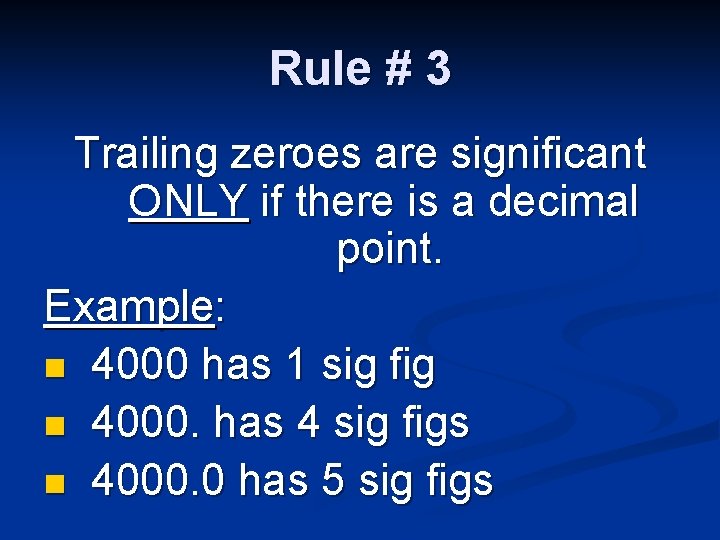
Rule # 3 Trailing zeroes are significant ONLY if there is a decimal point. Example: n 4000 has 1 sig fig n 4000. has 4 sig figs n 4000. 0 has 5 sig figs
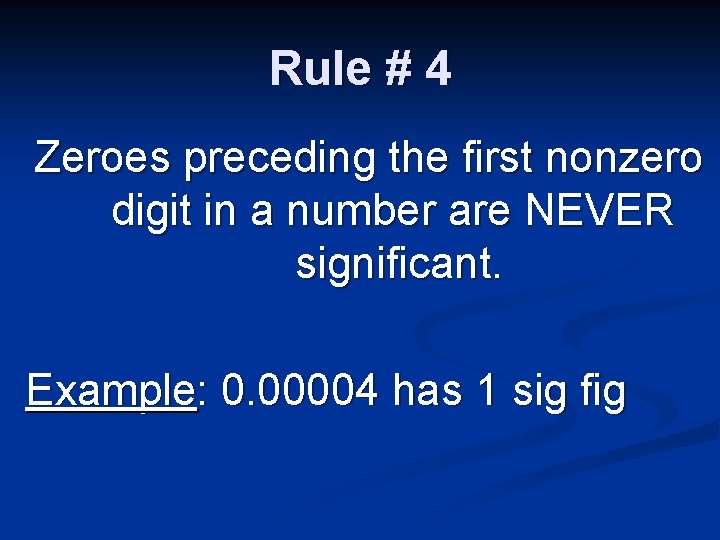
Rule # 4 Zeroes preceding the first nonzero digit in a number are NEVER significant. Example: 0. 00004 has 1 sig fig
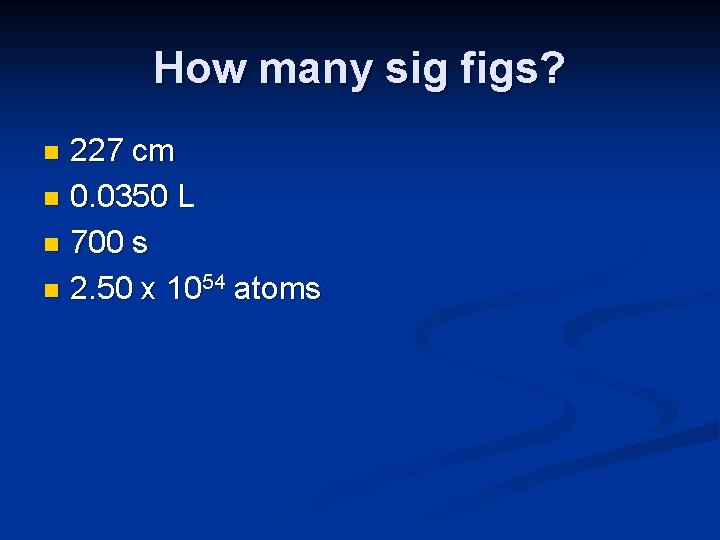
How many sig figs? 227 cm n 0. 0350 L n 700 s n 2. 50 x 1054 atoms n
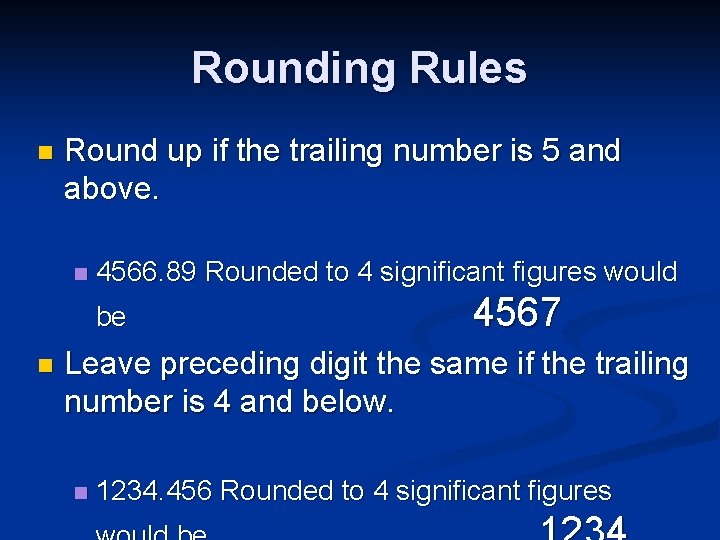
Rounding Rules n Round up if the trailing number is 5 and above. n 4566. 89 Rounded to 4 significant figures would be n 4567 Leave preceding digit the same if the trailing number is 4 and below. n 1234. 456 Rounded to 4 significant figures
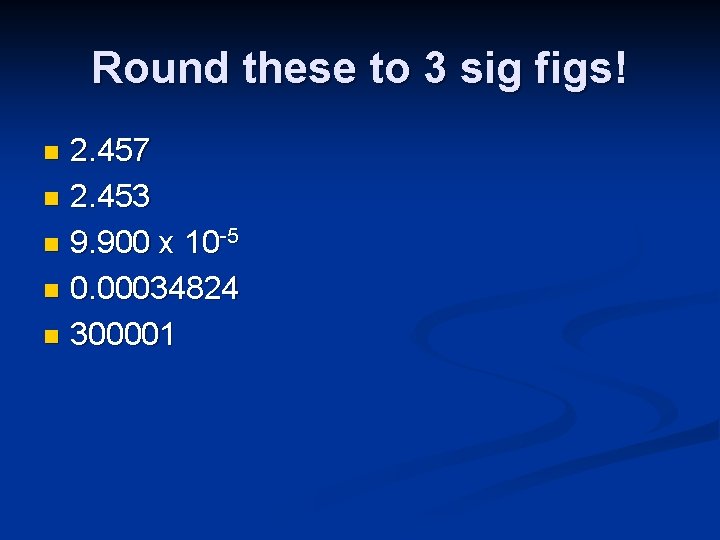
Round these to 3 sig figs! 2. 457 n 2. 453 n 9. 900 x 10 -5 n 0. 00034824 n 300001 n
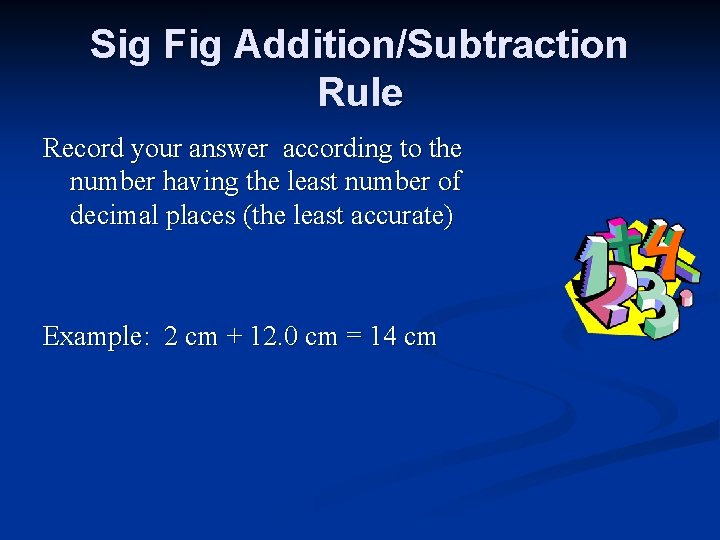
Sig Fig Addition/Subtraction Rule Record your answer according to the number having the least number of decimal places (the least accurate) Example: 2 cm + 12. 0 cm = 14 cm
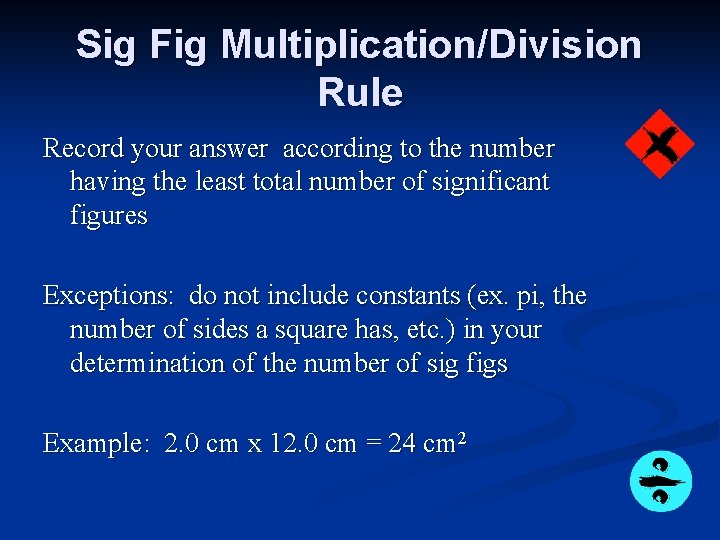
Sig Fig Multiplication/Division Rule Record your answer according to the number having the least total number of significant figures Exceptions: do not include constants (ex. pi, the number of sides a square has, etc. ) in your determination of the number of sig figs Example: 2. 0 cm x 12. 0 cm = 24 cm 2
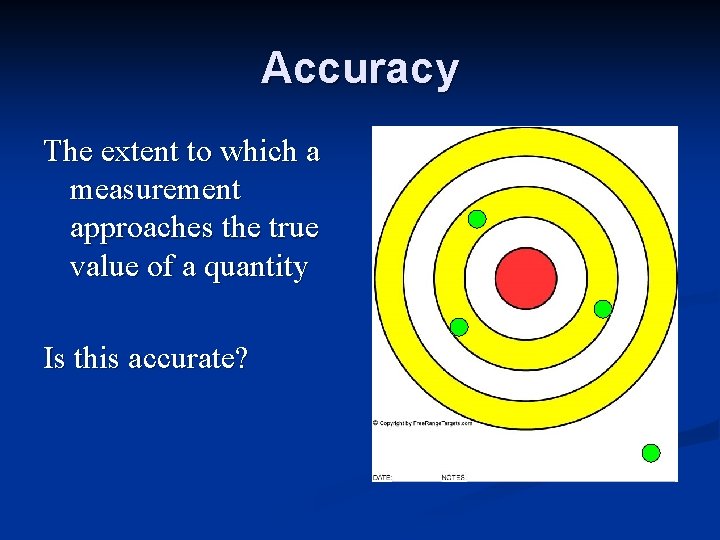
Accuracy The extent to which a measurement approaches the true value of a quantity Is this accurate?
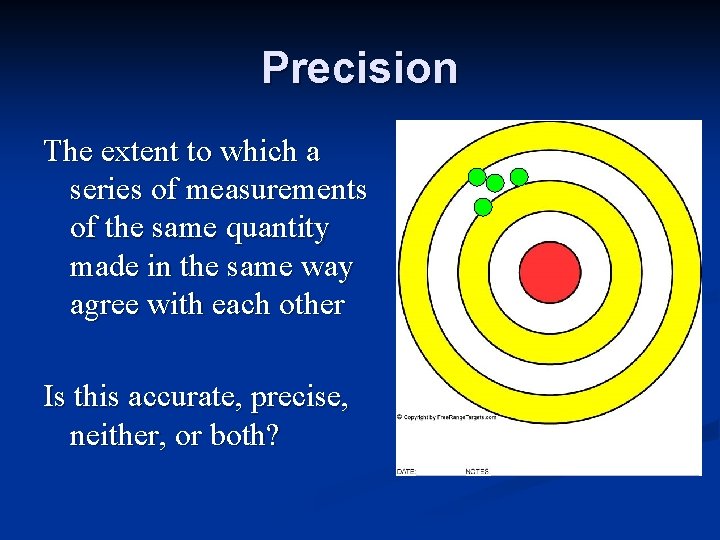
Precision The extent to which a series of measurements of the same quantity made in the same way agree with each other Is this accurate, precise, neither, or both?