
Significance of Retroviruses Defiance of the Central Dogma

- Slides: 34
Significance of Retroviruses Defiance of the Central Dogma Model Mobile Genetic Elements Discovery of Oncogenes Vectors for c. DNA delivery Disease Causing Agents
AIDS: A New Disease? Morbidity and Mortality Weekly Report June 5, 1981 Pneumocystis Pneumonia --- Los Angeles In the period October 1980 -May 1981, 5 young men, all active homosexuals, were treated for biopsy-confirmed Pneumocystis carinii pneumonia at 3 different hospitals in Los Angeles, California. Two of the patients died. . .
AIDS: Clues to a Retroviral Etiology Blood-borne transmissible agent: Hi. Vol. SA, IVDU, Hemophilia CD 4+ T-cells reduced with AIDS 1 st human retrovirus (1980), CD 4 -tropic Human T Cell Leukemia Virus Type 1 Immune defects with animal retroviruses
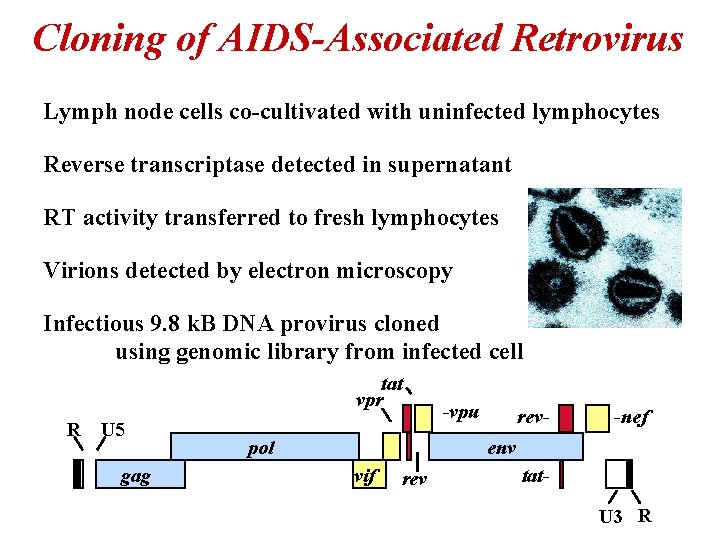
Cloning of AIDS-Associated Retrovirus Lymph node cells co-cultivated with uninfected lymphocytes Reverse transcriptase detected in supernatant RT activity transferred to fresh lymphocytes Virions detected by electron microscopy Infectious 9. 8 k. B DNA provirus cloned using genomic library from infected cell tat vpr R U 5 gag pol -vpu rev- -nef env vif rev tat. U 3 R
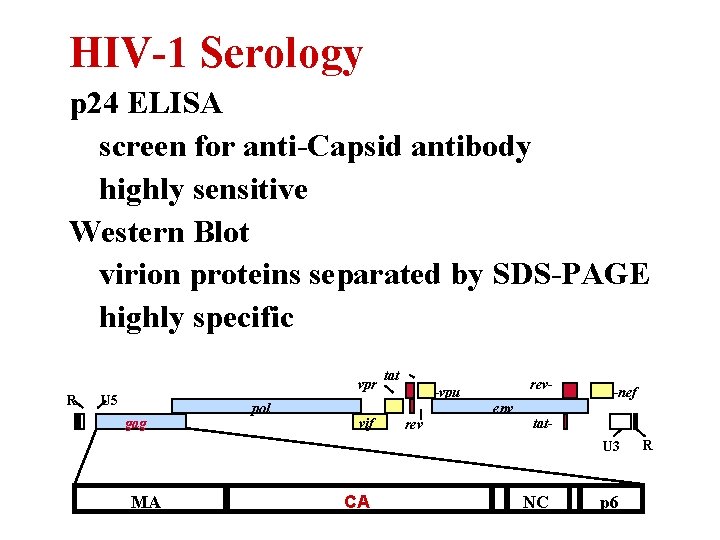
HIV-1 Serology p 24 ELISA screen for anti-Capsid antibody highly sensitive Western Blot virion proteins separated by SDS-PAGE highly specific vpr R U 5 gag tat -vpu pol vif revenv -nef tat. U 3 MA CA NC p 6 R
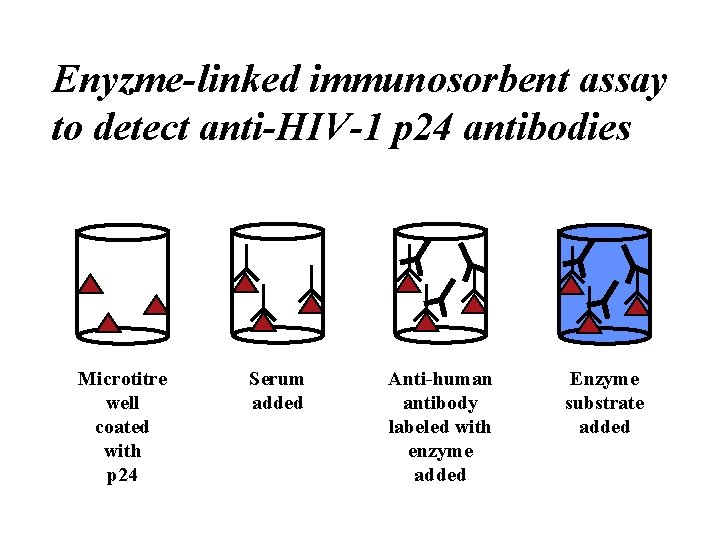
Enyzme-linked immunosorbent assay to detect anti-HIV-1 p 24 antibodies Microtitre well coated with p 24 Serum added Anti-human antibody labeled with enzyme added Enzyme substrate added
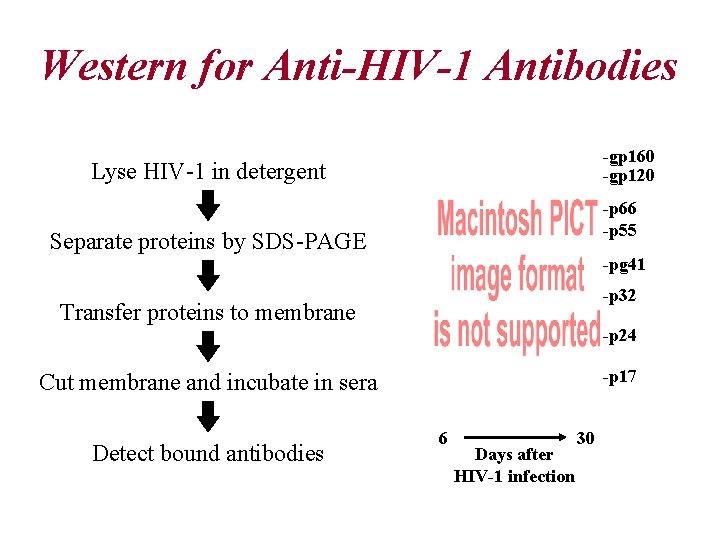
Western for Anti-HIV-1 Antibodies -gp 160 -gp 120 Lyse HIV-1 in detergent -p 66 -p 55 Separate proteins by SDS-PAGE -pg 41 -p 32 Transfer proteins to membrane -p 24 -p 17 Cut membrane and incubate in sera Detect bound antibodies 6 Days after HIV-1 infection 30
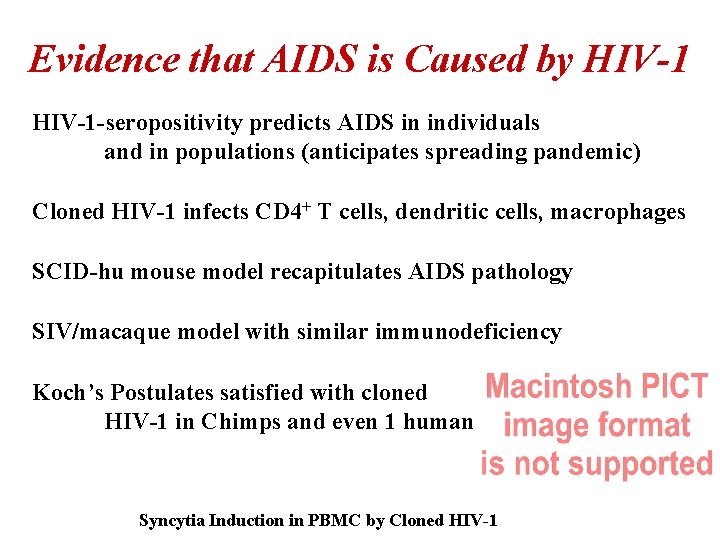
Evidence that AIDS is Caused by HIV-1 -seropositivity predicts AIDS in individuals and in populations (anticipates spreading pandemic) Cloned HIV-1 infects CD 4+ T cells, dendritic cells, macrophages SCID-hu mouse model recapitulates AIDS pathology SIV/macaque model with similar immunodeficiency Koch’s Postulates satisfied with cloned HIV-1 in Chimps and even 1 human Syncytia Induction in PBMC by Cloned HIV-1
HIV-2 Genetically similar to HIV-1 Identified in asymptomatic, HIV-1 seronegative individuals with antibodies against SIV capsid Causes AIDS, progression less rapid than with HIV-1 Blood-bank ELISA detects HIV-1 and HIV-2
HIV-1: member of large family of viruses that co-evolved with African primates 1. Each virus adapted to particular primate species 2. Disease occurs when viruses jump to non-native host: - SIVSM from Sooty mangabey to macaque - HIV-2 is identical to SIVSM - HIV-1 is identical to virus in feral chimps
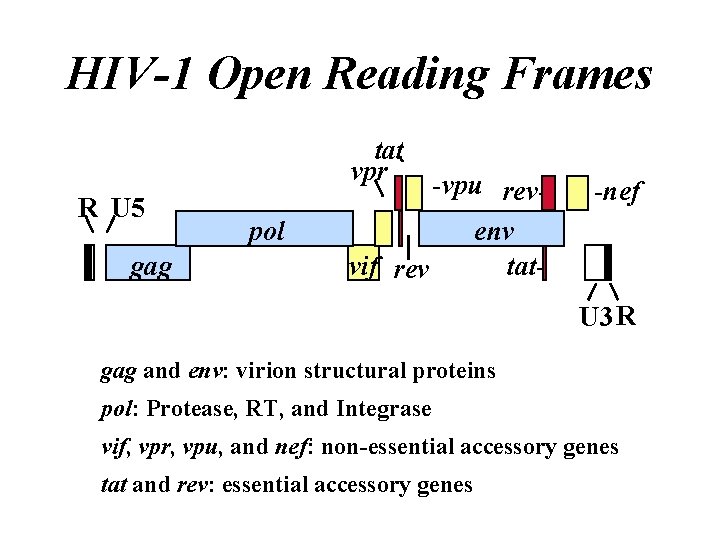
HIV-1 Open Reading Frames tat vpr R U 5 gag pol -vpu revenv vif rev tat- -nef U 3 R gag and env: virion structural proteins pol: Protease, RT, and Integrase vif, vpr, vpu, and nef: non-essential accessory genes tat and rev: essential accessory genes
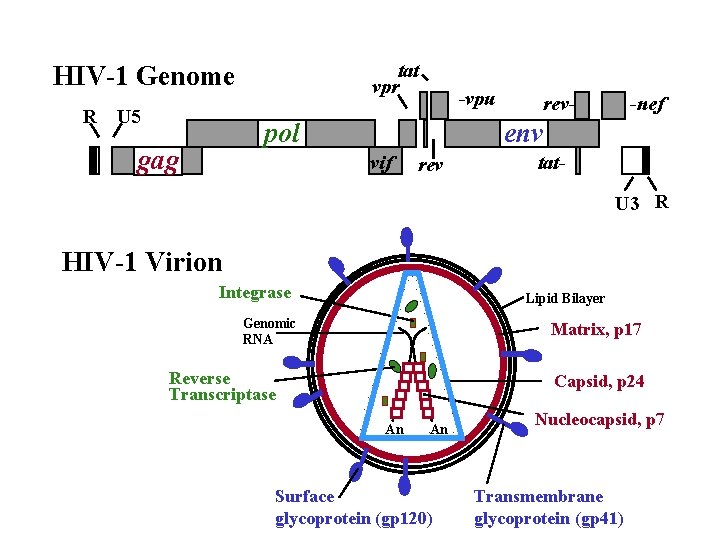
tat vpr HIV-1 Genome R U 5 -vpu pol gag rev- -nef env vif rev tat. U 3 R HIV-1 Virion Integrase Lipid Bilayer Genomic RNA Matrix, p 17 Reverse Transcriptase Capsid, p 24 An An Surface glycoprotein (gp 120) Nucleocapsid, p 7 Transmembrane glycoprotein (gp 41)
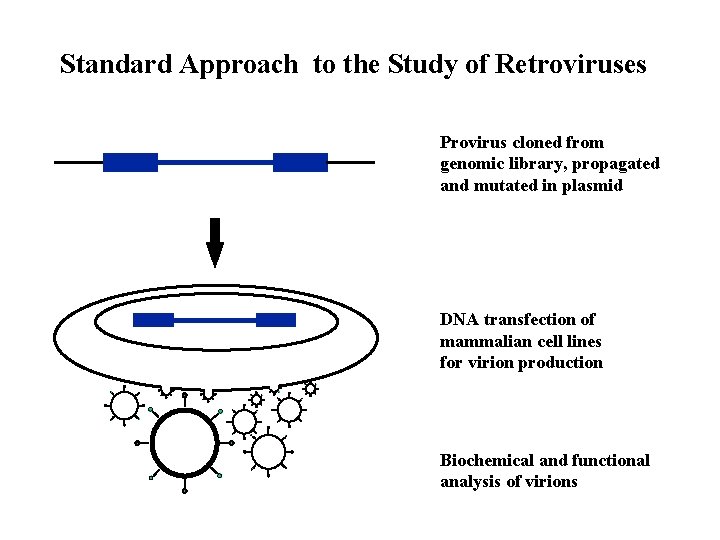
Standard Approach to the Study of Retroviruses Provirus cloned from genomic library, propagated and mutated in plasmid DNA transfection of mammalian cell lines for virion production Biochemical and functional analysis of virions
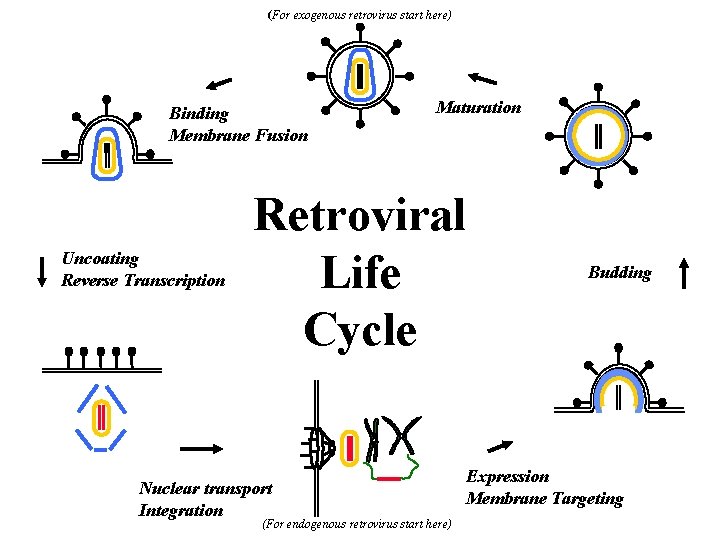
(For exogenous retrovirus start here) Binding Membrane Fusion Uncoating Reverse Transcription Maturation Retroviral Life Cycle Nuclear transport Integration (For endogenous retrovirus start here) Budding Expression Membrane Targeting
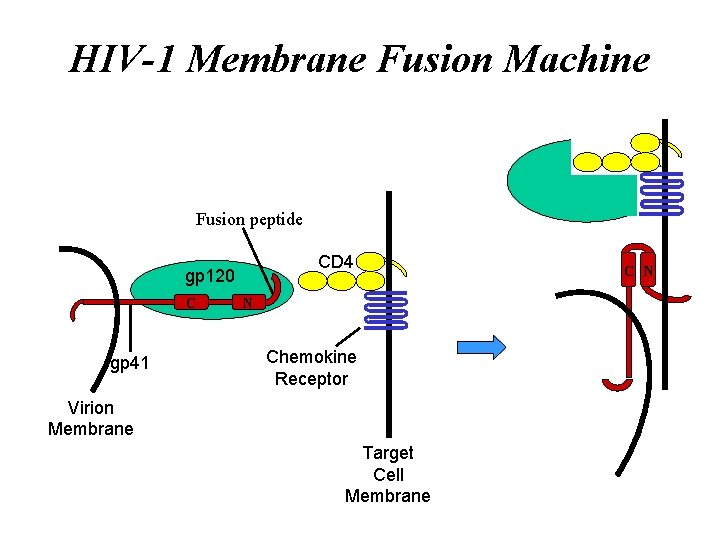
HIV-1 Membrane Fusion Machine Fusion peptide CD 4 gp 120 C gp 41 N Chemokine Receptor Virion Membrane Target Cell Membrane C N
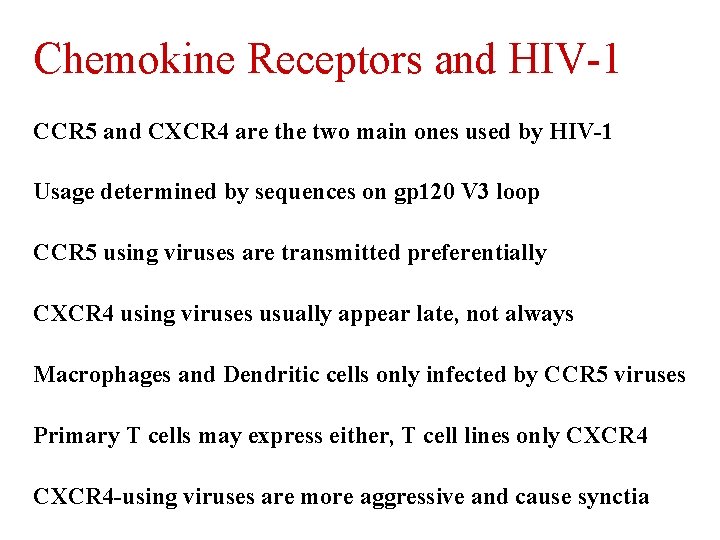
Chemokine Receptors and HIV-1 CCR 5 and CXCR 4 are the two main ones used by HIV-1 Usage determined by sequences on gp 120 V 3 loop CCR 5 using viruses are transmitted preferentially CXCR 4 using viruses usually appear late, not always Macrophages and Dendritic cells only infected by CCR 5 viruses Primary T cells may express either, T cell lines only CXCR 4 -using viruses are more aggressive and cause synctia
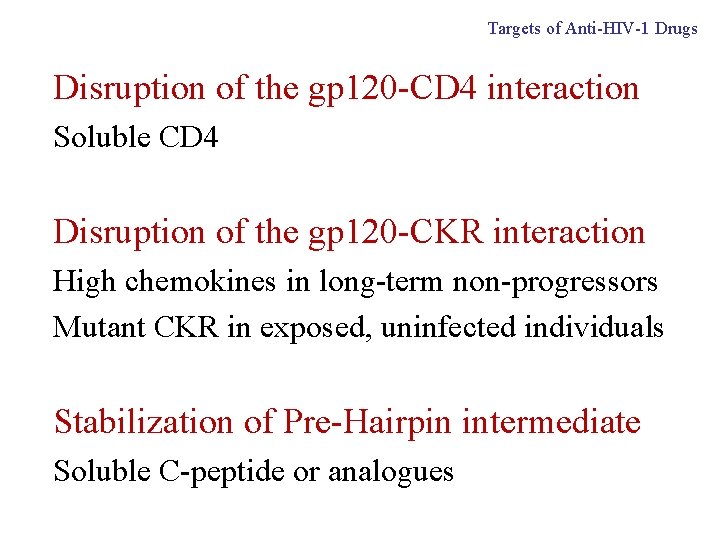
Targets of Anti-HIV-1 Drugs Disruption of the gp 120 -CD 4 interaction Soluble CD 4 Disruption of the gp 120 -CKR interaction High chemokines in long-term non-progressors Mutant CKR in exposed, uninfected individuals Stabilization of Pre-Hairpin intermediate Soluble C-peptide or analogues
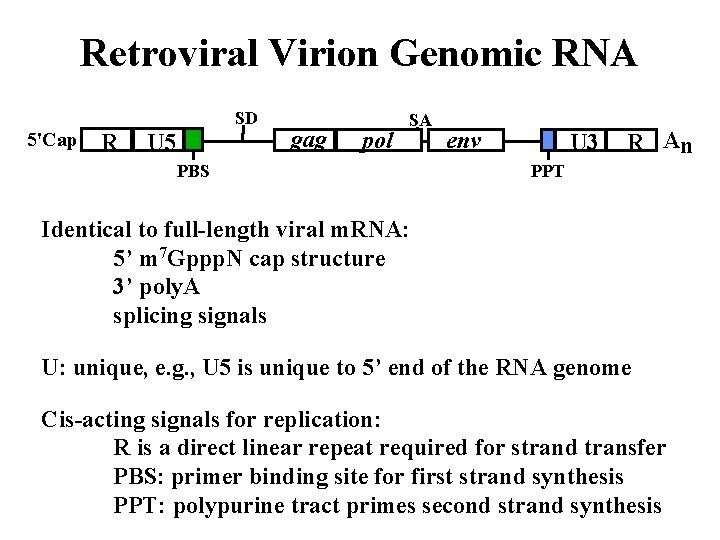
Retroviral Virion Genomic RNA SD 5'Cap R U 5 gag pol SA PBS env U 3 R An PPT Identical to full-length viral m. RNA: 5’ m 7 Gppp. N cap structure 3’ poly. A splicing signals U: unique, e. g. , U 5 is unique to 5’ end of the RNA genome Cis-acting signals for replication: R is a direct linear repeat required for strand transfer PBS: primer binding site for first strand synthesis PPT: polypurine tract primes second strand synthesis
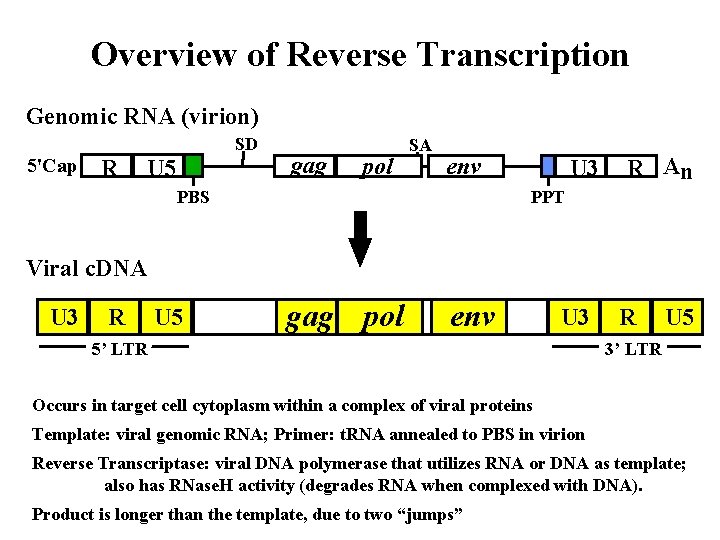
Overview of Reverse Transcription Genomic RNA (virion) SD 5'Cap R U 5 gag pol SA env PBS U 3 R An PPT Viral c. DNA U 3 R U 5 gag pol env U 3 5’ LTR R U 5 3’ LTR Occurs in target cell cytoplasm within a complex of viral proteins Template: viral genomic RNA; Primer: t. RNA annealed to PBS in virion Reverse Transcriptase: viral DNA polymerase that utilizes RNA or DNA as template; also has RNase. H activity (degrades RNA when complexed with DNA). Product is longer than the template, due to two “jumps”
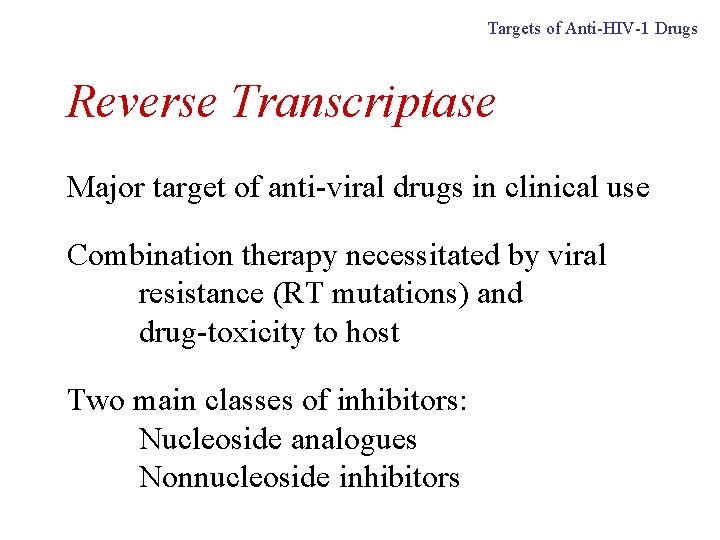
Targets of Anti-HIV-1 Drugs Reverse Transcriptase Major target of anti-viral drugs in clinical use Combination therapy necessitated by viral resistance (RT mutations) and drug-toxicity to host Two main classes of inhibitors: Nucleoside analogues Nonnucleoside inhibitors
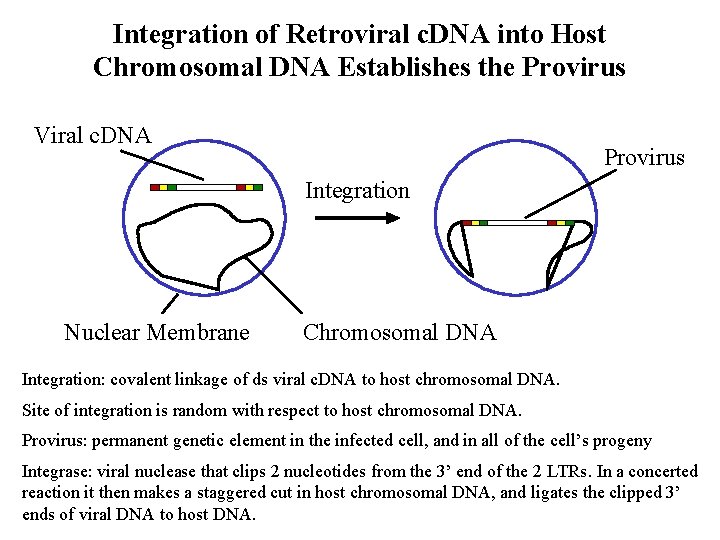
Integration of Retroviral c. DNA into Host Chromosomal DNA Establishes the Provirus Viral c. DNA Provirus Integration Nuclear Membrane Chromosomal DNA Integration: covalent linkage of ds viral c. DNA to host chromosomal DNA. Site of integration is random with respect to host chromosomal DNA. Provirus: permanent genetic element in the infected cell, and in all of the cell’s progeny Integrase: viral nuclease that clips 2 nucleotides from the 3’ end of the 2 LTRs. In a concerted reaction it then makes a staggered cut in host chromosomal DNA, and ligates the clipped 3’ ends of viral DNA to host DNA.
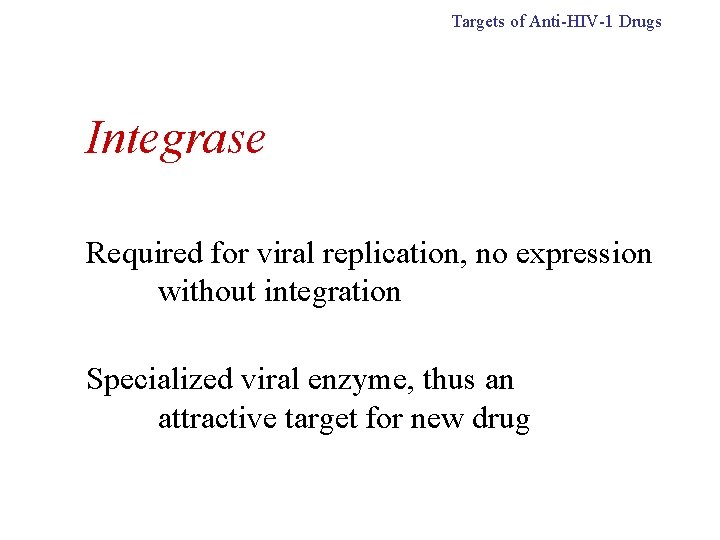
Targets of Anti-HIV-1 Drugs Integrase Required for viral replication, no expression without integration Specialized viral enzyme, thus an attractive target for new drug
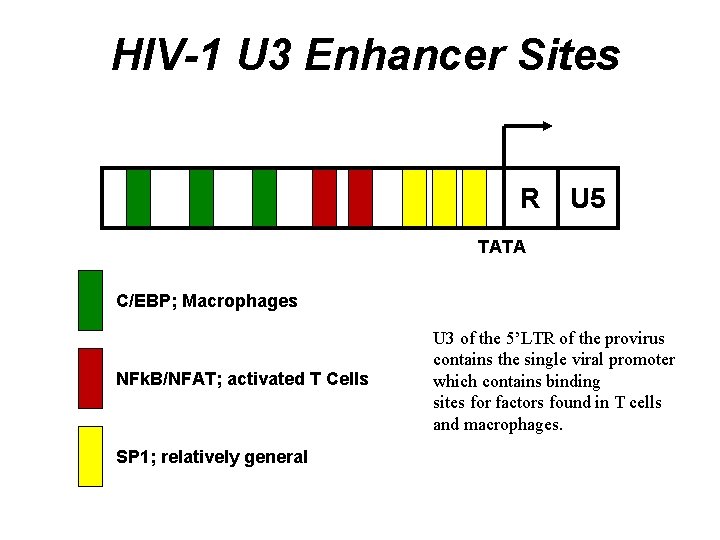
HIV-1 U 3 Enhancer Sites R U 5 TATA C/EBP; Macrophages NFk. B/NFAT; activated T Cells SP 1; relatively general U 3 of the 5’LTR of the provirus contains the single viral promoter which contains binding sites for factors found in T cells and macrophages.
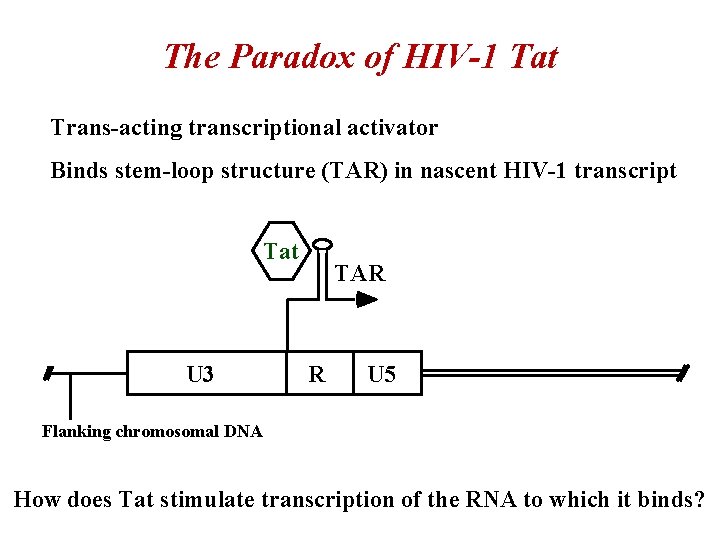
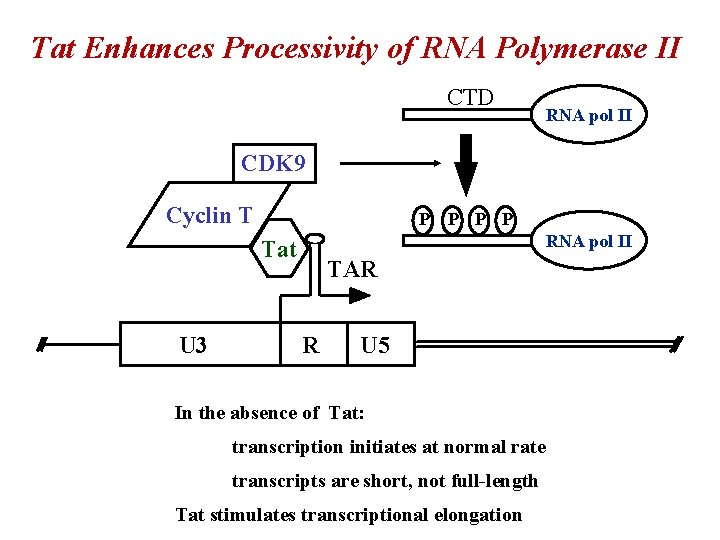
The Paradox of HIV-1 Tat Trans-acting transcriptional activator Binds stem-loop structure (TAR) in nascent HIV-1 transcript Tat U 3 TAR R U 5 Flanking chromosomal DNA How does Tat stimulate transcription of the RNA to which it binds?
Tat Enhances Processivity of RNA Polymerase II CTD RNA pol II CDK 9 Cyclin T P RNA pol II Tat U 3 P P P TAR R U 5 In the absence of Tat: transcription initiates at normal rate transcripts are short, not full-length Tat stimulates transcriptional elongation
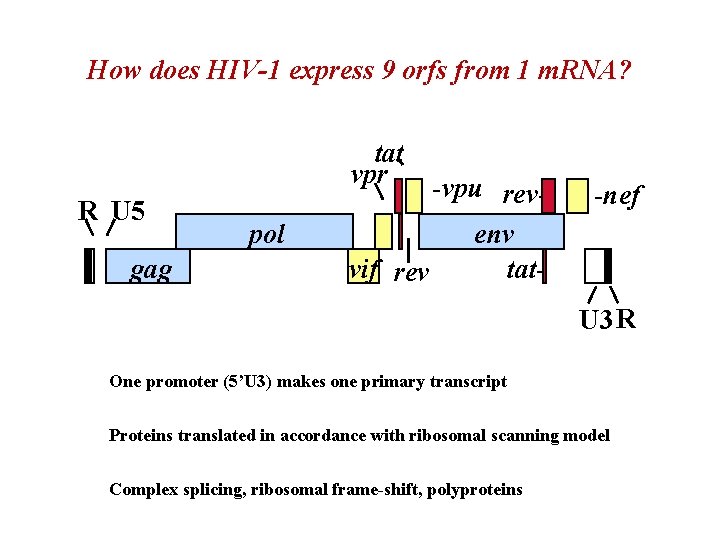
How does HIV-1 express 9 orfs from 1 m. RNA? tat vpr R U 5 gag pol -vpu revenv vif rev tat- -nef U 3 R One promoter (5’U 3) makes one primary transcript Proteins translated in accordance with ribosomal scanning model Complex splicing, ribosomal frame-shift, polyproteins
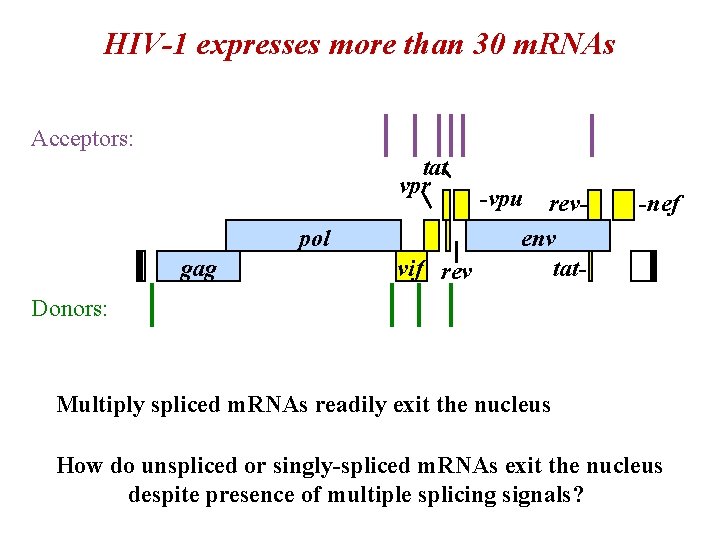
HIV-1 expresses more than 30 m. RNAs Acceptors: tat vpr pol gag vif rev -vpu revenv tat- -nef Donors: Multiply spliced m. RNAs readily exit the nucleus How do unspliced or singly-spliced m. RNAs exit the nucleus despite presence of multiple splicing signals?
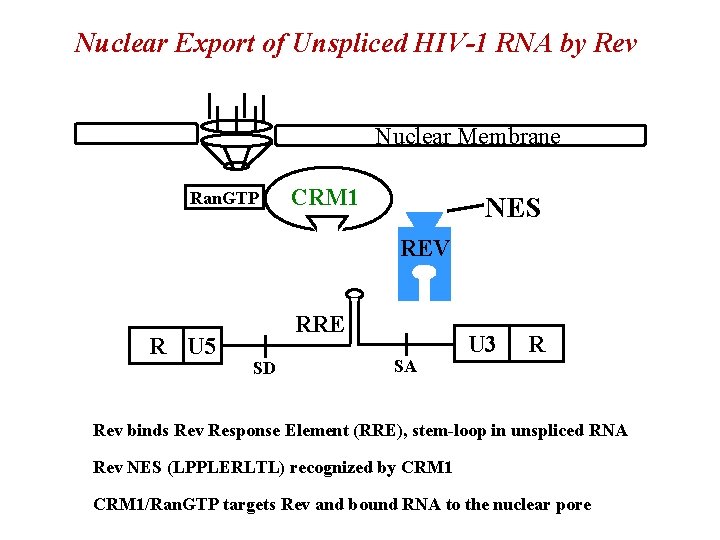
Nuclear Export of Unspliced HIV-1 RNA by Rev Nuclear Membrane Ran. GTP CRM 1 NES REV R U 5 RRE SD SA U 3 R Rev binds Rev Response Element (RRE), stem-loop in unspliced RNA Rev NES (LPPLERLTL) recognized by CRM 1/Ran. GTP targets Rev and bound RNA to the nuclear pore
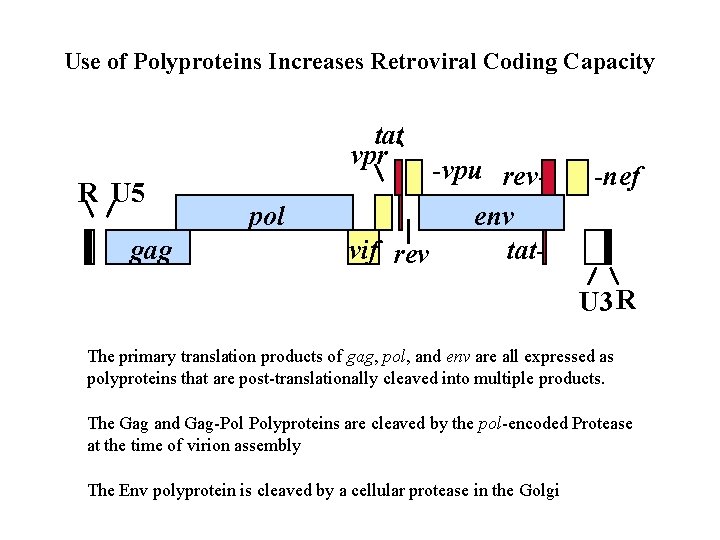
Use of Polyproteins Increases Retroviral Coding Capacity tat vpr R U 5 gag pol -vpu revenv vif rev tat- -nef U 3 R The primary translation products of gag, pol, and env are all expressed as polyproteins that are post-translationally cleaved into multiple products. The Gag and Gag-Pol Polyproteins are cleaved by the pol-encoded Protease at the time of virion assembly The Env polyprotein is cleaved by a cellular protease in the Golgi
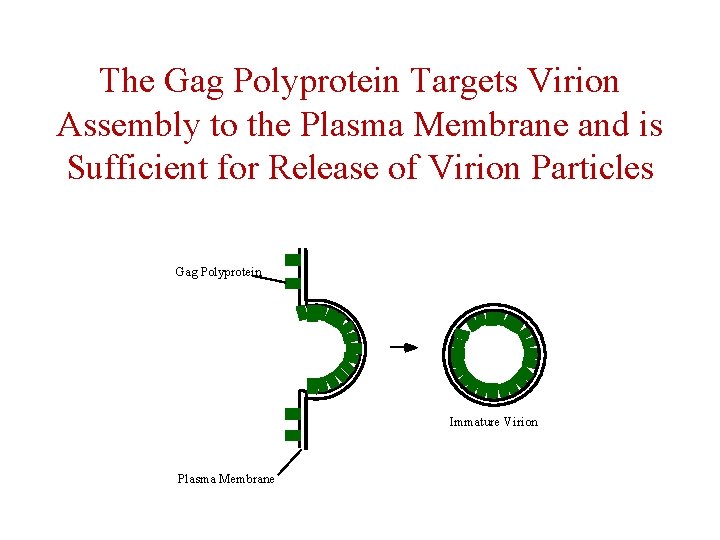
The Gag Polyprotein Targets Virion Assembly to the Plasma Membrane and is Sufficient for Release of Virion Particles Gag Polyprotein Immature Virion Plasma Membrane
Retroviral Protease Activation
Molecular Targets of Anti-HIV-1 Drugs Viral Protease Not required for virion assembly Required for virion maturation and infectivity Inhibitors of this enzyme are now a standard part of the anti-HIV drug regimen Combination therapy necessitated by resistance
Is Cure of HIV Infection Possible? Combination anti-viral therapy effectively inhibits viral replication without appearance of drug-resistant virus Persistent reservoirs of viral infection include long-lived memory T-cells bearing proviral DNA and macrophages
Vote as if your grant life depended on it New York, Feb 15 th, 2003