
Significance of DHT Androgen receptor has a higher



- Slides: 29
Significance of DHT • Androgen receptor has a higher affinity for DHT • Can get effects with low levels of circulating testosterone • Secondary sex characteristic tissue in the male expresses 5 -reductase
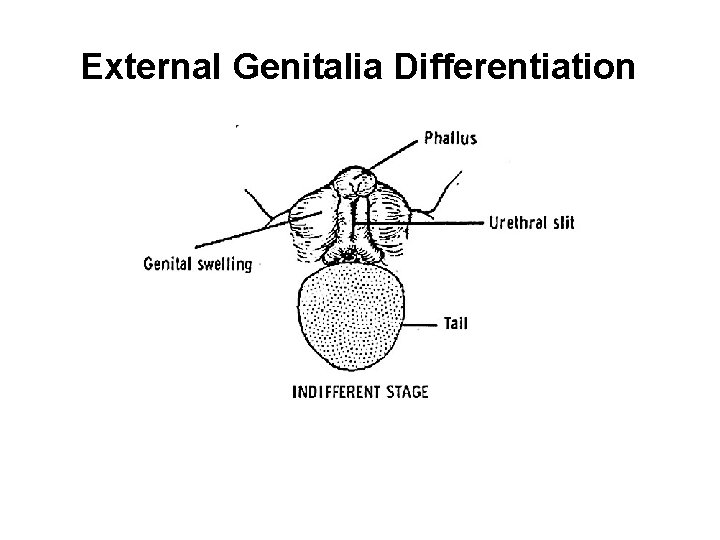
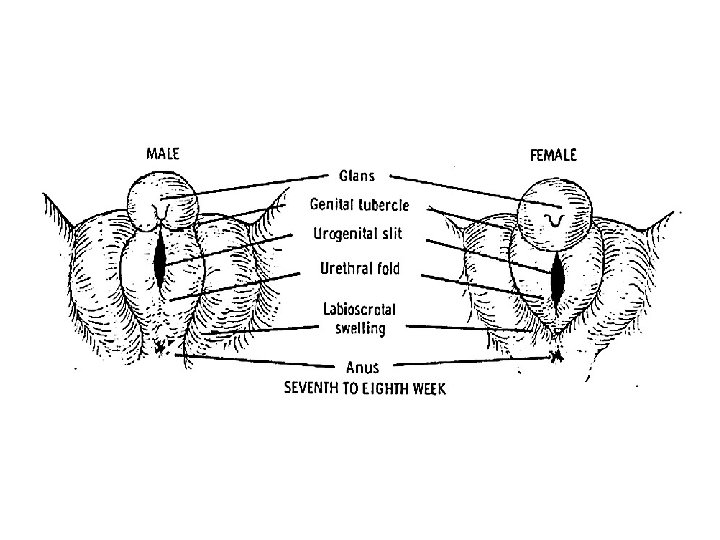
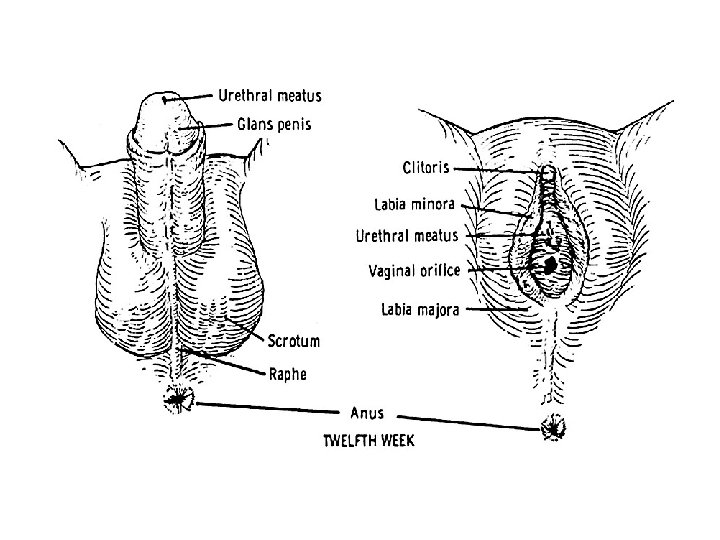
External Genitalia Differentiation
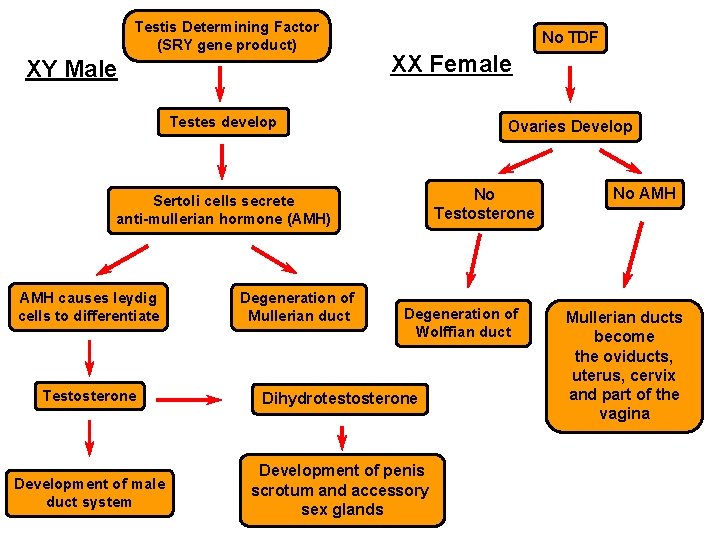
Testis Determining Factor (SRY gene product) XY Male No TDF XX Female Testes develop Ovaries Develop No Testosterone Sertoli cells secrete anti-mullerian hormone (AMH) AMH causes leydig cells to differentiate Degeneration of Mullerian duct Degeneration of Wolffian duct Testosterone Dihydrotestosterone Development of male duct system Development of penis scrotum and accessory sex glands No AMH Mullerian ducts become the oviducts, uterus, cervix and part of the vagina
Brain or Behavioral Sex
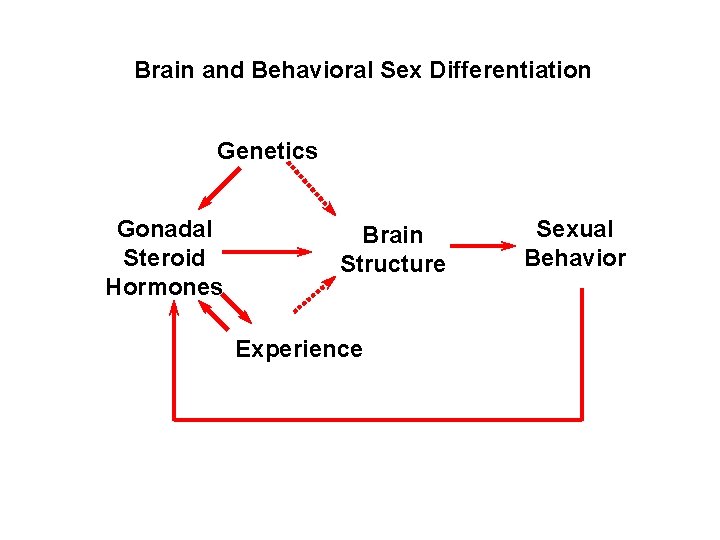
Brain and Behavioral Sex Differentiation Genetics Gonadal Steroid Hormones Brain Structure Experience Sexual Behavior
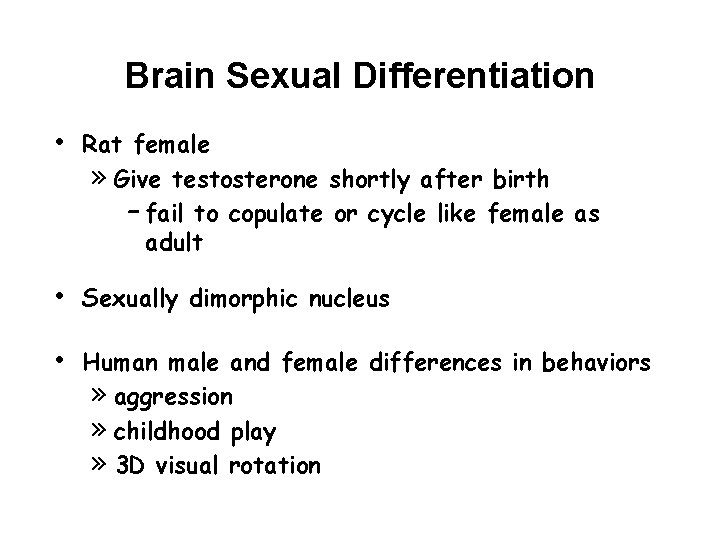
Brain Sexual Differentiation • Rat female » Give testosterone shortly after birth – fail to copulate or cycle like female as adult • Sexually dimorphic nucleus • Human male and female differences in behaviors » aggression » childhood play » 3 D visual rotation
Descent of the Testis into the Scrotum
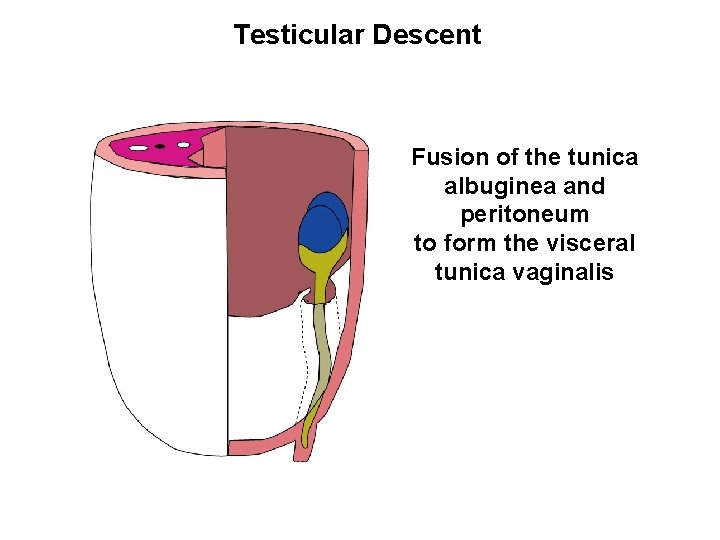
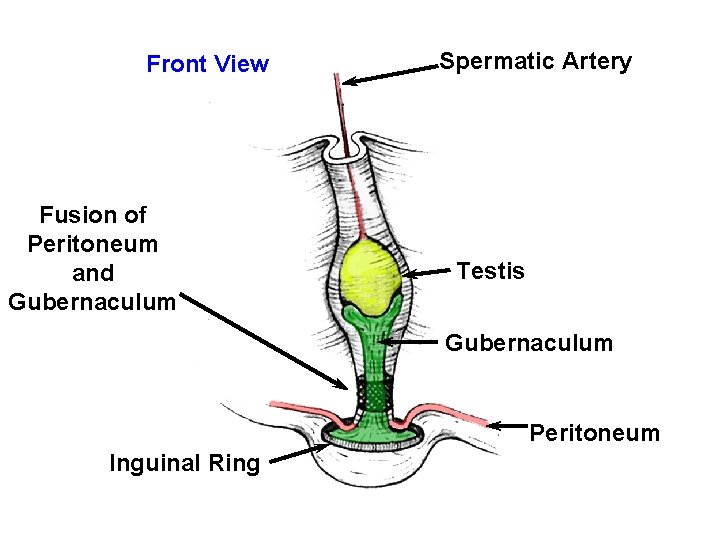
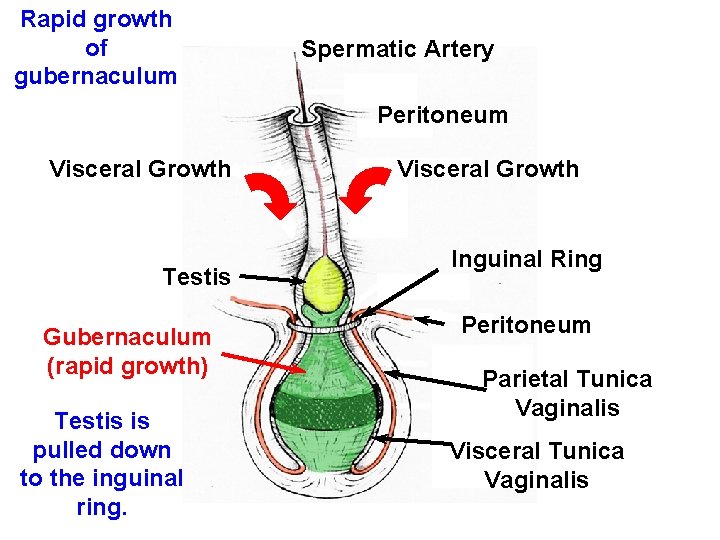
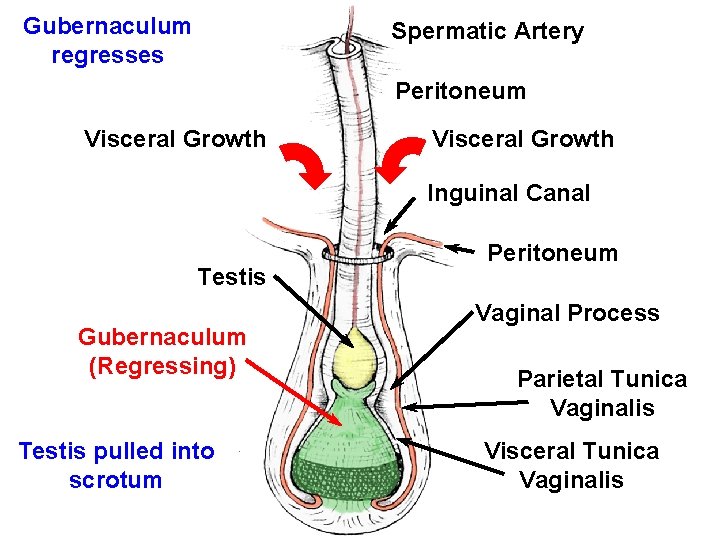
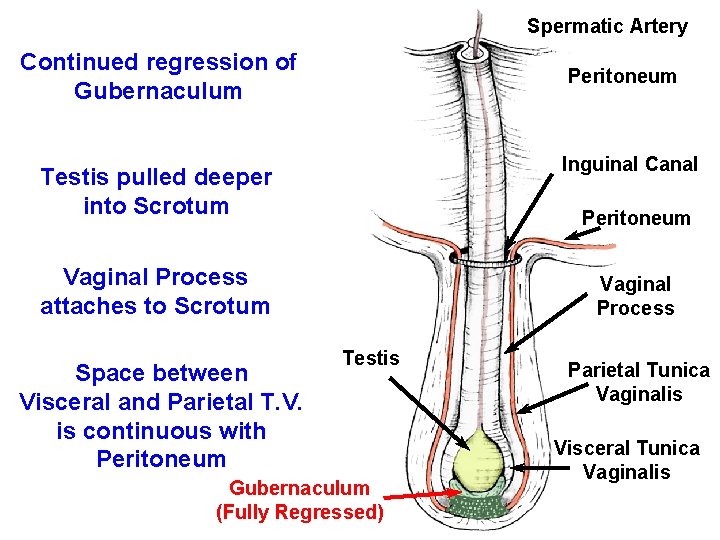
Testicular Descent Fusion of the tunica albuginea and peritoneum to form the visceral tunica vaginalis
Front View Fusion of Peritoneum and Gubernaculum Spermatic Artery Testis Gubernaculum Peritoneum Inguinal Ring
Rapid growth of gubernaculum Spermatic Artery Peritoneum Visceral Growth Testis Gubernaculum (rapid growth) Testis is pulled down to the inguinal ring. Visceral Growth Inguinal Ring Peritoneum Parietal Tunica Vaginalis Visceral Tunica Vaginalis
Gubernaculum regresses Spermatic Artery Peritoneum Visceral Growth Inguinal Canal Testis Gubernaculum (Regressing) Testis pulled into scrotum Peritoneum Vaginal Process Parietal Tunica Vaginalis Visceral Tunica Vaginalis
Spermatic Artery Continued regression of Gubernaculum Peritoneum Inguinal Canal Testis pulled deeper into Scrotum Peritoneum Vaginal Process attaches to Scrotum Space between Visceral and Parietal T. V. is continuous with Peritoneum Vaginal Process Testis Gubernaculum (Fully Regressed) Parietal Tunica Vaginalis Visceral Tunica Vaginalis
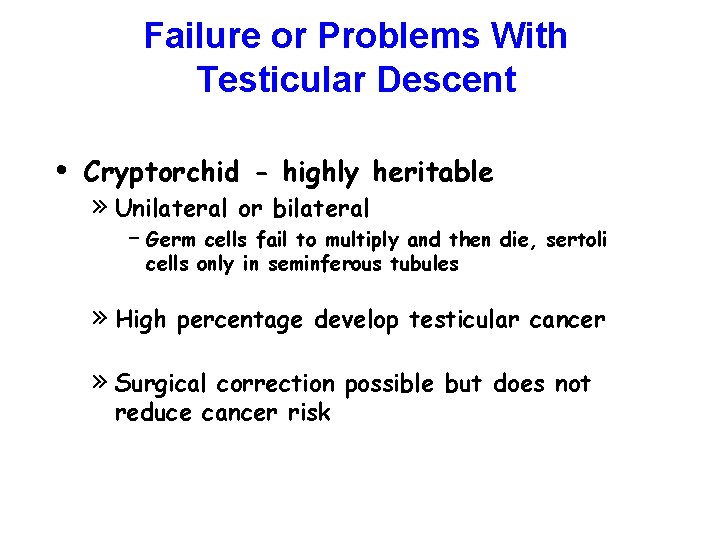
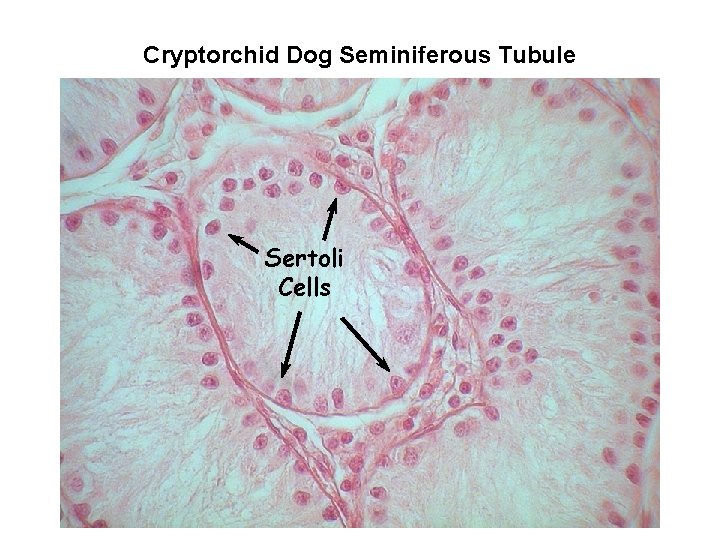
Failure or Problems With Testicular Descent • Cryptorchid - highly heritable » Unilateral – Germ or bilateral cells fail to multiply and then die, sertoli cells only in seminferous tubules » High percentage develop testicular cancer » Surgical correction possible but does not reduce cancer risk
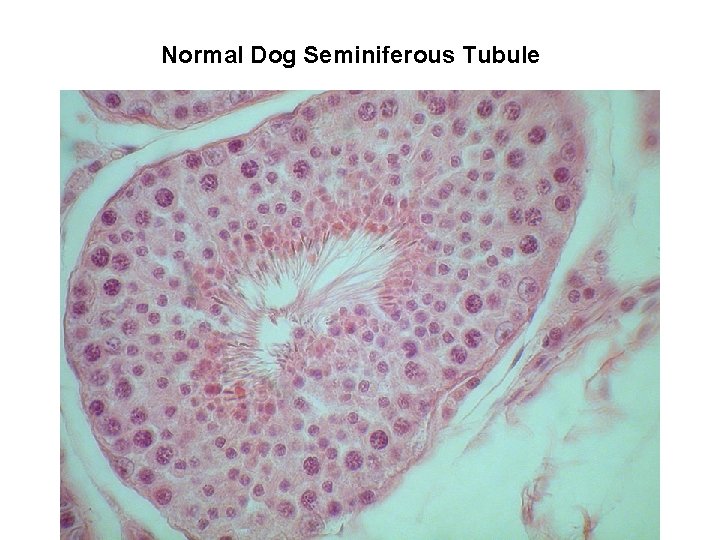
Normal Dog Seminiferous Tubule
Cryptorchid Dog Seminiferous Tubule Sertoli Cells
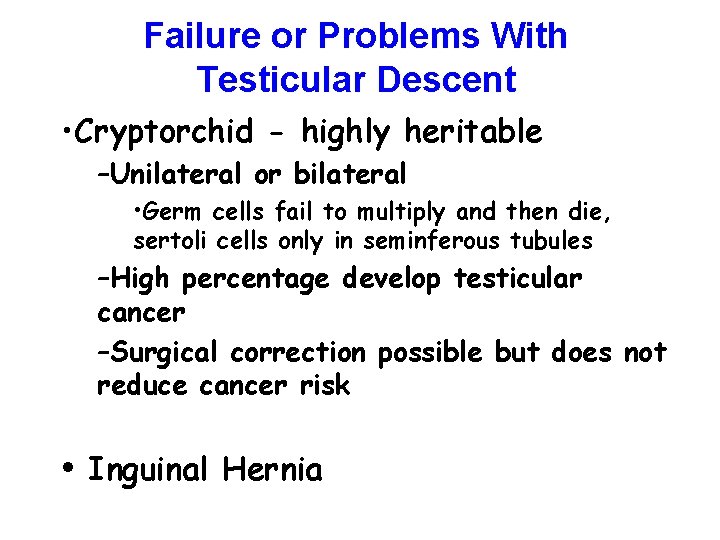
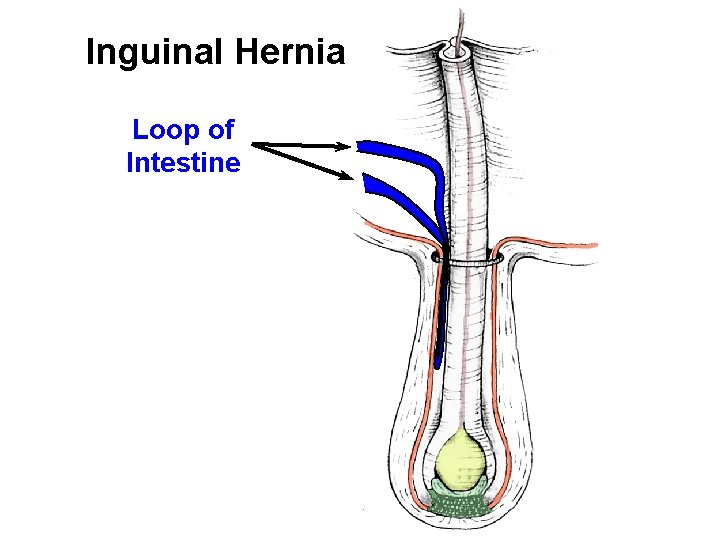
Failure or Problems With Testicular Descent • Cryptorchid - highly heritable –Unilateral or bilateral • Germ cells fail to multiply and then die, sertoli cells only in seminferous tubules –High percentage develop testicular cancer –Surgical correction possible but does not reduce cancer risk • Inguinal Hernia
Inguinal Hernia Loop of Intestine
Abnormalities in Development
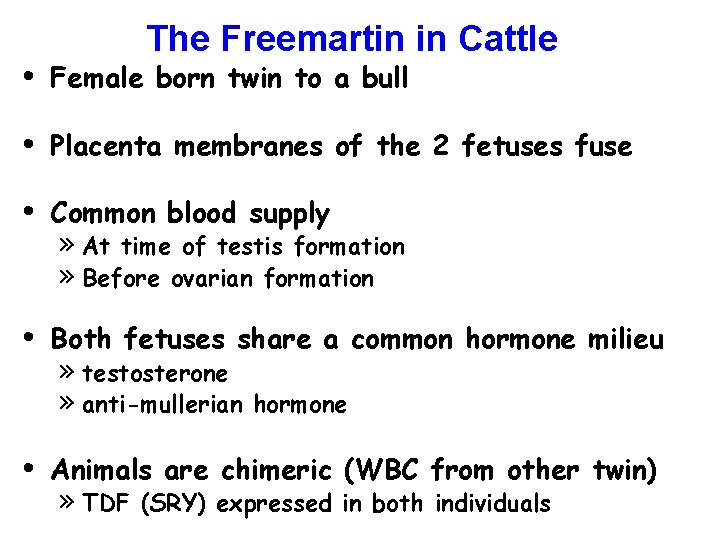
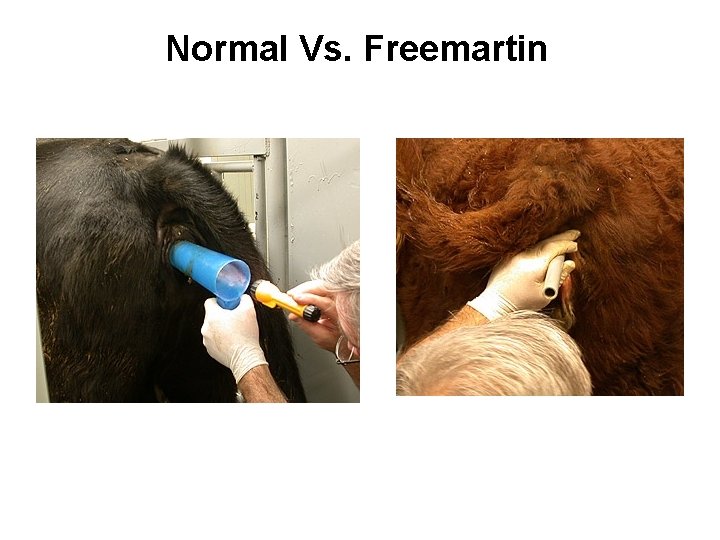
The Freemartin in Cattle • Female born twin to a bull • Placenta membranes of the 2 fetuses fuse • Common blood supply • Both fetuses share a common hormone milieu • » At time of testis formation » Before ovarian formation » testosterone » anti-mullerian hormone Animals are chimeric (WBC from other twin) » TDF (SRY) expressed in both individuals
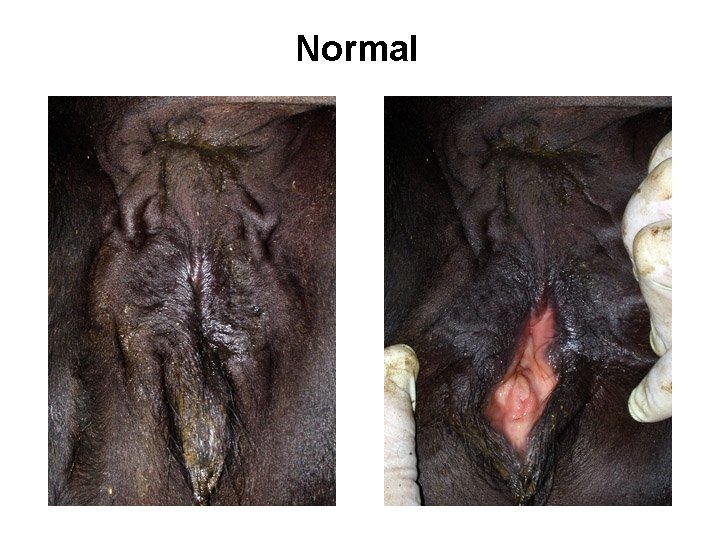
Normal
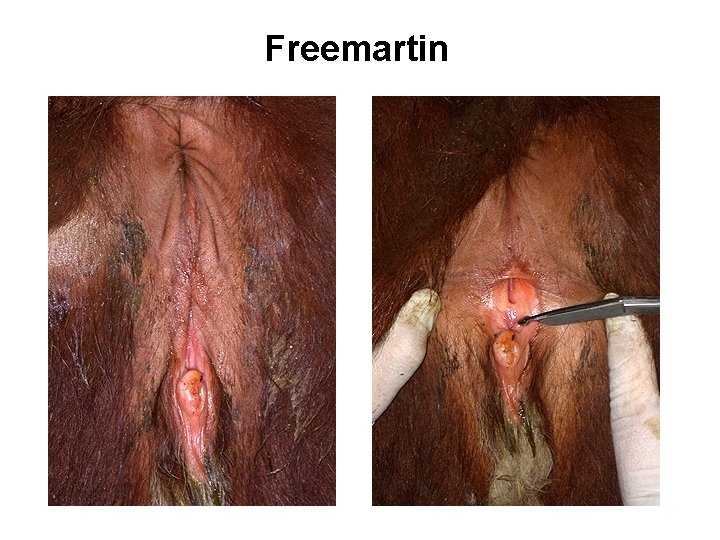
Freemartin
Normal Vs. Freemartin
Freemartin • AMH from bull - blocks Mullerian ducts • Testosterone from bull » Posterior vagina, no anterior vagina » clitoral enlargment » Brain changes like that of male • Ovaries do not grow but are chimeric • Use as estrus detector • Abnormalities exist as a continuum » Ovotestis – SRY and therefore AMH and Testosterone – Further changes and adult male behavior
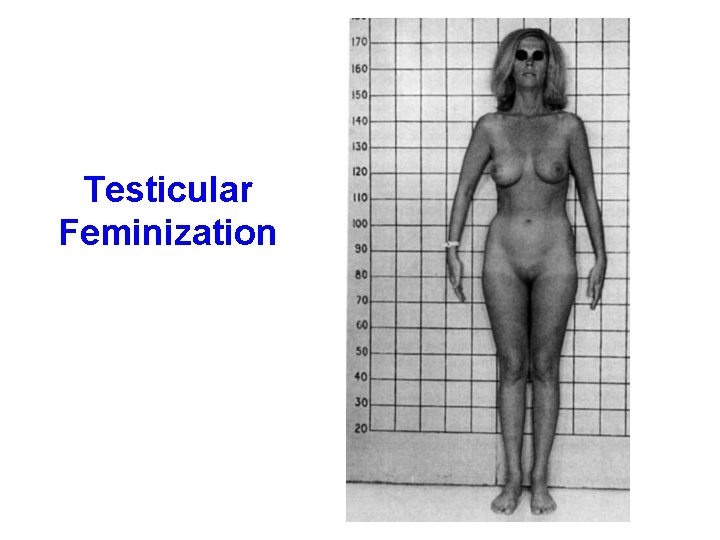
Testicular Feminization in an XY Individual • No androgen receptor • Testis • No testosterone response so no Wolffian duct development • AMH present so mullerian ducts regress • External genitalia is female due to lack of androgen
Testicular Feminization
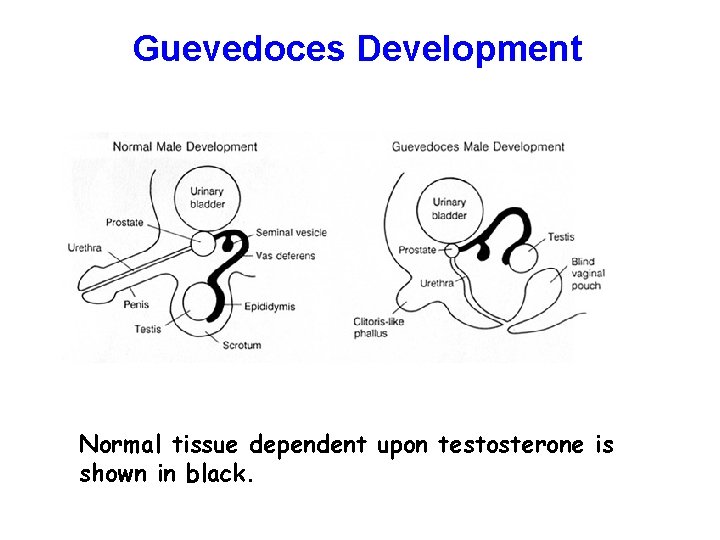
5 Reductase Deficiency in an XY Individual • Guevedoces (penis at 12) • Testis • AMH present so Mullerian ducts regress • Wolffian ducts • psuedovagina and female external genitalia • at puberty may differentiate into more of a phenotypic male
Guevedoces Development Normal tissue dependent upon testosterone is shown in black.