
Signatures of Early Earth Differentiation in the Deep
- Slides: 28
Signatures of Early Earth Differentiation in the Deep Mantle? Richard W. Carlson Department of Terrestrial Magnetism Carnegie Institution of Washington COMPRES, June 15, 2011
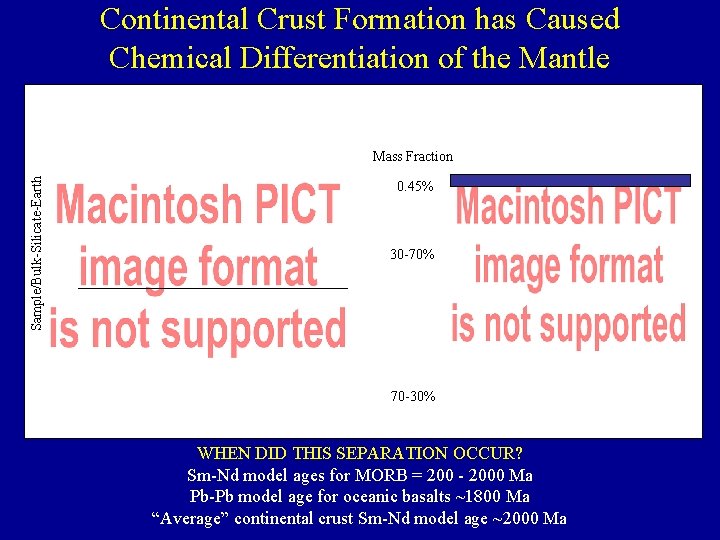
Continental Crust Formation has Caused Chemical Differentiation of the Mantle Sample/Bulk-Silicate-Earth Mass Fraction 0. 45% 30 -70% 70 -30% WHEN DID THIS SEPARATION OCCUR? Sm-Nd model ages for MORB = 200 - 2000 Ma Pb-Pb model age for oceanic basalts ~1800 Ma “Average” continental crust Sm-Nd model age ~2000 Ma
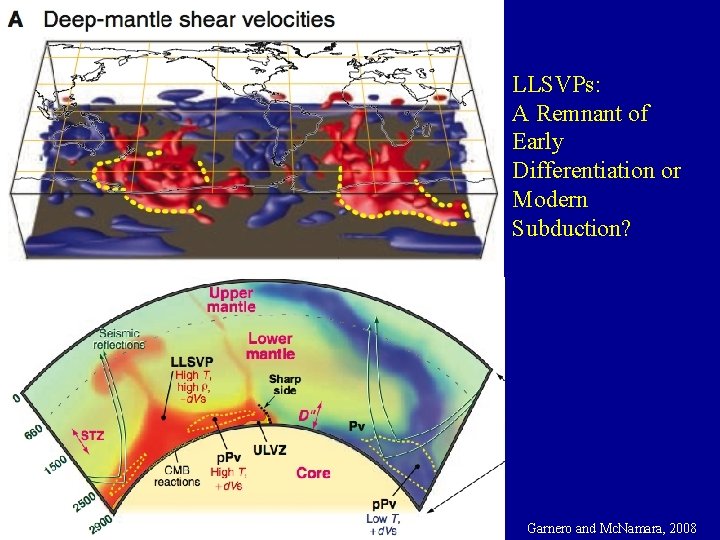
LLSVPs: A Remnant of Early Differentiation or Modern Subduction? Garnero and Mc. Namara, 2008
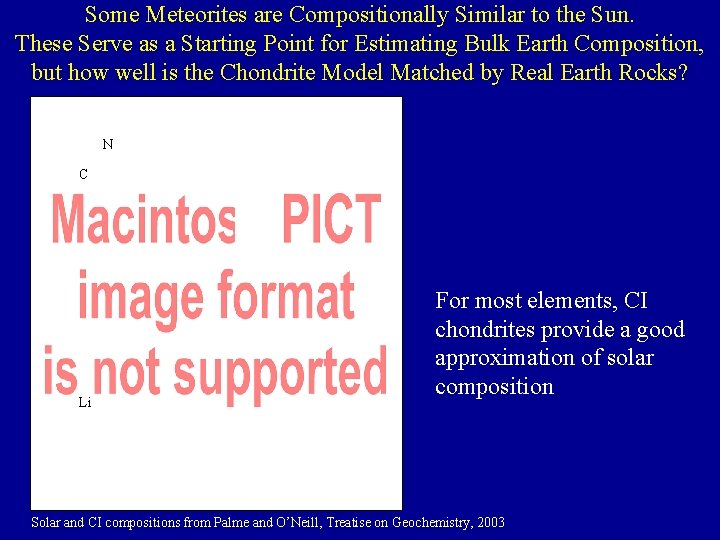
Some Meteorites are Compositionally Similar to the Sun. These Serve as a Starting Point for Estimating Bulk Earth Composition, but how well is the Chondrite Model Matched by Real Earth Rocks? N C Li In? For most elements, CI chondrites provide a good approximation of solar composition Solar and CI compositions from Palme and O’Neill, Treatise on Geochemistry, 2003
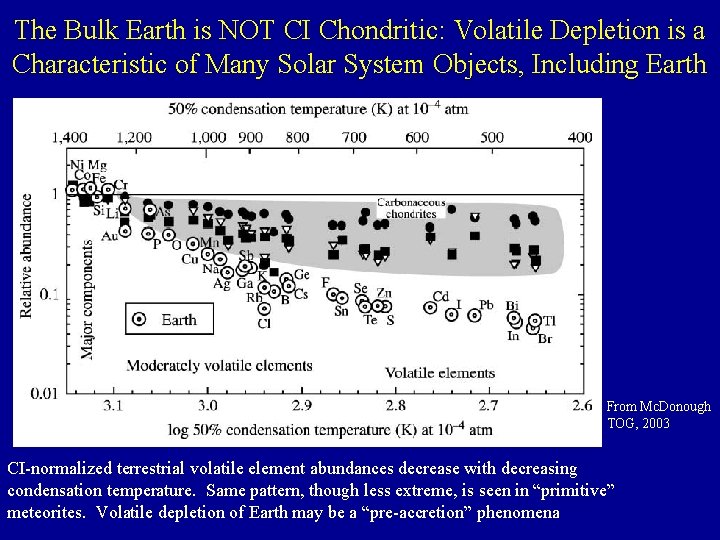
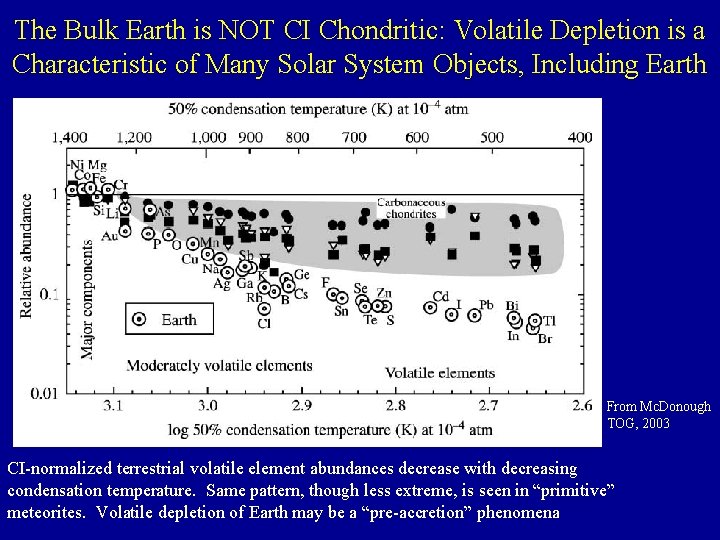
The Bulk Earth is NOT CI Chondritic: Volatile Depletion is a Characteristic of Many Solar System Objects, Including Earth From Mc. Donough TOG, 2003 CI-normalized terrestrial volatile element abundances decrease with decreasing condensation temperature. Same pattern, though less extreme, is seen in “primitive” meteorites. Volatile depletion of Earth may be a “pre-accretion” phenomena
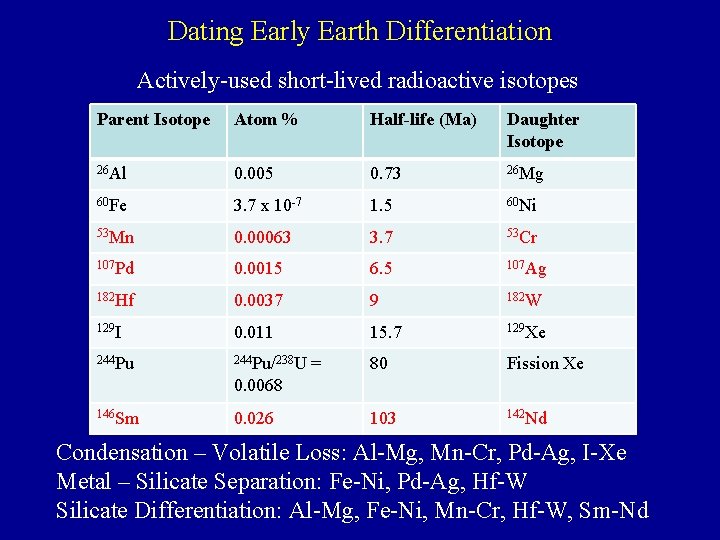
Dating Early Earth Differentiation Actively-used short-lived radioactive isotopes Parent Isotope Atom % Half-life (Ma) Daughter Isotope 26 Al 0. 005 0. 73 26 Mg 60 Fe 3. 7 x 10 -7 1. 5 60 Ni 53 Mn 0. 00063 3. 7 53 Cr 107 Pd 0. 0015 6. 5 107 Ag 182 Hf 0. 0037 9 182 W 129 I 0. 011 15. 7 129 Xe 244 Pu/238 U 80 Fission Xe 103 142 Nd = 0. 0068 146 Sm 0. 026 Condensation – Volatile Loss: Al-Mg, Mn-Cr, Pd-Ag, I-Xe Metal – Silicate Separation: Fe-Ni, Pd-Ag, Hf-W Silicate Differentiation: Al-Mg, Fe-Ni, Mn-Cr, Hf-W, Sm-Nd
The Bulk Earth is NOT CI Chondritic: Volatile Depletion is a Characteristic of Many Solar System Objects, Including Earth From Mc. Donough TOG, 2003 CI-normalized terrestrial volatile element abundances decrease with decreasing condensation temperature. Same pattern, though less extreme, is seen in “primitive” meteorites. Volatile depletion of Earth may be a “pre-accretion” phenomena
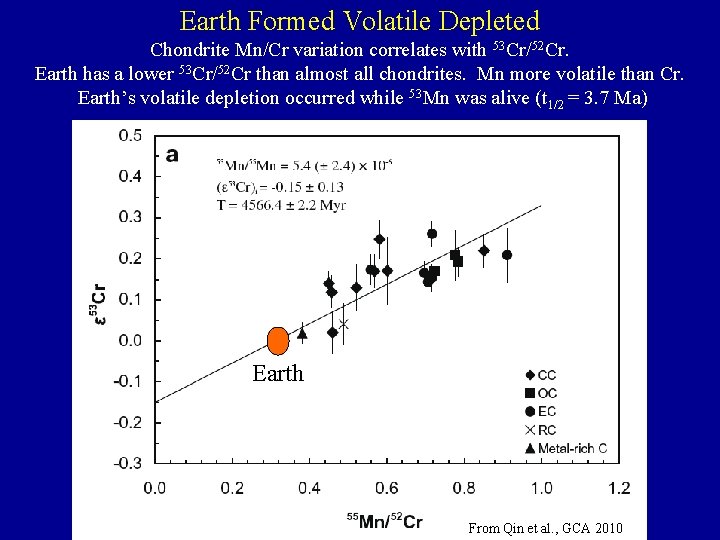
Earth Formed Volatile Depleted Chondrite Mn/Cr variation correlates with 53 Cr/52 Cr. Earth has a lower 53 Cr/52 Cr than almost all chondrites. Mn more volatile than Cr. Earth’s volatile depletion occurred while 53 Mn was alive (t 1/2 = 3. 7 Ma) Earth From Qin et al. , GCA 2010
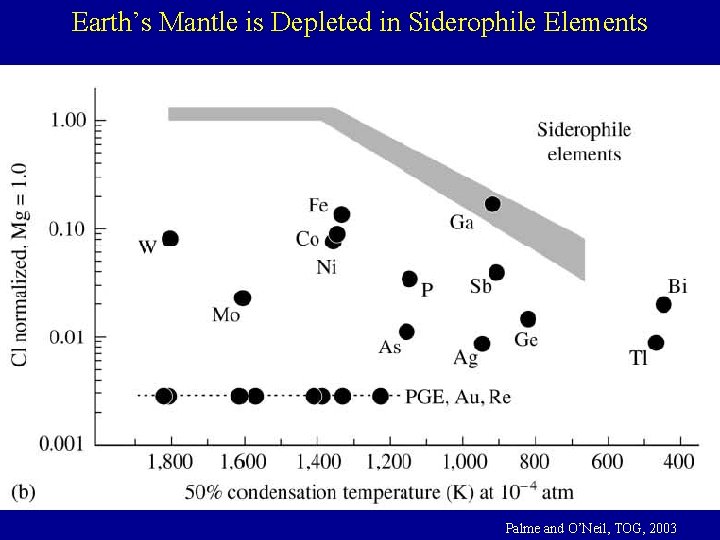
Earth’s Mantle is Depleted in Siderophile Elements Palme and O’Neil, TOG, 2003
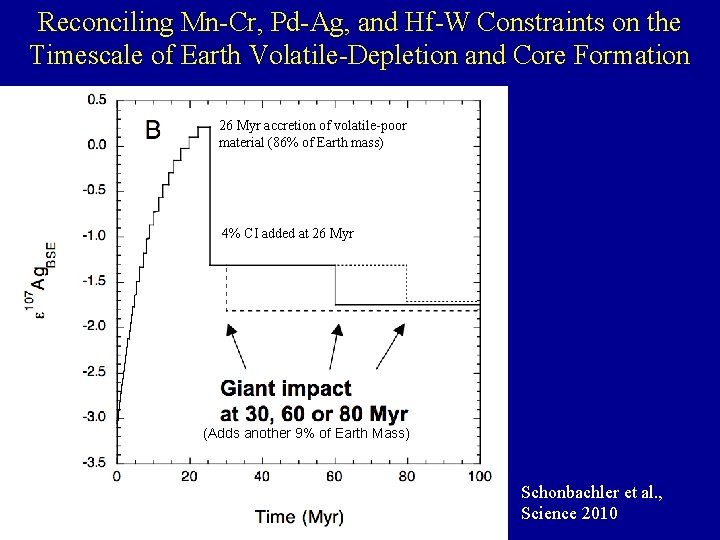
Reconciling Mn-Cr, Pd-Ag, and Hf-W Constraints on the Timescale of Earth Volatile-Depletion and Core Formation 26 Myr accretion of volatile-poor material (86% of Earth mass) 4% CI added at 26 Myr (Adds another 9% of Earth Mass) Schonbachler et al. , Science 2010
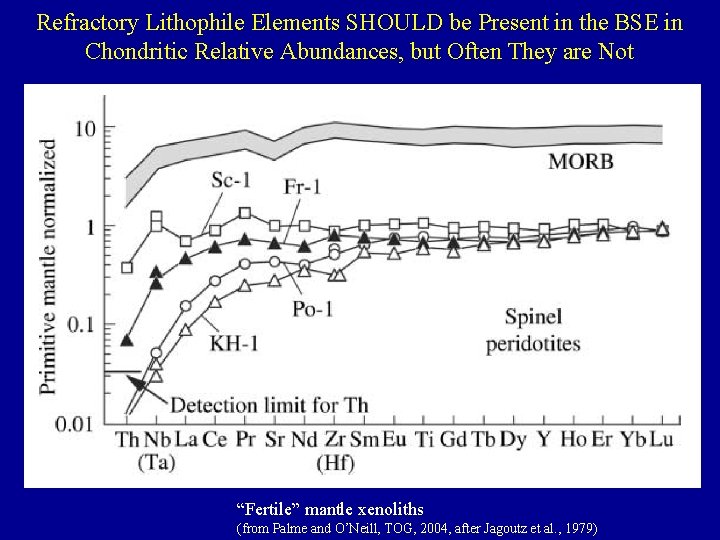
Refractory Lithophile Elements SHOULD be Present in the BSE in Chondritic Relative Abundances, but Often They are Not “Fertile” mantle xenoliths (from Palme and O’Neill, TOG, 2004, after Jagoutz et al. , 1979)
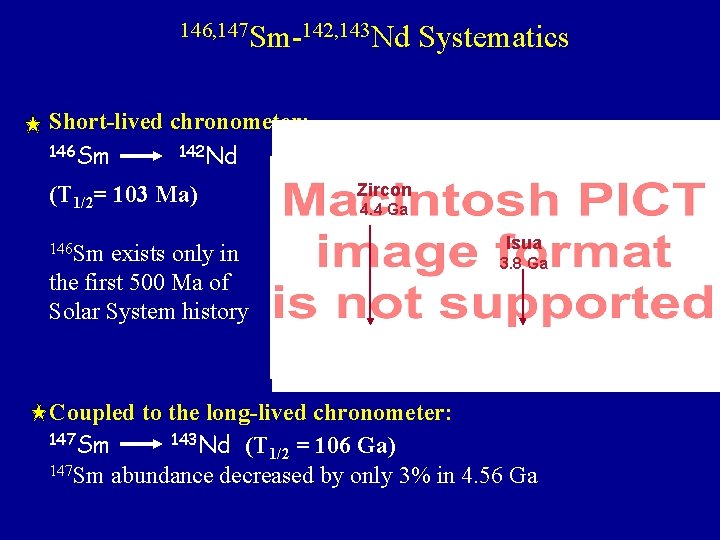
146, 147 Sm-142, 143 Nd Systematics Short-lived chronometer: 146 Sm 142 Nd (T 1/2= 103 Ma) 146 Sm exists only in the first 500 Ma of Solar System history Zircon 4. 4 Ga Isua 3. 8 Ga Coupled to the long-lived chronometer: 147 Sm 143 Nd (T 1/2 = 106 Ga) 147 Sm abundance decreased by only 3% in 4. 56 Ga
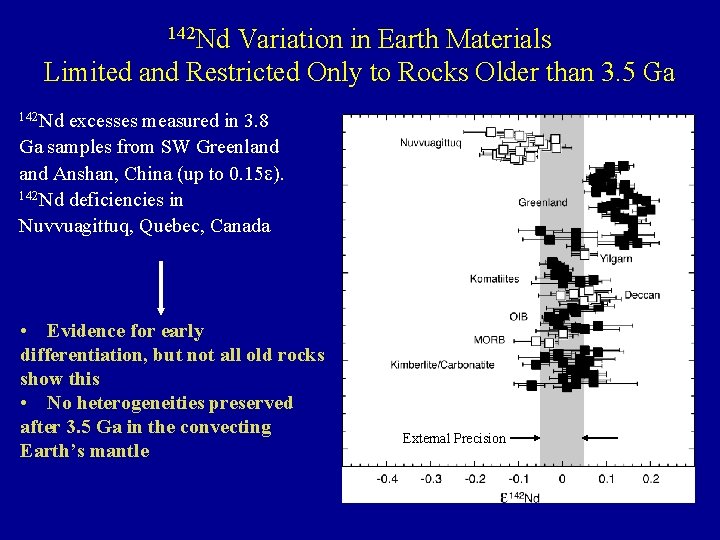
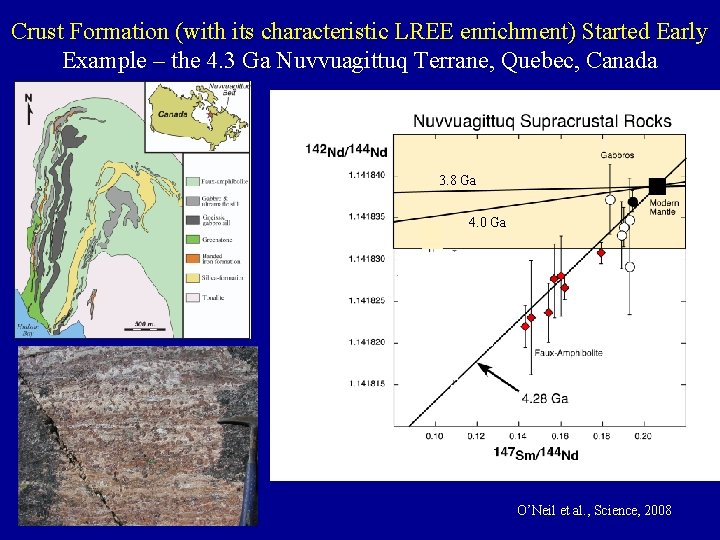
142 Nd Variation in Earth Materials Limited and Restricted Only to Rocks Older than 3. 5 Ga 142 Nd excesses measured in 3. 8 Ga samples from SW Greenland Anshan, China (up to 0. 15 ). 142 Nd deficiencies in Nuvvuagittuq, Quebec, Canada • Evidence for early differentiation, but not all old rocks show this • No heterogeneities preserved after 3. 5 Ga in the convecting Earth’s mantle External Precision
Is “Terrestrial” 142 Nd/144 Nd Chondritic? – No! • 142 Nd/144 Nd ratios measured in carbonaceous, ordinary and some enstatite chondrites, and eucrites, are lower than laboratory standard and terrestrial samples • Excess 142 Nd in Earth rocks indicative of higher than chondritic Sm/Nd ratio while 146 Sm was still extant. Open symbols show data from Nyquist et al. , 1995; Andreasen and Sharma, 2006; Rankenburg et al. , 2006. Closed symbols are data from Boyet and Carlson, 2005; Carlson et al. , 2007.
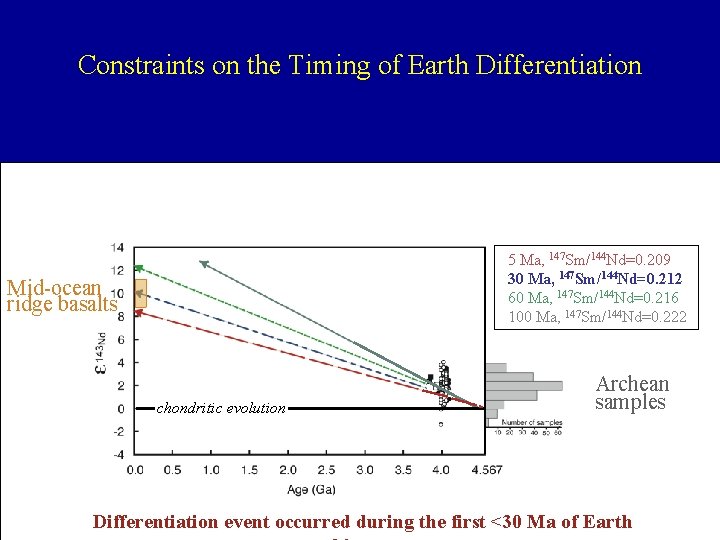
Constraints on the Timing of Earth Differentiation 5 Ma, 147 Sm/144 Nd=0. 209 30 Ma, 147 Sm/144 Nd=0. 212 60 Ma, 147 Sm/144 Nd=0. 216 100 Ma, 147 Sm/144 Nd=0. 222 Mid-ocean ridge basalts chondritic evolution Archean samples Differentiation event occurred during the first <30 Ma of Earth
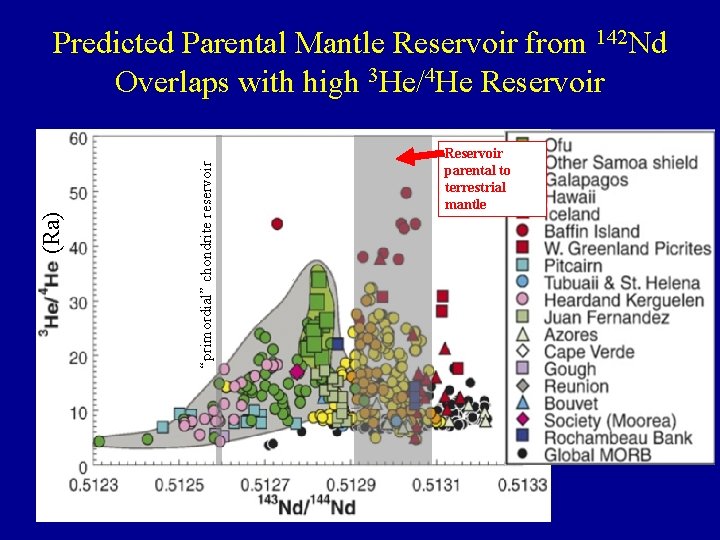
“primordial” chondrite reservoir (Ra) Predicted Parental Mantle Reservoir from 142 Nd Overlaps with high 3 He/4 He Reservoir parental to terrestrial mantle
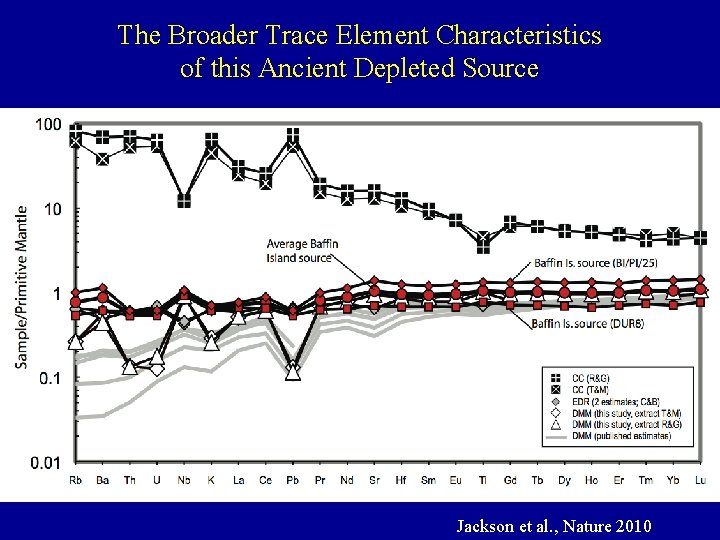
The Broader Trace Element Characteristics of this Ancient Depleted Source Jackson et al. , Nature 2010
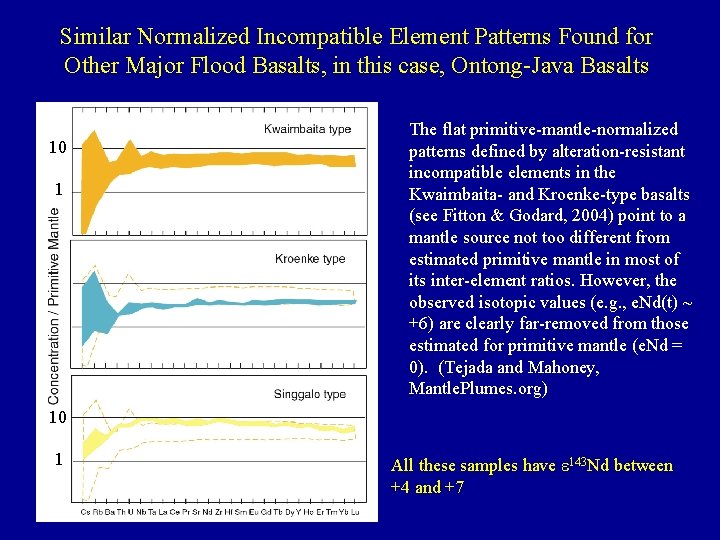
Similar Normalized Incompatible Element Patterns Found for Other Major Flood Basalts, in this case, Ontong-Java Basalts 10 1 The flat primitive-mantle-normalized patterns defined by alteration-resistant incompatible elements in the Kwaimbaita- and Kroenke-type basalts (see Fitton & Godard, 2004) point to a mantle source not too different from estimated primitive mantle in most of its inter-element ratios. However, the observed isotopic values (e. g. , e. Nd(t) ~ +6) are clearly far-removed from those estimated for primitive mantle (e. Nd = 0). (Tejada and Mahoney, Mantle. Plumes. org) 10 1 All these samples have 143 Nd between +4 and +7
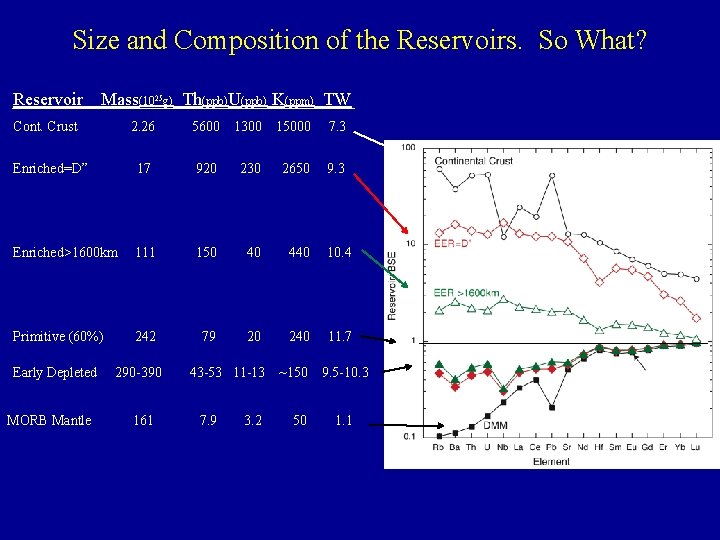
Size and Composition of the Reservoirs. So What? Reservoir Mass(1025 g) Th(ppb)U(ppb) K(ppm) TW Cont. Crust 2. 26 5600 1300 15000 7. 3 Enriched=D” 17 920 230 2650 9. 3 Enriched>1600 km 111 150 40 440 10. 4 Primitive (60%) 242 79 20 240 11. 7 43 -53 11 -13 ~150 Early Depleted MORB Mantle 290 -390 161 7. 9 3. 2 50 9. 5 -10. 3 1. 1
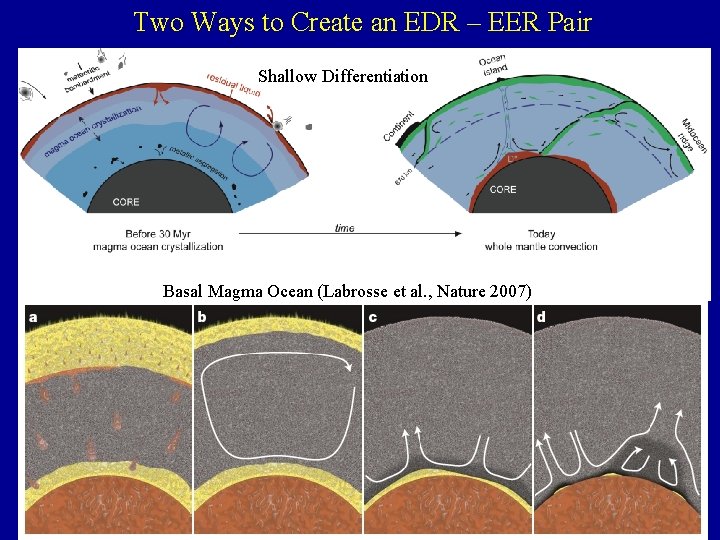
Two Ways to Create an EDR – EER Pair Magma Ocean Overturn Shallow Differentiation Basal Magma Ocean (Labrosse et al. , Nature 2007)
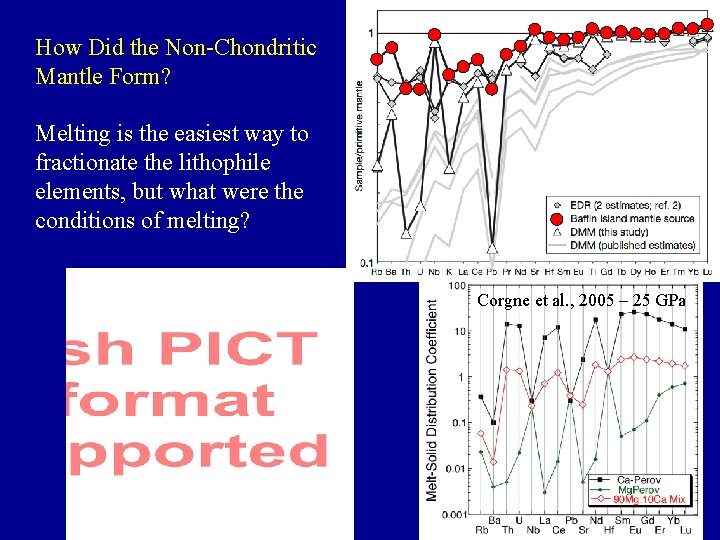
How Did the Non-Chondritic Mantle Form? Melting is the easiest way to fractionate the lithophile elements, but what were the conditions of melting? Corgne et al. , 2005 – 25 GPa
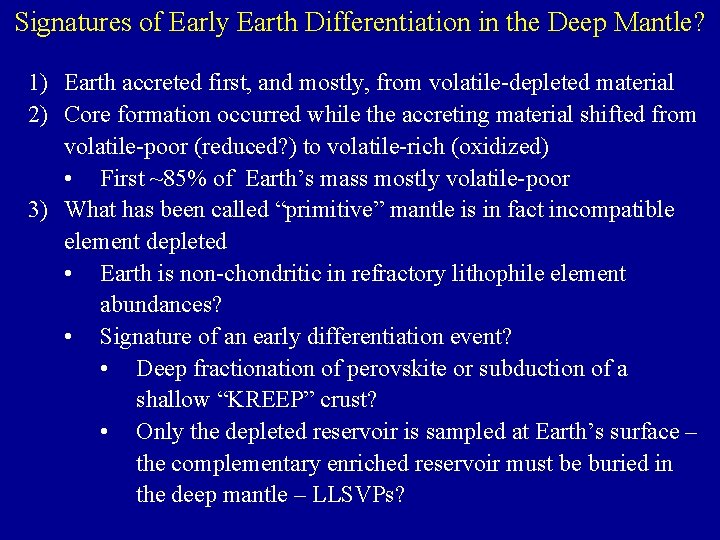
Signatures of Early Earth Differentiation in the Deep Mantle? 1) Earth accreted first, and mostly, from volatile-depleted material 2) Core formation occurred while the accreting material shifted from volatile-poor (reduced? ) to volatile-rich (oxidized) • First ~85% of Earth’s mass mostly volatile-poor 3) What has been called “primitive” mantle is in fact incompatible element depleted • Earth is non-chondritic in refractory lithophile element abundances? • Signature of an early differentiation event? • Deep fractionation of perovskite or subduction of a shallow “KREEP” crust? • Only the depleted reservoir is sampled at Earth’s surface – the complementary enriched reservoir must be buried in the deep mantle – LLSVPs?
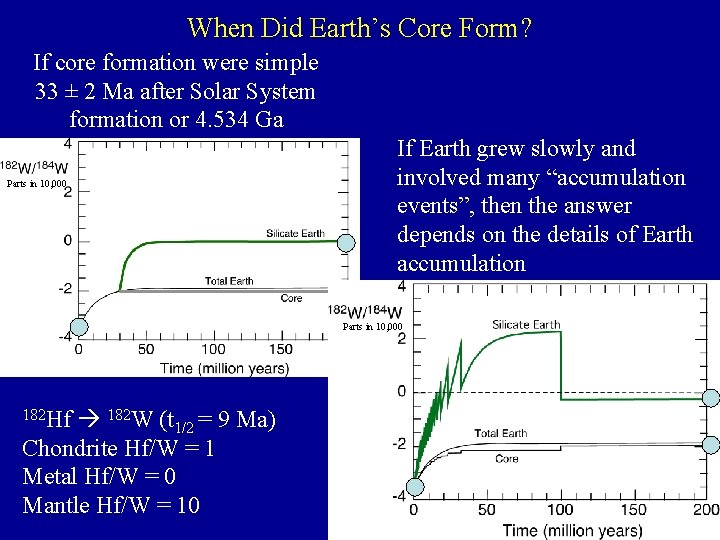
When Did Earth’s Core Form? If core formation were simple 33 ± 2 Ma after Solar System formation or 4. 534 Ga Parts in 10, 000 If Earth grew slowly and involved many “accumulation events”, then the answer depends on the details of Earth accumulation Parts in 10, 000 182 W (t 1/2 = 9 Ma) Chondrite Hf/W = 1 Metal Hf/W = 0 Mantle Hf/W = 10 182 Hf
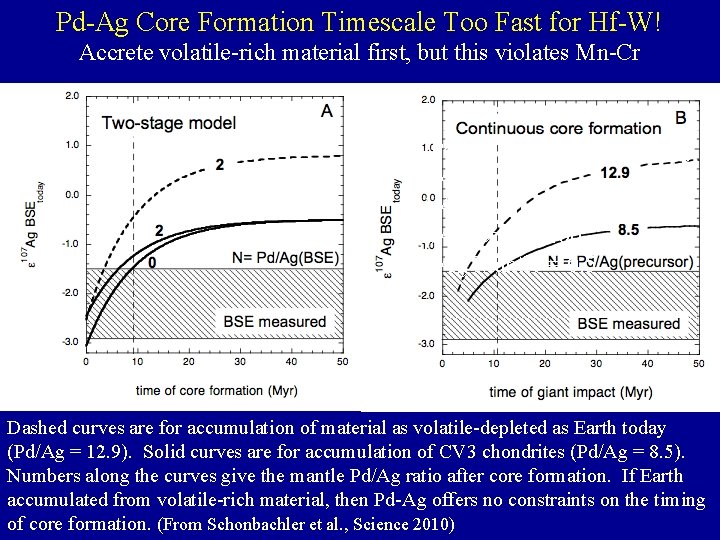
Pd-Ag Core Formation Timescale Too Fast for Hf-W! Accrete volatile-rich material first, but this violates Mn-Cr 107 Ag (t 1/2 = 6. 5 Myr) Pd/Ag CI = 3 Pd/Ag Earth = 13 Pd/Ag Core > 400 Pd/Ag Mantle = 0. 5 107 Pd Dashed curves are for accumulation of material as volatile-depleted as Earth today (Pd/Ag = 12. 9). Solid curves are for accumulation of CV 3 chondrites (Pd/Ag = 8. 5). Numbers along the curves give the mantle Pd/Ag ratio after core formation. If Earth accumulated from volatile-rich material, then Pd-Ag offers no constraints on the timing of core formation. (From Schonbachler et al. , Science 2010)
The Importance of that Last 1% Earth = 6 x 1024 kg Ocean = 1. 4 x 10²¹ kg CI Chondrite = 18 wt% H 2 O 1% Earth Mass of CI Chondrite contains 1021 kg water
Early Earth 142 Nd/144 Nd and 143 Nd/144 Nd Evolution The +15 ppm 142 Nd/144 Nd of the SW Greenland Archean rocks require a 147 Sm/144 Nd > 0. 225. The reduction in 142 Nd/144 Nd between 3. 9 and 3. 5 Ga requires mixing between high- and low-Sm/Nd reservoirs formed within tens of Ma of Earth formation. 142 Nd/144 Nd in Archean Mantle-Derived Rocks Initial 143 Nd in Mantle-Derived Rocks
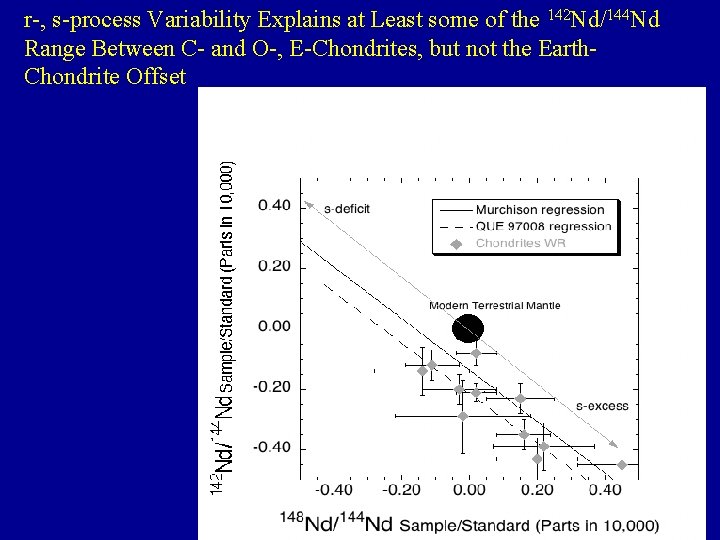
r-, s-process Variability Explains at Least some of the 142 Nd/144 Nd Range Between C- and O-, E-Chondrites, but not the Earth. Chondrite Offset
Crust Formation (with its characteristic LREE enrichment) Started Early Example – the 4. 3 Ga Nuvvuagittuq Terrane, Quebec, Canada 3. 8 Ga 4. 0 Ga O’Neil et al. , Science, 2008