
Signals Systems Spring 2009 Instructor Mariam Shafqat UET
- Slides: 63
Signals & Systems Spring 2009 Instructor: Mariam Shafqat UET Taxila 1
Today's lecture n n n n The course Course contents Recommended books Course structure Assessments breakdown Before we start… Introduction to signals and systems 2
The Course n n Core course First course in Computer Engineering A strong foundation for advanced courses and research What the course is about q q n Mathematical & theoretical q n n Analysis and processing of information System design for required processing Calculus, Linear Algebra, Differential Expectations Extensive and tough 3
Labs Session n Performance criteria: q q q Performance within the lab Lab report submission after one week Lab report submission only in the lab Viva from each individual student from his/her lab report Announcement of marks obtained by each individual students in the lab at the end of lab session. 4
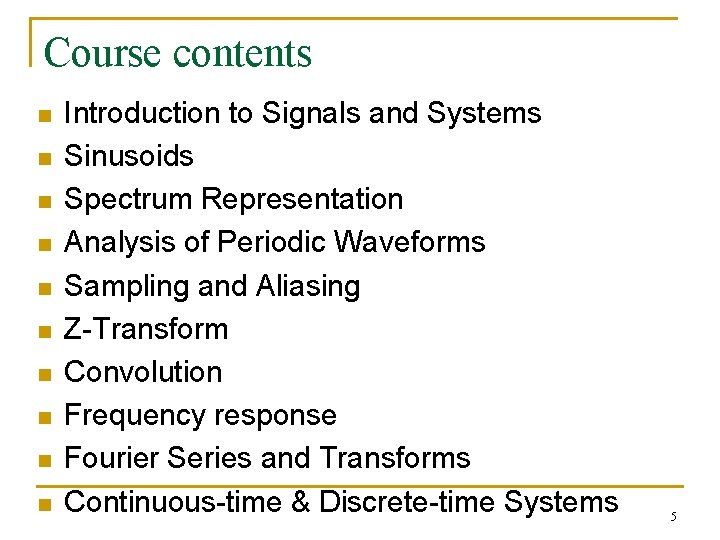
Course contents n n n n n Introduction to Signals and Systems Sinusoids Spectrum Representation Analysis of Periodic Waveforms Sampling and Aliasing Z-Transform Convolution Frequency response Fourier Series and Transforms Continuous-time & Discrete-time Systems 5
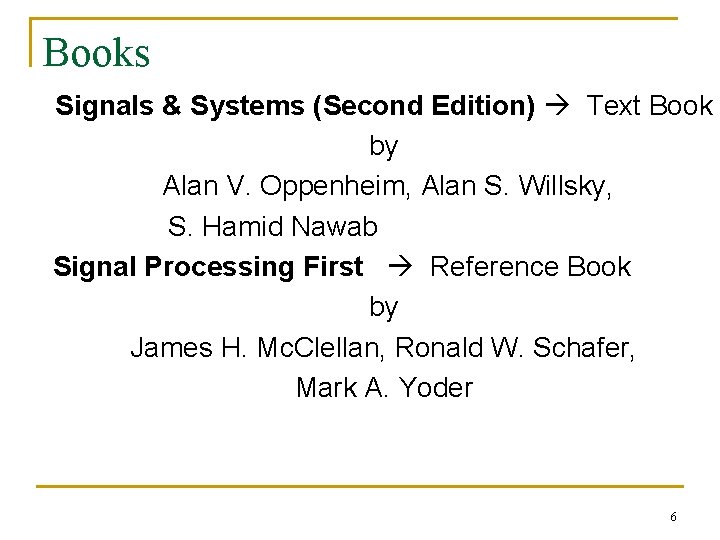
Books Signals & Systems (Second Edition) Text Book by Alan V. Oppenheim, Alan S. Willsky, S. Hamid Nawab Signal Processing First Reference Book by James H. Mc. Clellan, Ronald W. Schafer, Mark A. Yoder 6
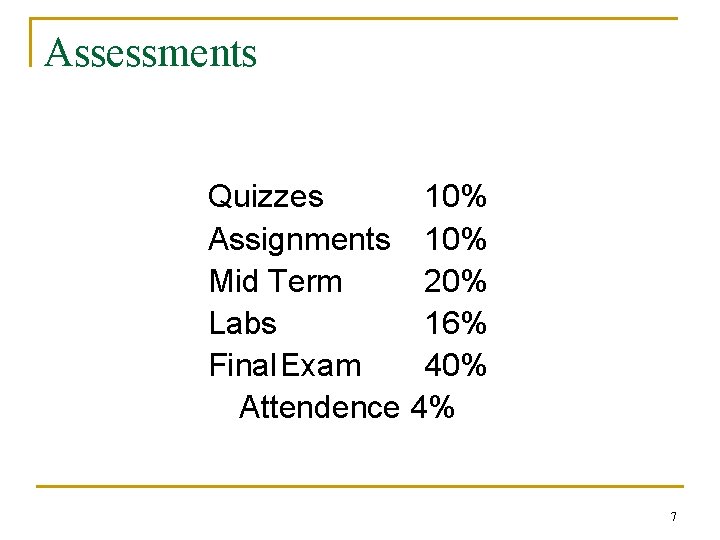
Assessments Quizzes 10% Assignments 10% Mid Term 20% Labs 16% Final. Exam 40% Attendence 4% 7
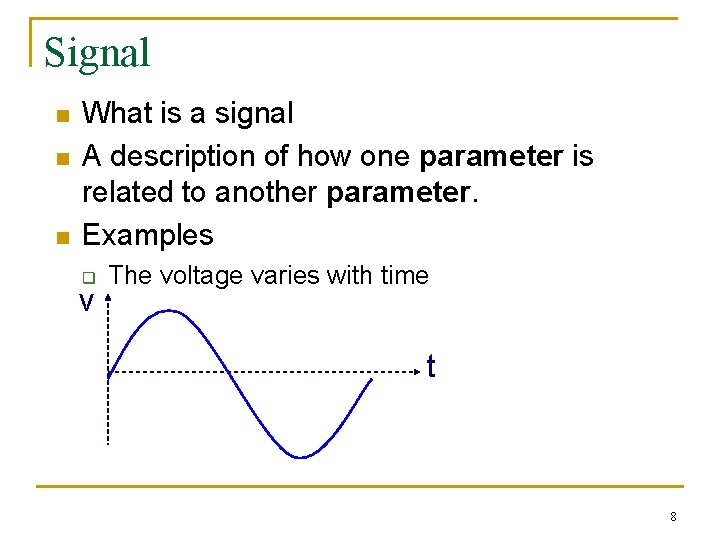
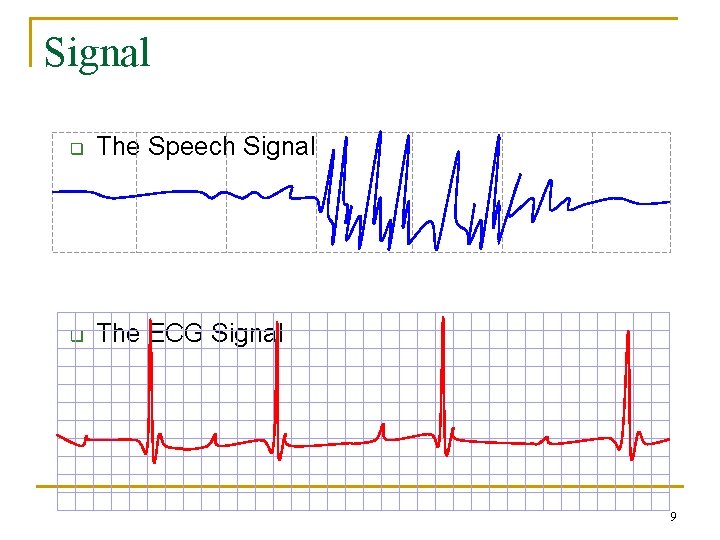
Signal n n n What is a signal A description of how one parameter is related to another parameter. Examples q v The voltage varies with time t 8
Signal q The Speech Signal q The ECG Signal 9
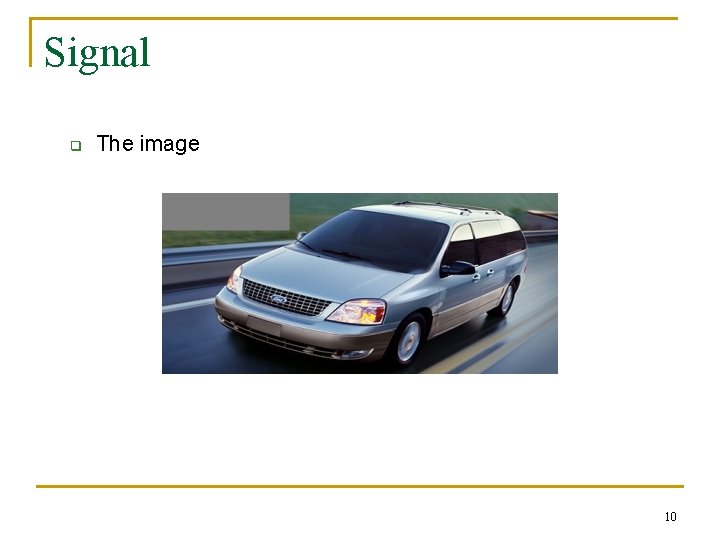
Signal q The image 10
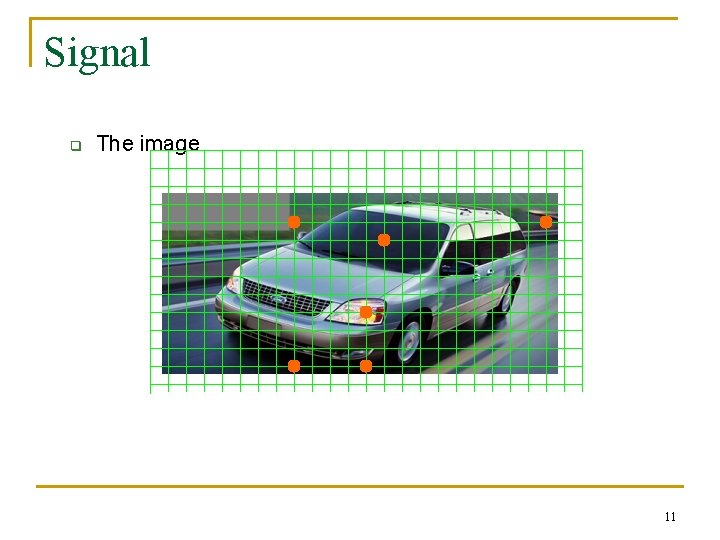
Signal q The image 11
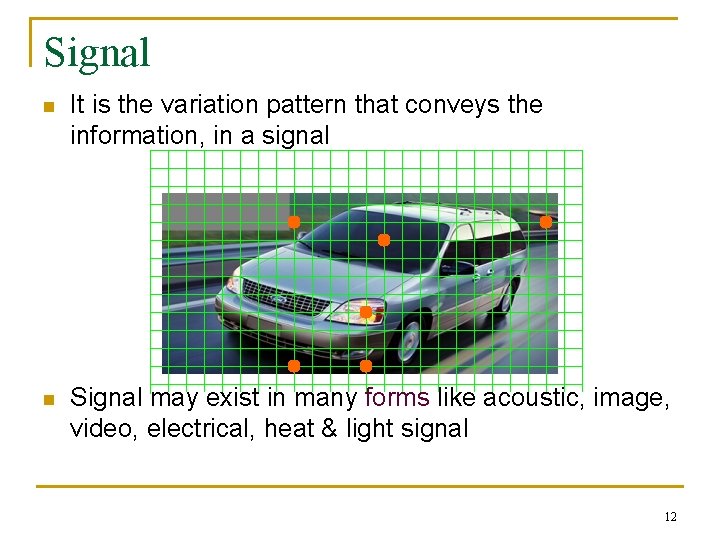
Signal n It is the variation pattern that conveys the information, in a signal n Signal may exist in many forms like acoustic, image, video, electrical, heat & light signal 12
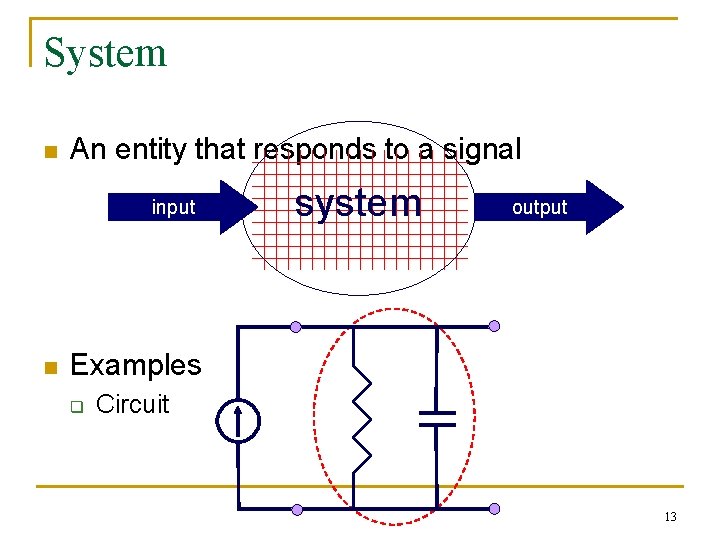
System n An entity that responds to a signal input n system output Examples q Circuit 13
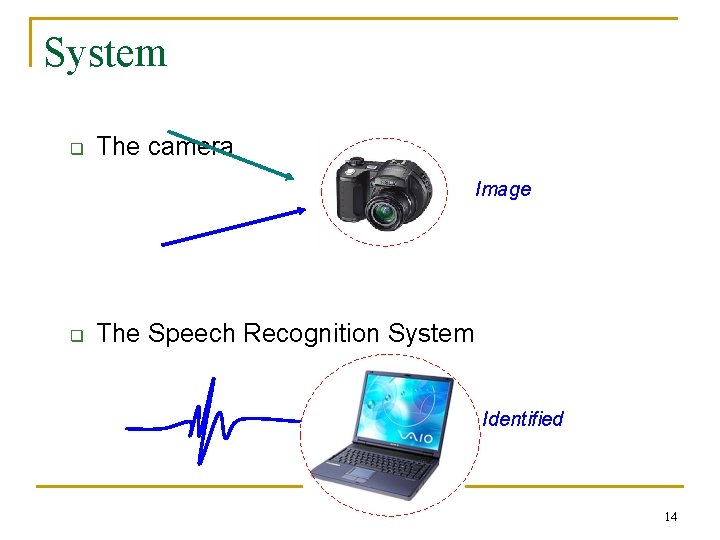
System q The camera Image q The Speech Recognition System Identified 14
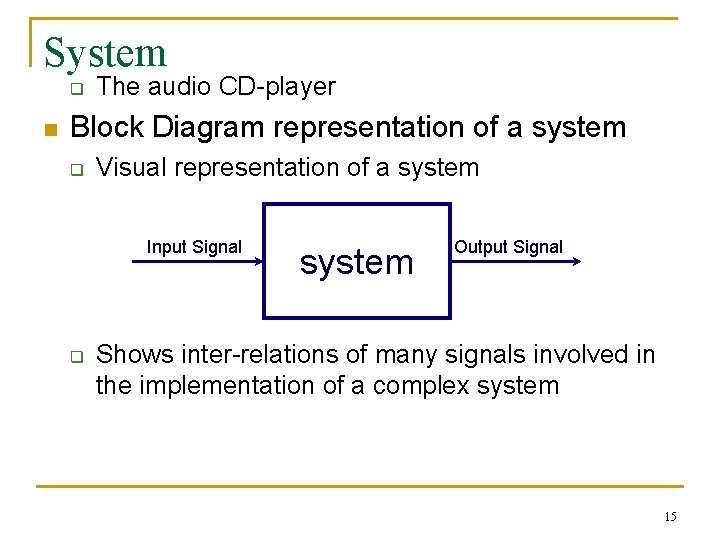
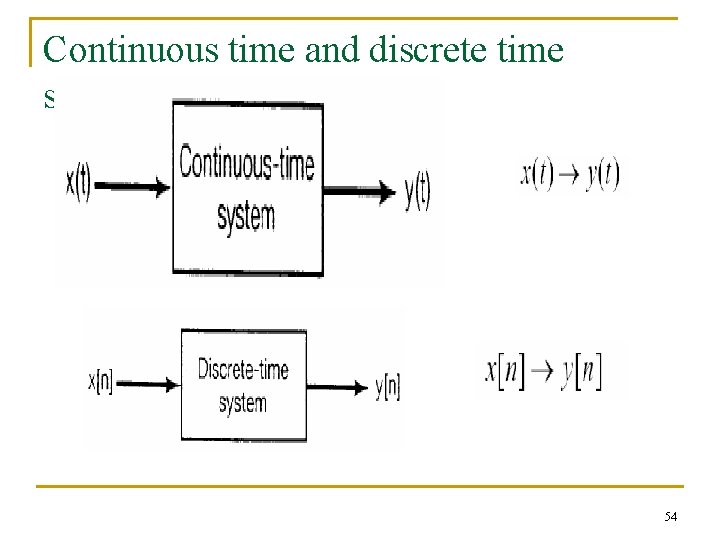
System q n The audio CD-player Block Diagram representation of a system q Visual representation of a system Input Signal q system Output Signal Shows inter-relations of many signals involved in the implementation of a complex system 15
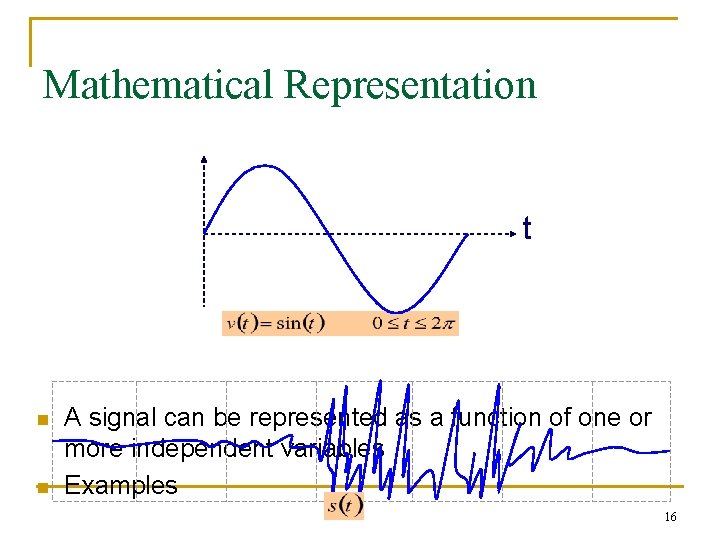
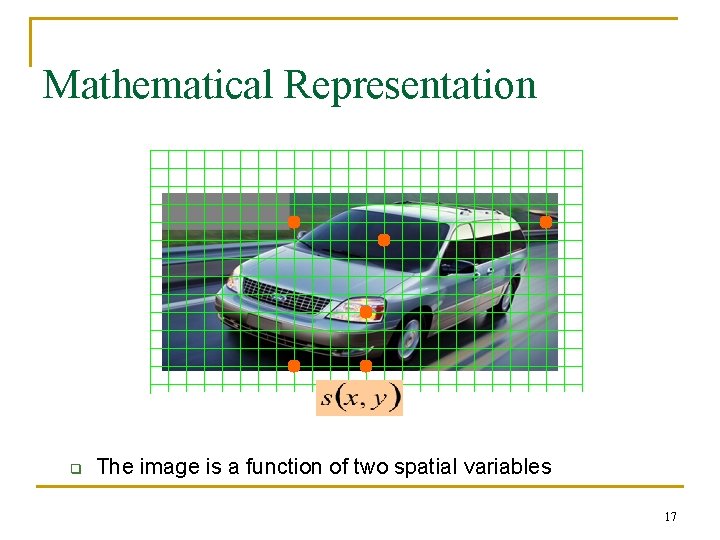
Mathematical Representation t n n A signal can be represented as a function of one or more independent variables Examples 16
Mathematical Representation q The image is a function of two spatial variables 17
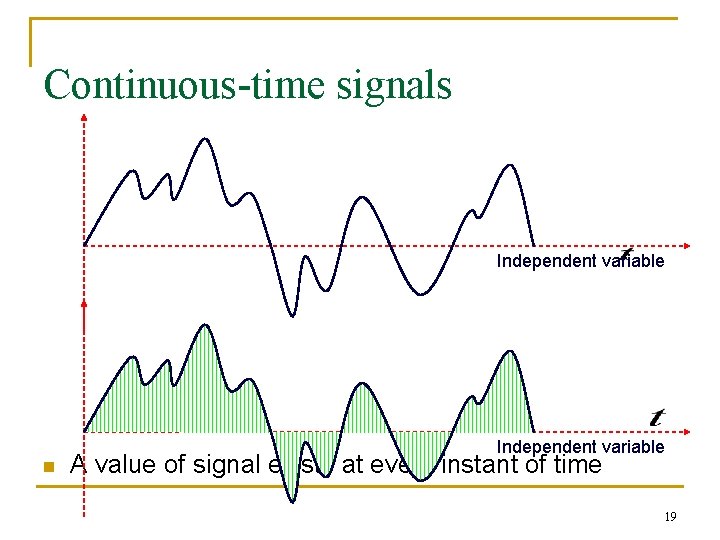
Continuous-Time Signals n n n Most signals in the real world are continuous time, as the scale is infinitesimally fine. E. g. voltage, velocity, Denote by x(t), where the time interval may be bounded (finite) or infinite 18
Continuous-time signals Independent variable n A value of signal exists at every instant of time 19
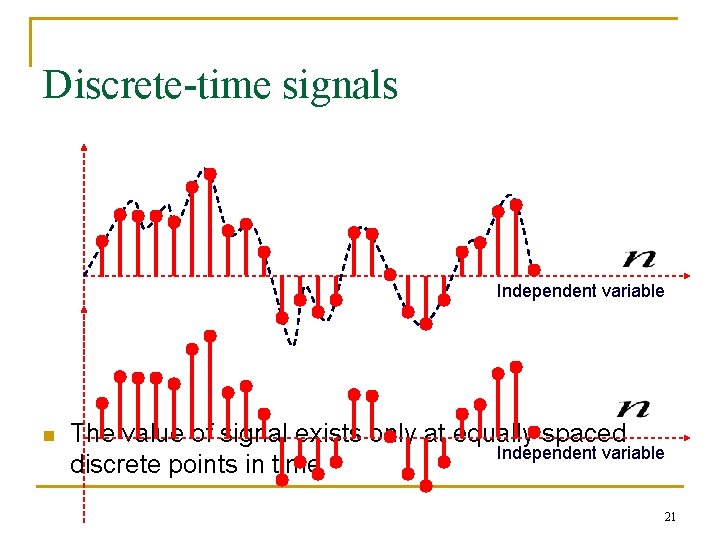
Discrete-Time Signals n n n Some real world and many digital signals are discrete time, as they are sampled E. g. pixels, daily stock price (anything that a digital computer processes) Denote by x[n], where n is an integer value that varies discretely. 20
Discrete-time signals Independent variable n The value of signal exists only at equally spaced Independent variable discrete points in time 21
Discrete-time signals n n Why to discretize How to discretize q n n n How closely spaced are the samples Distinction between discrete & digital signals How to denote discrete signals Is the image a discrete or continuous signal q q The image is generally considered to be a continuous variable Sampling can however be used to obtain a discrete, two dimensional signal (sampled image) 22
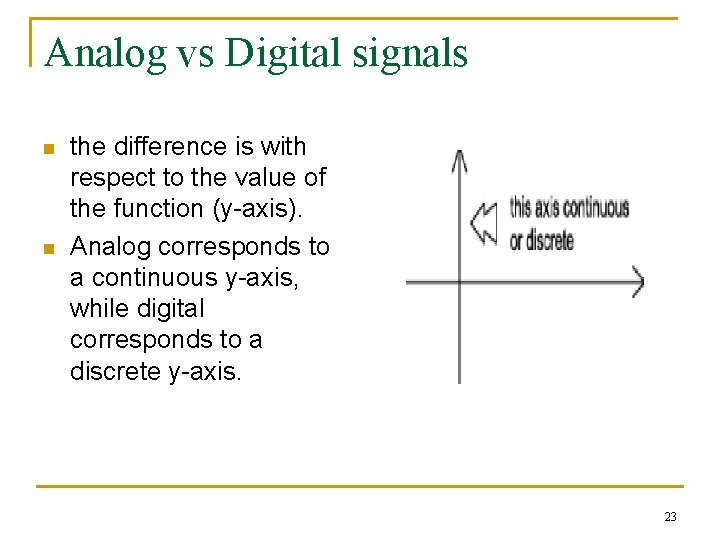
Analog vs Digital signals n n the difference is with respect to the value of the function (y-axis). Analog corresponds to a continuous y-axis, while digital corresponds to a discrete y-axis. 23
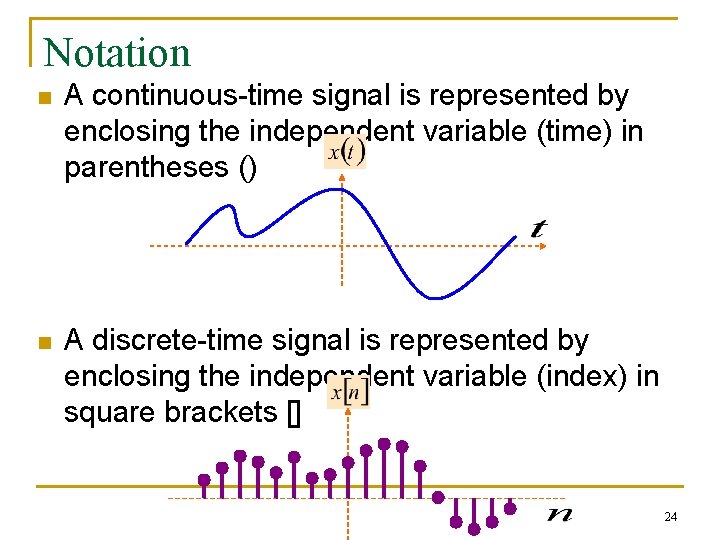
Notation n A continuous-time signal is represented by enclosing the independent variable (time) in parentheses () n A discrete-time signal is represented by enclosing the independent variable (index) in square brackets [] 24
Important Parameters n n Signal power Signal energy 25
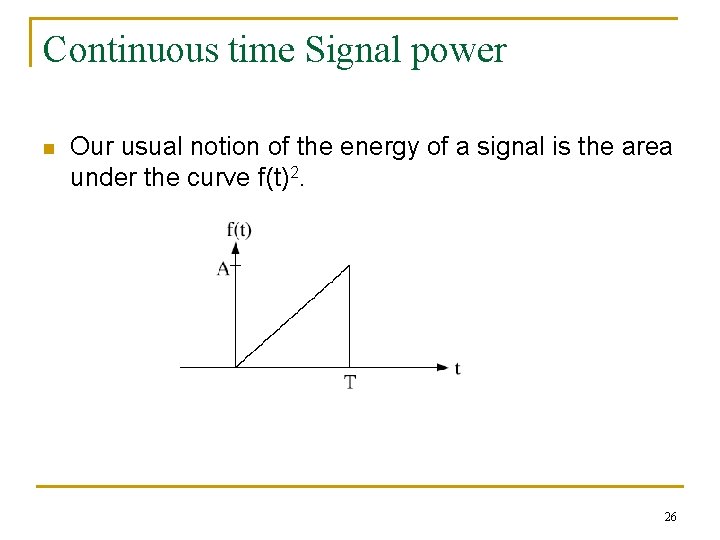
Continuous time Signal power n Our usual notion of the energy of a signal is the area under the curve f(t)2. 26
n Some further classification of signals 27
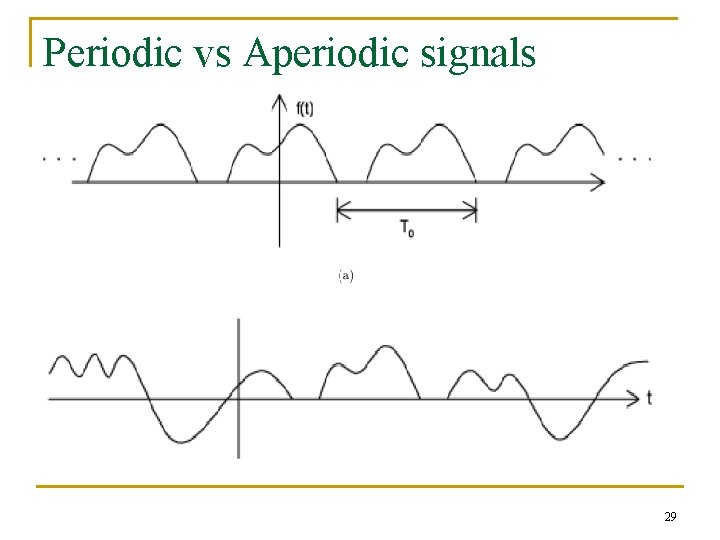
Periodic vs Aperiodic signals n n Periodic signals repeat with some period T, while aperiodic, or nonperiodic, signals do not. We can define a periodic function through the following mathematical expression, where t can be any number and T is a positive constant: q n f (t) = f (T + t) The fundamental period of our function, f (t), is the smallest value of T that the still allows equation to be true. 28
Periodic vs Aperiodic signals 29
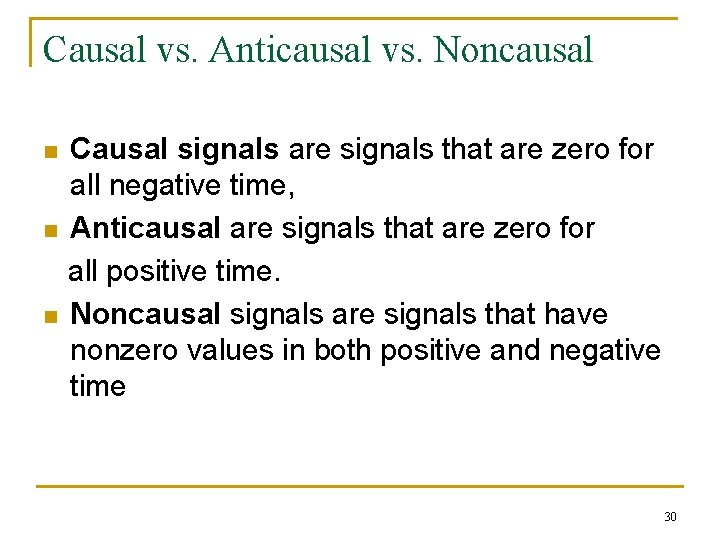
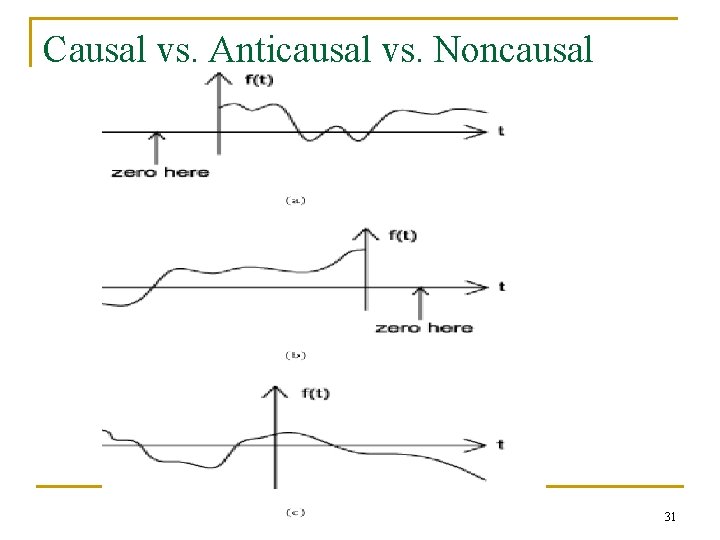
Causal vs. Anticausal vs. Noncausal n n n Causal signals are signals that are zero for all negative time, Anticausal are signals that are zero for all positive time. Noncausal signals are signals that have nonzero values in both positive and negative time 30
Causal vs. Anticausal vs. Noncausal 31
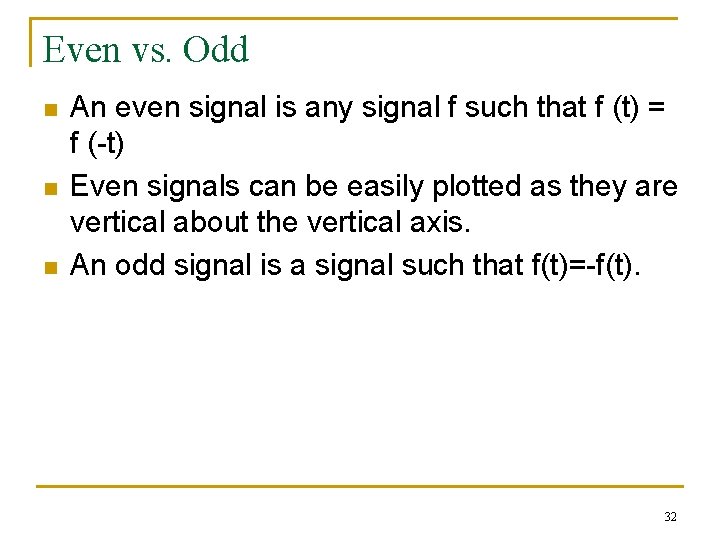
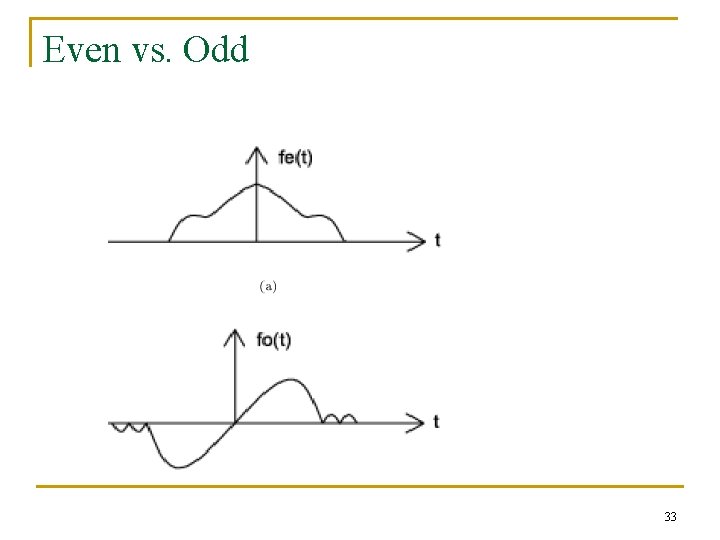
Even vs. Odd n n n An even signal is any signal f such that f (t) = f (-t) Even signals can be easily plotted as they are vertical about the vertical axis. An odd signal is a signal such that f(t)=-f(t). 32
Even vs. Odd 33
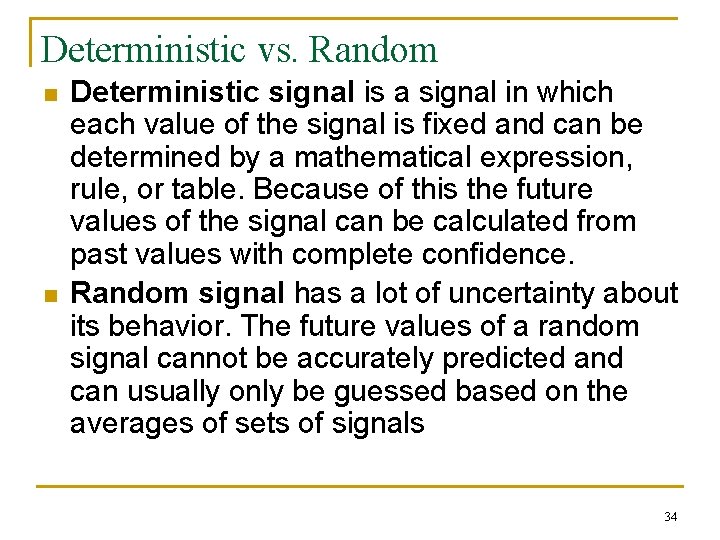
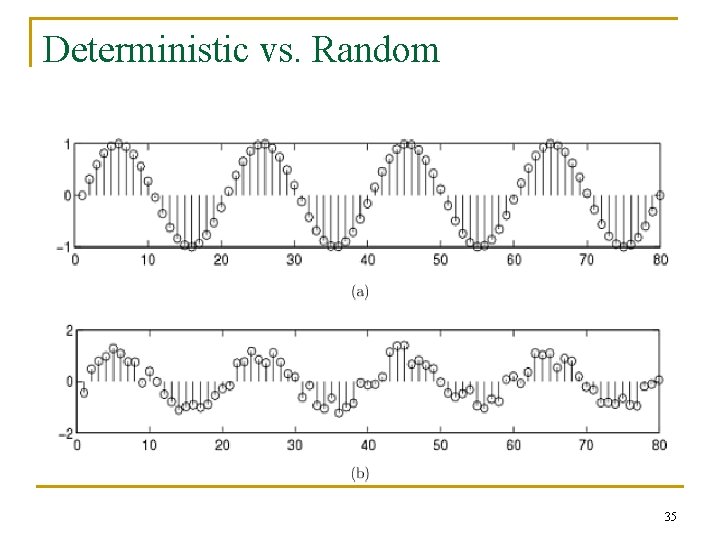
Deterministic vs. Random n n Deterministic signal is a signal in which each value of the signal is fixed and can be determined by a mathematical expression, rule, or table. Because of this the future values of the signal can be calculated from past values with complete confidence. Random signal has a lot of uncertainty about its behavior. The future values of a random signal cannot be accurately predicted and can usually only be guessed based on the averages of sets of signals 34
Deterministic vs. Random 35
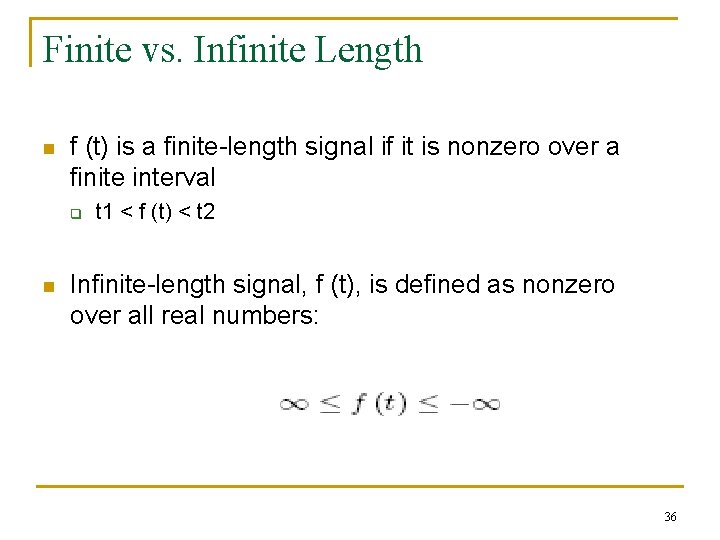
Finite vs. Infinite Length n f (t) is a finite-length signal if it is nonzero over a finite interval q n t 1 < f (t) < t 2 Infinite-length signal, f (t), is defined as nonzero over all real numbers: 36
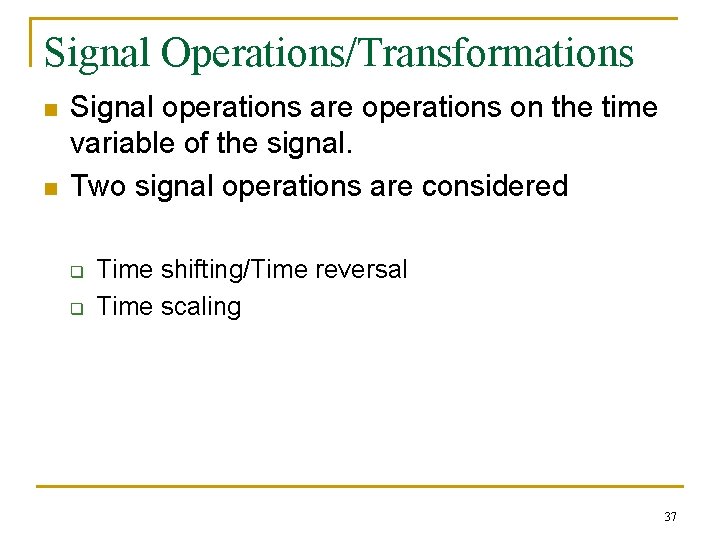
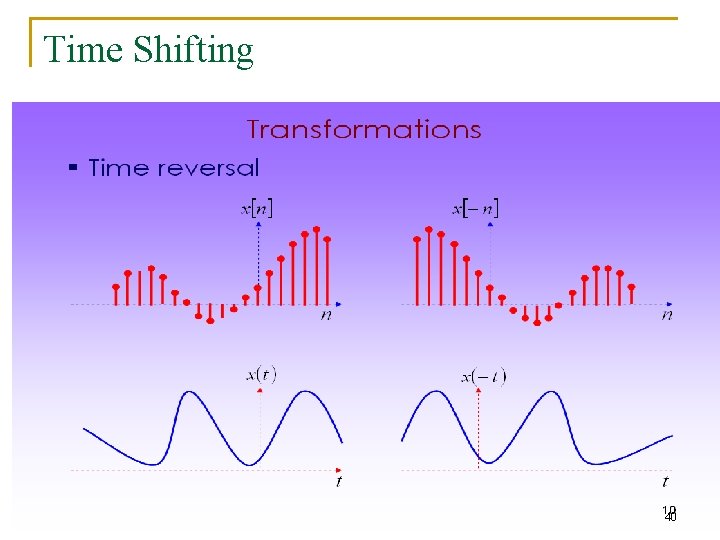
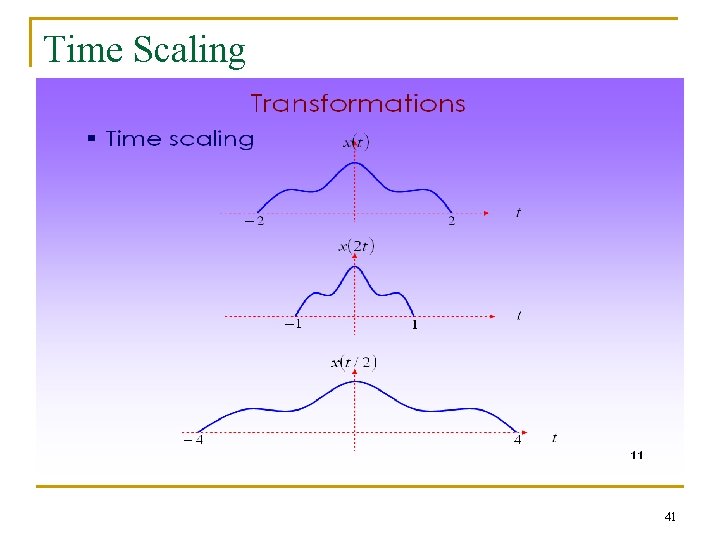
Signal Operations/Transformations n n Signal operations are operations on the time variable of the signal. Two signal operations are considered q q Time shifting/Time reversal Time scaling 37
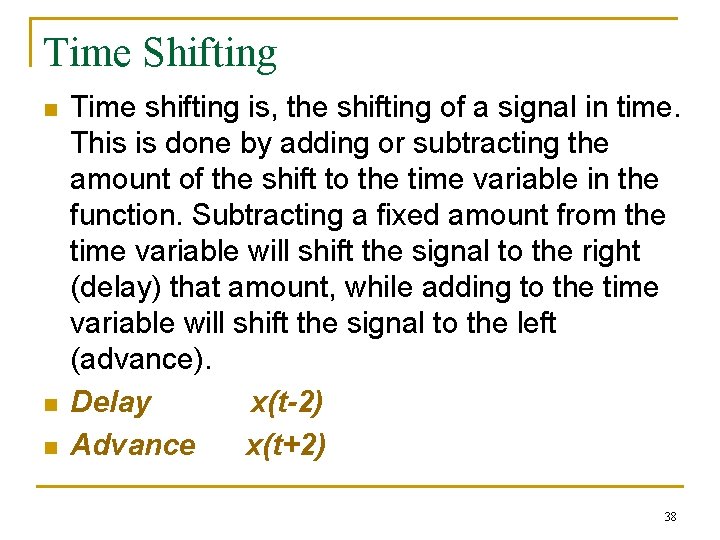
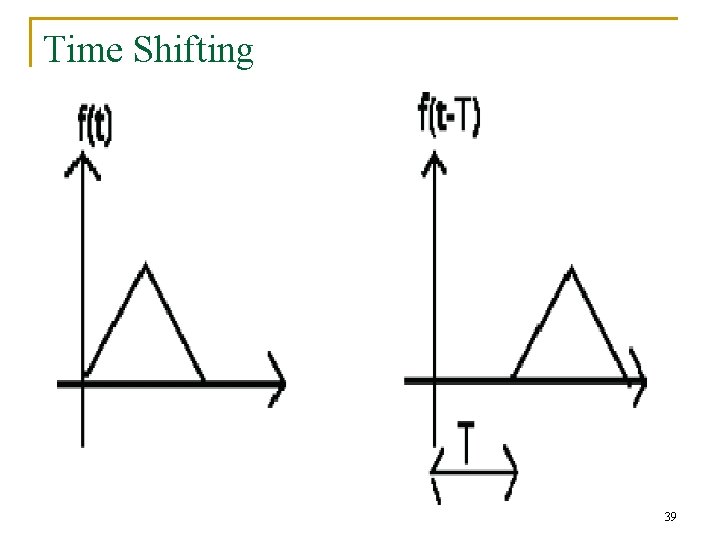
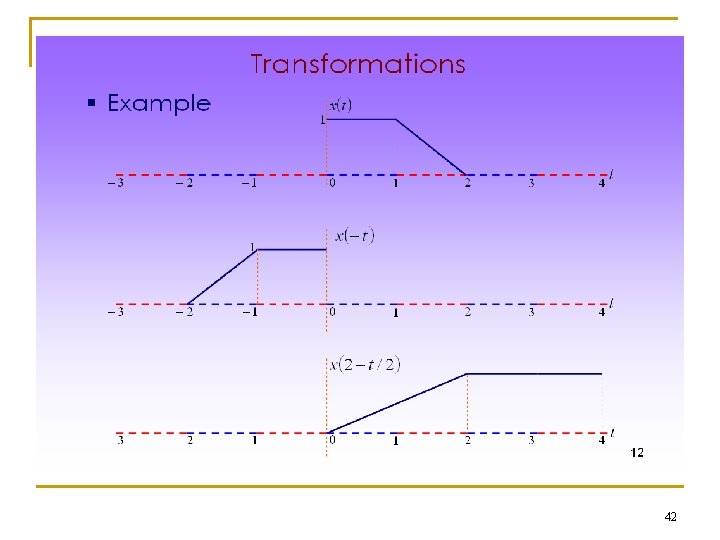
Time Shifting n n n Time shifting is, the shifting of a signal in time. This is done by adding or subtracting the amount of the shift to the time variable in the function. Subtracting a fixed amount from the time variable will shift the signal to the right (delay) that amount, while adding to the time variable will shift the signal to the left (advance). Delay x(t-2) Advance x(t+2) 38
Time Shifting 39
Time Shifting 40
Time Scaling 41
42
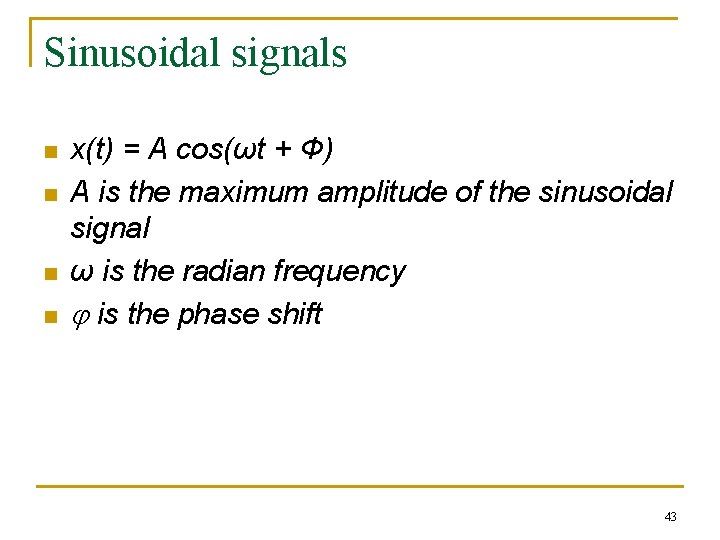
Sinusoidal signals n n x(t) = A cos(ωt + Φ) A is the maximum amplitude of the sinusoidal signal ω is the radian frequency is the phase shift 43
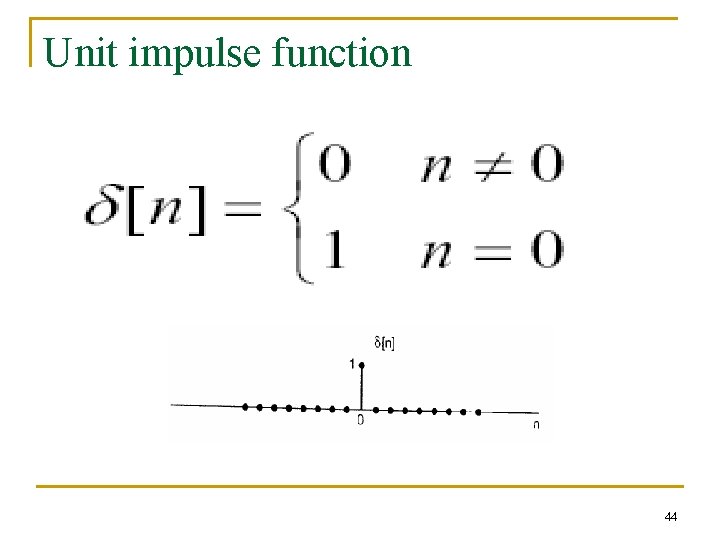
Unit impulse function 44
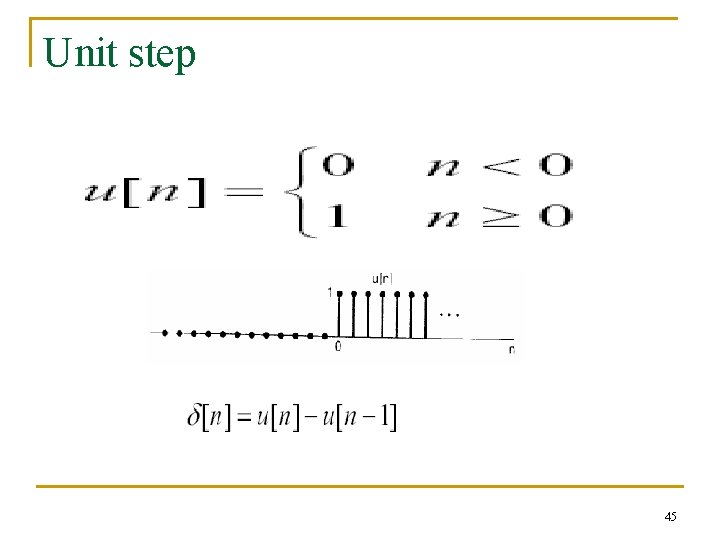
Unit step 45
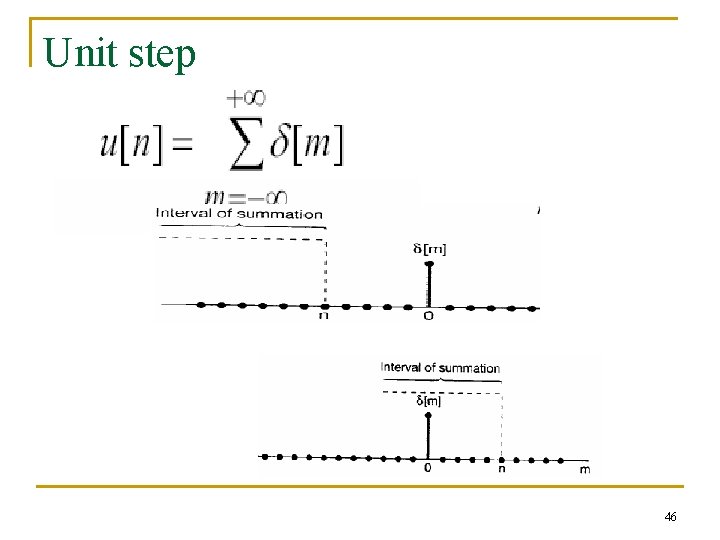
Unit step 46
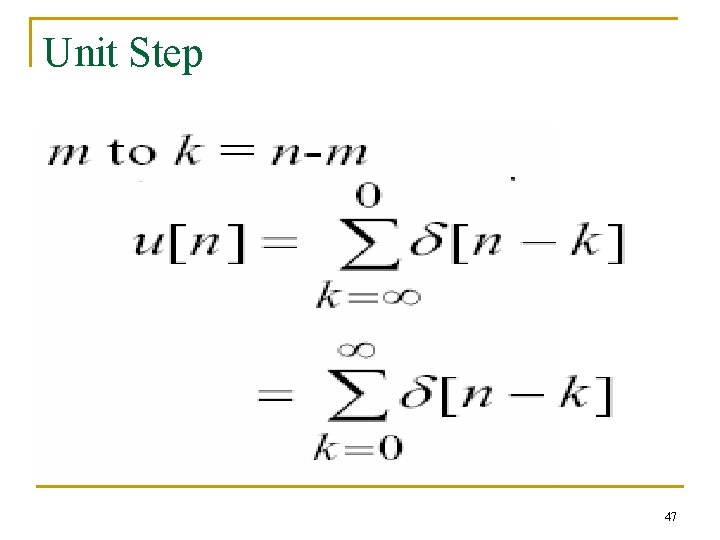
Unit Step 47
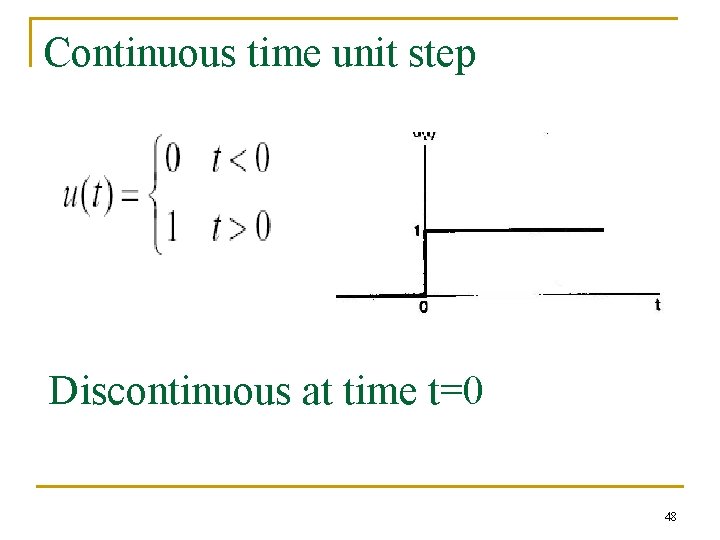
Continuous time unit step Discontinuous at time t=0 48
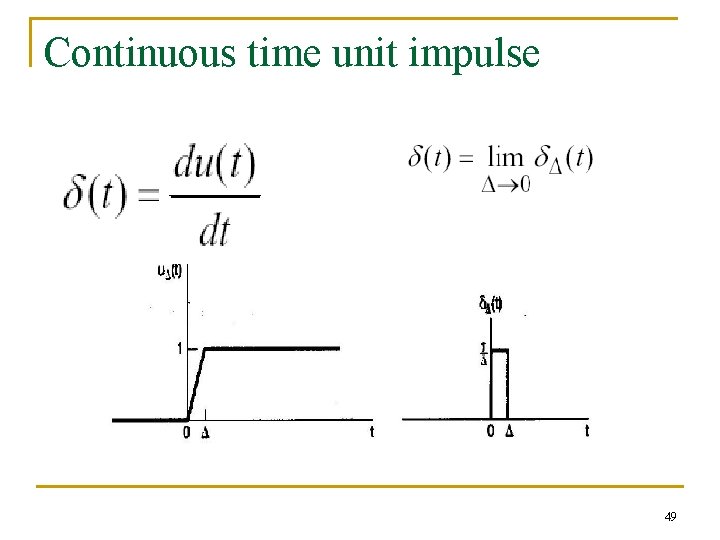
Continuous time unit impulse 49
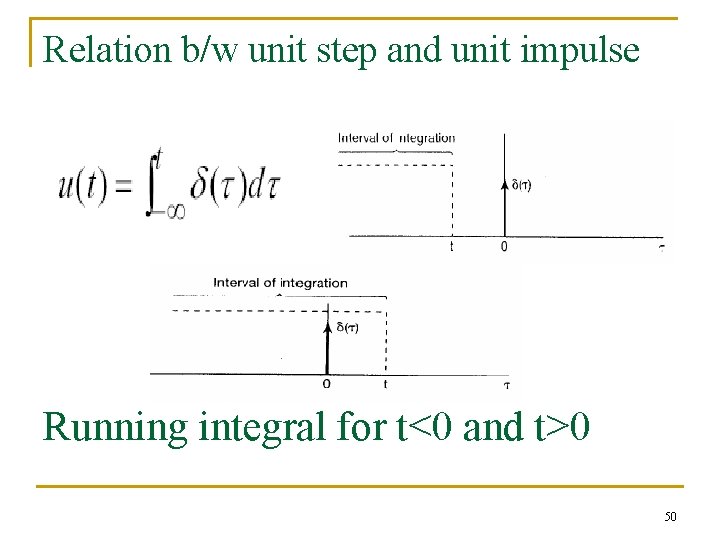
Relation b/w unit step and unit impulse Running integral for t<0 and t>0 50
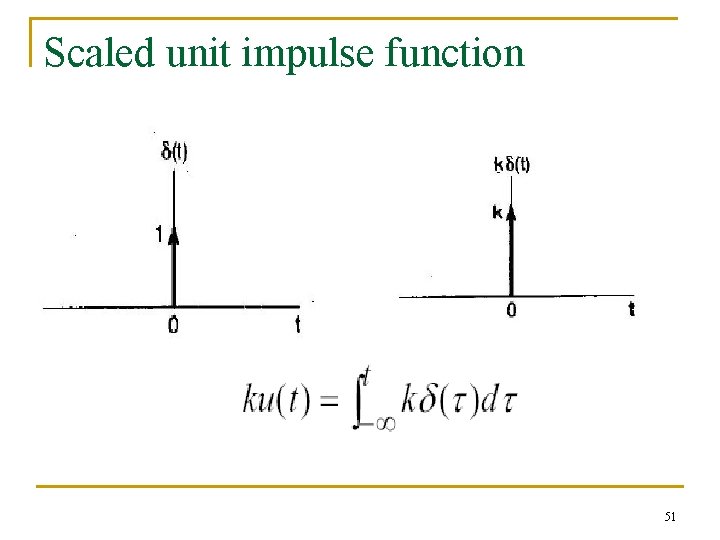
Scaled unit impulse function 51
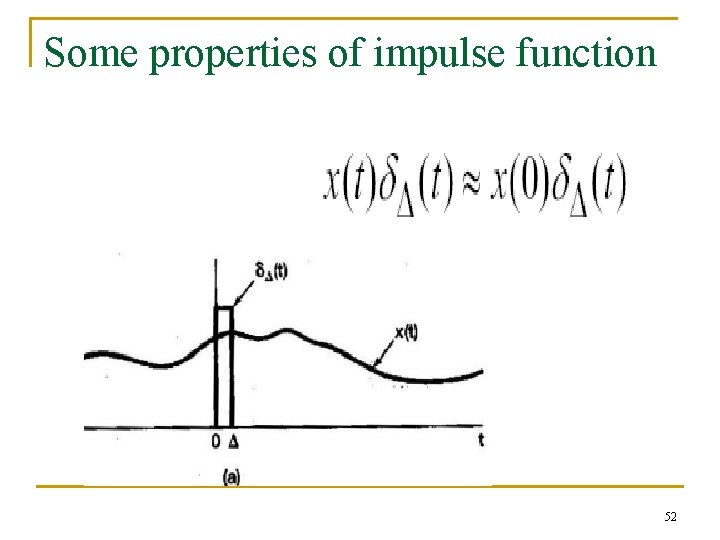
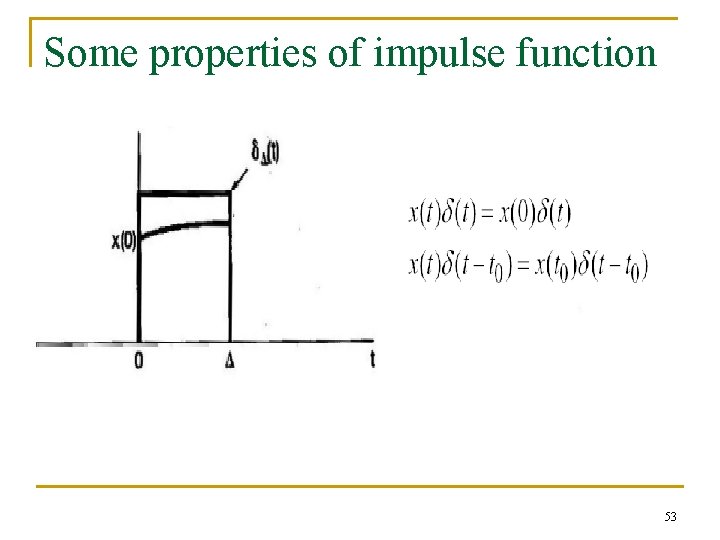
Some properties of impulse function 52
Some properties of impulse function 53
Continuous time and discrete time systems 54
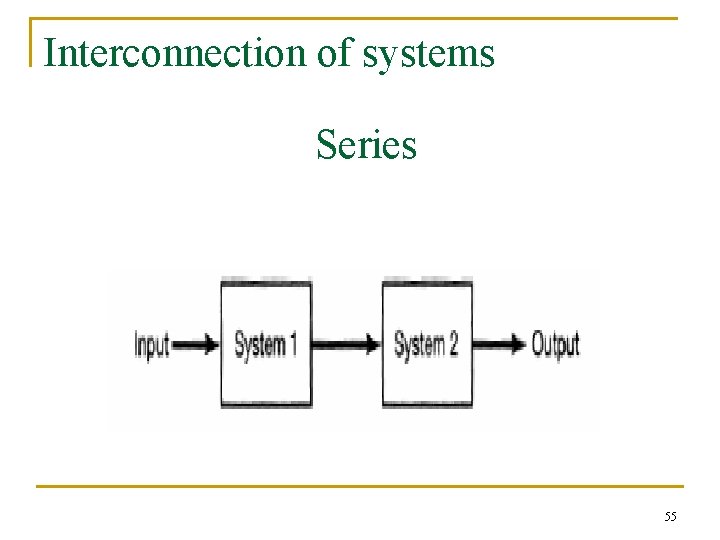
Interconnection of systems Series 55
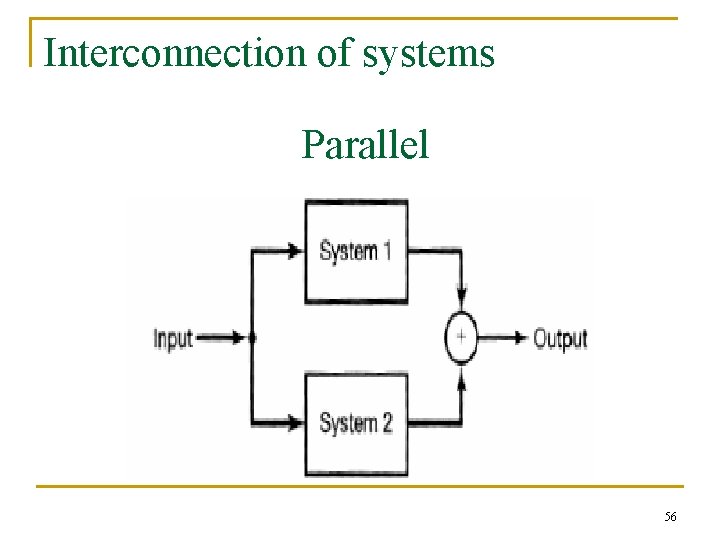
Interconnection of systems Parallel 56
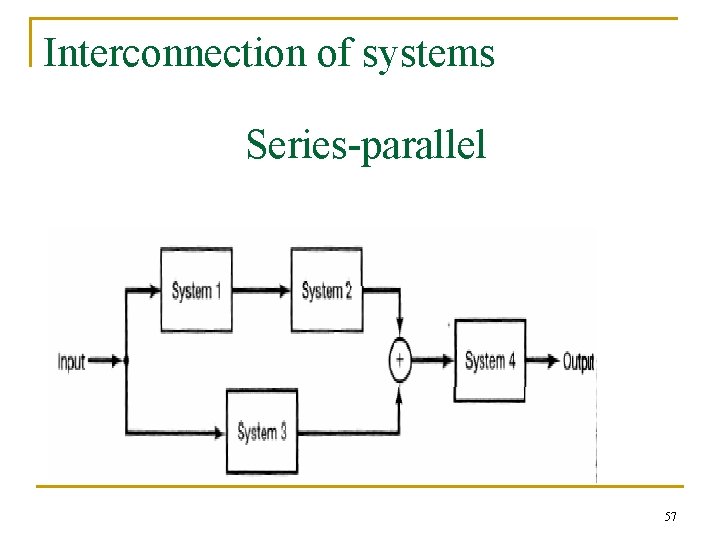
Interconnection of systems Series-parallel 57
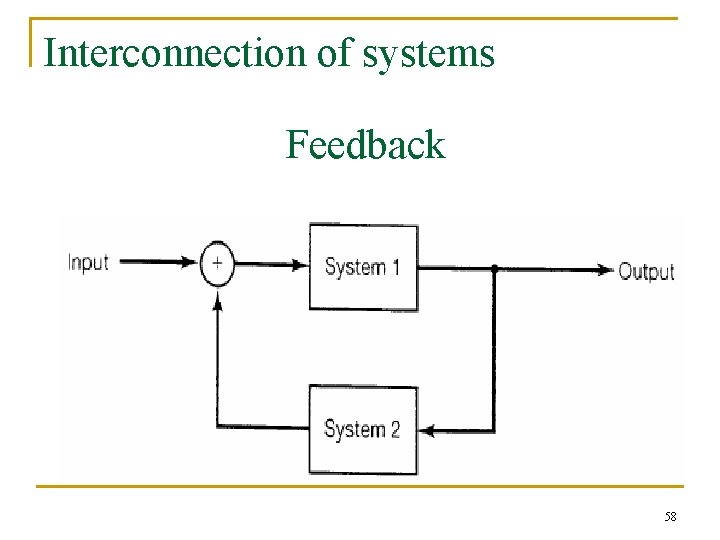
Interconnection of systems Feedback 58
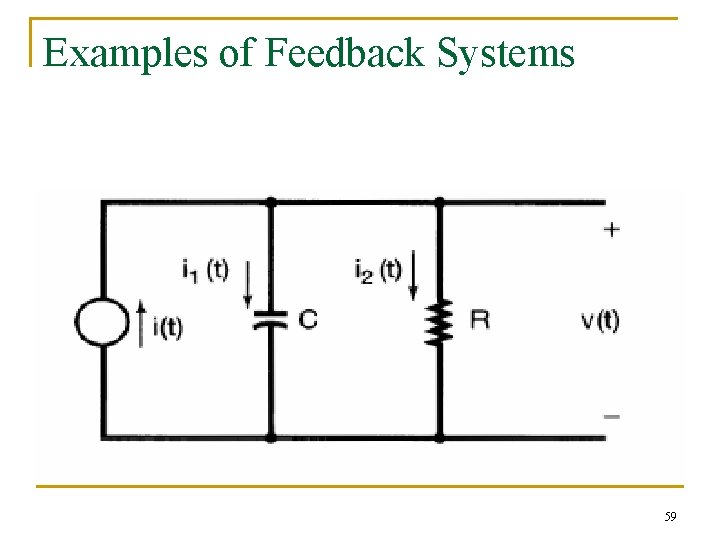
Examples of Feedback Systems 59
Some basic systems properties 60
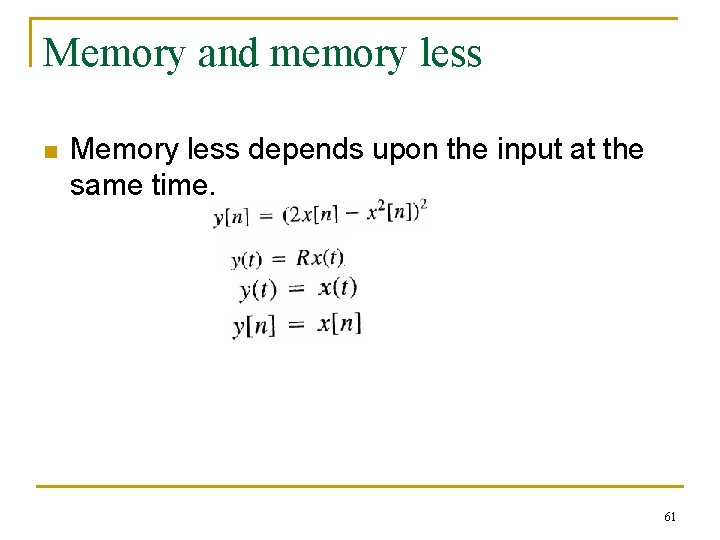
Memory and memory less n Memory less depends upon the input at the same time. 61
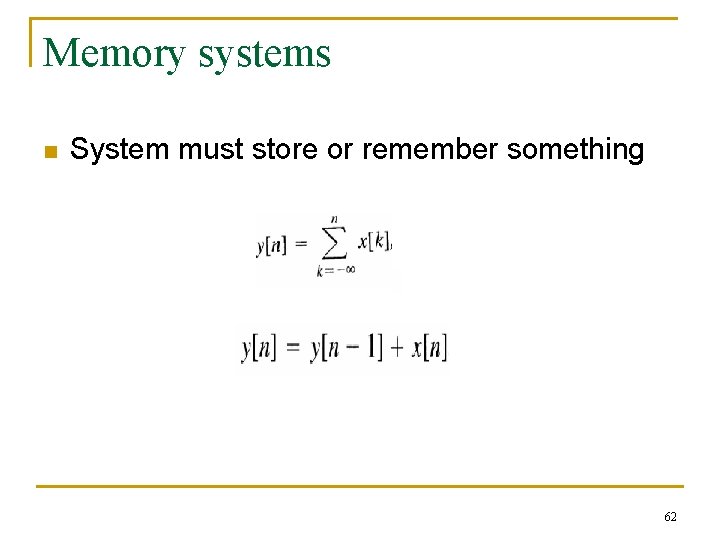
Memory systems n System must store or remember something 62
63