
Signals from space S 4 Physics Telescopes are
- Slides: 11
Signals from space. . S 4 Physics
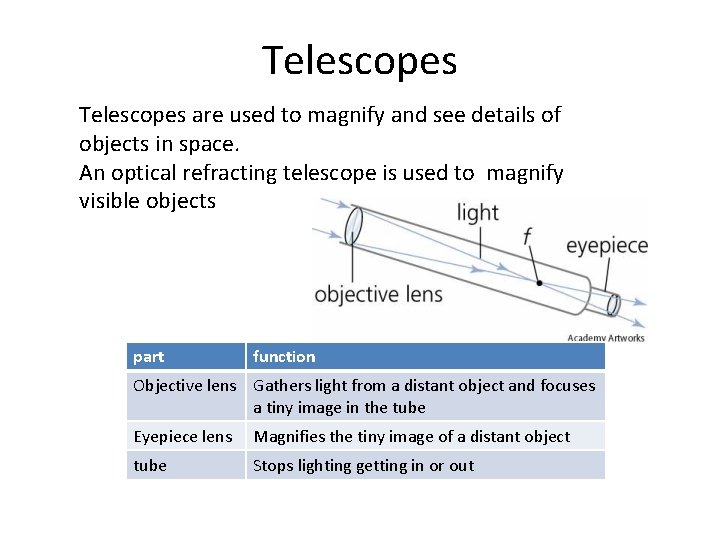
Telescopes are used to magnify and see details of objects in space. An optical refracting telescope is used to magnify visible objects part function Objective lens Gathers light from a distant object and focuses a tiny image in the tube Eyepiece lens Magnifies the tiny image of a distant object tube Stops lighting getting in or out
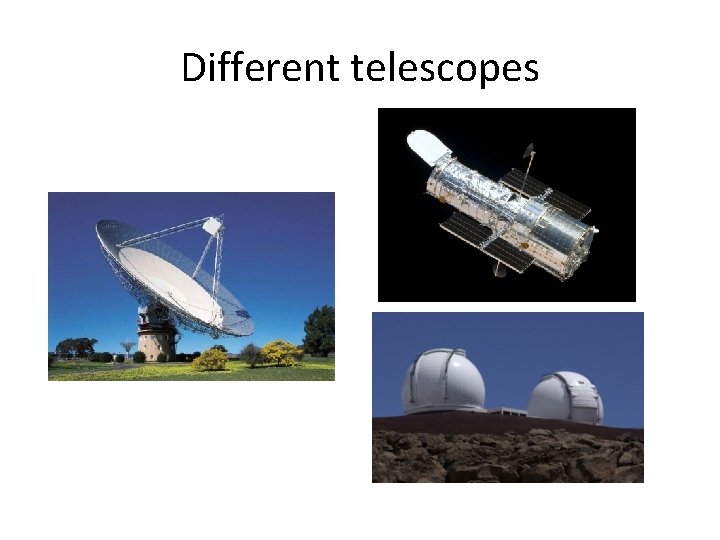
Different telescopes
Starlight • Light from stars can tell us: I. how fast they are moving (from the red shift) II. III. how old they are how far away they are But by splitting the light up with a prism, we can learn much, much more………. .
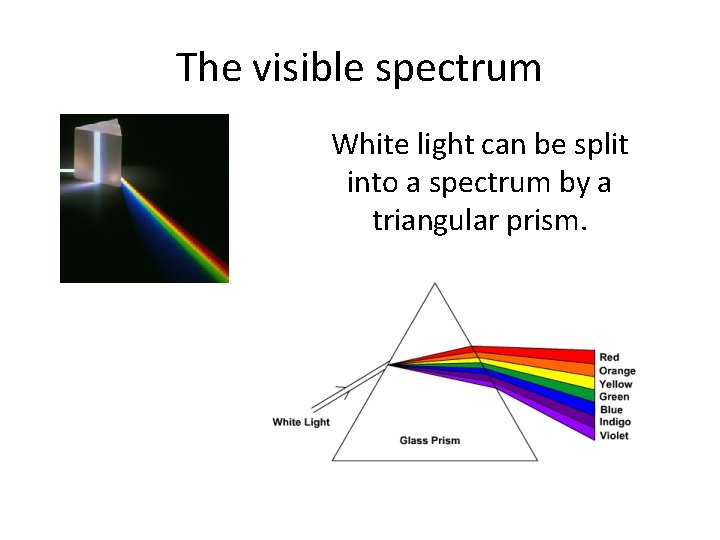
The visible spectrum White light can be split into a spectrum by a triangular prism.
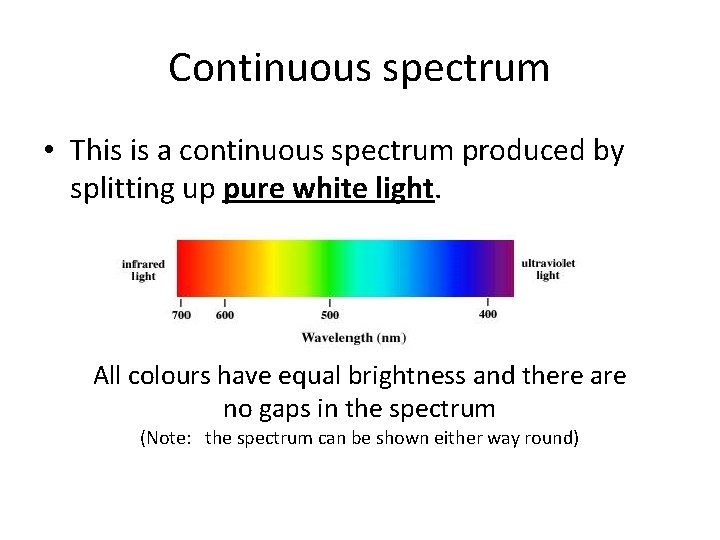
Continuous spectrum • This is a continuous spectrum produced by splitting up pure white light. All colours have equal brightness and there are no gaps in the spectrum (Note: the spectrum can be shown either way round)
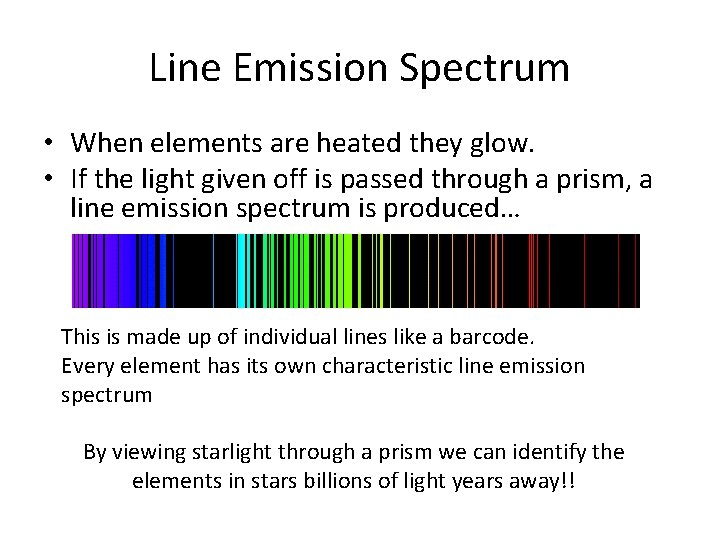
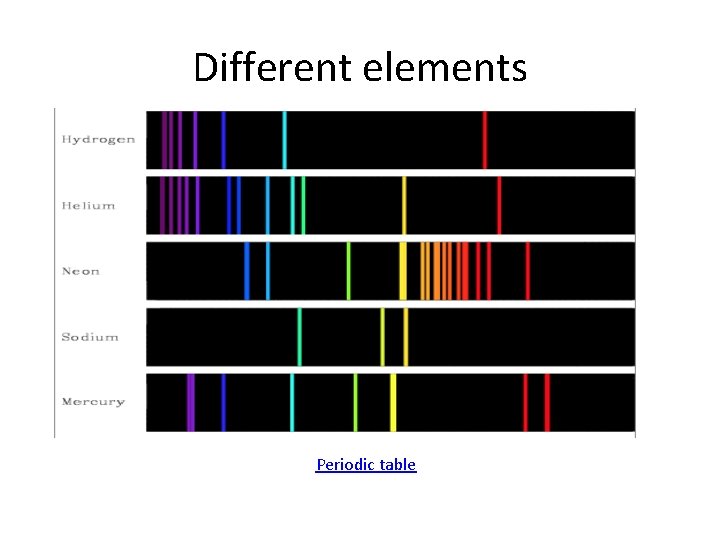
Line Emission Spectrum • When elements are heated they glow. • If the light given off is passed through a prism, a line emission spectrum is produced… This is made up of individual lines like a barcode. Every element has its own characteristic line emission spectrum By viewing starlight through a prism we can identify the elements in stars billions of light years away!!
Different elements Periodic table
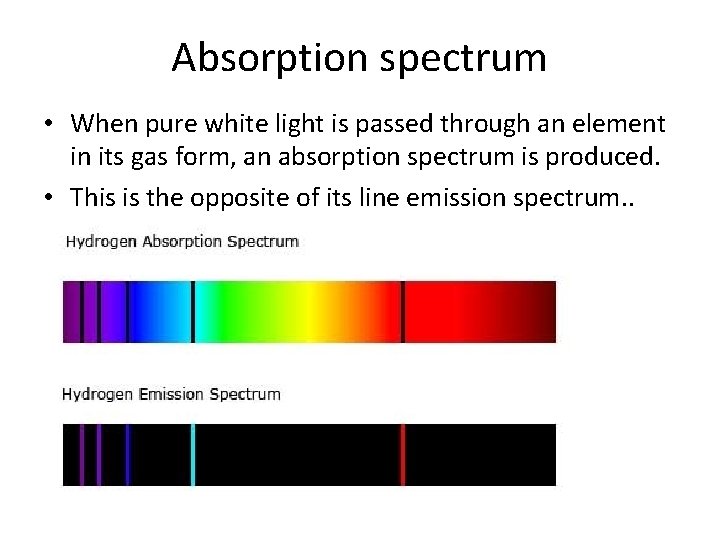
Absorption spectrum • When pure white light is passed through an element in its gas form, an absorption spectrum is produced. • This is the opposite of its line emission spectrum. .
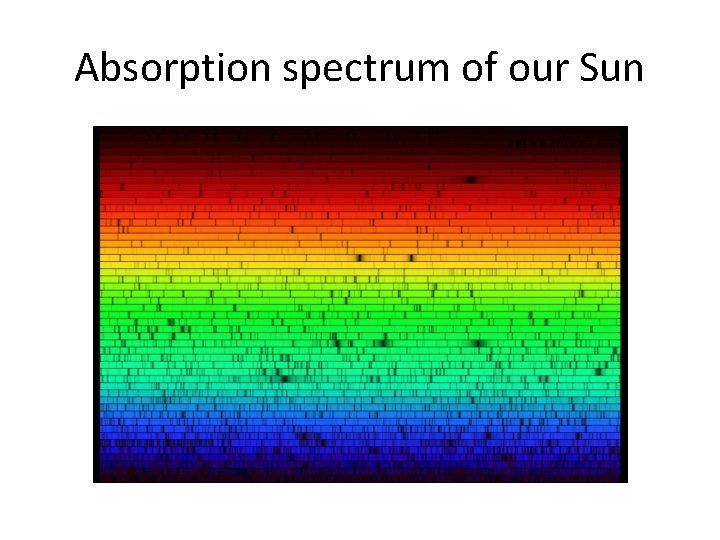
Absorption spectrum of our Sun
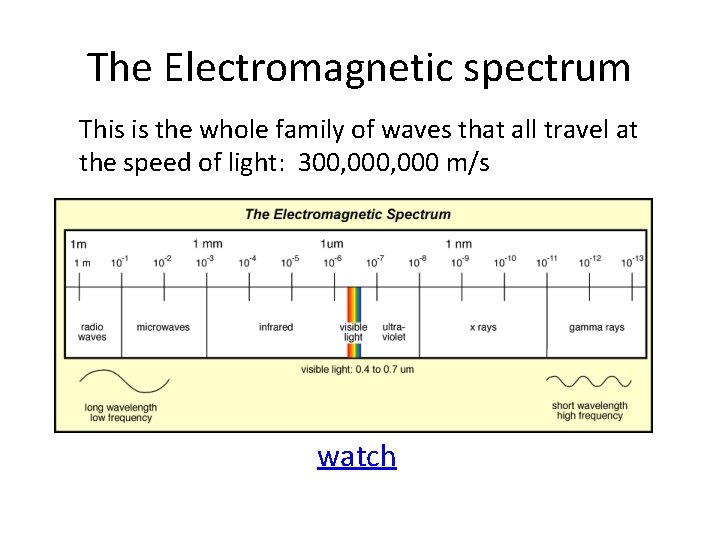
The Electromagnetic spectrum This is the whole family of waves that all travel at the speed of light: 300, 000 m/s watch