
Signals and Systems Lecture 1 DR TANIA STATHAKI
- Slides: 31
Signals and Systems Lecture 1 DR TANIA STATHAKI READER (ASSOCIATE PROFFESOR) IN SIGNAL PROCESSING IMPERIAL COLLEGE LONDON
Miscellanea Teacher: Dr. Tania Stathaki, Reader (Associate Professor) in Signal Processing, Imperial College London E-mail: t. stathaki@imperial. ac. uk Office: 812
Logistics of the course • • Lectures - 15 hours over 8 -9 weeks • Text Books: Problem Classes – 7 -8 hours over 8 -9 weeks Assessment – 100% by examination in June Handouts in the form of pdf slides are available at http: //www. commsp. ee. ic. ac. uk/~tania/ - B. P. Lathi, “Linear Systems and Signals”, 2 nd Ed. , Oxford University Press - A. V. Oppenheim & A. S. Willsky “Signals and Systems”, Prentice Hall
Aims and Objectives of Signals and Systems • The concepts of signals and systems arise in a variety of fields such as, communications, aeronautics, bio-engineering, energy, circuit design and others. • Although the physical attributes of the signals and systems involved in the above disciplines are different, all signal and systems have basic features in common. • The aim of this course is to provide the fundamental and universal tools for the analysis of signals. • Furthermore, the course aims at teaching the analysis and design of basic systems independently of the domain of application.
Aims and Objectives cont. By the end of the course, you will have understood: - Basic signal analysis Basic system analysis Time-domain system analysis including convolution Laplace and Fourier Transform System analysis in Laplace and Fourier domains Filter design Sampling Theorem and signal reconstructions Basics on z-transform
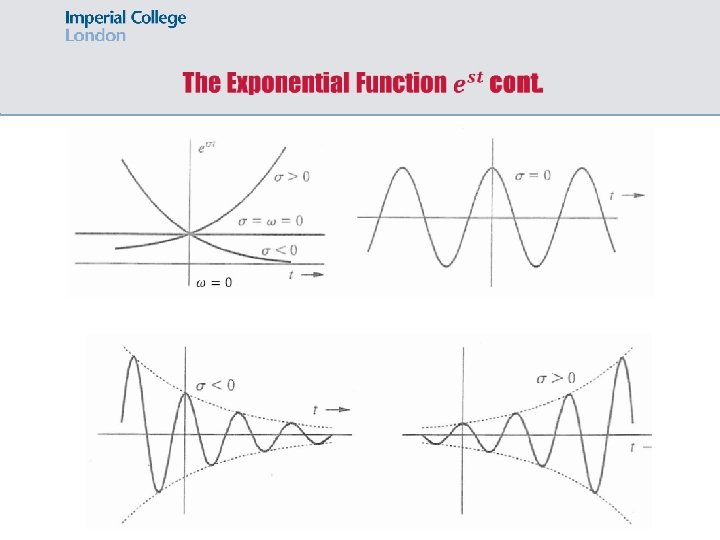
Today’s Lecture In this lecture we will talk about: • • Examples of signals Some useful signal operations Classification of signals Some specific widely used signals: § Unit step function § Unit impulse function § The exponential function
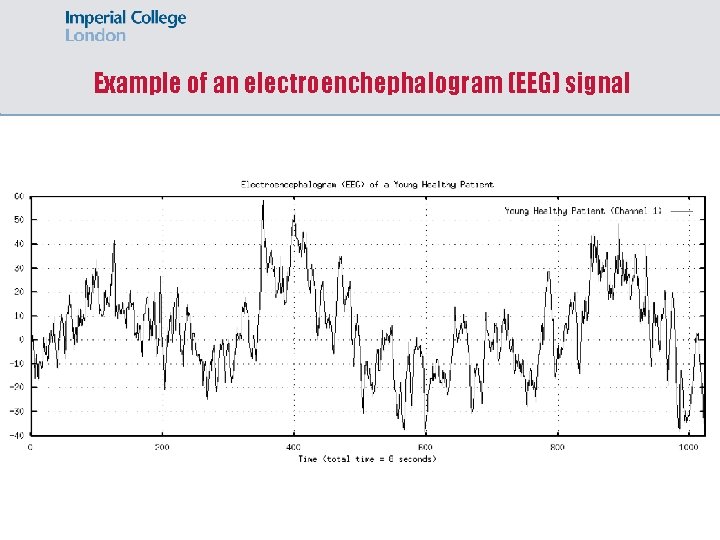
Example of an electroenchephalogram (EEG) signal
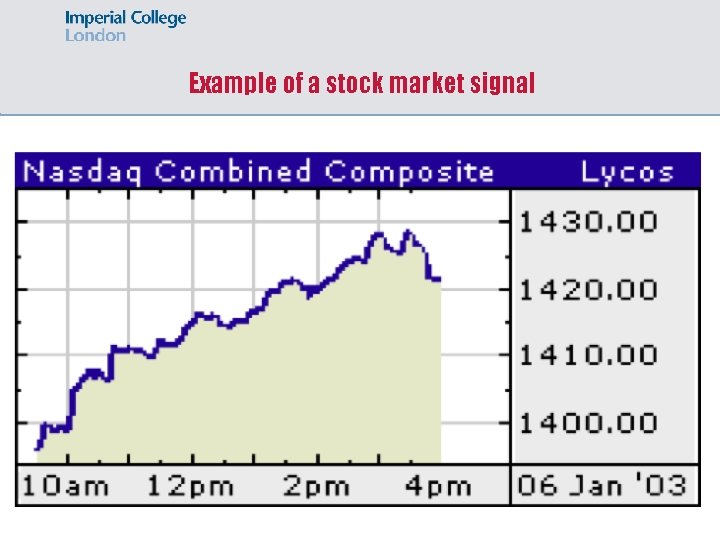
Example of a stock market signal
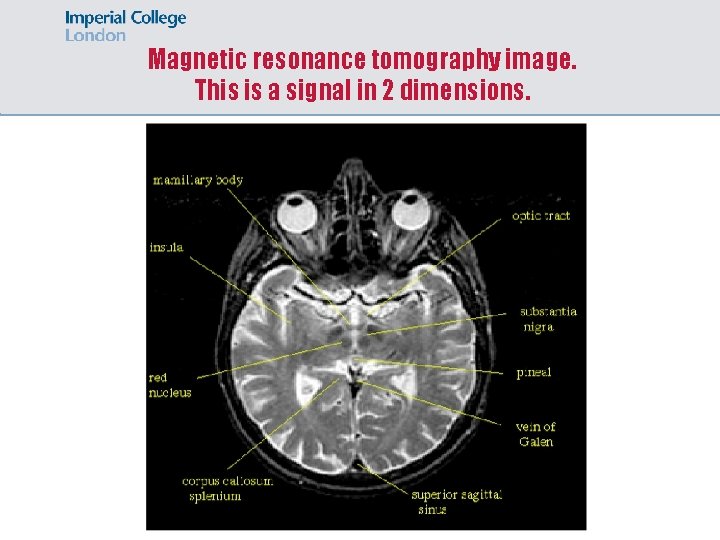
Magnetic resonance tomography image. This is a signal in 2 dimensions.
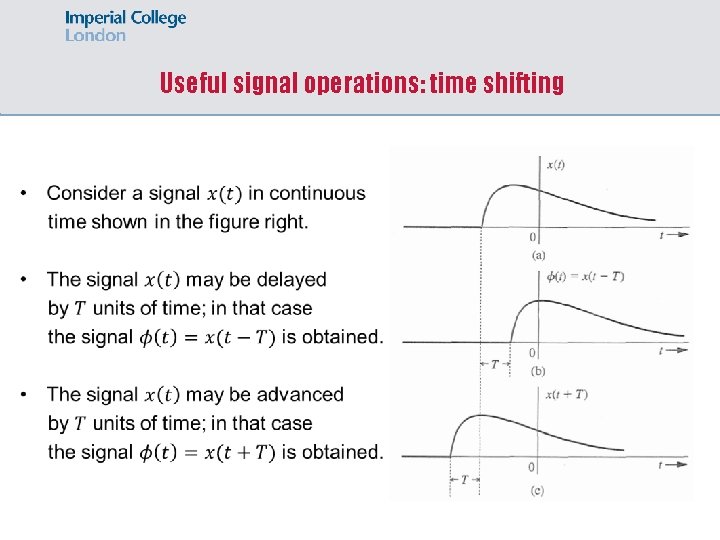
Useful signal operations: time shifting
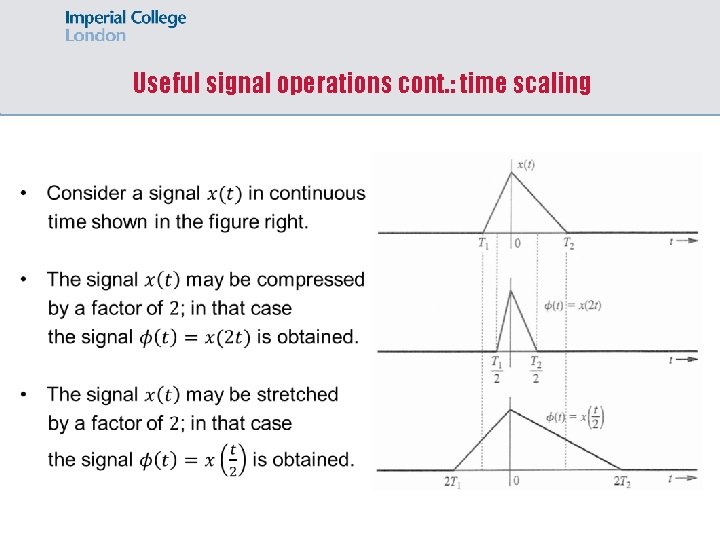
Useful signal operations cont. : time scaling
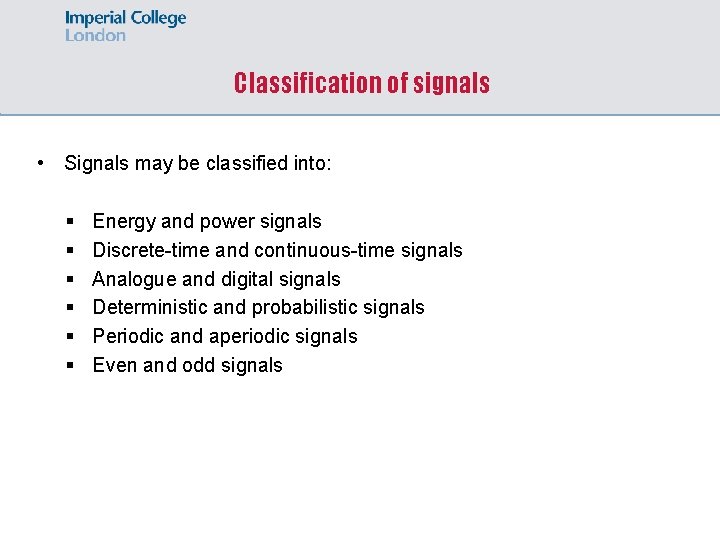
Classification of signals • Signals may be classified into: § § § Energy and power signals Discrete-time and continuous-time signals Analogue and digital signals Deterministic and probabilistic signals Periodic and aperiodic signals Even and odd signals
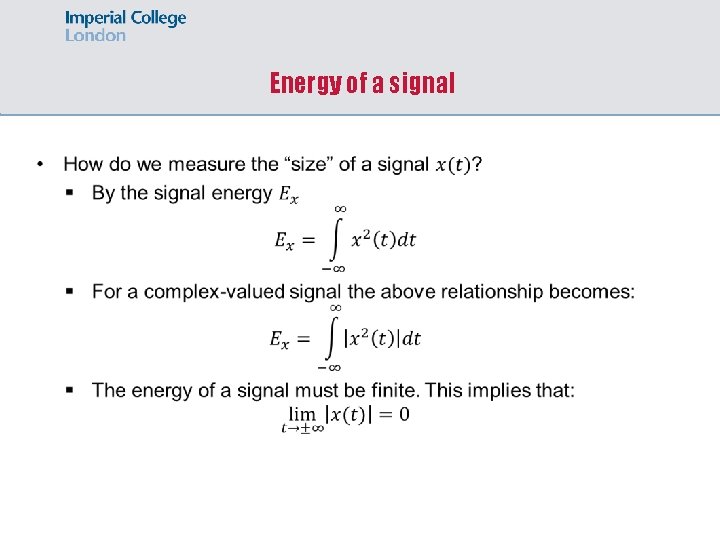
Energy of a signal
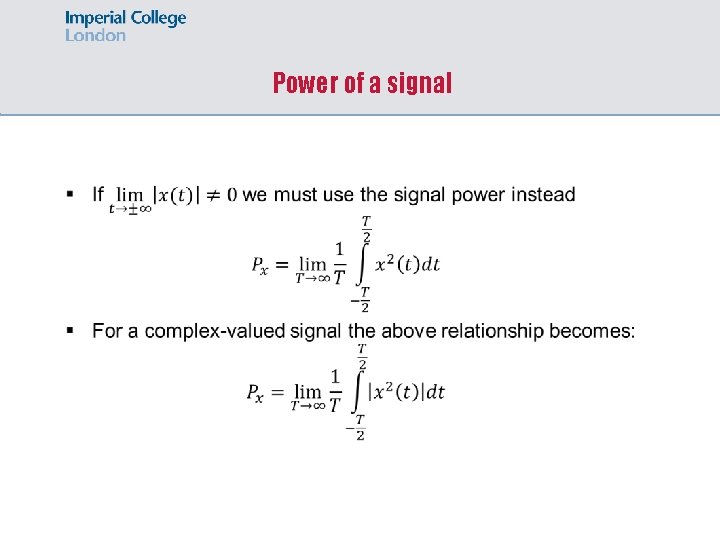
Power of a signal
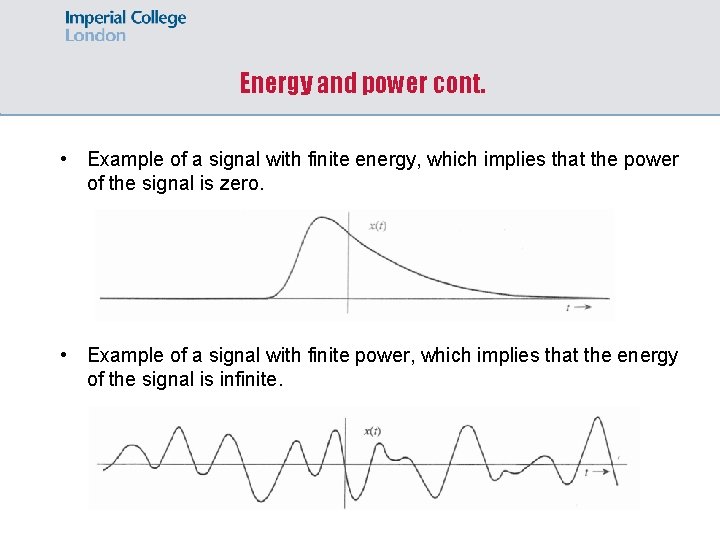
Energy and power cont. • Example of a signal with finite energy, which implies that the power of the signal is zero. • Example of a signal with finite power, which implies that the energy of the signal is infinite.
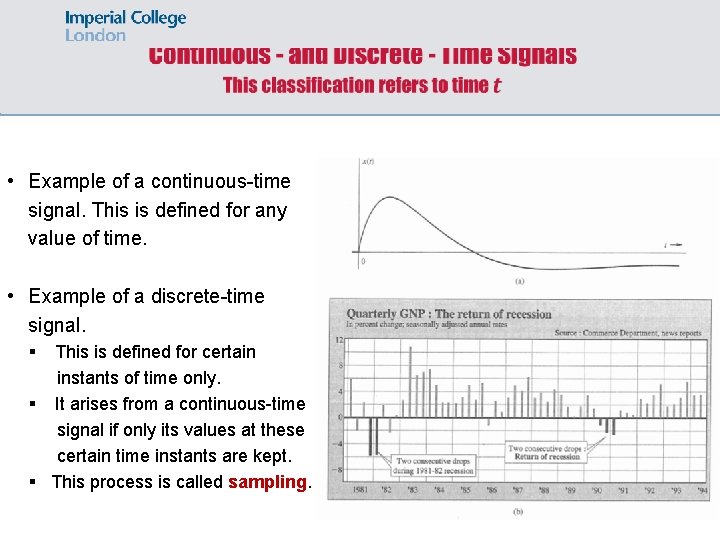
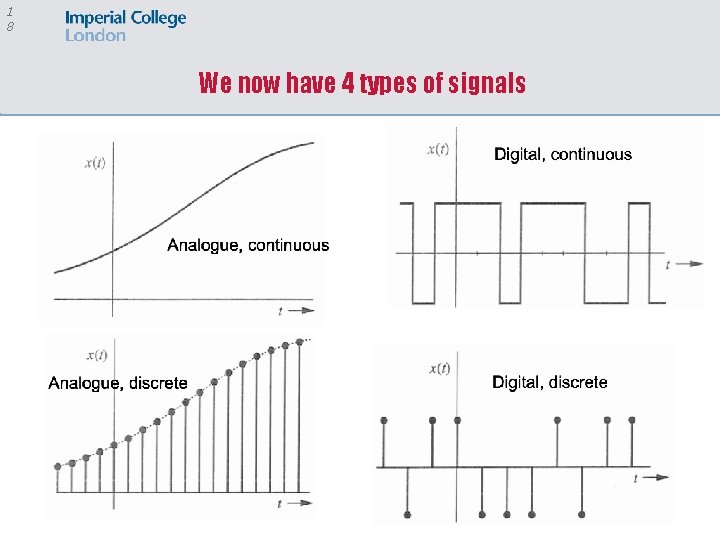
• Example of a continuous-time signal. This is defined for any value of time. • Example of a discrete-time signal. § This is defined for certain instants of time only. § It arises from a continuous-time signal if only its values at these certain time instants are kept. § This process is called sampling.
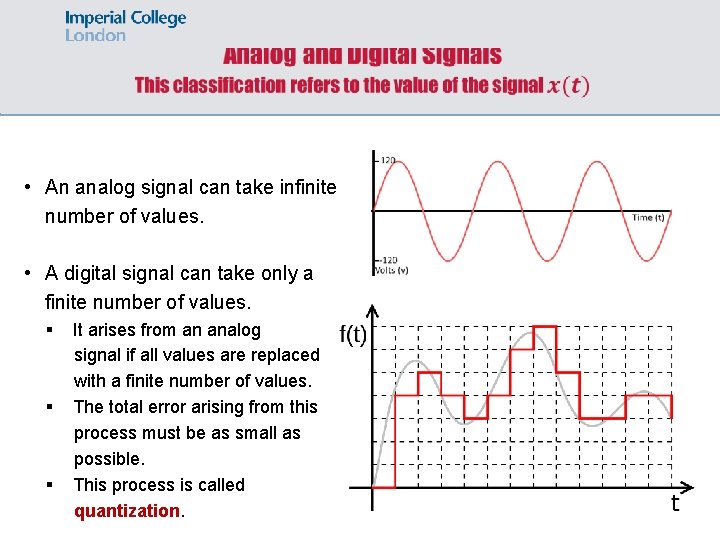
• An analog signal can take infinite number of values. • A digital signal can take only a finite number of values. § § § It arises from an analog signal if all values are replaced with a finite number of values. The total error arising from this process must be as small as possible. This process is called quantization.
1 8 We now have 4 types of signals
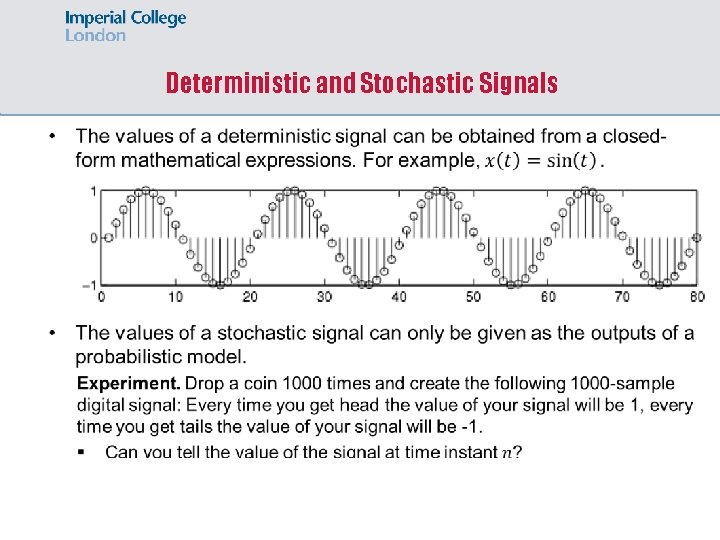
Deterministic and Stochastic Signals
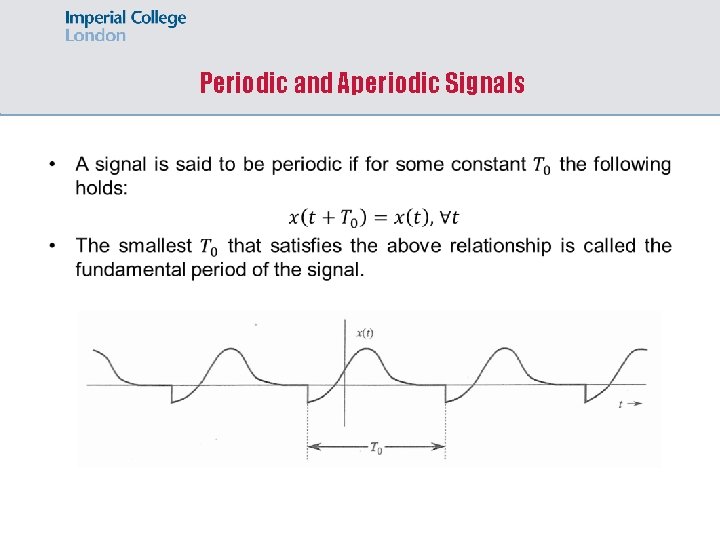
Periodic and Aperiodic Signals
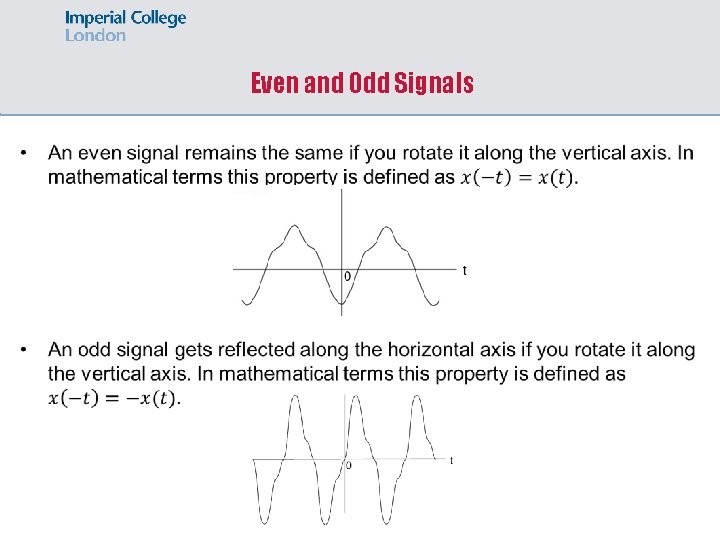
Even and Odd Signals
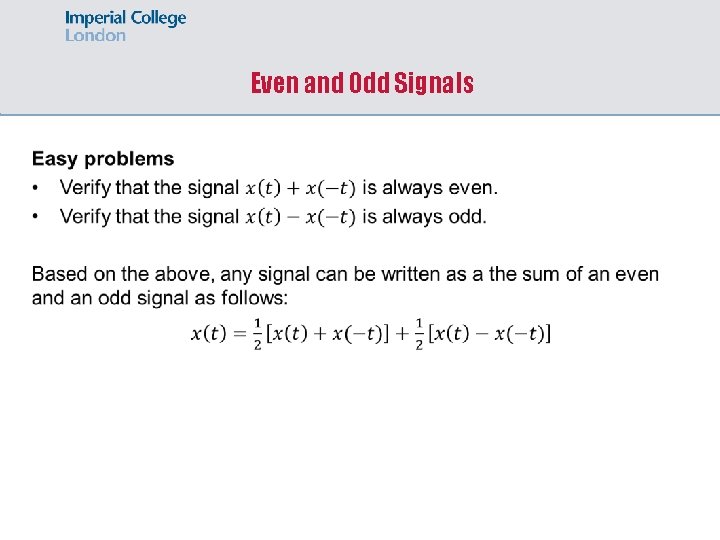
Even and Odd Signals
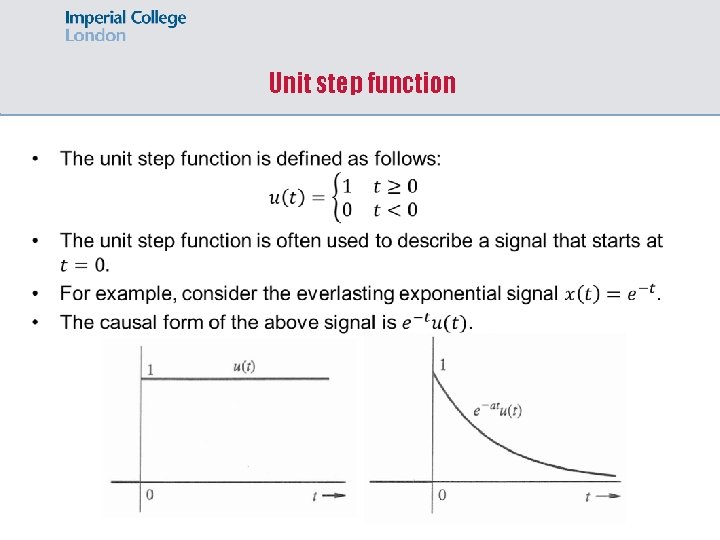
Unit step function
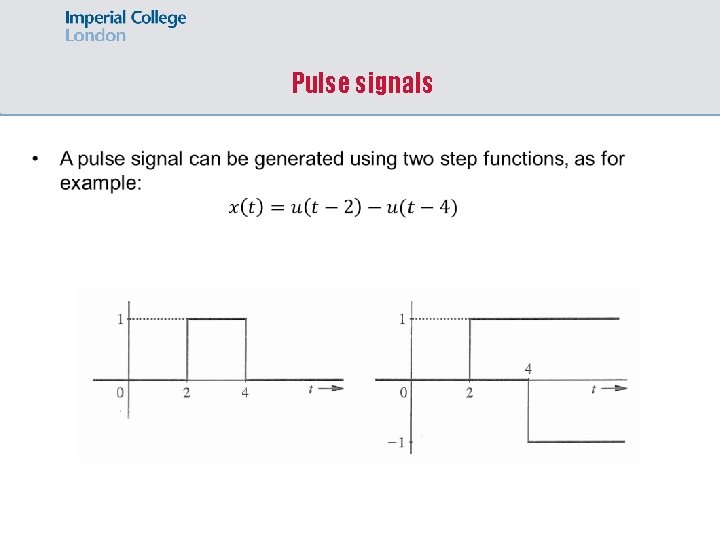
Pulse signals
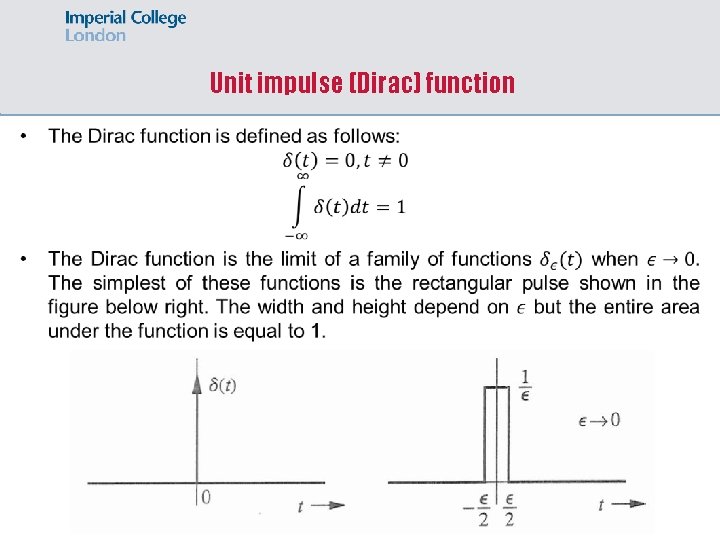
Unit impulse (Dirac) function
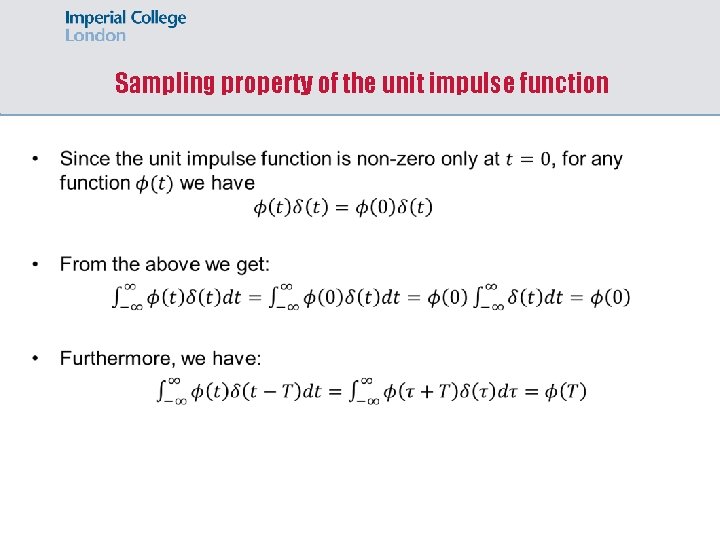
Sampling property of the unit impulse function
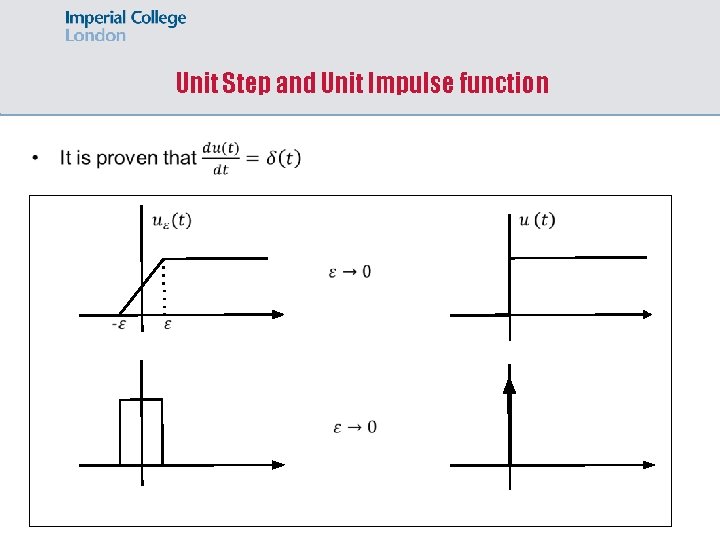
Unit Step and Unit Impulse function