
Signaling Overview 1 Introduction A Definitions B Components
Signaling Overview 1. Introduction A. Definitions B. Components involved in signaling C. Types of signaling 2. Types of Signaling Ligands - cell-surface vs. intracellular 3. Three Major Classes of Signaling Receptors Ion Channel-linked G protein-coupled receptors (GPRs) Enzyme-linked receptors Tyrosine-Kinase Receptors Overview Mechanism of activation Different ways that TKRs can be activated TKs that are non-covalently linked with receptors 4. Second Messengers: c. AMP, c. GMP, IP 3 and DAG, Ca+2, PIP 3 5. Signaling Cascades A. Ras GTPase B. Adaptor proteins with SH 2 and SH 3 domains C. MAP kinase pathway D. 5 different kinases activated by different cascades E. JAK-STAT pathway 6. Pathogen examples A. Is signaling via entry receptors important for HIV-1 replication? B. Signaling is involved in attachment of Plasmodium-infected RBCs to vascular endothelium 4/27/06 Pabio 552, J. R. Lingappa 1
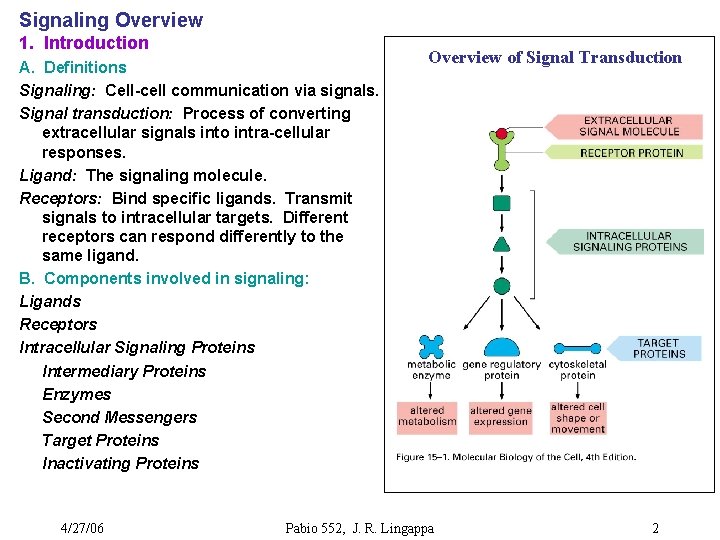
Signaling Overview 1. Introduction A. Definitions Signaling: Cell-cell communication via signals. Signal transduction: Process of converting extracellular signals into intra-cellular responses. Ligand: The signaling molecule. Receptors: Bind specific ligands. Transmit signals to intracellular targets. Different receptors can respond differently to the same ligand. B. Components involved in signaling: Ligands Receptors Intracellular Signaling Proteins Intermediary Proteins Enzymes Second Messengers Target Proteins Inactivating Proteins 4/27/06 Overview of Signal Transduction Pabio 552, J. R. Lingappa 2
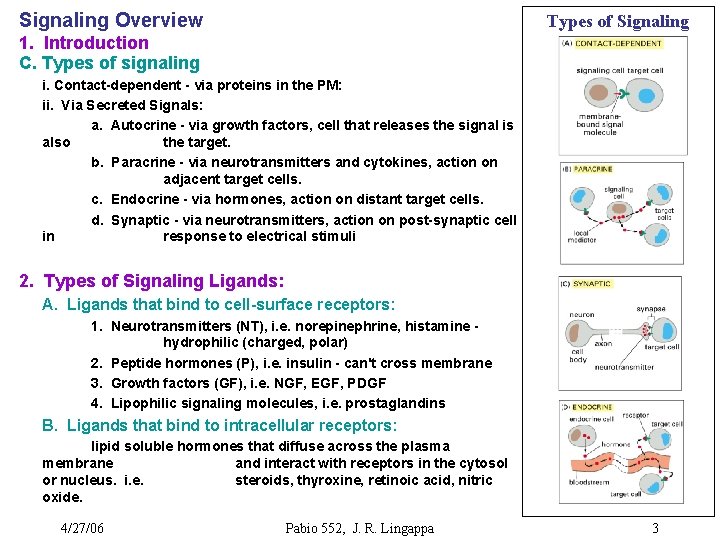
Signaling Overview Types of Signaling 1. Introduction C. Types of signaling i. Contact-dependent - via proteins in the PM: ii. Via Secreted Signals: a. Autocrine - via growth factors, cell that releases the signal is also the target. b. Paracrine - via neurotransmitters and cytokines, action on adjacent target cells. c. Endocrine - via hormones, action on distant target cells. d. Synaptic - via neurotransmitters, action on post-synaptic cell in response to electrical stimuli 2. Types of Signaling Ligands: A. Ligands that bind to cell-surface receptors: 1. Neurotransmitters (NT), i. e. norepinephrine, histamine hydrophilic (charged, polar) 2. Peptide hormones (P), i. e. insulin - can't cross membrane 3. Growth factors (GF), i. e. NGF, EGF, PDGF 4. Lipophilic signaling molecules, i. e. prostaglandins B. Ligands that bind to intracellular receptors: lipid soluble hormones that diffuse across the plasma membrane and interact with receptors in the cytosol or nucleus. i. e. steroids, thyroxine, retinoic acid, nitric oxide. 4/27/06 Pabio 552, J. R. Lingappa 3
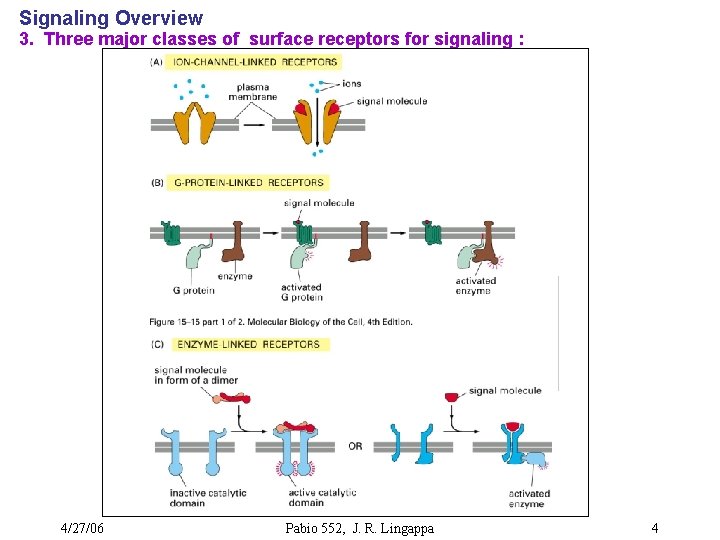
Signaling Overview 3. Three major classes of surface receptors for signaling : 4/27/06 Pabio 552, J. R. Lingappa 4
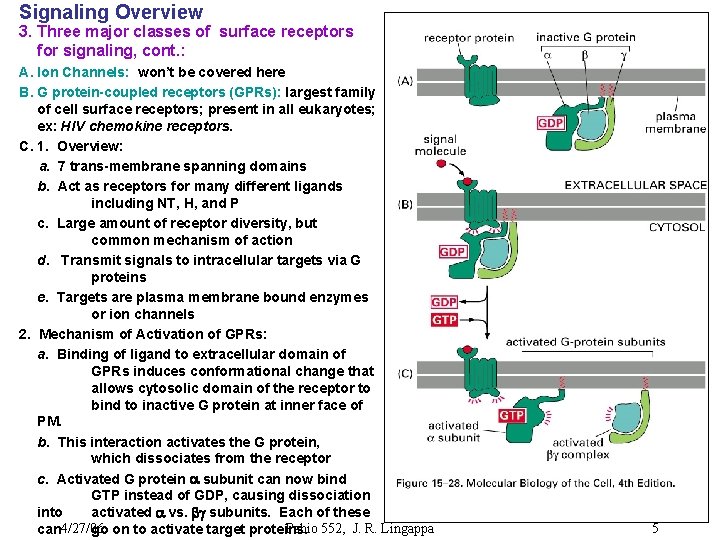
Signaling Overview 3. Three major classes of surface receptors for signaling, cont. : A. Ion Channels: won’t be covered here B. G protein-coupled receptors (GPRs): largest family of cell surface receptors; present in all eukaryotes; ex: HIV chemokine receptors. C. 1. Overview: a. 7 trans-membrane spanning domains b. Act as receptors for many different ligands including NT, H, and P c. Large amount of receptor diversity, but common mechanism of action d. Transmit signals to intracellular targets via G proteins e. Targets are plasma membrane bound enzymes or ion channels 2. Mechanism of Activation of GPRs: a. Binding of ligand to extracellular domain of GPRs induces conformational change that allows cytosolic domain of the receptor to bind to inactive G protein at inner face of PM. b. This interaction activates the G protein, which dissociates from the receptor c. Activated G protein subunit can now bind GTP instead of GDP, causing dissociation into activated vs. subunits. Each of these Pabio 552, J. R. Lingappa can 4/27/06 go on to activate target proteins. 5

Monomeric GTPase GAP binds to the GTP-bound GTPase and increases the rate of GTP hydrolysis GEF binds to the GTPase and alters its conformation so it releases GDP 4/27/06 Pabio 552, J. R. Lingappa 6
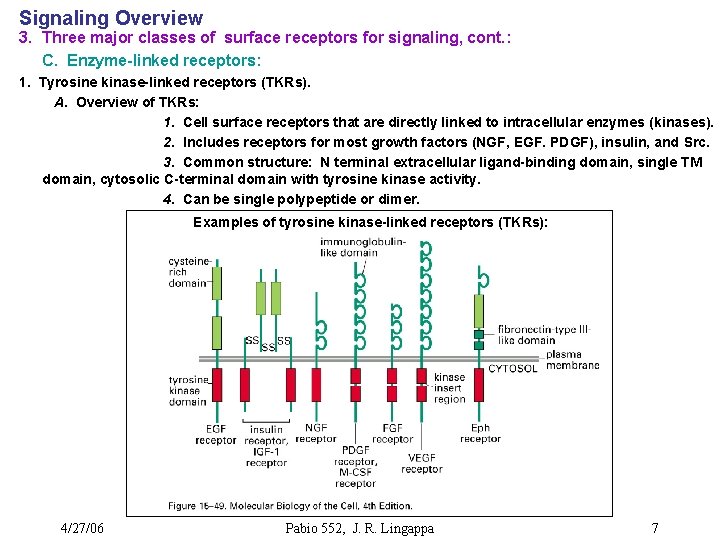
Signaling Overview 3. Three major classes of surface receptors for signaling, cont. : C. Enzyme-linked receptors: 1. Tyrosine kinase-linked receptors (TKRs). A. Overview of TKRs: 1. Cell surface receptors that are directly linked to intracellular enzymes (kinases). 2. Includes receptors for most growth factors (NGF, EGF. PDGF), insulin, and Src. 3. Common structure: N terminal extracellular ligand-binding domain, single TM domain, cytosolic C-terminal domain with tyrosine kinase activity. 4. Can be single polypeptide or dimer. Examples of tyrosine kinase-linked receptors (TKRs): 4/27/06 Pabio 552, J. R. Lingappa 7

Signaling Overview 3. Three major classes of surface receptors for signaling, cont. : C. Enzyme-linked receptors, cont. : 1. Tyrosine kinase-linked receptors (TKRs) B. Mechanism of activation of TKRs: i. ligand binding induces receptor dimerization (receptor crosslinking). ii. dimerization leads to autophosphorylation of the receptor (cross-phosphorylation). iii. phosphorylation increases kinase activity & also creates specific new binding sites. iv. proteins that bind to these new binding sites transmit intracellular signals. 4/27/06 Pabio 552, J. R. Lingappa 8
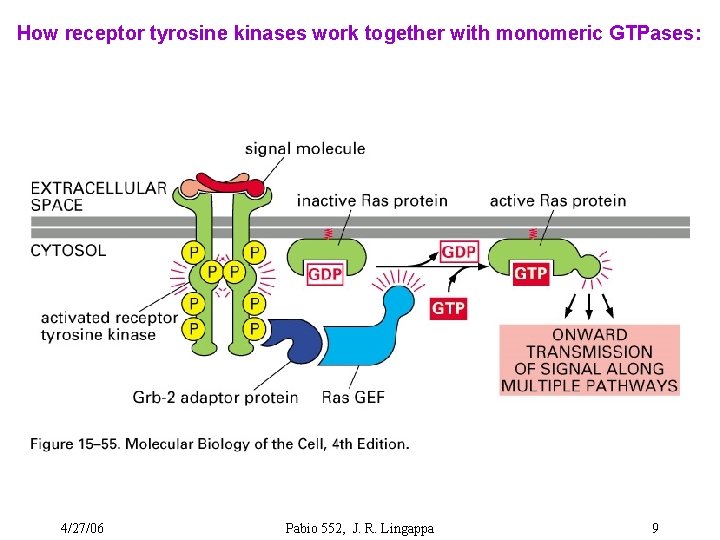
How receptor tyrosine kinases work together with monomeric GTPases: 4/27/06 Pabio 552, J. R. Lingappa 9
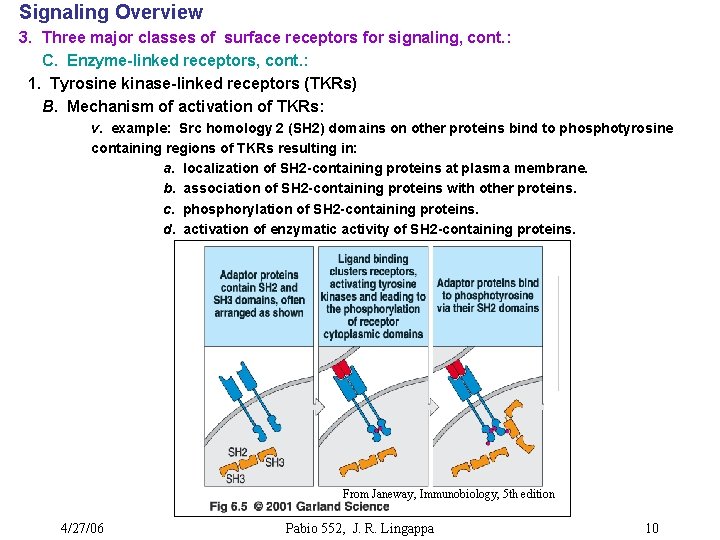
Signaling Overview 3. Three major classes of surface receptors for signaling, cont. : C. Enzyme-linked receptors, cont. : 1. Tyrosine kinase-linked receptors (TKRs) B. Mechanism of activation of TKRs: v. example: Src homology 2 (SH 2) domains on other proteins bind to phosphotyrosine containing regions of TKRs resulting in: a. localization of SH 2 -containing proteins at plasma membrane. b. association of SH 2 -containing proteins with other proteins. c. phosphorylation of SH 2 -containing proteins. d. activation of enzymatic activity of SH 2 -containing proteins. From Janeway, Immunobiology, 5 th edition 4/27/06 Pabio 552, J. R. Lingappa 10
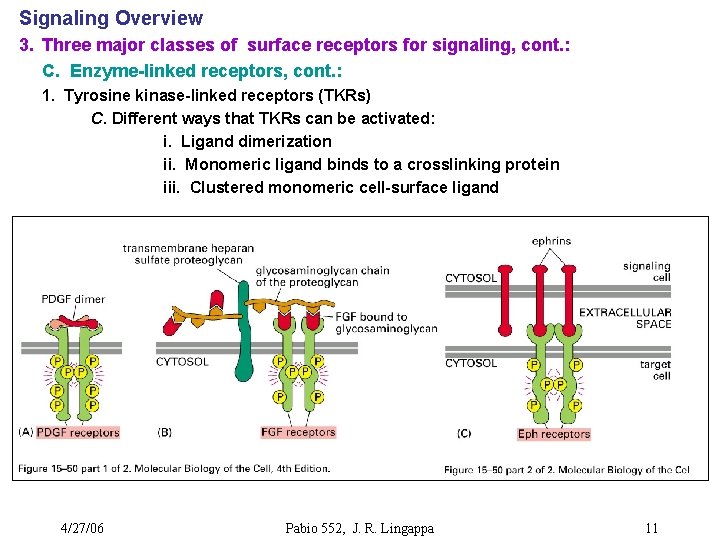
Signaling Overview 3. Three major classes of surface receptors for signaling, cont. : C. Enzyme-linked receptors, cont. : 1. Tyrosine kinase-linked receptors (TKRs) C. Different ways that TKRs can be activated: i. Ligand dimerization ii. Monomeric ligand binds to a crosslinking protein iii. Clustered monomeric cell-surface ligand 4/27/06 Pabio 552, J. R. Lingappa 11
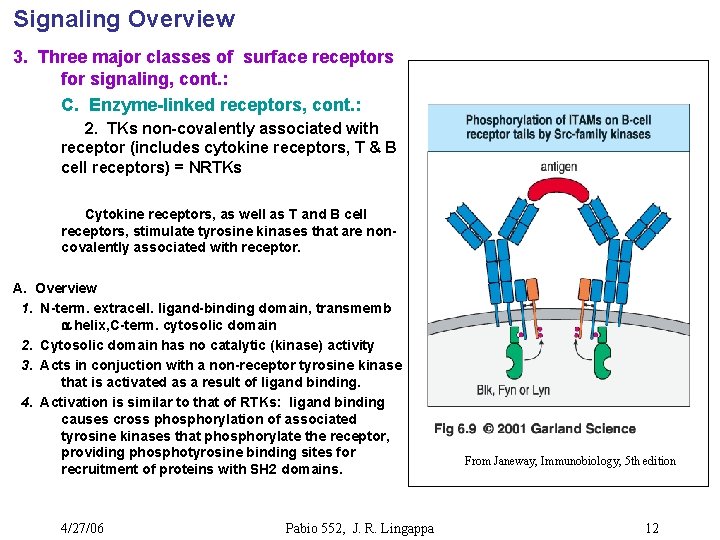
Signaling Overview 3. Three major classes of surface receptors for signaling, cont. : C. Enzyme-linked receptors, cont. : 2. TKs non-covalently associated with receptor (includes cytokine receptors, T & B cell receptors) = NRTKs Cytokine receptors, as well as T and B cell receptors, stimulate tyrosine kinases that are noncovalently associated with receptor. A. Overview 1. N-term. extracell. ligand-binding domain, transmemb helix, C-term. cytosolic domain 2. Cytosolic domain has no catalytic (kinase) activity 3. Acts in conjuction with a non-receptor tyrosine kinase that is activated as a result of ligand binding. 4. Activation is similar to that of RTKs: ligand binding causes cross phosphorylation of associated tyrosine kinases that phosphorylate the receptor, providing phosphotyrosine binding sites for recruitment of proteins with SH 2 domains. 4/27/06 Pabio 552, J. R. Lingappa From Janeway, Immunobiology, 5 th edition 12
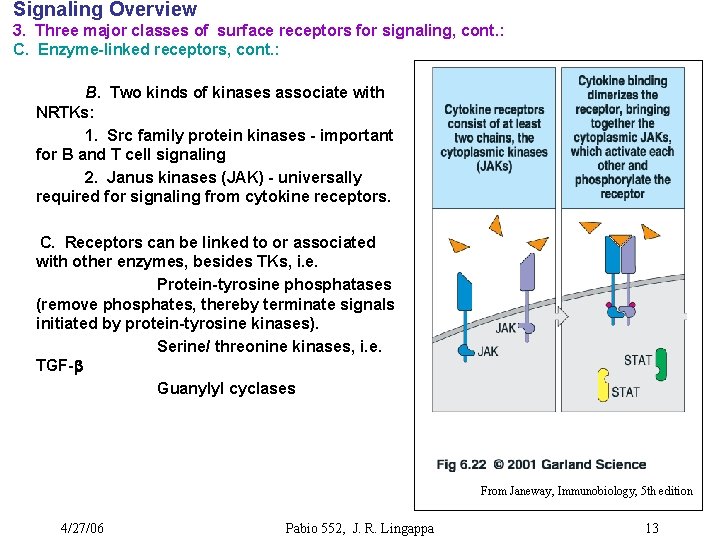
Signaling Overview 3. Three major classes of surface receptors for signaling, cont. : C. Enzyme-linked receptors, cont. : B. Two kinds of kinases associate with NRTKs: 1. Src family protein kinases - important for B and T cell signaling 2. Janus kinases (JAK) - universally required for signaling from cytokine receptors. C. Receptors can be linked to or associated with other enzymes, besides TKs, i. e. Protein-tyrosine phosphatases (remove phosphates, thereby terminate signals initiated by protein-tyrosine kinases). Serine/ threonine kinases, i. e. TGF- Guanylyl cyclases From Janeway, Immunobiology, 5 th edition 4/27/06 Pabio 552, J. R. Lingappa 13
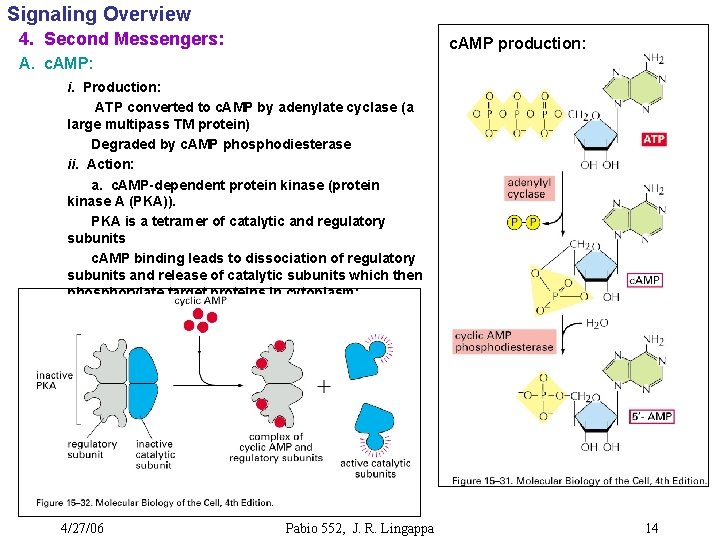
Signaling Overview 4. Second Messengers: c. AMP production: A. c. AMP: i. Production: ATP converted to c. AMP by adenylate cyclase (a large multipass TM protein) Degraded by c. AMP phosphodiesterase ii. Action: a. c. AMP-dependent protein kinase (protein kinase A (PKA)). PKA is a tetramer of catalytic and regulatory subunits c. AMP binding leads to dissociation of regulatory subunits and release of catalytic subunits which then phosphorylate target proteins in cytoplasm: From Janeway, Immunobiology, 5 th edition 4/27/06 Pabio 552, J. R. Lingappa 14
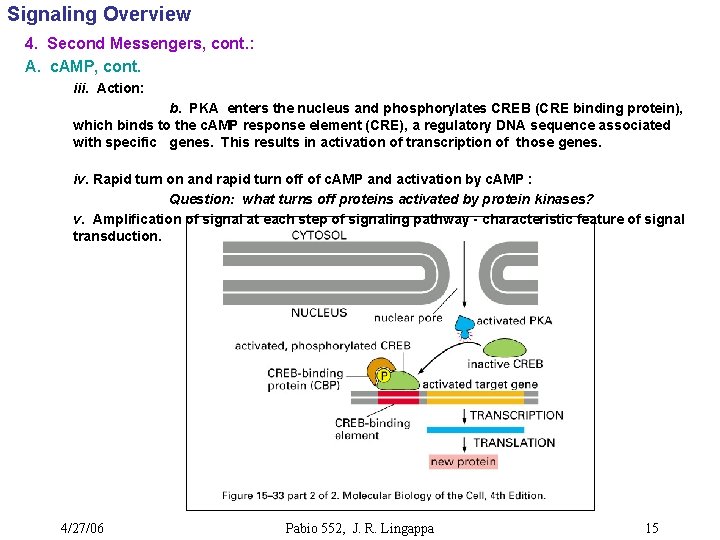
Signaling Overview 4. Second Messengers, cont. : A. c. AMP, cont. iii. Action: b. PKA enters the nucleus and phosphorylates CREB (CRE binding protein), which binds to the c. AMP response element (CRE), a regulatory DNA sequence associated with specific genes. This results in activation of transcription of those genes. iv. Rapid turn on and rapid turn off of c. AMP and activation by c. AMP : Question: what turns off proteins activated by protein kinases? v. Amplification of signal at each step of signaling pathway - characteristic feature of signal transduction. 4/27/06 Pabio 552, J. R. Lingappa 15
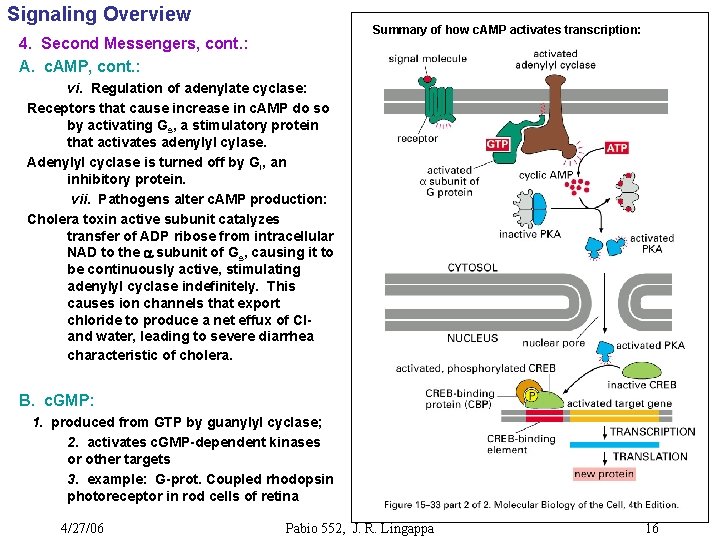
Signaling Overview Summary of how c. AMP activates transcription: 4. Second Messengers, cont. : A. c. AMP, cont. : vi. Regulation of adenylate cyclase: Receptors that cause increase in c. AMP do so by activating Gs, a stimulatory protein that activates adenylyl cylase. Adenylyl cyclase is turned off by Gi, an inhibitory protein. vii. Pathogens alter c. AMP production: Cholera toxin active subunit catalyzes transfer of ADP ribose from intracellular NAD to the subunit of Gs, causing it to be continuously active, stimulating adenylyl cyclase indefinitely. This causes ion channels that export chloride to produce a net effux of Cland water, leading to severe diarrhea characteristic of cholera. B. c. GMP: 1. produced from GTP by guanylyl cyclase; 2. activates c. GMP-dependent kinases or other targets 3. example: G-prot. Coupled rhodopsin photoreceptor in rod cells of retina 4/27/06 Pabio 552, J. R. Lingappa 16
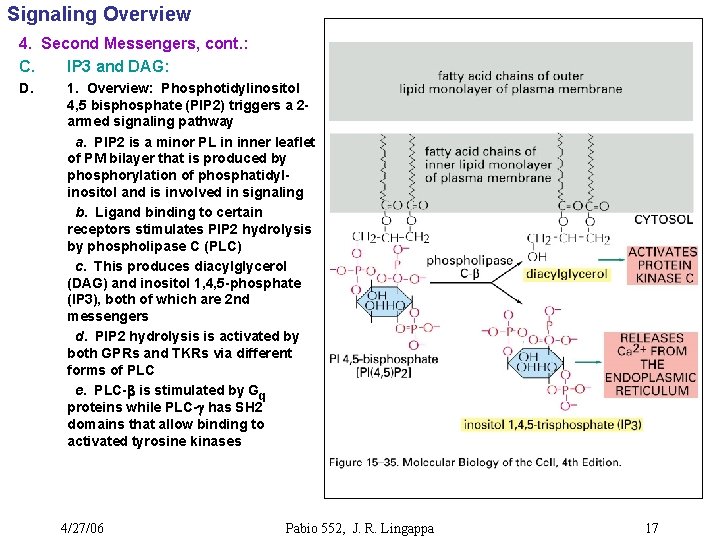
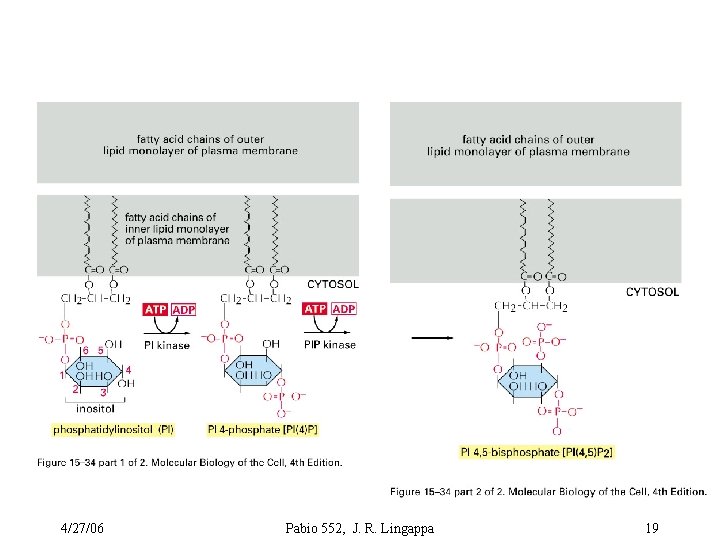
Signaling Overview 4. Second Messengers, cont. : C. IP 3 and DAG: D. 1. Overview: Phosphotidylinositol 4, 5 bisphosphate (PIP 2) triggers a 2 armed signaling pathway a. PIP 2 is a minor PL in inner leaflet of PM bilayer that is produced by phosphorylation of phosphatidylinositol and is involved in signaling b. Ligand binding to certain receptors stimulates PIP 2 hydrolysis by phospholipase C (PLC) c. This produces diacylglycerol (DAG) and inositol 1, 4, 5 -phosphate (IP 3), both of which are 2 nd messengers d. PIP 2 hydrolysis is activated by both GPRs and TKRs via different forms of PLC e. PLC- is stimulated by Gq proteins while PLC- has SH 2 domains that allow binding to activated tyrosine kinases 4/27/06 Pabio 552, J. R. Lingappa 17
4/27/06 Pabio 552, J. R. Lingappa 18
4/27/06 Pabio 552, J. R. Lingappa 19
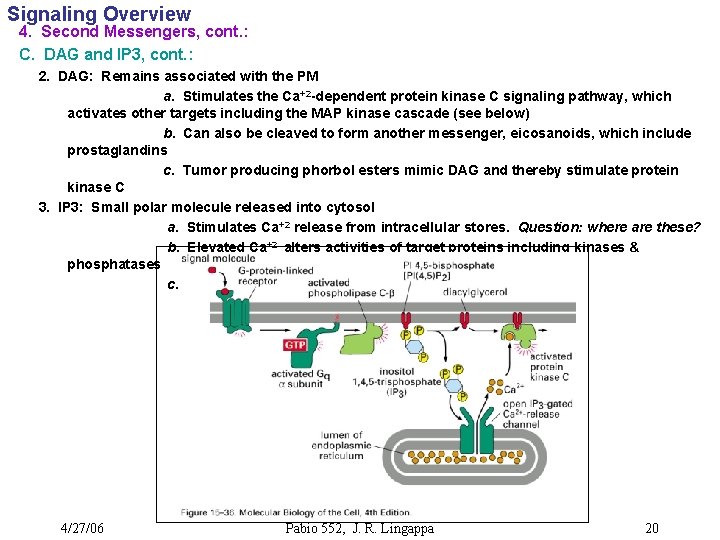
Signaling Overview 4. Second Messengers, cont. : C. DAG and IP 3, cont. : 2. DAG: Remains associated with the PM a. Stimulates the Ca+2 -dependent protein kinase C signaling pathway, which activates other targets including the MAP kinase cascade (see below) b. Can also be cleaved to form another messenger, eicosanoids, which include prostaglandins c. Tumor producing phorbol esters mimic DAG and thereby stimulate protein kinase C 3. IP 3: Small polar molecule released into cytosol a. Stimulates Ca+2 release from intracellular stores. Question: where are these? b. Elevated Ca+2 alters activities of target proteins including kinases & phosphatases c. What drug would mimic the effect of IP 3? 4/27/06 Pabio 552, J. R. Lingappa 20
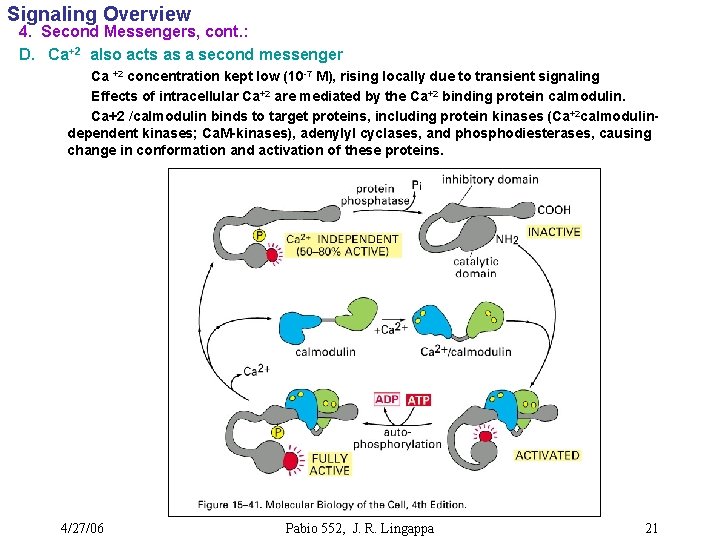
Signaling Overview 4. Second Messengers, cont. : D. Ca+2 also acts as a second messenger Ca +2 concentration kept low (10 -7 M), rising locally due to transient signaling Effects of intracellular Ca+2 are mediated by the Ca+2 binding protein calmodulin. Ca+2 /calmodulin binds to target proteins, including protein kinases (Ca+2 calmodulindependent kinases; Ca. M-kinases), adenylyl cyclases, and phosphodiesterases, causing change in conformation and activation of these proteins. 4/27/06 Pabio 552, J. R. Lingappa 21
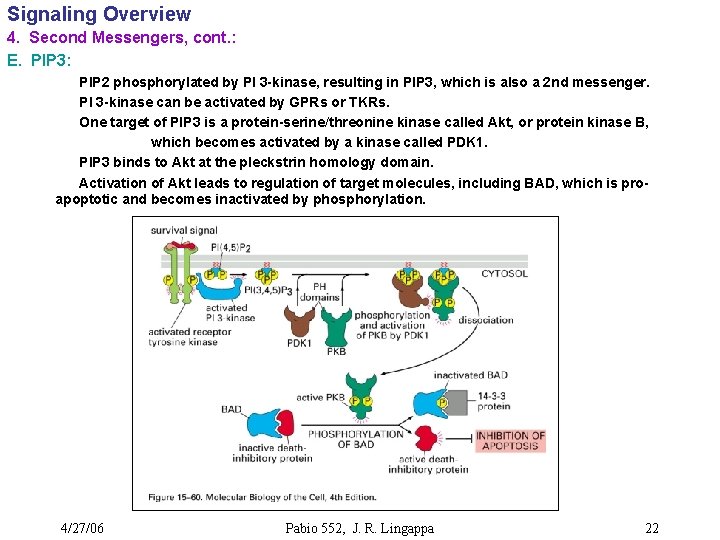
Signaling Overview 4. Second Messengers, cont. : E. PIP 3: PIP 2 phosphorylated by PI 3 -kinase, resulting in PIP 3, which is also a 2 nd messenger. PI 3 -kinase can be activated by GPRs or TKRs. One target of PIP 3 is a protein-serine/threonine kinase called Akt, or protein kinase B, which becomes activated by a kinase called PDK 1. PIP 3 binds to Akt at the pleckstrin homology domain. Activation of Akt leads to regulation of target molecules, including BAD, which is proapoptotic and becomes inactivated by phosphorylation. 4/27/06 Pabio 552, J. R. Lingappa 22
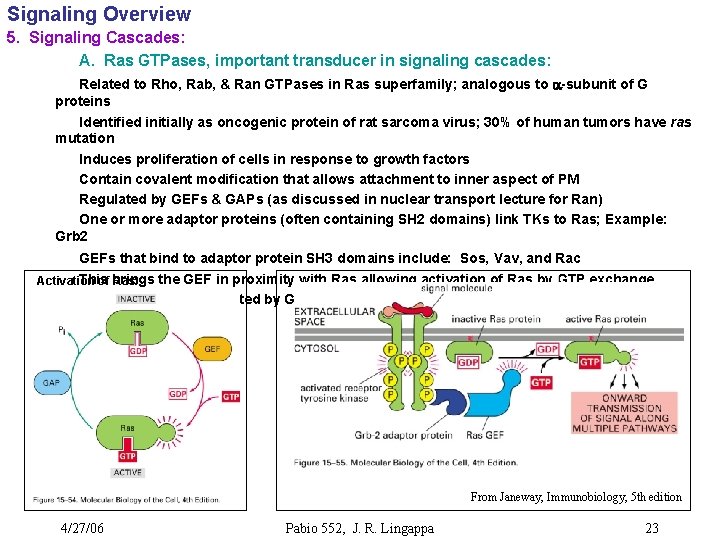
Signaling Overview 5. Signaling Cascades: A. Ras GTPases, important transducer in signaling cascades: Related to Rho, Rab, & Ran GTPases in Ras superfamily; analogous to -subunit of G proteins Identified initially as oncogenic protein of rat sarcoma virus; 30% of human tumors have ras mutation Induces proliferation of cells in response to growth factors Contain covalent modification that allows attachment to inner aspect of PM Regulated by GEFs & GAPs (as discussed in nuclear transport lecture for Ran) One or more adaptor proteins (often containing SH 2 domains) link TKs to Ras; Example: Grb 2 GEFs that bind to adaptor protein SH 3 domains include: Sos, Vav, and Rac This the GEF in proximity with Ras allowing activation of Ras by GTP exchange Activation of brings Ras: GEFs can also be activated by G proteins, Ca+2, or DAG From Janeway, Immunobiology, 5 th edition 4/27/06 Pabio 552, J. R. Lingappa 23
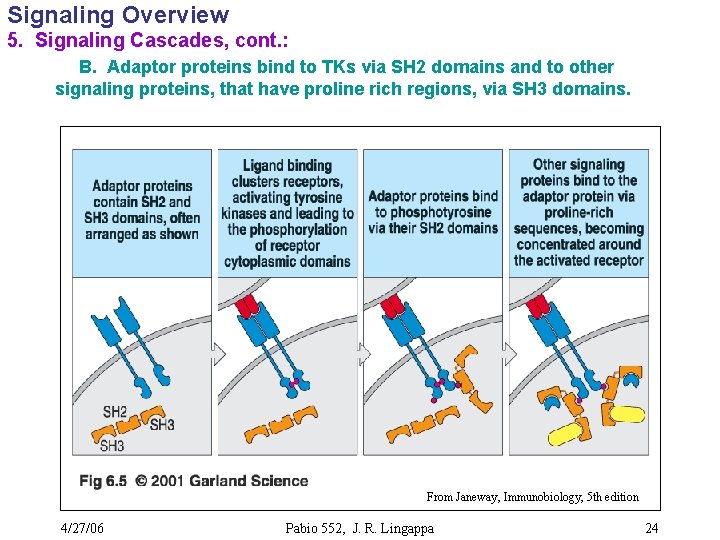
Signaling Overview 5. Signaling Cascades, cont. : B. Adaptor proteins bind to TKs via SH 2 domains and to other signaling proteins, that have proline rich regions, via SH 3 domains. From Janeway, Immunobiology, 5 th edition 4/27/06 Pabio 552, J. R. Lingappa 24
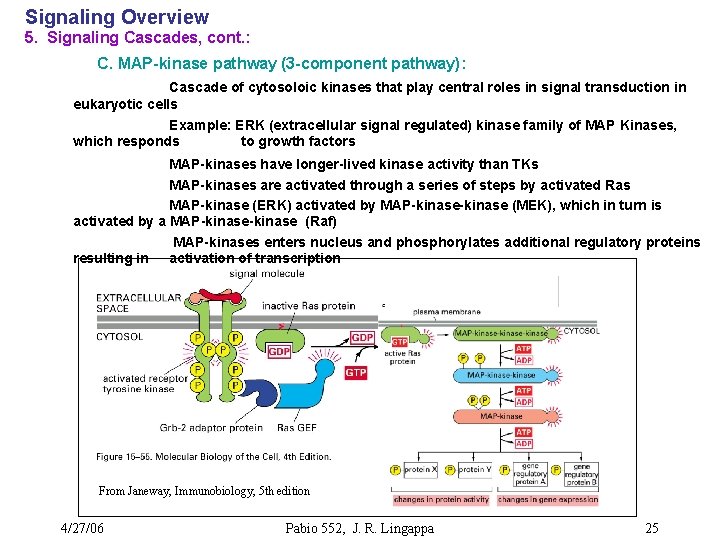
Signaling Overview 5. Signaling Cascades, cont. : C. MAP-kinase pathway (3 -component pathway): Cascade of cytosoloic kinases that play central roles in signal transduction in eukaryotic cells Example: ERK (extracellular signal regulated) kinase family of MAP Kinases, which responds to growth factors MAP-kinases have longer-lived kinase activity than TKs MAP-kinases are activated through a series of steps by activated Ras MAP-kinase (ERK) activated by MAP-kinase (MEK), which in turn is activated by a MAP-kinase (Raf) MAP-kinases enters nucleus and phosphorylates additional regulatory proteins resulting in activation of transcription From Janeway, Immunobiology, 5 th edition 4/27/06 Pabio 552, J. R. Lingappa 25
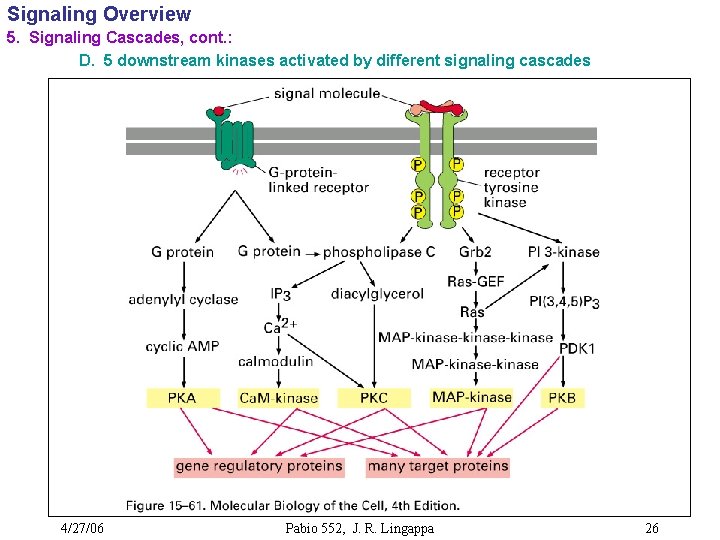
Signaling Overview 5. Signaling Cascades, cont. : D. 5 downstream kinases activated by different signaling cascades 4/27/06 Pabio 552, J. R. Lingappa 26
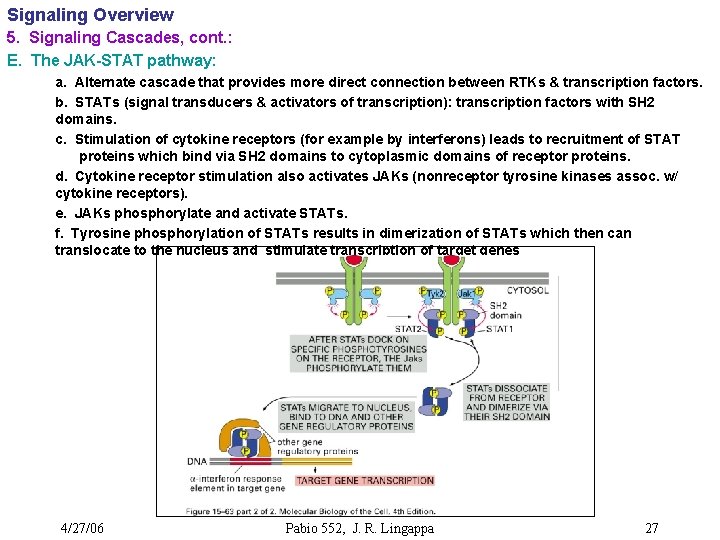
Signaling Overview 5. Signaling Cascades, cont. : E. The JAK-STAT pathway: a. Alternate cascade that provides more direct connection between RTKs & transcription factors. b. STATs (signal transducers & activators of transcription): transcription factors with SH 2 domains. c. Stimulation of cytokine receptors (for example by interferons) leads to recruitment of STAT proteins which bind via SH 2 domains to cytoplasmic domains of receptor proteins. d. Cytokine receptor stimulation also activates JAKs (nonreceptor tyrosine kinases assoc. w/ cytokine receptors). e. JAKs phosphorylate and activate STATs. f. Tyrosine phosphorylation of STATs results in dimerization of STATs which then can translocate to the nucleus and stimulate transcription of target genes 4/27/06 Pabio 552, J. R. Lingappa 27
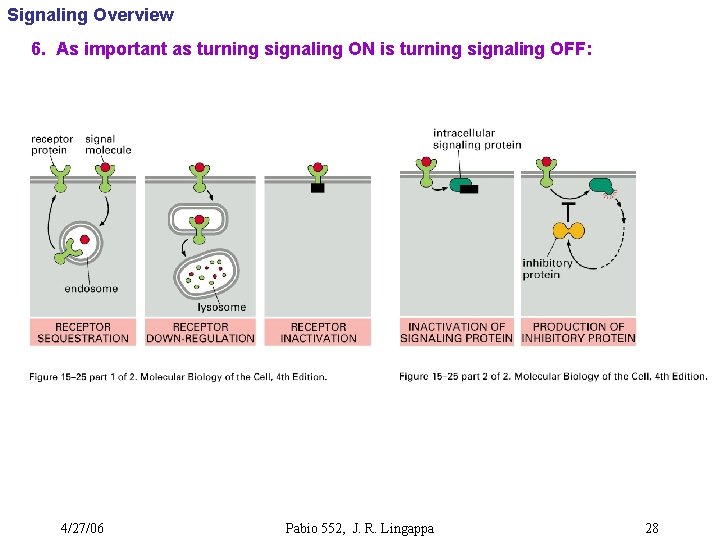
Signaling Overview 6. As important as turning signaling ON is turning signaling OFF: 4/27/06 Pabio 552, J. R. Lingappa 28
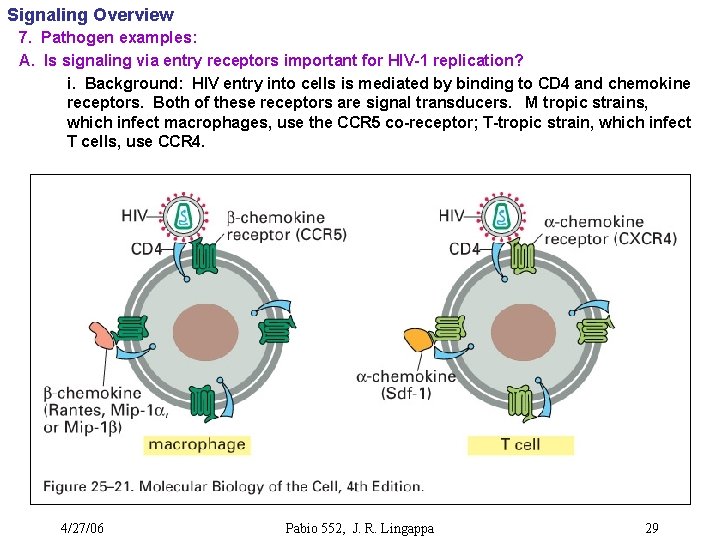
Signaling Overview 7. Pathogen examples: A. Is signaling via entry receptors important for HIV-1 replication? i. Background: HIV entry into cells is mediated by binding to CD 4 and chemokine receptors. Both of these receptors are signal transducers. M tropic strains, which infect macrophages, use the CCR 5 co-receptor; T-tropic strain, which infect T cells, use CCR 4. 4/27/06 Pabio 552, J. R. Lingappa 29
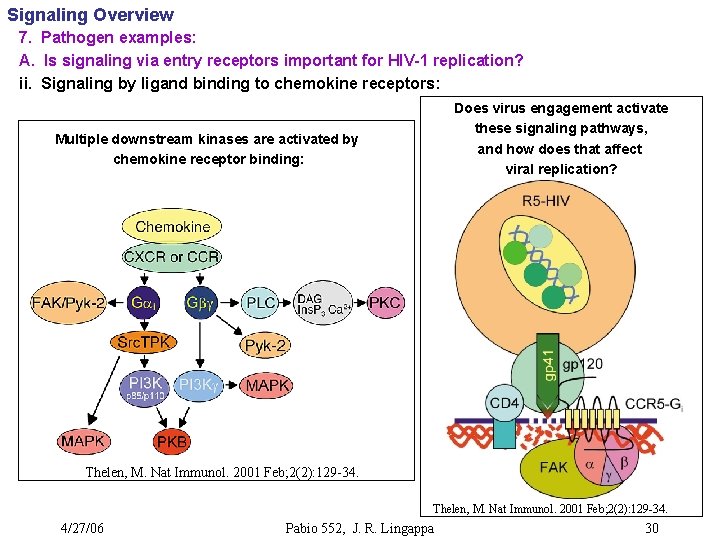
Signaling Overview 7. Pathogen examples: A. Is signaling via entry receptors important for HIV-1 replication? ii. Signaling by ligand binding to chemokine receptors: Does virus engagement activate these signaling pathways, and how does that affect viral replication? Multiple downstream kinases are activated by chemokine receptor binding: Thelen, M. Nat Immunol. 2001 Feb; 2(2): 129 -34. 4/27/06 Pabio 552, J. R. Lingappa 30
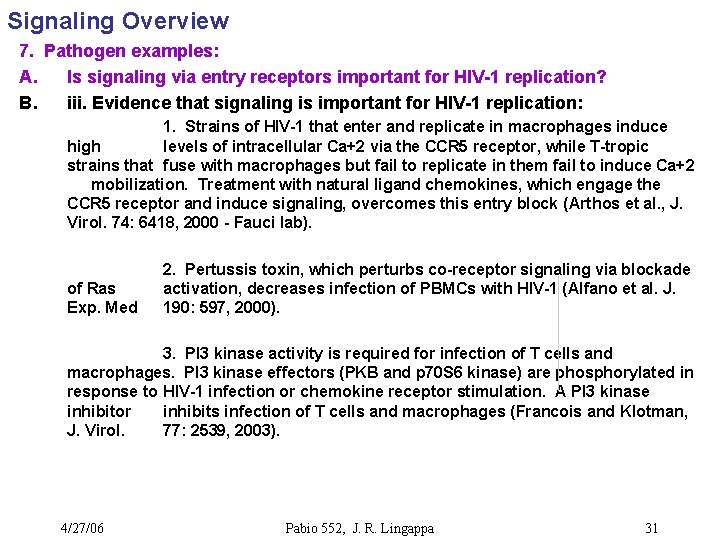
Signaling Overview 7. Pathogen examples: A. Is signaling via entry receptors important for HIV-1 replication? B. iii. Evidence that signaling is important for HIV-1 replication: 1. Strains of HIV-1 that enter and replicate in macrophages induce high levels of intracellular Ca+2 via the CCR 5 receptor, while T-tropic strains that fuse with macrophages but fail to replicate in them fail to induce Ca+2 mobilization. Treatment with natural ligand chemokines, which engage the CCR 5 receptor and induce signaling, overcomes this entry block (Arthos et al. , J. Virol. 74: 6418, 2000 - Fauci lab). of Ras Exp. Med 2. Pertussis toxin, which perturbs co-receptor signaling via blockade activation, decreases infection of PBMCs with HIV-1 (Alfano et al. J. 190: 597, 2000). 3. PI 3 kinase activity is required for infection of T cells and macrophages. PI 3 kinase effectors (PKB and p 70 S 6 kinase) are phosphorylated in response to HIV-1 infection or chemokine receptor stimulation. A PI 3 kinase inhibitor inhibits infection of T cells and macrophages (Francois and Klotman, J. Virol. 77: 2539, 2003). 4/27/06 Pabio 552, J. R. Lingappa 31
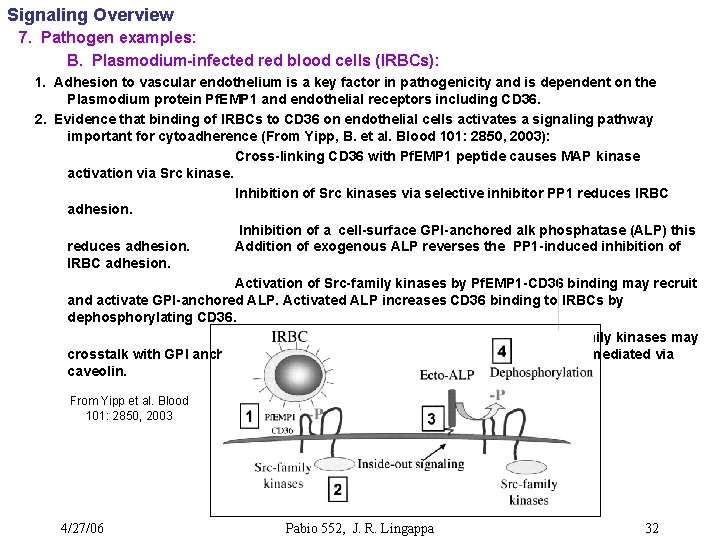
Signaling Overview 7. Pathogen examples: B. Plasmodium-infected red blood cells (IRBCs): 1. Adhesion to vascular endothelium is a key factor in pathogenicity and is dependent on the Plasmodium protein Pf. EMP 1 and endothelial receptors including CD 36. 2. Evidence that binding of IRBCs to CD 36 on endothelial cells activates a signaling pathway important for cytoadherence (From Yipp, B. et al. Blood 101: 2850, 2003): Cross-linking CD 36 with Pf. EMP 1 peptide causes MAP kinase activation via Src kinase. Inhibition of Src kinases via selective inhibitor PP 1 reduces IRBC adhesion. Inhibition of a cell-surface GPI-anchored alk phosphatase (ALP) this reduces adhesion. Addition of exogenous ALP reverses the PP 1 -induced inhibition of IRBC adhesion. Activation of Src-family kinases by Pf. EMP 1 -CD 36 binding may recruit and activate GPI-anchored ALP. Activated ALP increases CD 36 binding to IRBCs by dephosphorylating CD 36. This is consistent with the emerging view that Src family kinases may crosstalk with GPI anchored outer membrane proteins. This crosstalk may be mediated via caveolin. From Yipp et al. Blood 101: 2850, 2003 4/27/06 Pabio 552, J. R. Lingappa 32
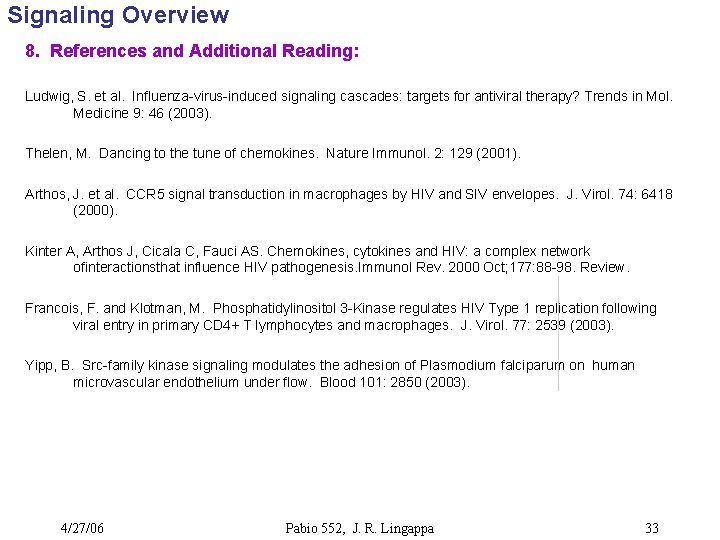
Signaling Overview 8. References and Additional Reading: Ludwig, S. et al. Influenza-virus-induced signaling cascades: targets for antiviral therapy? Trends in Mol. Medicine 9: 46 (2003). Thelen, M. Dancing to the tune of chemokines. Nature Immunol. 2: 129 (2001). Arthos, J. et al. CCR 5 signal transduction in macrophages by HIV and SIV envelopes. J. Virol. 74: 6418 (2000). Kinter A, Arthos J, Cicala C, Fauci AS. Chemokines, cytokines and HIV: a complex network ofinteractionsthat influence HIV pathogenesis. Immunol Rev. 2000 Oct; 177: 88 -98. Review. Francois, F. and Klotman, M. Phosphatidylinositol 3 -Kinase regulates HIV Type 1 replication following viral entry in primary CD 4+ T lymphocytes and macrophages. J. Virol. 77: 2539 (2003). Yipp, B. Src-family kinase signaling modulates the adhesion of Plasmodium falciparum on human microvascular endothelium under flow. Blood 101: 2850 (2003). 4/27/06 Pabio 552, J. R. Lingappa 33
- Slides: 33