
SIGNALDETECTION THEORY AND RECEIVER OPERATING CHARACTERISTIC ROC ANALYSIS

- Slides: 41
SIGNAL-DETECTION THEORY AND RECEIVER OPERATING CHARACTERISTIC (ROC) ANALYSIS Psych 272
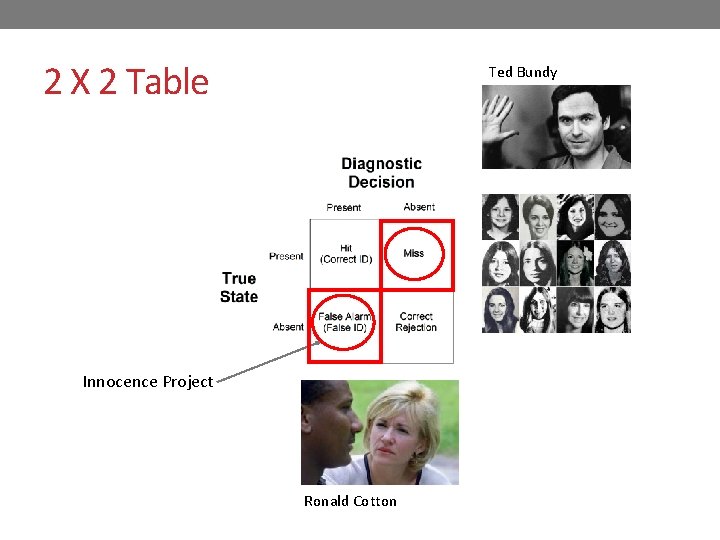
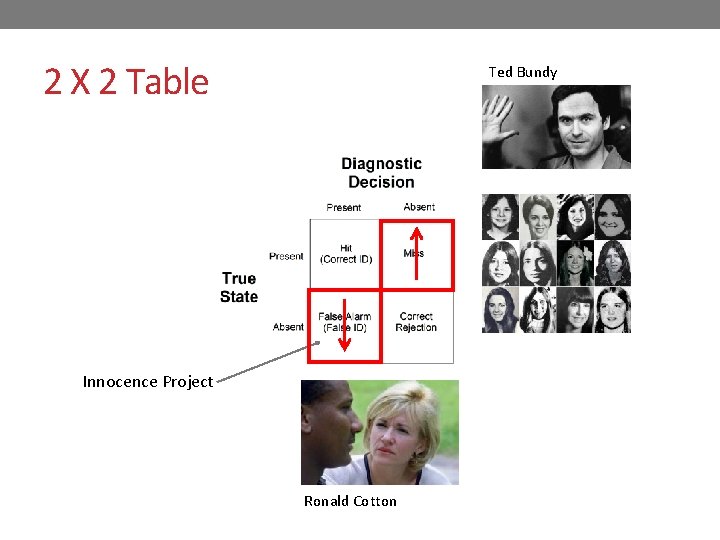
Eyewitness Memory and Wrongful Convictions • Since the 1990 s, DNA testing has overturned 318 wrongful convictions • Eyewitness misidentifications – which were invariably made with high confidence in a court of law – played a role in 75% of these cases • One of the most famous cases involved the misidentification of a man named Ronald Cotton
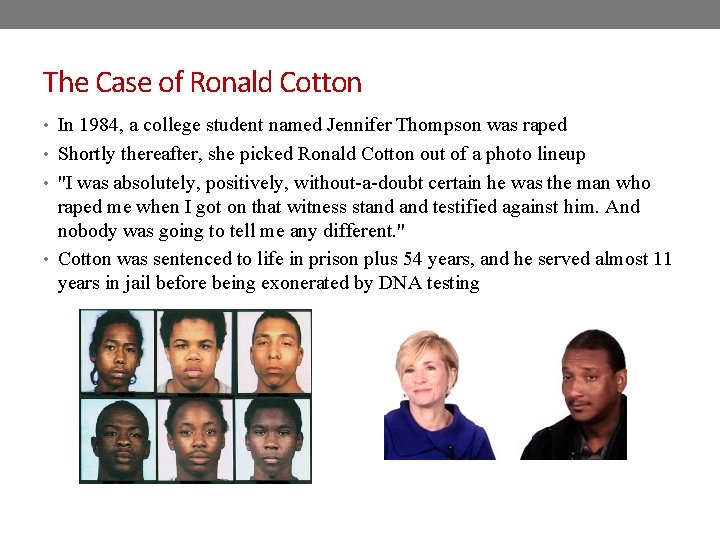
The Case of Ronald Cotton • In 1984, a college student named Jennifer Thompson was raped • Shortly thereafter, she picked Ronald Cotton out of a photo lineup • "I was absolutely, positively, without-a-doubt certain he was the man who raped me when I got on that witness stand testified against him. And nobody was going to tell me any different. " • Cotton was sentenced to life in prison plus 54 years, and he served almost 11 years in jail before being exonerated by DNA testing
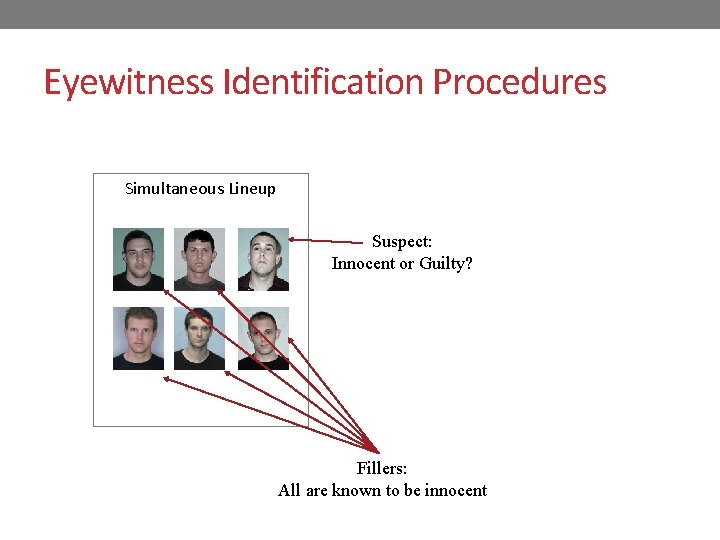
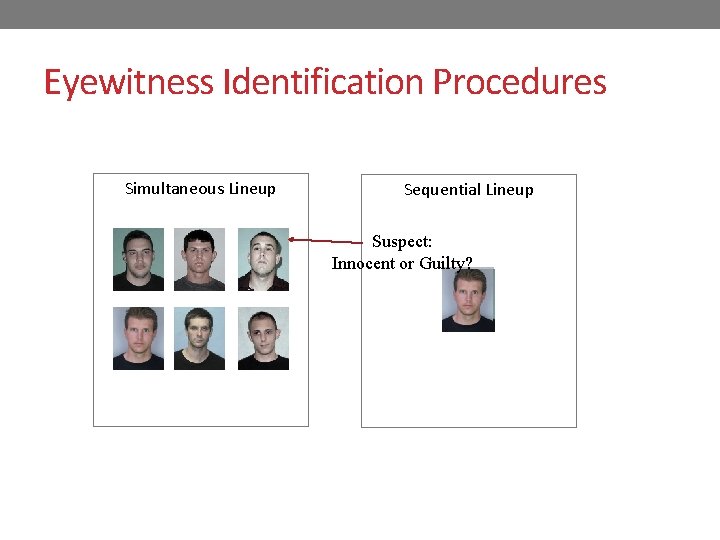
Eyewitness Identification Procedures Simultaneous Lineup Suspect: Innocent or Guilty? Fillers: All are known to be innocent
Eyewitness Identification Procedures Simultaneous Lineup Sequential Lineup Suspect: Innocent or Guilty?
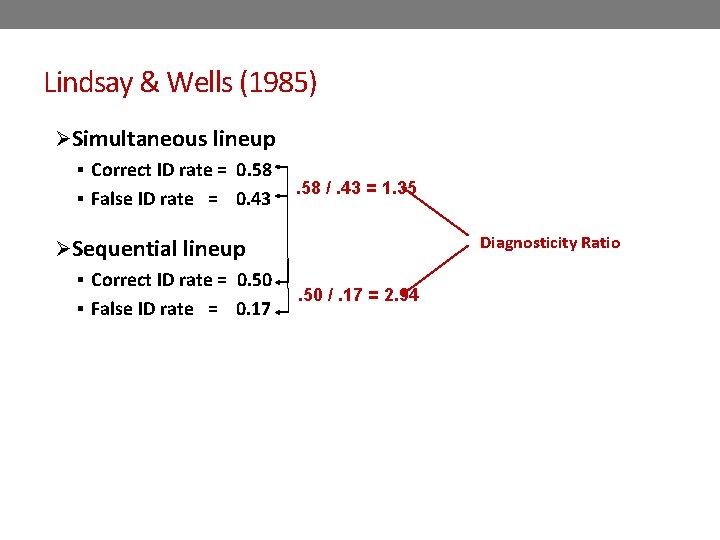
Lindsay & Wells (1985) ØSimultaneous lineup § Correct ID rate = 0. 58 § False ID rate = 0. 43 ØSequential lineup § Correct ID rate = 0. 50 § False ID rate = 0. 17 . 58 /. 43 = 1. 35 Diagnosticity Ratio. 50 /. 17 = 2. 94
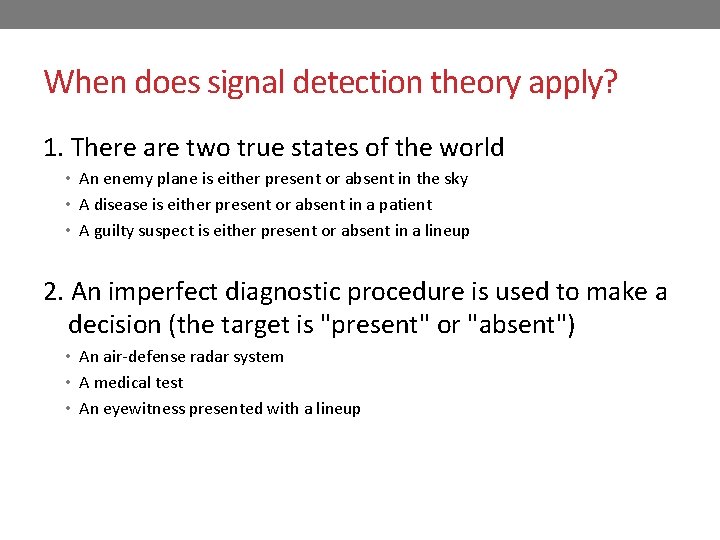
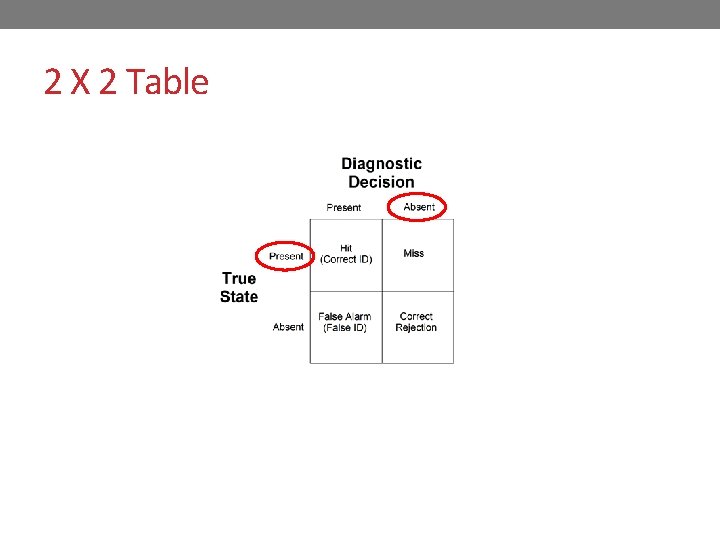
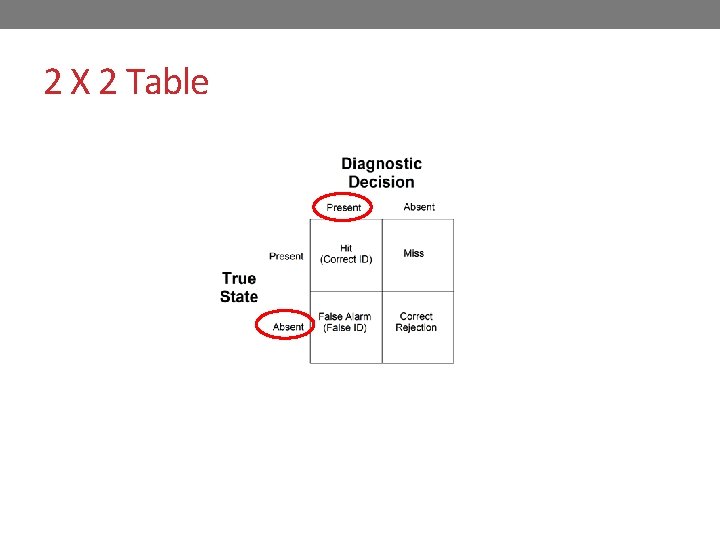
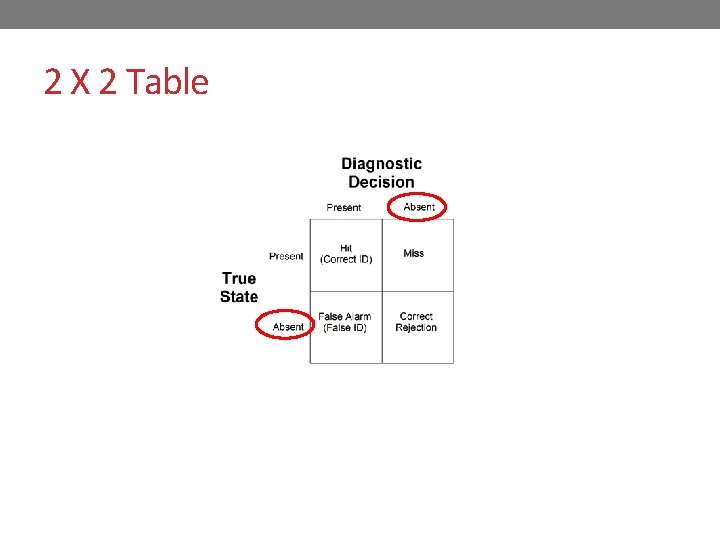
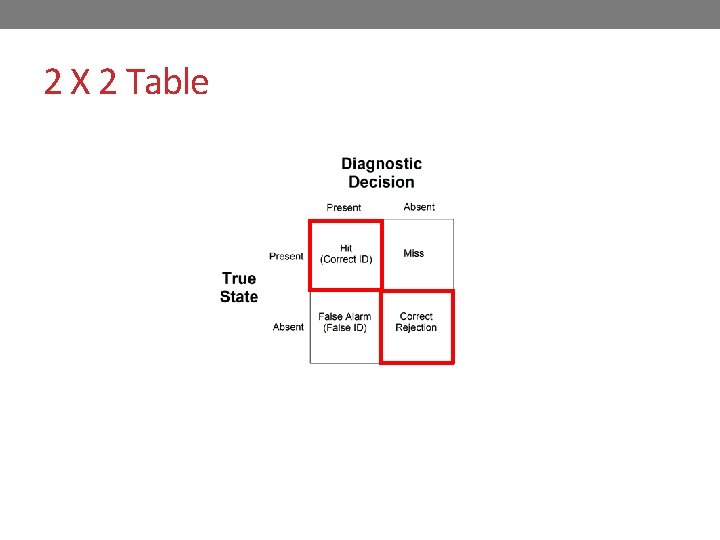
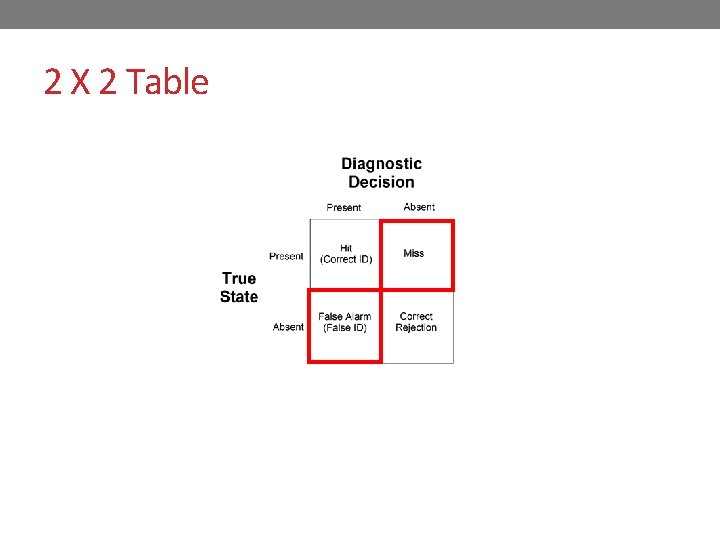
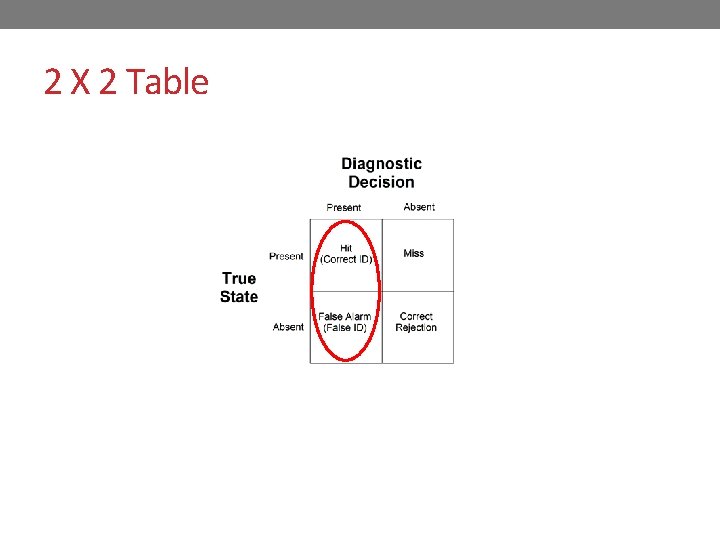
When does signal detection theory apply? 1. There are two true states of the world • An enemy plane is either present or absent in the sky • A disease is either present or absent in a patient • A guilty suspect is either present or absent in a lineup 2. An imperfect diagnostic procedure is used to make a decision (the target is "present" or "absent") • An air-defense radar system • A medical test • An eyewitness presented with a lineup
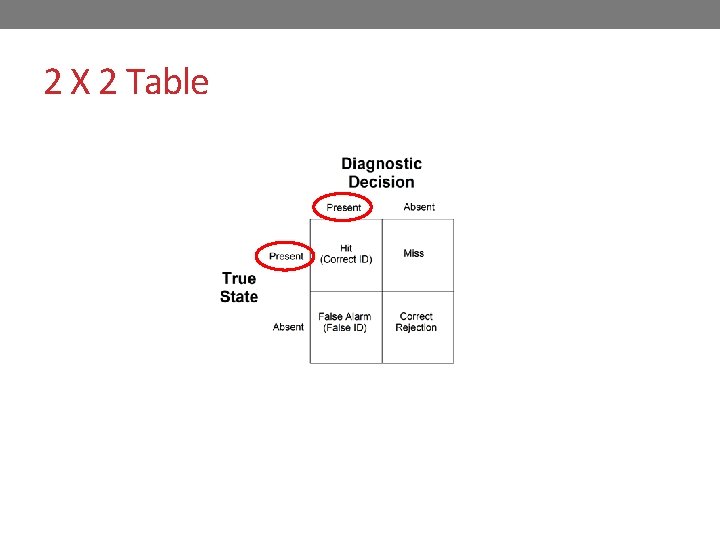
2 X 2 Table
2 X 2 Table
2 X 2 Table
2 X 2 Table
2 X 2 Table
2 X 2 Table
2 X 2 Table Ted Bundy Innocence Project Ronald Cotton
2 X 2 Table Ted Bundy Innocence Project Ronald Cotton
2 X 2 Table
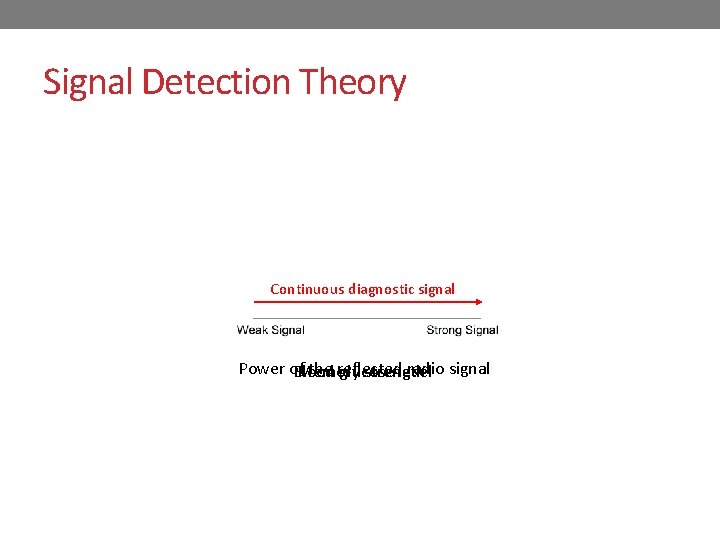
Signal Detection Theory Continuous diagnostic signal Power of the reflected radio signal Blood Memory glucose strength level
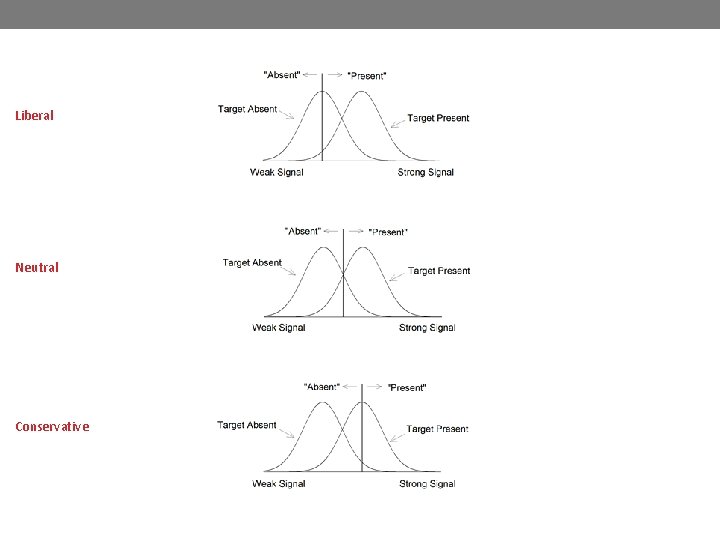
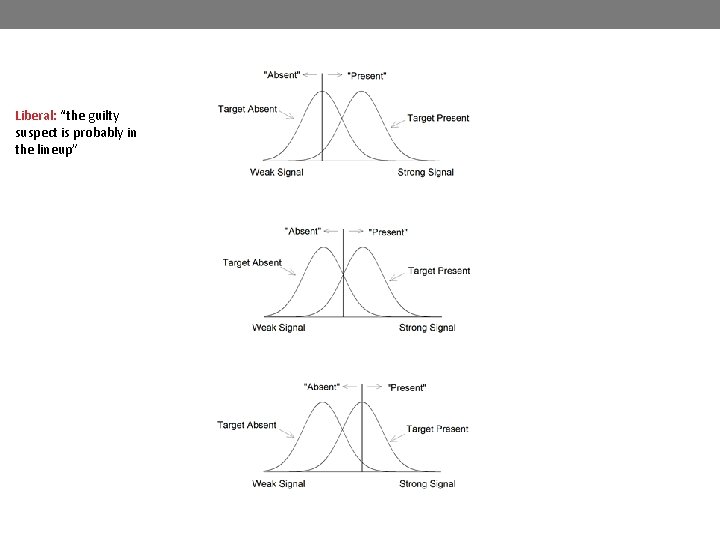
Signal Detection Theory: Response Bias “the guilty suspect is probably in the lineup”
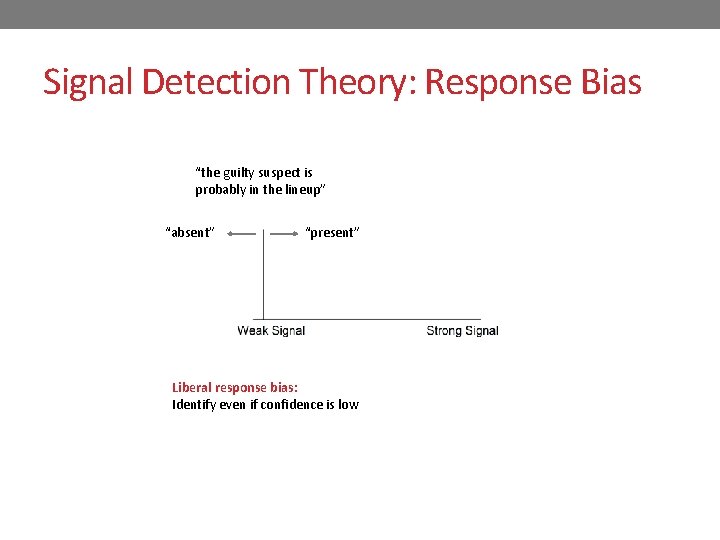
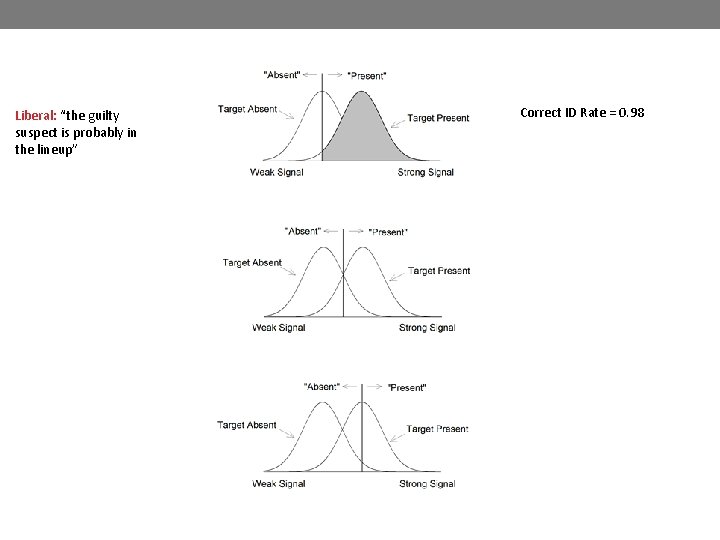
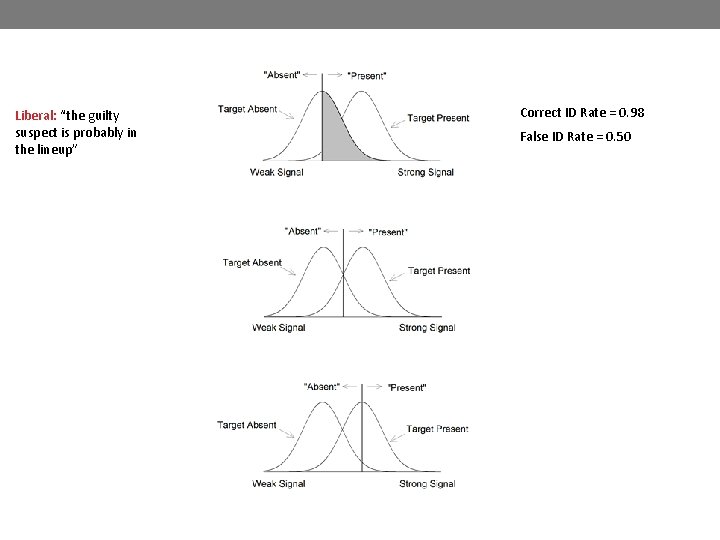
Signal Detection Theory: Response Bias “the guilty suspect is probably in the lineup” “absent” “present” Liberal response bias: Identify even if confidence is low
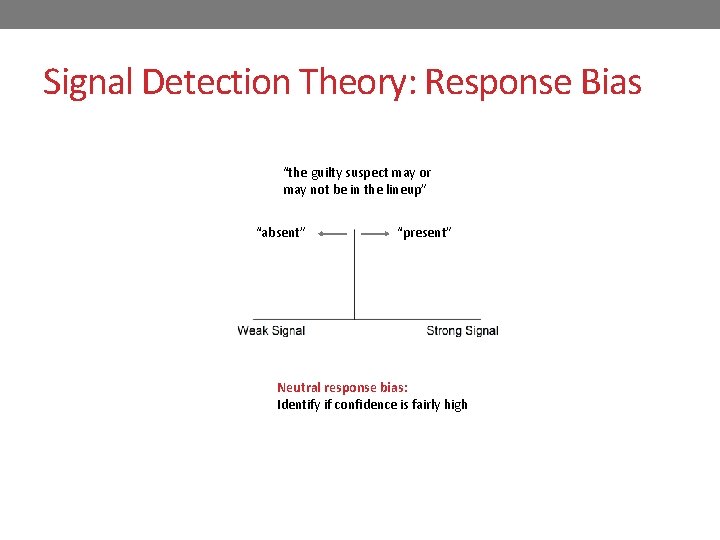
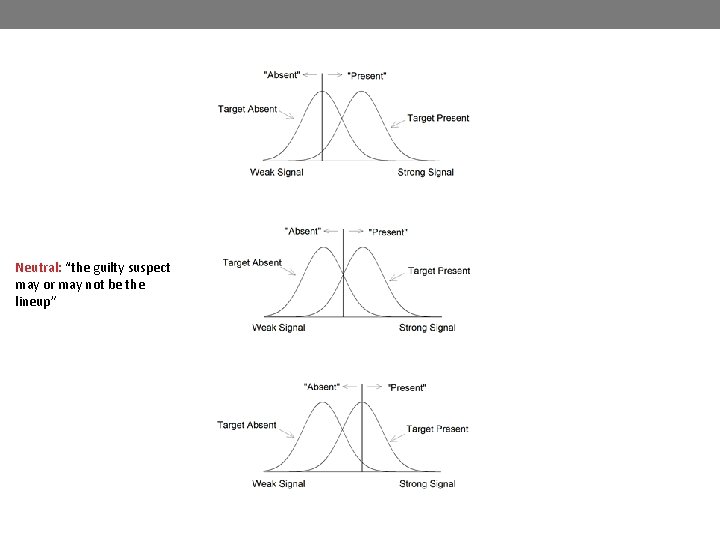
Signal Detection Theory: Response Bias “the guilty suspect may or may not be in the lineup”
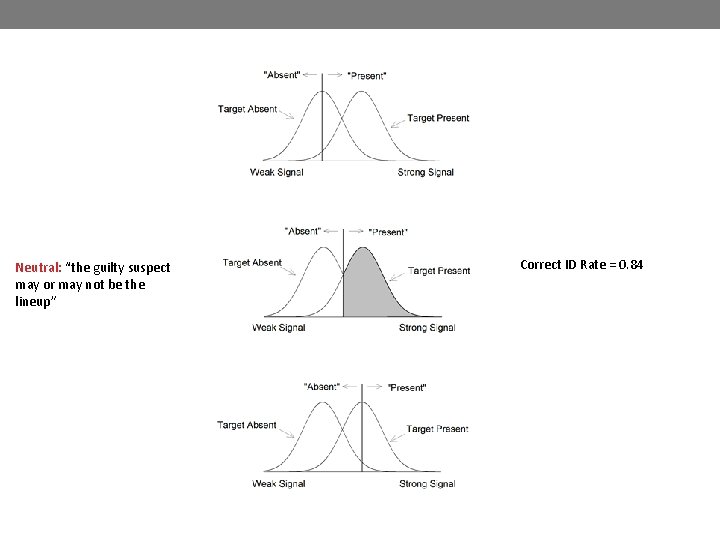
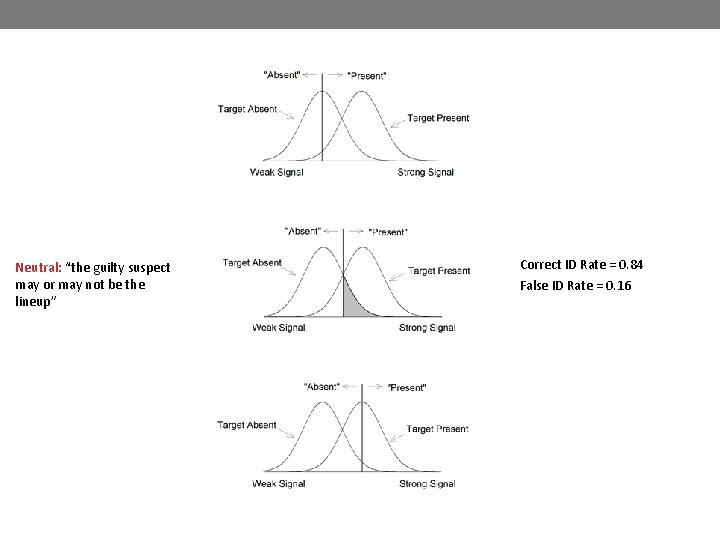
Signal Detection Theory: Response Bias “the guilty suspect may or may not be in the lineup” “absent” “present” Neutral response bias: Identify if confidence is fairly high
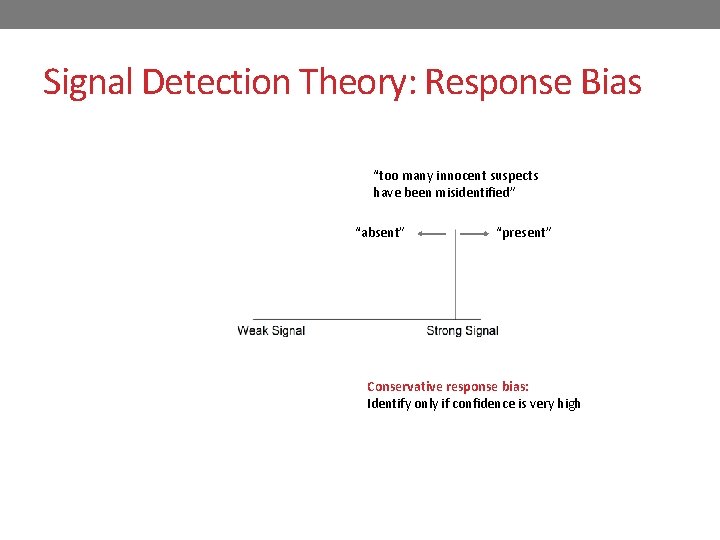
Signal Detection Theory: Response Bias “too many innocent suspects have been misidentified”
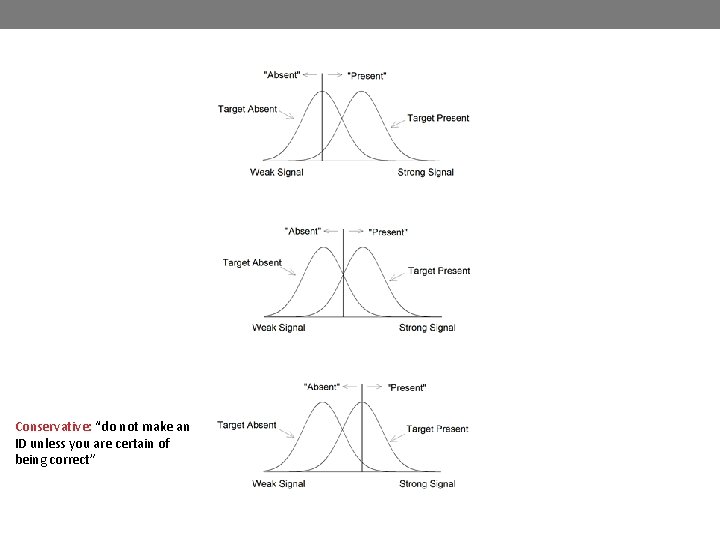
Signal Detection Theory: Response Bias “too many innocent suspects have been misidentified” “absent” “present” Conservative response bias: Identify only if confidence is very high
Signal Detection Theory: Discriminability
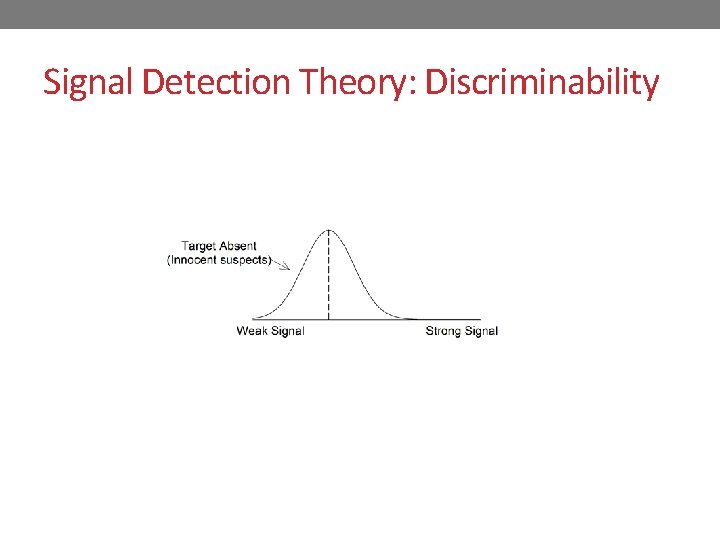
Signal Detection Theory: Discriminability
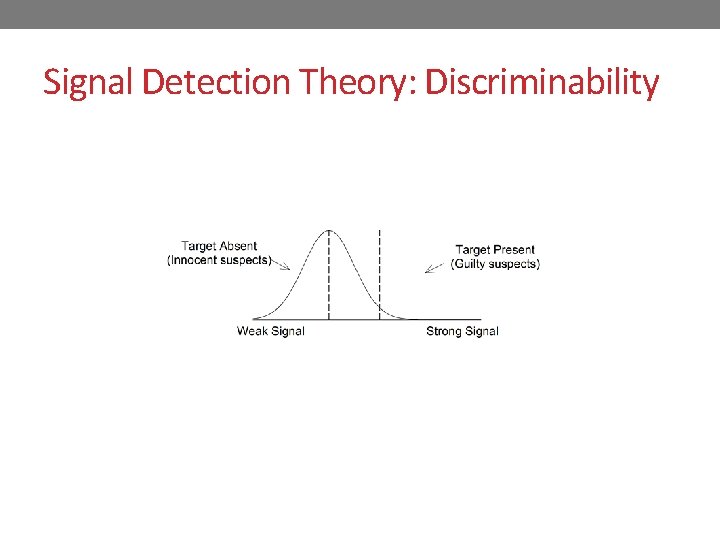
Signal Detection Theory: Discriminability
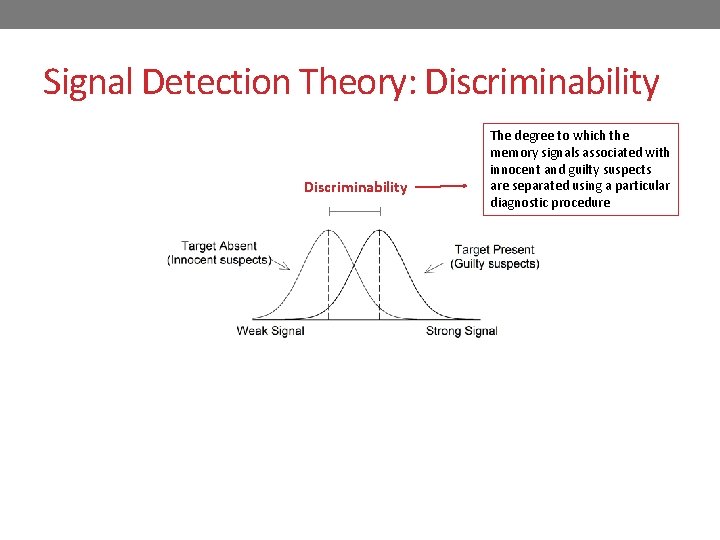
Signal Detection Theory: Discriminability
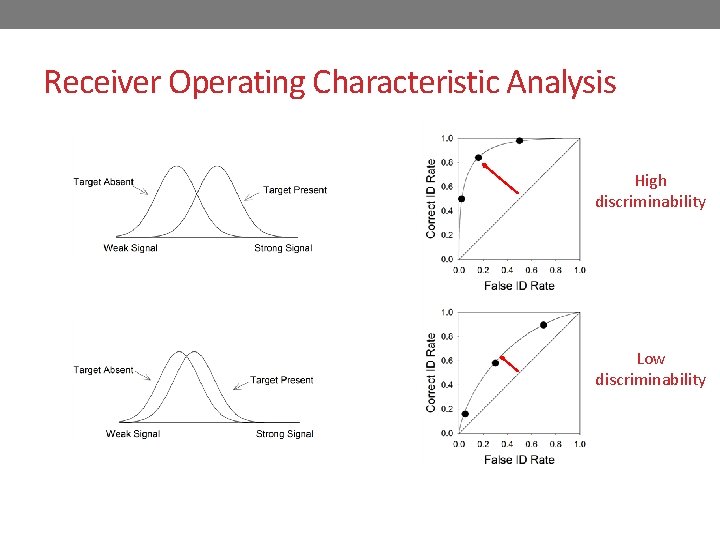
Signal Detection Theory: Discriminability The degree to which the memory signals associated with innocent and guilty suspects are separated using a particular diagnostic procedure
Liberal Neutral Conservative
Liberal: “the guilty suspect is probably in the lineup”
Liberal: “the guilty suspect is probably in the lineup” Correct ID Rate = 0. 98
Liberal: “the guilty suspect is probably in the lineup” Correct ID Rate = 0. 98 False ID Rate = 0. 50
Neutral: “the guilty suspect may or may not be the lineup”
Neutral: “the guilty suspect may or may not be the lineup” Correct ID Rate = 0. 84
Neutral: “the guilty suspect may or may not be the lineup” Correct ID Rate = 0. 84 False ID Rate = 0. 16
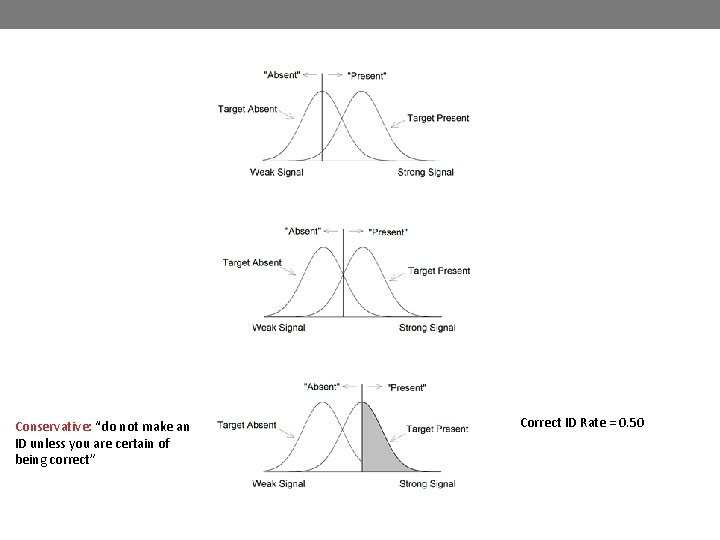
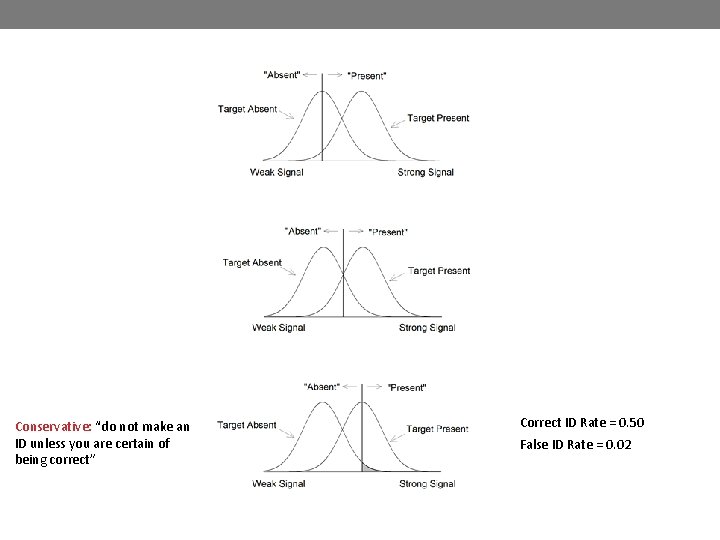
Conservative: “do not make an ID unless you are certain of being correct”
Conservative: “do not make an ID unless you are certain of being correct” Correct ID Rate = 0. 50
Conservative: “do not make an ID unless you are certain of being correct” Correct ID Rate = 0. 50 False ID Rate = 0. 02
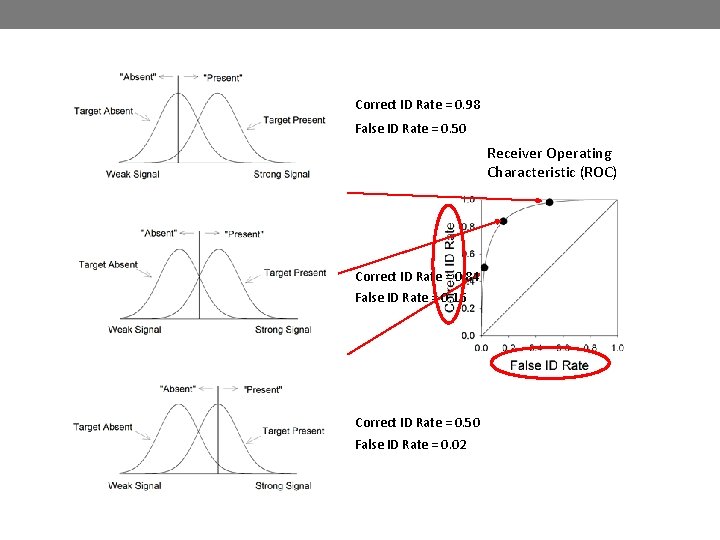
Correct ID Rate = 0. 98 False ID Rate = 0. 50 Receiver Operating Characteristic (ROC) Correct ID Rate = 0. 84 False ID Rate = 0. 16 Correct ID Rate = 0. 50 False ID Rate = 0. 02
Receiver Operating Characteristic Analysis High discriminability Low discriminability