
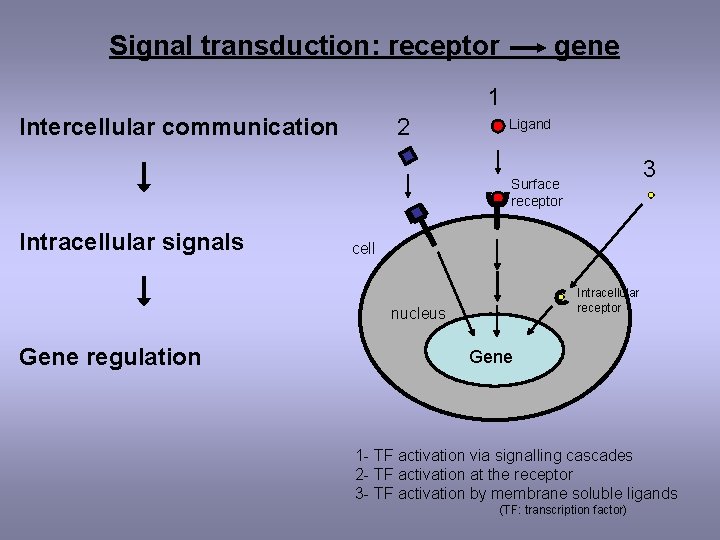
Signal transduction receptor gene 1 2 Intercellular communication
- Slides: 22
Signal transduction: receptor gene 1 2 Intercellular communication Ligand 3 Surface receptor Intracellular signals cell Intracellular receptor nucleus Gene regulation Gene 1 - TF activation via signalling cascades 2 - TF activation at the receptor 3 - TF activation by membrane soluble ligands (TF: transcription factor)
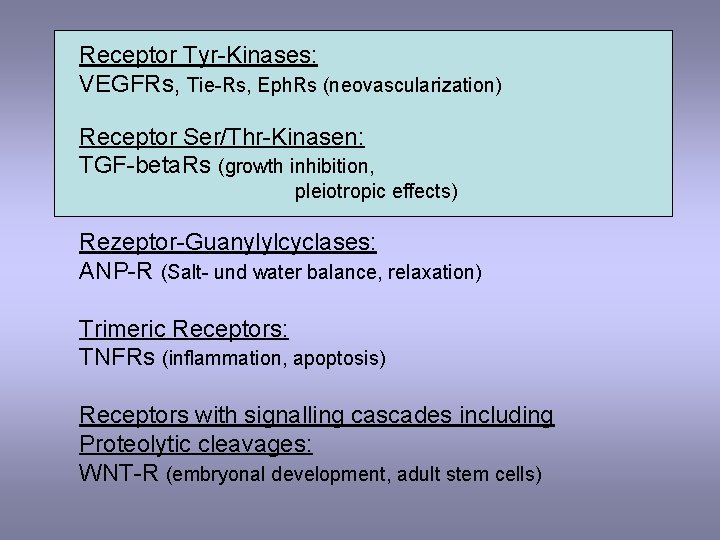
Receptor Tyr-Kinases: VEGFRs, Tie-Rs, Eph. Rs (neovascularization) Receptor Ser/Thr-Kinasen: TGF-beta. Rs (growth inhibition, pleiotropic effects) Rezeptor-Guanylylcyclases: ANP-R (Salt- und water balance, relaxation) Trimeric Receptors: TNFRs (inflammation, apoptosis) Receptors with signalling cascades including Proteolytic cleavages: WNT-R (embryonal development, adult stem cells)
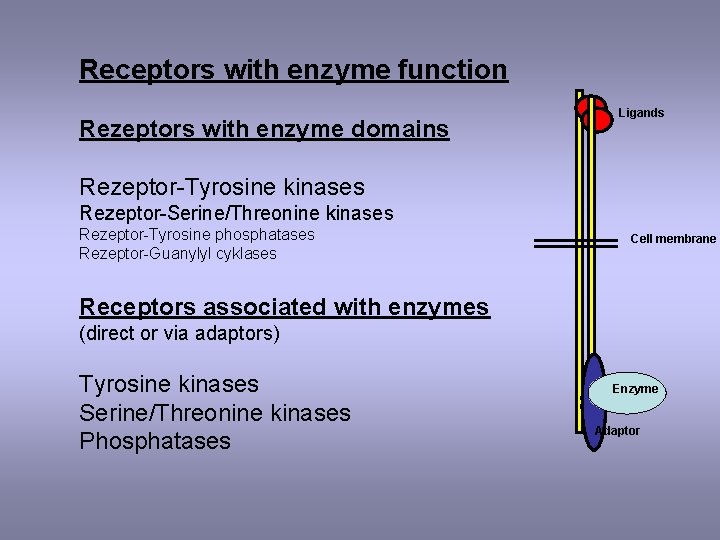
Receptors with enzyme function Rezeptors with enzyme domains Ligands Rezeptor-Tyrosine kinases Rezeptor-Serine/Threonine kinases Rezeptor-Tyrosine phosphatases Rezeptor-Guanylyl cyklases Cell membrane Receptors associated with enzymes (direct or via adaptors) Tyrosine kinases Serine/Threonine kinases Phosphatases Enzyme domäne Adaptor
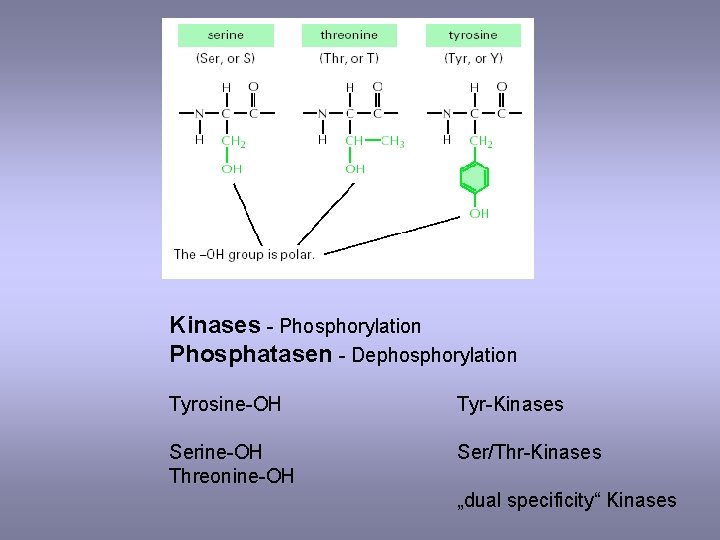
Kinases - Phosphorylation Phosphatasen - Dephosphorylation Tyrosine-OH Tyr-Kinases Serine-OH Threonine-OH Ser/Thr-Kinases „dual specificity“ Kinases
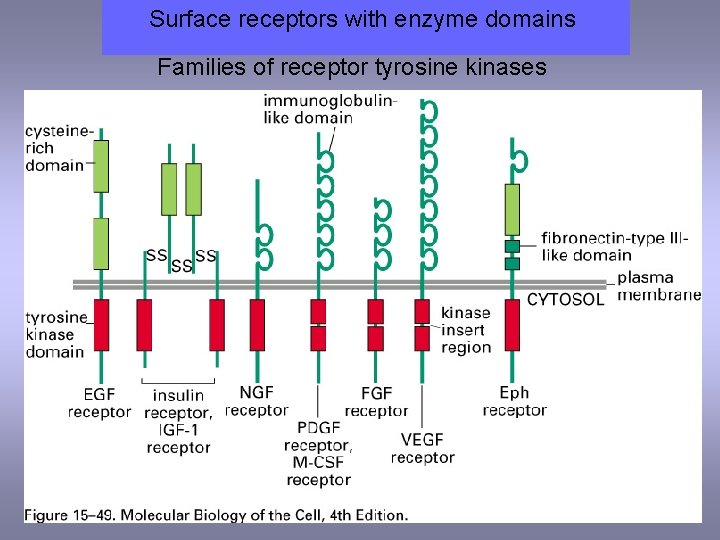
Surface receptors with enzyme domains Families of receptor tyrosine kinases
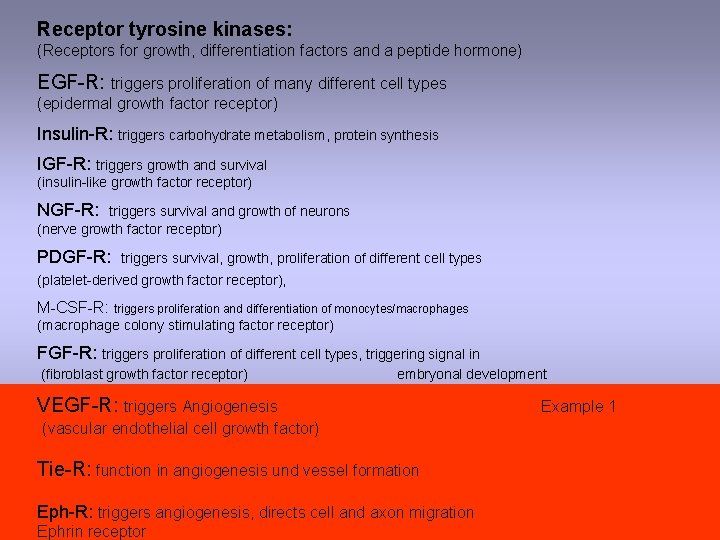
Receptor tyrosine kinases: (Receptors for growth, differentiation factors and a peptide hormone) EGF-R: triggers proliferation of many different cell types (epidermal growth factor receptor) Insulin-R: triggers carbohydrate metabolism, protein synthesis IGF-R: triggers growth and survival (insulin-like growth factor receptor) NGF-R: triggers survival and growth of neurons (nerve growth factor receptor) PDGF-R: triggers survival, growth, proliferation of different cell types (platelet-derived growth factor receptor), M-CSF-R: triggers proliferation and differentiation of monocytes/macrophages (macrophage colony stimulating factor receptor) FGF-R: triggers proliferation of different cell types, triggering signal in (fibroblast growth factor receptor) embryonal development VEGF-R: triggers Angiogenesis (vascular endothelial cell growth factor) Tie-R: function in angiogenesis und vessel formation Eph-R: triggers angiogenesis, directs cell and axon migration Ephrin receptor Example 1
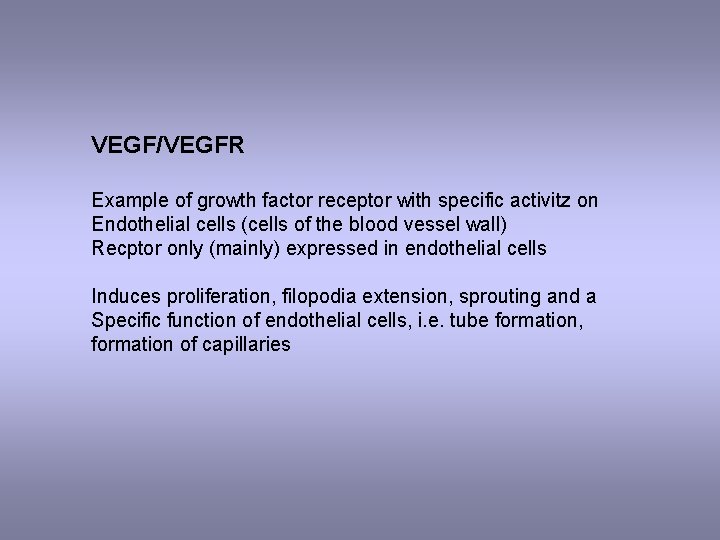
VEGF/VEGFR Example of growth factor receptor with specific activitz on Endothelial cells (cells of the blood vessel wall) Recptor only (mainly) expressed in endothelial cells Induces proliferation, filopodia extension, sprouting and a Specific function of endothelial cells, i. e. tube formation, formation of capillaries
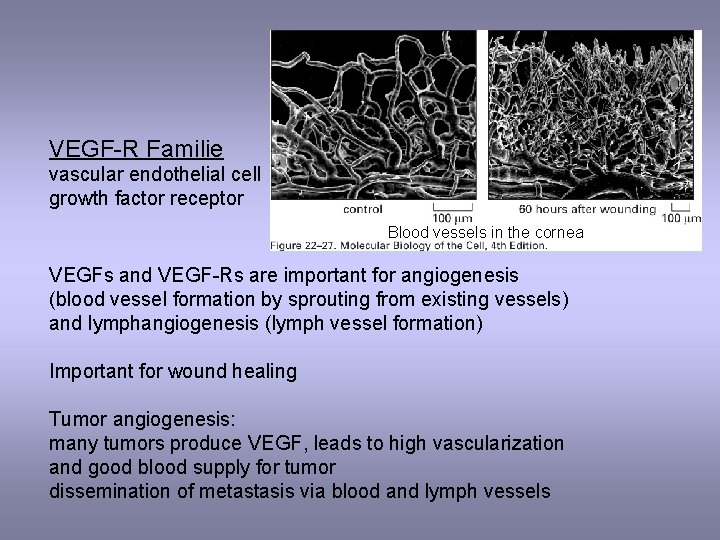
VEGF-R Familie vascular endothelial cell growth factor receptor Blood vessels in the cornea VEGFs and VEGF-Rs are important for angiogenesis (blood vessel formation by sprouting from existing vessels) and lymphangiogenesis (lymph vessel formation) Important for wound healing Tumor angiogenesis: many tumors produce VEGF, leads to high vascularization and good blood supply for tumor dissemination of metastasis via blood and lymph vessels
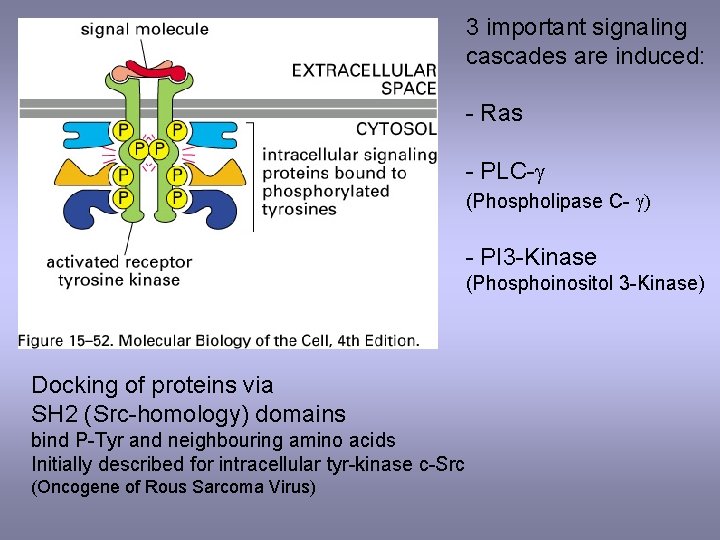
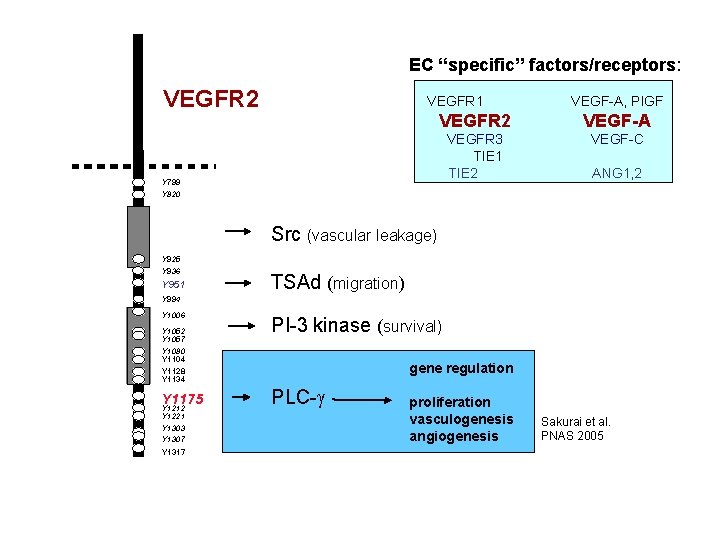
3 important signaling cascades are induced: - Ras - PLC-g (Phospholipase C- g) - PI 3 -Kinase (Phosphoinositol 3 -Kinase) Docking of proteins via SH 2 (Src-homology) domains bind P-Tyr and neighbouring amino acids Initially described for intracellular tyr-kinase c-Src (Oncogene of Rous Sarcoma Virus)
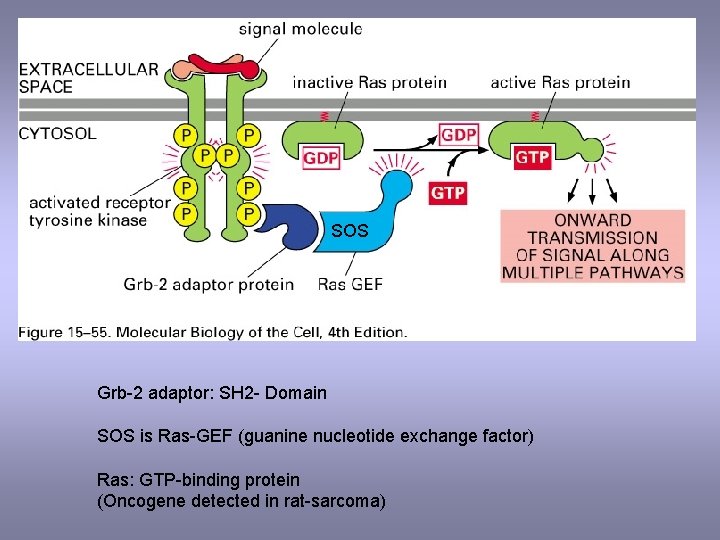
SOS Grb-2 adaptor: SH 2 - Domain SOS is Ras-GEF (guanine nucleotide exchange factor) Ras: GTP-binding protein (Oncogene detected in rat-sarcoma)
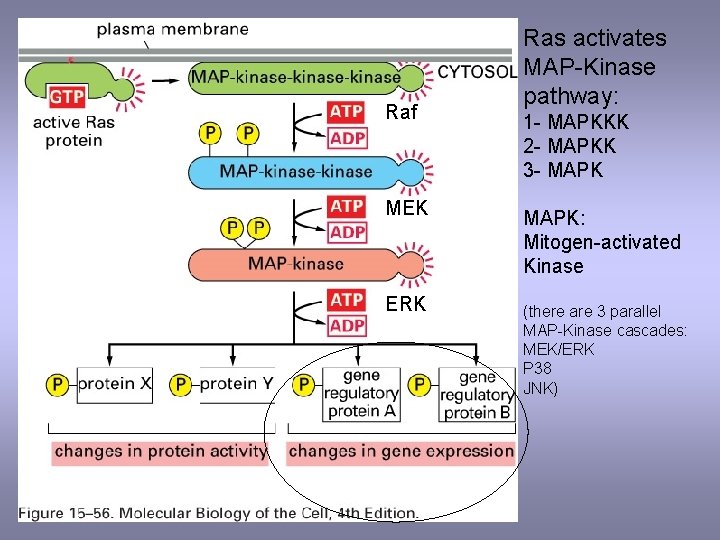
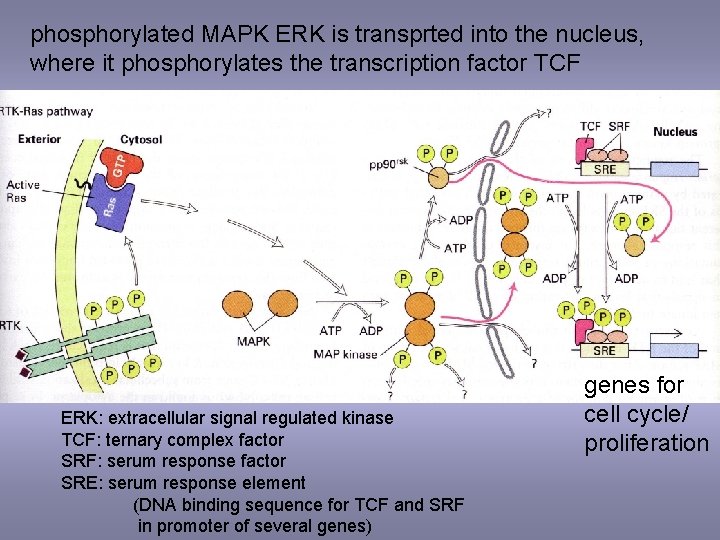
Raf MEK ERK Ras activates MAP-Kinase pathway: 1 - MAPKKK 2 - MAPKK 3 - MAPK: Mitogen-activated Kinase (there are 3 parallel MAP-Kinase cascades: MEK/ERK P 38 JNK)
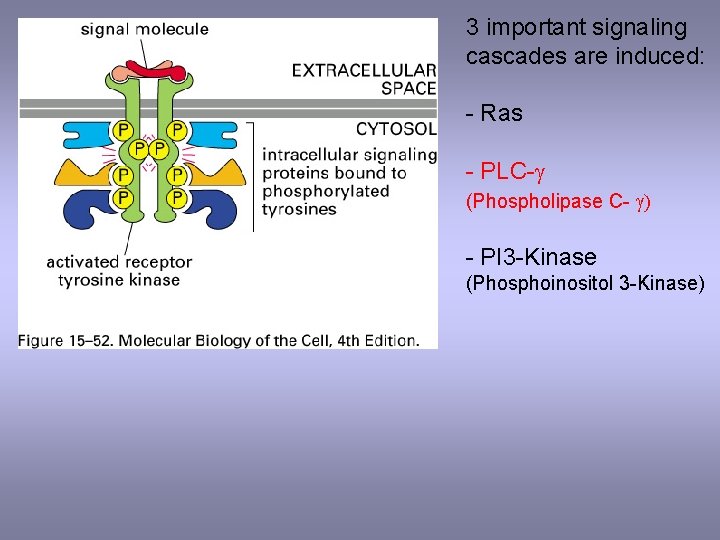
3 important signaling cascades are induced: - Ras - PLC-g (Phospholipase C- g) - PI 3 -Kinase (Phosphoinositol 3 -Kinase)
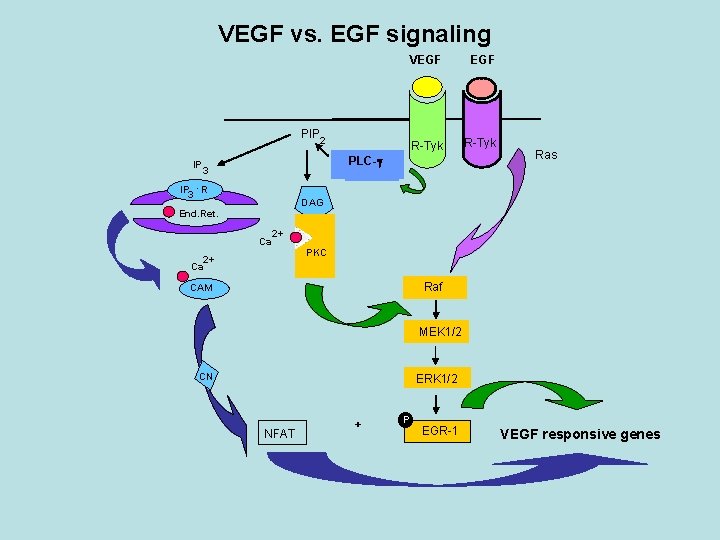
PLC-g pathway induced by tyrosine kinase receptors VEGF PLC-g Ca++ gene regulation PKC
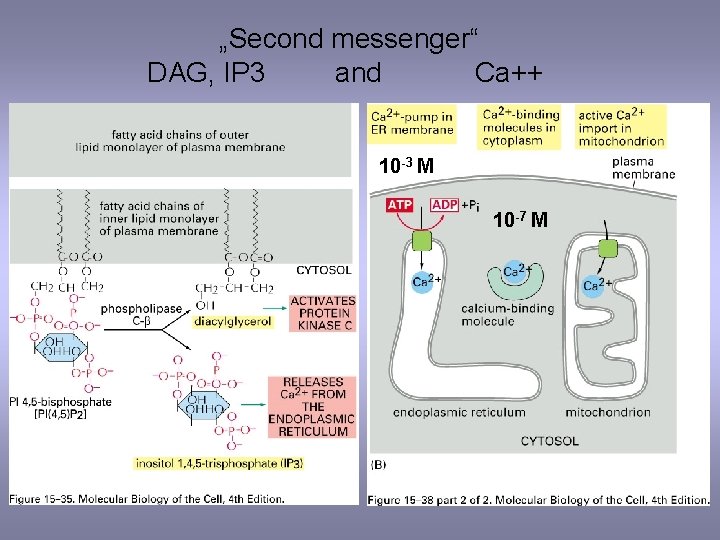
„Second messenger“ DAG, IP 3 and Ca++ 10 -3 M 10 -7 M
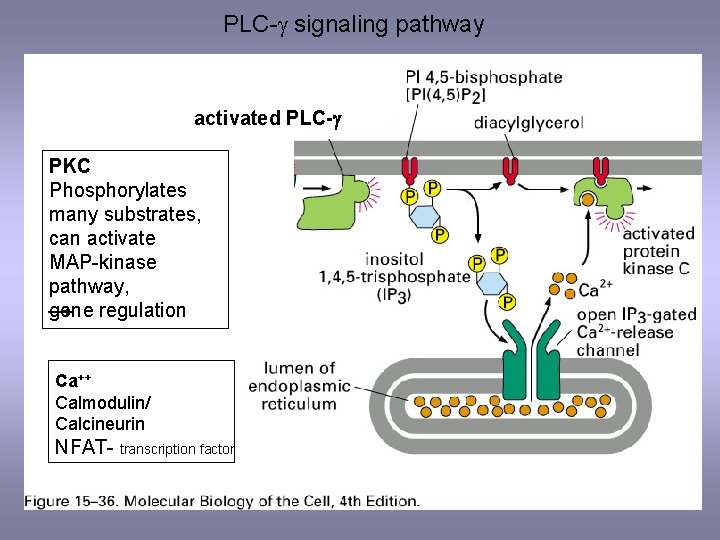
PLC-g signaling pathway activated PLC-g PKC Phosphorylates many substrates, can activate MAP-kinase pathway, gene regulation Ca++ Calmodulin/ Calcineurin NFAT- transcription factor
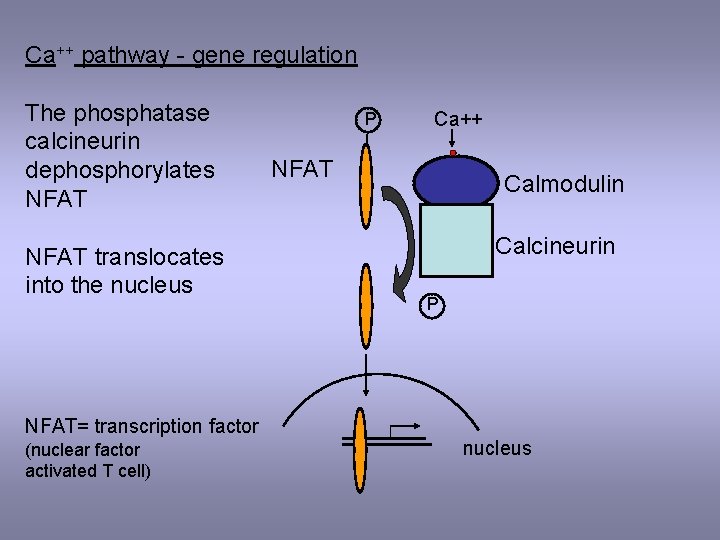
Ca++ pathway - gene regulation The phosphatase calcineurin dephosphorylates NFAT translocates into the nucleus NFAT= transcription factor (nuclear factor activated T cell) P I Ca++ NFAT Calmodulin Calcineurin P nucleus
EC “specific” factors/receptors: VEGFR 2 VEGFR 1 VEGF-A, Pl. GF VEGFR 2 VEGF-A VEGFR 3 TIE 1 TIE 2 VEGF-C Y 799 ANG 1, 2 Y 820 Src (vascular leakage) Y 925 Y 936 Y 951 TSAd (migration) Y 994 Y 1006 Y 1052 Y 1057 PI-3 kinase (survival) Y 1080 Y 1104 gene regulation Y 1128 Y 1134 Y 1175 Y 1212 Y 1221 Y 1303 Y 1307 Y 1317 PLC-g proliferation vasculogenesis angiogenesis Sakurai et al. PNAS 2005
VEGF vs. EGF signaling PIP 2 IP VEGF R-Tyk PLC-g 3 IP - R 3 Ras DAG End. Ret. Ca 2+ 2+ Ca PKC Raf CAM MEK 1/2 CN ERK 1/2 NFAT + P EGR-1 VEGF responsive genes
phosphorylated MAPK ERK is transprted into the nucleus, where it phosphorylates the transcription factor TCF ERK: extracellular signal regulated kinase TCF: ternary complex factor SRF: serum response factor SRE: serum response element (DNA binding sequence for TCF and SRF in promoter of several genes) genes for cell cycle/ proliferation
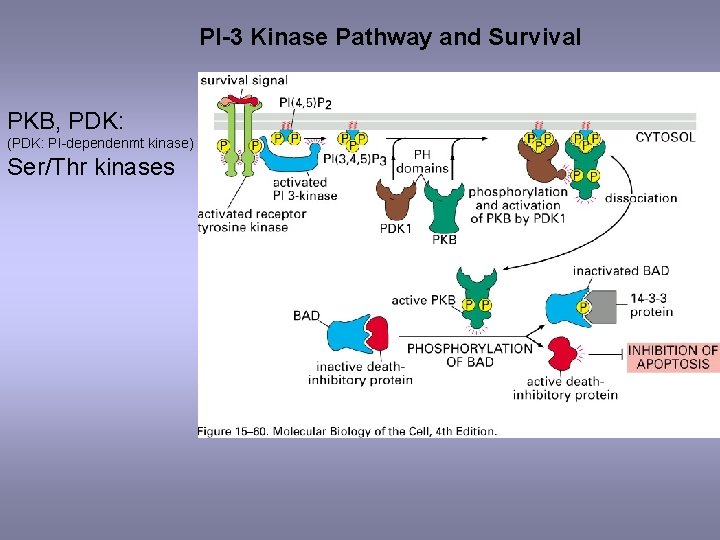
PI-3 Kinase Pathway and Survival PKB, PDK: (PDK: PI-dependenmt kinase) Ser/Thr kinases
Unterlagen: http: //mailbox. univie. ac. at/erhard. hofer Student point, Vorlesungsunterlagen erhard. hofer@univie. ac. at