
Signal Transduction Pathways Signal Transduction Pathways link cellular

- Slides: 40
Signal Transduction Pathways
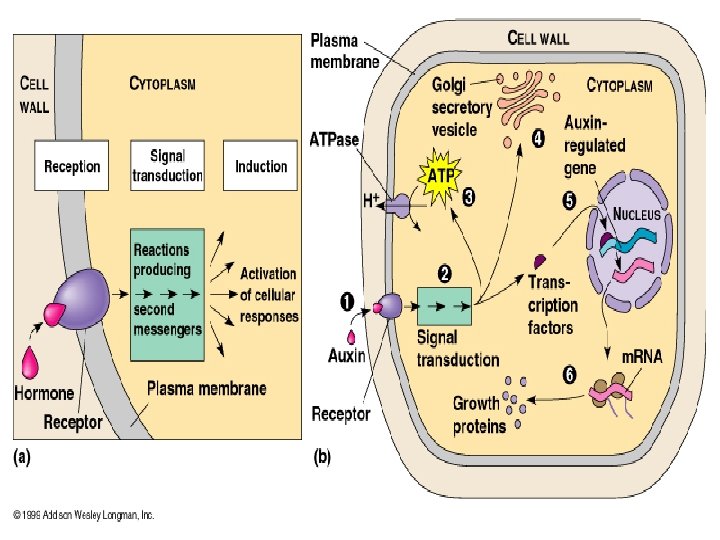
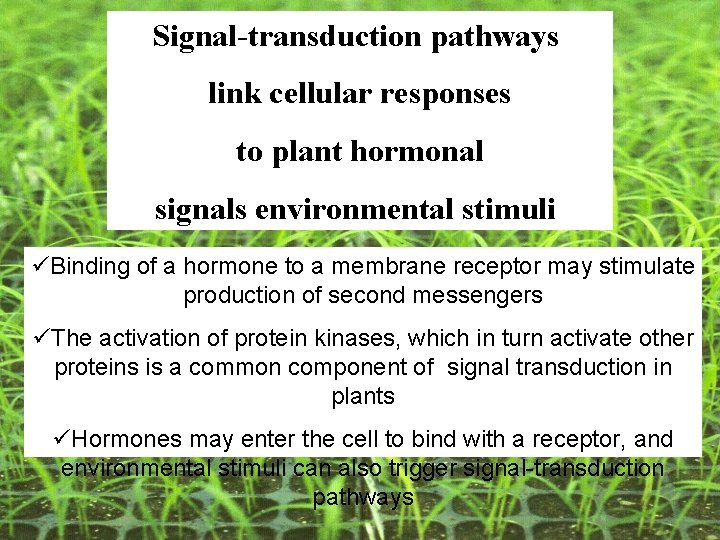
Signal Transduction Pathways ü link cellular responses to plant hormonal signals environmental stimuli ü Binding of a hormone to a membrane receptor may stimulate production of second messengers ü The activation of protein kinases, which in turn activate other proteins is a common component of signal transduction in plants ü Hormones may enter the cell to bind with a receptor, and environmental stimuli can also trigger signal-transduction pathways
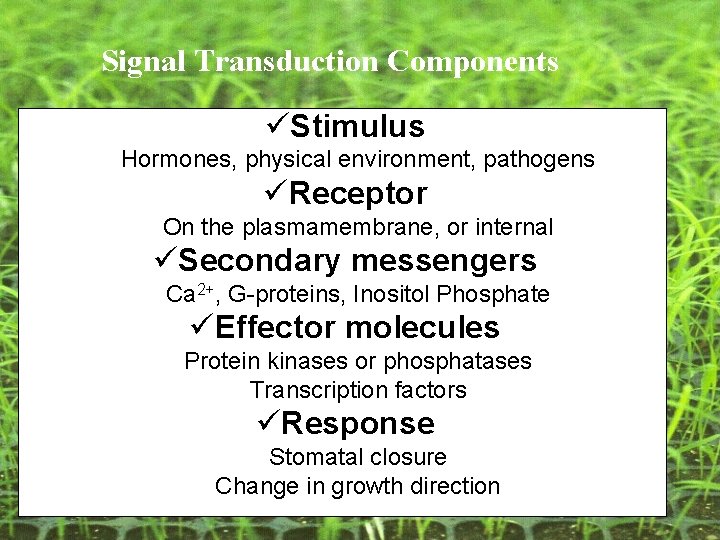
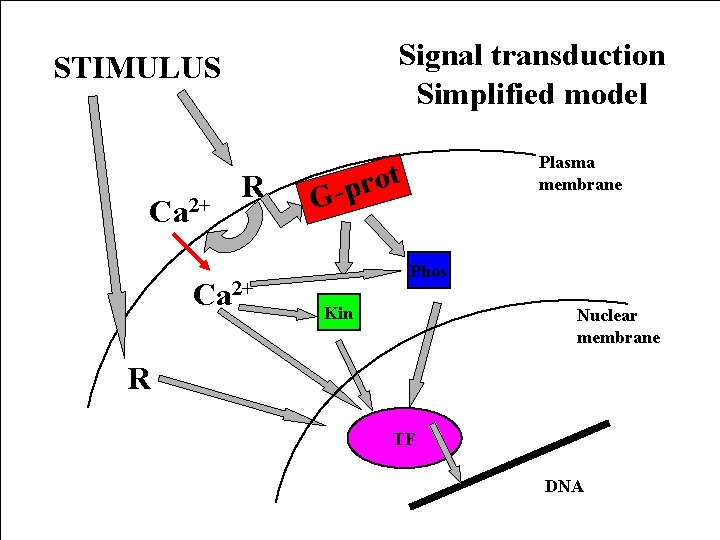
Signal Transduction Components üStimulus Hormones, physical environment, pathogens üReceptor On the plasmamembrane, or internal üSecondary messengers Ca 2+, G-proteins, Inositol Phosphate üEffector molecules Protein kinases or phosphatases Transcription factors üResponse Stomatal closure Change in growth direction
Signal transduction Simplified model STIMULUS Ca 2+ R Ca 2+ Plasma membrane t o r p GPhos Kin Nuclear membrane R TF DNA
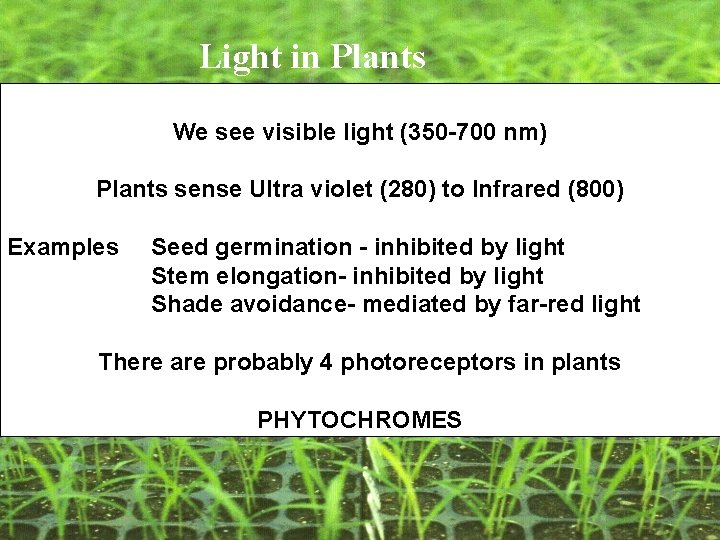
Light in Plants We see visible light (350 -700 nm) Plants sense Ultra violet (280) to Infrared (800) Examples Seed germination - inhibited by light Stem elongation- inhibited by light Shade avoidance- mediated by far-red light There are probably 4 photoreceptors in plants PHYTOCHROMES
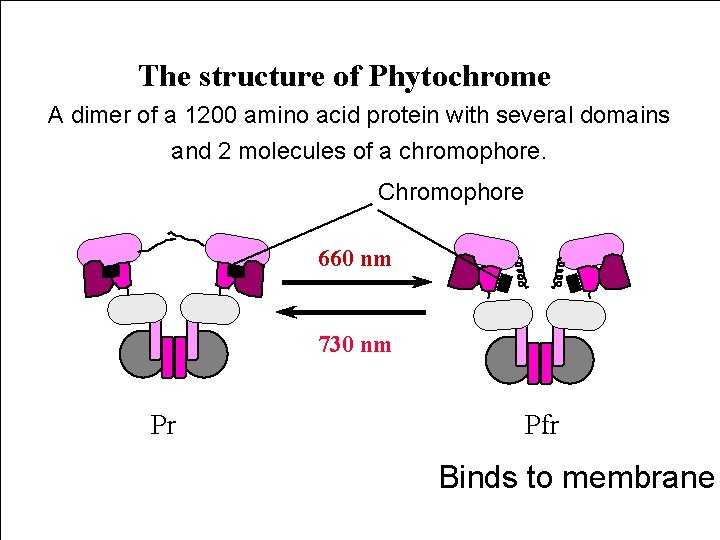
The structure of Phytochrome A dimer of a 1200 amino acid protein with several domains and 2 molecules of a chromophore. Chromophore 660 nm 730 nm Pr Pfr Binds to membrane
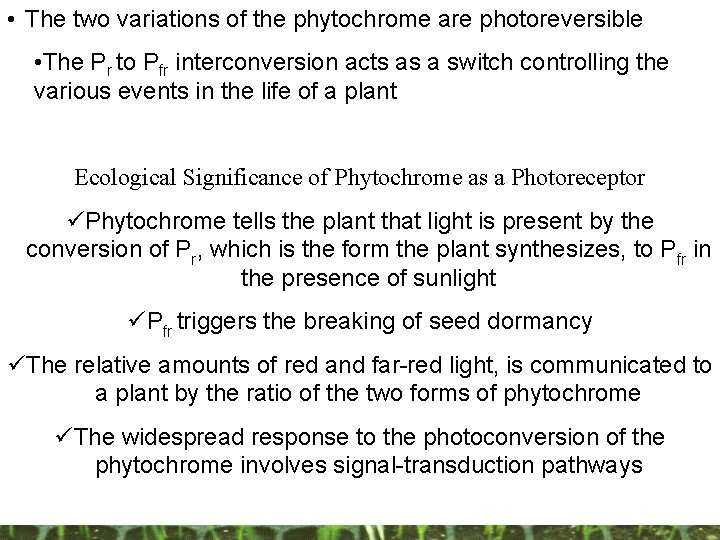
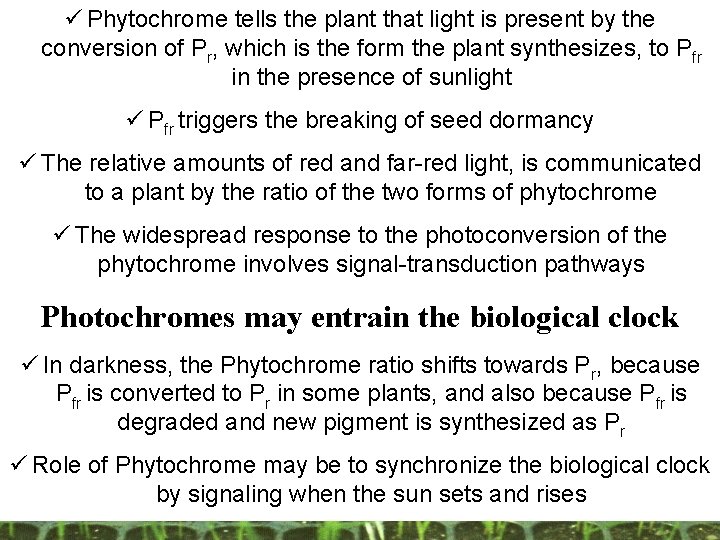
• The two variations of the phytochrome are photoreversible • The Pr to Pfr interconversion acts as a switch controlling the various events in the life of a plant Ecological Significance of Phytochrome as a Photoreceptor üPhytochrome tells the plant that light is present by the conversion of Pr, which is the form the plant synthesizes, to Pfr in the presence of sunlight üPfr triggers the breaking of seed dormancy üThe relative amounts of red and far-red light, is communicated to a plant by the ratio of the two forms of phytochrome üThe widespread response to the photoconversion of the phytochrome involves signal-transduction pathways
ü Phytochrome tells the plant that light is present by the conversion of Pr, which is the form the plant synthesizes, to Pfr in the presence of sunlight ü Pfr triggers the breaking of seed dormancy ü The relative amounts of red and far-red light, is communicated to a plant by the ratio of the two forms of phytochrome ü The widespread response to the photoconversion of the phytochrome involves signal-transduction pathways Photochromes may entrain the biological clock ü In darkness, the Phytochrome ratio shifts towards Pr, because Pfr is converted to Pr in some plants, and also because Pfr is degraded and new pigment is synthesized as Pr ü Role of Phytochrome may be to synchronize the biological clock by signaling when the sun sets and rises
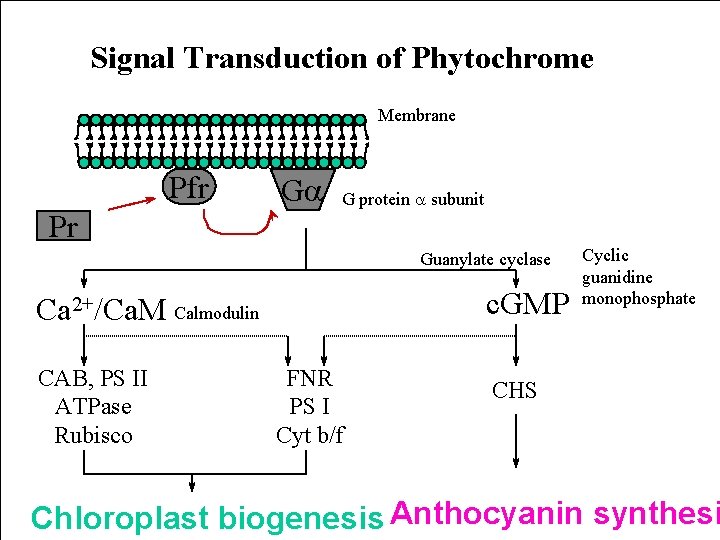
Signal Transduction of Phytochrome Membrane Pfr Pr Ga G protein a subunit Guanylate cyclase c. GMP Ca 2+/Ca. M Calmodulin CAB, PS II ATPase Rubisco FNR PS I Cyt b/f Cyclic guanidine monophosphate CHS Chloroplast biogenesis Anthocyanin synthesi
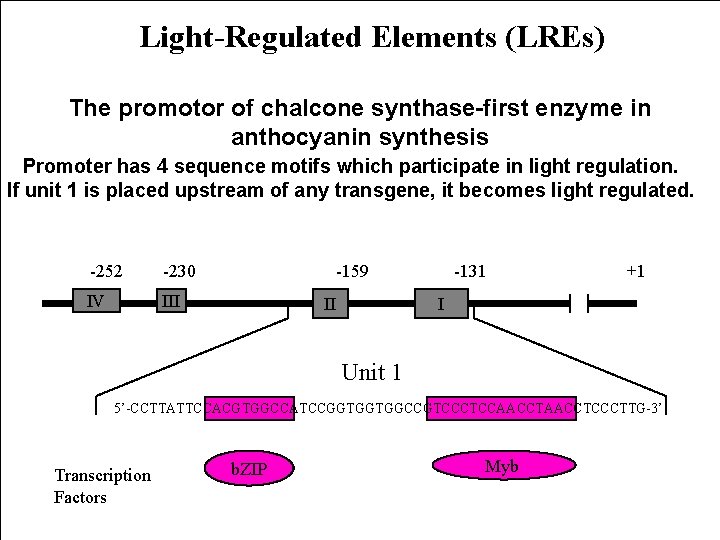
Light-Regulated Elements (LREs) The promotor of chalcone synthase-first enzyme in anthocyanin synthesis Promoter has 4 sequence motifs which participate in light regulation. If unit 1 is placed upstream of any transgene, it becomes light regulated. -252 -230 IV III -159 II -131 +1 I Unit 1 5’-CCTTATTCCACGTGGCCATCCGGTGGTGGCCGTCCCTCCAACCTCCCTTG-3’ Transcription Factors b. ZIP Myb
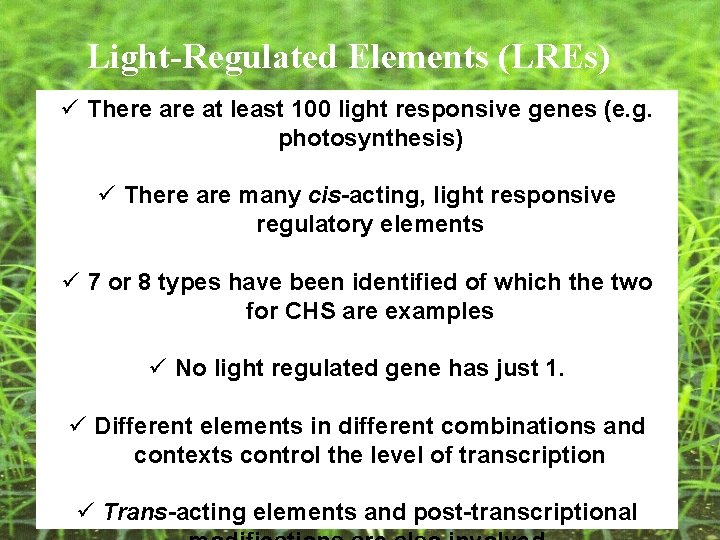
Light-Regulated Elements (LREs) ü There at least 100 light responsive genes (e. g. photosynthesis) ü There are many cis-acting, light responsive regulatory elements ü 7 or 8 types have been identified of which the two for CHS are examples ü No light regulated gene has just 1. ü Different elements in different combinations and contexts control the level of transcription ü Trans-acting elements and post-transcriptional
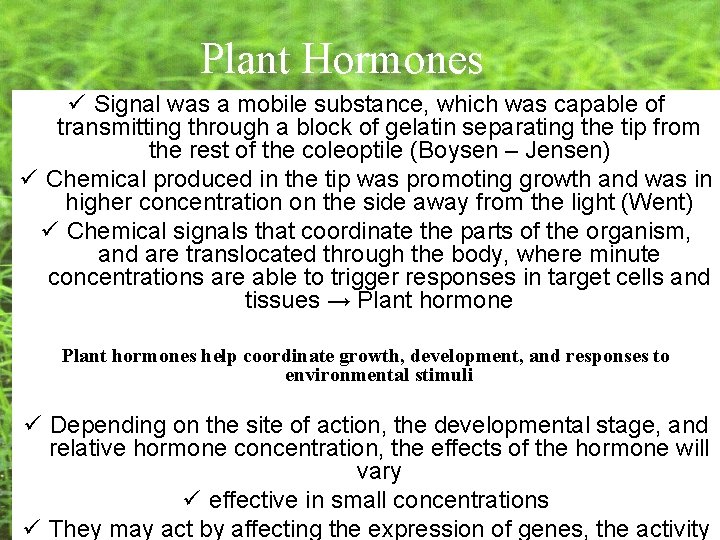
Plant Hormones ü Signal was a mobile substance, which was capable of transmitting through a block of gelatin separating the tip from the rest of the coleoptile (Boysen – Jensen) ü Chemical produced in the tip was promoting growth and was in higher concentration on the side away from the light (Went) ü Chemical signals that coordinate the parts of the organism, and are translocated through the body, where minute concentrations are able to trigger responses in target cells and tissues → Plant hormones help coordinate growth, development, and responses to environmental stimuli ü Depending on the site of action, the developmental stage, and relative hormone concentration, the effects of the hormone will vary ü effective in small concentrations ü They may act by affecting the expression of genes, the activity
Signal-transduction pathways link cellular responses to plant hormonal signals environmental stimuli üBinding of a hormone to a membrane receptor may stimulate production of second messengers üThe activation of protein kinases, which in turn activate other proteins is a common component of signal transduction in plants üHormones may enter the cell to bind with a receptor, and environmental stimuli can also trigger signal-transduction pathways
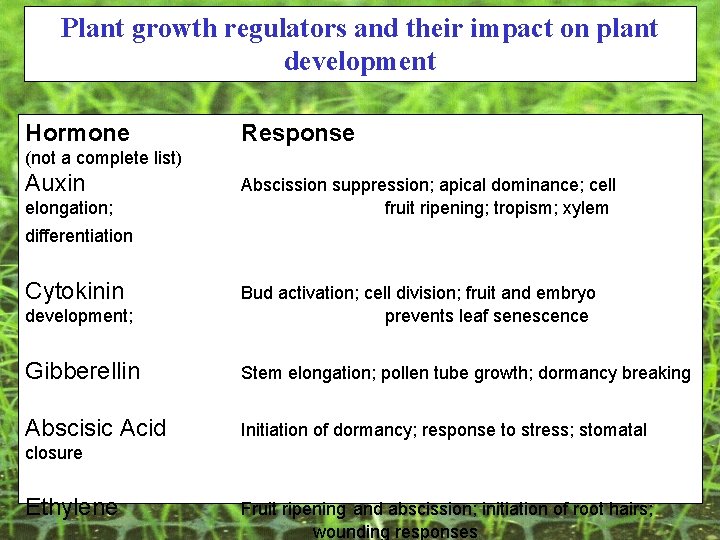
Plant growth regulators and their impact on plant development Hormone Response (not a complete list) Auxin elongation; Abscission suppression; apical dominance; cell fruit ripening; tropism; xylem differentiation Cytokinin development; Bud activation; cell division; fruit and embryo prevents leaf senescence Gibberellin Stem elongation; pollen tube growth; dormancy breaking Abscisic Acid Initiation of dormancy; response to stress; stomatal closure Ethylene Fruit ripening and abscission; initiation of root hairs; wounding responses
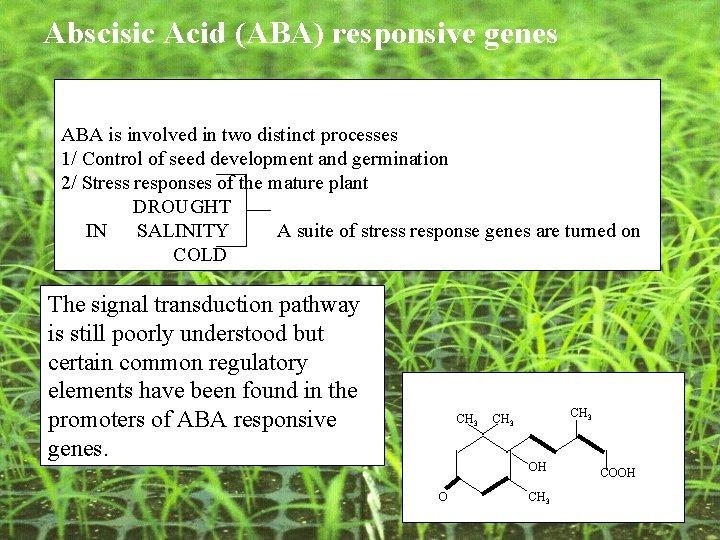
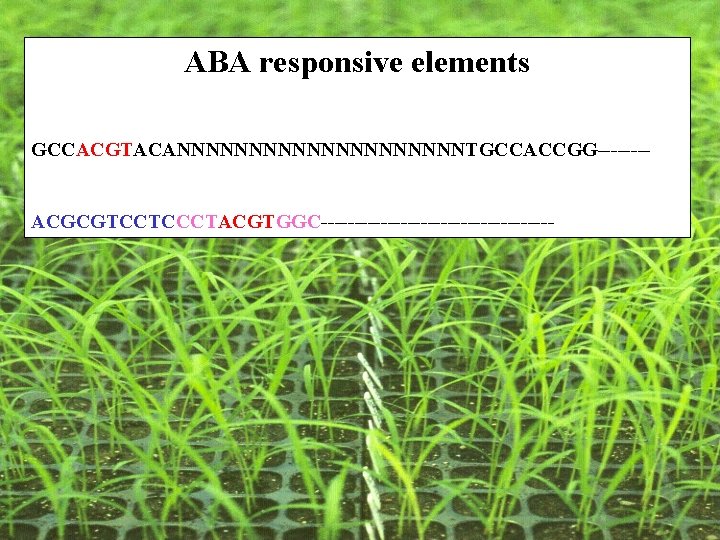
Abscisic Acid (ABA) responsive genes ABA is involved in two distinct processes 1/ Control of seed development and germination 2/ Stress responses of the mature plant DROUGHT IN SALINITY A suite of stress response genes are turned on COLD The signal transduction pathway is still poorly understood but certain common regulatory elements have been found in the promoters of ABA responsive genes. CH 3 OH O CH 3 COOH
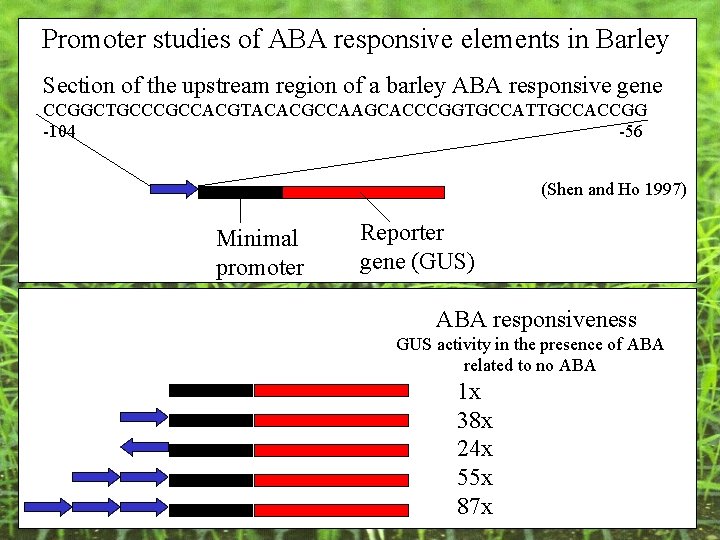
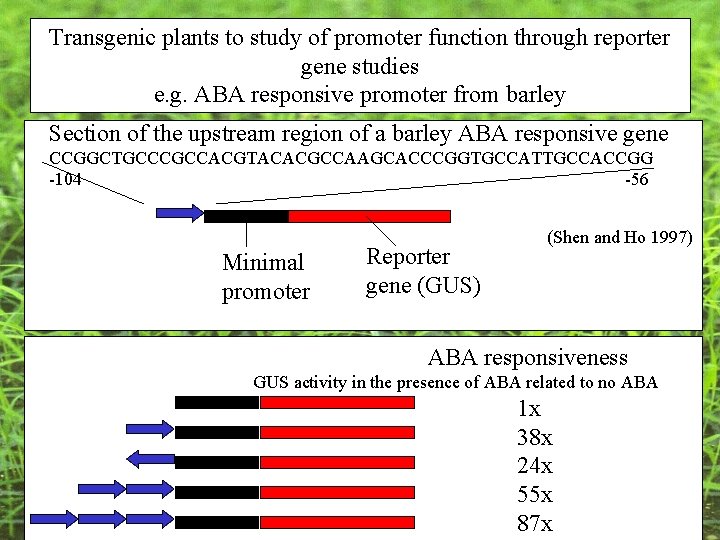
Promoter studies of ABA responsive elements in Barley Section of the upstream region of a barley ABA responsive gene CCGGCTGCCCGCCACGTACACGCCAAGCACCCGGTGCCATTGCCACCGG -104 -56 (Shen and Ho 1997) Minimal promoter Reporter gene (GUS) ABA responsiveness GUS activity in the presence of ABA related to no ABA 1 x 38 x 24 x 55 x 87 x
ABA responsive elements GCCACGTACANNNNNNNNNNTGCCACCGG-------ACGCGTCCTCCCTACGTGGC------------------
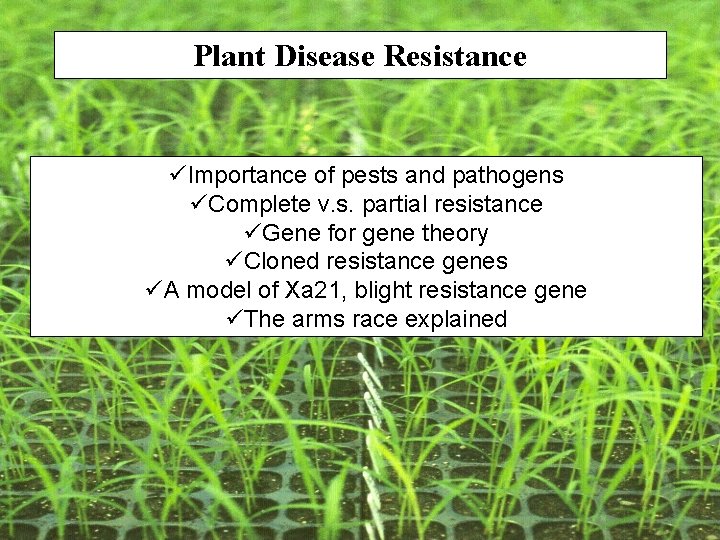
Plant Disease Resistance üImportance of pests and pathogens üComplete v. s. partial resistance üGene for gene theory üCloned resistance genes üA model of Xa 21, blight resistance gene üThe arms race explained
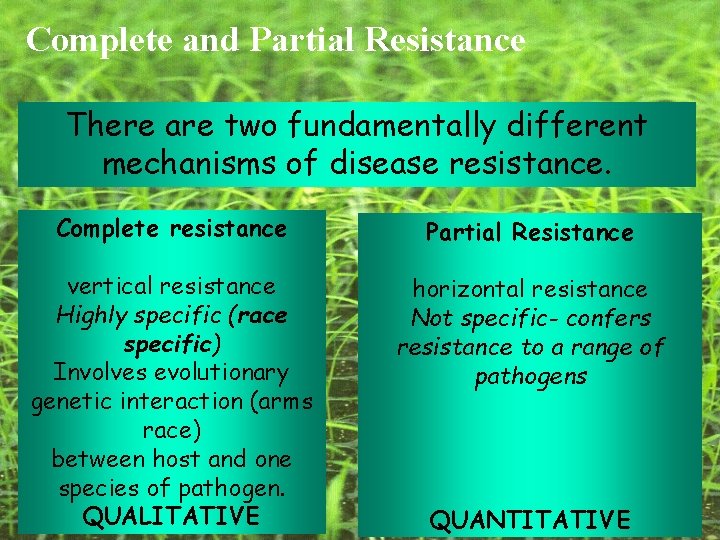
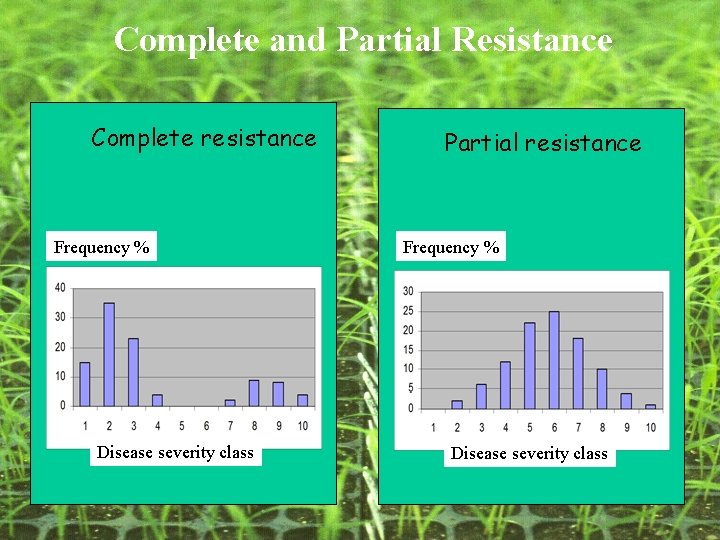
Complete and Partial Resistance There are two fundamentally different mechanisms of disease resistance. Complete resistance Partial Resistance vertical resistance Highly specific (race specific) Involves evolutionary genetic interaction (arms race) between host and one species of pathogen. QUALITATIVE horizontal resistance Not specific- confers resistance to a range of pathogens QUANTITATIVE
Complete and Partial Resistance Complete resistance Frequency % Disease severity class Partial resistance Frequency % Disease severity class
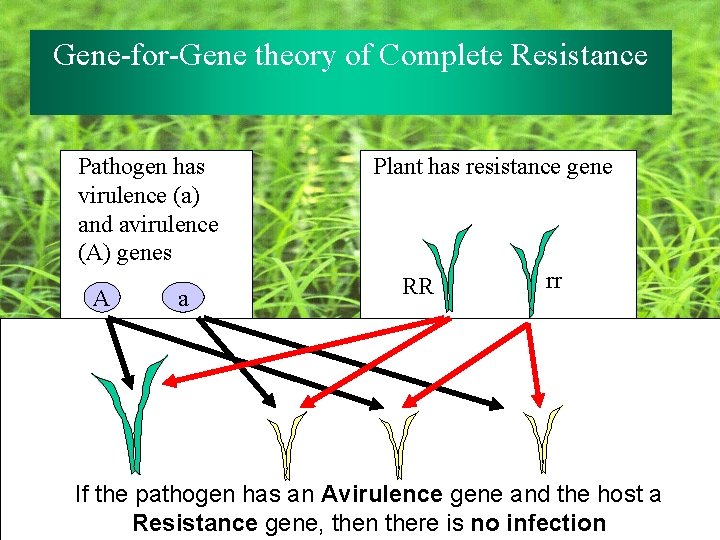
Gene-for-Gene theory of Complete Resistance Pathogen has virulence (a) and avirulence (A) genes A a Plant has resistance gene RR rr If the pathogen has an Avirulence gene and the host a Resistance gene, then there is no infection
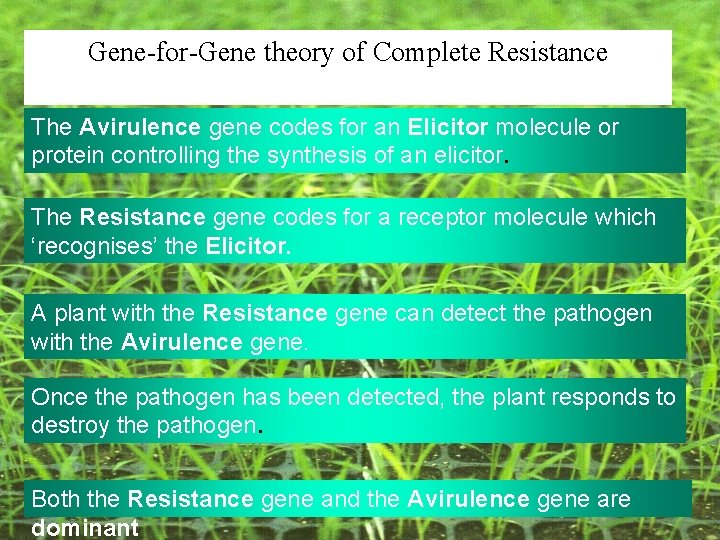
Gene-for-Gene theory of Complete Resistance The Avirulence gene codes for an Elicitor molecule or protein controlling the synthesis of an elicitor. The Resistance gene codes for a receptor molecule which ‘recognises’ the Elicitor. A plant with the Resistance gene can detect the pathogen with the Avirulence gene. Once the pathogen has been detected, the plant responds to destroy the pathogen. Both the Resistance gene and the Avirulence gene are dominant
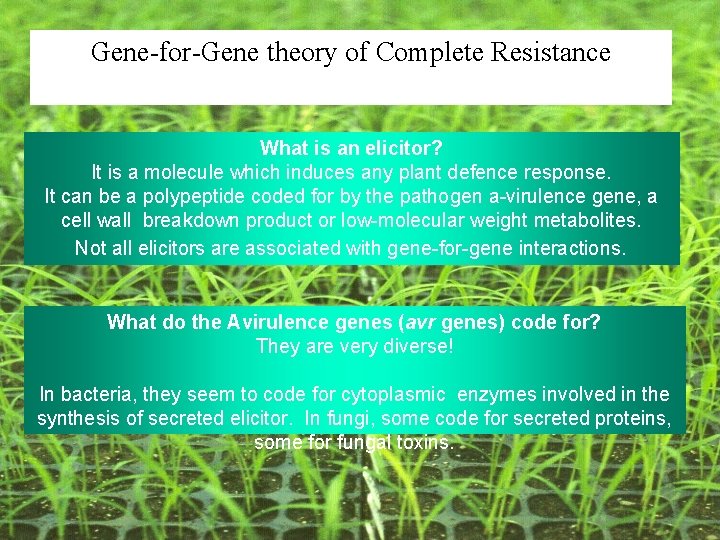
Gene-for-Gene theory of Complete Resistance What is an elicitor? It is a molecule which induces any plant defence response. It can be a polypeptide coded for by the pathogen a-virulence gene, a cell wall breakdown product or low-molecular weight metabolites. Not all elicitors are associated with gene-for-gene interactions. What do the Avirulence genes (avr genes) code for? They are very diverse! In bacteria, they seem to code for cytoplasmic enzymes involved in the synthesis of secreted elicitor. In fungi, some code for secreted proteins, some for fungal toxins.
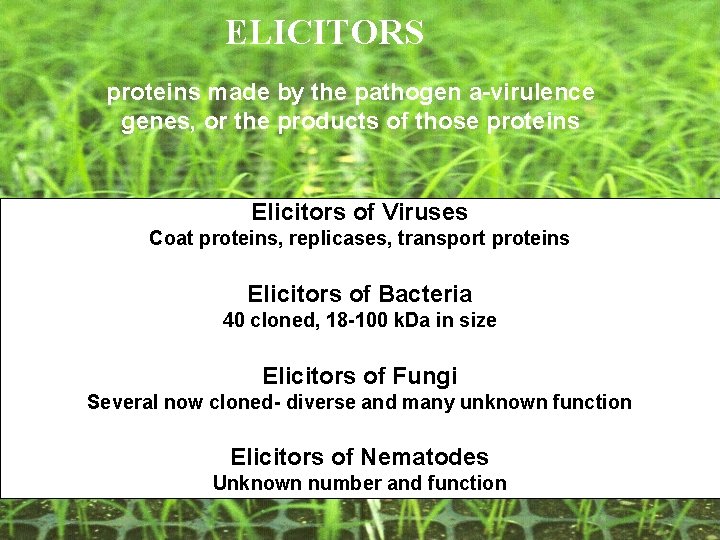
ELICITORS proteins made by the pathogen a-virulence genes, or the products of those proteins Elicitors of Viruses Coat proteins, replicases, transport proteins Elicitors of Bacteria 40 cloned, 18 -100 k. Da in size Elicitors of Fungi Several now cloned- diverse and many unknown function Elicitors of Nematodes Unknown number and function
Gene-for-Gene theory of Complete Resistance What does a resistance gene code for? The receptor for the specific elicitor associated with the interacting avr gene
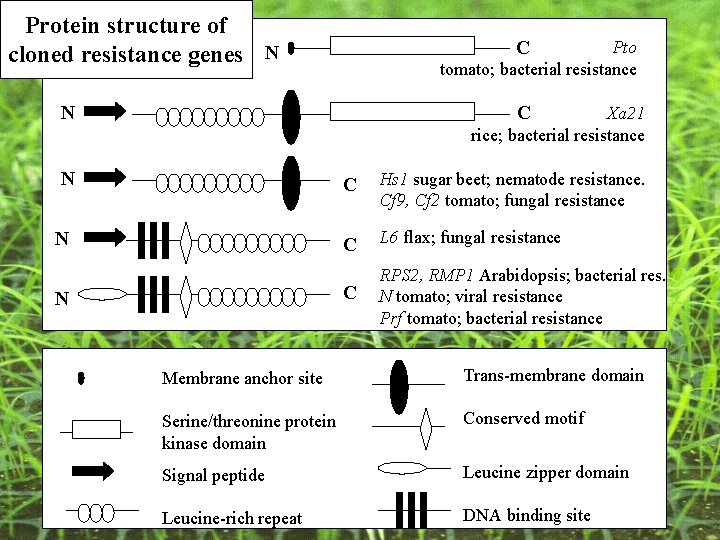
Protein structure of cloned resistance genes N C Pto tomato; bacterial resistance N C Xa 21 rice; bacterial resistance N C Hs 1 sugar beet; nematode resistance. Cf 9, Cf 2 tomato; fungal resistance N C L 6 flax; fungal resistance C RPS 2, RMP 1 Arabidopsis; bacterial res. N tomato; viral resistance Prf tomato; bacterial resistance N Membrane anchor site Trans-membrane domain Serine/threonine protein kinase domain Conserved motif Signal peptide Leucine zipper domain Leucine-rich repeat DNA binding site
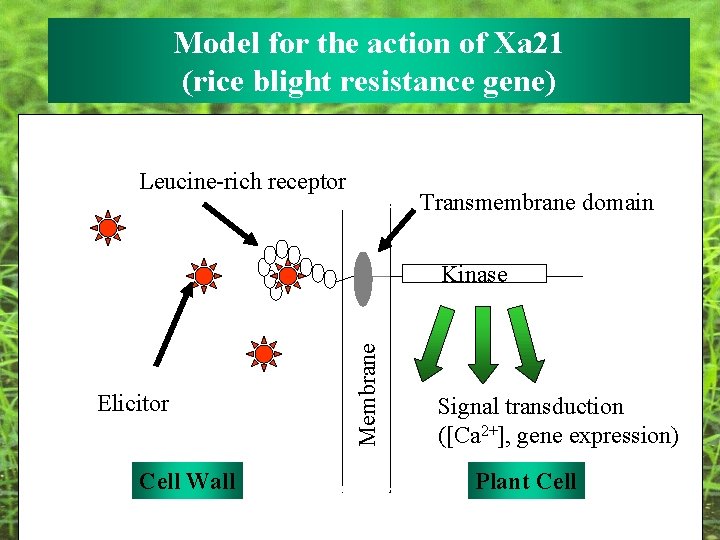
Model for the action of Xa 21 (rice blight resistance gene) Leucine-rich receptor Transmembrane domain Elicitor Cell Wall Membrane Kinase Signal transduction ([Ca 2+], gene expression) Plant Cell
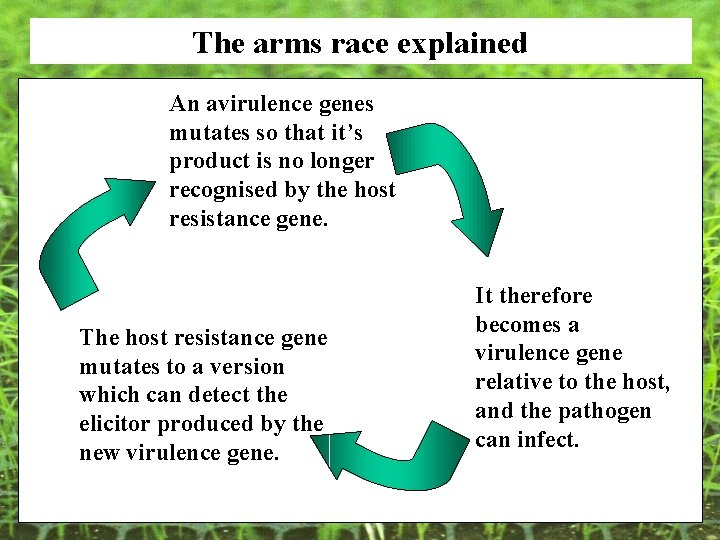
The arms race explained An avirulence genes mutates so that it’s product is no longer recognised by the host resistance gene. The host resistance gene mutates to a version which can detect the elicitor produced by the new virulence gene. It therefore becomes a virulence gene relative to the host, and the pathogen can infect.
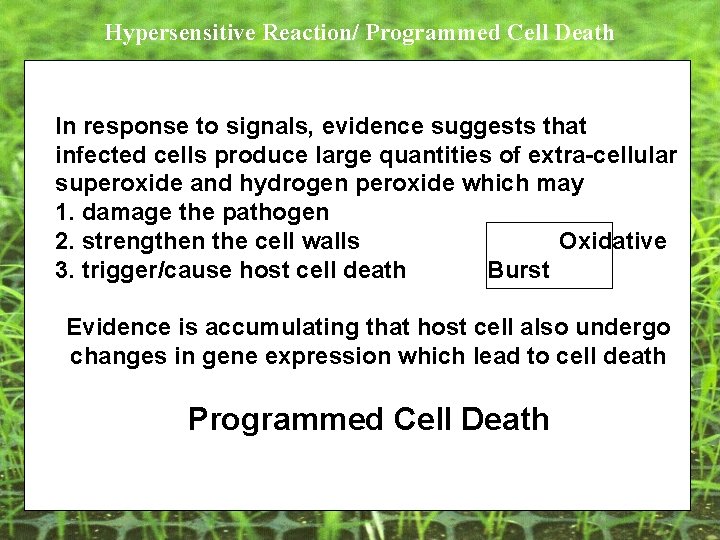
Hypersensitive Reaction/ Programmed Cell Death In response to signals, evidence suggests that infected cells produce large quantities of extra-cellular superoxide and hydrogen peroxide which may 1. damage the pathogen 2. strengthen the cell walls Oxidative 3. trigger/cause host cell death Burst Evidence is accumulating that host cell also undergo changes in gene expression which lead to cell death Programmed Cell Death
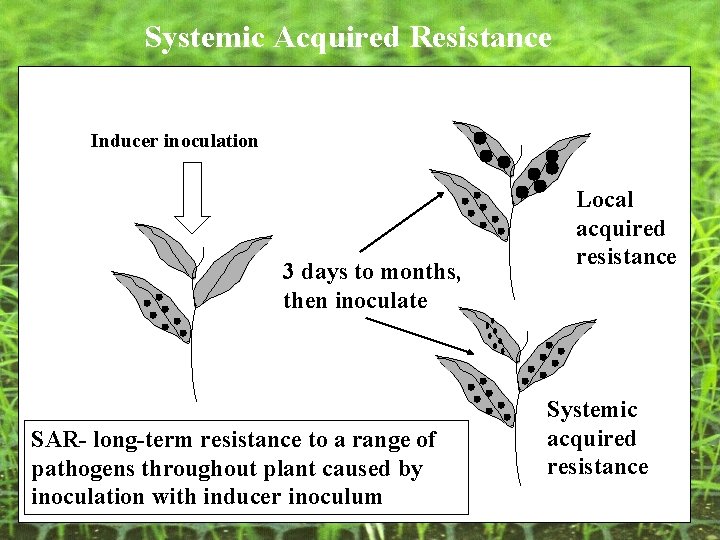
Systemic Acquired Resistance Inducer inoculation 3 days to months, then inoculate SAR- long-term resistance to a range of pathogens throughout plant caused by inoculation with inducer inoculum Local acquired resistance Systemic acquired resistance
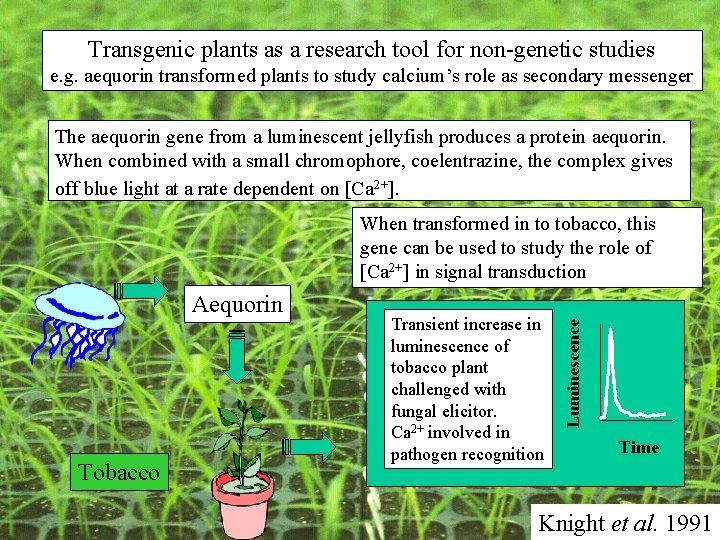
Transgenic plants as a research tool for non-genetic studies e. g. aequorin transformed plants to study calcium’s role as secondary messenger The aequorin gene from a luminescent jellyfish produces a protein aequorin. When combined with a small chromophore, coelentrazine, the complex gives off blue light at a rate dependent on [Ca 2+]. Aequorin Tobacco Transient increase in luminescence of tobacco plant challenged with fungal elicitor. Ca 2+ involved in pathogen recognition Luminescence When transformed in to tobacco, this gene can be used to study the role of [Ca 2+] in signal transduction Time Knight et al. 1991
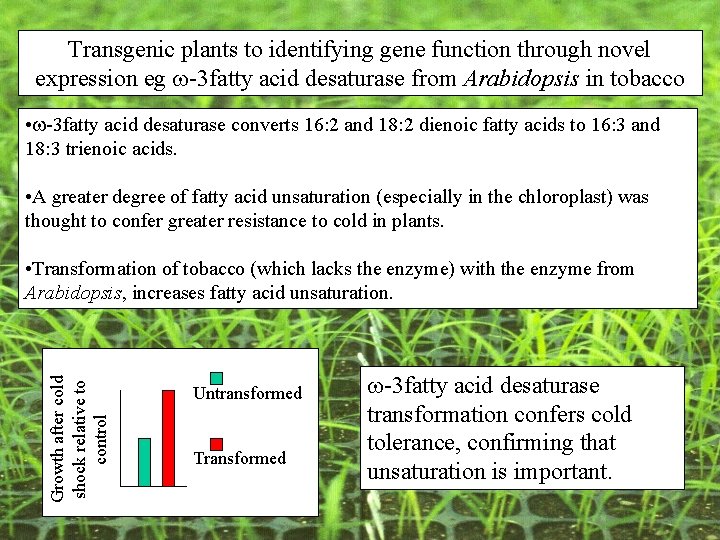
Transgenic plants to identifying gene function through novel expression eg -3 fatty acid desaturase from Arabidopsis in tobacco • -3 fatty acid desaturase converts 16: 2 and 18: 2 dienoic fatty acids to 16: 3 and 18: 3 trienoic acids. • A greater degree of fatty acid unsaturation (especially in the chloroplast) was thought to confer greater resistance to cold in plants. Growth after cold shock relative to control • Transformation of tobacco (which lacks the enzyme) with the enzyme from Arabidopsis, increases fatty acid unsaturation. Untransformed Transformed -3 fatty acid desaturase transformation confers cold tolerance, confirming that unsaturation is important.
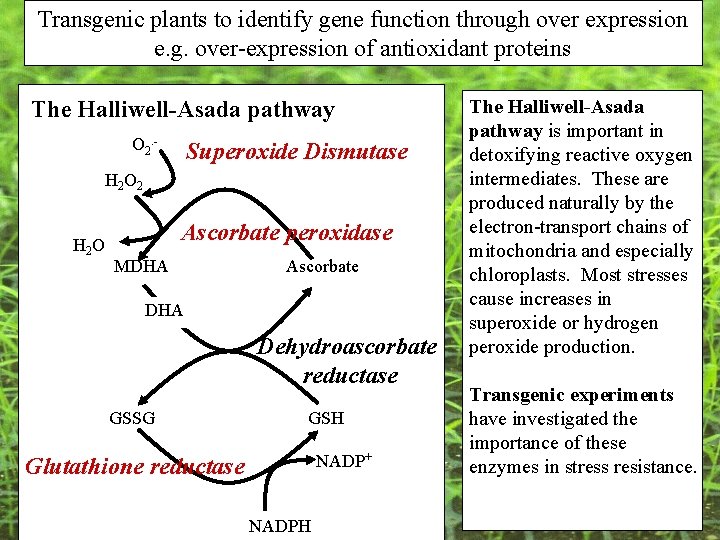
Transgenic plants to identify gene function through over expression e. g. over-expression of antioxidant proteins The Halliwell-Asada pathway O 2. - Superoxide Dismutase H 2 O 2 H 2 O Ascorbate peroxidase MDHA Ascorbate DHA Dehydroascorbate reductase GSSG GSH NADP+ Glutathione reductase NADPH The Halliwell-Asada pathway is important in detoxifying reactive oxygen intermediates. These are produced naturally by the electron-transport chains of mitochondria and especially chloroplasts. Most stresses cause increases in superoxide or hydrogen peroxide production. Transgenic experiments have investigated the importance of these enzymes in stress resistance.
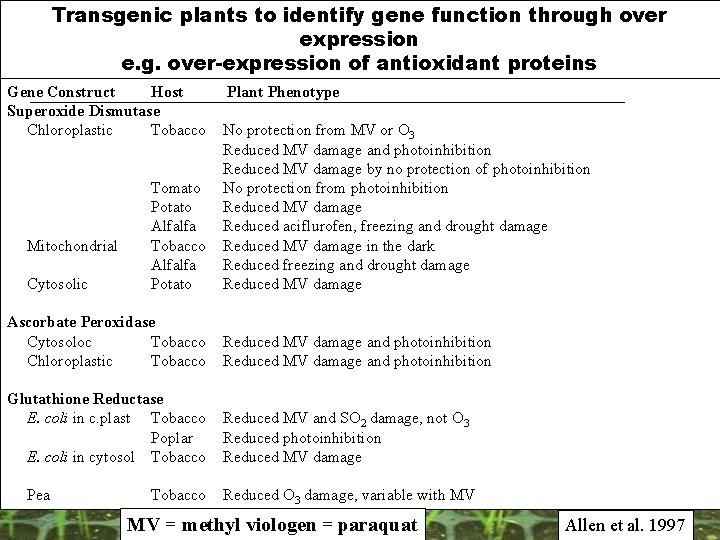
Transgenic plants to identify gene function through over expression e. g. over-expression of antioxidant proteins Gene Construct Host Superoxide Dismutase Chloroplastic Tobacco Mitochondrial Cytosolic Tomato Potato Alfalfa Tobacco Alfalfa Potato Plant Phenotype No protection from MV or O 3 Reduced MV damage and photoinhibition Reduced MV damage by no protection of photoinhibition No protection from photoinhibition Reduced MV damage Reduced aciflurofen, freezing and drought damage Reduced MV damage in the dark Reduced freezing and drought damage Reduced MV damage Ascorbate Peroxidase Cytosoloc Tobacco Chloroplastic Tobacco Reduced MV damage and photoinhibition Glutathione Reductase E. coli in c. plast Tobacco Poplar E. coli in cytosol Tobacco Reduced MV and SO 2 damage, not O 3 Reduced photoinhibition Reduced MV damage Pea Tobacco Reduced O 3 damage, variable with MV MV = methyl viologen = paraquat Allen et al. 1997
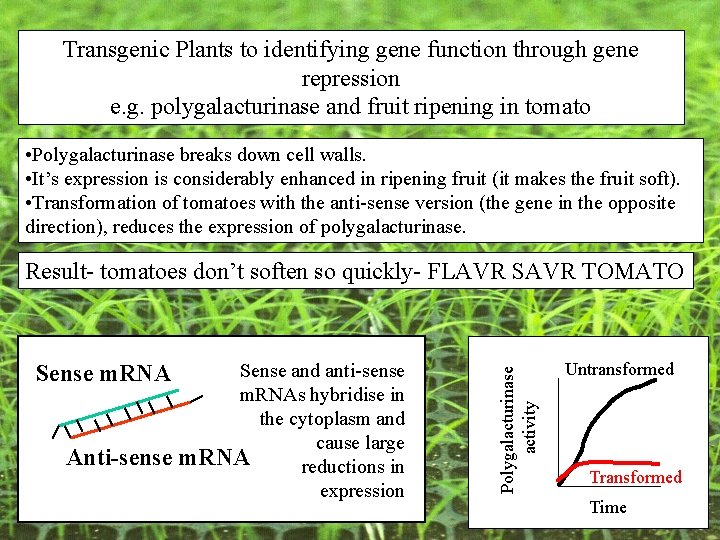
Transgenic Plants to identifying gene function through gene repression e. g. polygalacturinase and fruit ripening in tomato • Polygalacturinase breaks down cell walls. • It’s expression is considerably enhanced in ripening fruit (it makes the fruit soft). • Transformation of tomatoes with the anti-sense version (the gene in the opposite direction), reduces the expression of polygalacturinase. Sense m. RNA Anti-sense Sense and anti-sense m. RNAs hybridise in the cytoplasm and cause large m. RNA reductions in expression Polygalacturinase activity Result- tomatoes don’t soften so quickly- FLAVR SAVR TOMATO Untransformed Time
Transgenic plants to study of promoter function through reporter gene studies e. g. ABA responsive promoter from barley Section of the upstream region of a barley ABA responsive gene CCGGCTGCCCGCCACGTACACGCCAAGCACCCGGTGCCATTGCCACCGG -104 -56 Minimal promoter Reporter gene (GUS) (Shen and Ho 1997) ABA responsiveness GUS activity in the presence of ABA related to no ABA 1 x 38 x 24 x 55 x 87 x
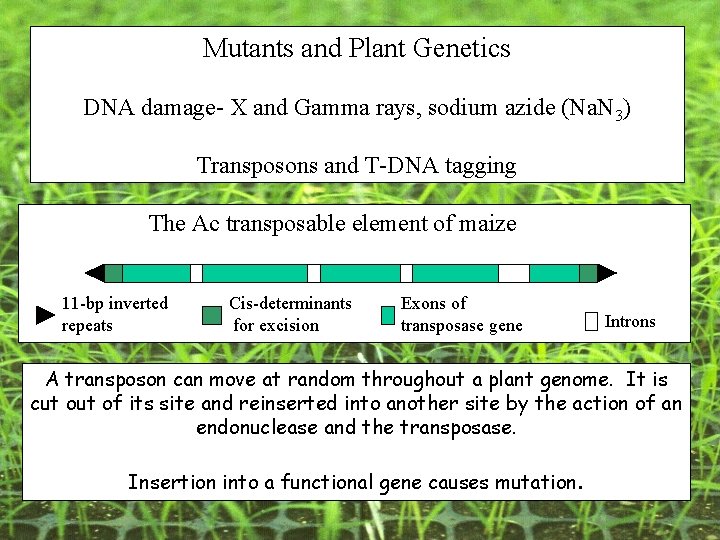
Mutants and Plant Genetics DNA damage- X and Gamma rays, sodium azide (Na. N 3) Transposons and T-DNA tagging The Ac transposable element of maize 11 -bp inverted repeats Cis-determinants for excision Exons of transposase gene Introns A transposon can move at random throughout a plant genome. It is cut of its site and reinserted into another site by the action of an endonuclease and the transposase. Insertion into a functional gene causes mutation.
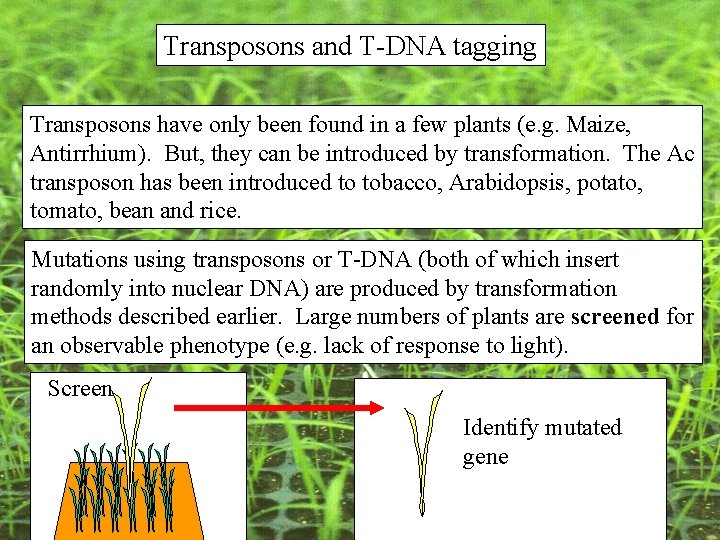
Transposons and T-DNA tagging Transposons have only been found in a few plants (e. g. Maize, Antirrhium). But, they can be introduced by transformation. The Ac transposon has been introduced to tobacco, Arabidopsis, potato, tomato, bean and rice. Mutations using transposons or T-DNA (both of which insert randomly into nuclear DNA) are produced by transformation methods described earlier. Large numbers of plants are screened for an observable phenotype (e. g. lack of response to light). Screen Identify mutated gene
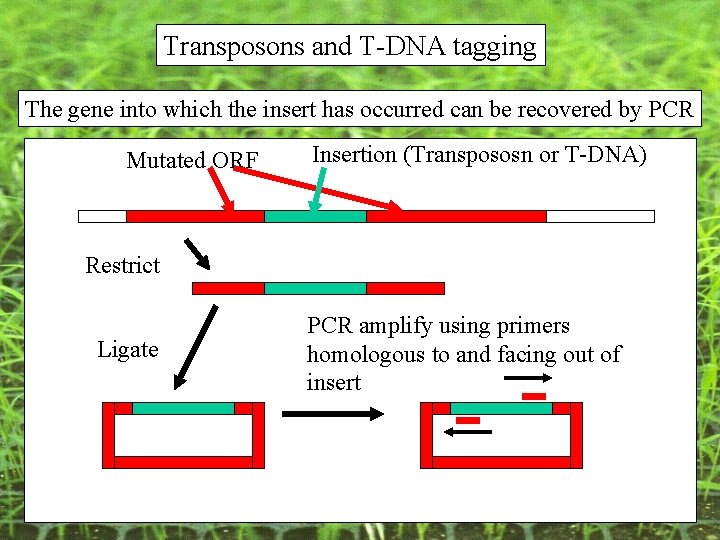
Transposons and T-DNA tagging The gene into which the insert has occurred can be recovered by PCR Mutated ORF Insertion (Transpososn or T-DNA) Restrict Ligate PCR amplify using primers homologous to and facing out of insert