
Signal transduction pathways link signal reception to response




- Slides: 73
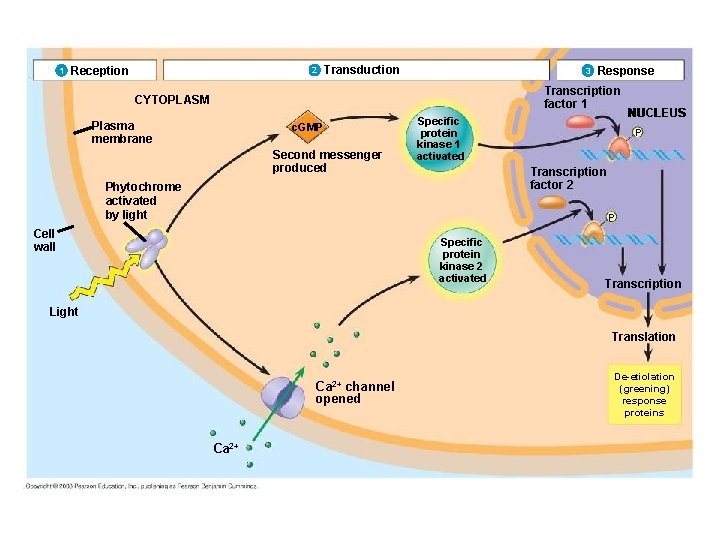
Signal transduction pathways link signal reception to response • Plants have cellular receptors that detect changes in their environment • For a stimulus to elicit a response, certain cells must have an appropriate receptor • Stimulation of the receptor initiates a specific signal transduction pathway • A potato left growing in darkness produces shoots that look unhealthy and lacks elongated roots
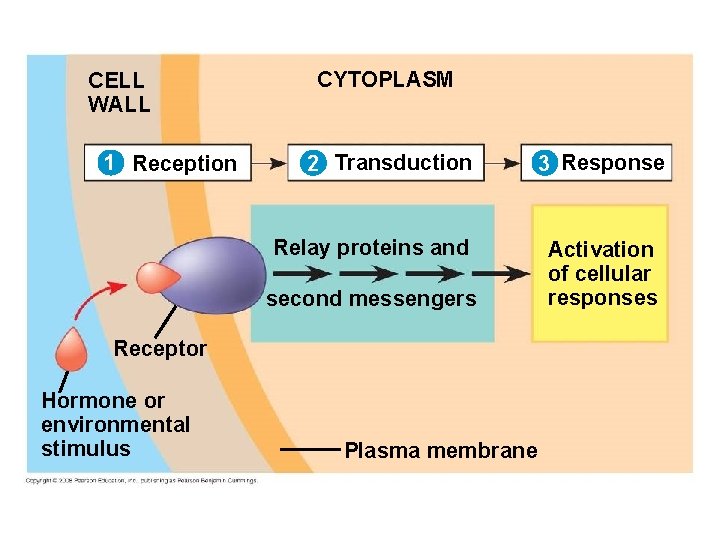
• These are morphological adaptations for growing in darkness, collectively called etiolation • After exposure to light, a potato undergoes changes called de-etiolation, in which shoots and roots grow normally • A potato’s response to light is an example of cell-signal processing • The stages are reception, transduction, and response
(a) Before exposure to light (b) After a week’s exposure to natural daylight
CELL WALL 1 Reception CYTOPLASM 2 Transduction Relay proteins and second messengers Receptor Hormone or environmental stimulus Plasma membrane 3 Response Activation of cellular responses
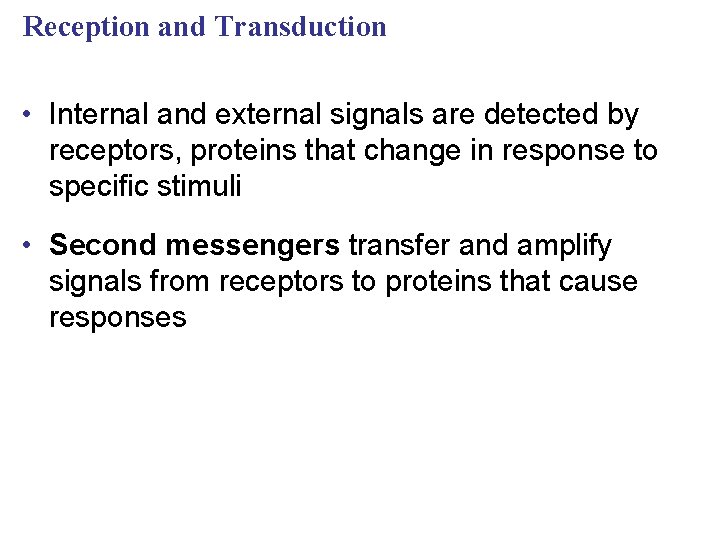
Reception and Transduction • Internal and external signals are detected by receptors, proteins that change in response to specific stimuli • Second messengers transfer and amplify signals from receptors to proteins that cause responses
1 Reception 2 Transduction 3 Response Transcription factor 1 CYTOPLASM Plasma membrane c. GMP Second messenger produced Specific protein kinase 1 activated NUCLEUS P Transcription factor 2 Phytochrome activated by light P Cell wall Specific protein kinase 2 activated Transcription Light Translation Ca 2+ channel opened Ca 2+ De-etiolation (greening) response proteins
Response • A signal transduction pathway leads to regulation of one or more cellular activities • In most cases, these responses to stimulation involve increased activity of enzymes • This can occur by transcriptional regulation or post-translational modification
Transcriptional Regulation • Specific transcription factors bind directly to specific regions of DNA and control transcription of genes • Positive transcription factors are proteins that increase the transcription of specific genes, while negative transcription factors are proteins that decrease the transcription of specific genes
Post-Translational Modification of Proteins • Post-translational modification involves modification of existing proteins in the signal response • Modification often involves the phosphorylation of specific amino acids
De-Etiolation (“Greening”) Proteins • Many enzymes that function in certain signal responses are directly involved in photosynthesis • Other enzymes are involved in supplying chemical precursors for chlorophyll production
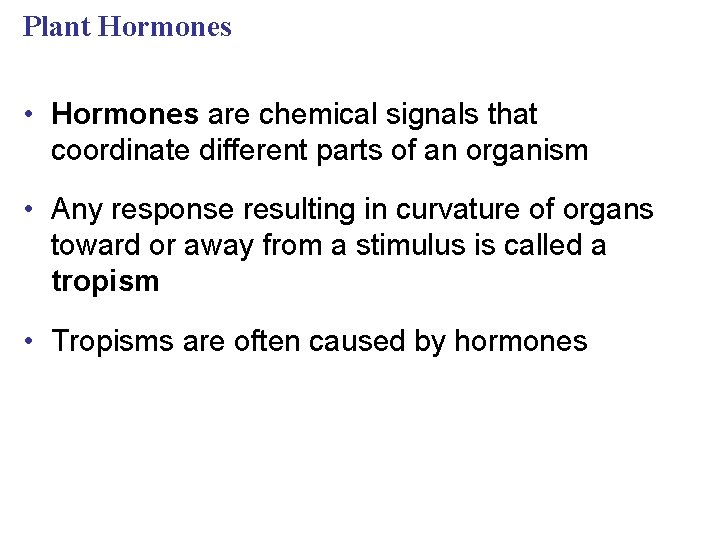
Plant Hormones • Hormones are chemical signals that coordinate different parts of an organism • Any response resulting in curvature of organs toward or away from a stimulus is called a tropism • Tropisms are often caused by hormones
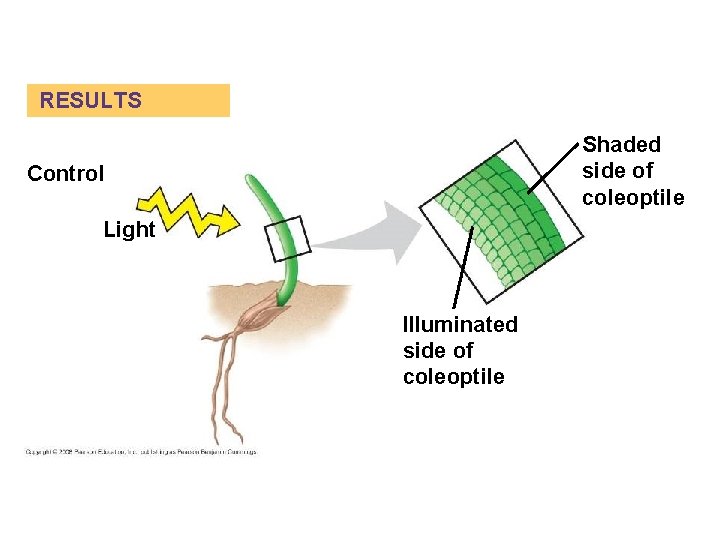
RESULTS Shaded side of coleoptile Control Light Illuminated side of coleoptile
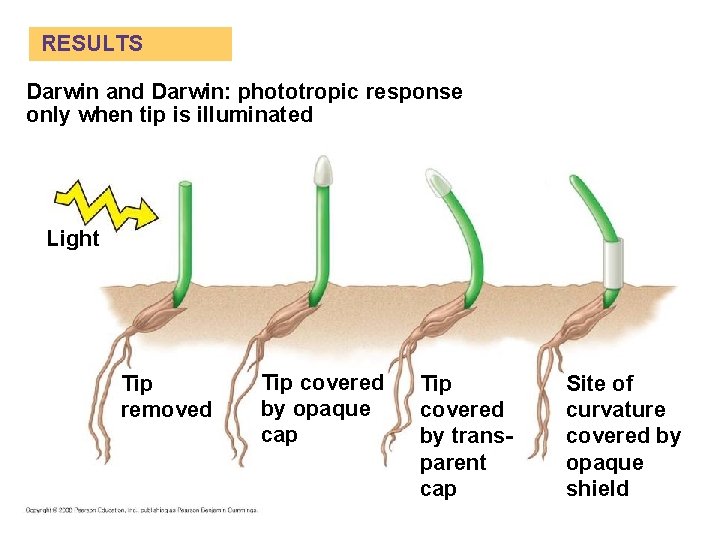
RESULTS Darwin and Darwin: phototropic response only when tip is illuminated Light Tip removed Tip covered by opaque cap Tip covered by transparent cap Site of curvature covered by opaque shield
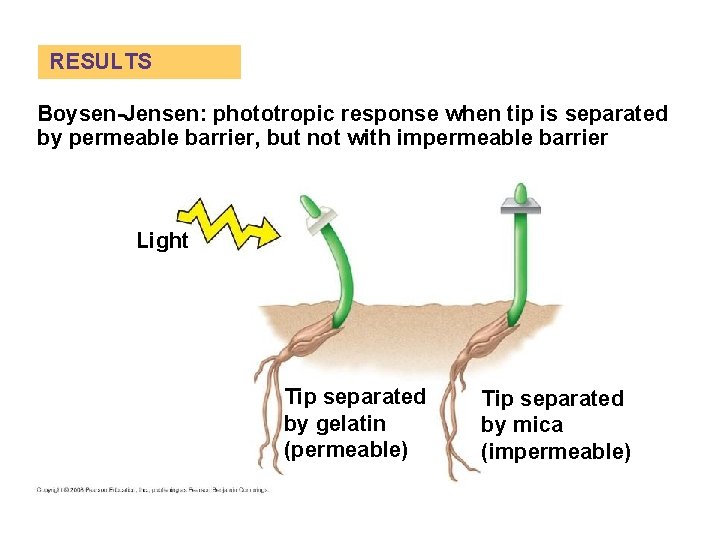
RESULTS Boysen-Jensen: phototropic response when tip is separated by permeable barrier, but not with impermeable barrier Light Tip separated by gelatin (permeable) Tip separated by mica (impermeable)
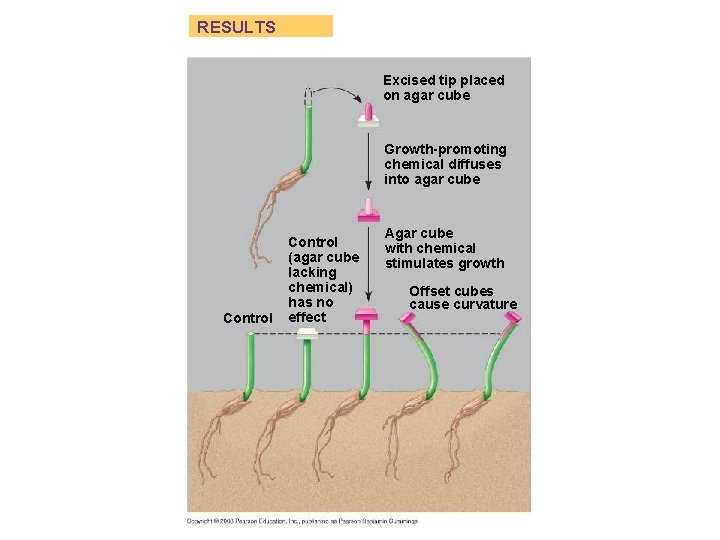
RESULTS Excised tip placed on agar cube Growth-promoting chemical diffuses into agar cube Control (agar cube lacking chemical) has no effect Agar cube with chemical stimulates growth Offset cubes cause curvature
A Survey of Plant Hormones • In general, hormones control plant growth and development by affecting the division, elongation, and differentiation of cells • Plant hormones are produced in very low concentration, but a minute amount can greatly affect growth and development of a plant organ
Auxin • The term auxin refers to any chemical that promotes elongation of coleoptiles • Indoleacetic acid (IAA) is a common auxin in plants; in this lecture the term auxin refers specifically to IAA • Auxin transporter proteins move the hormone from the basal end of one cell into the apical end of the neighboring cell
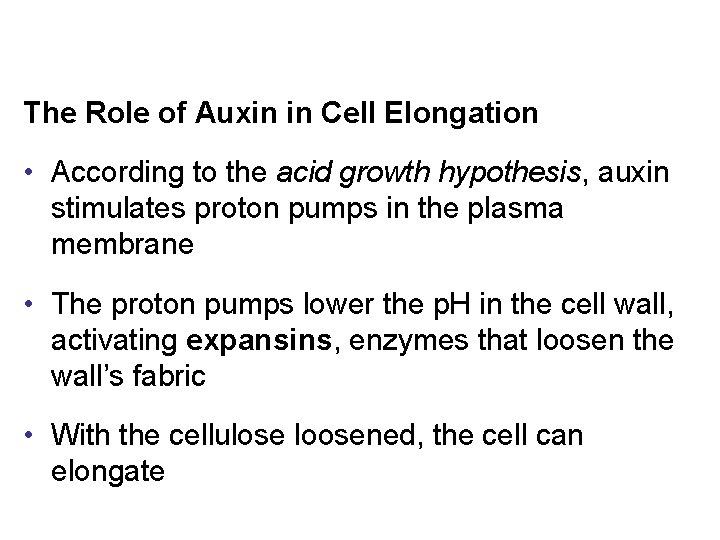
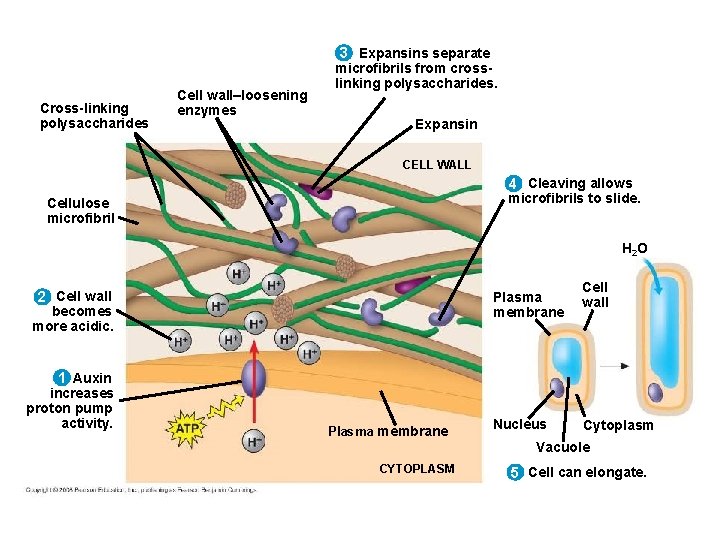
The Role of Auxin in Cell Elongation • According to the acid growth hypothesis, auxin stimulates proton pumps in the plasma membrane • The proton pumps lower the p. H in the cell wall, activating expansins, enzymes that loosen the wall’s fabric • With the cellulose loosened, the cell can elongate
3 Expansins separate Cross-linking polysaccharides Cell wall–loosening enzymes microfibrils from crosslinking polysaccharides. Expansin CELL WALL 4 Cleaving allows microfibrils to slide. Cellulose microfibril H 2 O 2 Cell wall Plasma membrane becomes more acidic. Cell wall 1 Auxin increases proton pump activity. Plasma membrane Nucleus Cytoplasm Vacuole CYTOPLASM 5 Cell can elongate.
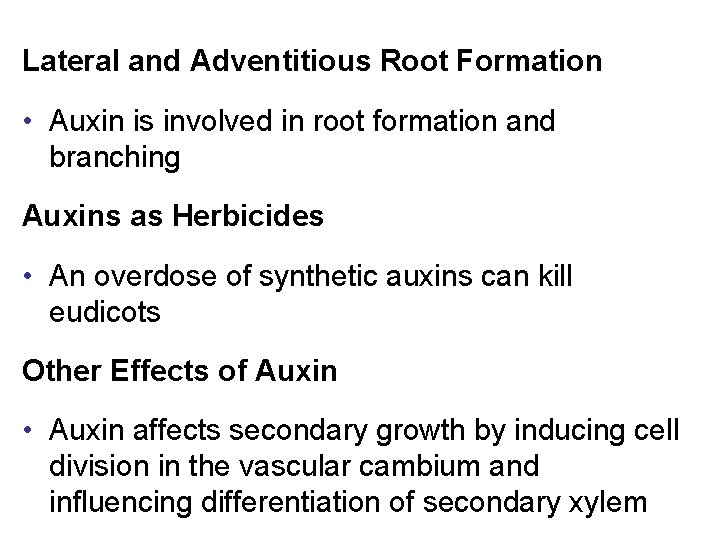
Lateral and Adventitious Root Formation • Auxin is involved in root formation and branching Auxins as Herbicides • An overdose of synthetic auxins can kill eudicots Other Effects of Auxin • Auxin affects secondary growth by inducing cell division in the vascular cambium and influencing differentiation of secondary xylem
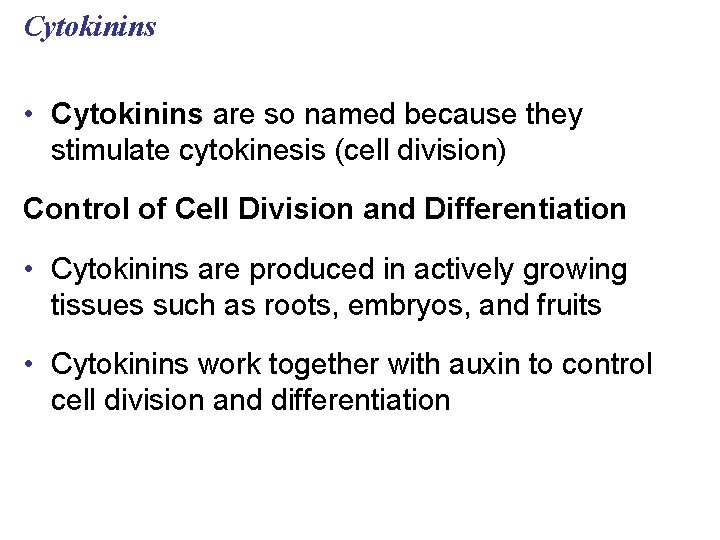
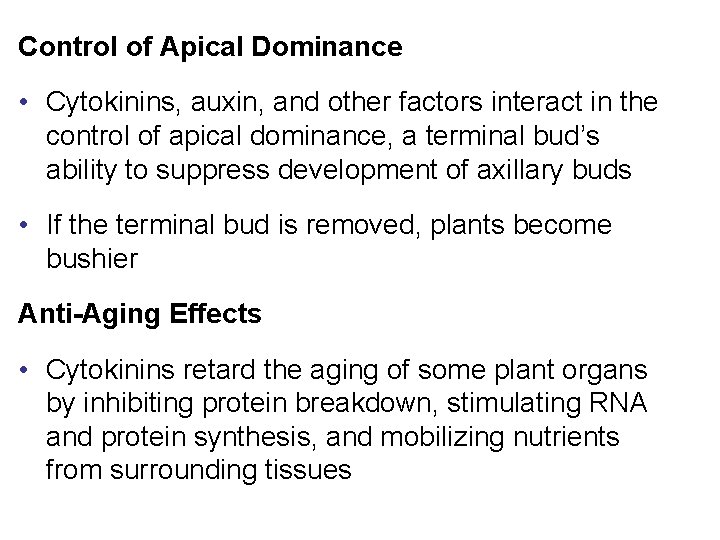
Cytokinins • Cytokinins are so named because they stimulate cytokinesis (cell division) Control of Cell Division and Differentiation • Cytokinins are produced in actively growing tissues such as roots, embryos, and fruits • Cytokinins work together with auxin to control cell division and differentiation
Control of Apical Dominance • Cytokinins, auxin, and other factors interact in the control of apical dominance, a terminal bud’s ability to suppress development of axillary buds • If the terminal bud is removed, plants become bushier Anti-Aging Effects • Cytokinins retard the aging of some plant organs by inhibiting protein breakdown, stimulating RNA and protein synthesis, and mobilizing nutrients from surrounding tissues
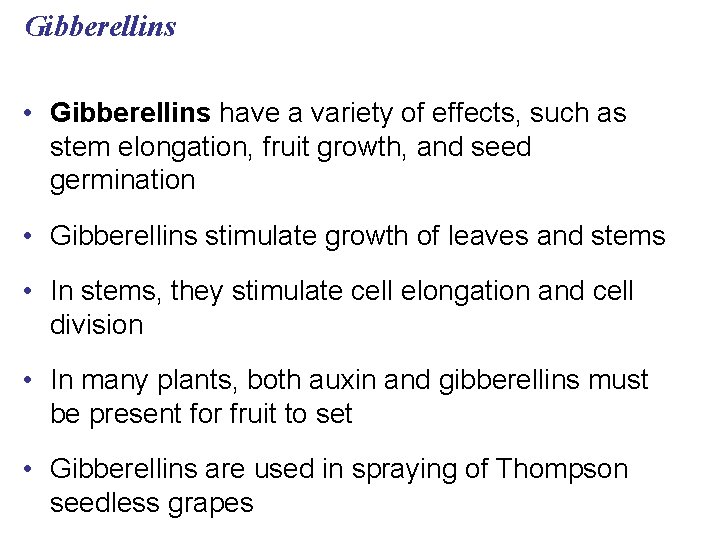
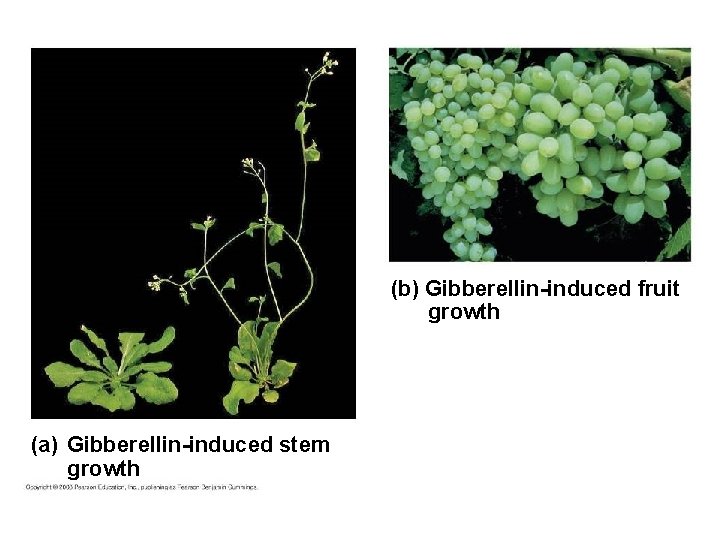
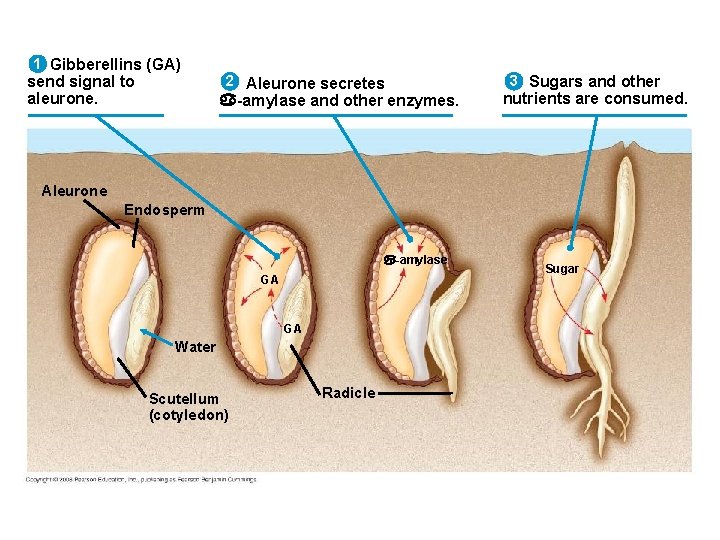
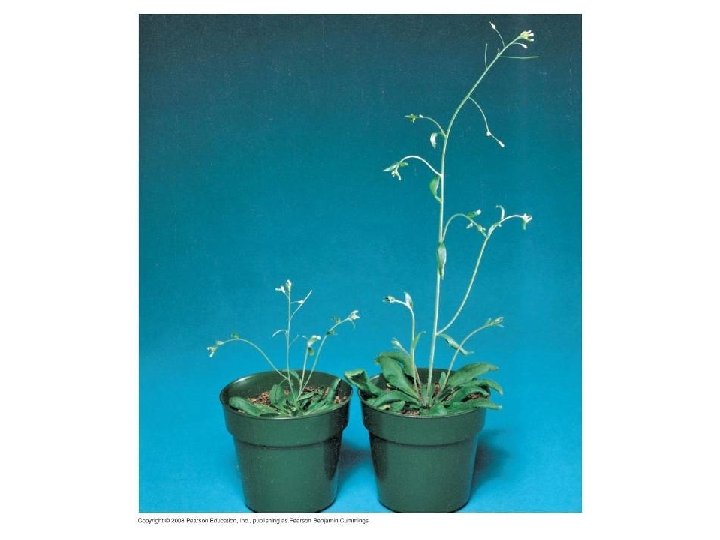
Gibberellins • Gibberellins have a variety of effects, such as stem elongation, fruit growth, and seed germination • Gibberellins stimulate growth of leaves and stems • In stems, they stimulate cell elongation and cell division • In many plants, both auxin and gibberellins must be present for fruit to set • Gibberellins are used in spraying of Thompson seedless grapes
(b) Gibberellin-induced fruit growth (a) Gibberellin-induced stem growth
1 Gibberellins (GA) send signal to aleurone. 2 Aleurone secretes -amylase and other enzymes. 3 Sugars and other nutrients are consumed. Aleurone Endosperm -amylase GA GA Water Scutellum (cotyledon) Radicle Sugar
Ethylene • Plants produce ethylene in response to stresses such as drought, flooding, mechanical pressure, injury, and infection • The effects of ethylene include response to mechanical stress, leaf abscission, and fruit ripening
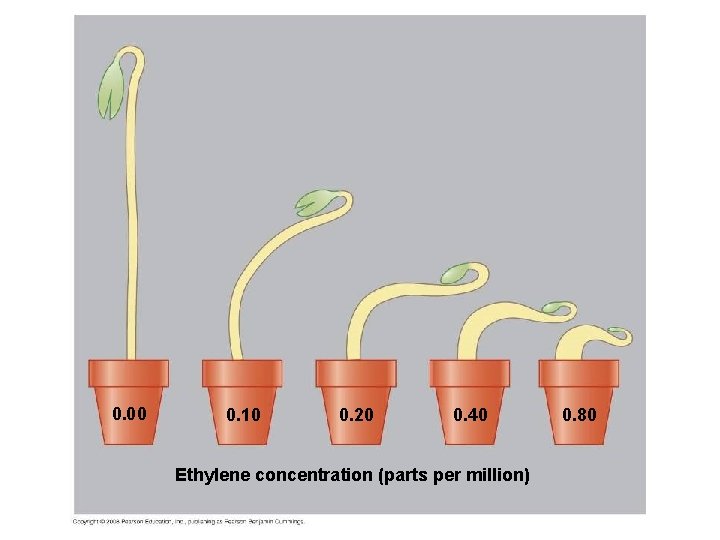
The Triple Response to Mechanical Stress • Ethylene induces the triple response, which allows a growing shoot to avoid obstacles • The triple response consists of a slowing of stem elongation, a thickening of the stem, and horizontal growth
0. 00 0. 10 0. 20 0. 40 Ethylene concentration (parts per million) 0. 80
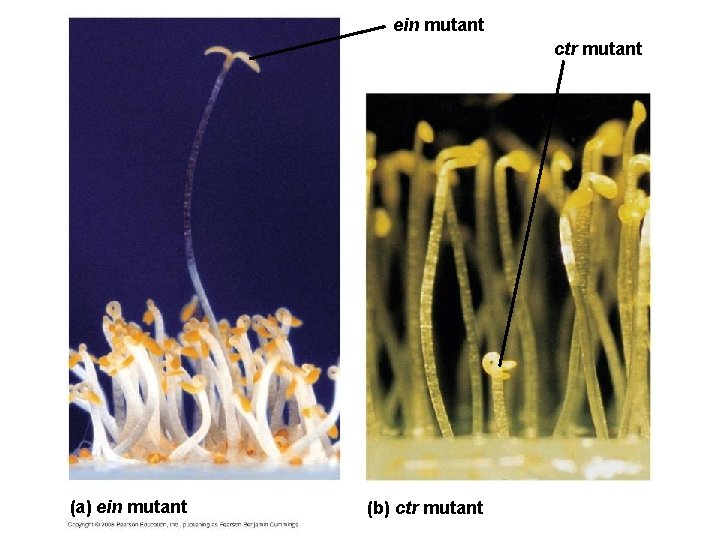
• Ethylene-insensitive mutants fail to undergo the triple response after exposure to ethylene • Other mutants undergo the triple response in air but do not respond to inhibitors of ethylene synthesis
ein mutant ctr mutant (a) ein mutant (b) ctr mutant
Senescence • Senescence is the programmed death of plant cells or organs • A burst of ethylene is associated with apoptosis, the programmed destruction of cells, organs, or whole plants
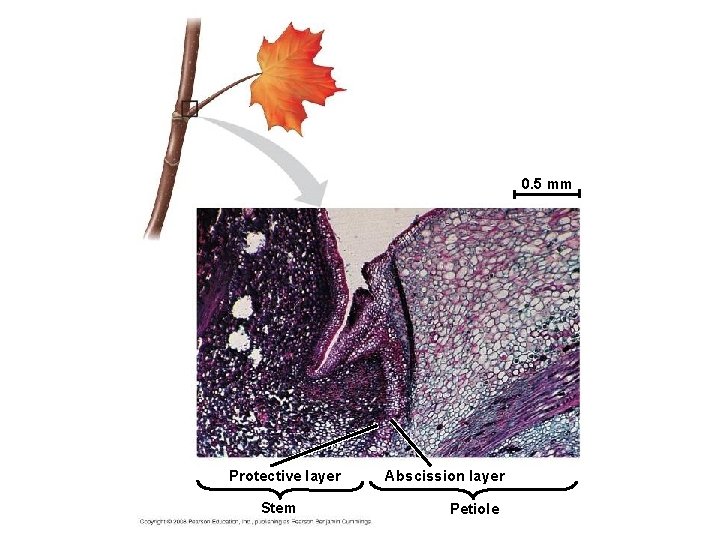
Leaf Abscission • A change in the balance of auxin and ethylene controls leaf abscission, the process that occurs in autumn when a leaf falls Fruit Ripening • A burst of ethylene production in a fruit triggers the ripening process
0. 5 mm Protective layer Stem Abscission layer Petiole
Responses to light are critical for plant success • Light cues many key events in plant growth and development • Effects of light on plant morphology are called photomorphogenesis
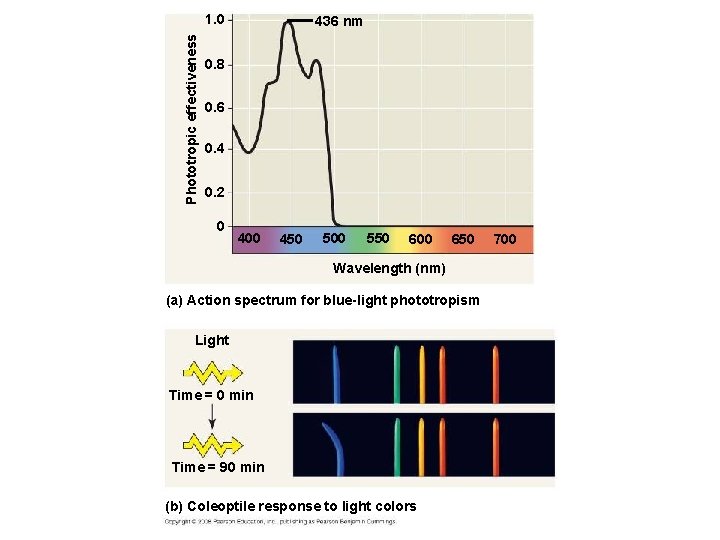
• Plants detect not only presence of light but also its direction, intensity, and wavelength (color) • A graph called an action spectrum depicts relative response of a process to different wavelengths • Action spectra are useful in studying any process that depends on light
Phototropic effectiveness 1. 0 436 nm 0. 8 0. 6 0. 4 0. 2 0 400 450 500 550 600 650 Wavelength (nm) (a) Action spectrum for blue-light phototropism Light Time = 0 min Time = 90 min (b) Coleoptile response to light colors 700
Blue-Light Photoreceptors • There are two major classes of light receptors: blue-light photoreceptors and phytochromes • Various blue-light photoreceptors control hypocotyl elongation, stomatal opening, and phototropism • Phytochromes are pigments that regulate many of a plant’s responses to light throughout its life • These responses include seed germination and shade avoidance
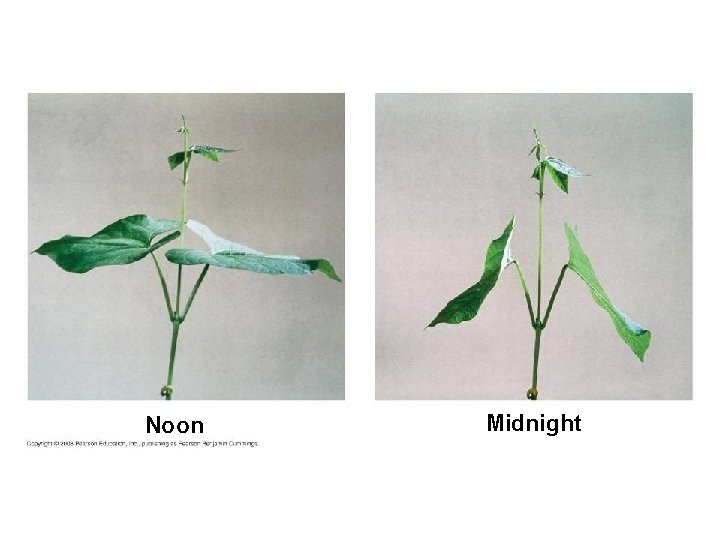
Biological Clocks and Circadian Rhythms • Many plant processes oscillate during the day • Many legumes lower their leaves in the evening and raise them in the morning, even when kept under constant light or dark conditions
Noon Midnight
• Circadian rhythms are cycles that are about 24 hours long and are governed by an internal “clock” • Circadian rhythms can be entrained to exactly 24 hours by the day/night cycle • The clock may depend on synthesis of a protein regulated through feedback control and may be common to all eukaryotes
The Effect of Light on the Biological Clock • Phytochrome conversion marks sunrise and sunset, providing the biological clock with environmental cues
Photoperiodism and Responses to Seasons • Photoperiod, the relative lengths of night and day, is the environmental stimulus plants use most often to detect the time of year • Photoperiodism is a physiological response to photoperiod
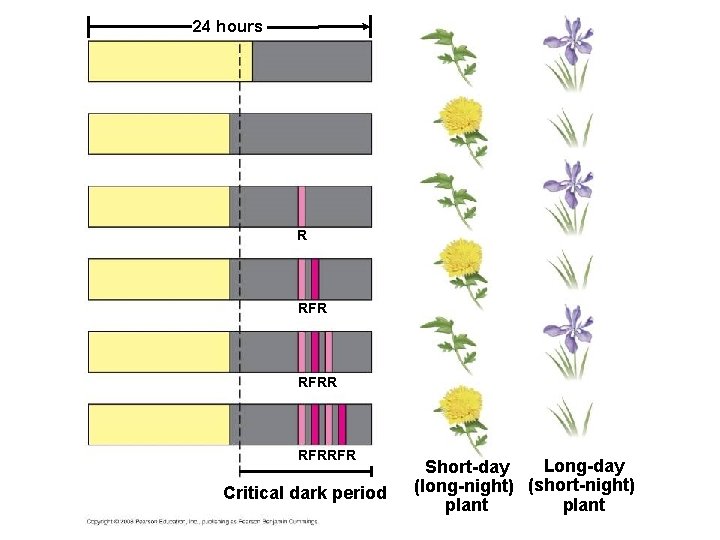
Photoperiodism and Control of Flowering • Some processes, including flowering in many species, require a certain photoperiod • Plants that flower when a light period is shorter than a critical length are called short-day plants • Plants that flower when a light period is longer than a certain number of hours are called longday plants • Flowering in day-neutral plants is controlled by plant maturity, not photoperiod
• Short-day plants are governed by whether the critical night length sets a minimum number of hours of darkness • Long-day plants are governed by whether the critical night length sets a maximum number of hours of darkness
24 hours (a) Short-day (long-night) plant Light Critical dark period Flash of light Darkness (b) Long-day (short-night) plant Flash of light
• Red light can interrupt the nighttime portion of the photoperiod • Action spectra and photoreversibility experiments show that phytochrome is the pigment that receives red light
24 hours R RFRRFR Critical dark period Long-day Short-day (long-night) (short-night) plant
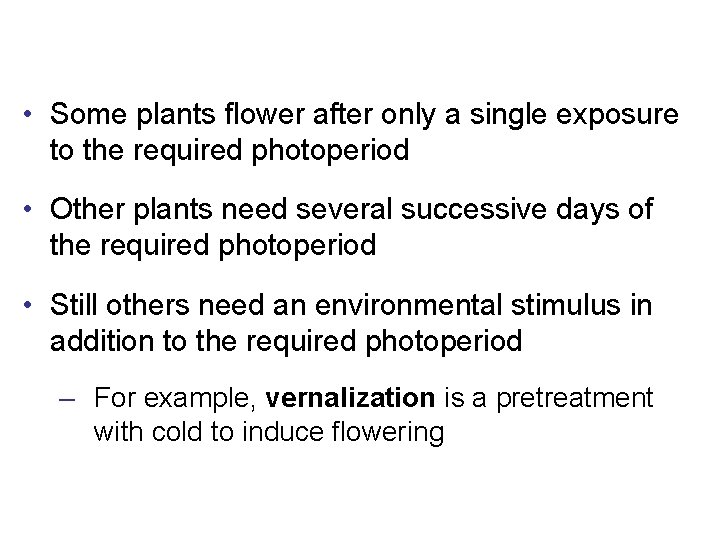
• Some plants flower after only a single exposure to the required photoperiod • Other plants need several successive days of the required photoperiod • Still others need an environmental stimulus in addition to the required photoperiod – For example, vernalization is a pretreatment with cold to induce flowering
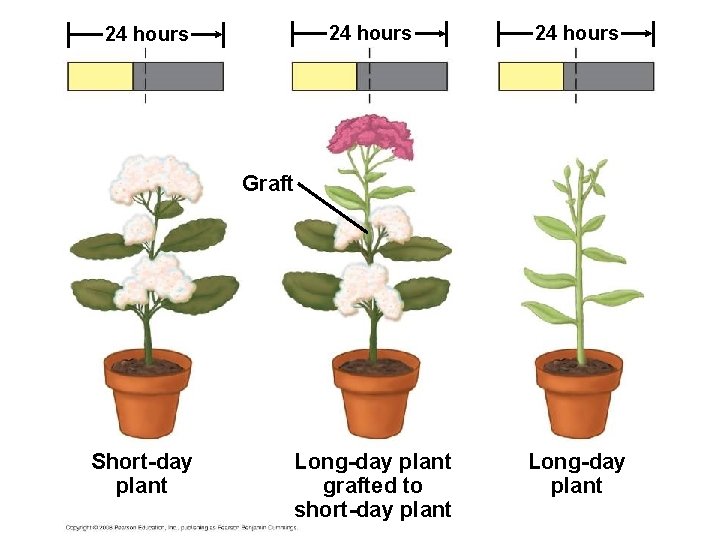
A Flowering Hormone? • The flowering signal, not yet chemically identified, is called florigen • Florigen may be a macromolecule governed by the CONSTANS gene
24 hours Long-day plant grafted to short-day plant Long-day plant 24 hours Graft Short-day plant
Meristem Transition and Flowering • For a bud to form a flower instead of a vegetative shoot, meristem identity genes must first be switched on • Researchers seek to identify the signal transduction pathways that link cues such as photoperiod and hormonal changes to the gene expression required for flowering
Plants respond to a wide variety of stimuli other than light • Because of immobility, plants must adjust to a range of environmental circumstances through developmental and physiological mechanisms
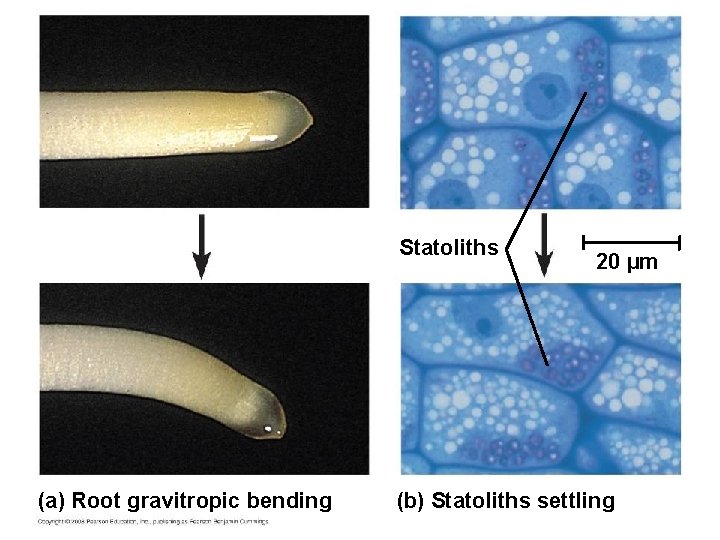
Statoliths (a) Root gravitropic bending 20 µm (b) Statoliths settling
Mechanical Stimuli • The term thigmomorphogenesis refers to changes in form that result from mechanical disturbance • Rubbing stems of young plants a couple of times daily results in plants that are shorter than controls
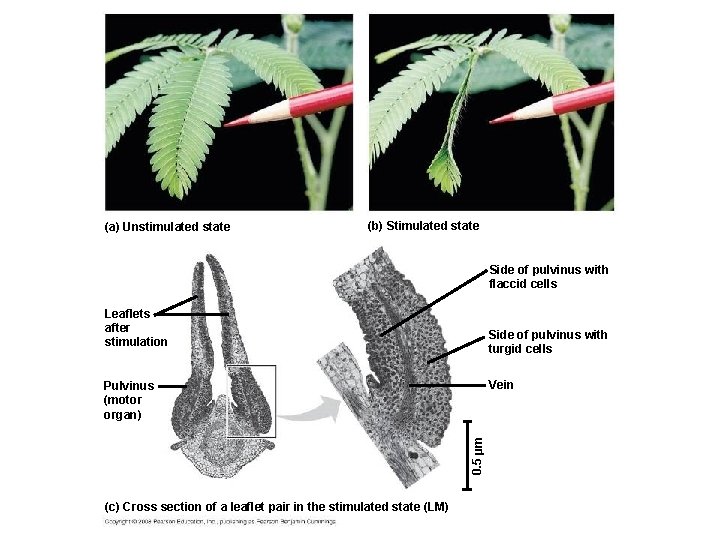
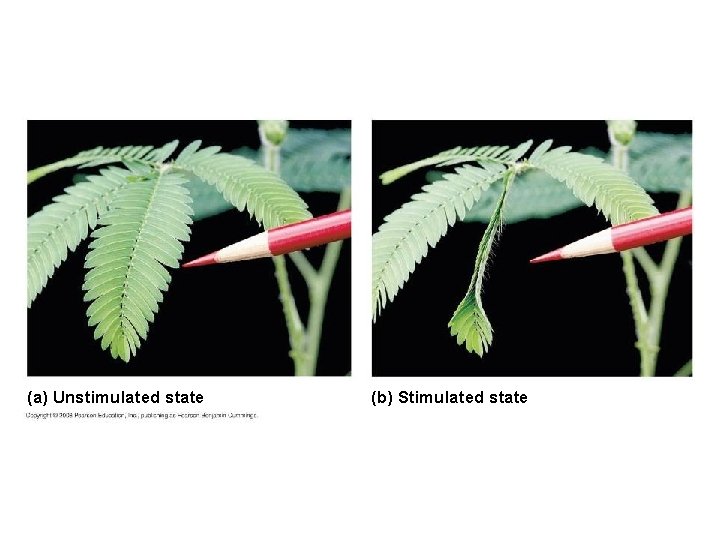
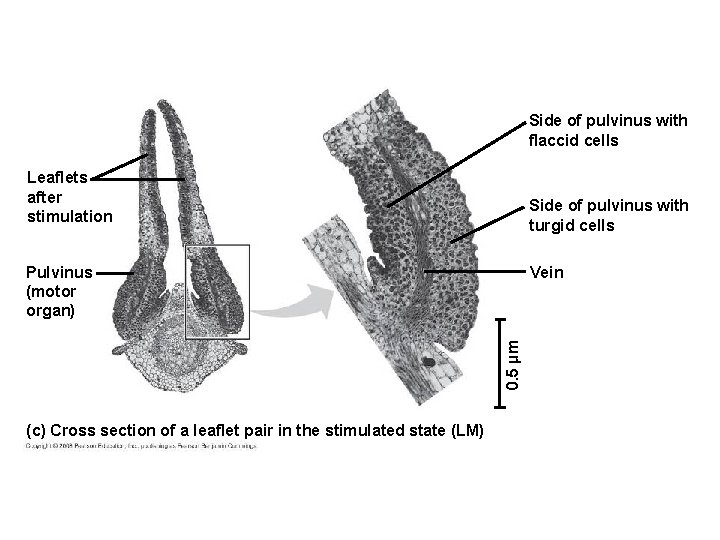
• Thigmotropism is growth in response to touch • It occurs in vines and other climbing plants • Rapid leaf movements in response to mechanical stimulation are examples of transmission of electrical impulses called action potentials
(a) Unstimulated state (b) Stimulated state Side of pulvinus with flaccid cells Leaflets after stimulation Side of pulvinus with turgid cells Vein 0. 5 µm Pulvinus (motor organ) (c) Cross section of a leaflet pair in the stimulated state (LM)
(a) Unstimulated state (b) Stimulated state
Side of pulvinus with flaccid cells Leaflets after stimulation Side of pulvinus with turgid cells Pulvinus (motor organ) 0. 5 µm Vein (c) Cross section of a leaflet pair in the stimulated state (LM)
Environmental Stresses • Environmental stresses have a potentially adverse effect on survival, growth, and reproduction • Stresses can be abiotic (nonliving) or biotic (living) • Abiotic stresses include drought, flooding, salt stress, heat stress, and cold stress
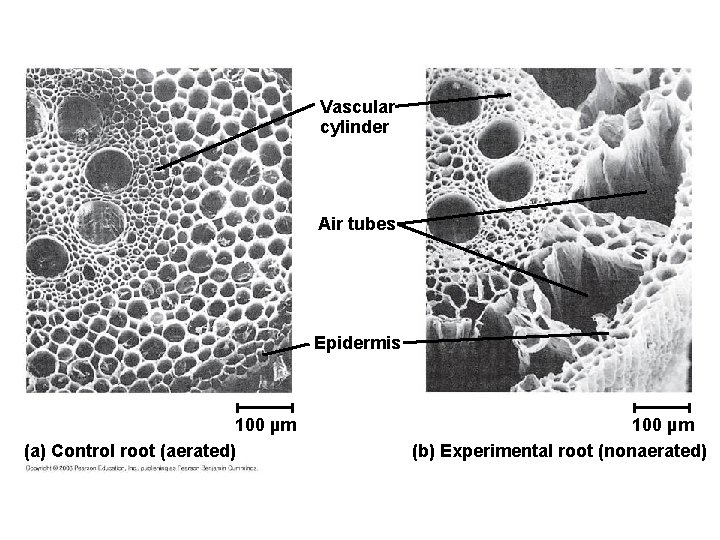
Drought and Flooding • During drought, plants reduce transpiration by closing stomata, slowing leaf growth, and reducing exposed surface area • Growth of shallow roots is inhibited, while deeper roots continue to grow • Enzymatic destruction of root cortex cells creates air tubes that help plants survive oxygen deprivation during flooding
Vascular cylinder Air tubes Epidermis 100 µm (a) Control root (aerated) 100 µm (b) Experimental root (nonaerated)
Salt Stress • Salt can lower the water potential of the soil solution and reduce water uptake • Plants respond to salt stress by producing solutes tolerated at high concentrations • This process keeps the water potential of cells more negative than that of the soil solution
Heat and Cold Stress • Excessive heat can denature a plant’s enzymes • Heat-shock proteins help protect other proteins from heat stress • Cold temperatures decrease membrane fluidity • Altering lipid composition of membranes is a response to cold stress • Freezing causes ice to form in a plant’s cell walls and intercellular spaces
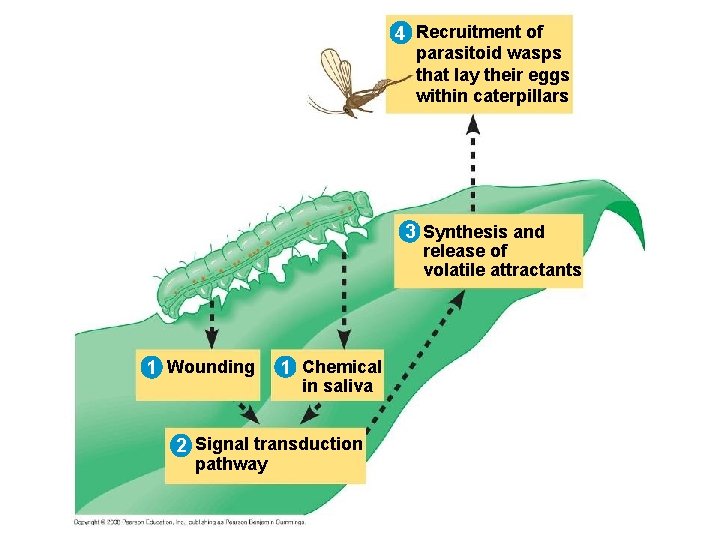
Defenses Against Herbivores • Herbivory, animals eating plants, is a stress that plants face in any ecosystem • Plants counter excessive herbivory with physical defenses such as thorns and chemical defenses such as distasteful or toxic compounds • Some plants even “recruit” predatory animals that help defend against specific herbivores
4 Recruitment of parasitoid wasps that lay their eggs within caterpillars 3 Synthesis and release of volatile attractants 1 Wounding 1 Chemical in saliva 2 Signal transduction pathway
• Plants damaged by insects can release volatile chemicals to warn other plants of the same species • Methyljasmonic acid can activate the expression of genes involved in plant defenses
Defenses Against Pathogens • A plant’s first line of defense against infection is the epidermis and periderm • If a pathogen penetrates the dermal tissue, the second line of defense is a chemical attack that kills the pathogen and prevents its spread • This second defense system is enhanced by the inherited ability to recognize certain pathogens
• A virulent pathogen is one that a plant has little specific defense against • An avirulent pathogen is one that may harm but does not kill the host plant
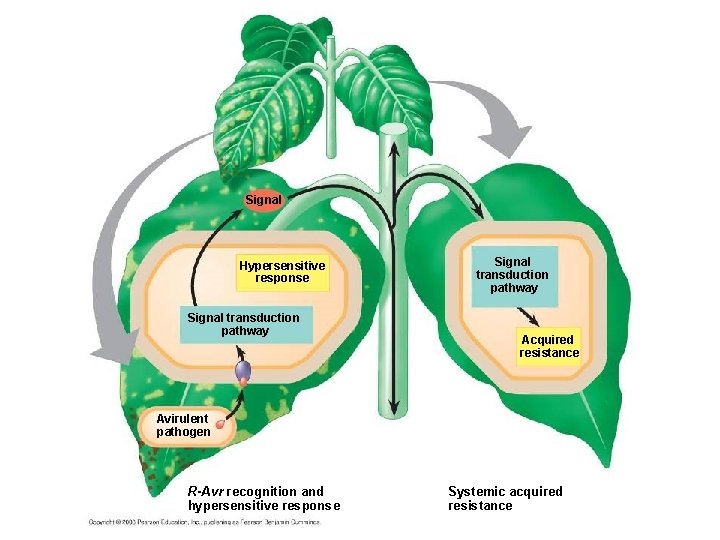
Signal Hypersensitive response Signal transduction pathway Acquired resistance Avirulent pathogen R-Avr recognition and hypersensitive response Systemic acquired resistance
Systemic Acquired Resistance • Systemic acquired resistance causes systemic expression of defense genes and is a long-lasting response • Salicylic acid is synthesized around the infection site and is likely the signal that triggers systemic acquired resistance
Animations and Videos • Tropisms • Auxin Affects Cell Wall • Went's Experiment • The Effect of Interrupted Day and Night • Phytochrome Signaling • Bozeman - Phototropism and Photoperiodism • Signaling Between Plants and Pathogens • Chapter Quiz Questions -1 • Chapter Quiz Questions – 2