
Signal transduction mediated by inorganic ions Martin J
Signal transduction mediated by inorganic ions. Martin J. Cann
The importance of the major biologically active inorganic ions. p. H homeostasis Volume homeostasis Solute transport Action potentials Gas transport Fluid secretion

The major biologically active inorganic ions Although the physiology of the predominant inorganic ions is well understood, sensor mechanisms remain elusive. Cations Na+ K+ Anions Cl. HCO 3 - ? ? guanylyl cyclase-A s. AC, Spirulina Cya. C

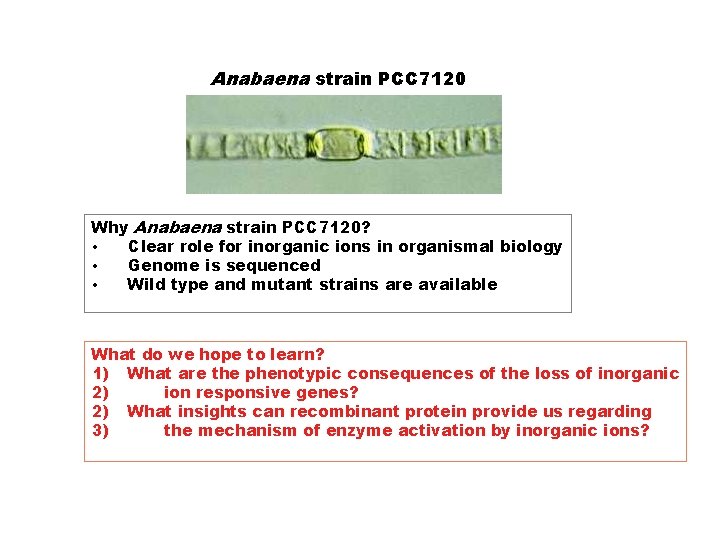
Anabaena strain PCC 7120 Why Anabaena strain PCC 7120? • Clear role for inorganic ions in organismal biology • Genome is sequenced • Wild type and mutant strains are available What do we hope to learn? 1) What are the phenotypic consequences of the loss of inorganic 2) ion responsive genes? 2) What insights can recombinant protein provide us regarding 3) the mechanism of enzyme activation by inorganic ions?
HCO 3 - responsive adenylyl cyclases in prokaryotes and eukaryotes.
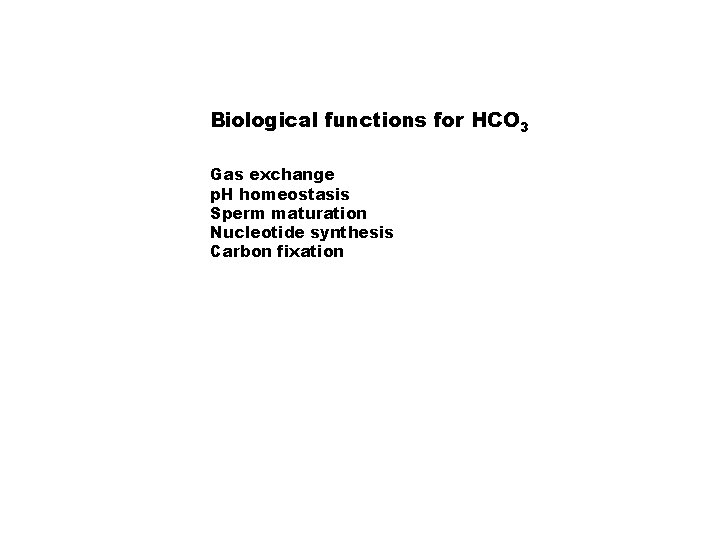
Biological functions for HCO 3 Gas exchange p. H homeostasis Sperm maturation Nucleotide synthesis Carbon fixation
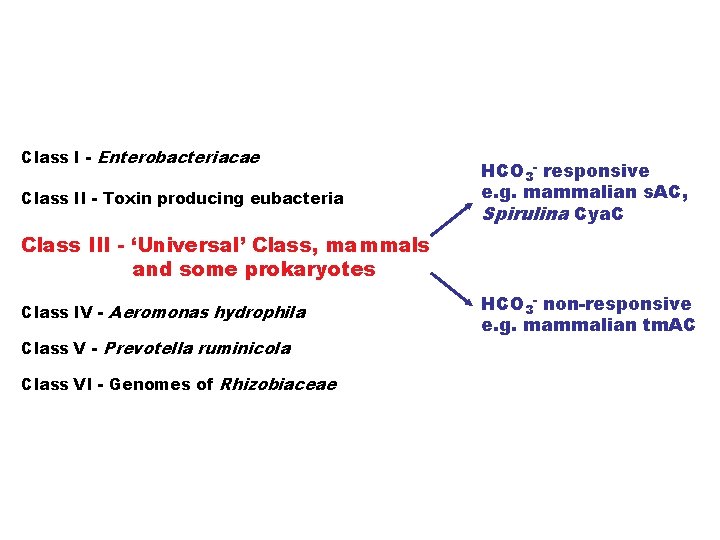
Class I - Enterobacteriacae Class II - Toxin producing eubacteria HCO 3 - responsive e. g. mammalian s. AC, Spirulina Cya. C Class III - ‘Universal’ Class, mammals and some prokaryotes Class IV - Aeromonas hydrophila Class V - Prevotella ruminicola Class VI - Genomes of Rhizobiaceae HCO 3 - non-responsive e. g. mammalian tm. AC

Cya. B 1595 -859 N GAF-A Q 50 GAF-B T 207 L 237 PAS L 385 I 394 K 465 AC G 595 C K 859
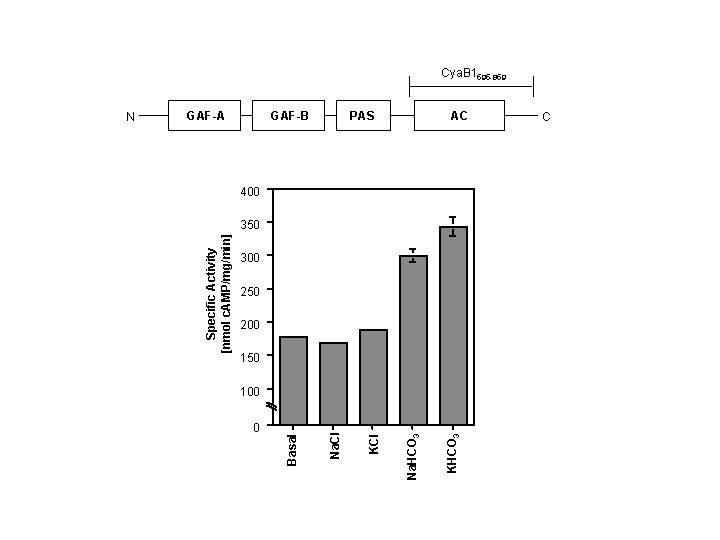
0 PAS KHCO 3 Na. HCO 3 GAF-B KCl Na. Cl GAF-A Basal N Specific Activity [nmol c. AMP/mg/min] Cya. B 1595 -859 AC 400 350 300 250 200 150 100 C
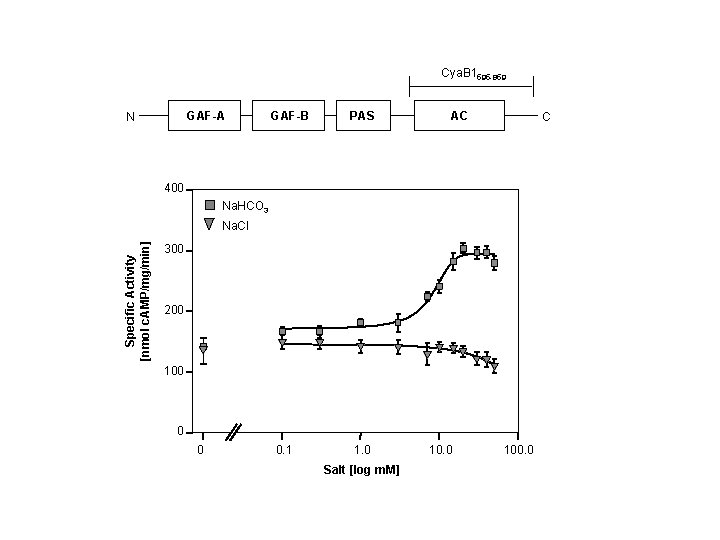
Cya. B 1595 -859 GAF-A N GAF-B PAS AC C 400 Na. HCO 3 Specific Activity [nmol c. AMP/mg/min] Na. Cl 300 200 100 0 0 0. 1 1. 0 Salt [log m. M] 10. 0 100. 0
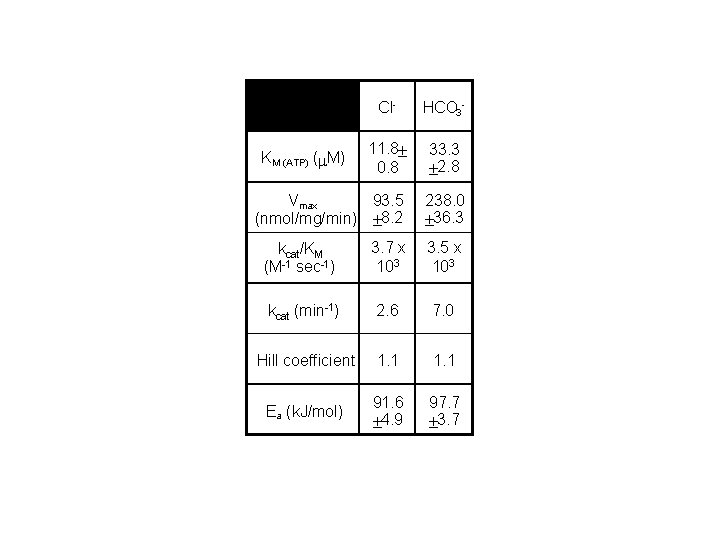
Cl- HCO 3 - 11. 8± 0. 8 33. 3 ± 2. 8 93. 5 Vmax (nmol/mg/min) ± 8. 2 238. 0 ± 36. 3 kcat/KM (M-1 sec-1) 3. 7 x 10³ 3. 5 x 10³ kcat (min-1) 2. 6 7. 0 Hill coefficient 1. 1 Ea (k. J/mol) 91. 6 ± 4. 9 97. 7 ± 3. 7 KM (ATP) (m. M)
![Cya. B 11 -859 + GAF-A GAF-B PAS AC + Accumulated c. AMP [pmol/assay]](http://slidetodoc.com/presentation_image/d58d996e1fdb669877ddff18f2c4dc54/image-13.jpg "Cya. B 11 -859 + GAF-A GAF-B PAS AC + Accumulated c. AMP [pmol/assay]")
Cya. B 11 -859 + GAF-A GAF-B PAS AC + Accumulated c. AMP [pmol/assay] N 300 KHCO 3 KCl 200 100 0 0 2 4 6 Time [mins] 8 10 C
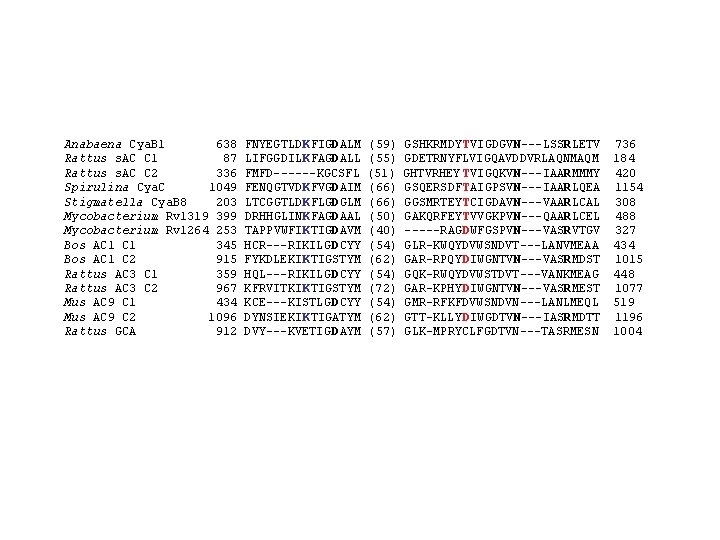
Anabaena Cya. B 1 638 Rattus s. AC C 1 87 Rattus s. AC C 2 336 Spirulina Cya. C 1049 Stigmatella Cya. B 8 203 Mycobacterium Rv 1319 399 Mycobacterium Rv 1264 253 Bos AC 1 345 Bos AC 1 C 2 915 Rattus AC 3 C 1 359 Rattus AC 3 C 2 967 Mus AC 9 C 1 434 Mus AC 9 C 2 1096 Rattus GCA 912 FNYEGTLD KFIGDALM LIFGGDILKFAGDALL FMFD------KGCSFL FENQGTVDKFVGDAIM LTCGGTLDKFLGDGLM DRHHGLINKFAGDAAL TAPPVWFIKTIGDAVM HCR---RIKILG DCYY FYKDLEKI KTIGSTYM HQL---RIKILG DCYY KFRVITKI KTIGSTYM KCE---KISTLG DCYY DYNSIEKI KTIGATYM DVY---KVETIG DAYM (59) (55) (51) (66) (50) (40) (54) (62) (54) (72) (54) (62) (57) GSHKRMDYTVIGDGVN---LSSRLETV GDETRNYFLVIGQAVDDVRLAQNMAQM GHTVRHEY TVIGQKVN---IAARMMMY GSQERSDFTAIGPSVN---IAARLQEA GGSMRTEYTCIGDAVN---VAARLCAL GAKQRFEYTVVGKPVN---QAARLCEL -----RAGDWFGSPVN---VASRVTGV GLR-KWQYDVWSNDVT---LANVMEAA GAR-RPQYDIWGNTVN---VASRMDST GQK-RWQYDVWSTDVT---VANKMEAG GAR-KPHYDIWGNTVN---VASRMEST GMR-RFKFDVWSNDVN---LANLMEQL GTT-KLLYDIWGDTVN---IASRMDTT GLK-MPRYCLFGDTVN---TASRMESN 736 184 420 1154 308 488 327 434 1015 448 1077 519 1196 1004
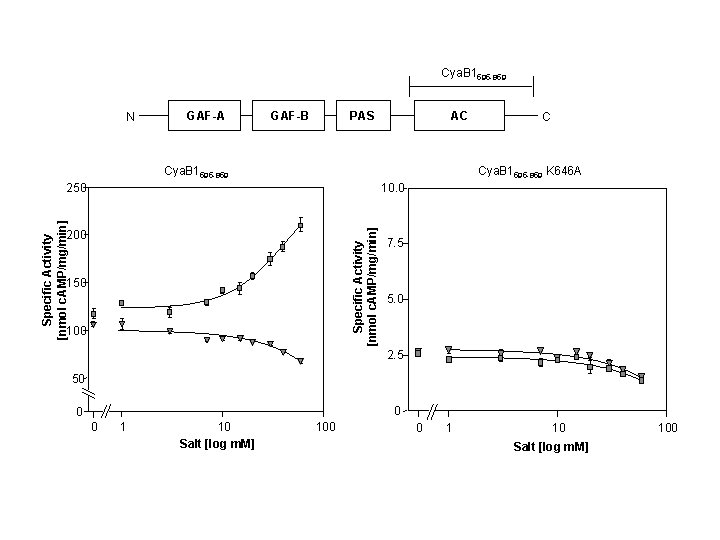
Cya. B 1595 -859 N GAF-A GAF-B PAS AC Cya. B 1595 -859 K 646 A 10. 0 Specific Activity [nmol c. AMP/mg/min] 250 200 150 100 7. 5 5. 0 2. 5 50 0 1 10 Salt [log m. M] 100

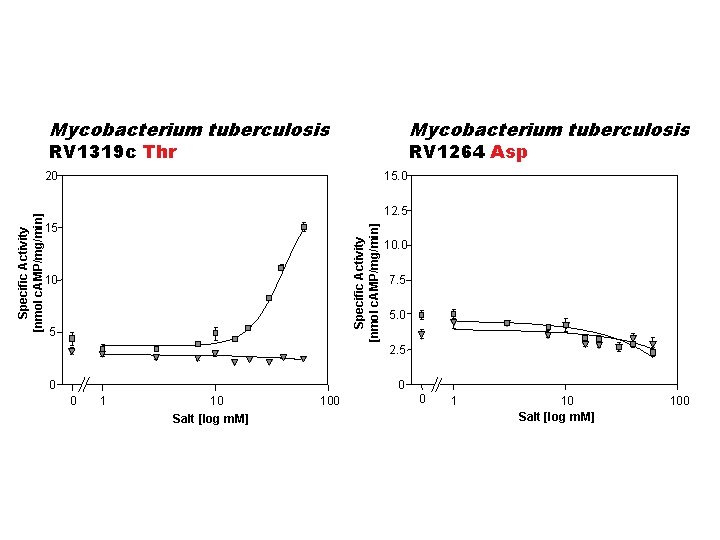
Mycobacterium tuberculosis RV 1319 c Thr RV 1264 Asp 15. 0 12. 5 15 Specific Activity [nmol c. AMP/mg/min] 20 10 5 10. 0 7. 5 5. 0 2. 5 0 0 0 1 10 Salt [log m. M] 100
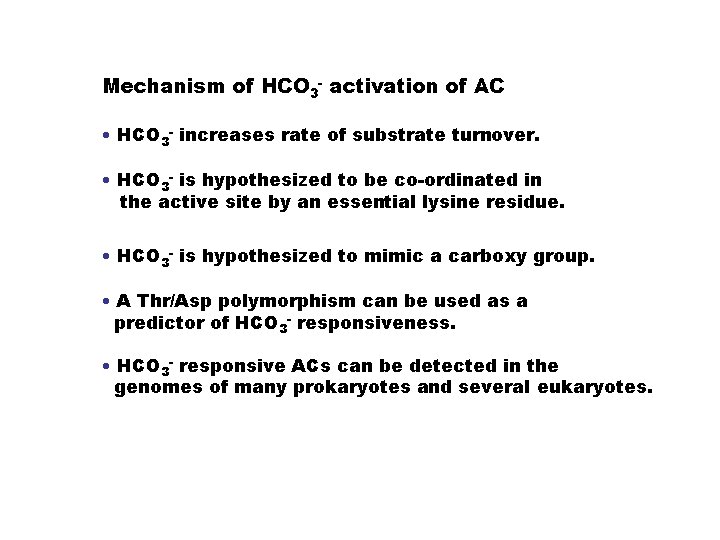
Mechanism of HCO 3 - activation of AC • HCO 3 - increases rate of substrate turnover. • HCO 3 - is hypothesized to be co-ordinated in the active site by an essential lysine residue. • HCO 3 - is hypothesized to mimic a carboxy group. • A Thr/Asp polymorphism can be used as a predictor of HCO 3 - responsiveness. • HCO 3 - responsive ACs can be detected in the genomes of many prokaryotes and several eukaryotes.
GAF domain mediated Na sensing.
Biological functions for Na p. H homeostasis Maintenance of blood pressure Action potentials Solute transport Volume homeostasis
![Cya. B 11 -859 + GAF-A GAF-B PAS AC + Accumulated c. AMP [pmol/assay]](http://slidetodoc.com/presentation_image/d58d996e1fdb669877ddff18f2c4dc54/image-21.jpg "Cya. B 11 -859 + GAF-A GAF-B PAS AC + Accumulated c. AMP [pmol/assay]")
Cya. B 11 -859 + GAF-A GAF-B PAS AC + Accumulated c. AMP [pmol/assay] N 300 KHCO 3 KCl 200 100 0 0 2 4 6 Time [mins] 8 10 C
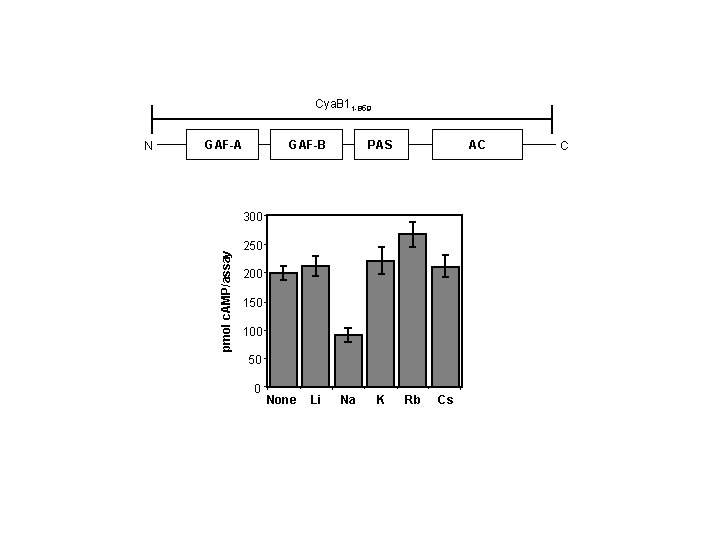
Cya. B 11 -859 GAF-A GAF-B PAS AC 300 pmol c. AMP/assay N 250 200 150 100 50 0 None Li Na K Rb Cs C
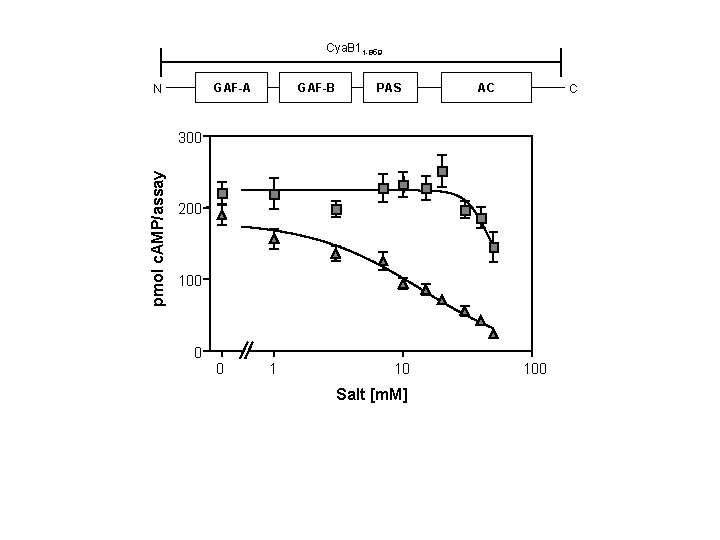
Cya. B 11 -859 GAF-A N GAF-B PAS AC C pmol c. AMP/assay 300 200 100 0 0 1 10 Salt [m. M] 100
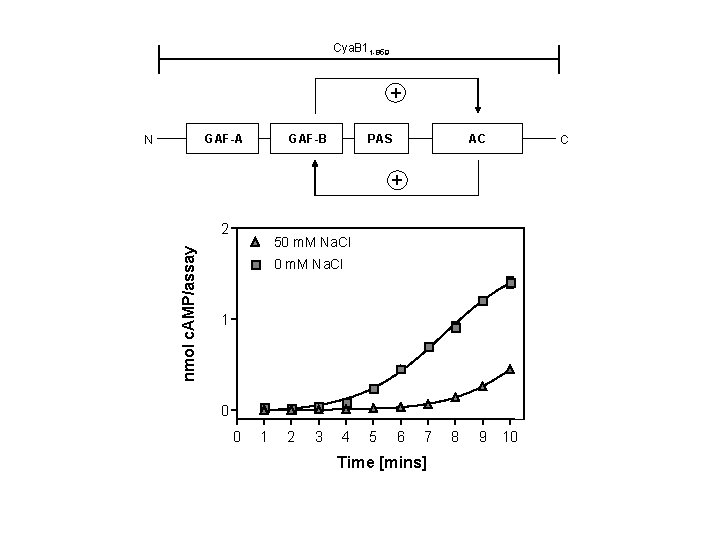
Cya. B 11 -859 + GAF-A N GAF-B PAS AC + nmol c. AMP/assay 2 50 m. M Na. Cl 1 0 0 1 2 3 4 5 6 7 Time [mins] 8 9 10 C
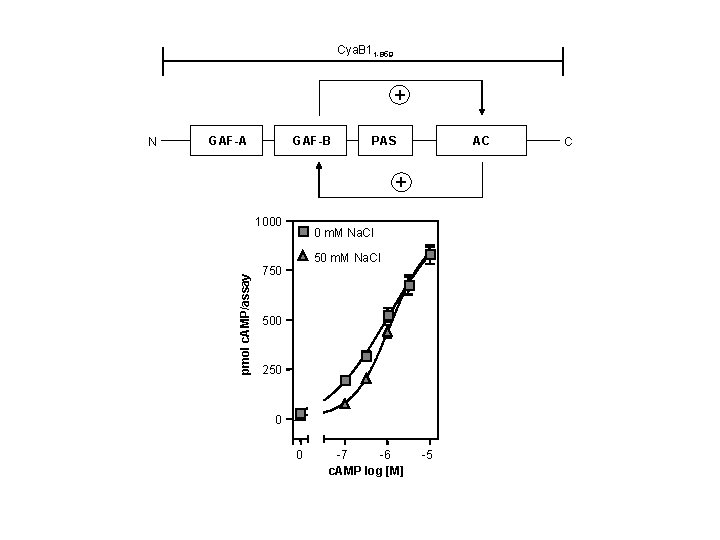
Cya. B 11 -859 + GAF-A GAF-B PAS AC + 1000 pmol c. AMP/assay N 0 m. M Na. Cl 50 m. M Na. Cl 750 500 250 0 0 -7 -6 c. AMP log [M] -5 C
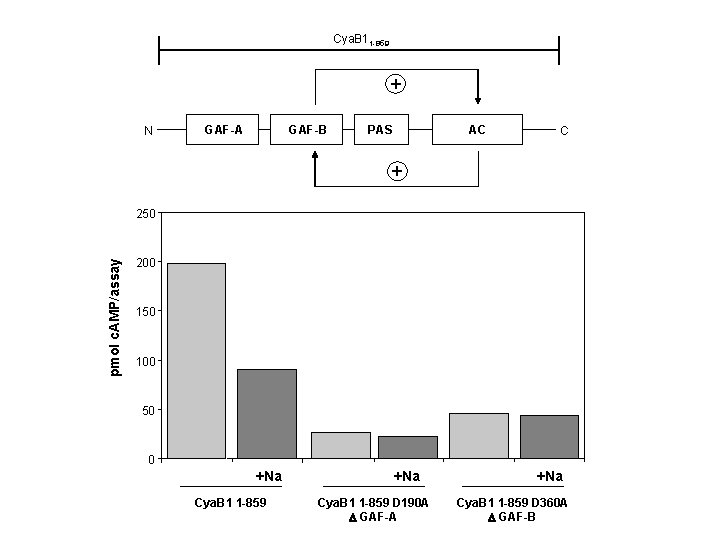
Cya. B 11 -859 + GAF-A N GAF-B PAS AC C + pmol c. AMP/assay 250 200 150 100 50 0 1 2 +Na Cya. B 1 1 -859 3 4 +Na Cya. B 1 1 -859 D 190 A GAF-A 5 6 +Na Cya. B 1 1 -859 D 360 A GAF-B
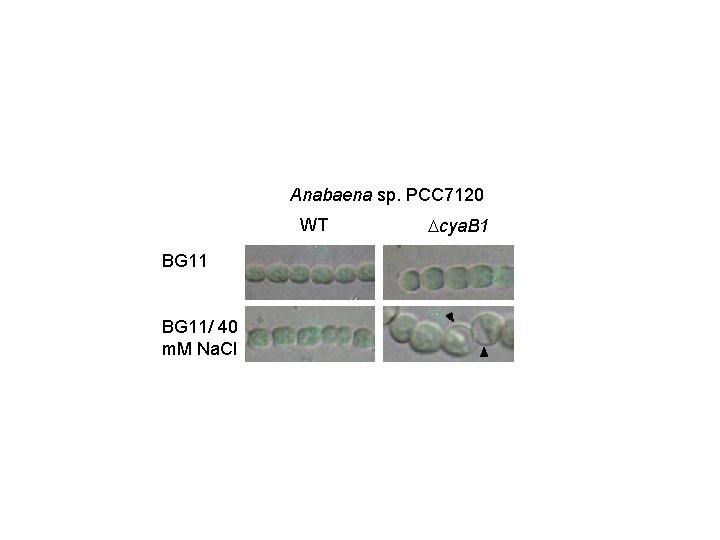
Anabaena sp. PCC 7120 WT BG 11/ 40 m. M Na. Cl cya. B 1
![Na. Cl [m. M] 0. 2 Wild type cya. B 1 0. 4 0.](http://slidetodoc.com/presentation_image/d58d996e1fdb669877ddff18f2c4dc54/image-28.jpg "Na. Cl [m. M] 0. 2 Wild type cya. B 1 0. 4 0.")
Na. Cl [m. M] 0. 2 Wild type cya. B 1 0. 4 0. 6 0. 8 1. 0 3. 0
![0. 04 Anabaena sp. PCC 7120 WT Growth Rate [ /hr-1] Anabaena sp. PCC](http://slidetodoc.com/presentation_image/d58d996e1fdb669877ddff18f2c4dc54/image-29.jpg "0. 04 Anabaena sp. PCC 7120 WT Growth Rate [ /hr-1] Anabaena sp. PCC")
0. 04 Anabaena sp. PCC 7120 WT Growth Rate [ /hr-1] Anabaena sp. PCC 7120 cya. B 1 0. 03 0. 02 0. 01 0 0 4 Na. Cl [m. M] 40
![Na. Cl [m. M] 0. 2 4. 0 WT 7. 0 7. 5 p.](http://slidetodoc.com/presentation_image/d58d996e1fdb669877ddff18f2c4dc54/image-30.jpg "Na. Cl [m. M] 0. 2 4. 0 WT 7. 0 7. 5 p.")
Na. Cl [m. M] 0. 2 4. 0 WT 7. 0 7. 5 p. H 8. 0 8. 5 9. 0 0. 2 4. 0 cya. B 1
![Fluorescence Intensity [Arbitrary Units] cells WT 0 cya. B 1 -10000 Na -20000](http://slidetodoc.com/presentation_image/d58d996e1fdb669877ddff18f2c4dc54/image-31.jpg "Fluorescence Intensity [Arbitrary Units] cells WT 0 cya. B 1 -10000 Na -20000")
Fluorescence Intensity [Arbitrary Units] cells WT 0 cya. B 1 -10000 Na -20000 -30000 -40000 -50000 0 100 200 300 400 500 600 Time [secs]
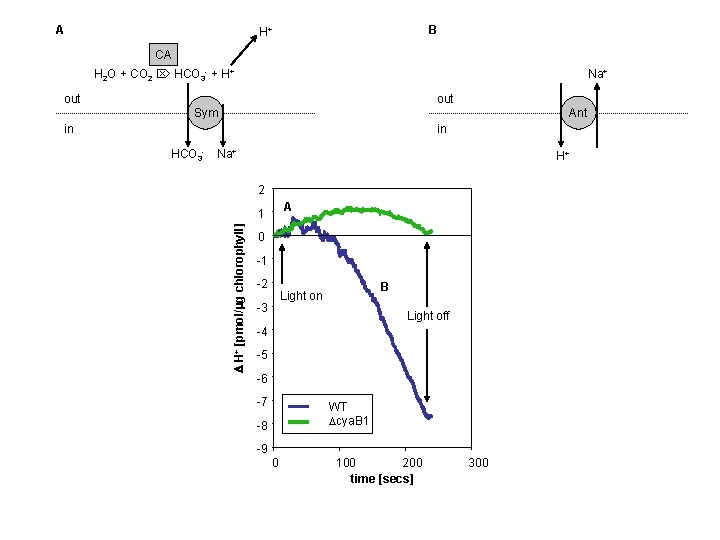
A B H+ CA H 2 O + CO 2 HCO 3 - + H+ Na+ out Ant Sym in in Na+ H+ 2 A 1 H+ [pmol/ g chlorophyll] HCO 3 - 0 -1 -2 B Light on -3 Light off -4 -5 -6 -7 WT cya. B 1 -8 -9 0 100 200 time [secs] 300
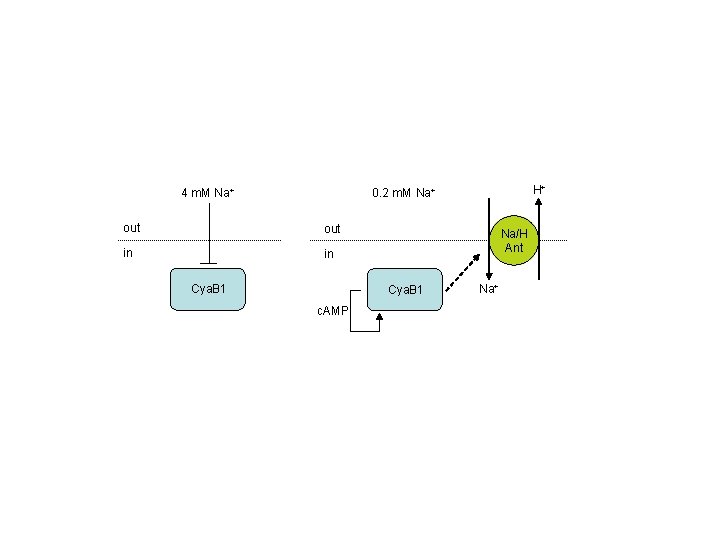
4 m. M Na+ H+ 0. 2 m. M Na+ out in in Cya. B 1 Na/H Ant Cya. B 1 c. AMP Na+
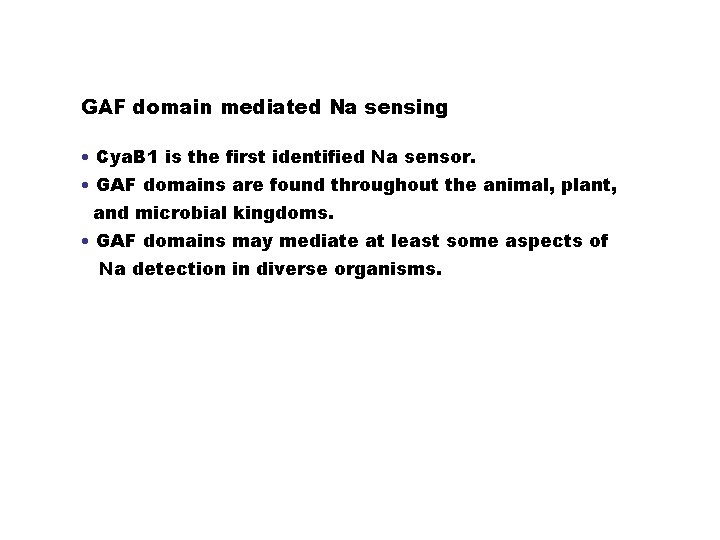
GAF domain mediated Na sensing • Cya. B 1 is the first identified Na sensor. • GAF domains are found throughout the animal, plant, and microbial kingdoms. • GAF domains may mediate at least some aspects of Na detection in diverse organisms.
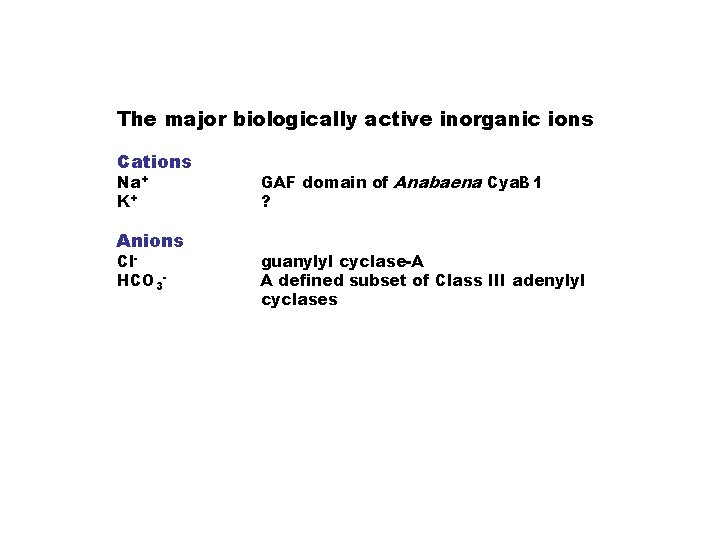
The major biologically active inorganic ions Cations Na+ K+ Anions Cl. HCO 3 - GAF domain of Anabaena Cya. B 1 ? guanylyl cyclase-A A defined subset of Class III adenylyl cyclases

University of Durham Martin Cann Arne Hammer Jie Zhou University of Tokyo Masayuki Ohmori University of Tübingen Joachim Schultz Tobias Kanacher Jurgen Linder
- Slides: 36