
Signal transduction in plants b Posttranslational modifications PTMS
Signal transduction in plants b Post-translational modifications (PTMS) Michael Wrzaczek Dept of Biosciences, Plant Biology Viikki Plant Science Centre (Vi. PS) University of Helsinki, Finland Helsinki, August 18 th, 2016
Post-translational modification (PTM) refers to the covalent and generally enzymatic modification of proteins during or after protein biosynthesis. (source: www. wikipedia. org)
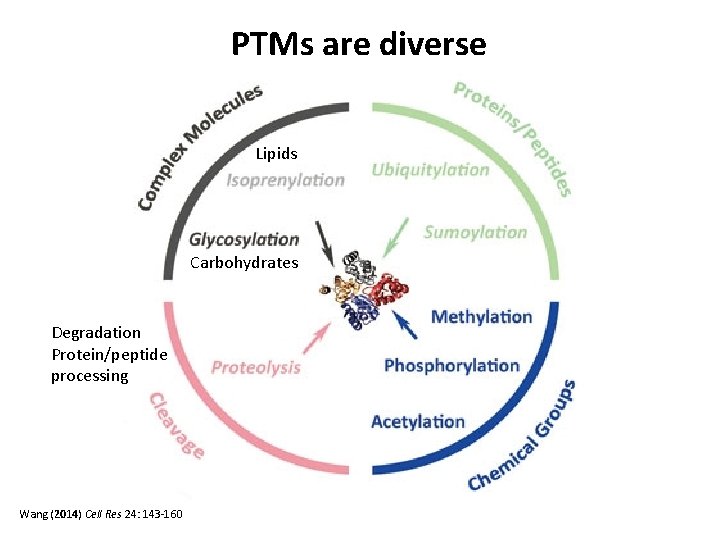
PTMs are diverse Lipids Carbohydrates Degradation Protein/peptide processing Wang (2014) Cell Res 24: 143 -160
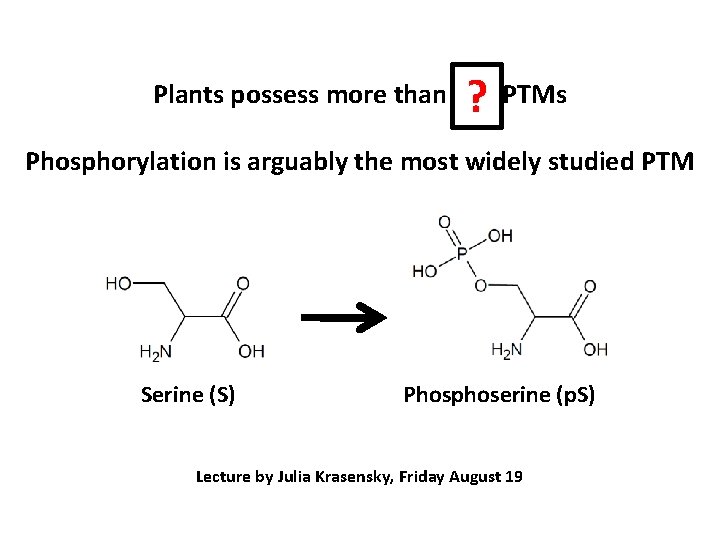
? Plants possess more than 300 PTMs Phosphorylation is arguably the most widely studied PTM Serine (S) Phosphoserine (p. S) Lecture by Julia Krasensky, Friday August 19
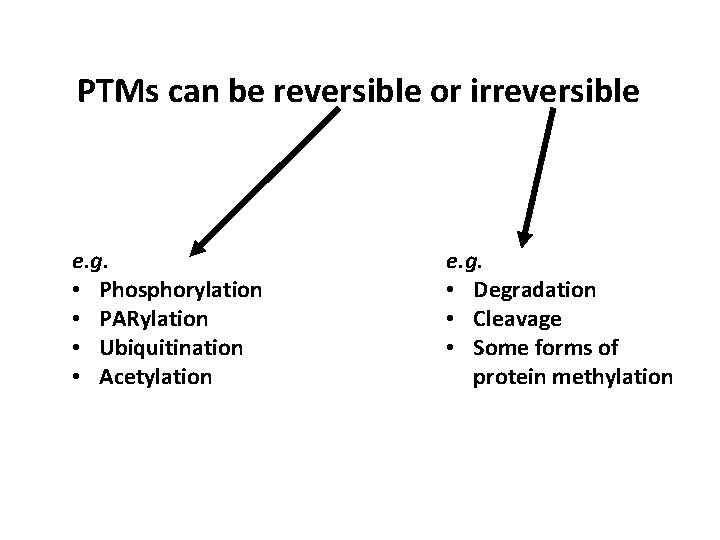
PTMs can be reversible or irreversible e. g. • Phosphorylation • PARylation • Ubiquitination • Acetylation e. g. • Degradation • Cleavage • Some forms of protein methylation
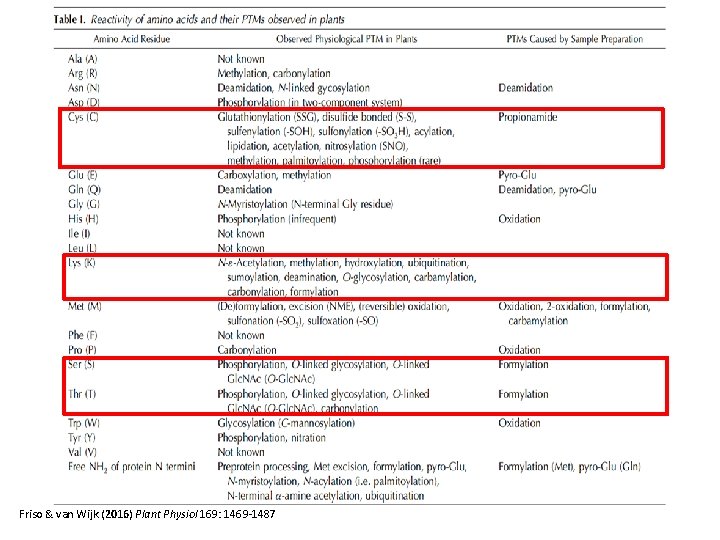
Friso & van Wijk (2016) Plant Physiol 169: 1469 -1487
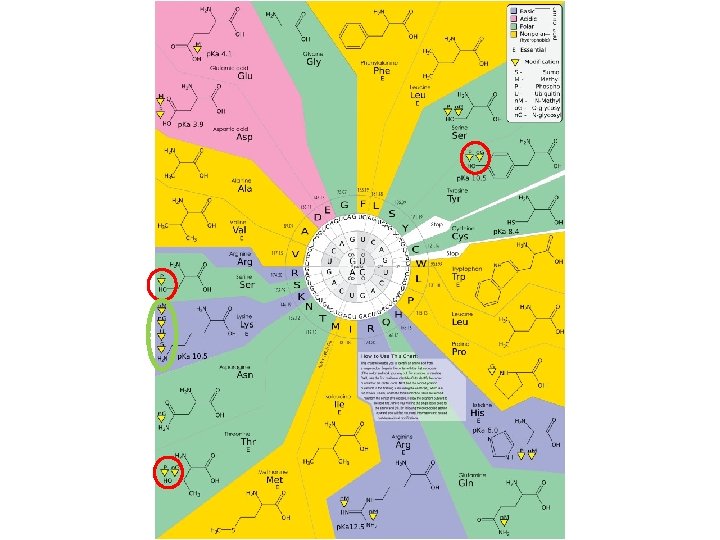
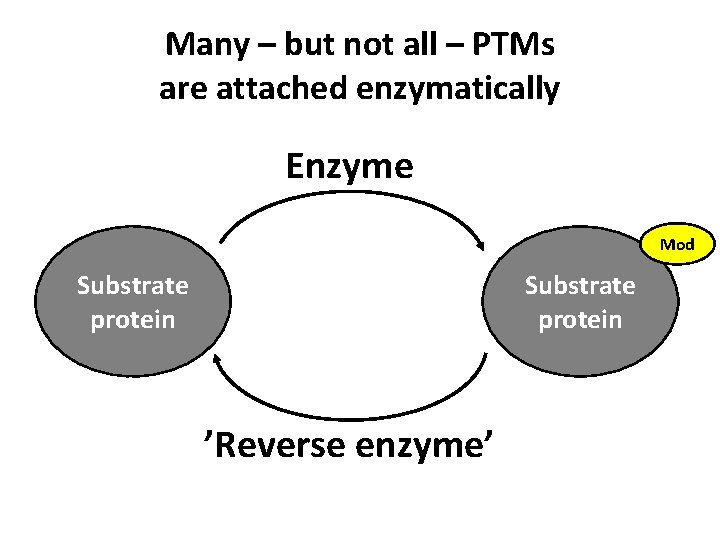
Many – but not all – PTMs are attached enzymatically Enzyme Mod Substrate protein ’Reverse enzyme’
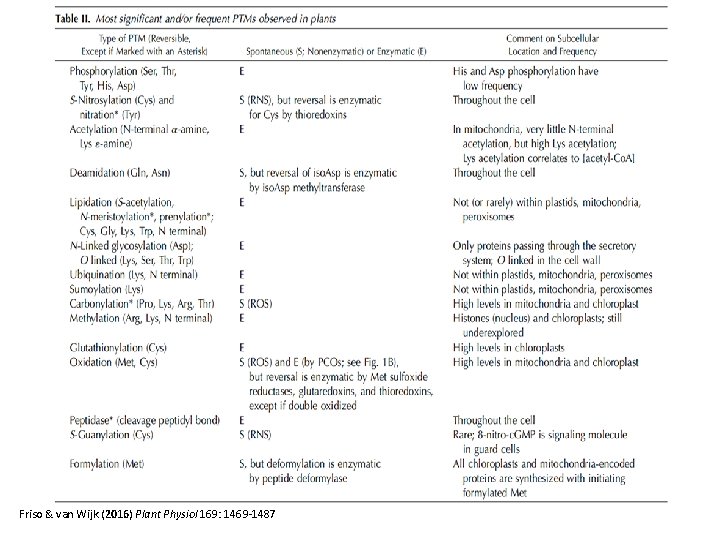
Friso & van Wijk (2016) Plant Physiol 169: 1469 -1487
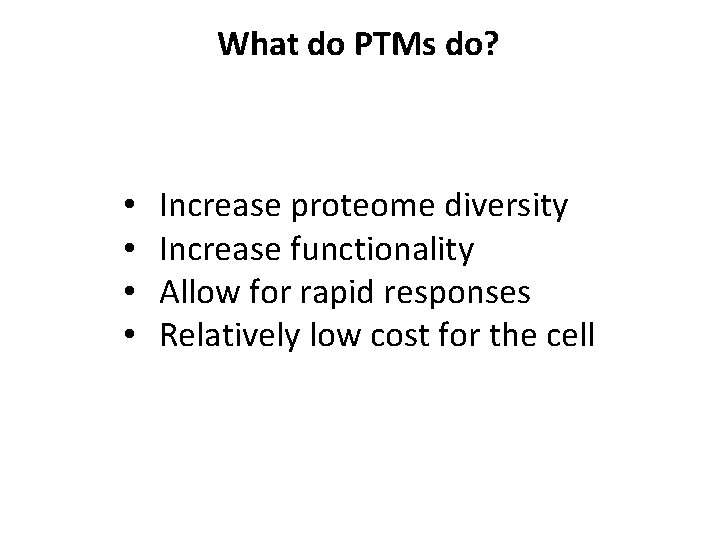
What do PTMs do? • • Increase proteome diversity Increase functionality Allow for rapid responses Relatively low cost for the cell
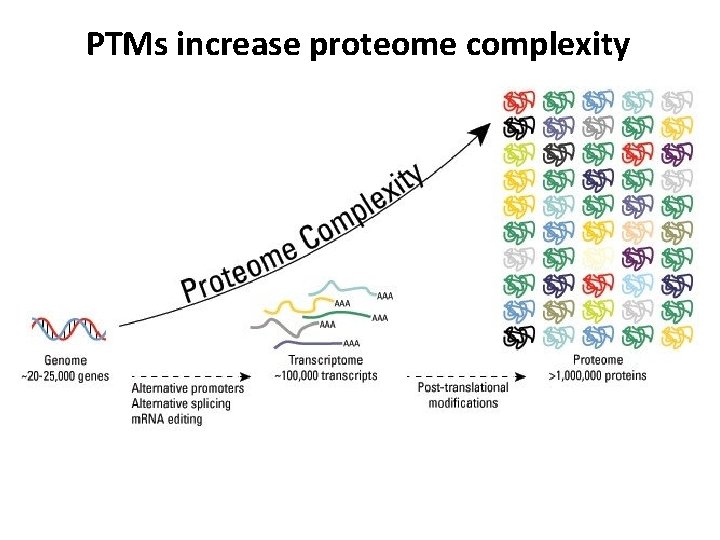
PTMs increase proteome complexity
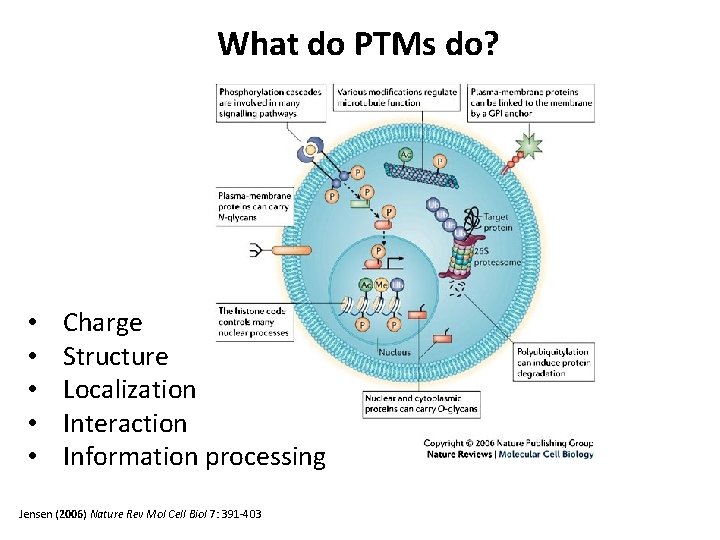
What do PTMs do? • • • Charge Structure Localization Interaction Information processing Jensen (2006) Nature Rev Mol Cell Biol 7: 391 -403
What do PTMs do? Hydrophobic groups for membrane localization • • myristoylation palmitoylation isoprenylation or prenylation (farnesylation, geranylation) GPI anchor formation
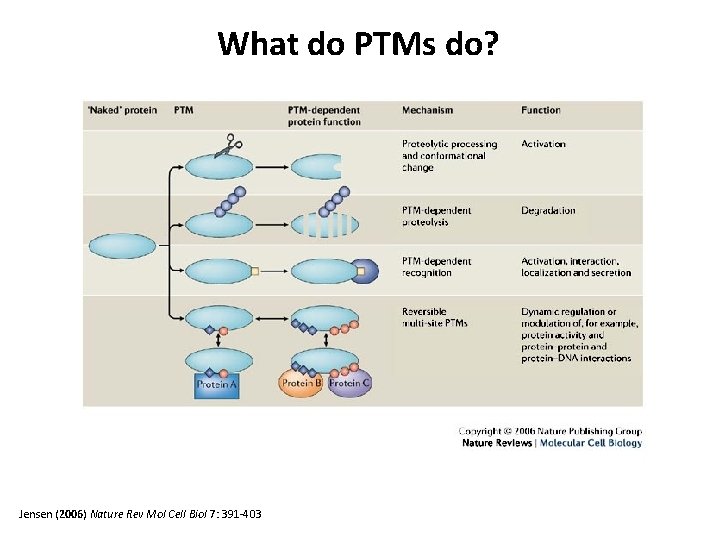
What do PTMs do? Jensen (2006) Nature Rev Mol Cell Biol 7: 391 -403
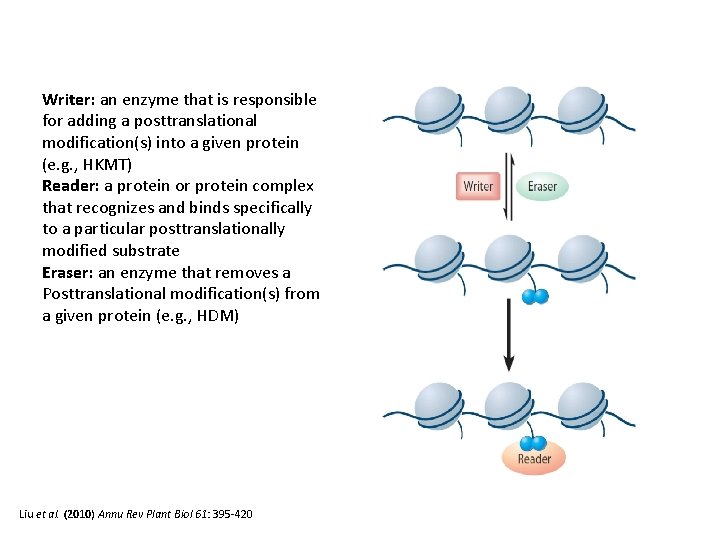
Writer: an enzyme that is responsible for adding a posttranslational modification(s) into a given protein (e. g. , HKMT) Reader: a protein or protein complex that recognizes and binds specifically to a particular posttranslationally modified substrate Eraser: an enzyme that removes a Posttranslational modification(s) from a given protein (e. g. , HDM) Liu et al. (2010) Annu Rev Plant Biol 61: 395 -420
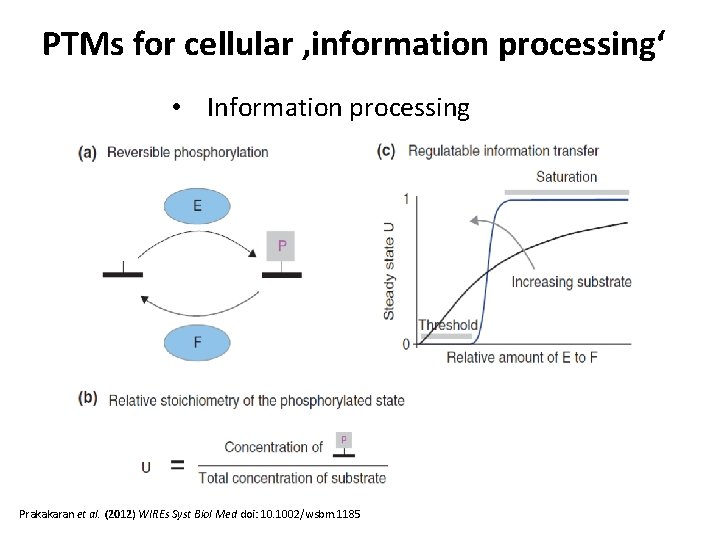
PTMs for cellular ‚information processing‘ • Information processing Prakakaran et al. (2012) WIREs Syst Biol Med doi: 10. 1002/wsbm. 1185
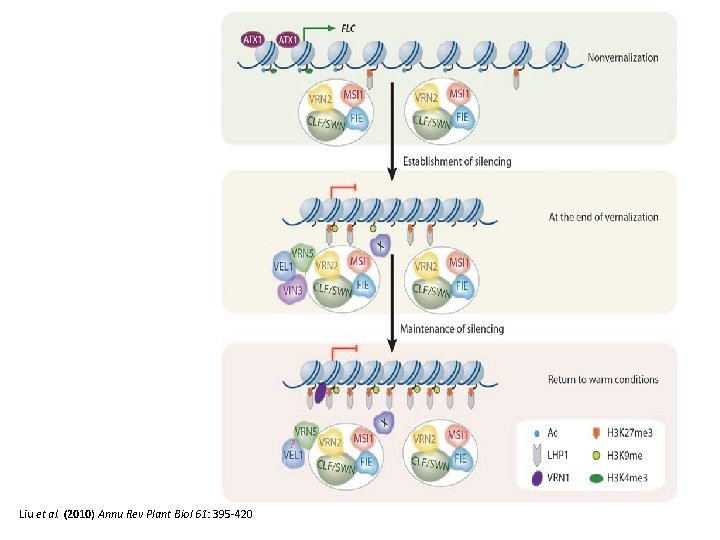
Liu et al. (2010) Annu Rev Plant Biol 61: 395 -420
How to detect PTMs?
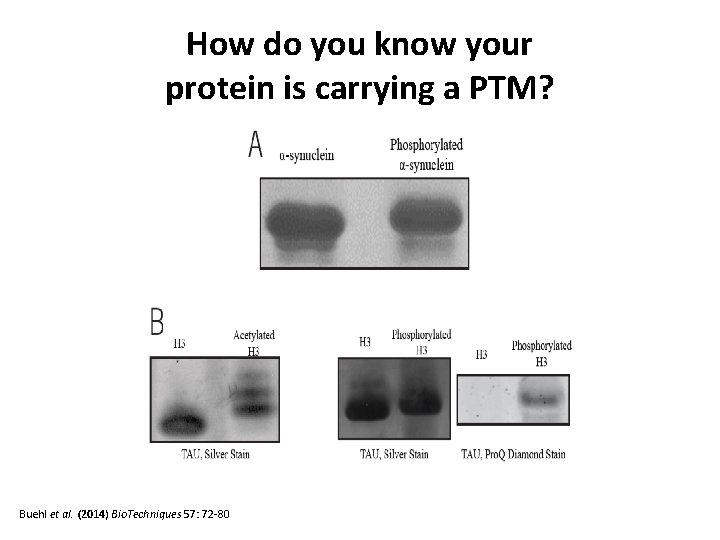
How do you know your protein is carrying a PTM? Buehl et al. (2014) Bio. Techniques 57: 72 -80
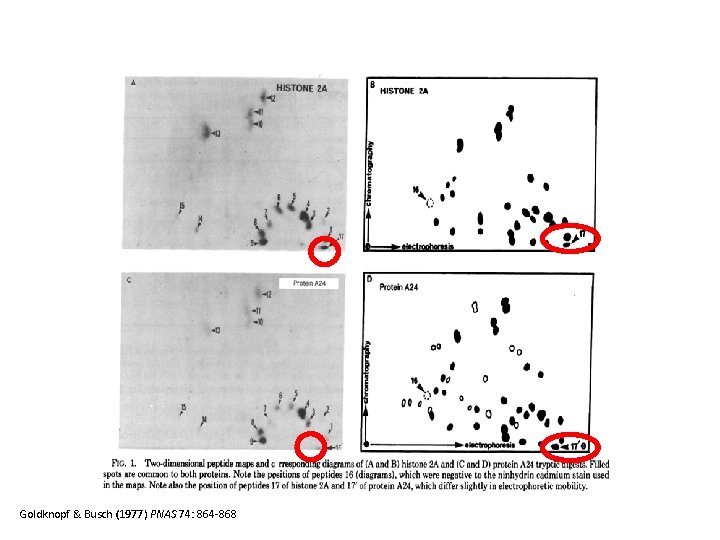
Goldknopf & Busch (1977) PNAS 74: 864 -868
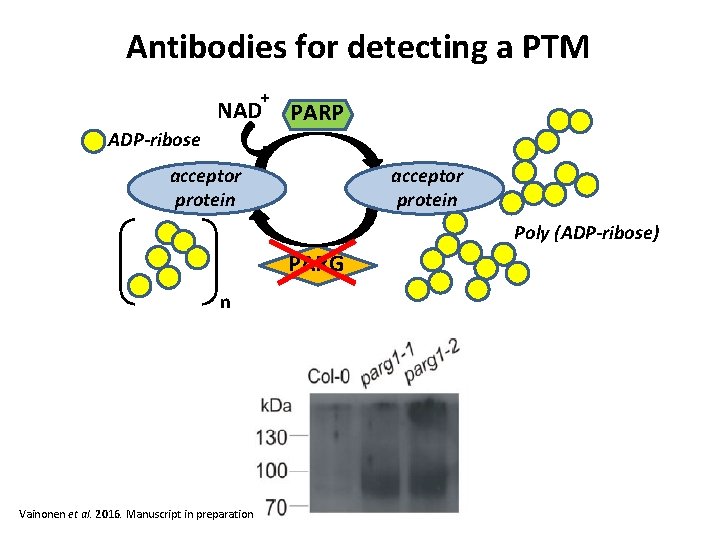
Antibodies for detecting a PTM + NAD PARP ADP-ribose acceptor protein Poly (ADP-ribose) PARG n Vainonen et al. 2016. Manuscript in preparation
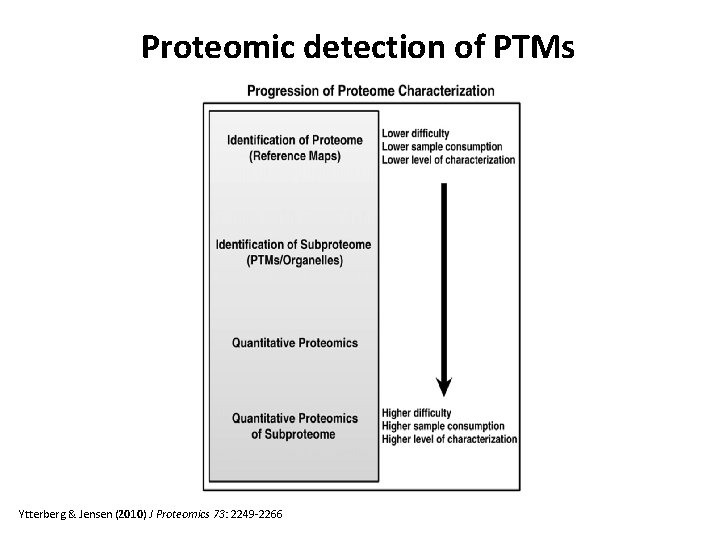
Proteomic detection of PTMs Ytterberg & Jensen (2010) J Proteomics 73: 2249 -2266
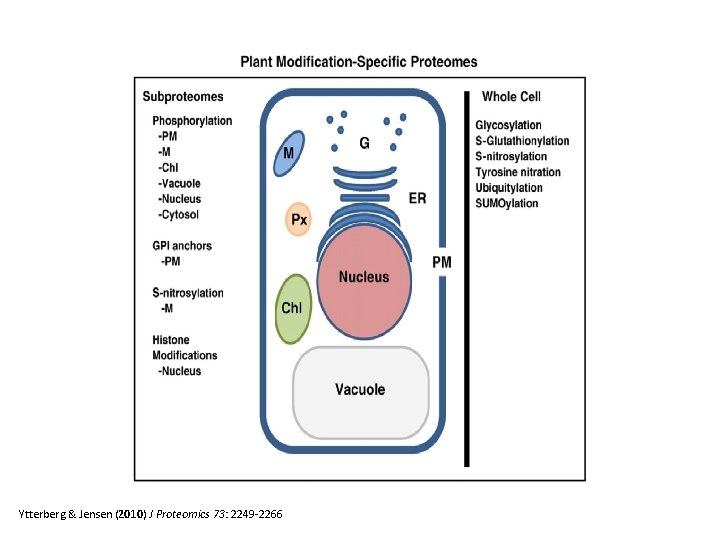
Ytterberg & Jensen (2010) J Proteomics 73: 2249 -2266
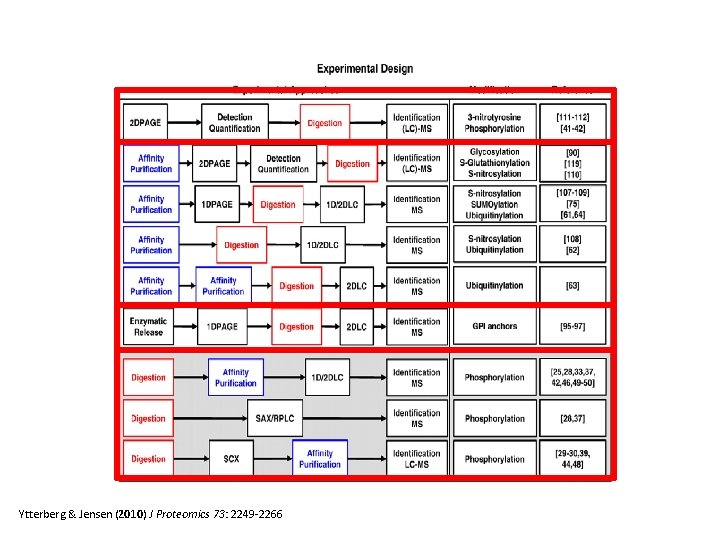
Ytterberg & Jensen (2010) J Proteomics 73: 2249 -2266
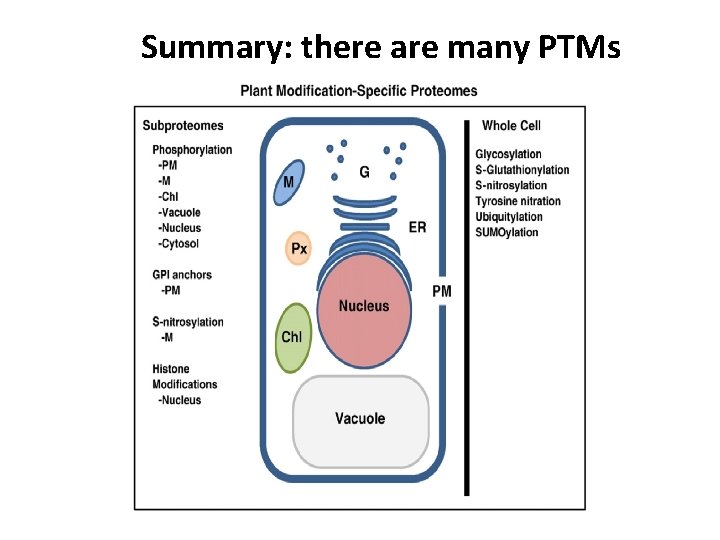
Summary: there are many PTMs
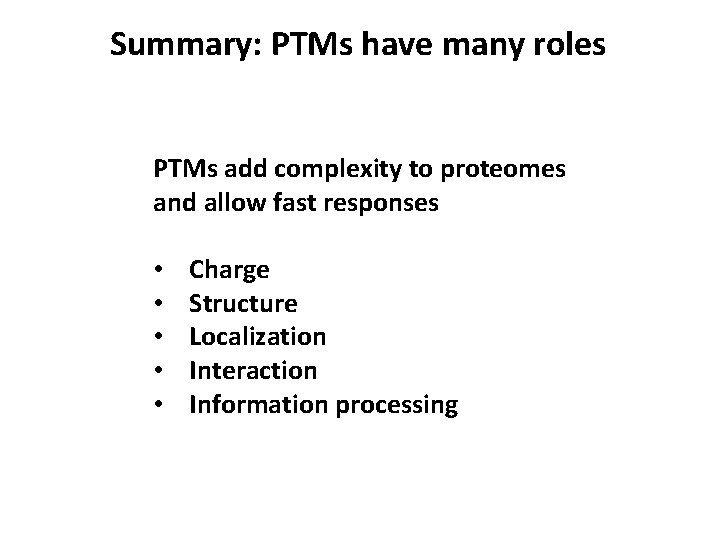
Summary: PTMs have many roles PTMs add complexity to proteomes and allow fast responses • • • Charge Structure Localization Interaction Information processing
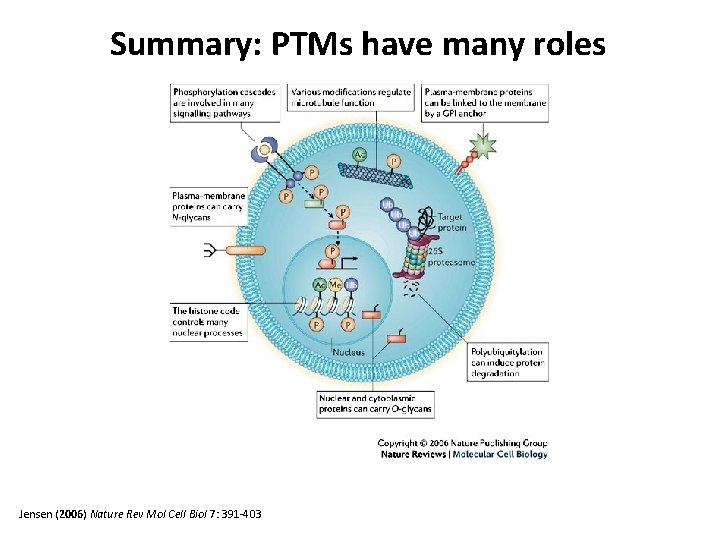
Summary: PTMs have many roles Jensen (2006) Nature Rev Mol Cell Biol 7: 391 -403
- Slides: 27