
Signal Ex Linking environmental acoustics with the signaling
- Slides: 27
Signal. Ex: Linking environmental acoustics with the signaling schemes Michael Porter Ocean Sciences Division Science Applications International and Keyko Mc. Donald, Paul Baxley, Joseph Rice Space and Naval Warfare Systems Center San Diego, CA
Outline Signal. Ex • Motivation Case study: Front engineering test • Signal. Ex tests – – – Telesonar testbeds Sites b, c, d Measured channel impulse response Predicted channel impulse response Performance of a DPSK/DSSS system
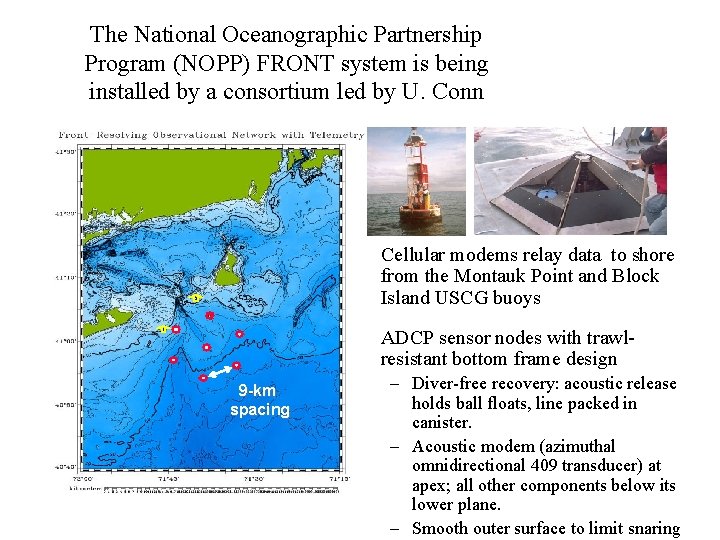
The National Oceanographic Partnership Program (NOPP) FRONT system is being installed by a consortium led by U. Conn • Cellular modems relay data to shore from the Montauk Point and Block Island USCG buoys • ADCP sensor nodes with trawlresistant bottom frame design 9 -km spacing – Diver-free recovery: acoustic release holds ball floats, line packed in canister. – Acoustic modem (azimuthal omnidirectional 409 transducer) at apex; all other components below its lower plane. – Smooth outer surface to limit snaring
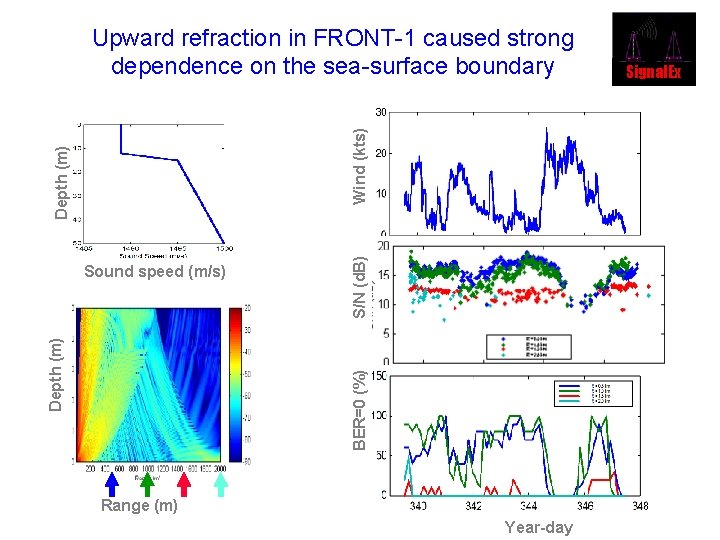
BER=0 (%) Depth (m) Sound speed (m/s) S/N (d. B) Depth (m) Wind (kts) Upward refraction in FRONT-1 caused strong dependence on the sea-surface boundary Range (m) Year-day Signal. Ex
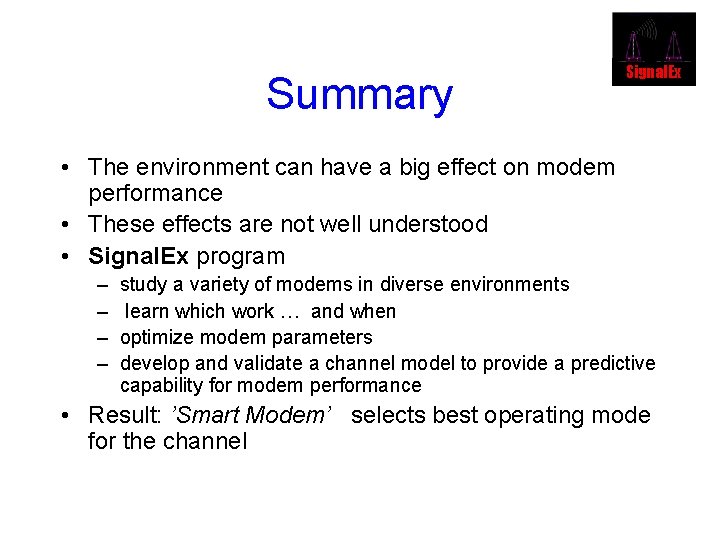
Summary Signal. Ex • The environment can have a big effect on modem performance • These effects are not well understood • Signal. Ex program – – study a variety of modems in diverse environments learn which work … and when optimize modem parameters develop and validate a channel model to provide a predictive capability for modem performance • Result: ’Smart Modem’ selects best operating mode for the channel
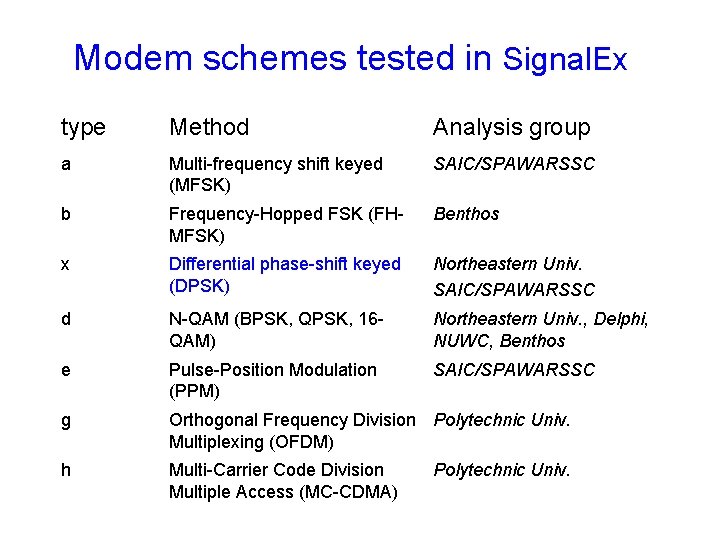
Modem schemes tested in Signal. Ex type Method Analysis group a Multi-frequency shift keyed (MFSK) SAIC/SPAWARSSC b Frequency-Hopped FSK (FHMFSK) Benthos x Differential phase-shift keyed (DPSK) Northeastern Univ. SAIC/SPAWARSSC d N-QAM (BPSK, QPSK, 16 QAM) Northeastern Univ. , Delphi, NUWC, Benthos e Pulse-Position Modulation (PPM) SAIC/SPAWARSSC g Orthogonal Frequency Division Polytechnic Univ. Multiplexing (OFDM) h Multi-Carrier Code Division Multiple Access (MC-CDMA) Polytechnic Univ.
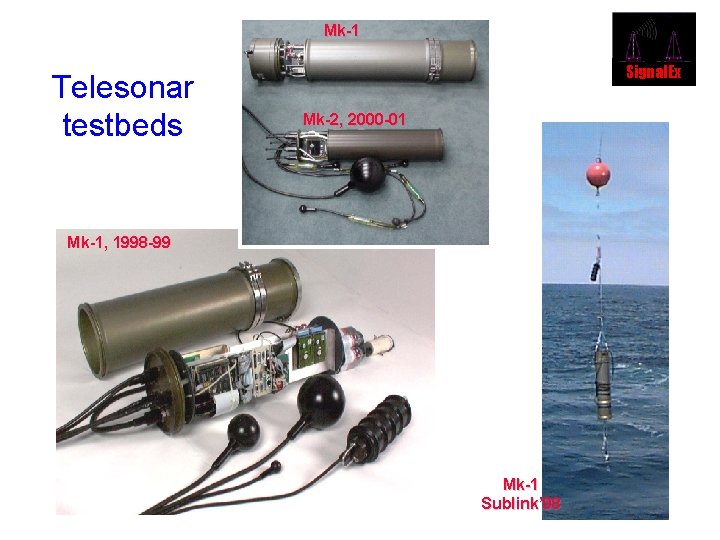
Mk-1 Telesonar testbeds Signal. Ex Mk-2, 2000 -01 Mk-1, 1998 -99 Mk-1 Sublink’ 98
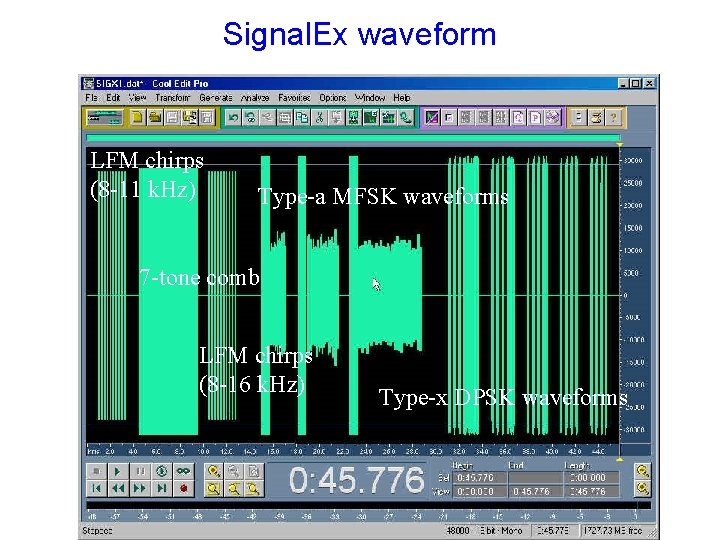
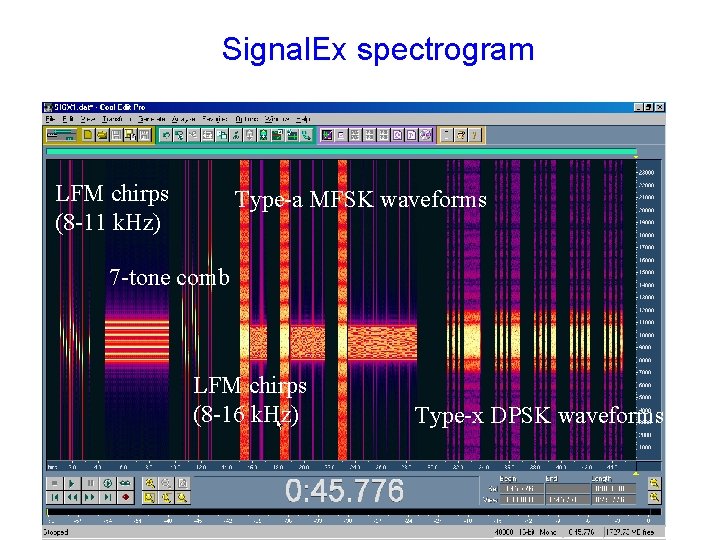
Signal. Ex waveform LFM chirps (8 -11 k. Hz) Type-a MFSK waveforms 7 -tone comb LFM chirps (8 -16 k. Hz) Type-x DPSK waveforms
Signal. Ex spectrogram LFM chirps (8 -11 k. Hz) Type-a MFSK waveforms 7 -tone comb LFM chirps (8 -16 k. Hz) Type-x DPSK waveforms
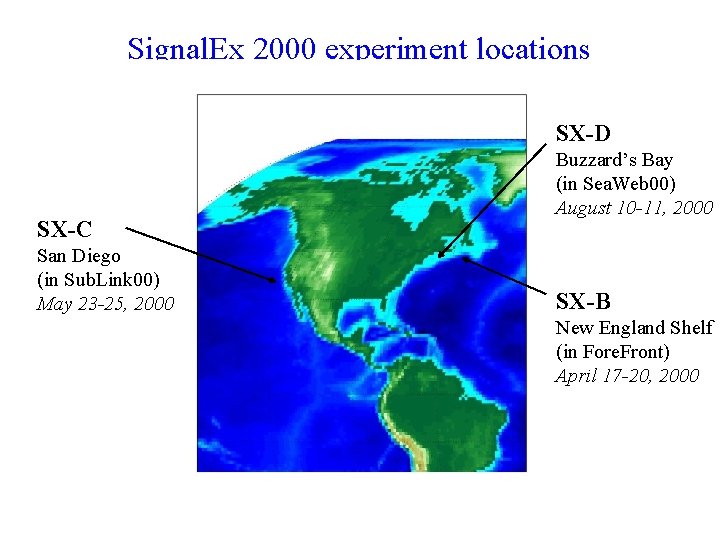
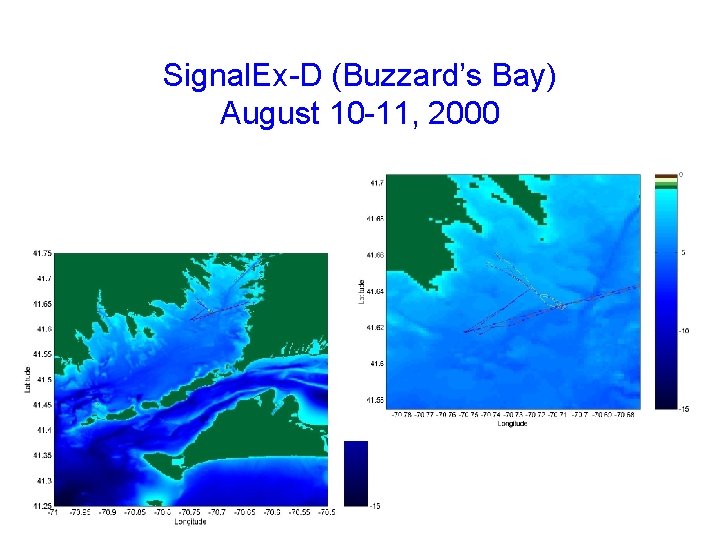
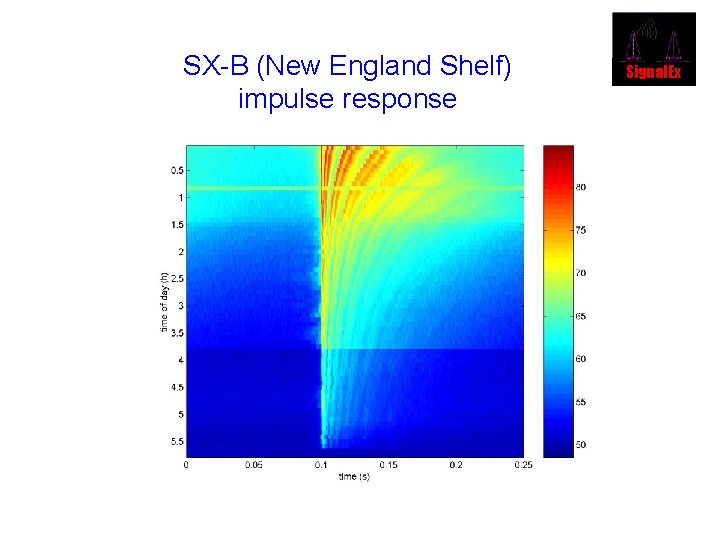
Signal. Ex 2000 experiment locations SX-D SX-C San Diego (in Sub. Link 00) May 23 -25, 2000 Buzzard’s Bay (in Sea. Web 00) August 10 -11, 2000 SX-B New England Shelf (in Fore. Front) April 17 -20, 2000
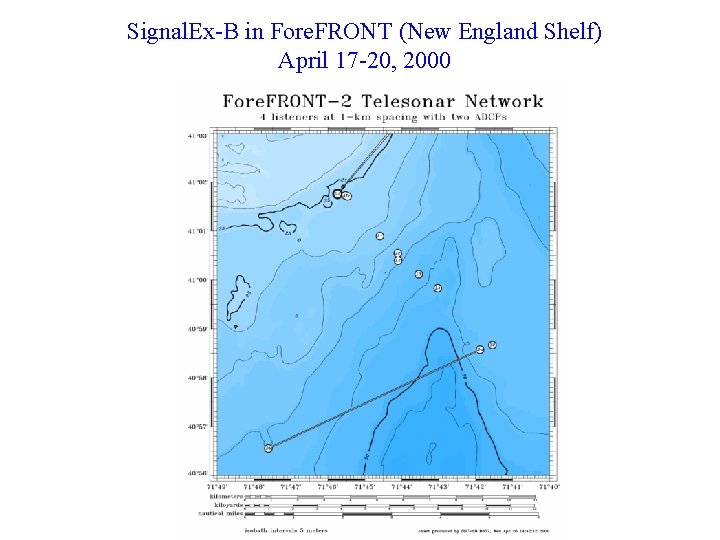
Signal. Ex-B in Fore. FRONT (New England Shelf) April 17 -20, 2000
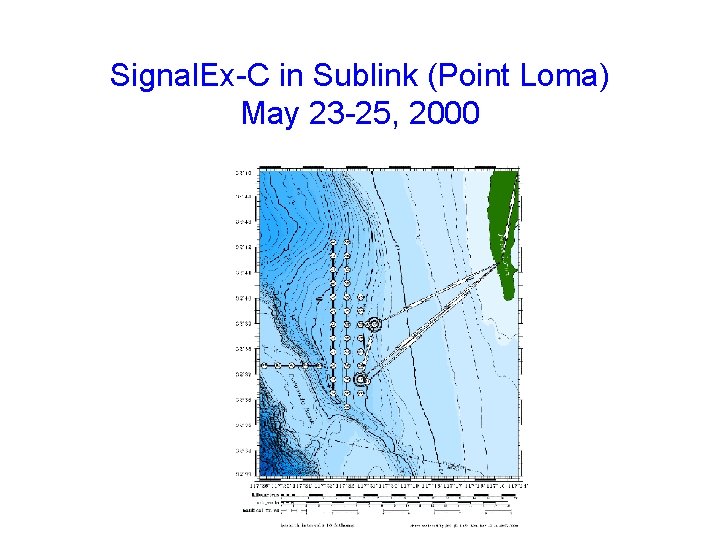
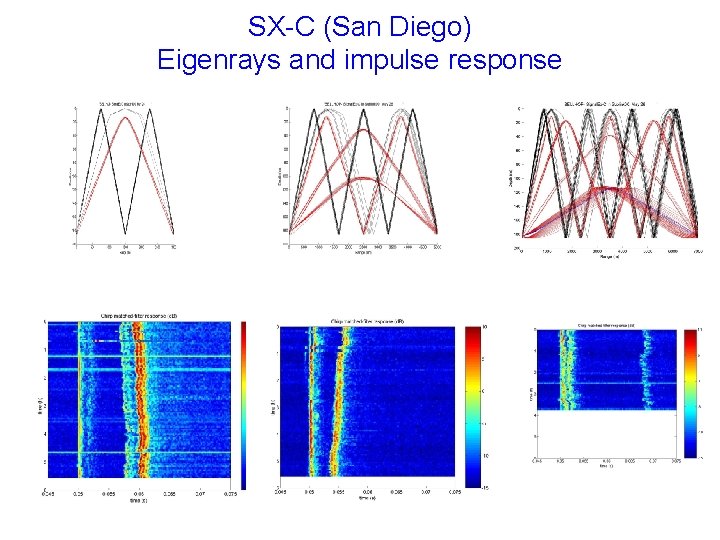
Signal. Ex-C in Sublink (Point Loma) May 23 -25, 2000
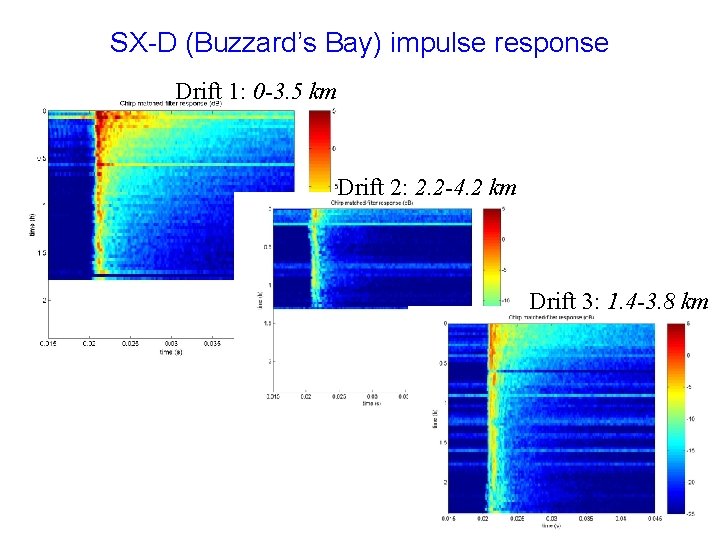
Signal. Ex-D (Buzzard’s Bay) August 10 -11, 2000
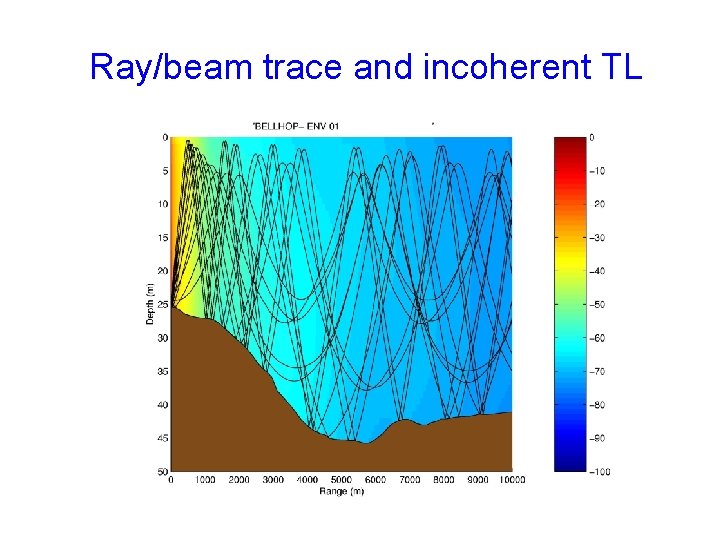
Ray/beam trace and incoherent TL
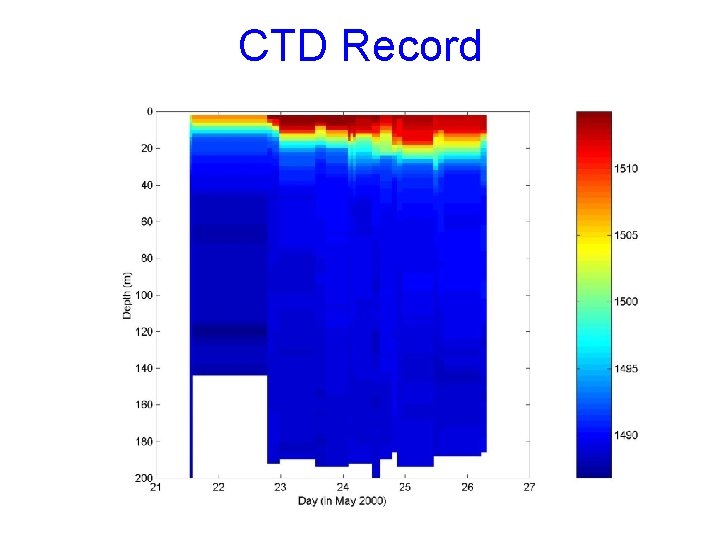
CTD Record
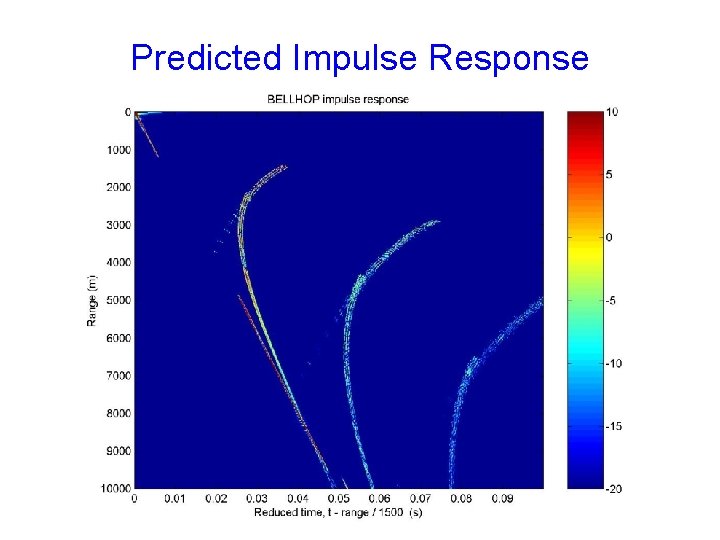
Predicted Impulse Response
SX-B (New England Shelf) impulse response Signal. Ex
SX-C (San Diego) Eigenrays and impulse response
SX-D (Buzzard’s Bay) impulse response Drift 1: 0 -3. 5 km Drift 2: 2. 2 -4. 2 km Drift 3: 1. 4 -3. 8 km
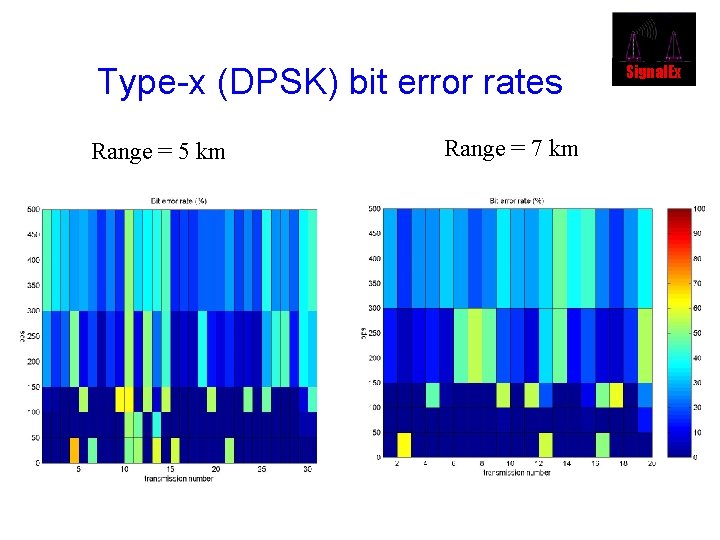
Type-x (DPSK) bit error rates Range = 5 km Range = 7 km Signal. Ex
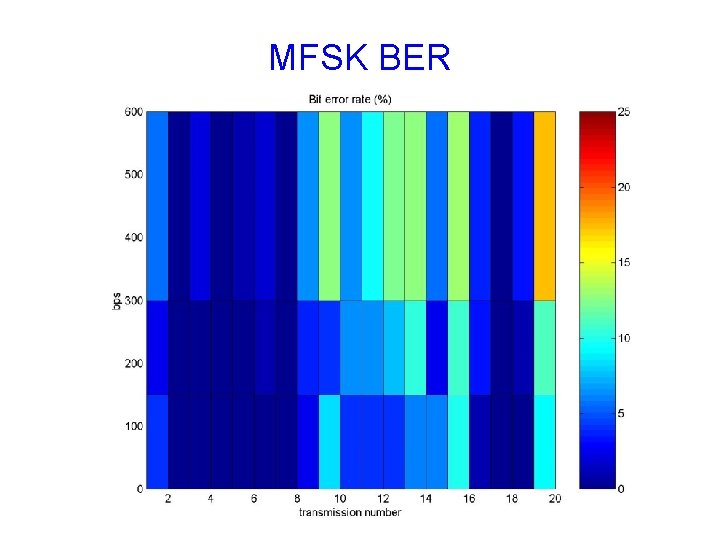
MFSK BER
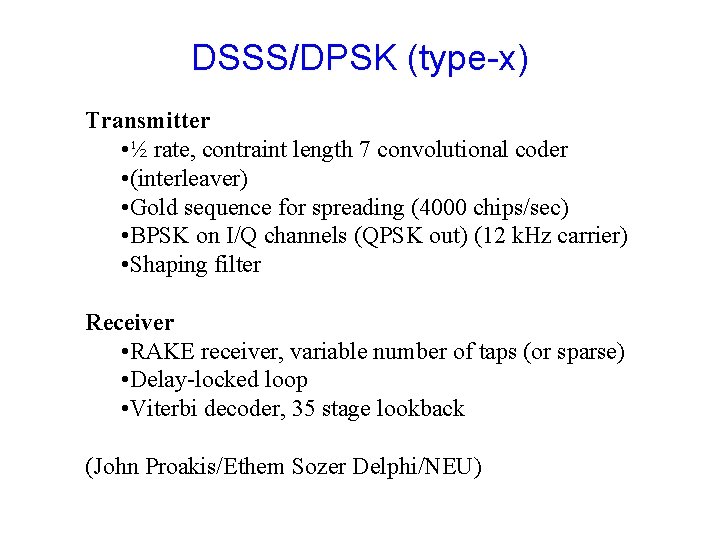
DSSS/DPSK (type-x) Transmitter • ½ rate, contraint length 7 convolutional coder • (interleaver) • Gold sequence for spreading (4000 chips/sec) • BPSK on I/Q channels (QPSK out) (12 k. Hz carrier) • Shaping filter Receiver • RAKE receiver, variable number of taps (or sparse) • Delay-locked loop • Viterbi decoder, 35 stage lookback (John Proakis/Ethem Sozer Delphi/NEU)
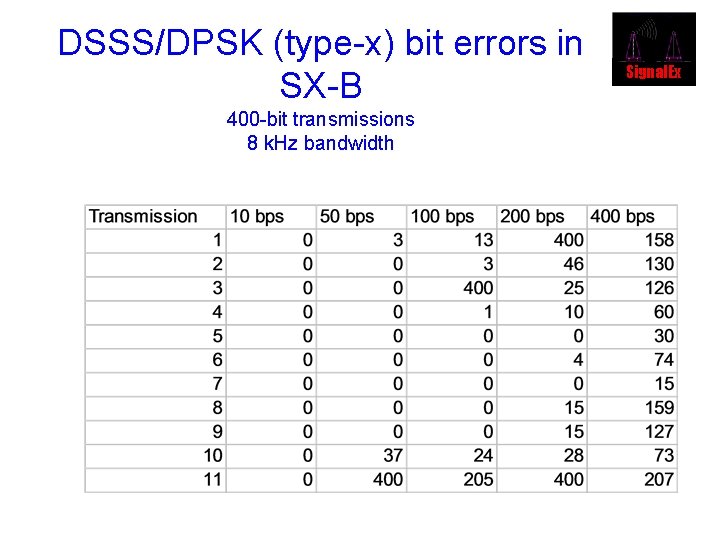
DSSS/DPSK (type-x) bit errors in SX-B 400 -bit transmissions 8 k. Hz bandwidth Signal. Ex
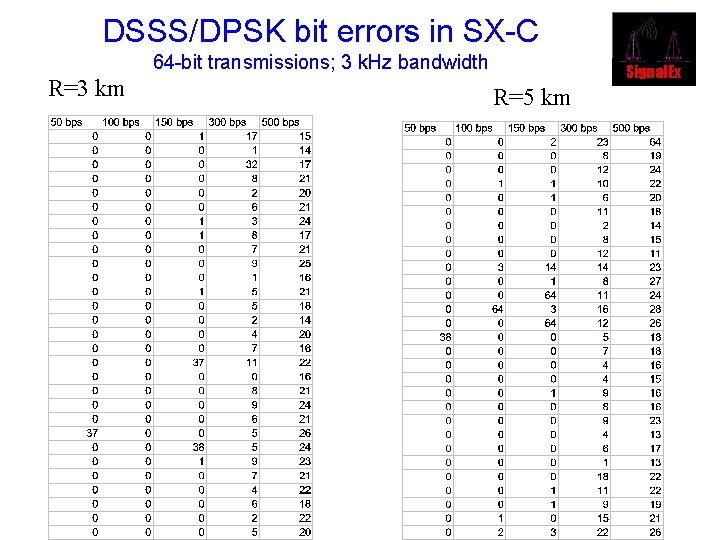
DSSS/DPSK bit errors in SX-C 64 -bit transmissions; 3 k. Hz bandwidth R=3 km Signal. Ex R=5 km
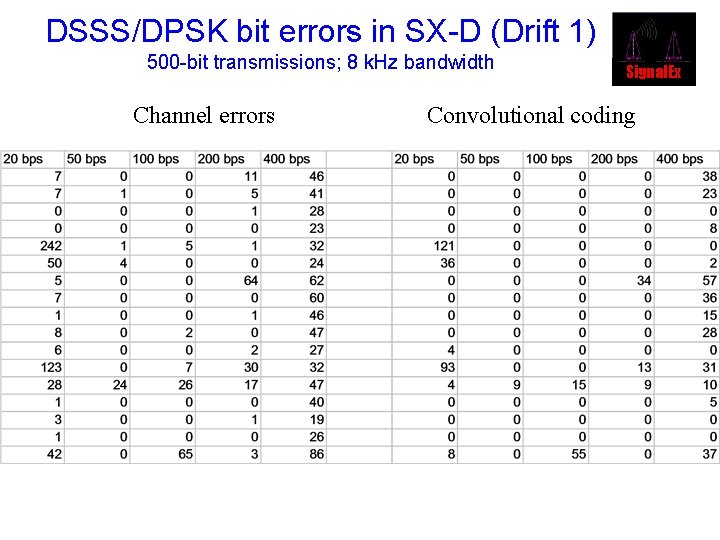
DSSS/DPSK bit errors in SX-D (Drift 1) 500 -bit transmissions; 8 k. Hz bandwidth Channel errors Signal. Ex Convolutional coding
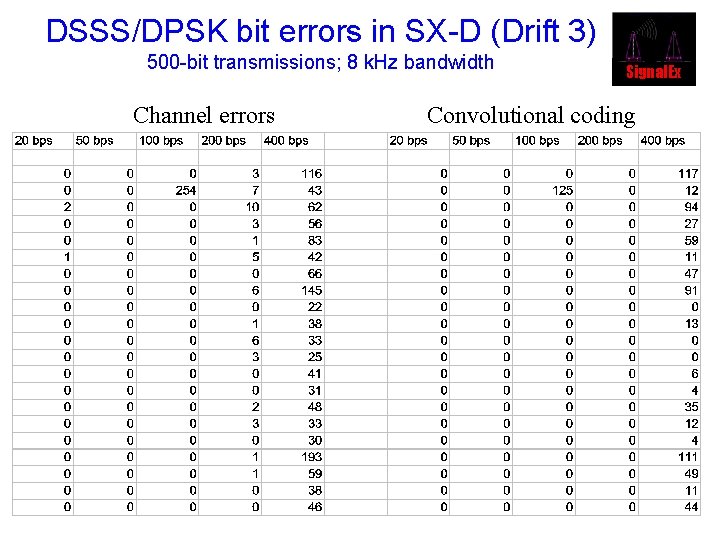
DSSS/DPSK bit errors in SX-D (Drift 3) 500 -bit transmissions; 8 k. Hz bandwidth Channel errors Signal. Ex Convolutional coding
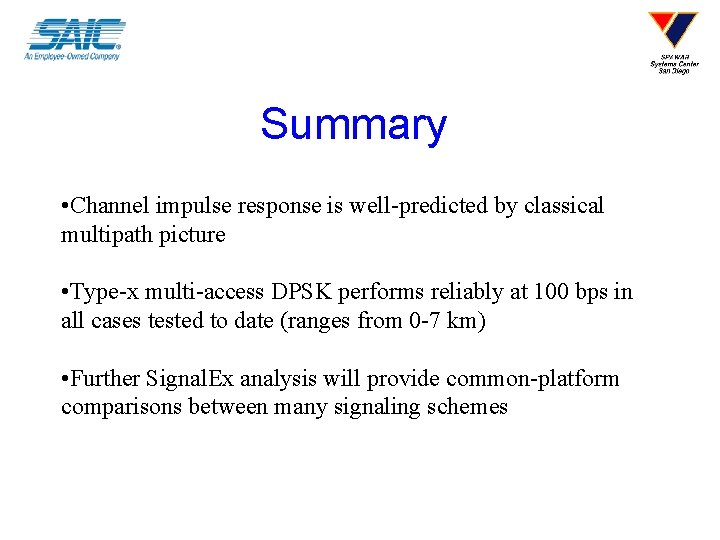
Summary • Channel impulse response is well-predicted by classical multipath picture • Type-x multi-access DPSK performs reliably at 100 bps in all cases tested to date (ranges from 0 -7 km) • Further Signal. Ex analysis will provide common-platform comparisons between many signaling schemes