
SIGNAL AND SYSTEM LECTURES SUMMARY What are they
![For many cases, x[n] is obtained by sampling x(t) as: x[n] = x(n. T)](https://slidetodoc.com/presentation_image_h2/6cf1be61db9130581c31bc7b29b8e071/image-6.jpg "For many cases, x[n] is obtained by sampling x(t) as: x[n] = x(n. T)")
![2. Even and odd signals: Even: x(−t) = x(t) x[−n] = x[n] Odd:](https://slidetodoc.com/presentation_image_h2/6cf1be61db9130581c31bc7b29b8e071/image-7.jpg "2. Even and odd signals: Even: x(−t) = x(t) x[−n] = x[n] Odd:")
![• DT signal x[n]: Energy: E= Power: Energy signal: if 0 < E](https://slidetodoc.com/presentation_image_h2/6cf1be61db9130581c31bc7b29b8e071/image-11.jpg "• DT signal x[n]: Energy: E= Power: Energy signal: if 0 < E")
- Slides: 24
SIGNAL AND SYSTEM LECTURES SUMMARY
What are they? Signal System General Introduction
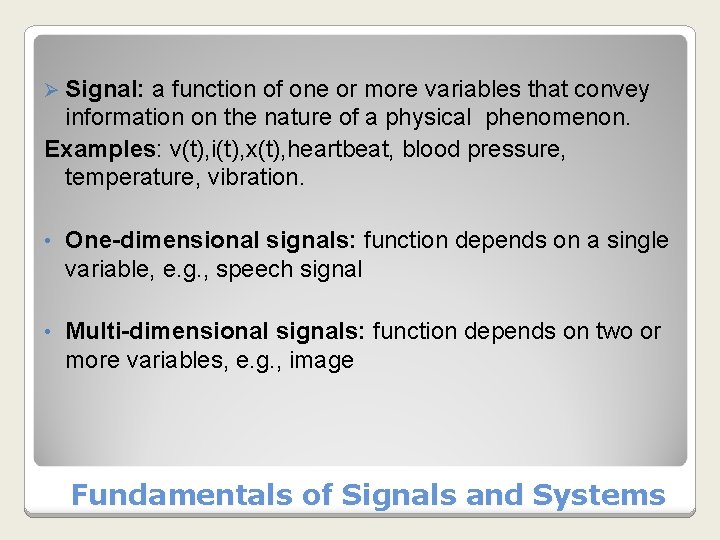
Ø Signal: a function of one or more variables that convey information on the nature of a physical phenomenon. Examples: v(t), i(t), x(t), heartbeat, blood pressure, temperature, vibration. • One-dimensional signals: function depends on a single variable, e. g. , speech signal • Multi-dimensional signals: function depends on two or more variables, e. g. , image Fundamentals of Signals and Systems
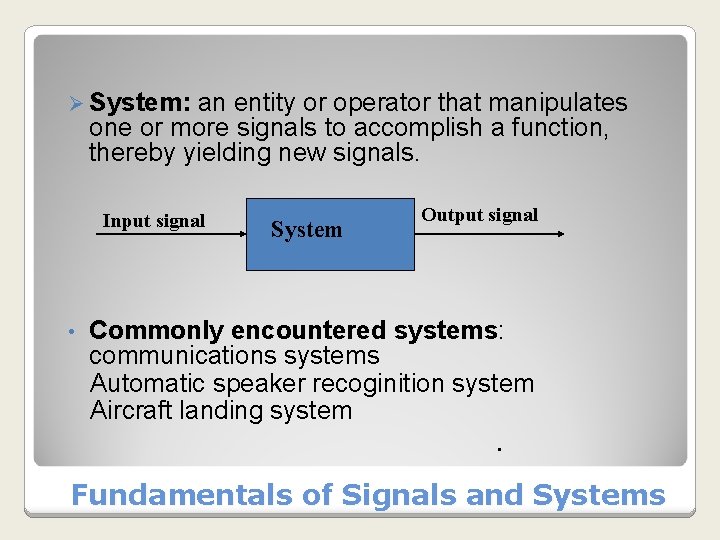
Ø System: an entity or operator that manipulates one or more signals to accomplish a function, thereby yielding new signals. Input signal • System Output signal Commonly encountered systems: communications systems Automatic speaker recoginition system Aircraft landing system . Fundamentals of Signals and Systems
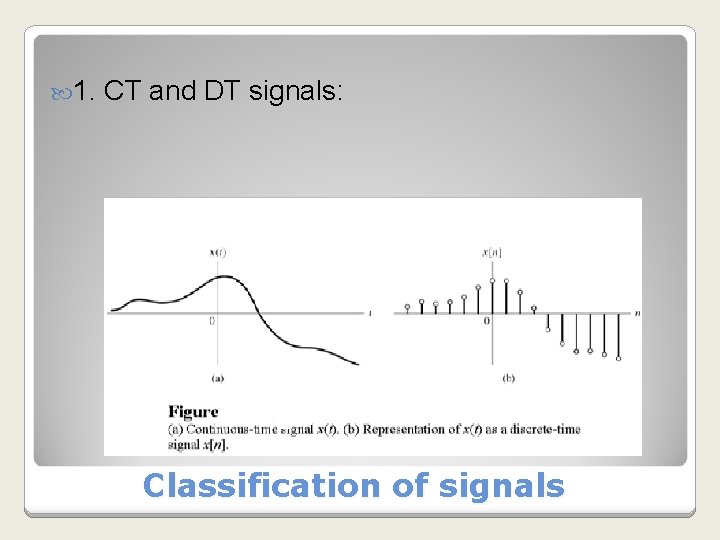
1. CT and DT signals: Classification of signals
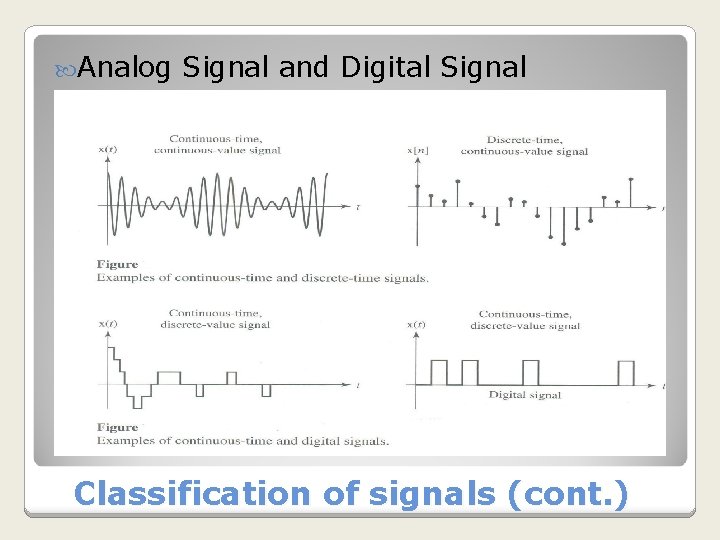
For many cases, x[n] is obtained by sampling x(t) as: x[n] = x(n. T) , n =0, +1, +2, … Are there any requirements for the sampling? Classification of signals (cont. )
2. Even and odd signals: Even: x(−t) = x(t) x[−n] = x[n] Odd: x(−t) = −x(t) x[−n] = −x[n] Any signal x(t) can be expressed as x(t) = xe(t) + xo(t) ) x(−t) = xe(t) − xo(t) where xe(t) = 1/2(x(t) + x(−t)) xo(t) = 1/2(x(t) − x(−t)) Classification of signals (cont. )
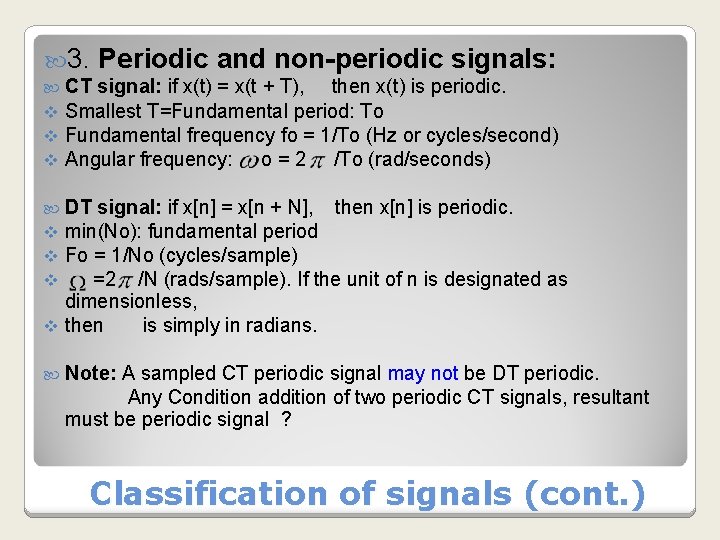
3. Periodic and non-periodic signals: CT signal: if x(t) = x(t + T), then x(t) is periodic. v Smallest T=Fundamental period: To v Fundamental frequency fo = 1/To (Hz or cycles/second) v Angular frequency: o = 2 /To (rad/seconds) DT signal: if x[n] = x[n + N], then x[n] is periodic. v min(No): fundamental period v Fo = 1/No (cycles/sample) v =2 /N (rads/sample). If the unit of n is designated dimensionless, v then is simply in radians. as Note: A sampled CT periodic signal may not be DT periodic. Any Condition addition of two periodic CT signals, resultant must be periodic signal ? Classification of signals (cont. )
4. Deterministic and random signals. • Deterministic signal: No uncertainty with to its value at any time • Completely specified at any time • respect Random signal: Uncertain before it occurs. E. g. , thermal noise. Classification of signals (cont. )
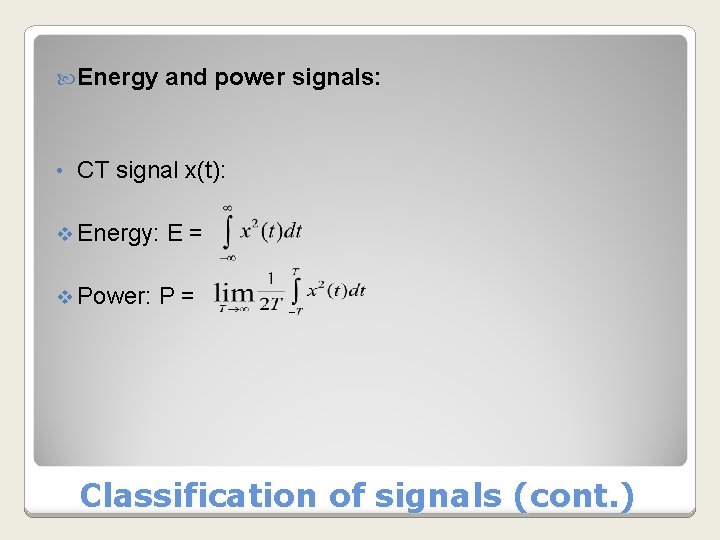
Energy • and power signals: CT signal x(t): v Energy: v Power: E= P= Classification of signals (cont. )
• DT signal x[n]: Energy: E= Power: Energy signal: if 0 < E < Power signal: if 0 < P < Classification of signals (cont. )
Analog Signal and Digital Signal Classification of signals (cont. )
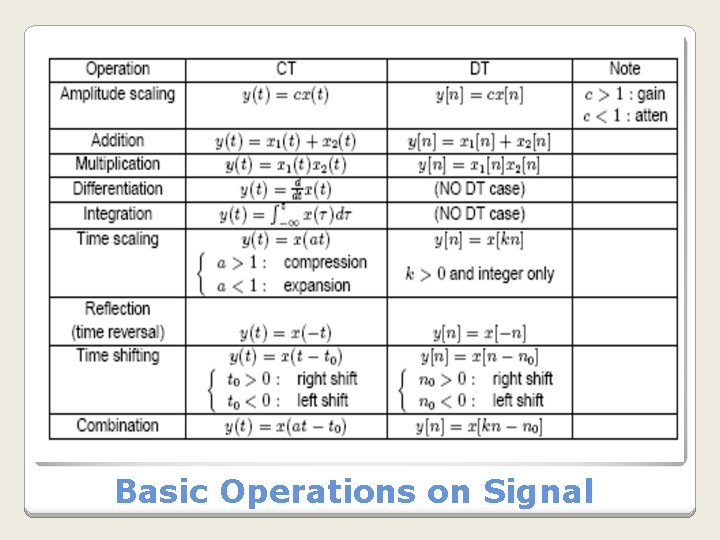
Basic operations on signals Basic Operations on Signal
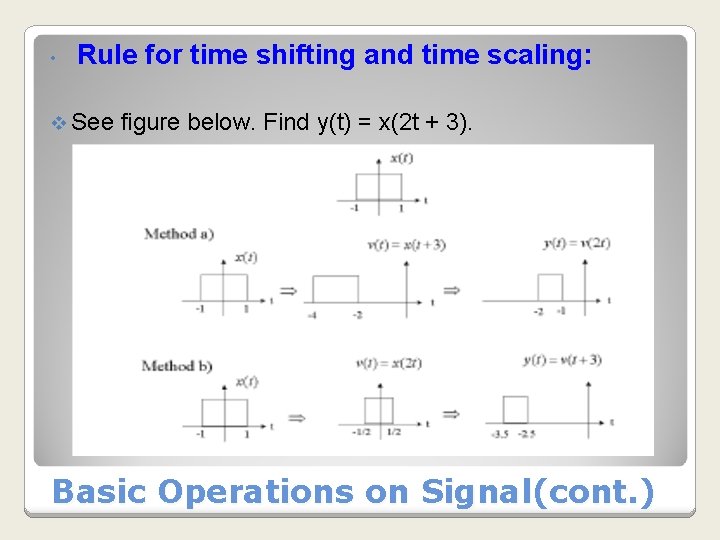
• Rule for time shifting and time scaling: v See figure below. Find y(t) = x(2 t + 3). Basic Operations on Signal(cont. )
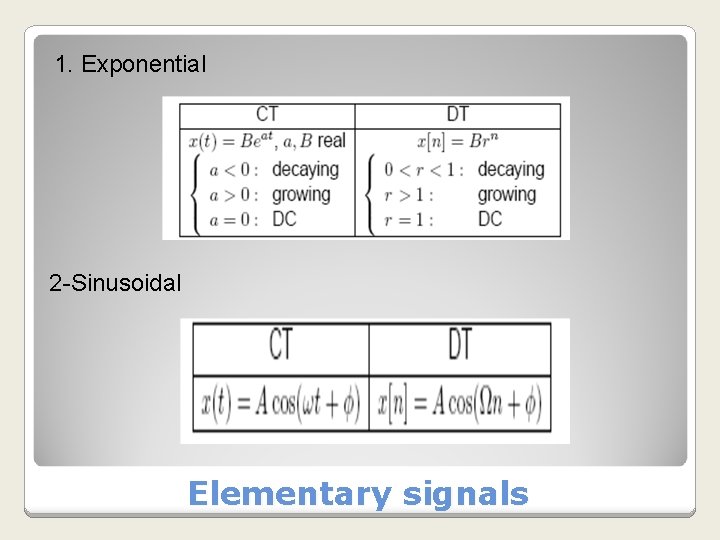
1. Exponential 2 -Sinusoidal Elementary signals
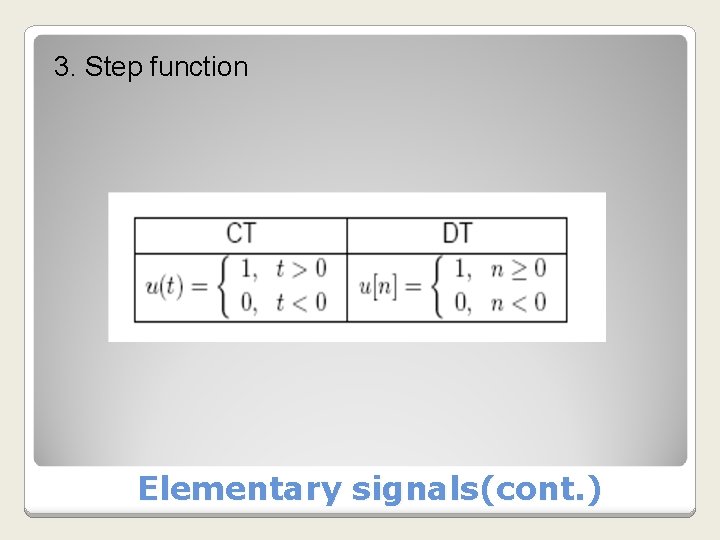
3. Step function Elementary signals(cont. )
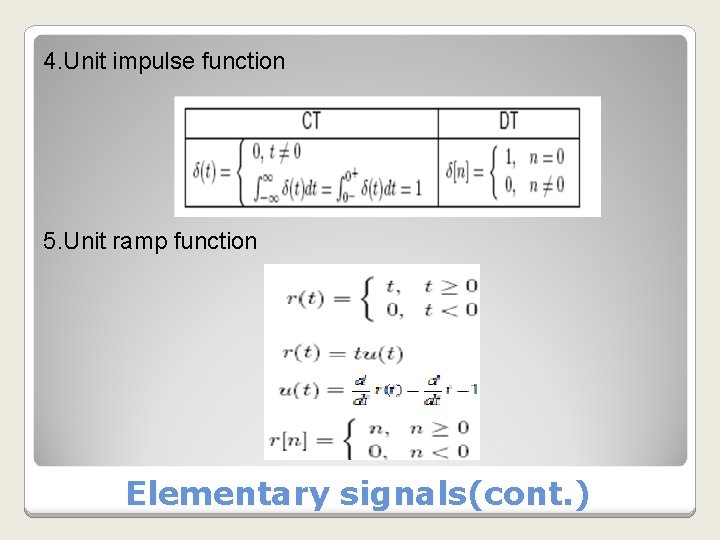
4. Unit impulse function 5. Unit ramp function Elementary signals(cont. )
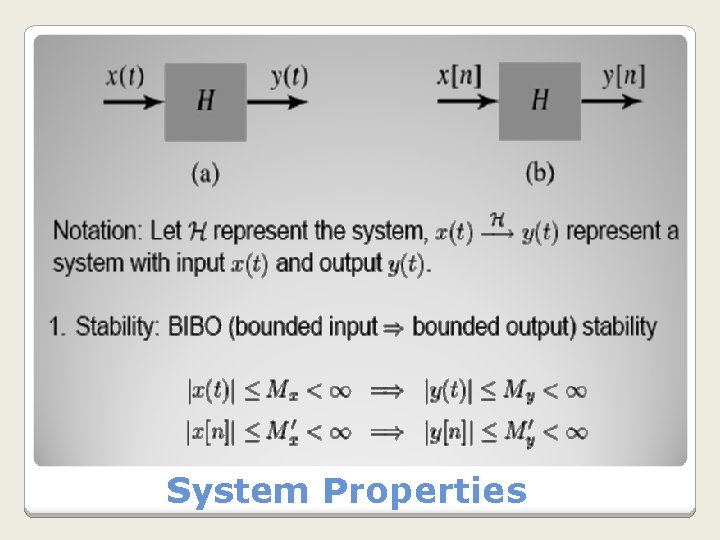
System Properties
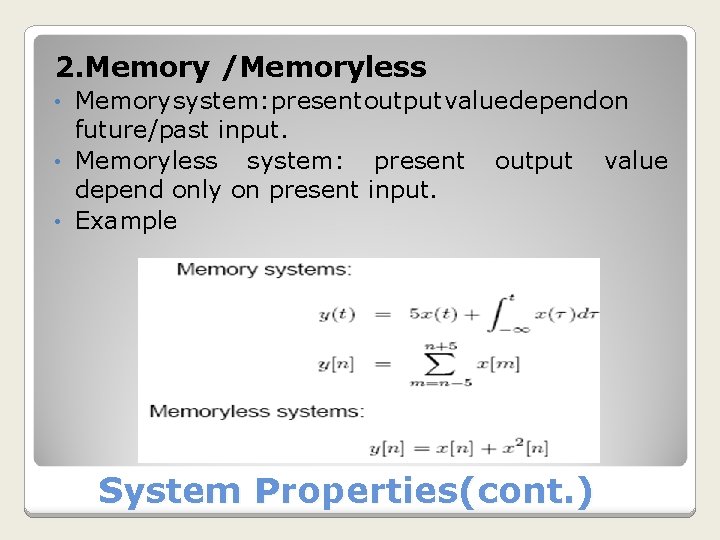
2. Memory /Memoryless Memory system: present output value depend on future/past input. • Memoryless system: present output value depend only on present input. • Example • System Properties(cont. )
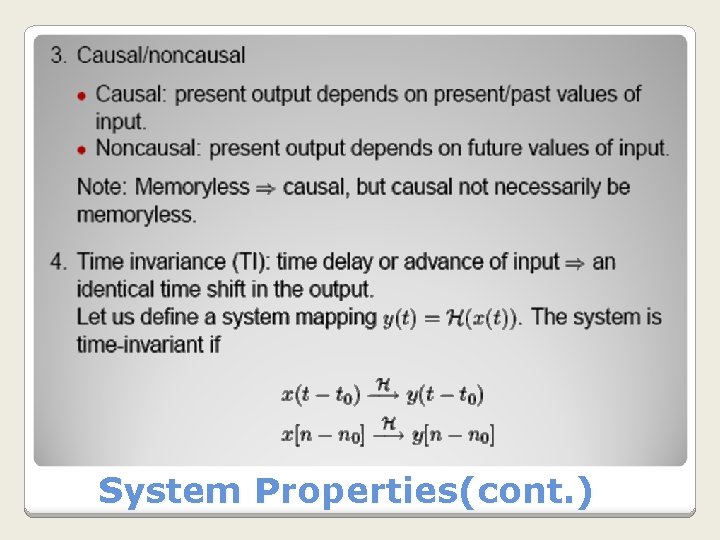
System Properties(cont. )
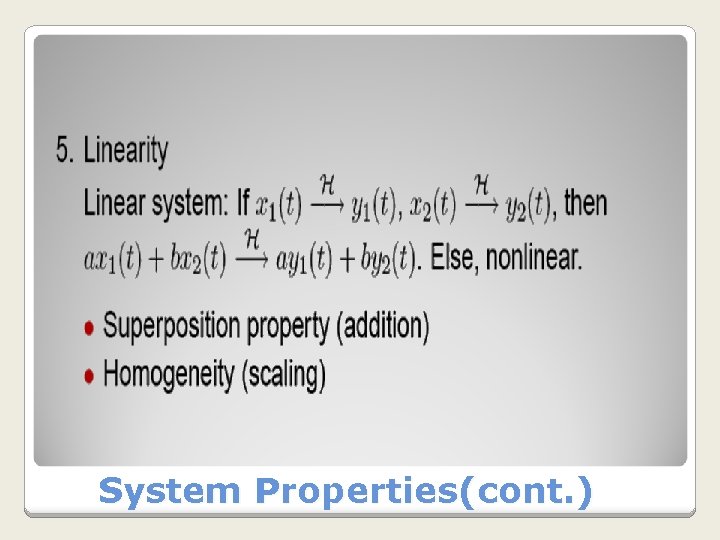
System Properties(cont. )
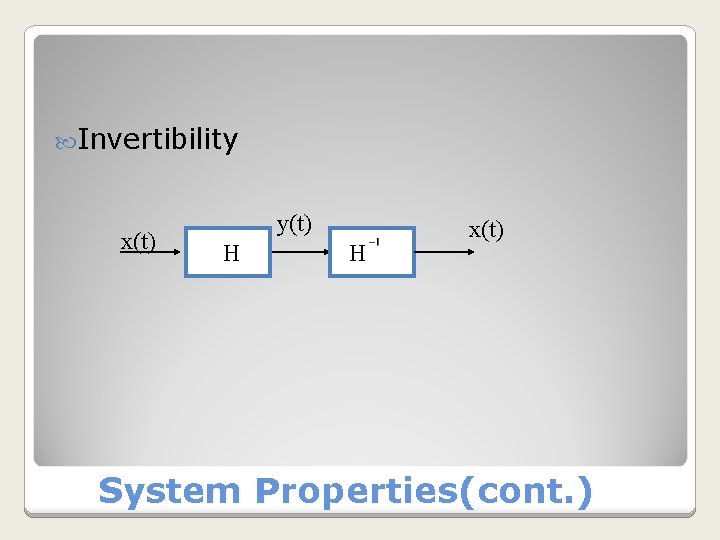
Invertibility x(t) y(t) H H x(t) System Properties(cont. )
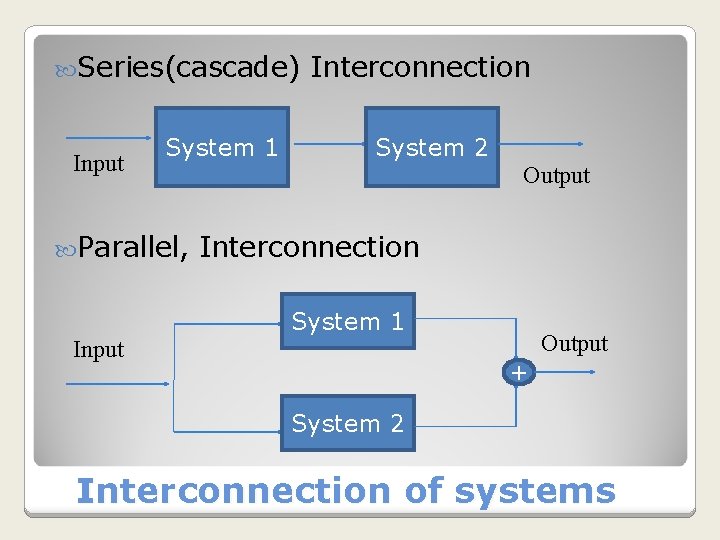
Series(cascade) Input System 1 Parallel, Input Interconnection System 2 Output Interconnection System 1 Output + System 2 Interconnection of systems
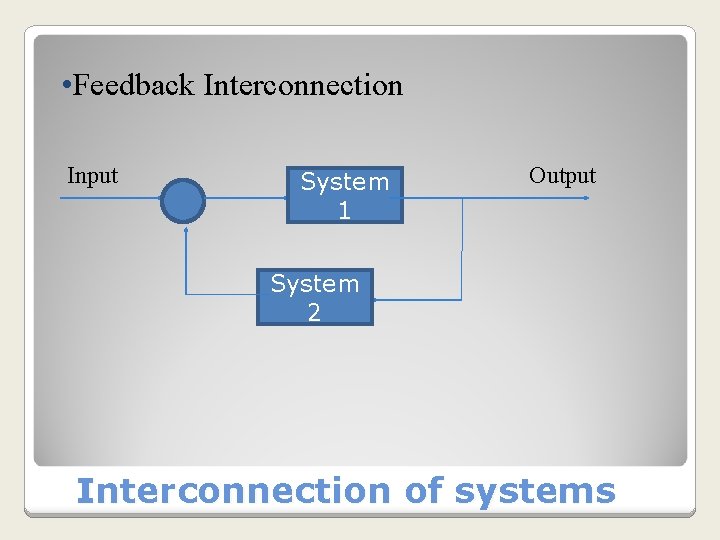
• Feedback Interconnection Input System 1 Output System 2 Interconnection of systems