
Sigmund Freud on Dreams and Desire Instinct an
- Slides: 9
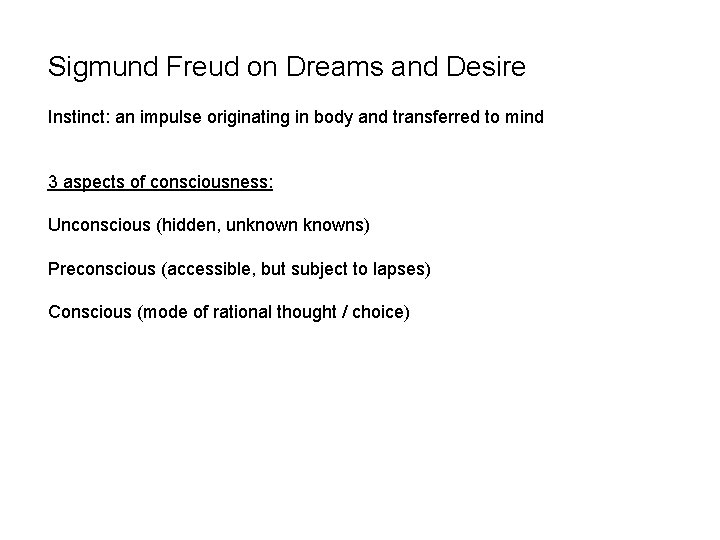
Sigmund Freud on Dreams and Desire Instinct: an impulse originating in body and transferred to mind 3 aspects of consciousness: Unconscious (hidden, unknowns) Preconscious (accessible, but subject to lapses) Conscious (mode of rational thought / choice)
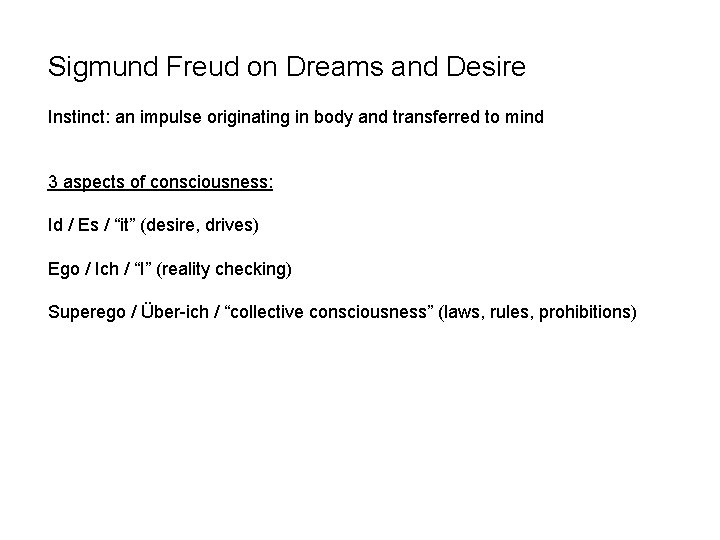
Sigmund Freud on Dreams and Desire Instinct: an impulse originating in body and transferred to mind 3 aspects of consciousness: Id / Es / “it” (desire, drives) Ego / Ich / “I” (reality checking) Superego / Über-ich / “collective consciousness” (laws, rules, prohibitions)
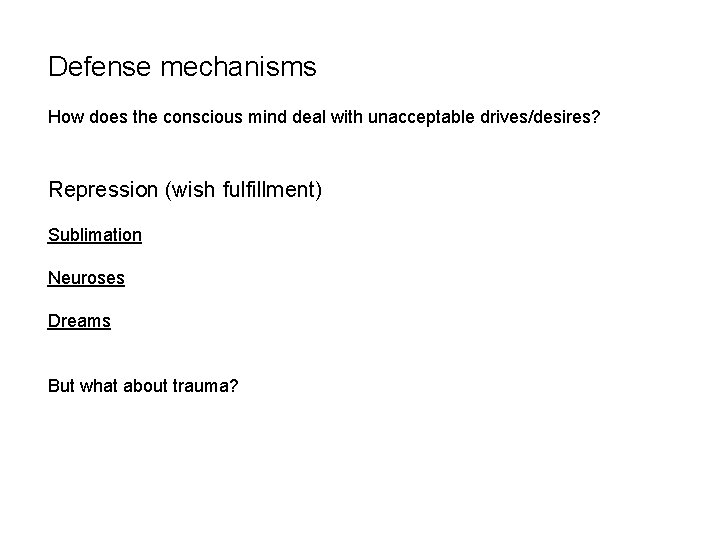
Defense mechanisms How does the conscious mind deal with unacceptable drives/desires? Repression (wish fulfillment) Sublimation Neuroses Dreams But what about trauma?
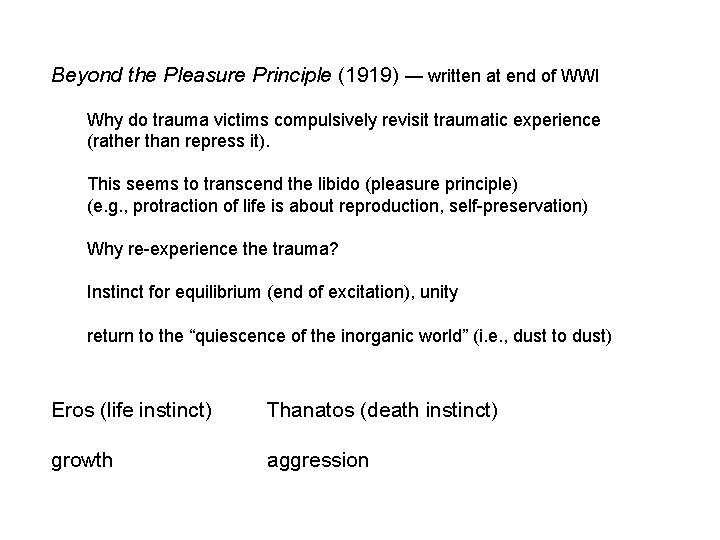
Beyond the Pleasure Principle (1919) — written at end of WWI Why do trauma victims compulsively revisit traumatic experience (rather than repress it). This seems to transcend the libido (pleasure principle) (e. g. , protraction of life is about reproduction, self-preservation) Why re-experience the trauma? Instinct for equilibrium (end of excitation), unity return to the “quiescence of the inorganic world” (i. e. , dust to dust) Eros (life instinct) Thanatos (death instinct) growth aggression
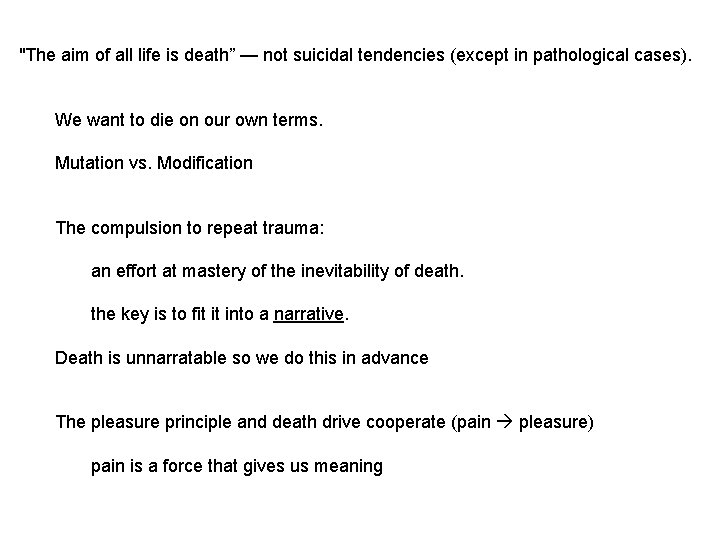
"The aim of all life is death” — not suicidal tendencies (except in pathological cases). We want to die on our own terms. Mutation vs. Modification The compulsion to repeat trauma: an effort at mastery of the inevitability of death. the key is to fit it into a narrative. Death is unnarratable so we do this in advance The pleasure principle and death drive cooperate (pain pleasure) pain is a force that gives us meaning
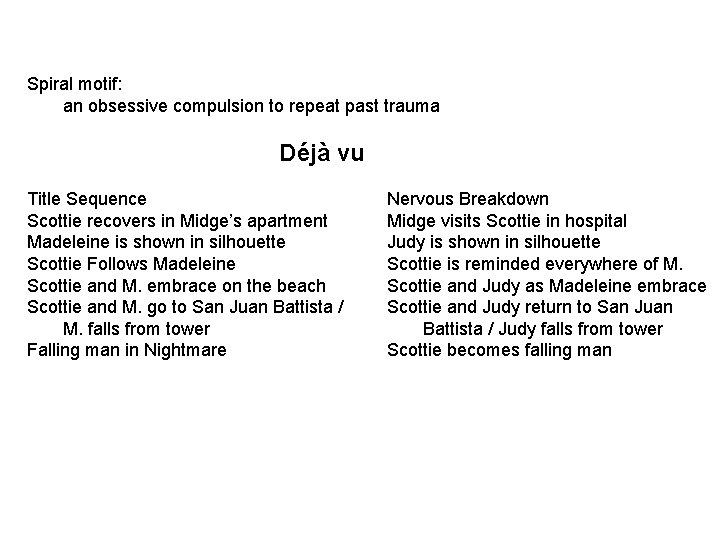
Spiral motif: an obsessive compulsion to repeat past trauma Déjà vu Title Sequence Scottie recovers in Midge’s apartment Madeleine is shown in silhouette Scottie Follows Madeleine Scottie and M. embrace on the beach Scottie and M. go to San Juan Battista / M. falls from tower Falling man in Nightmare Nervous Breakdown Midge visits Scottie in hospital Judy is shown in silhouette Scottie is reminded everywhere of M. Scottie and Judy as Madeleine embrace Scottie and Judy return to San Juan Battista / Judy falls from tower Scottie becomes falling man
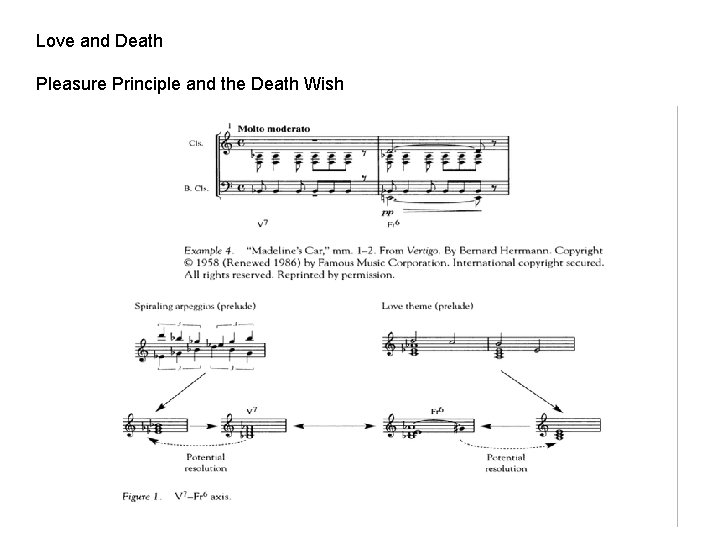
Love and Death Pleasure Principle and the Death Wish
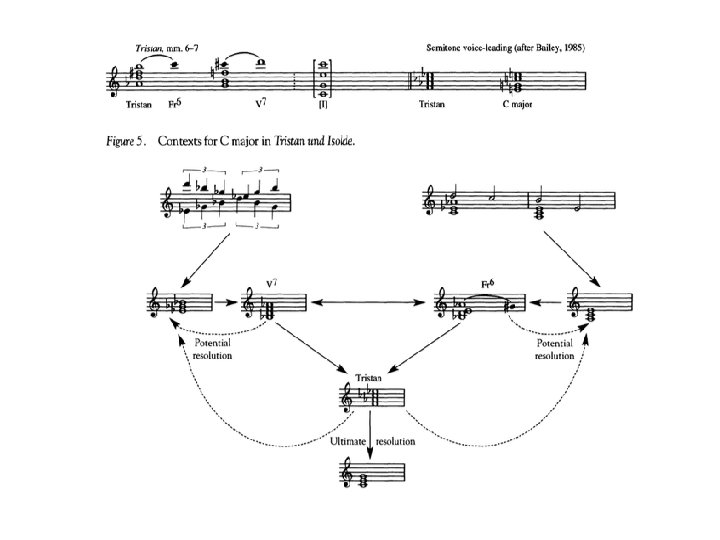
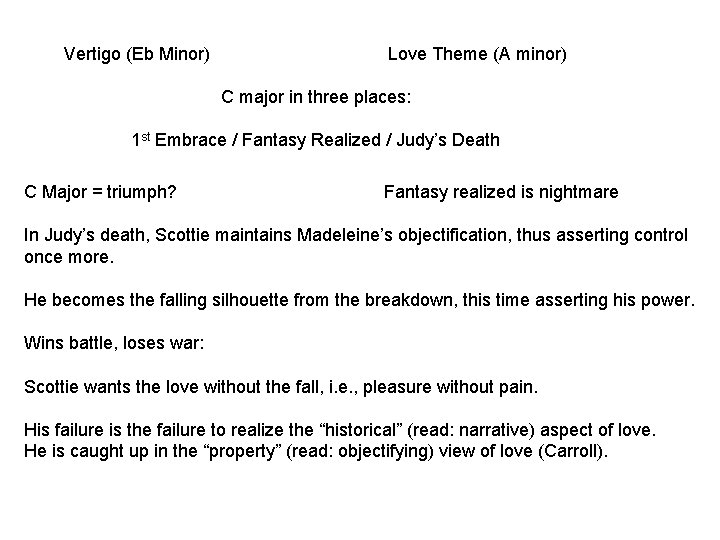
Vertigo (Eb Minor) Love Theme (A minor) C major in three places: 1 st Embrace / Fantasy Realized / Judy’s Death C Major = triumph? Fantasy realized is nightmare In Judy’s death, Scottie maintains Madeleine’s objectification, thus asserting control once more. He becomes the falling silhouette from the breakdown, this time asserting his power. Wins battle, loses war: Scottie wants the love without the fall, i. e. , pleasure without pain. His failure is the failure to realize the “historical” (read: narrative) aspect of love. He is caught up in the “property” (read: objectifying) view of love (Carroll).