
SightWord Reading Instructional process by which students learn

Sight-Word Reading Instructional process by which students learn to instantly recognize words Usually refers to just the end product— _____________ Lists Sentences Passages
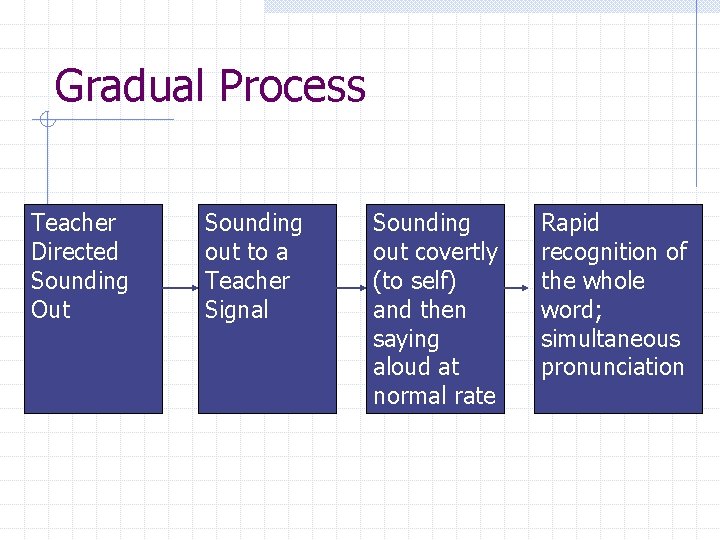
Gradual Process Teacher Directed Sounding Out Sounding out to a Teacher Signal Sounding out covertly (to self) and then saying aloud at normal rate Rapid recognition of the whole word; simultaneous pronunciation
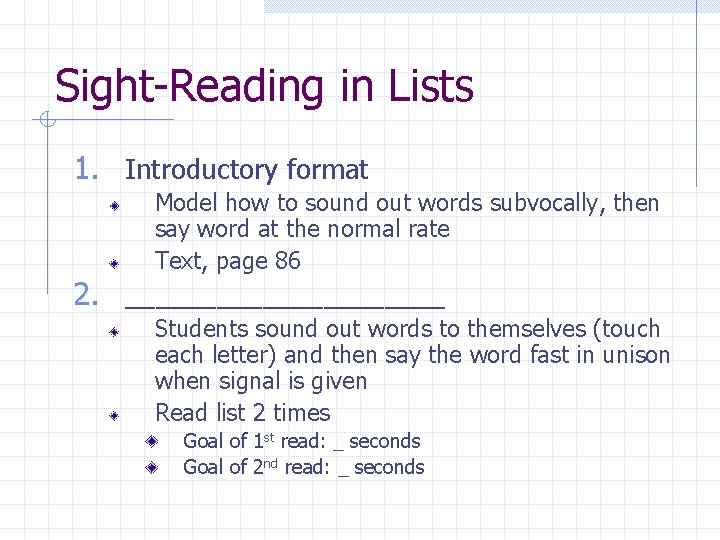
Sight-Reading in Lists 1. Introductory format Model how to sound out words subvocally, then say word at the normal rate Text, page 86 2. ___________ Students sound out words to themselves (touch each letter) and then say the word fast in unison when signal is given Read list 2 times Goal of 1 st read: _ seconds Goal of 2 nd read: _ seconds
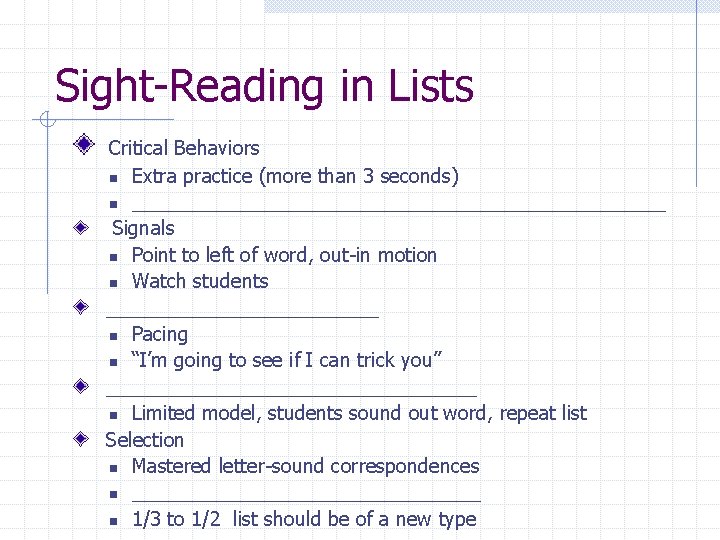
Sight-Reading in Lists Critical Behaviors n Extra practice (more than 3 seconds) n _________________________ Signals n Point to left of word, out-in motion n Watch students _____________ n Pacing n “I’m going to see if I can trick you” _________________ n Limited model, students sound out word, repeat list Selection n Mastered letter-sound correspondences n ________________ n 1/3 to 1/2 list should be of a new type
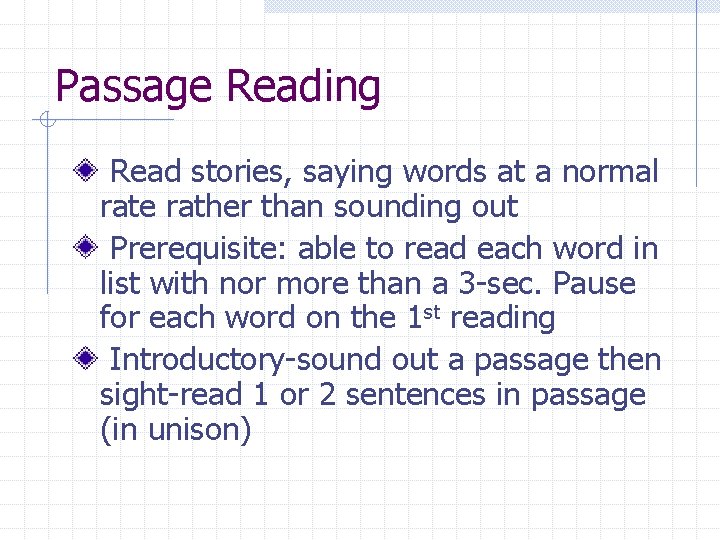
Passage Reading Read stories, saying words at a normal rate rather than sounding out Prerequisite: able to read each word in list with nor more than a 3 -sec. Pause for each word on the 1 st reading Introductory-sound out a passage then sight-read 1 or 2 sentences in passage (in unison)
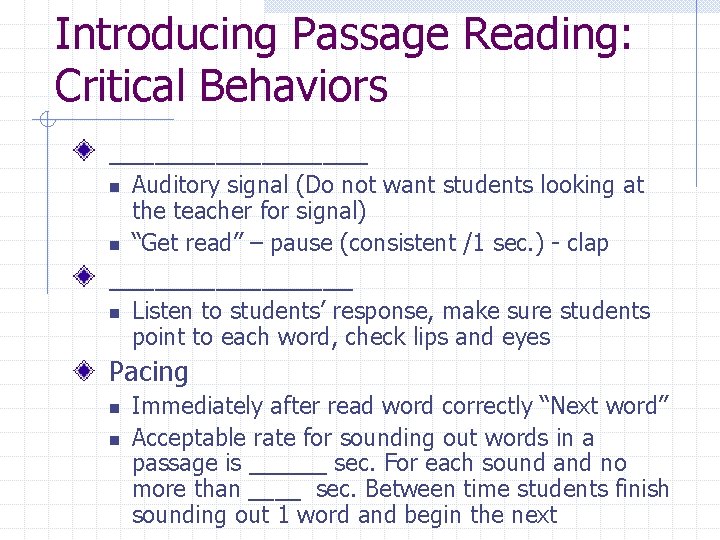
Introducing Passage Reading: Critical Behaviors _________ n n Auditory signal (Do not want students looking at the teacher for signal) “Get read” – pause (consistent /1 sec. ) - clap ________ n Listen to students’ response, make sure students point to each word, check lips and eyes Pacing n n Immediately after read word correctly “Next word” Acceptable rate for sounding out words in a passage is ______ sec. For each sound and no more than ____ sec. Between time students finish sounding out 1 word and begin the next
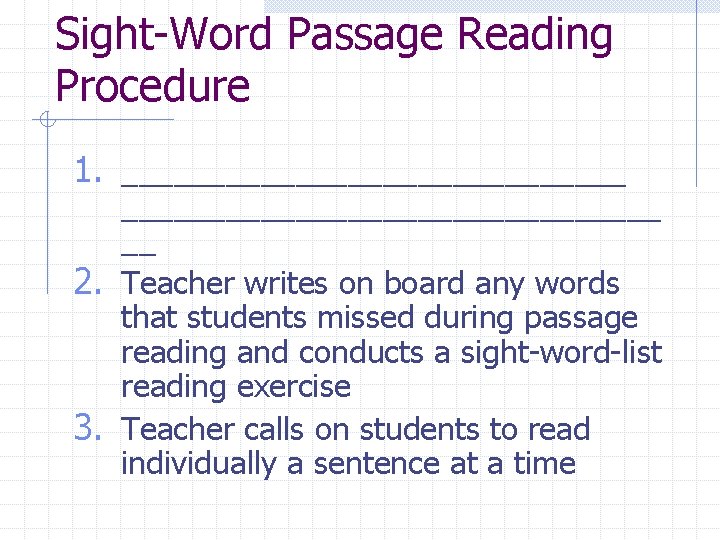
Sight-Word Passage Reading Procedure 1. _______________________________ __ 2. Teacher writes on board any words that students missed during passage reading and conducts a sight-word-list reading exercise 3. Teacher calls on students to read individually a sentence at a time
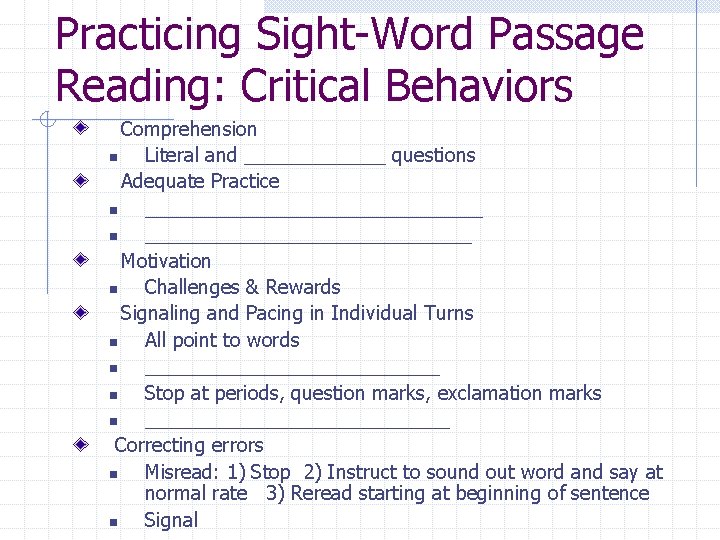
Practicing Sight-Word Passage Reading: Critical Behaviors Comprehension n Literal and _______ questions Adequate Practice n ________________ n _______________ Motivation n Challenges & Rewards Signaling and Pacing in Individual Turns n All point to words n ______________ n Stop at periods, question marks, exclamation marks n ______________ Correcting errors n Misread: 1) Stop 2) Instruct to sound out word and say at normal rate 3) Reread starting at beginning of sentence n Signal
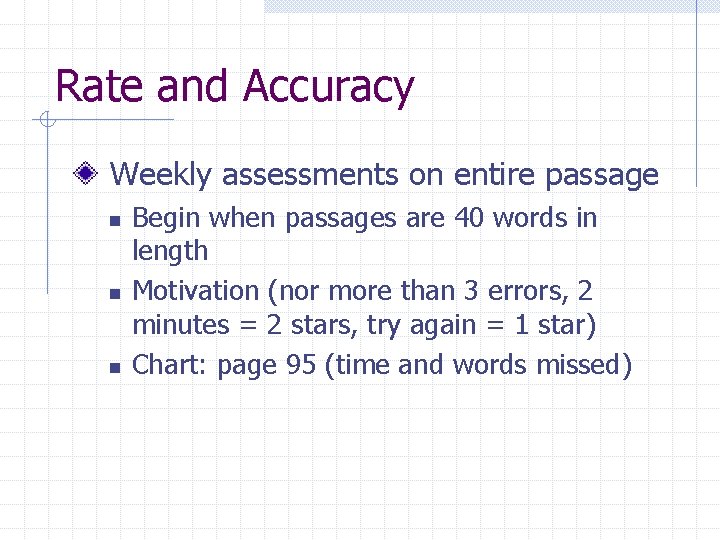
Rate and Accuracy Weekly assessments on entire passage n n n Begin when passages are 40 words in length Motivation (nor more than 3 errors, 2 minutes = 2 stars, try again = 1 star) Chart: page 95 (time and words missed)
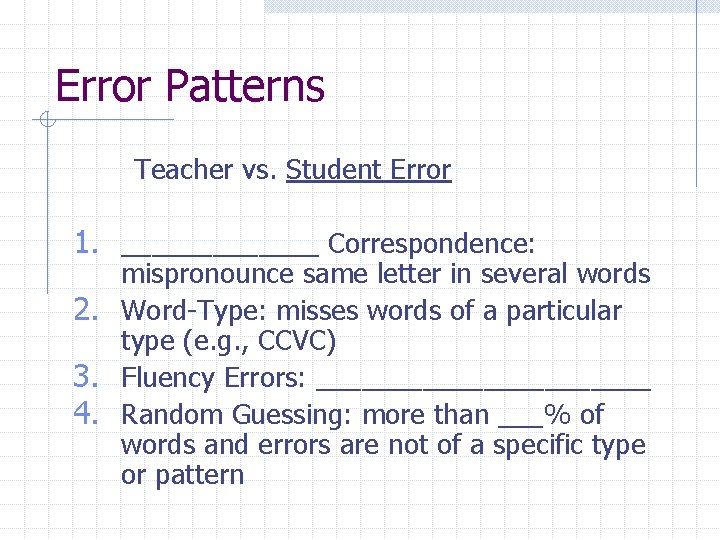
Error Patterns Teacher vs. Student Error 1. _______ Correspondence: mispronounce same letter in several words 2. Word-Type: misses words of a particular type (e. g. , CCVC) 3. Fluency Errors: ___________ 4. Random Guessing: more than ___% of words and errors are not of a specific type or pattern
- Slides: 10