
Sig Figs Significant figure a digit that is

- Slides: 10
Sig Figs
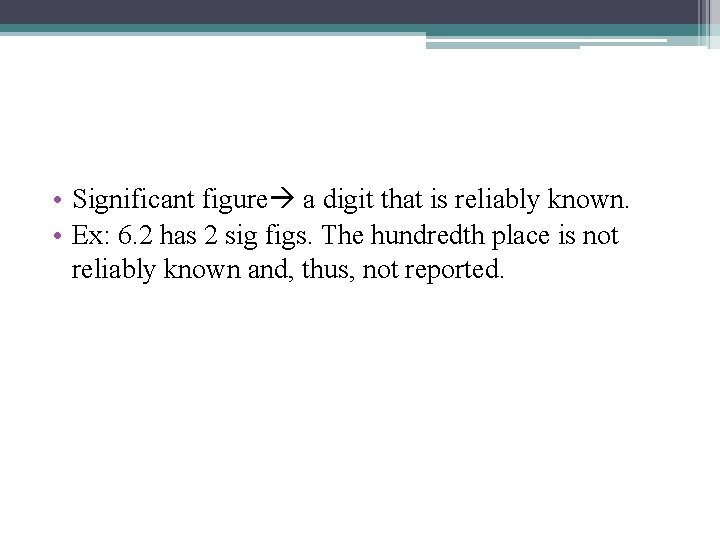
• Significant figure a digit that is reliably known. • Ex: 6. 2 has 2 sig figs. The hundredth place is not reliably known and, thus, not reported.
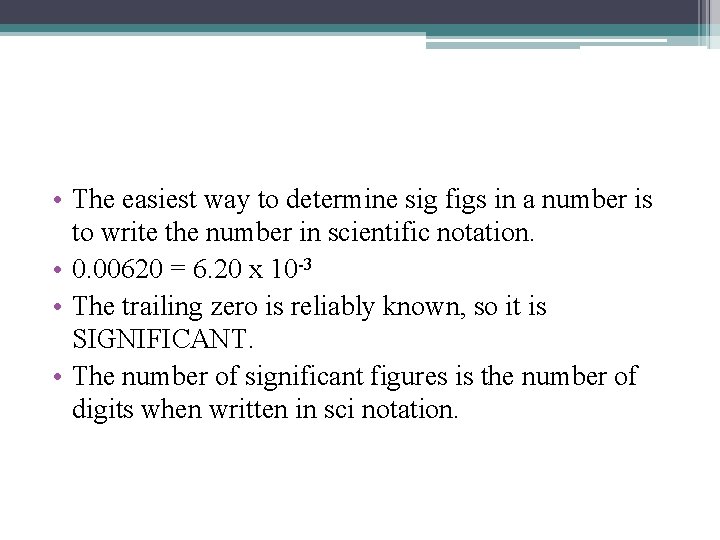
• The easiest way to determine sig figs in a number is to write the number in scientific notation. • 0. 00620 = 6. 20 x 10 -3 • The trailing zero is reliably known, so it is SIGNIFICANT. • The number of significant figures is the number of digits when written in sci notation.
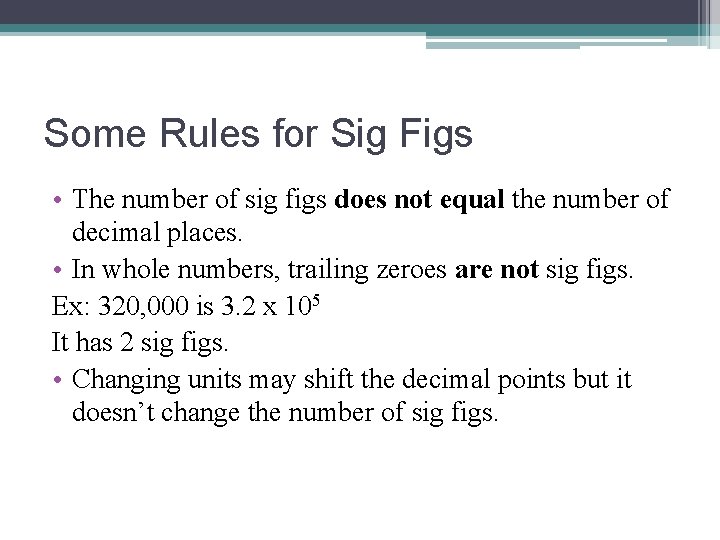
Some Rules for Sig Figs • The number of sig figs does not equal the number of decimal places. • In whole numbers, trailing zeroes are not sig figs. Ex: 320, 000 is 3. 2 x 10⁵ It has 2 sig figs. • Changing units may shift the decimal points but it doesn’t change the number of sig figs.
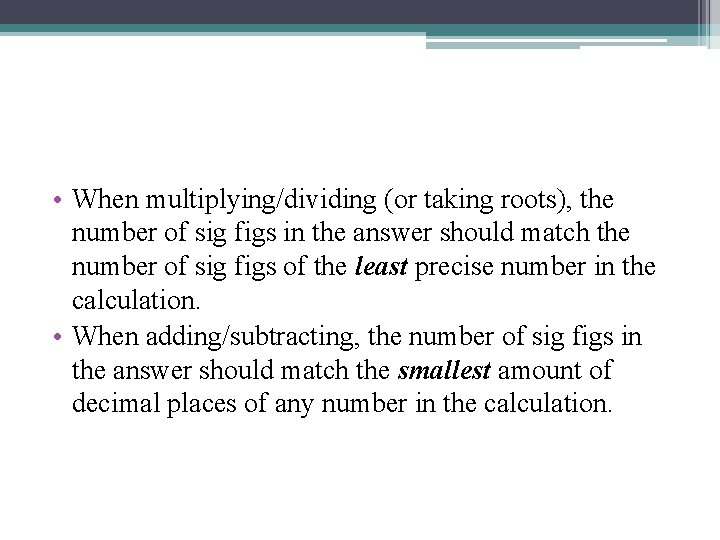
• When multiplying/dividing (or taking roots), the number of sig figs in the answer should match the number of sig figs of the least precise number in the calculation. • When adding/subtracting, the number of sig figs in the answer should match the smallest amount of decimal places of any number in the calculation.
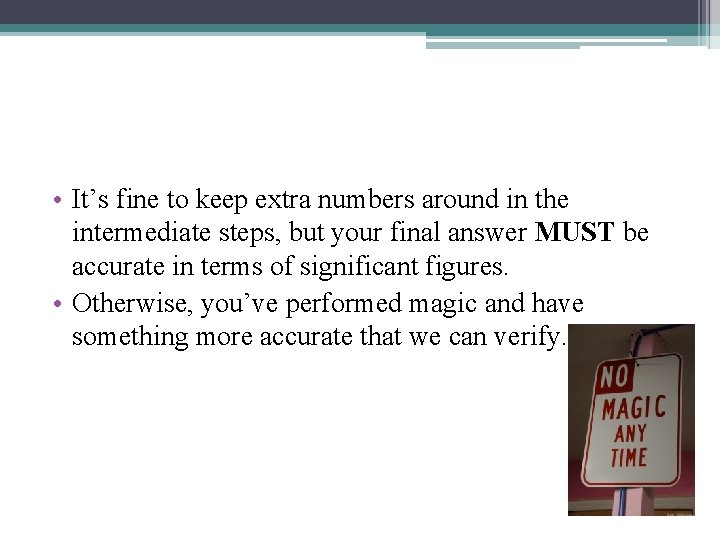
• It’s fine to keep extra numbers around in the intermediate steps, but your final answer MUST be accurate in terms of significant figures. • Otherwise, you’ve performed magic and have something more accurate that we can verify.
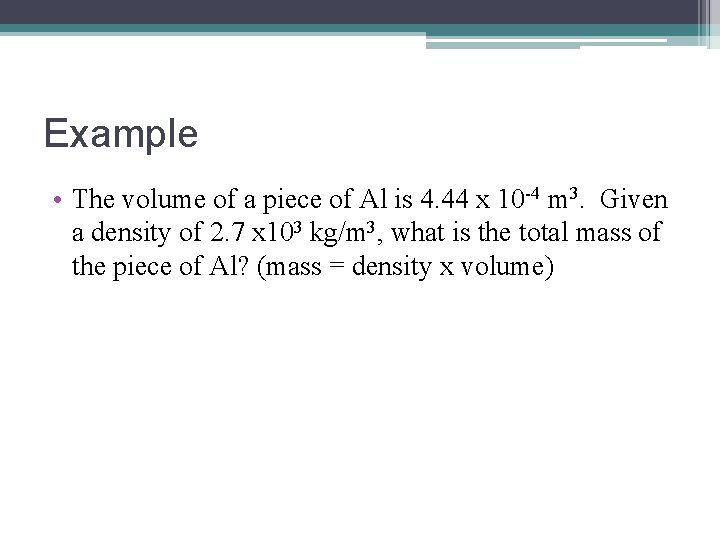
Example • The volume of a piece of Al is 4. 44 x 10 -4 m 3. Given a density of 2. 7 x 10³ kg/m 3, what is the total mass of the piece of Al? (mass = density x volume)
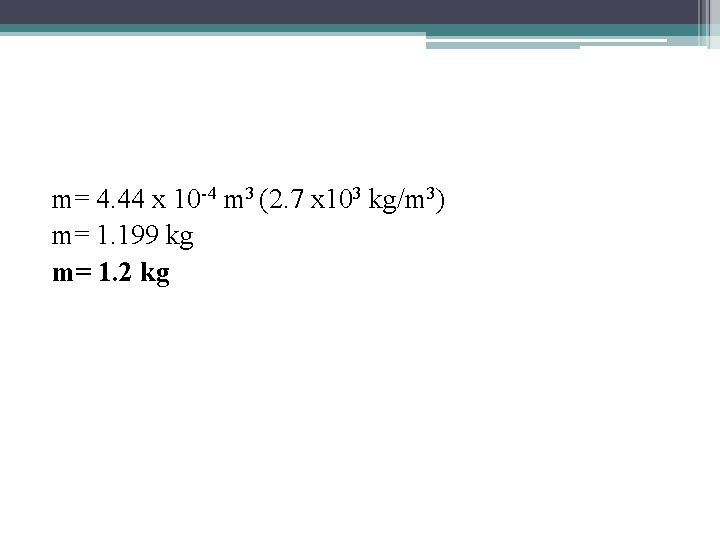
m= 4. 44 x 10 -4 m 3 (2. 7 x 10³ kg/m 3) m= 1. 199 kg m= 1. 2 kg
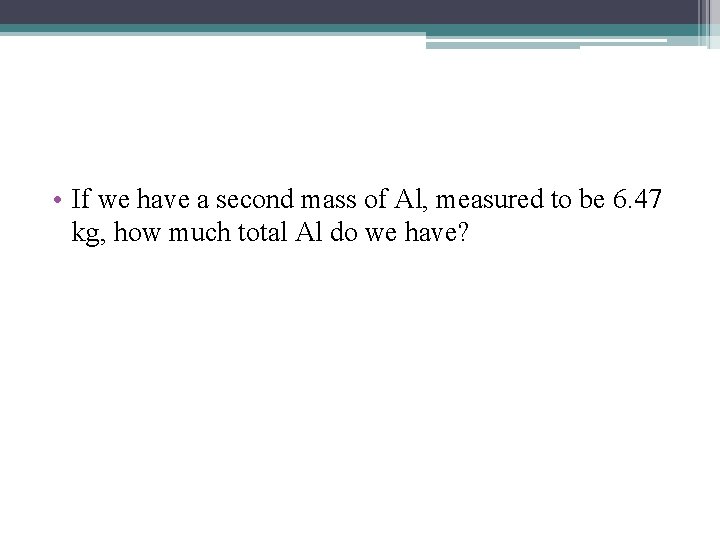
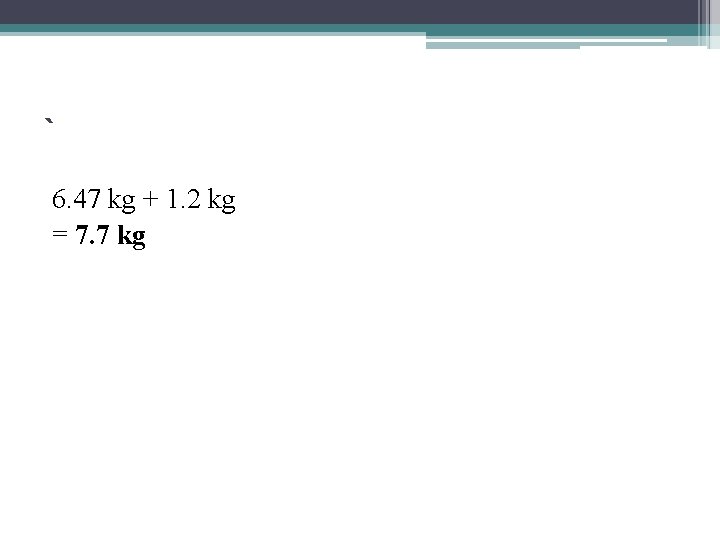
• If we have a second mass of Al, measured to be 6. 47 kg, how much total Al do we have?
` 6. 47 kg + 1. 2 kg = 7. 7 kg