
Side Effects of Psychiatric Medications in Long Term

- Slides: 47
Side Effects of Psychiatric Medications in Long Term Care Thomas Magnuson, M. D. Assistant Professor Division of Geriatric Psychiatry UNMC
Objectives n Delineate common psychiatric medications used in long-term care n Identify common side effects associated with those medications
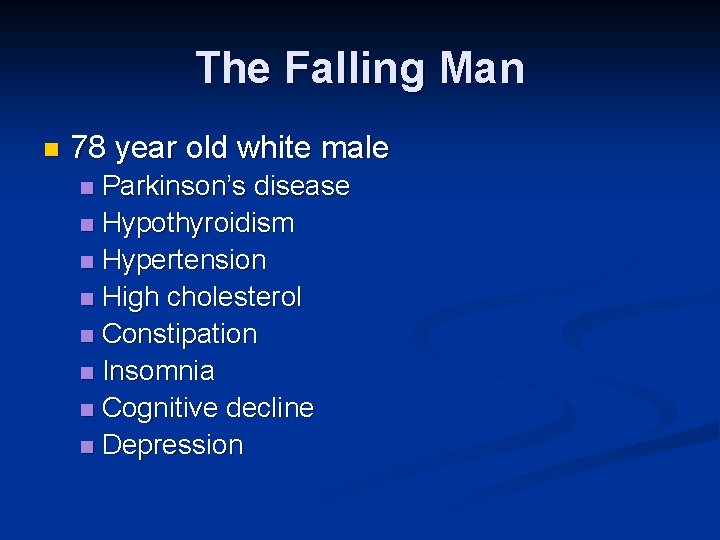
The Falling Man n 78 year old white male Parkinson’s disease n Hypothyroidism n Hypertension n High cholesterol n Constipation n Insomnia n Cognitive decline n Depression n
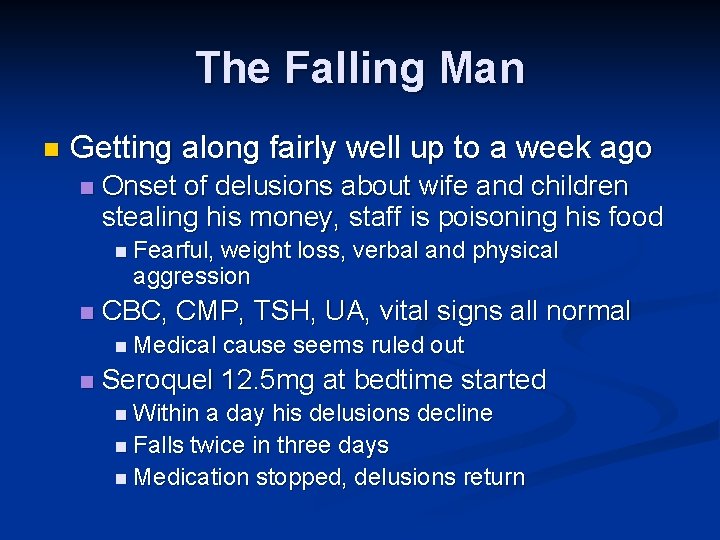
The Falling Man n Getting along fairly well up to a week ago n Onset of delusions about wife and children stealing his money, staff is poisoning his food n Fearful, weight loss, verbal and physical aggression n CBC, CMP, TSH, UA, vital signs all normal n Medical n cause seems ruled out Seroquel 12. 5 mg at bedtime started n Within a day his delusions decline n Falls twice in three days n Medication stopped, delusions return
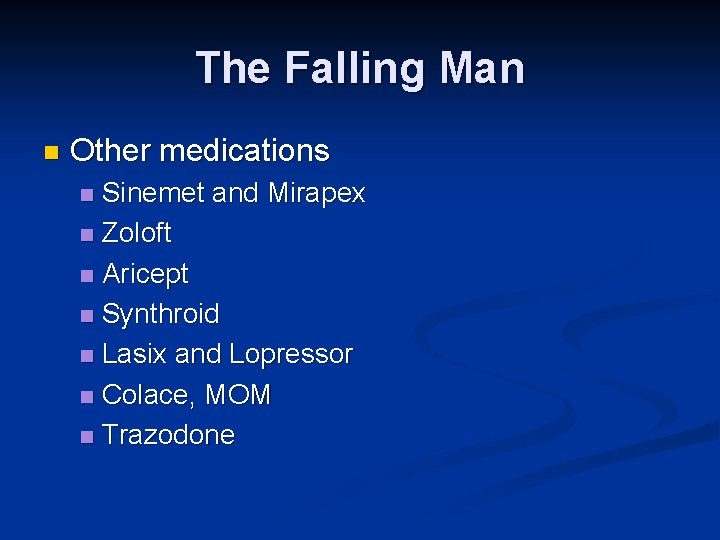
The Falling Man n Other medications Sinemet and Mirapex n Zoloft n Aricept n Synthroid n Lasix and Lopressor n Colace, MOM n Trazodone n
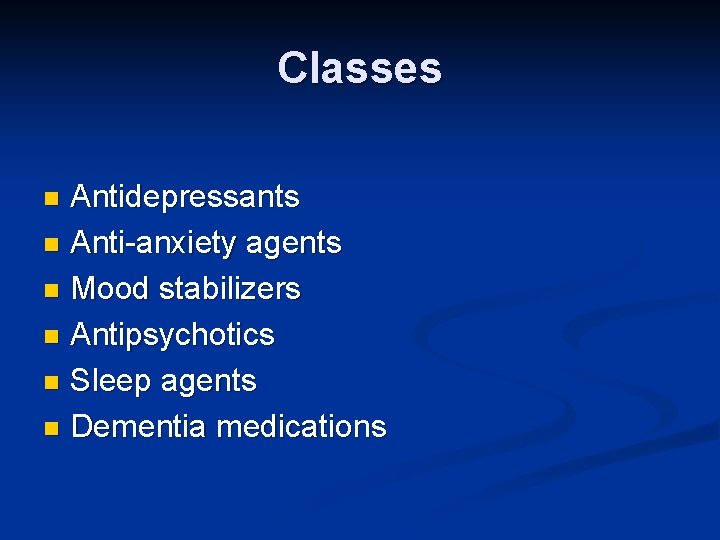
Classes Antidepressants n Anti-anxiety agents n Mood stabilizers n Antipsychotics n Sleep agents n Dementia medications n
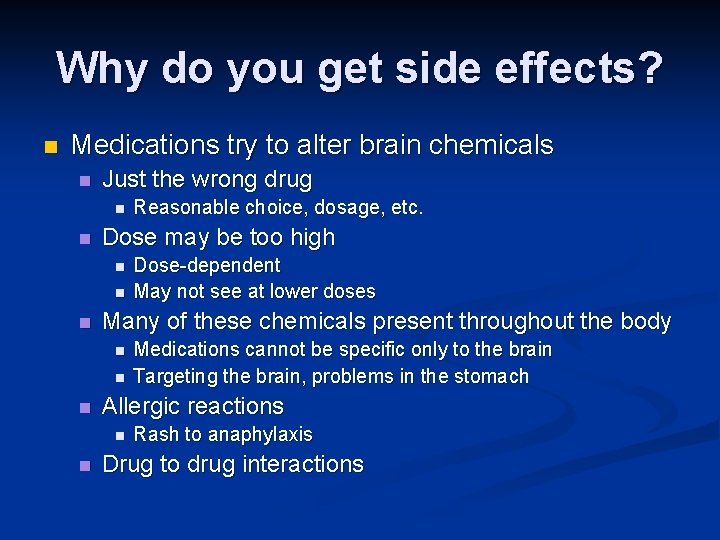
Why do you get side effects? n Medications try to alter brain chemicals n Just the wrong drug n n Dose may be too high n n Medications cannot be specific only to the brain Targeting the brain, problems in the stomach Allergic reactions n n Dose-dependent May not see at lower doses Many of these chemicals present throughout the body n n Reasonable choice, dosage, etc. Rash to anaphylaxis Drug to drug interactions
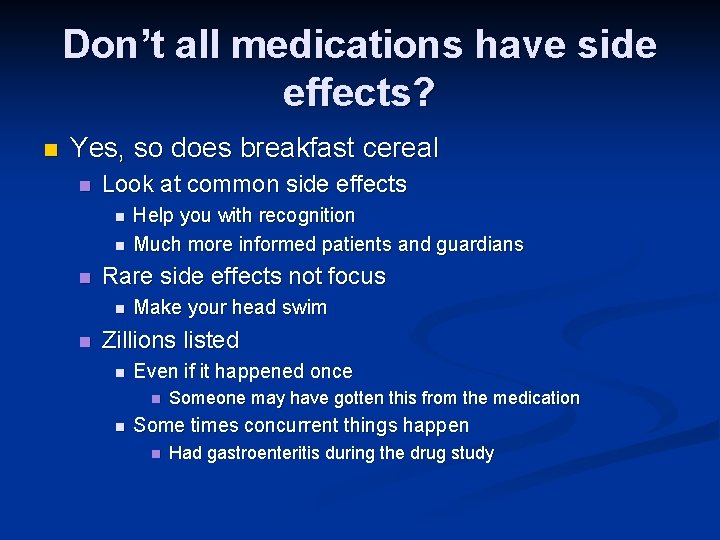
Don’t all medications have side effects? n Yes, so does breakfast cereal n Look at common side effects n n n Rare side effects not focus n n Help you with recognition Much more informed patients and guardians Make your head swim Zillions listed n Even if it happened once n n Someone may have gotten this from the medication Some times concurrent things happen n Had gastroenteritis during the drug study
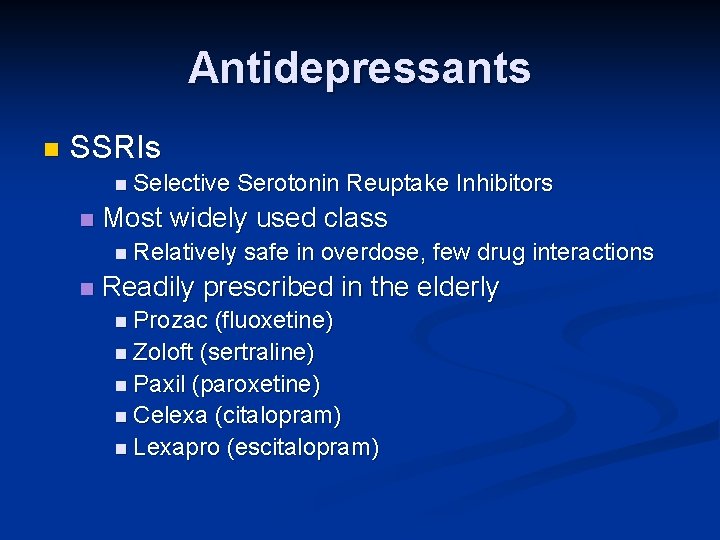
Antidepressants n SSRIs n Selective n Serotonin Reuptake Inhibitors Most widely used class n Relatively n safe in overdose, few drug interactions Readily prescribed in the elderly n Prozac (fluoxetine) n Zoloft (sertraline) n Paxil (paroxetine) n Celexa (citalopram) n Lexapro (escitalopram)
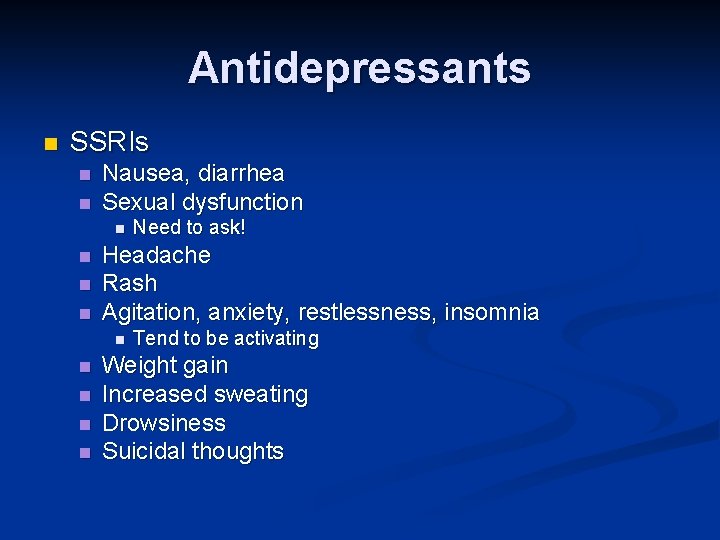
Antidepressants n SSRIs n n Nausea, diarrhea Sexual dysfunction n n Headache Rash Agitation, anxiety, restlessness, insomnia n n n Need to ask! Tend to be activating Weight gain Increased sweating Drowsiness Suicidal thoughts
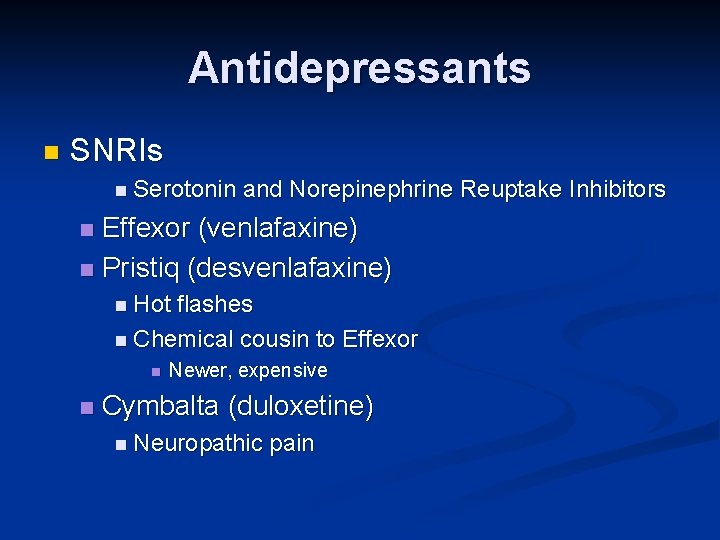
Antidepressants n SNRIs n Serotonin and Norepinephrine Reuptake Inhibitors Effexor (venlafaxine) n Pristiq (desvenlafaxine) n n Hot flashes n Chemical cousin to Effexor n n Newer, expensive Cymbalta (duloxetine) n Neuropathic pain
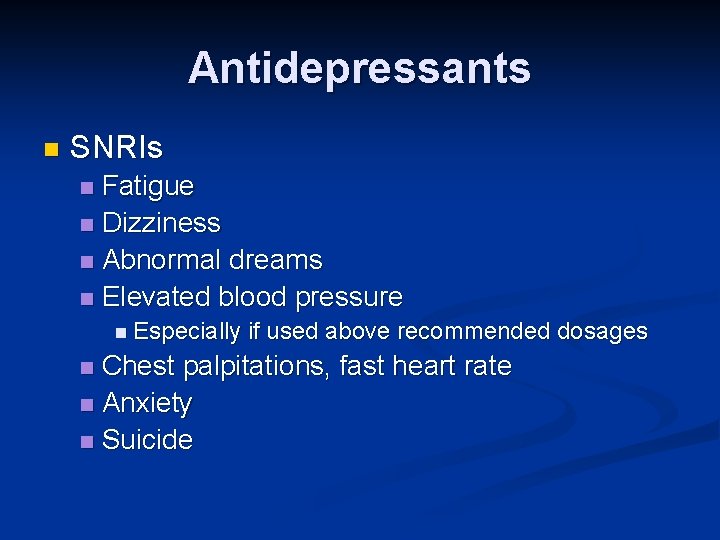
Antidepressants n SNRIs Fatigue n Dizziness n Abnormal dreams n Elevated blood pressure n n Especially if used above recommended dosages Chest palpitations, fast heart rate n Anxiety n Suicide n
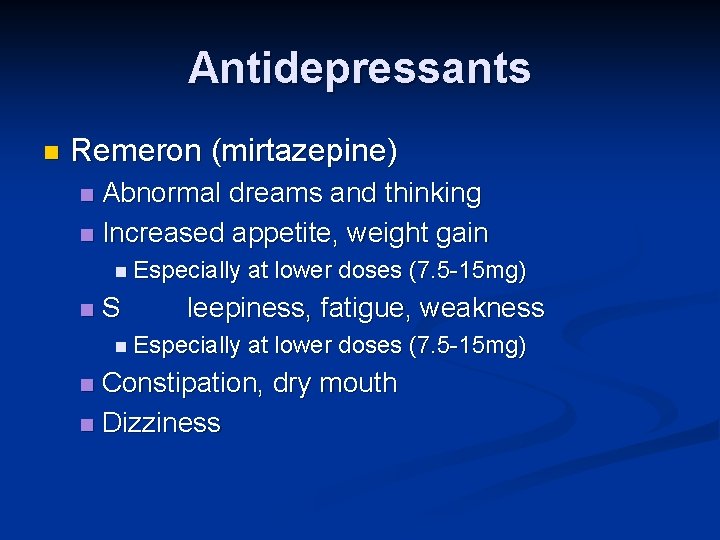
Antidepressants n Remeron (mirtazepine) Abnormal dreams and thinking n Increased appetite, weight gain n n Especially n S at lower doses (7. 5 -15 mg) leepiness, fatigue, weakness n Especially at lower doses (7. 5 -15 mg) Constipation, dry mouth n Dizziness n
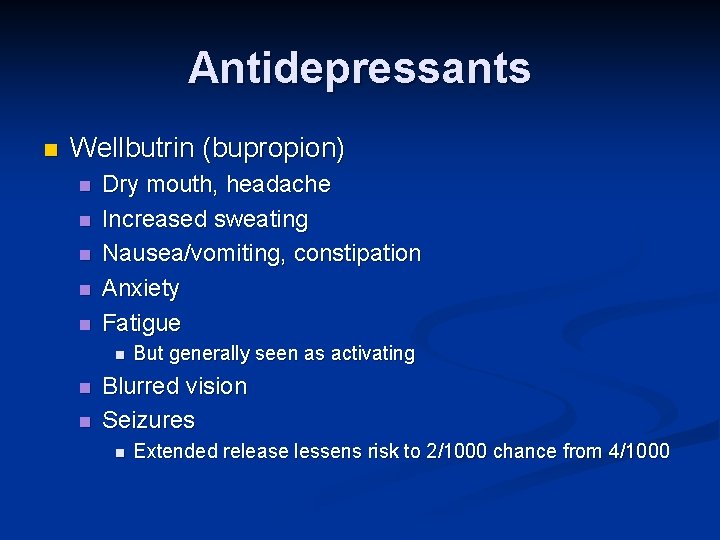
Antidepressants n Wellbutrin (bupropion) n n n Dry mouth, headache Increased sweating Nausea/vomiting, constipation Anxiety Fatigue n n n But generally seen as activating Blurred vision Seizures n Extended release lessens risk to 2/1000 chance from 4/1000
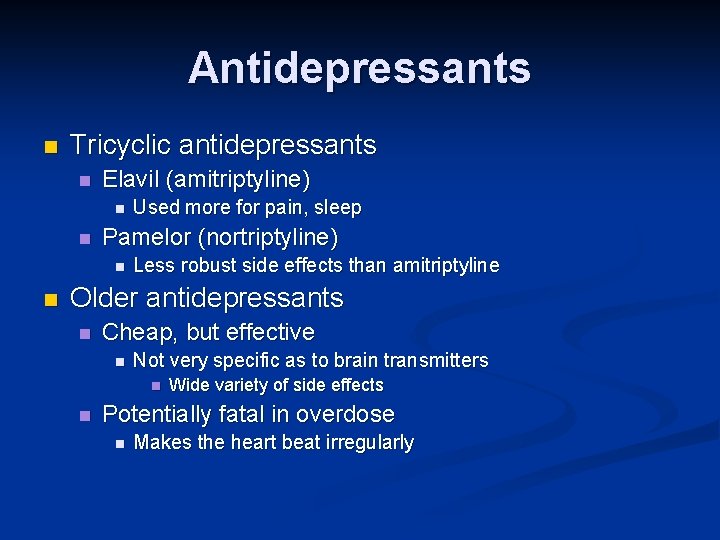
Antidepressants n Tricyclic antidepressants n Elavil (amitriptyline) n n Pamelor (nortriptyline) n n Used more for pain, sleep Less robust side effects than amitriptyline Older antidepressants n Cheap, but effective n Not very specific as to brain transmitters n n Wide variety of side effects Potentially fatal in overdose n Makes the heart beat irregularly
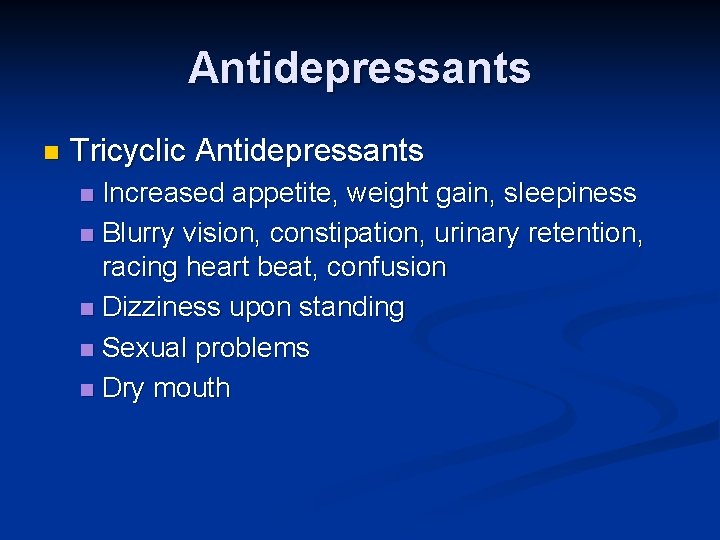
Antidepressants n Tricyclic Antidepressants Increased appetite, weight gain, sleepiness n Blurry vision, constipation, urinary retention, racing heart beat, confusion n Dizziness upon standing n Sexual problems n Dry mouth n
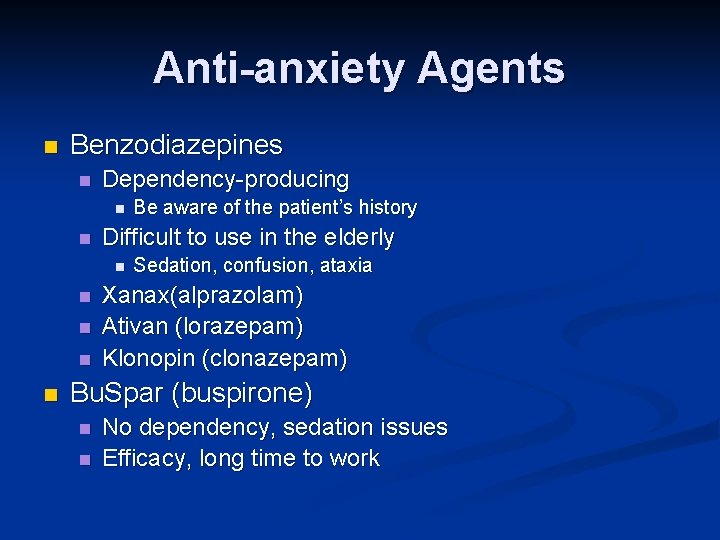
Anti-anxiety Agents n Benzodiazepines n Dependency-producing n n Difficult to use in the elderly n n n Be aware of the patient’s history Sedation, confusion, ataxia Xanax(alprazolam) Ativan (lorazepam) Klonopin (clonazepam) Bu. Spar (buspirone) n n No dependency, sedation issues Efficacy, long time to work
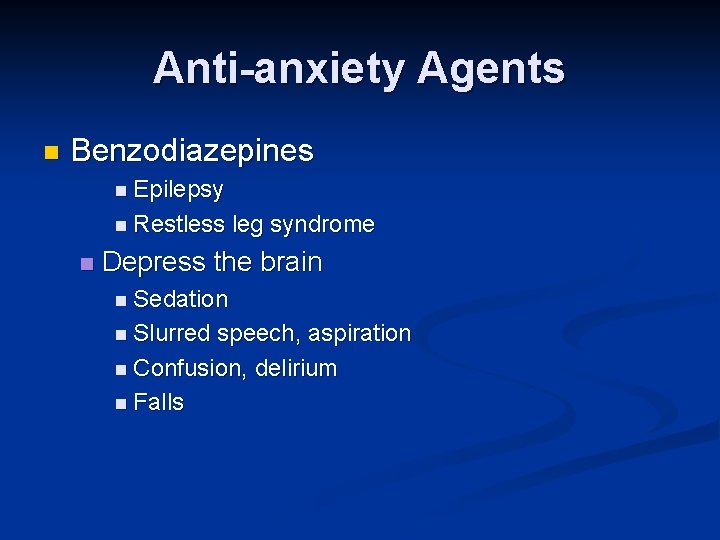
Anti-anxiety Agents n Benzodiazepines n Epilepsy n Restless n leg syndrome Depress the brain n Sedation n Slurred speech, aspiration n Confusion, delirium n Falls
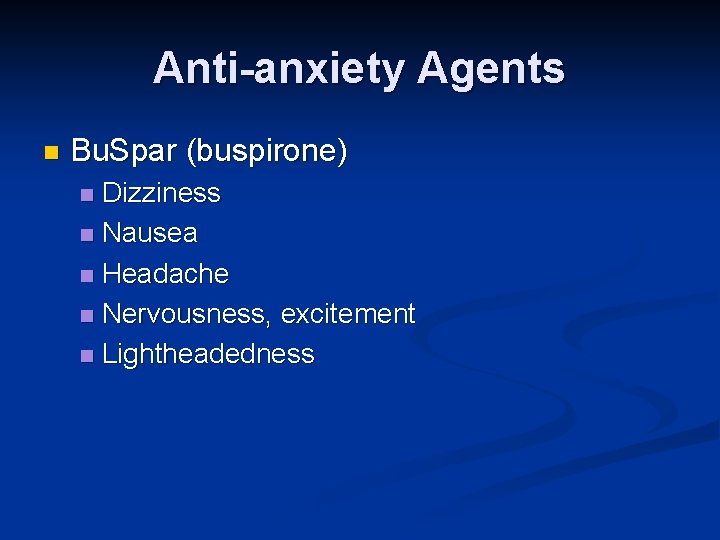
Anti-anxiety Agents n Bu. Spar (buspirone) Dizziness n Nausea n Headache n Nervousness, excitement n Lightheadedness n
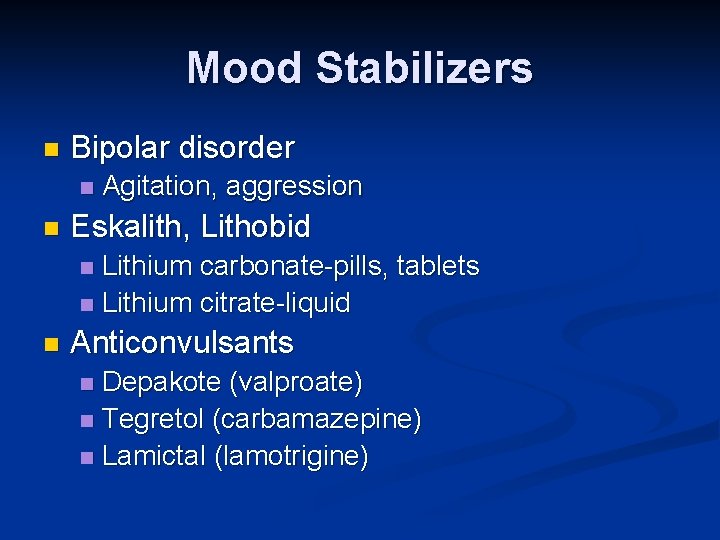
Mood Stabilizers n Bipolar disorder n n Agitation, aggression Eskalith, Lithobid Lithium carbonate-pills, tablets n Lithium citrate-liquid n n Anticonvulsants Depakote (valproate) n Tegretol (carbamazepine) n Lamictal (lamotrigine) n
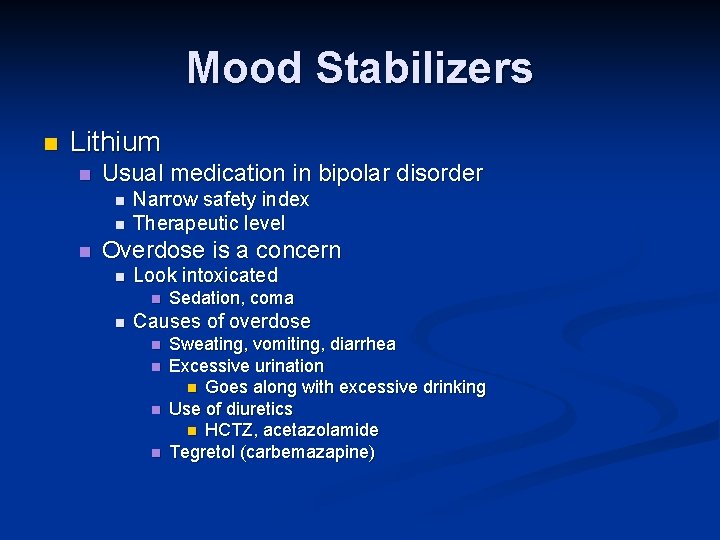
Mood Stabilizers n Lithium n Usual medication in bipolar disorder n n n Narrow safety index Therapeutic level Overdose is a concern n Look intoxicated n n Sedation, coma Causes of overdose n n Sweating, vomiting, diarrhea Excessive urination n Goes along with excessive drinking Use of diuretics n HCTZ, acetazolamide Tegretol (carbemazapine)
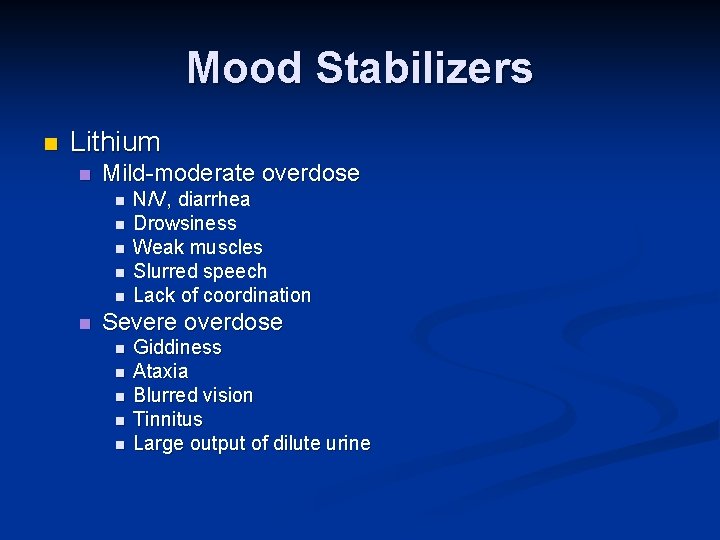
Mood Stabilizers n Lithium n Mild-moderate overdose n n n N/V, diarrhea Drowsiness Weak muscles Slurred speech Lack of coordination Severe overdose n n n Giddiness Ataxia Blurred vision Tinnitus Large output of dilute urine
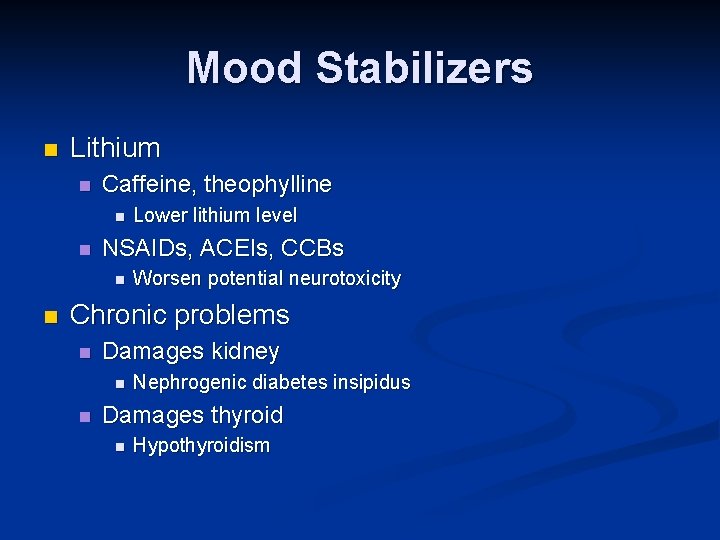
Mood Stabilizers n Lithium n Caffeine, theophylline n n NSAIDs, ACEIs, CCBs n n Lower lithium level Worsen potential neurotoxicity Chronic problems n Damages kidney n n Nephrogenic diabetes insipidus Damages thyroid n Hypothyroidism
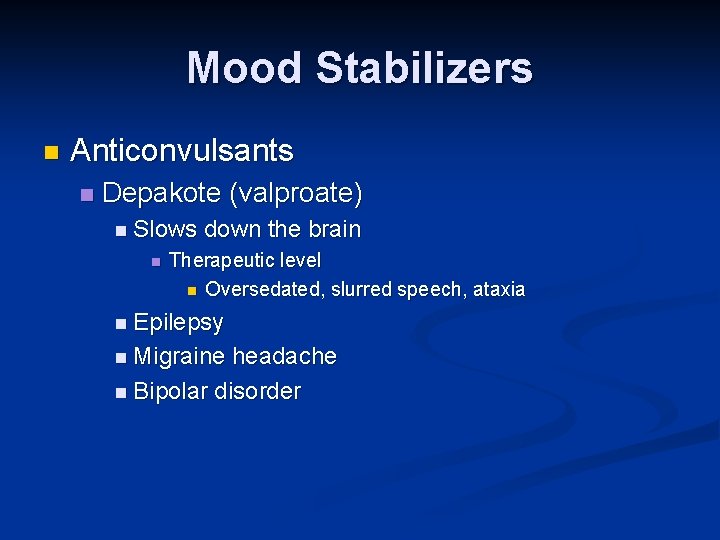
Mood Stabilizers n Anticonvulsants n Depakote (valproate) n Slows n down the brain Therapeutic level n Oversedated, slurred speech, ataxia n Epilepsy n Migraine headache n Bipolar disorder
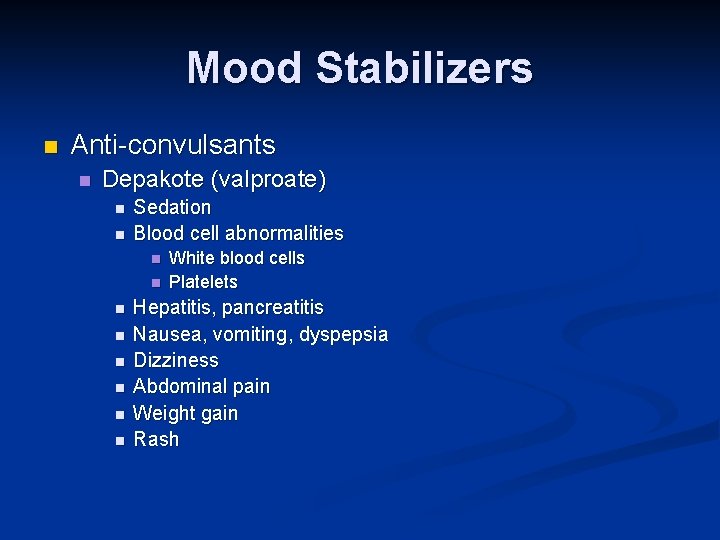
Mood Stabilizers n Anti-convulsants n Depakote (valproate) n n Sedation Blood cell abnormalities n n n n White blood cells Platelets Hepatitis, pancreatitis Nausea, vomiting, dyspepsia Dizziness Abdominal pain Weight gain Rash
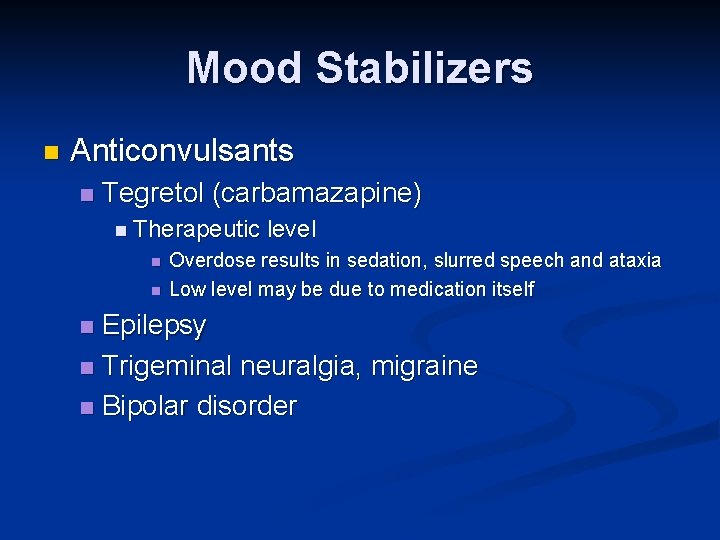
Mood Stabilizers n Anticonvulsants n Tegretol (carbamazapine) n Therapeutic n n level Overdose results in sedation, slurred speech and ataxia Low level may be due to medication itself Epilepsy n Trigeminal neuralgia, migraine n Bipolar disorder n
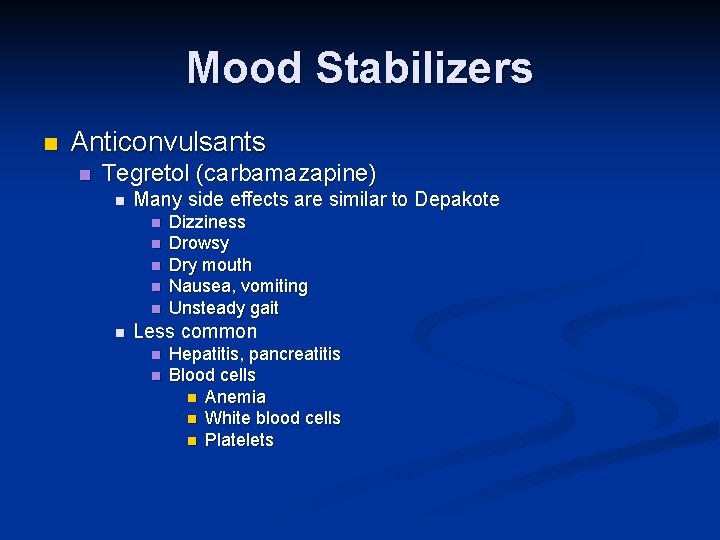
Mood Stabilizers n Anticonvulsants n Tegretol (carbamazapine) n Many side effects are similar to Depakote n n n Dizziness Drowsy Dry mouth Nausea, vomiting Unsteady gait Less common n n Hepatitis, pancreatitis Blood cells n Anemia n White blood cells n Platelets
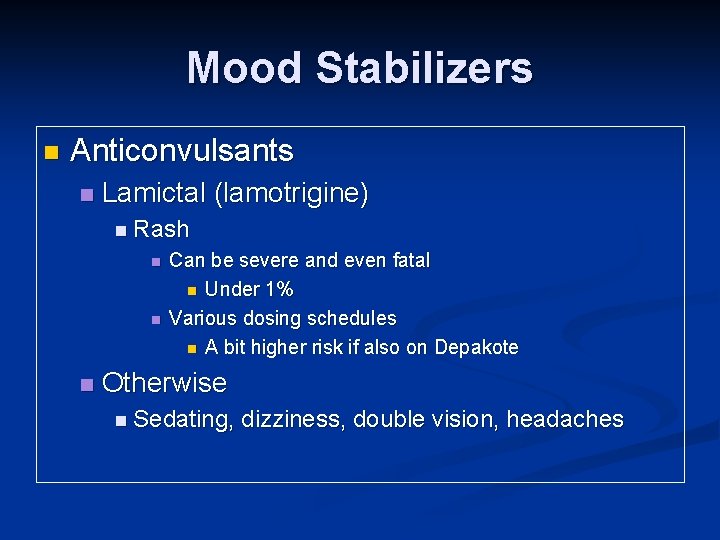
Mood Stabilizers n Anticonvulsants n Lamictal (lamotrigine) n Rash n n n Can be severe and even fatal n Under 1% Various dosing schedules n A bit higher risk if also on Depakote Otherwise n Sedating, dizziness, double vision, headaches
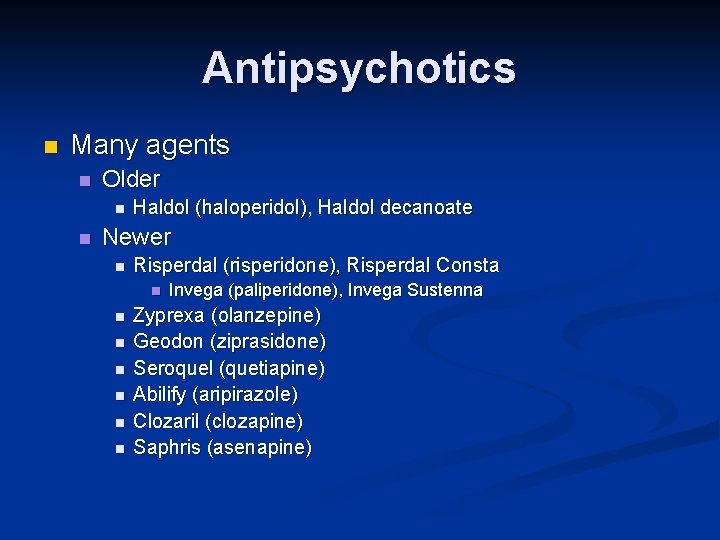
Antipsychotics n Many agents n Older n n Haldol (haloperidol), Haldol decanoate Newer n Risperdal (risperidone), Risperdal Consta n n n n Invega (paliperidone), Invega Sustenna Zyprexa (olanzepine) Geodon (ziprasidone) Seroquel (quetiapine) Abilify (aripirazole) Clozaril (clozapine) Saphris (asenapine)
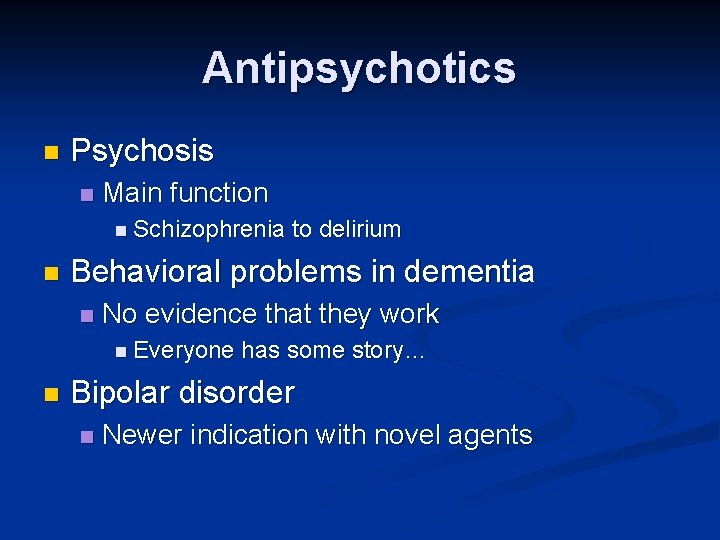
Antipsychotics n Psychosis n Main function n Schizophrenia n Behavioral problems in dementia n No evidence that they work n Everyone n to delirium has some story… Bipolar disorder n Newer indication with novel agents
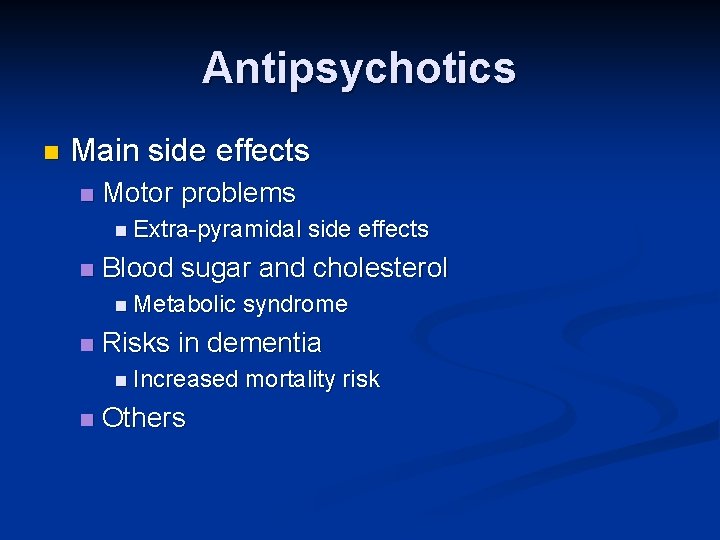
Antipsychotics n Main side effects n Motor problems n Extra-pyramidal n Blood sugar and cholesterol n Metabolic n syndrome Risks in dementia n Increased n side effects Others mortality risk
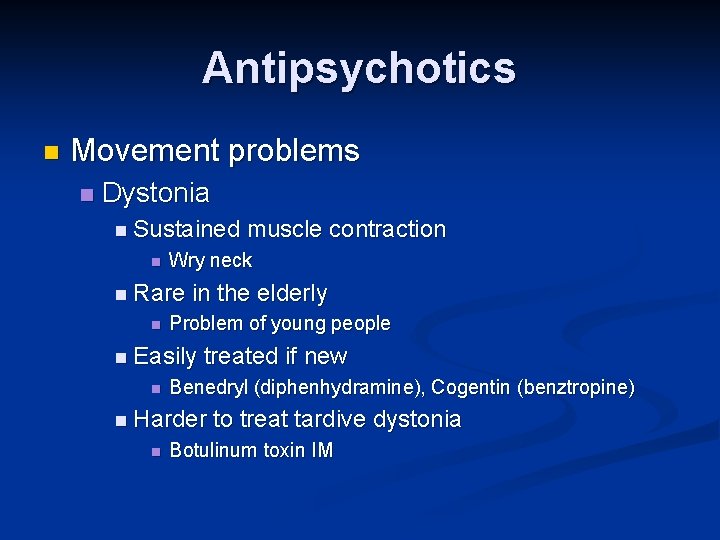
Antipsychotics n Movement problems n Dystonia n Sustained n Wry neck n Rare n in the elderly Problem of young people n Easily n treated if new Benedryl (diphenhydramine), Cogentin (benztropine) n Harder n muscle contraction to treat tardive dystonia Botulinum toxin IM
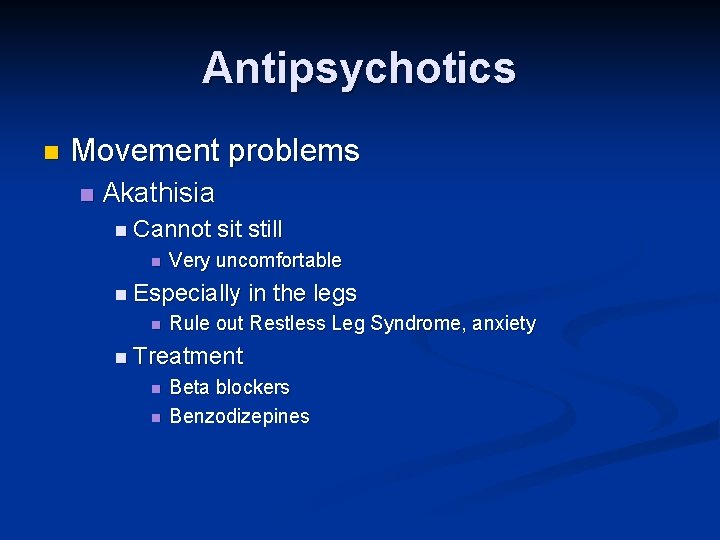
Antipsychotics n Movement problems n Akathisia n Cannot n sit still Very uncomfortable n Especially n in the legs Rule out Restless Leg Syndrome, anxiety n Treatment n n Beta blockers Benzodizepines
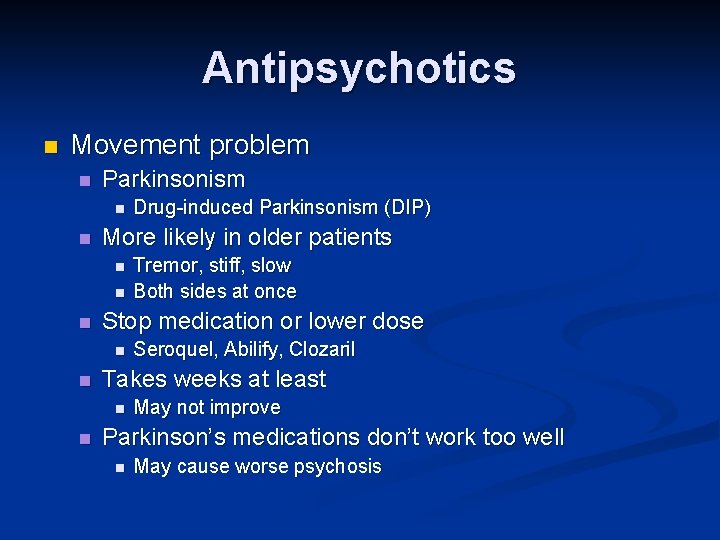
Antipsychotics n Movement problem n Parkinsonism n n More likely in older patients n n n Seroquel, Abilify, Clozaril Takes weeks at least n n Tremor, stiff, slow Both sides at once Stop medication or lower dose n n Drug-induced Parkinsonism (DIP) May not improve Parkinson’s medications don’t work too well n May cause worse psychosis
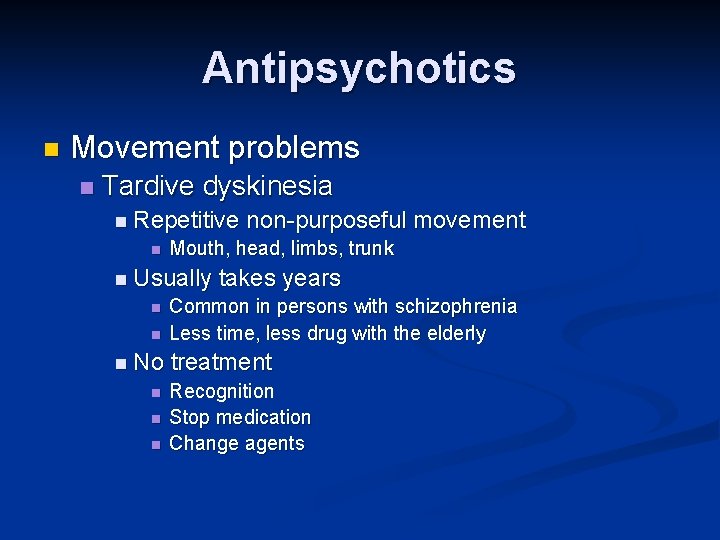
Antipsychotics n Movement problems n Tardive dyskinesia n Repetitive n Mouth, head, limbs, trunk n Usually n n n No n non-purposeful movement takes years Common in persons with schizophrenia Less time, less drug with the elderly treatment Recognition Stop medication Change agents
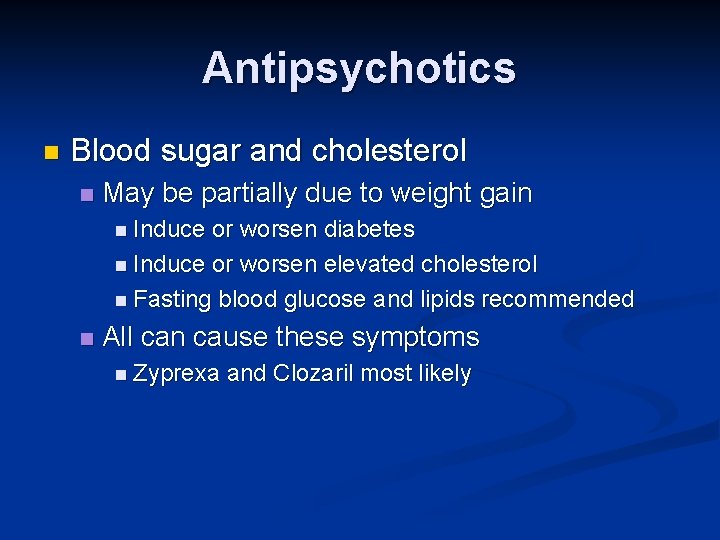
Antipsychotics n Blood sugar and cholesterol n May be partially due to weight gain n Induce or worsen diabetes n Induce or worsen elevated cholesterol n Fasting blood glucose and lipids recommended n All can cause these symptoms n Zyprexa and Clozaril most likely
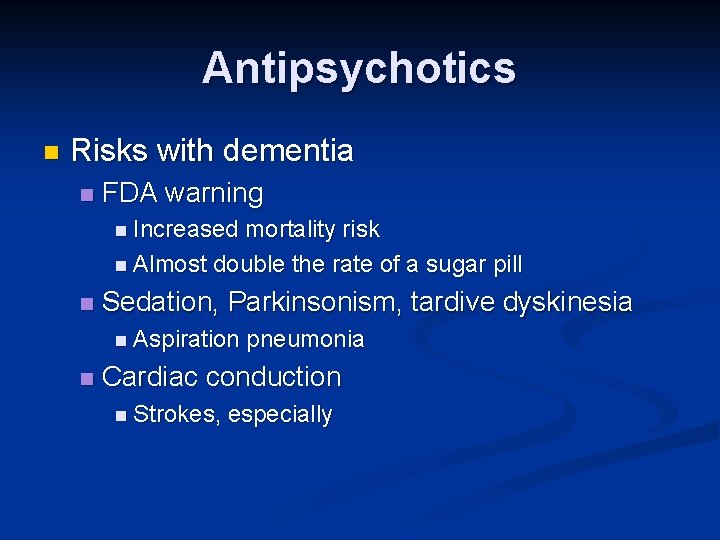
Antipsychotics n Risks with dementia n FDA warning n Increased mortality risk n Almost double the rate of a sugar pill n Sedation, Parkinsonism, tardive dyskinesia n Aspiration n pneumonia Cardiac conduction n Strokes, especially
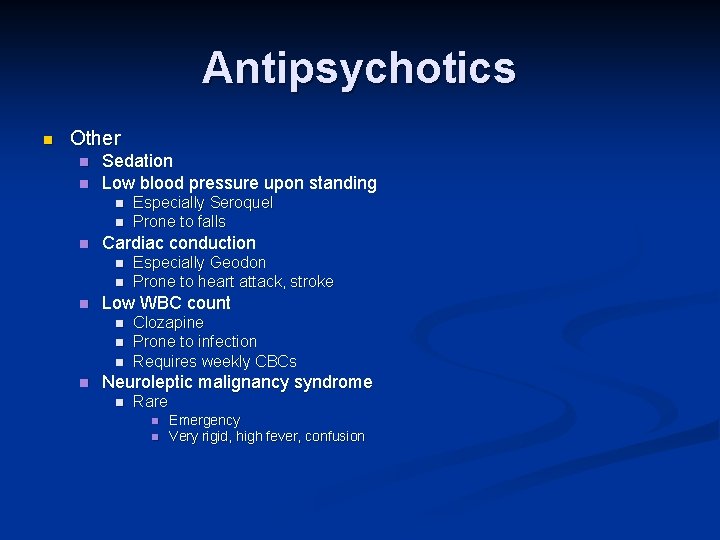
Antipsychotics n Other n n Sedation Low blood pressure upon standing n n n Cardiac conduction n Especially Geodon Prone to heart attack, stroke Low WBC count n n Especially Seroquel Prone to falls Clozapine Prone to infection Requires weekly CBCs Neuroleptic malignancy syndrome n Rare n n Emergency Very rigid, high fever, confusion
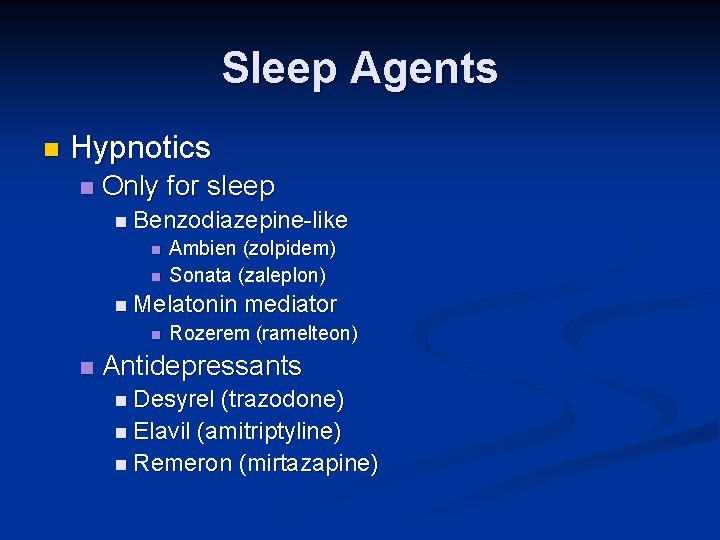
Sleep Agents n Hypnotics n Only for sleep n Benzodiazepine-like n n Ambien (zolpidem) Sonata (zaleplon) n Melatonin n n mediator Rozerem (ramelteon) Antidepressants n Desyrel (trazodone) n Elavil (amitriptyline) n Remeron (mirtazapine)
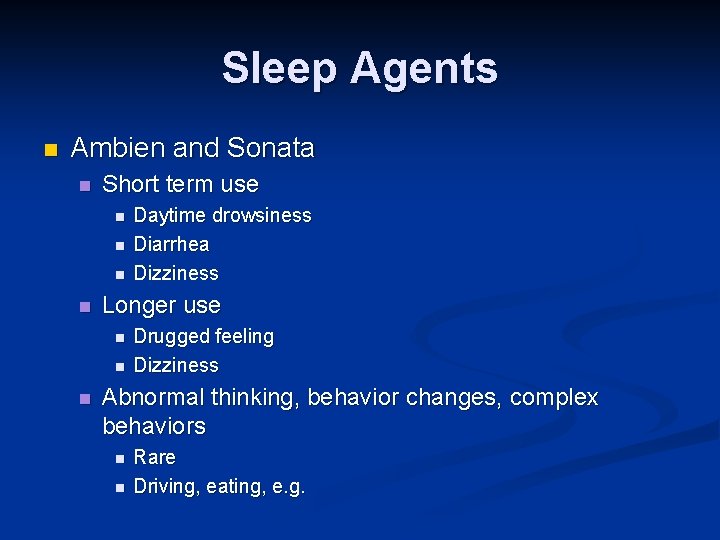
Sleep Agents n Ambien and Sonata n Short term use n n Longer use n n n Daytime drowsiness Diarrhea Dizziness Drugged feeling Dizziness Abnormal thinking, behavior changes, complex behaviors n n Rare Driving, eating, e. g.
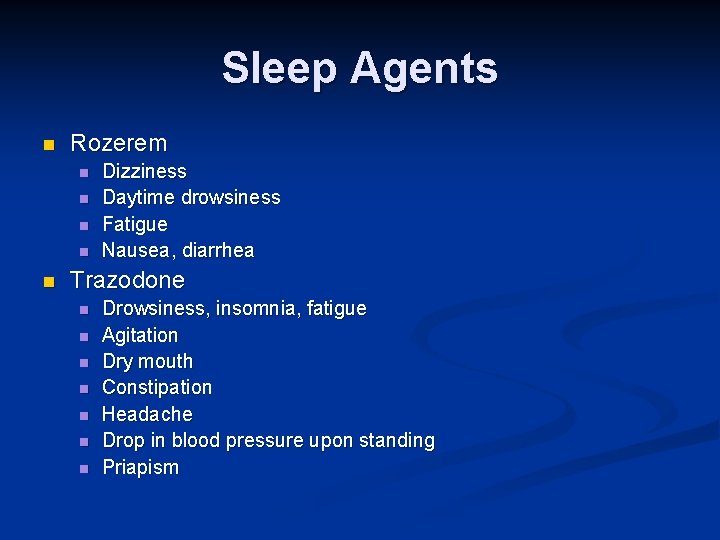
Sleep Agents n Rozerem n n n Dizziness Daytime drowsiness Fatigue Nausea, diarrhea Trazodone n n n n Drowsiness, insomnia, fatigue Agitation Dry mouth Constipation Headache Drop in blood pressure upon standing Priapism
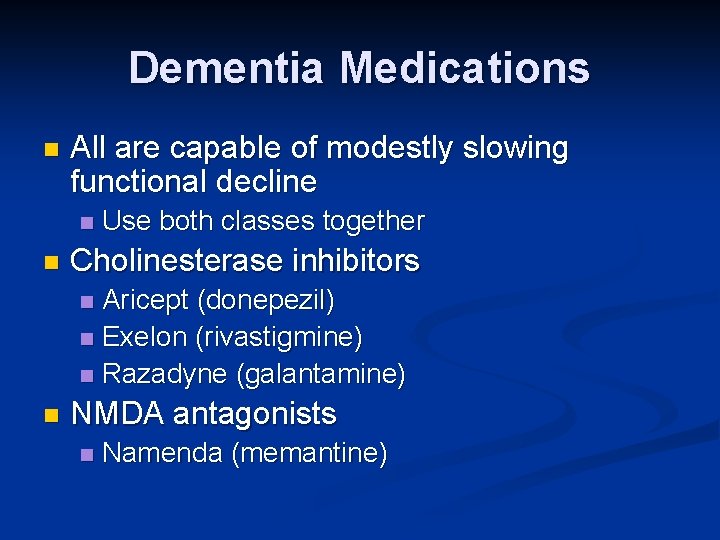
Dementia Medications n All are capable of modestly slowing functional decline n n Use both classes together Cholinesterase inhibitors Aricept (donepezil) n Exelon (rivastigmine) n Razadyne (galantamine) n n NMDA antagonists n Namenda (memantine)
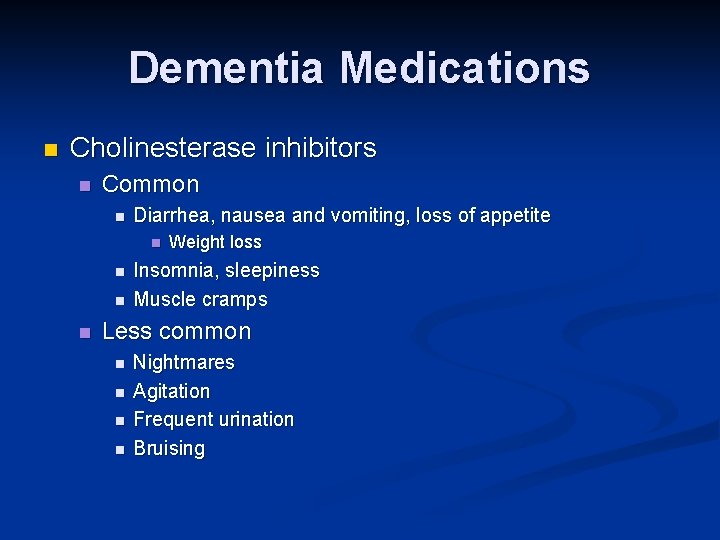
Dementia Medications n Cholinesterase inhibitors n Common n Diarrhea, nausea and vomiting, loss of appetite n n Weight loss Insomnia, sleepiness Muscle cramps Less common n n Nightmares Agitation Frequent urination Bruising
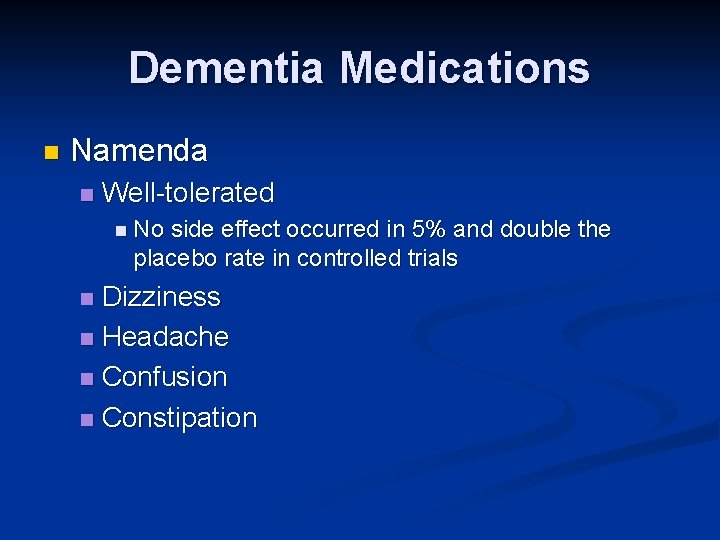
Dementia Medications n Namenda n Well-tolerated n No side effect occurred in 5% and double the placebo rate in controlled trials Dizziness n Headache n Confusion n Constipation n
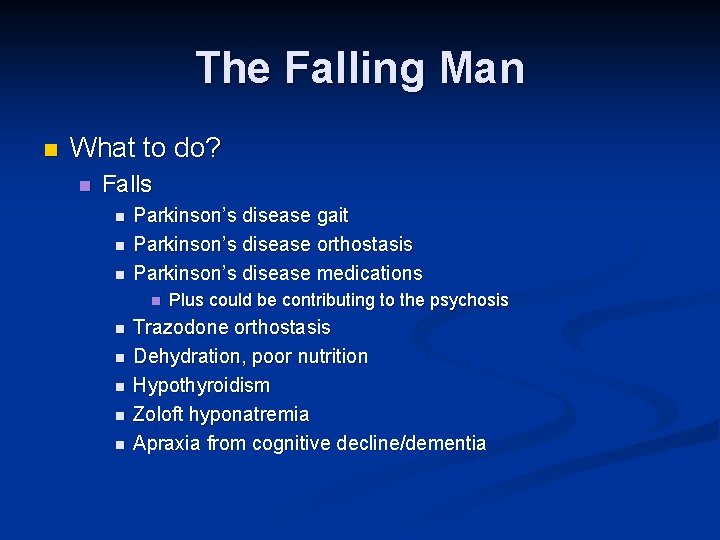
The Falling Man n What to do? n Falls n n n Parkinson’s disease gait Parkinson’s disease orthostasis Parkinson’s disease medications n n n Plus could be contributing to the psychosis Trazodone orthostasis Dehydration, poor nutrition Hypothyroidism Zoloft hyponatremia Apraxia from cognitive decline/dementia
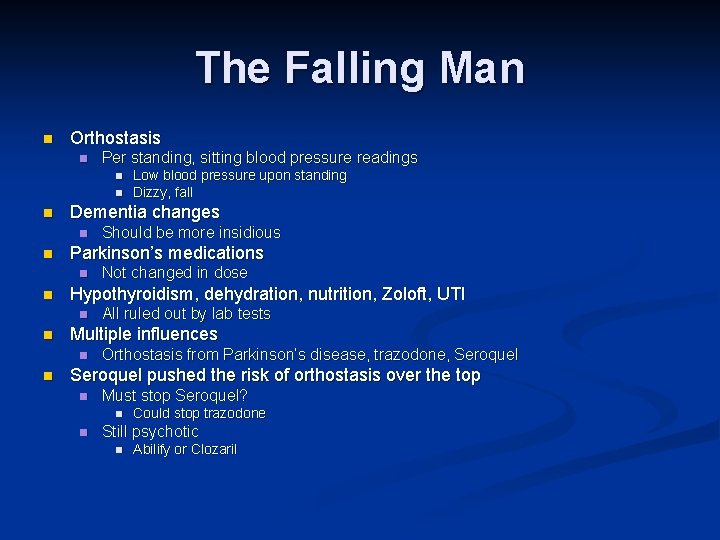
The Falling Man n Orthostasis n Per standing, sitting blood pressure readings n n n Dementia changes n n All ruled out by lab tests Multiple influences n n Not changed in dose Hypothyroidism, dehydration, nutrition, Zoloft, UTI n n Should be more insidious Parkinson’s medications n n Low blood pressure upon standing Dizzy, fall Orthostasis from Parkinson’s disease, trazodone, Seroquel pushed the risk of orthostasis over the top n Must stop Seroquel? n n Could stop trazodone Still psychotic n Abilify or Clozaril
n Questions?