
SICO Surgical Interception Attacks by Manipulating BGP Communities
SICO Surgical Interception Attacks by Manipulating BGP Communities Henry Birge-Lee Liang Wang, Jennifer Rexford, Prateek Mittal
BGP is vulnerable to hijacks ● BGP: Routing protocol used between autonomous systems ● No inherent authentication method ● Networks can falsely claim ownership of IP prefixes and announce malicious routes (i. e. , a BGP hijack) 2
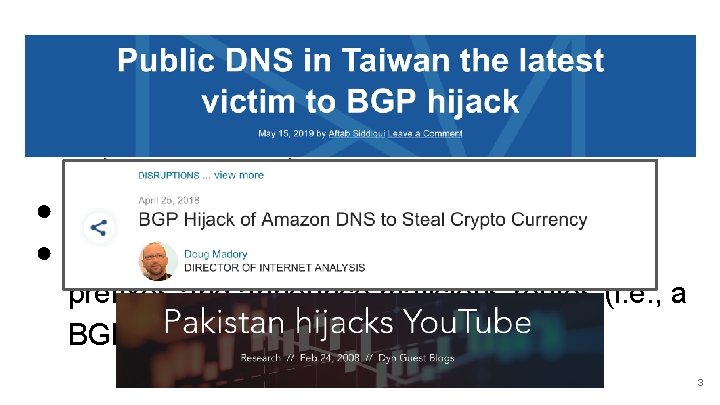
BGP is vulnerable to hijacks ● BGP: Routing protocol used between autonomous systems ● No inherent authentication method ● Networks can falsely claim ownership of IP prefixes and announce malicious routes (i. e. , a BGP hijack) 3
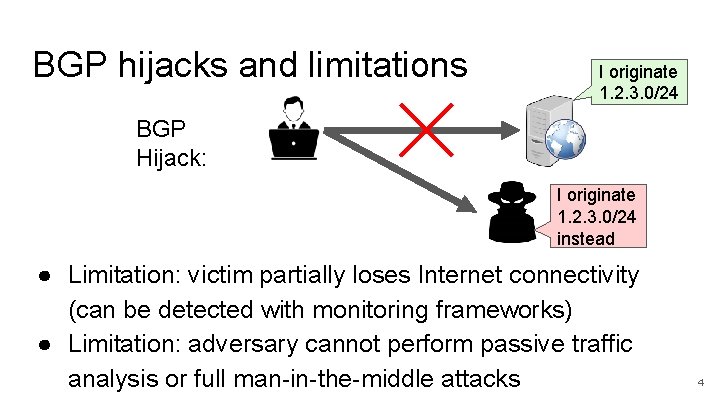
BGP hijacks and limitations I originate 1. 2. 3. 0/24 BGP Hijack: I originate 1. 2. 3. 0/24 instead ● Limitation: victim partially loses Internet connectivity (can be detected with monitoring frameworks) ● Limitation: adversary cannot perform passive traffic analysis or full man-in-the-middle attacks 4
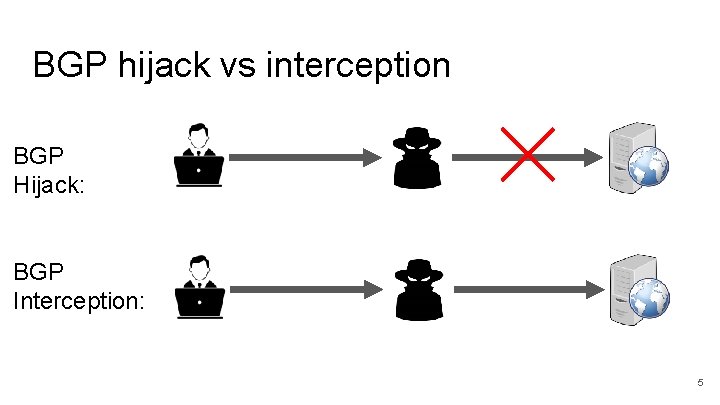
BGP hijack vs interception BGP Hijack: BGP Interception: 5
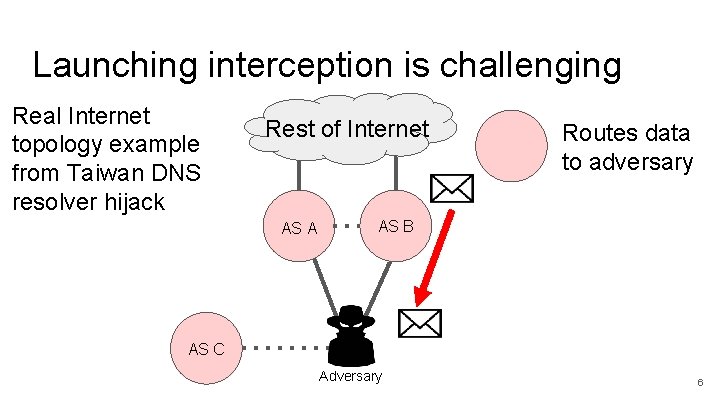
Launching interception is challenging Real Internet topology example from Taiwan DNS resolver hijack Rest of Internet AS A Routes data to adversary AS B AS C Adversary 6
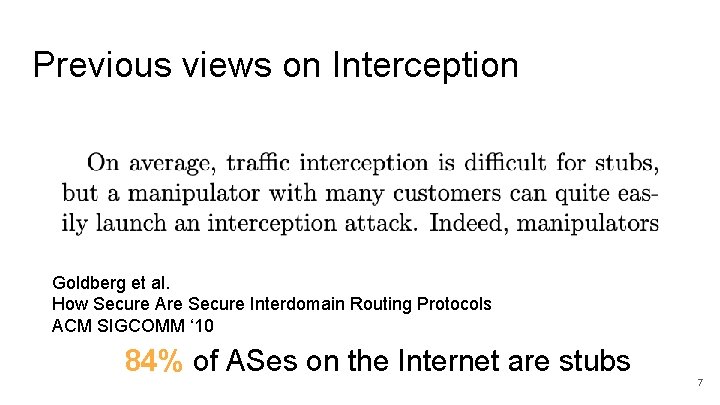
Previous views on Interception Goldberg et al. How Secure Are Secure Interdomain Routing Protocols ACM SIGCOMM ‘ 10 84% of ASes on the Internet are stubs 7
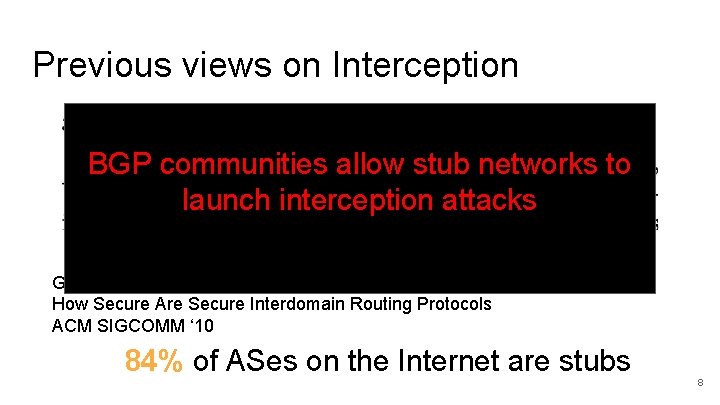
Previous views on Interception BGP communities allow stub networks to launch interception attacks Goldberg et al. How Secure Are Secure Interdomain Routing Protocols ACM SIGCOMM ‘ 10 84% of ASes on the Internet are stubs 8

Our Contributions ● Use seemingly benign BGP communities to enable 48% of ASes (incl. stubs) to launch interception ● Demonstrate viability and effectiveness of these attacks in the wild ● Introduce targeted BGP attacks that increase stealth and decrease attack cost 9
Overview ● ● How communities enable interception Real-world evaluation Targeted SICO attacks Simulation-based evaluation 10
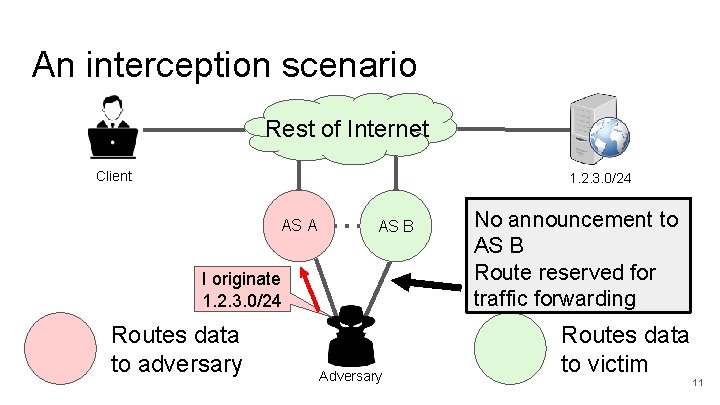
An interception scenario Rest of Internet Client 1. 2. 3. 0/24 AS AS A 4230 AS AS B 18881 I originate 1. 2. 3. 0/24 Routes data to adversary Adversary No announcement to AS B Route reserved for traffic forwarding Routes data to victim 11
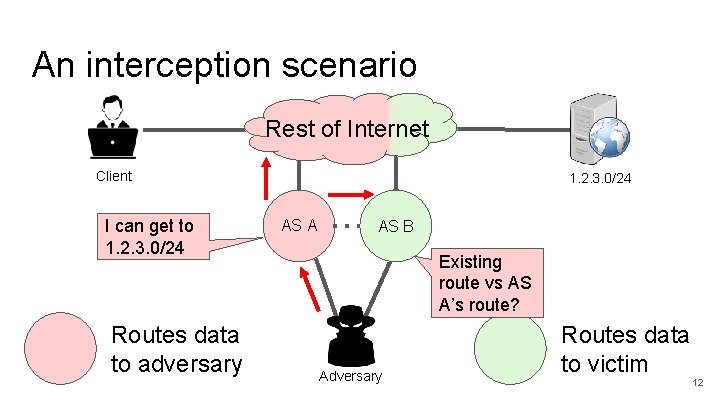
An interception scenario Rest of Internet Client I can get to 1. 2. 3. 0/24 Routes data to adversary 1. 2. 3. 0/24 AS AS B 18881 Existing route vs AS A’s route? Adversary Routes data to victim 12
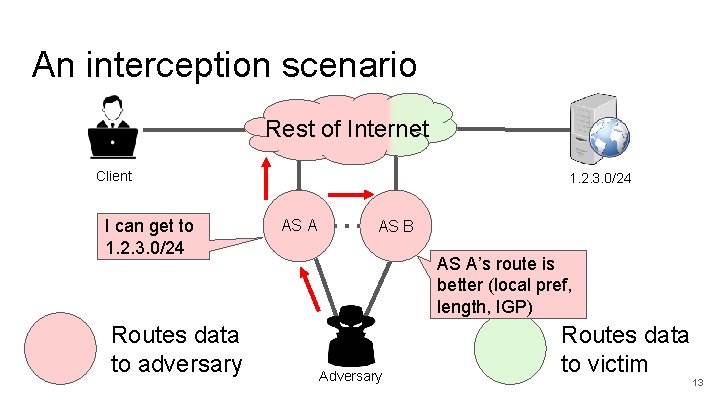
An interception scenario Rest of Internet Client I can get to 1. 2. 3. 0/24 Routes data to adversary 1. 2. 3. 0/24 AS AS A 1 4230 AS B AS A’s route is better (local pref, length, IGP) Adversary Routes data to victim 13
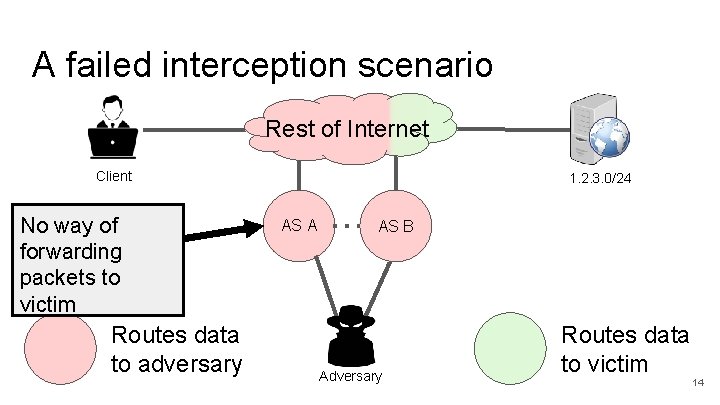
A failed interception scenario Rest of Internet Client No way of forwarding packets to victim Routes data to adversary 1. 2. 3. 0/24 AS A 1 2 AS B Adversary Routes data to victim 14
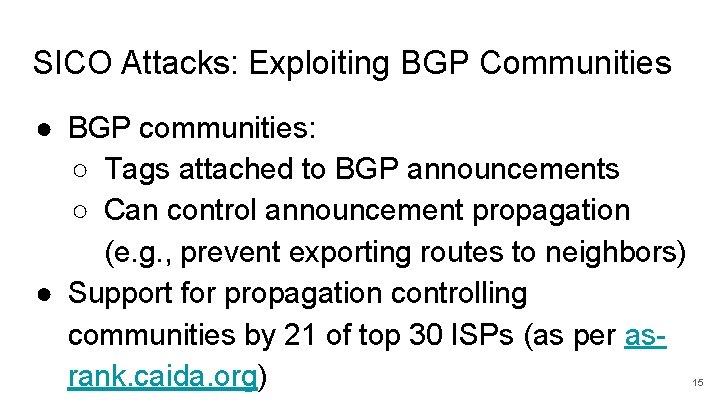
SICO Attacks: Exploiting BGP Communities ● BGP communities: ○ Tags attached to BGP announcements ○ Can control announcement propagation (e. g. , prevent exporting routes to neighbors) ● Support for propagation controlling communities by 21 of top 30 ISPs (as per asrank. caida. org) 15
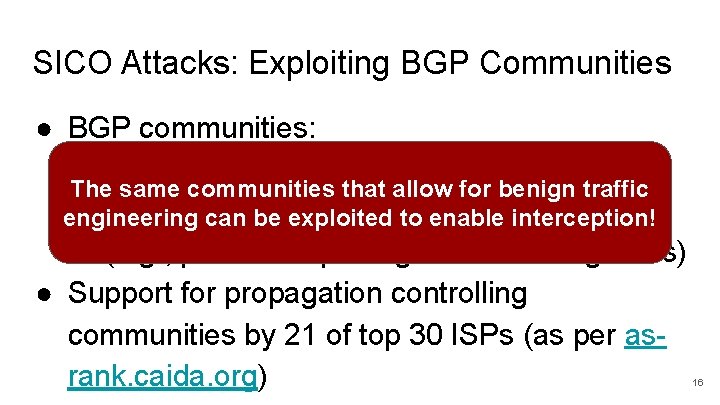
SICO Attacks: Exploiting BGP Communities ● BGP communities: ○ Tags attached to BGP announcements The same communities that allow for benign traffic ○ Can control announcement propagation engineering can be exploited to enable interception! (e. g. , prevent exporting routes to neighbors) ● Support for propagation controlling communities by 21 of top 30 ISPs (as per asrank. caida. org) 16
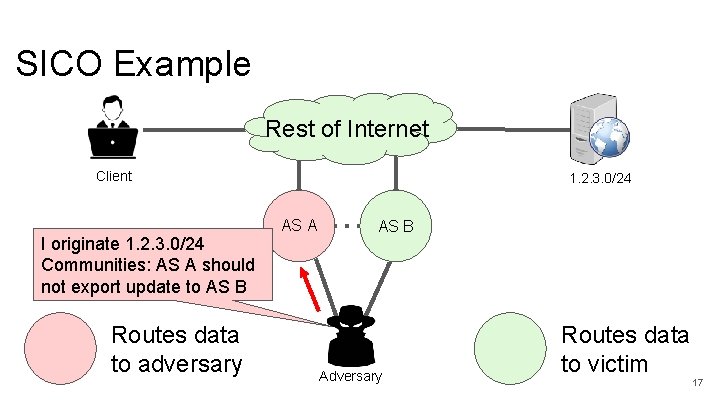
SICO Example Rest of Internet Client I originate 1. 2. 3. 0/24 Communities: AS A should not export update to AS B Routes data to adversary 1. 2. 3. 0/24 AS AS A 4230 AS AS B 18881 Adversary Routes data to victim 17
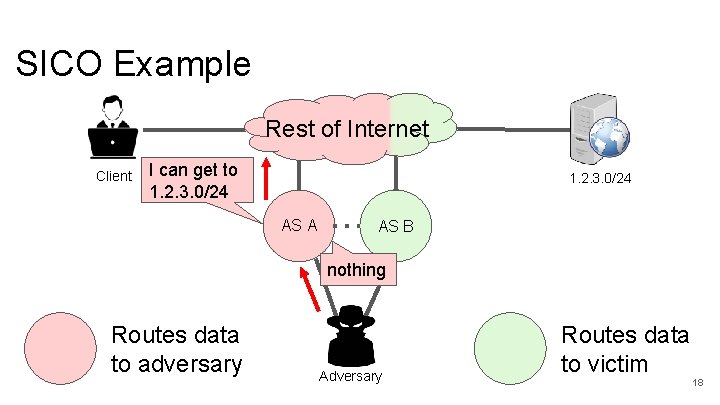
SICO Example Rest of Internet Client I can get to 1. 2. 3. 0/24 AS AS B 18881 nothing Routes data to adversary Adversary Routes data to victim 18
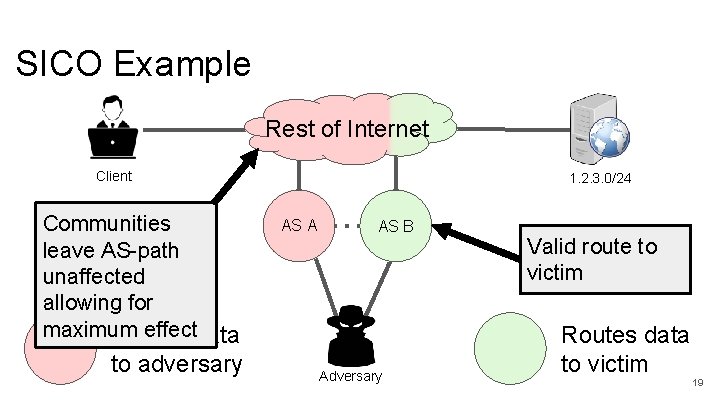
SICO Example Rest of Internet Client Communities leave AS-path unaffected allowing for maximum effectdata Routes to adversary 1. 2. 3. 0/24 AS AS A 1 4230 AS AS B 18881 Adversary Valid route to victim Routes data to victim 19
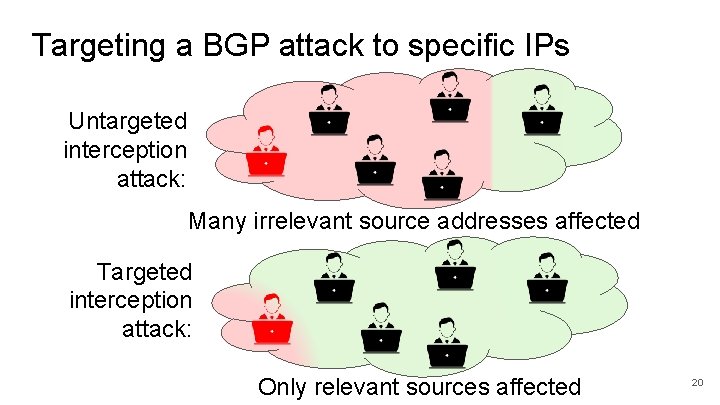
Targeting a BGP attack to specific IPs Untargeted interception attack: Many irrelevant source addresses affected Targeted interception attack: Only relevant sources affected 20
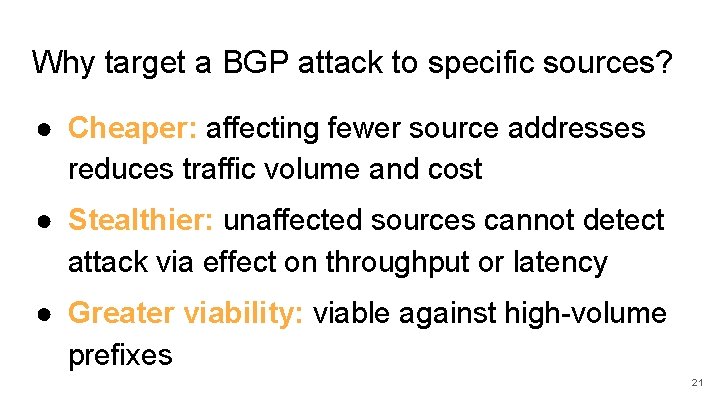
Why target a BGP attack to specific sources? ● Cheaper: affecting fewer source addresses reduces traffic volume and cost ● Stealthier: unaffected sources cannot detect attack via effect on throughput or latency ● Greater viability: viable against high-volume prefixes 21
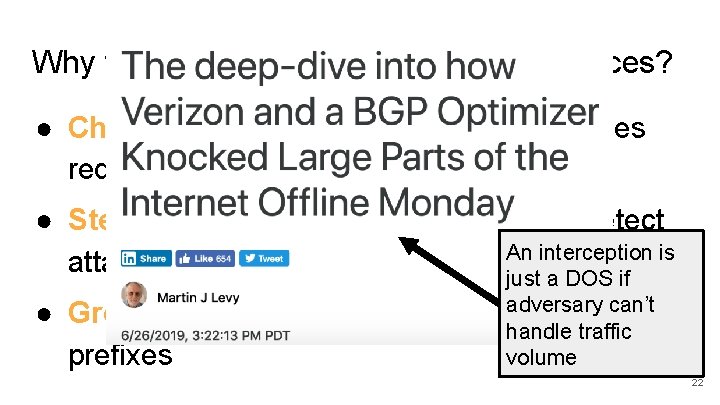
Why target a BGP attack to specific sources? ● Cheaper: affecting fewer source addresses reduces traffic volume and cost ● Stealthier: unaffected sources cannot detect interception is attack via effect on throughput or An latency just a DOS if adversary can’t ● Greater viability: viable against high-volume handle traffic prefixes volume 22
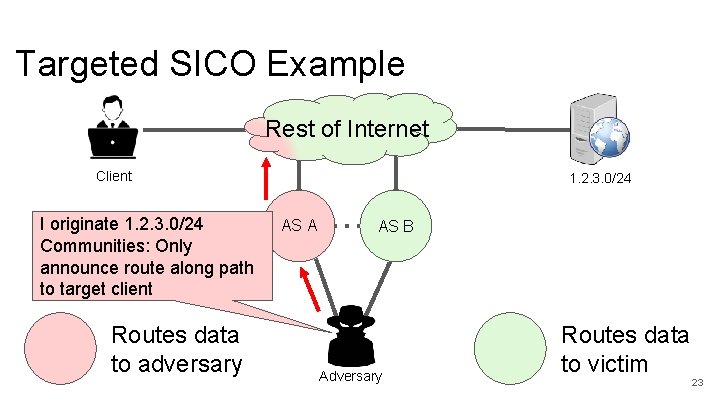
Targeted SICO Example Rest of Internet Client I originate 1. 2. 3. 0/24 Communities: Only announce route along path to target client Routes data to adversary 1. 2. 3. 0/24 AS AS A 4230 AS AS B 18881 Adversary Routes data to victim 23
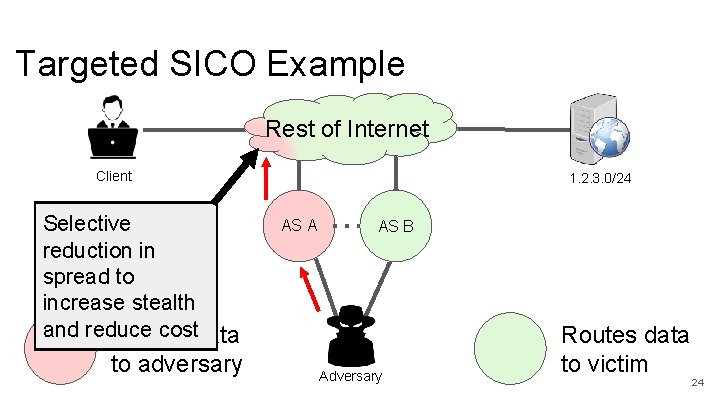
Targeted SICO Example Rest of Internet Client Selective reduction in spread to increase stealth and reduce costdata Routes to adversary 1. 2. 3. 0/24 AS AS B 18881 Adversary Routes data to victim 24
Overview ● ● How communities enable interception Real-world evaluation Targeted SICO attacks Simulation-based evaluation 25
Ethically Launching Attacks ● Used PEERING testbed ● Hijack/intercept only our own prefixes ● Repeated experiments with two different adversaries (Amsterdam and Seattle) 26
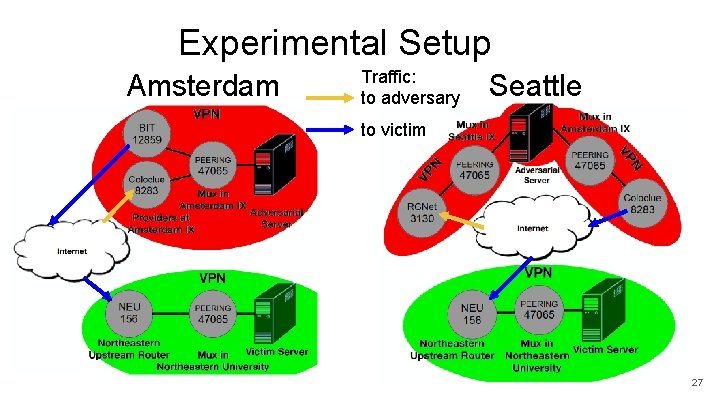
Experimental Setup Amsterdam Traffic: to adversary Seattle to victim 27
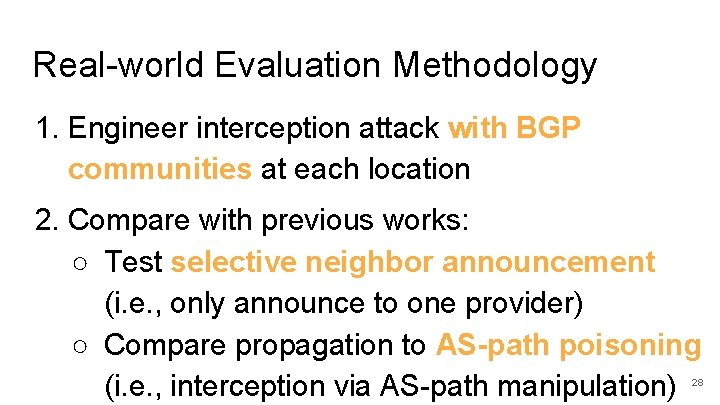
Real-world Evaluation Methodology 1. Engineer interception attack with BGP communities at each location 2. Compare with previous works: ○ Test selective neighbor announcement (i. e. , only announce to one provider) ○ Compare propagation to AS-path poisoning (i. e. , interception via AS-path manipulation) 28
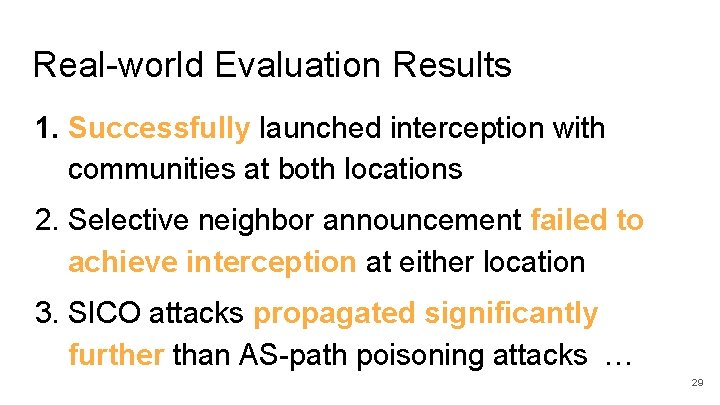
Real-world Evaluation Results 1. Successfully launched interception with communities at both locations 2. Selective neighbor announcement failed to achieve interception at either location 3. SICO attacks propagated significantly further than AS-path poisoning attacks … 29
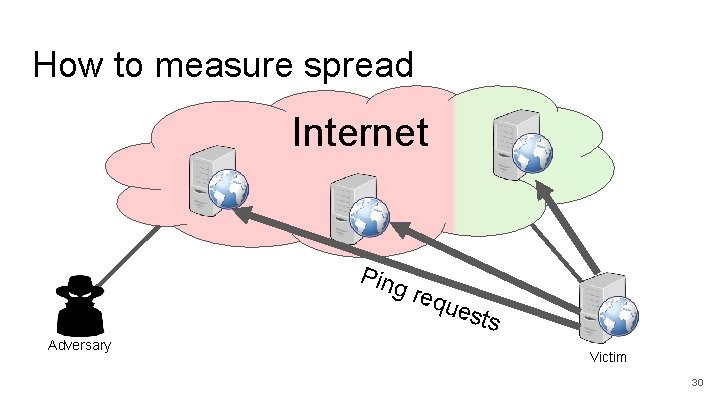
How to measure spread Internet Ping Adversary req ues ts Victim 30
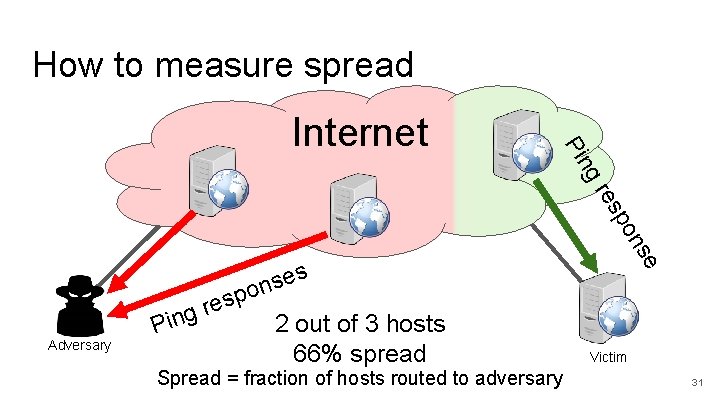
How to measure spread se n o p Adversary es r g Pin s 2 out of 3 hosts 66% spread Spread = fraction of hosts routed to adversary se on p es gr Pin Internet Victim 31
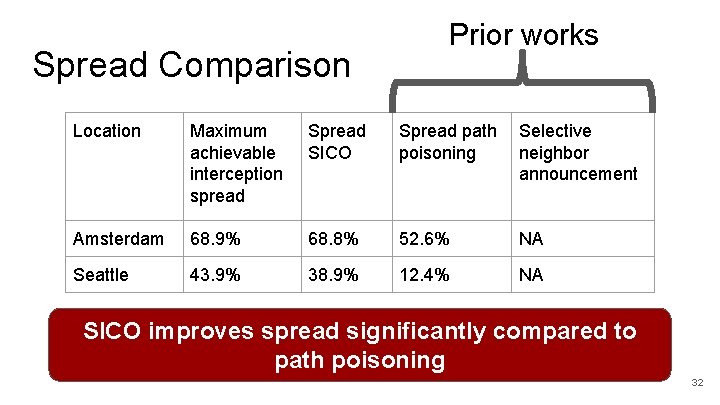
Spread Comparison Prior works Location Maximum achievable interception spread SICO Spread path poisoning Selective neighbor announcement Amsterdam 68. 9% 68. 8% 52. 6% NA Seattle 43. 9% 38. 9% 12. 4% NA SICO improves spread significantly compared to path poisoning 32
Overview ● ● How communities enable interception Real-world evaluation Targeted SICO attacks Simulation-based evaluation 33
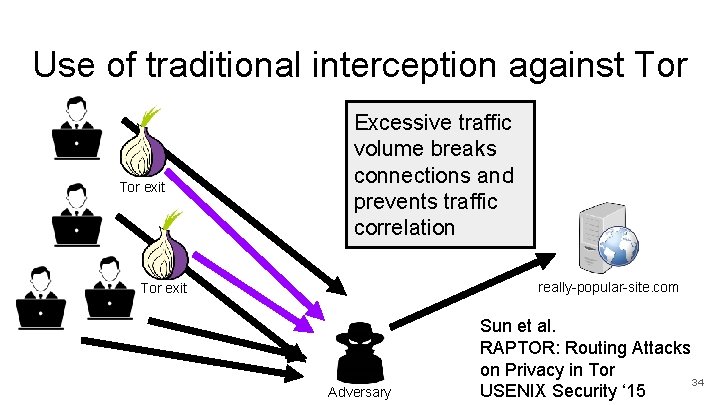
Use of traditional interception against Tor exit Excessive traffic volume breaks connections and prevents traffic correlation really-popular-site. com Tor exit Adversary Sun et al. RAPTOR: Routing Attacks on Privacy in Tor 34 USENIX Security ‘ 15
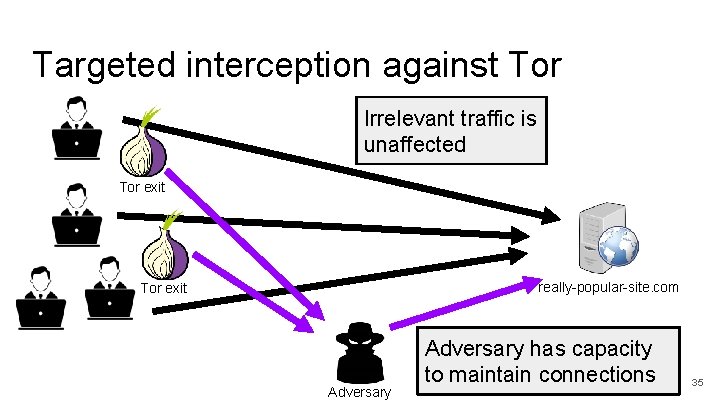
Targeted interception against Tor Irrelevant traffic is unaffected Tor exit really-popular-site. com Tor exit Adversary has capacity to maintain connections 35
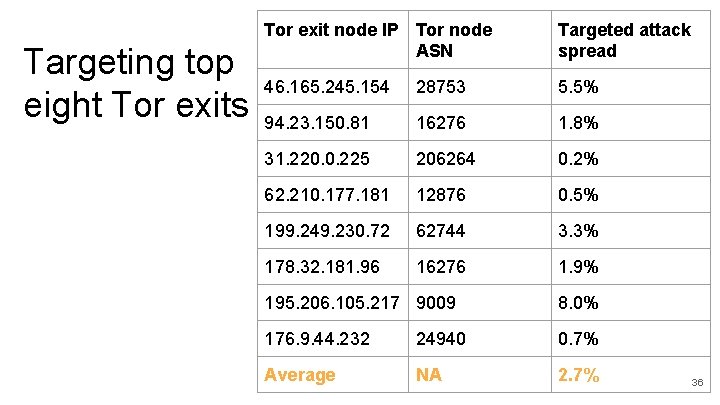
Targeting top eight Tor exits Tor exit node IP Tor node ASN Targeted attack spread 46. 165. 245. 154 28753 5. 5% 94. 23. 150. 81 16276 1. 8% 31. 220. 0. 225 206264 0. 2% 62. 210. 177. 181 12876 0. 5% 199. 249. 230. 72 62744 3. 3% 178. 32. 181. 96 16276 1. 9% 195. 206. 105. 217 9009 8. 0% 176. 9. 44. 232 24940 0. 7% Average NA 2. 7% 36
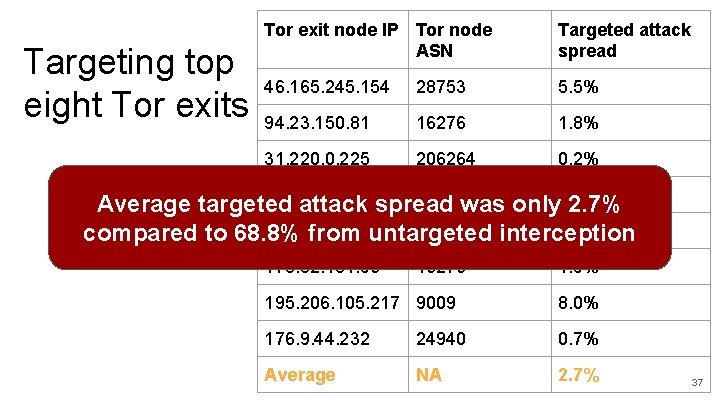
Targeting top eight Tor exits Tor exit node IP Tor node ASN Targeted attack spread 46. 165. 245. 154 28753 5. 5% 94. 23. 150. 81 16276 1. 8% 31. 220. 0. 225 206264 0. 2% 62. 210. 177. 181 12876 Average targeted attack spread was only 0. 5% 2. 7% 199. 249. 230. 72 62744 3. 3% compared to 68. 8% from untargeted interception 178. 32. 181. 96 16276 1. 9% 195. 206. 105. 217 9009 8. 0% 176. 9. 44. 232 24940 0. 7% Average NA 2. 7% 37
Overview ● ● How communities enable interception Real-world evaluation Targeted SICO attacks Simulation-based evaluation 38
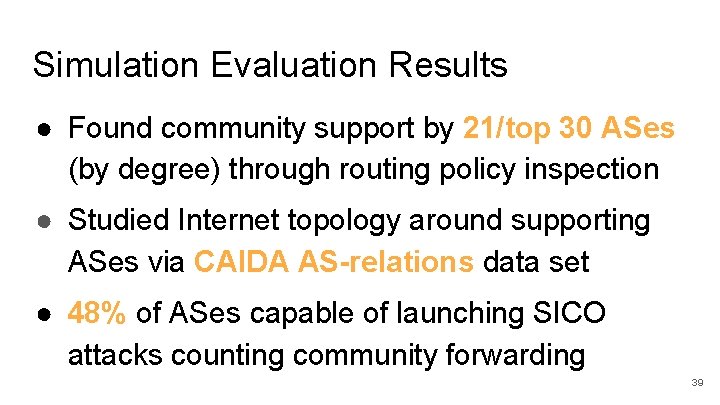
Simulation Evaluation Results ● Found community support by 21/top 30 ASes (by degree) through routing policy inspection ● Studied Internet topology around supporting ASes via CAIDA AS-relations data set ● 48% of ASes capable of launching SICO attacks counting community forwarding 39
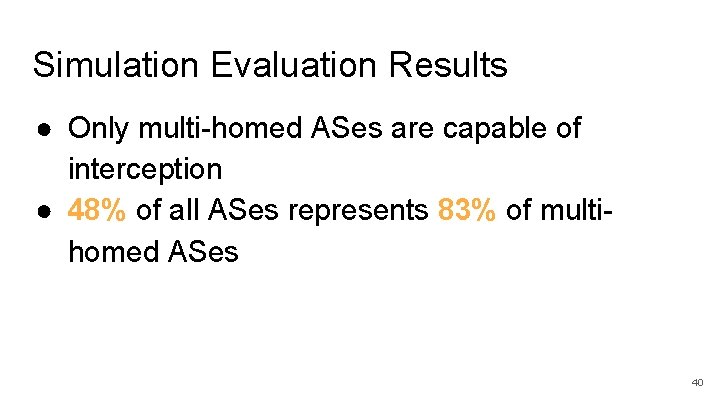
Simulation Evaluation Results ● Only multi-homed ASes are capable of interception ● 48% of all ASes represents 83% of multihomed ASes 40
Takeaways Questions? ● BGP communities let adversaries shape malicious announcements ● This enables effective interception ● Even stub ASes can feasibly intercept traffic ● Future threat models should consider adversaries that can launch and target interception attacks Thanks to support from 41
- Slides: 41