
Sickle Cell Disease Emily S Moses M D

- Slides: 27
Sickle Cell Disease Emily S. Moses, M. D. September 13, 2017
Sickle Cell Disease Facts • Affects ~100, 000 Americans • 1/365 African American births • 1/16, 300 Hispanic American births • 1/13 African American babies has sickle cell trait www. cdc. gov
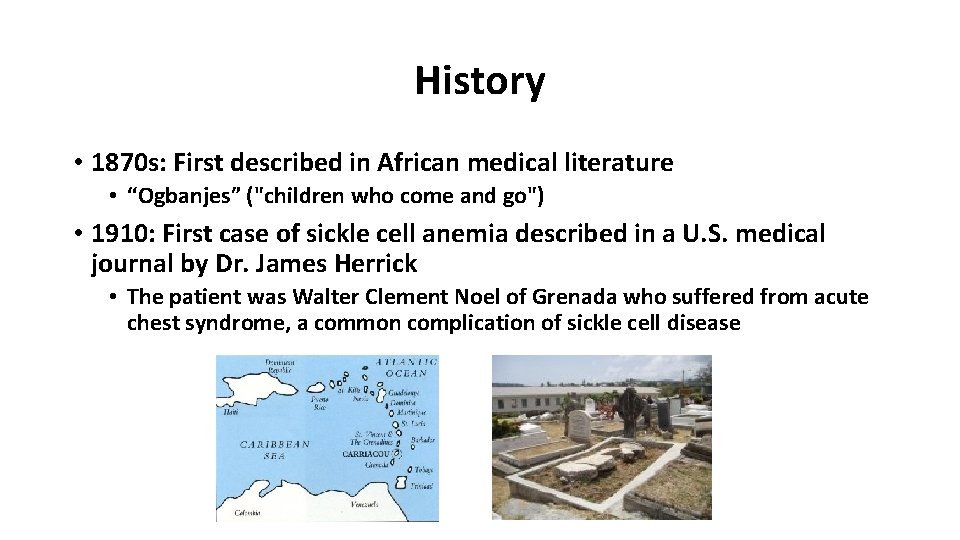
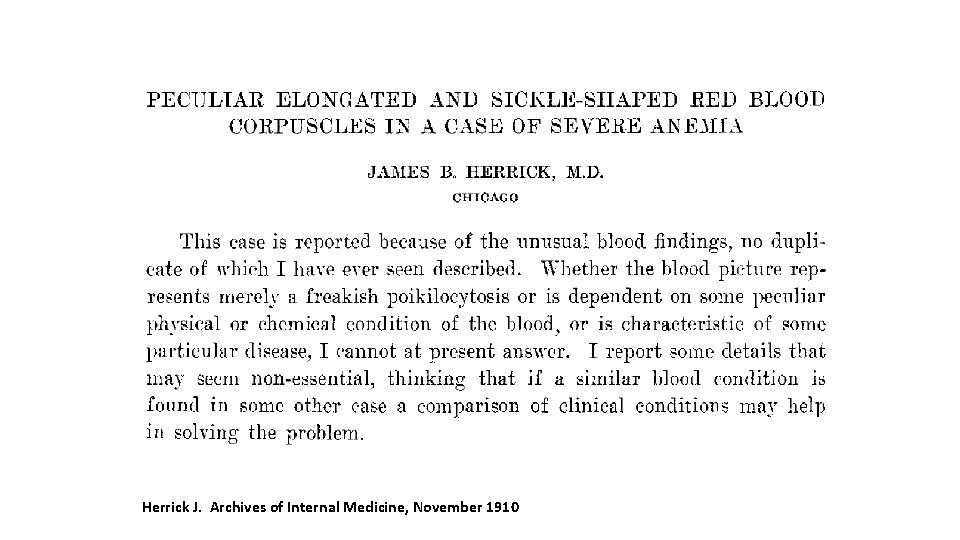
History • 1870 s: First described in African medical literature • “Ogbanjes” ("children who come and go") • 1910: First case of sickle cell anemia described in a U. S. medical journal by Dr. James Herrick • The patient was Walter Clement Noel of Grenada who suffered from acute chest syndrome, a common complication of sickle cell disease
Herrick J. Archives of Internal Medicine, November 1910
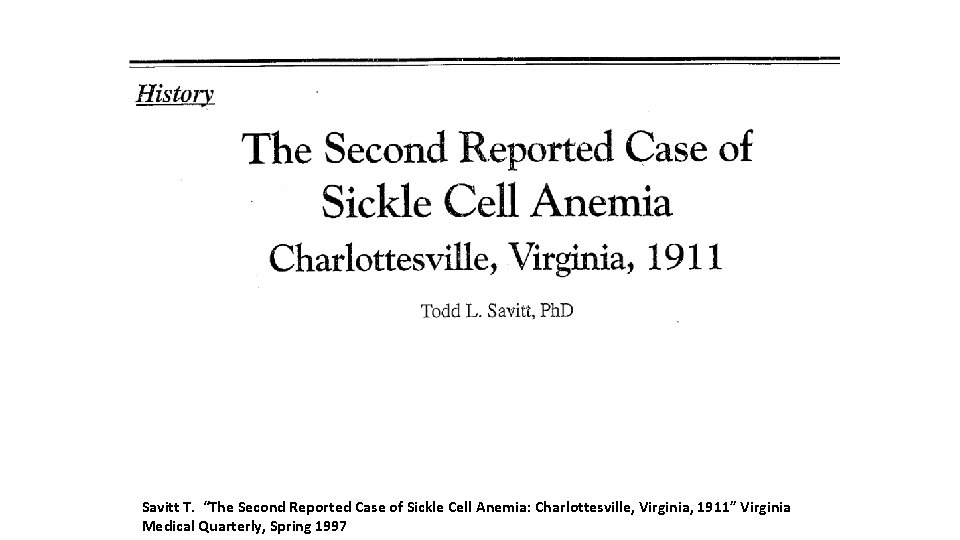
History • In February of 1911, Benjamin E. Washburn, a 4 th year medical school student at UVA, published the 2 nd case report of sickle cell disease • The patient, Ellen Anthony, frequently received charity care from the UVA hospital from 1907 through 1918 Savitt T. “The Second Reported Case of Sickle Cell Anemia: Charlottesville, Virginia, 1911” Virginia Medical Quarterly, Spring 1997
Savitt T. “The Second Reported Case of Sickle Cell Anemia: Charlottesville, Virginia, 1911” Virginia Medical Quarterly, Spring 1997
History • 1963 • Sir John Dacie “Sickle Cell Anemia is essentially a disease of childhood. ” • 1973 • Average life expectancy was 14. 3 years • 20% of patients died in the first 2 years of life • 2000’s • Nearly all patients survive to adulthood
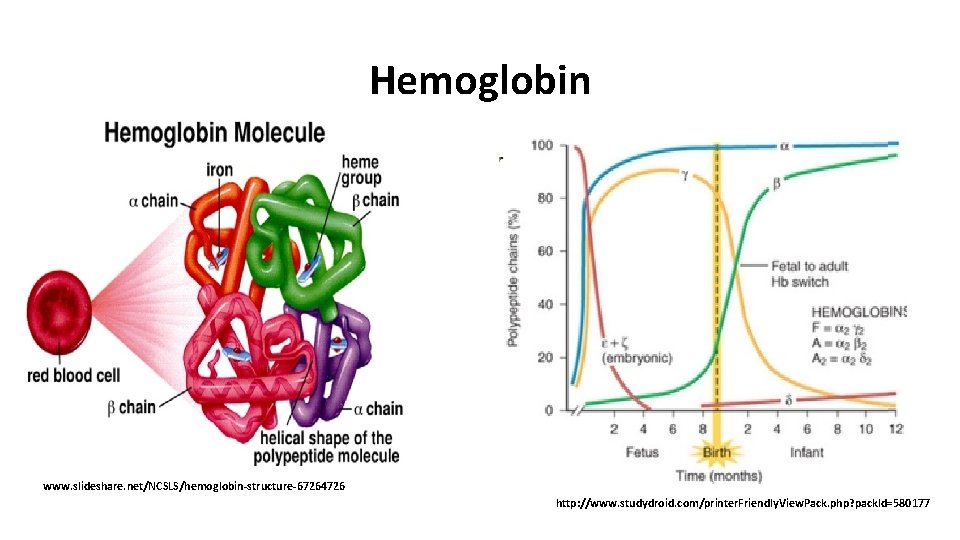
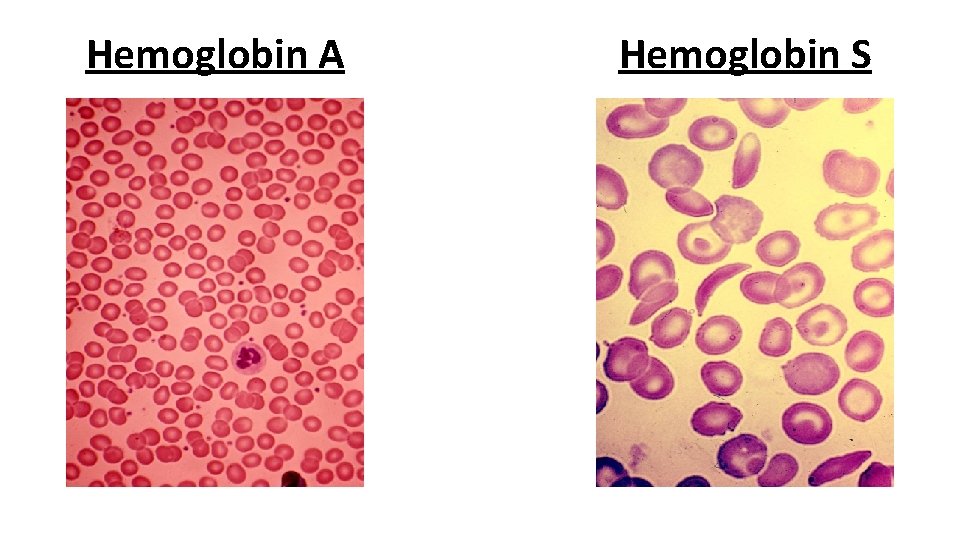
What is Sickle Cell Disease (SCD)? • Group of inherited disorders of red blood cells • Hemoglobin S forms due to a mutation of the Beta globin gene on chromosome 11 • Defect occurs because of a single amino acid substitution • Glutamic Acid is replaced by Valine • Results in defective hemoglobin protein that causes the production of misshapen red blood cells • Sickle cells die early, causing shortage of red blood cells • Sickle cells get stuck in small blood vessels causing pain and other problems
Hemoglobin www. slideshare. net/NCSLS/hemoglobin-structure-67264726 http: //www. studydroid. com/printer. Friendly. View. Pack. php? pack. Id=580177
Hemoglobin A Hemoglobin S
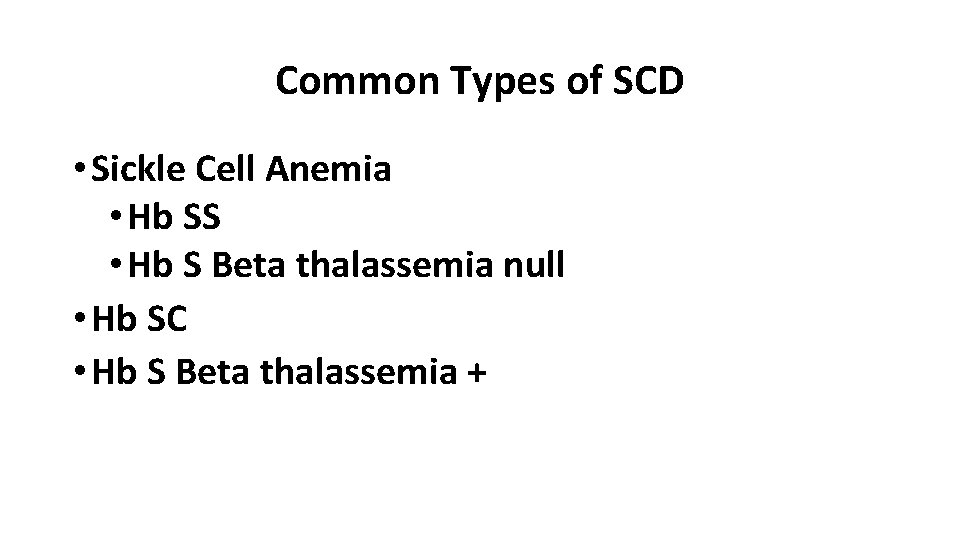
Common Types of SCD • Sickle Cell Anemia • Hb SS • Hb S Beta thalassemia null • Hb SC • Hb S Beta thalassemia +
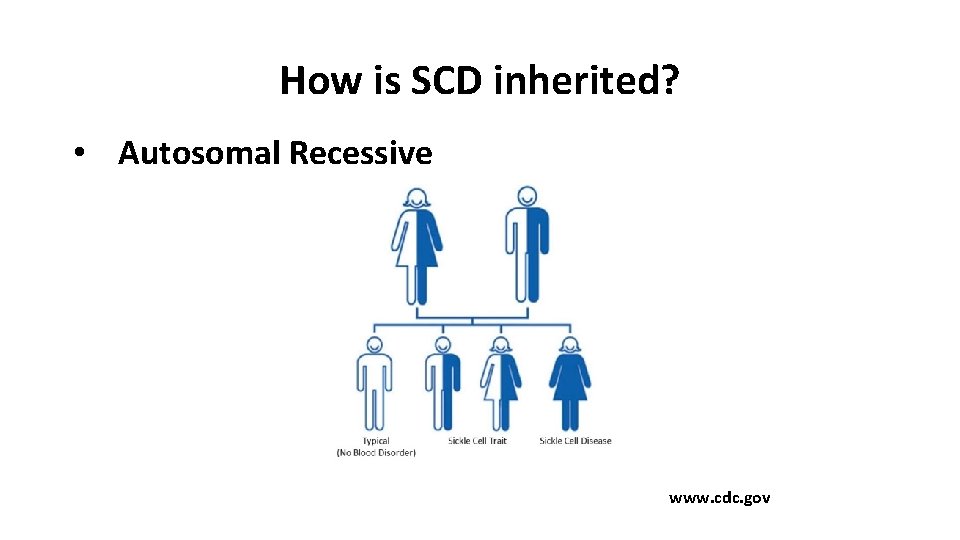
How is SCD inherited? • Autosomal Recessive www. cdc. gov
How is SCD diagnosed? • Newborn screening • • FS – Hb SS or Hb S Beta null FSA – Hb S Beta + FSC – Hb SC FAS – sickle cell trait
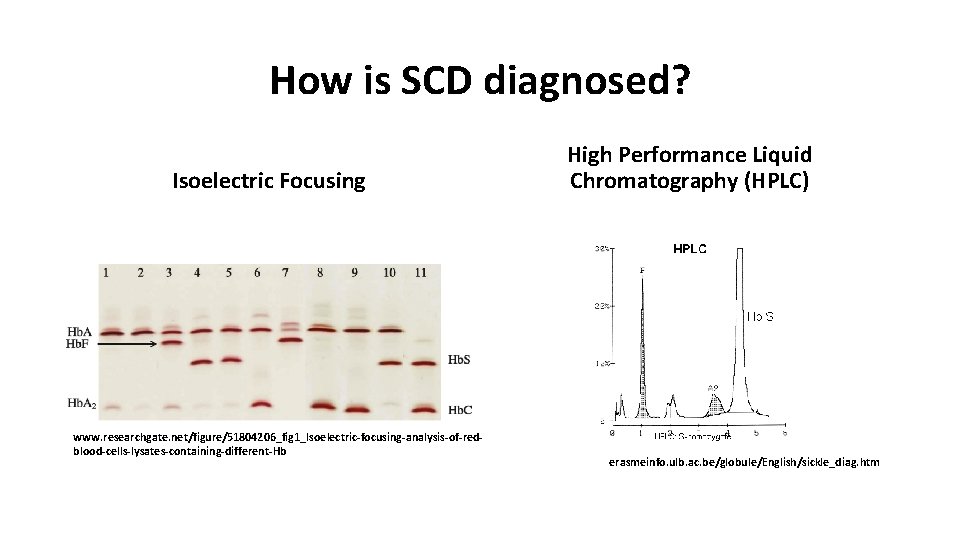
How is SCD diagnosed? Isoelectric Focusing www. researchgate. net/figure/51804206_fig 1_Isoelectric-focusing-analysis-of-redblood-cells-lysates-containing-different-Hb High Performance Liquid Chromatography (HPLC) erasmeinfo. ulb. ac. be/globule/English/sickle_diag. htm
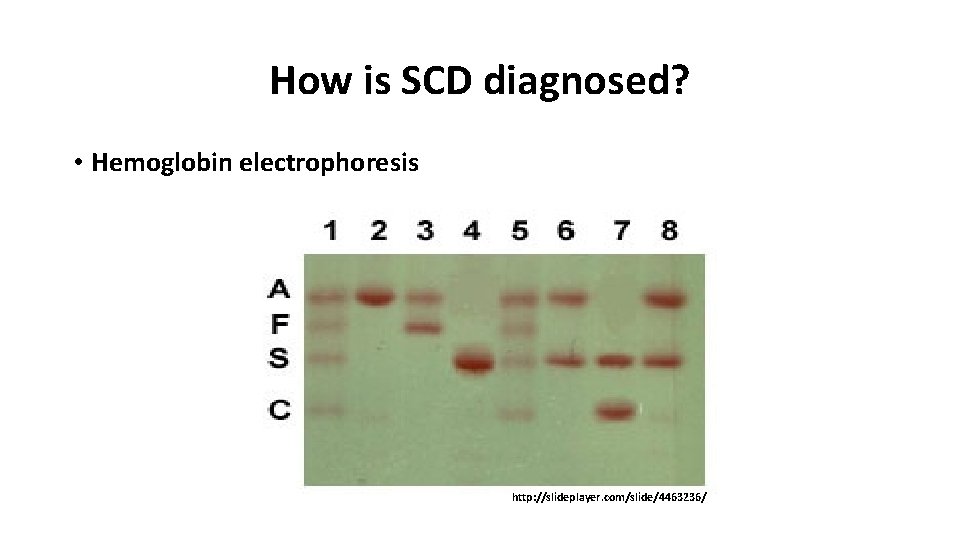
How is SCD diagnosed? • Hemoglobin electrophoresis http: //slideplayer. com/slide/4463236/
Acute Complications of Sickle Cell Disease • Vaso-occlusive Crisis • Fever • Acute chest syndrome • Stroke • Splenic sequestration • Priaprism • Aplastic anemia
Vaso-occlusive Crisis (VOC) • Occurs because of red blood cell sickling, small blood vessel occlusion and tissue ischemia/reperfusion • Most common cause of acute morbidity • Associated with severity of disease and early mortality among young adults • Most common triggers: • Cold temperature, cold water, dehydration, overexertion, and menses • Management: • NSAIDs, Opioids, Correct dehydration • In addition to these acute episodes of more severe pain, pain in patients with sickle cell is often chronic, underrecognized and underreported, and therefore undertreated
Fever • Patients with SCD are at increased risk of severe bacterial infection, because of impaired or absent spleen function • High risk of sepsis and meningitis from Streptococcus pneumoniae • Incidence of invasive pneumococcal infection is decreased due to use of prophylactic penicillin and pneumococcal vaccine, however fever is still considered an emergency
Acute chest syndrome • 2 nd most frequent reason for hospitalization in children and adults • Most common cause of death • Manifests as fever, signs and symptoms of respiratory distress, and an infiltrate on chest x-ray • Management: hospitalization, antibiotics, possible blood transfusion, do not fluid overload, use incentive spirometry http: //www. nrsg 101. com/incentive-spirometry. html reference. medscape. com/features/slideshow/sickle-cell#8
Stroke • To prevent stroke, in all children with Hb. SS or Hb. SBeta null, a transcranial doppler (TCD) is done yearly from 2 – 16 yrs of age • If at any time it is abnormal, the patient begins chronic transfusions or exchange transfusions to keep their Hb S < 30% • Without primary stroke prevention, 20 -35% of children with Hb. SS have silent cerebral infarcts, • can cause cognitive decline • predisposes them to additional silent infarcts and overt strokes
Acute Anemia • Splenic sequestration • Sudden enlargement of the spleen and reduction in hemoglobin concentration by at least 2 g/d. L below the patient’s baseline value • Teach parents to palpate for the spleen • Aplastic crisis • Presents often with fever, lethargy, rapid heart rate, and occasionally heart failure • Hemoglobin is usually far below a patient’s baseline and the reticulocyte count (estimate of if the bone marrow is making red blood cells) is decreased or 0 • Parvovirus B 19
Priaprism • Sustained, unwanted painful erection lasting 4 or more hours • Affects 35% of boys/men • Delayed diagnosis and therapy can result in impotence • Management: hydration and pain meds, may need surgical intervention
Chronic Complications of SCD • Avascular Necrosis • Chronic pain • Renal complications • Pulmonary Hypertension • Recurrent Priaprism
How far have we come? • Newborn screening • Effective vaccination against pneumococcal disease • Hydroxyurea - only medication ever shown to decrease complications and increase life expectancy • Prophylactic penicillin • Bone marrow transplant
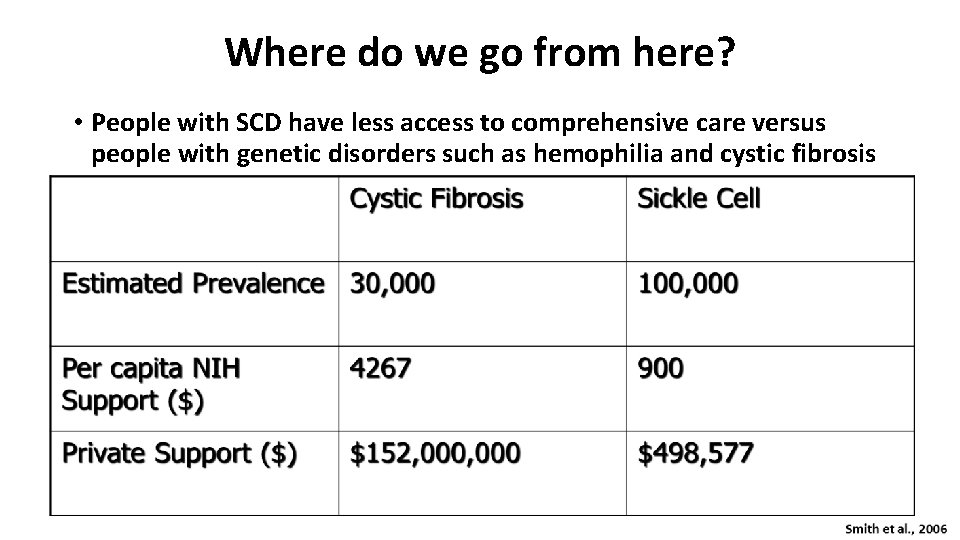
Where do we go from here? • People with SCD have less access to comprehensive care versus people with genetic disorders such as hemophilia and cystic fibrosis
Sickle Cell Trait and the Athlete • National Association of Athletic Trainers published a Consensus Statement in 2007 • Since 2000, 9 athletes with sickle cell trait have died following collapse after exertional exercise • In over a decade, 136 sudden non-traumatic sports deaths in high school & college; 5% related to exertional sickling • Newborn Screen Results or Testing for all student athletes • SCDAA: “Nevertheless this approach carries great risk of stigmatization and discrimination against athletes with sickle cell trait. The NCAA mandate for sickle trait screening does not provide adequate assurance of the privacy of genetic information nor protection from the discriminatory use of such information. ”
Don’t Forget: September is National Sickle Cell Awareness Month!