
Sickle Cell Anemia Most common genetic disease in
- Slides: 17
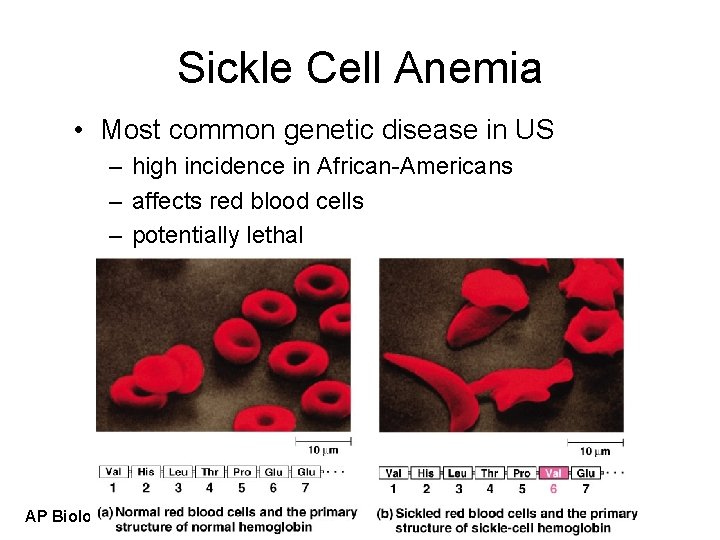
Sickle Cell Anemia • Most common genetic disease in US – high incidence in African-Americans – affects red blood cells – potentially lethal AP Biology
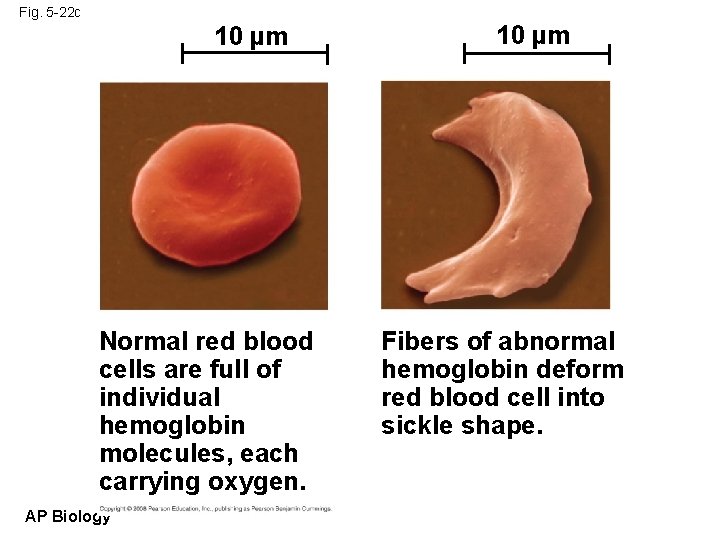
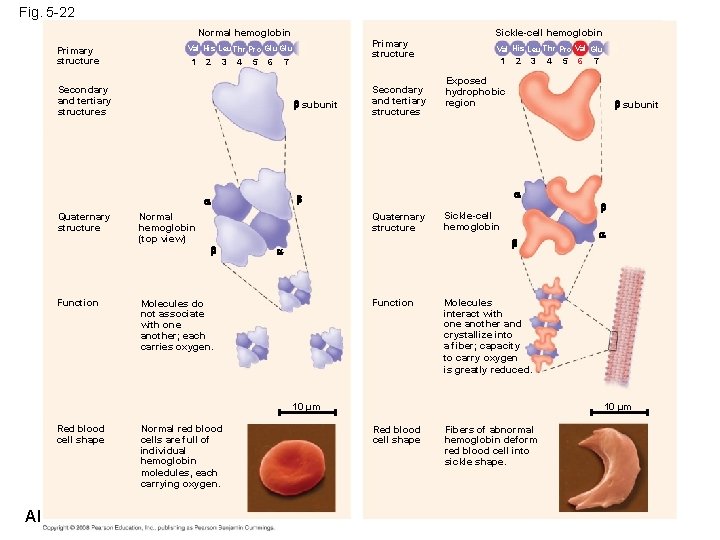
Fig. 5 -22 c 10 µm Normal red blood cells are full of individual hemoglobin molecules, each carrying oxygen. AP Biology 10 µm Fibers of abnormal hemoglobin deform red blood cell into sickle shape.
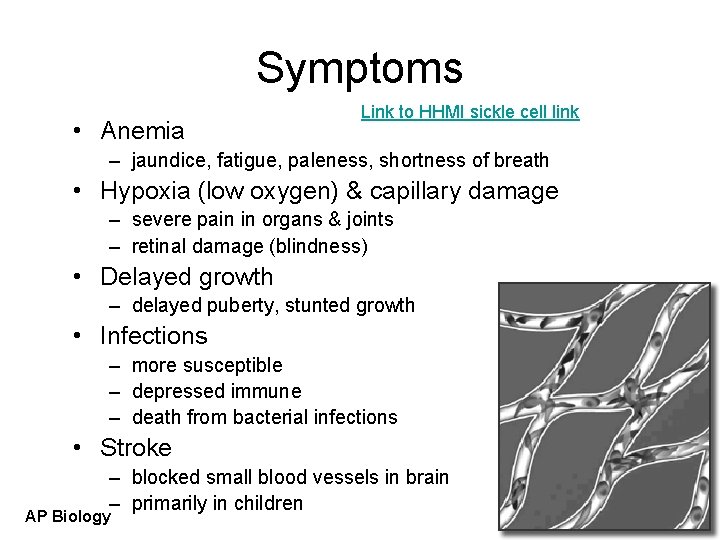
Symptoms • Anemia Link to HHMI sickle cell link – jaundice, fatigue, paleness, shortness of breath • Hypoxia (low oxygen) & capillary damage – severe pain in organs & joints – retinal damage (blindness) • Delayed growth – delayed puberty, stunted growth • Infections – more susceptible – depressed immune – death from bacterial infections • Stroke – blocked small blood vessels in brain – primarily in children AP Biology
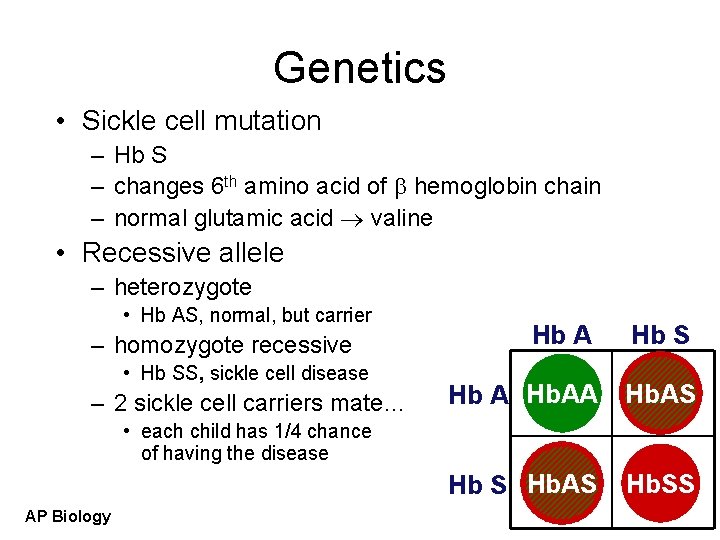
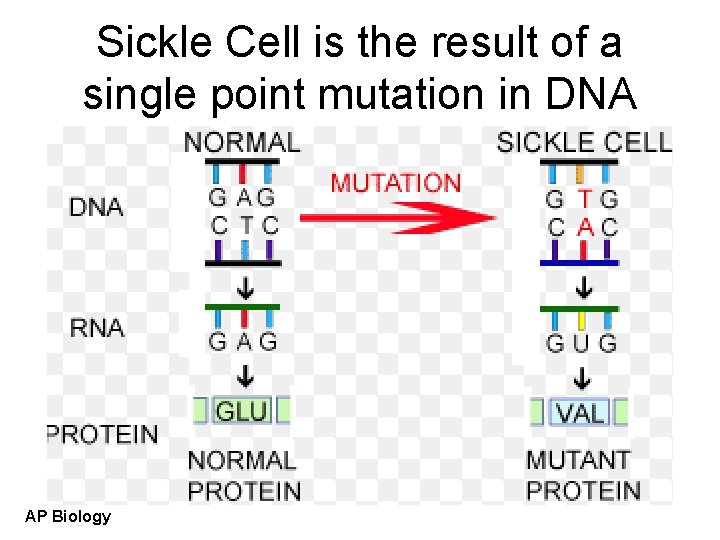
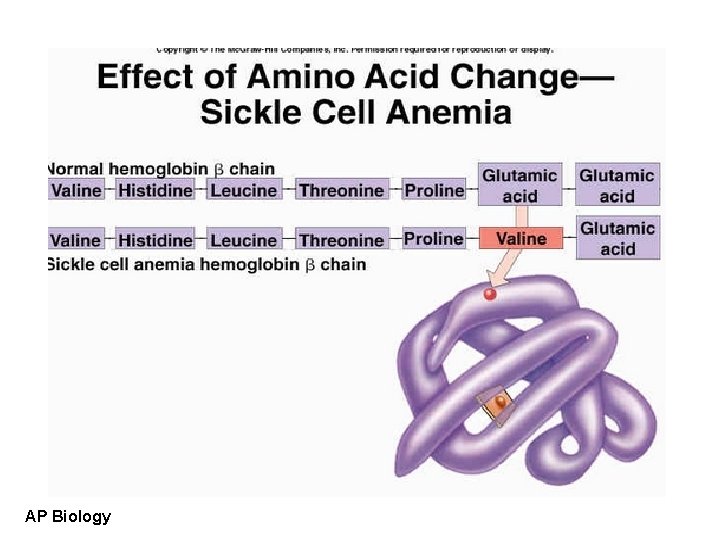
Genetics • Sickle cell mutation – Hb S – changes 6 th amino acid of hemoglobin chain – normal glutamic acid valine • Recessive allele – heterozygote • Hb AS, normal, but carrier – homozygote recessive • Hb SS, sickle cell disease – 2 sickle cell carriers mate… Hb A Hb S Hb A Hb. AS Hb. SS • each child has 1/4 chance of having the disease AP Biology
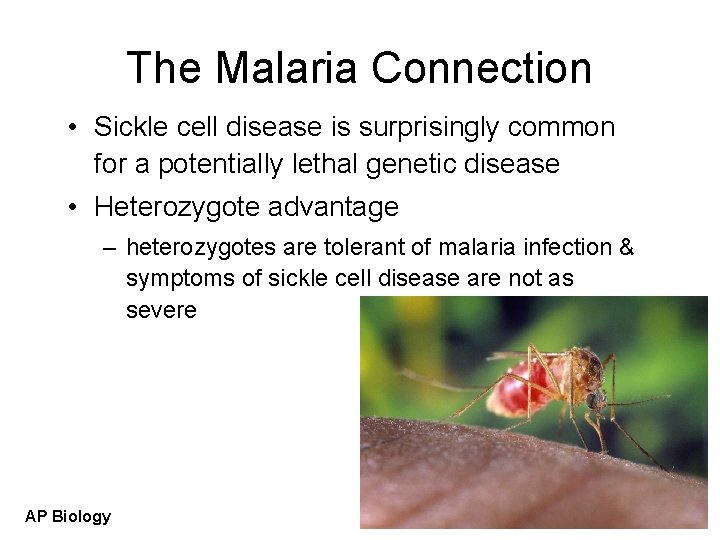
The Malaria Connection • Sickle cell disease is surprisingly common for a potentially lethal genetic disease • Heterozygote advantage – heterozygotes are tolerant of malaria infection & symptoms of sickle cell disease are not as severe AP Biology
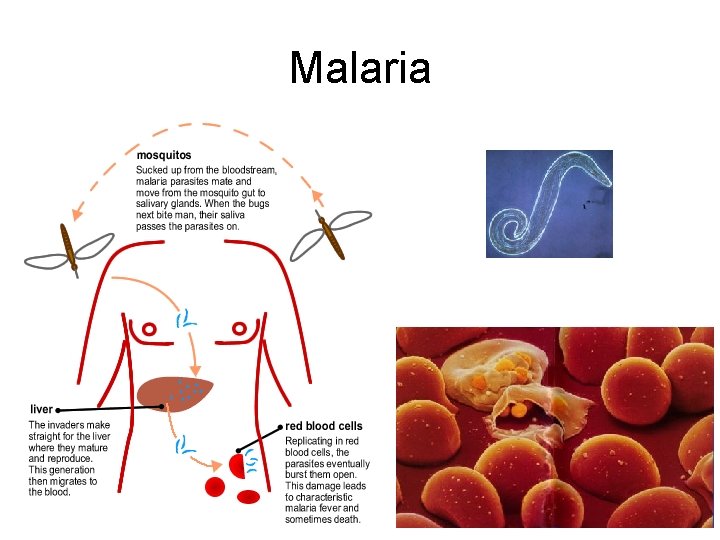
Malaria AP Biology
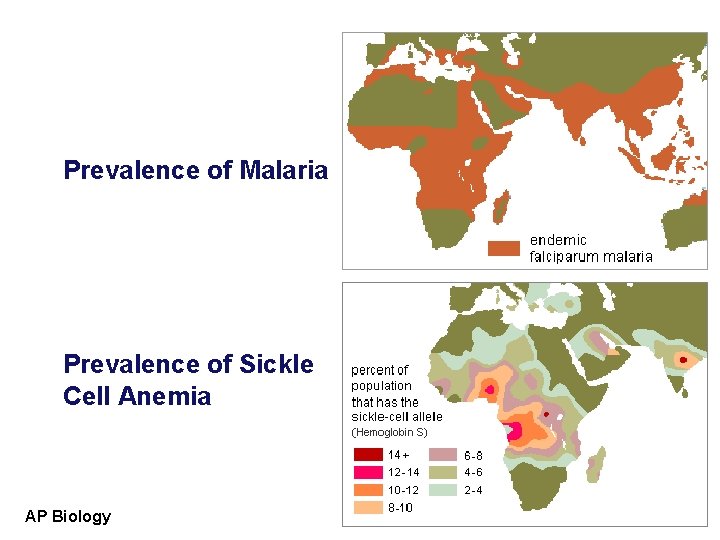
Prevalence of Malaria Prevalence of Sickle Cell Anemia AP Biology
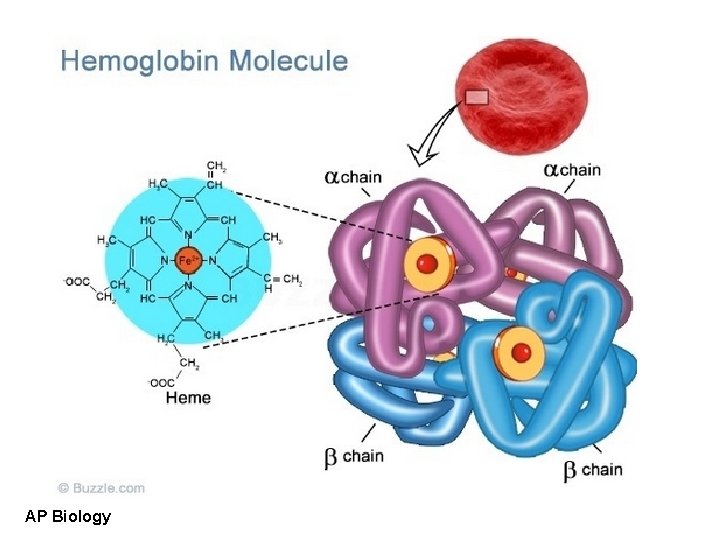
AP Biology
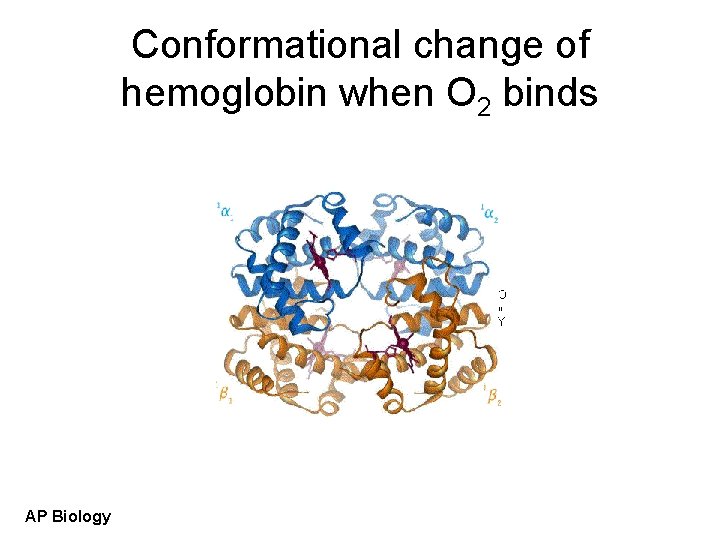
Conformational change of hemoglobin when O 2 binds AP Biology
Sickle Cell is the result of a single point mutation in DNA AP Biology
AP Biology
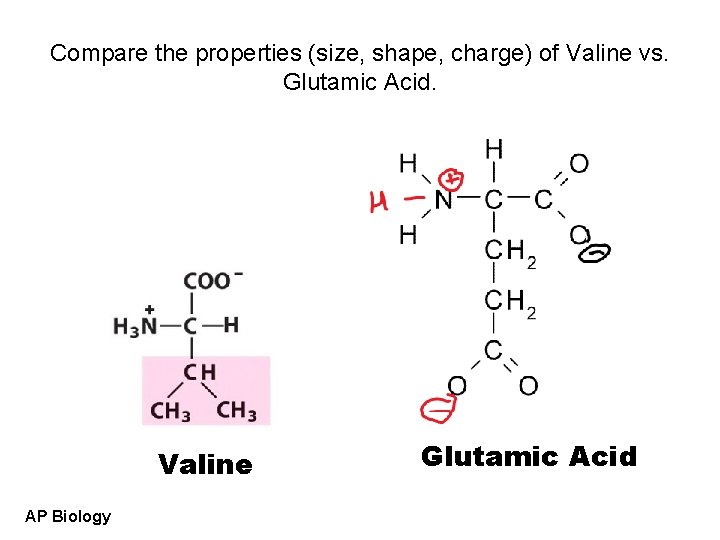
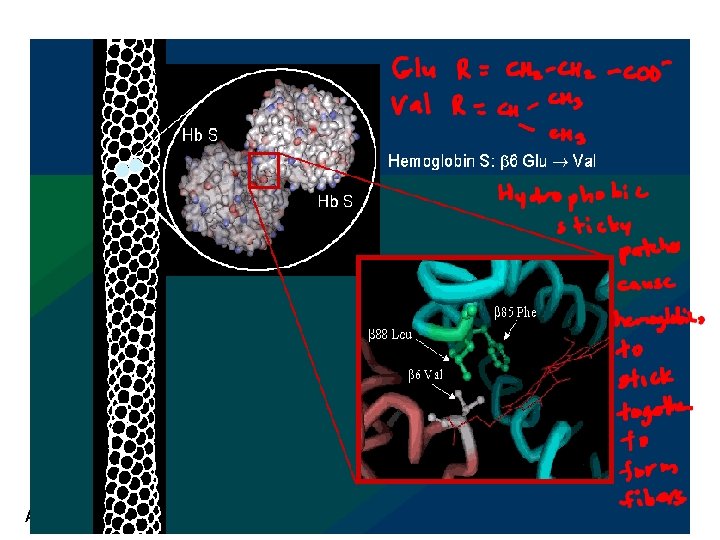
Compare the properties (size, shape, charge) of Valine vs. Glutamic Acid. Valine AP Biology Glutamic Acid
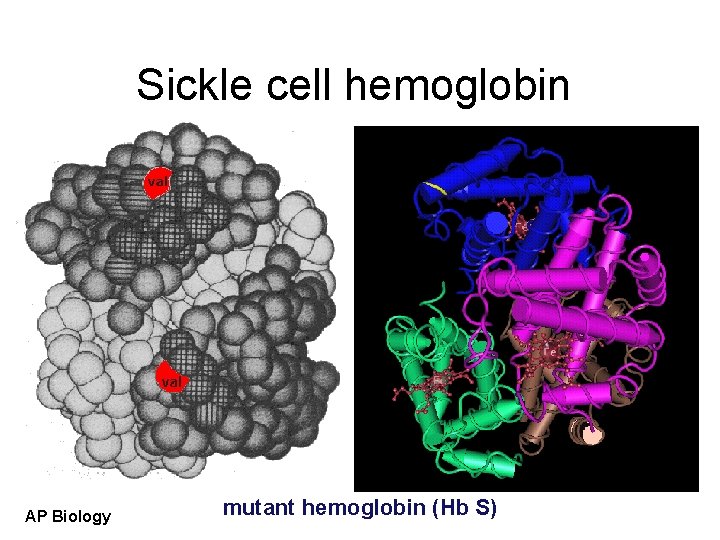
Sickle cell hemoglobin AP Biology mutant hemoglobin (Hb S)
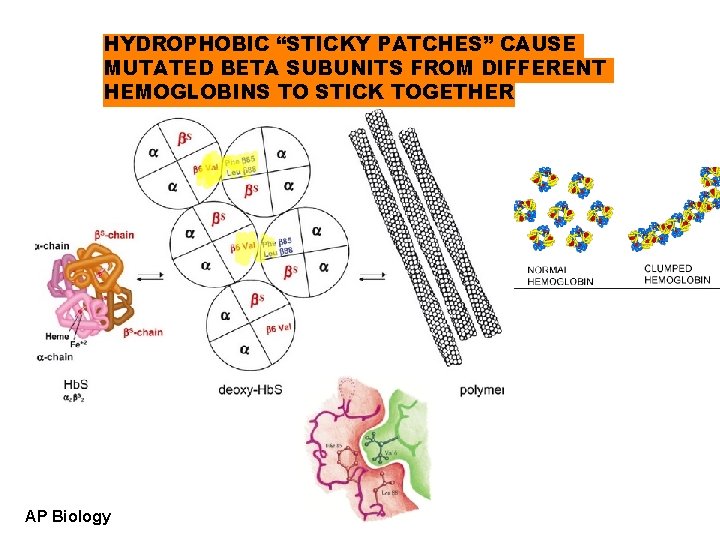
HYDROPHOBIC “STICKY PATCHES” CAUSE MUTATED BETA SUBUNITS FROM DIFFERENT HEMOGLOBINS TO STICK TOGETHER AP Biology
AP Biology
Fig. 5 -22 Normal hemoglobin Primary structure 1 2 3 4 5 6 7 Secondary and tertiary structures subunit Function Normal hemoglobin (top view) Secondary and tertiary structures Val His Leu Thr Pro Val Glu 1 2 3 AP Biology Normal red blood cells are full of individual hemoglobin moledules, each carrying oxygen. 6 7 subunit Sickle-cell hemoglobin Function Molecules interact with one another and crystallize into a fiber; capacity to carry oxygen is greatly reduced. 10 µm Red blood cell shape 5 Exposed hydrophobic region Molecules do not associate with one another; each carries oxygen. 4 Quaternary structure Sickle-cell hemoglobin Quaternary structure Primary structure Val His Leu Thr Pro Glu 10 µm Red blood cell shape Fibers of abnormal hemoglobin deform red blood cell into sickle shape.
Link to Sickle Cell Animation AP Biology