
Shwasa Roga Dr Abhishek Upadhyay Lecturer PG department
Shwasa Roga Dr Abhishek Upadhyay Lecturer PG department of Kayachikitsa National Institute of Ayurveda
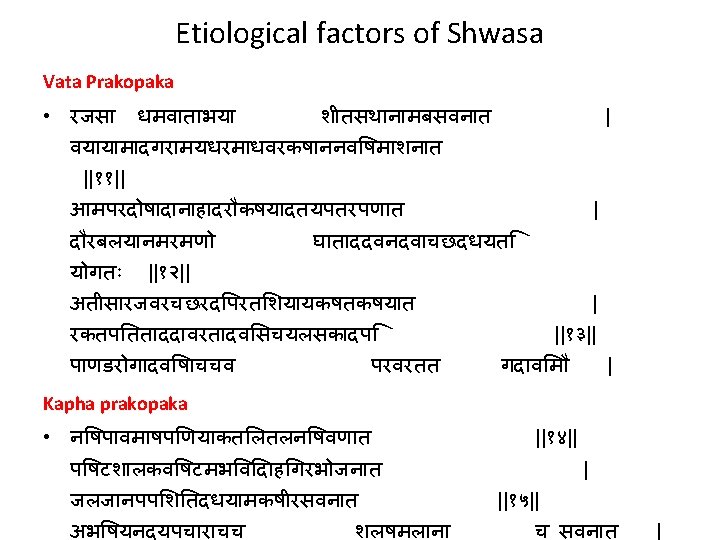
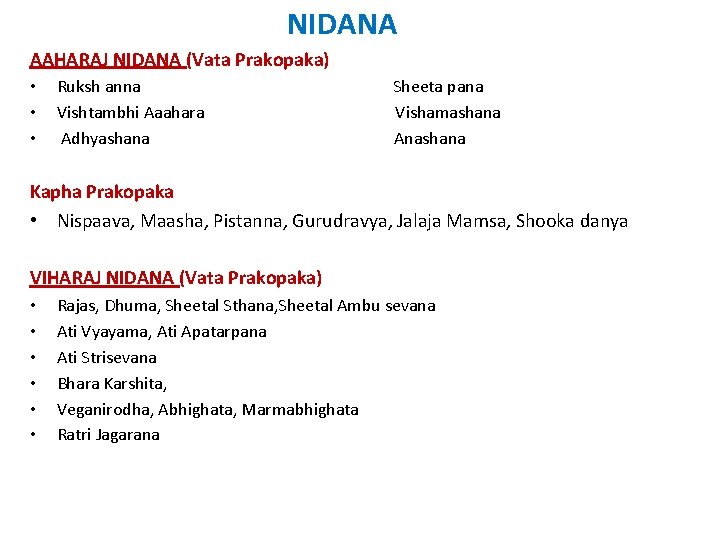
NIDANA AAHARAJ NIDANA (Vata Prakopaka) • • • Ruksh anna Vishtambhi Aaahara Adhyashana Sheeta pana Vishamashana Anashana Kapha Prakopaka • Nispaava, Maasha, Pistanna, Gurudravya, Jalaja Mamsa, Shooka danya VIHARAJ NIDANA (Vata Prakopaka) • • • Rajas, Dhuma, Sheetal Sthana, Sheetal Ambu sevana Ati Vyayama, Ati Apatarpana Ati Strisevana Bhara Karshita, Veganirodha, Abhighata, Marmabhighata Ratri Jagarana
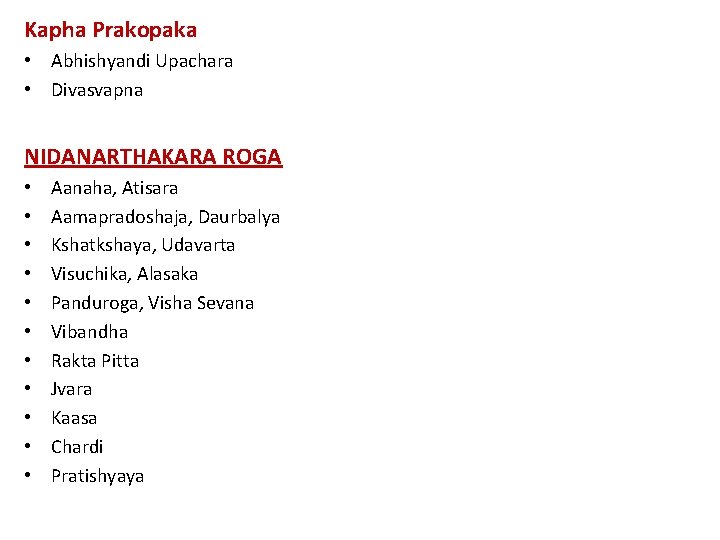
Kapha Prakopaka • Abhishyandi Upachara • Divasvapna NIDANARTHAKARA ROGA • • • Aanaha, Atisara Aamapradoshaja, Daurbalya Kshatkshaya, Udavarta Visuchika, Alasaka Panduroga, Visha Sevana Vibandha Rakta Pitta Jvara Kaasa Chardi Pratishyaya
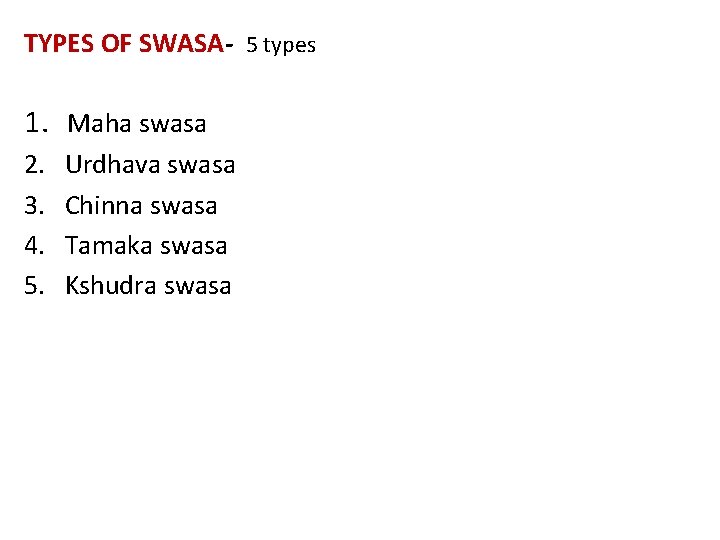
TYPES OF SWASA- 5 types 1. Maha swasa 2. 3. 4. 5. Urdhava swasa Chinna swasa Tamaka swasa Kshudra swasa
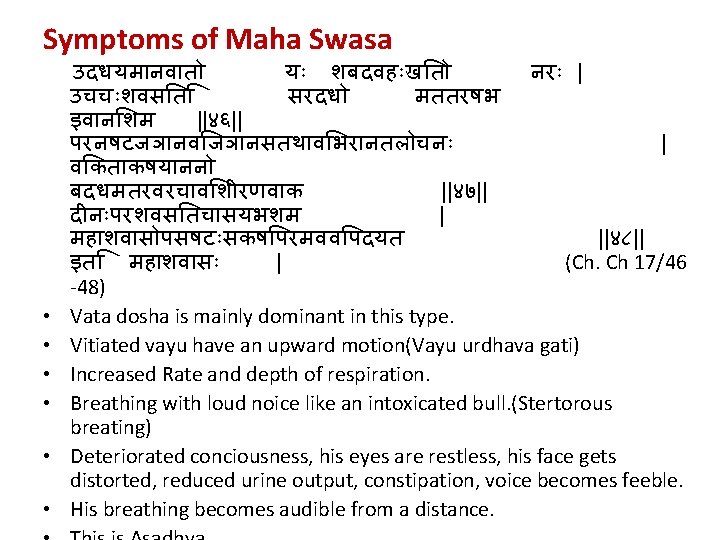
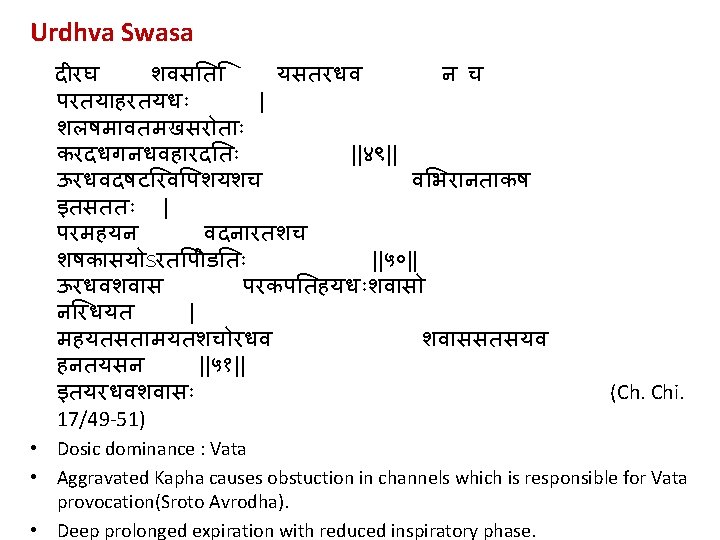
Symptoms of Maha Swasa • • • उदधयम नव त य शबदवह ख त नर | उचच शवस त सरदध मततरषभ इव न शम ||४६|| परनषटजञ नव जञ नसतथ व भर नतल चन | व कत कषय नन बदधमतरवरच व श रणव क ||४७|| द न परशवस तच सयभशम | मह शव स पसषट सकष परमवव पदयत ||४८|| इत मह शव स | (Ch. Ch 17/46 -48) Vata dosha is mainly dominant in this type. Vitiated vayu have an upward motion(Vayu urdhava gati) Increased Rate and depth of respiration. Breathing with loud noice like an intoxicated bull. (Stertorous breating) Deteriorated conciousness, his eyes are restless, his face gets distorted, reduced urine output, constipation, voice becomes feeble. His breathing becomes audible from a distance.
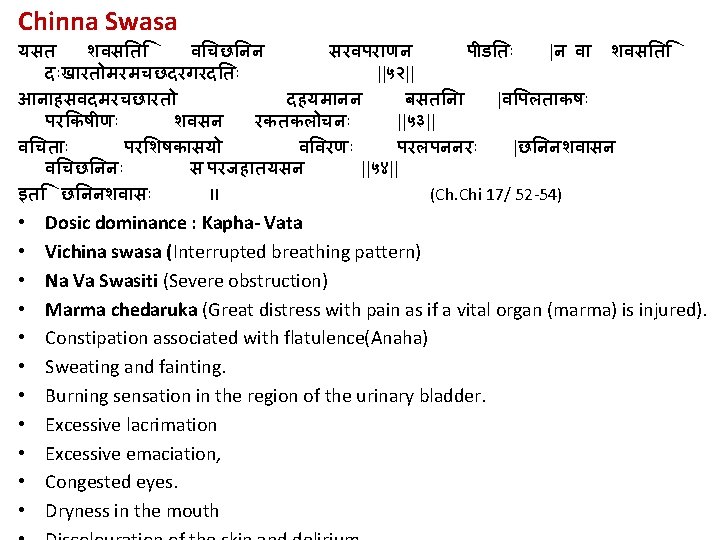
Chinna Swasa यसत शवस त व चछ नन सरवपर णन प ड त |न व शवस त द ख रत मरमचछदरगरद त ||५२|| आन हसवदमरचछ रत दहयम नन बसत न |व पलत कष पर कष ण शवसन रकतकल चन ||५३|| व चत पर शषक सय व वरण परलपननर |छ ननशव सन व चछ नन स परजह तयसन ||५४|| इत छ ननशव स II (Ch. Chi 17/ 52 -54) • • • Dosic dominance : Kapha- Vata Vichina swasa (Interrupted breathing pattern) Na Va Swasiti (Severe obstruction) Marma chedaruka (Great distress with pain as if a vital organ (marma) is injured). Constipation associated with flatulence(Anaha) Sweating and fainting. Burning sensation in the region of the urinary bladder. Excessive lacrimation Excessive emaciation, Congested eyes. Dryness in the mouth
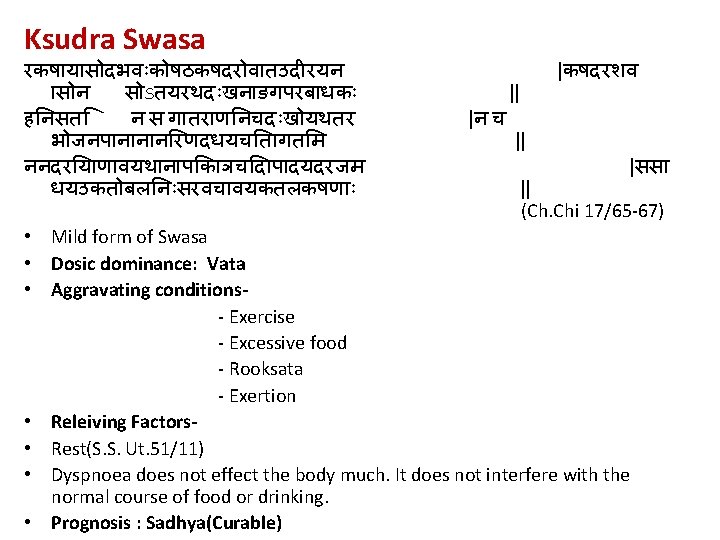
Ksudra Swasa रकष य स दभव क षठकषदर व तउद रयन स ऽतयरथद खन ङगपरब धक ह नसत न स ग तर ण नचद ख यथतर भ जनप न न न रणदधयच त गत म ननदर य ण वयथ न प क ञच द प दयदरजम धयउकत बल न सरवच वयकतलकषण |न च |कषदरशव || || |सस || (Ch. Chi 17/65 -67) • Mild form of Swasa • Dosic dominance: Vata • Aggravating conditions- Exercise - Excessive food - Rooksata - Exertion • Releiving Factors • Rest(S. S. Ut. 51/11) • Dyspnoea does not effect the body much. It does not interfere with the normal course of food or drinking. • Prognosis : Sadhya(Curable)
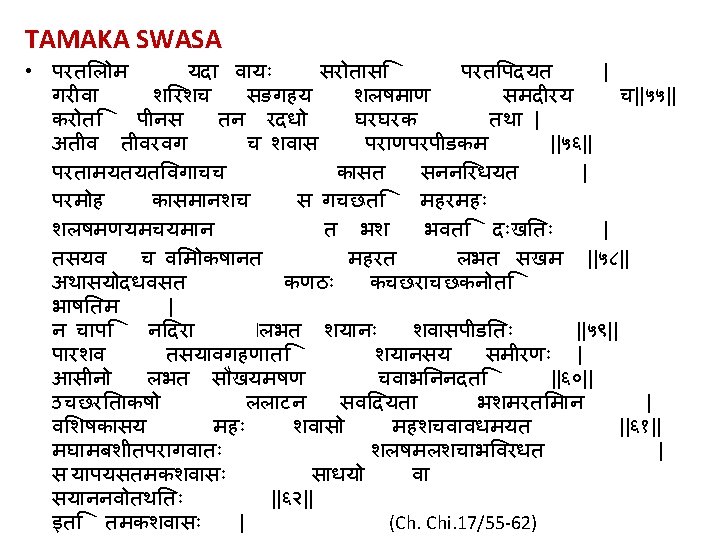
TAMAKA SWASA DERIVATION OF TAMAKA • Word Tama has been used with different meanings i. e. , to choke, to be suffocated, to be exhausted, to be unease, to be distressed (Vidyadhar Vamana) ETYMOLOGY OF TAMAKA SWASA • Tamaka Swasa consists of two words viz Tamaka and Swasa. The etymology of these two words are as follows. • (a) Tamyati it Tama – feeling of darkness. • (b) Adarsa Hindu Sabdakosa by Pandit Ram Chandra Pathaka has given the following meanings for Tamak - Udvega, Tivrata, Krodha, Tosa and a type of Swasa Roga.
CHARACTERSTICS OF TAMAKA SWASA • Dosic dominance : Kapha • Vayu moving in reverse direction afflicts the neck & head, stimulates phlegm to cause Peenus i. e. rhinitis. • Ghurghurkam (Wheezing sounds) • Excessive Sweating expecially in forehead • Dryness of mouth • Excessive thirst • Excessive Cough in bouts untill expectoration • attacks in paroxysms • Difficulty in speaking due to respiratory distress. • Vomiting(S. S. ) • Aversion for food(C. S. ) • Jwara • Repeated fainting while coughing.
Aggravating conditions • Cloudy rainy and cold days • Diet and regimen and which increases kapha • Sleep • Eastern wind Relieving Factors • In sitting position • After Expectoration • Intake of hot substances • On reducing kapha by any measure (A. H &C. S. ) (S. S. ) (A. H, S. S. & C. S. ) (A. H) (C. S. ) (S. S. &C. S) Prognosis - Yapya • Sadhya if Rogi is balavan and roga is of recent origin.
TYPES OF TAMAKASWASA • Santamaka and Pratamaka Swasa जवरमरचछ पर तसय व दय त उद वरतरज ऽज रणकल ननक यन र धज तमस वरधतऽतयरथ श तशच श मजजतसतमस व ऽसय व दय त परतमकसनतमकशव स परतमक त तम | || परश मयत | सनतमक त तम || इत (Ch. Chi 17/63 -64). Pratamaka Swasa • In this clinical condition patient of Tamaka Swasa gets afflicted with Fever & Episodes of fainting. • Pitta is equally vitiated in this condition with Vata & Kapha which is responsible for the above symptoms. Santamaka Swasa • It is caused by udavarta, dust, indigestion, humidity and due to suppression of natural urges. • Santamaka Swasa is aggravated in the night and patient feels relief with cold in contrary to Tamaka Swasa. • The patient feels to be drowning in the sea of darkness, so it is known as Santamaka Swasa
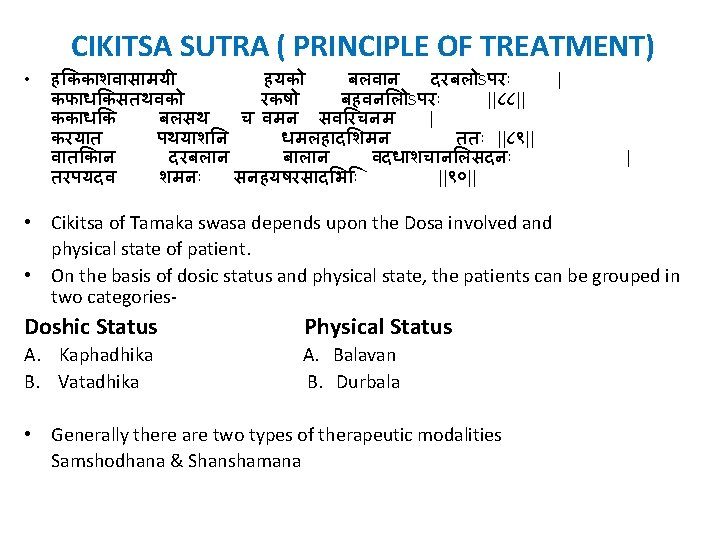
CIKITSA SUTRA ( PRINCIPLE OF TREATMENT) • ह कक शव स मय हयक बलव न दरबल ऽपर कफ ध कसतथवक रकष बहवन ल ऽपर ||८८|| कक ध क बलसथ च वमन सव रचनम | करय त पथय श न धमलह द शमन तत ||८९|| व त क न दरबल न ब ल न वदध शच न लसदन तरपयदव शमन सनहयषरस द भ ||९०|| | | • Cikitsa of Tamaka swasa depends upon the Dosa involved and physical state of patient. • On the basis of dosic status and physical state, the patients can be grouped in two categories- Doshic Status Physical Status A. Kaphadhika B. Vatadhika A. Balavan B. Durbala • Generally there are two types of therapeutic modalities Samshodhana & Shanshamana
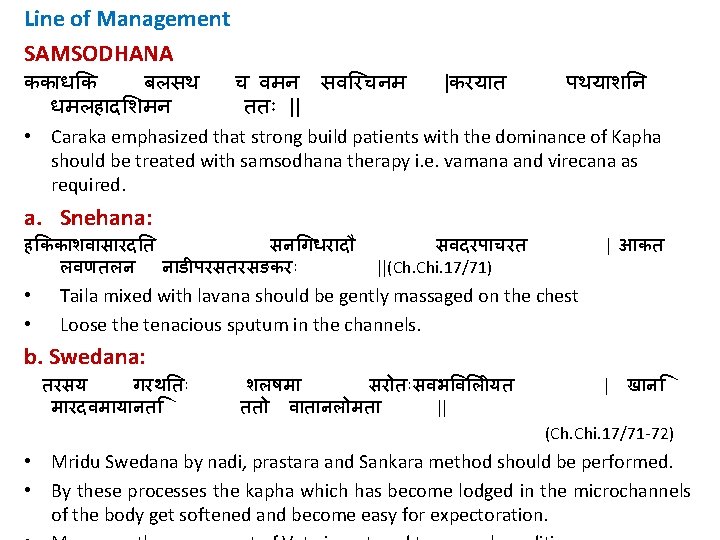
Line of Management SAMSODHANA कक ध क बलसथ च वमन सव रचनम |करय त पथय श न धमलह द शमन तत || • Caraka emphasized that strong build patients with the dominance of Kapha should be treated with samsodhana therapy i. e. vamana and virecana as required. a. Snehana: ह कक शव स रद त सन गधर द लवणतलन न ड परसतरसङकर • • सवदरप चरत ||(Ch. Chi. 17/71) | आकत Taila mixed with lavana should be gently massaged on the chest Loose the tenacious sputum in the channels. b. Swedana: तरसय गरथ त म रदवम य नत शलषम सर त सवभ व ल यत तत व त नल मत || | ख न (Ch. Chi. 17/71 -72) • Mridu Swedana by nadi, prastara and Sankara method should be performed. • By these processes the kapha which has become lodged in the microchannels of the body get softened and become easy for expectoration.
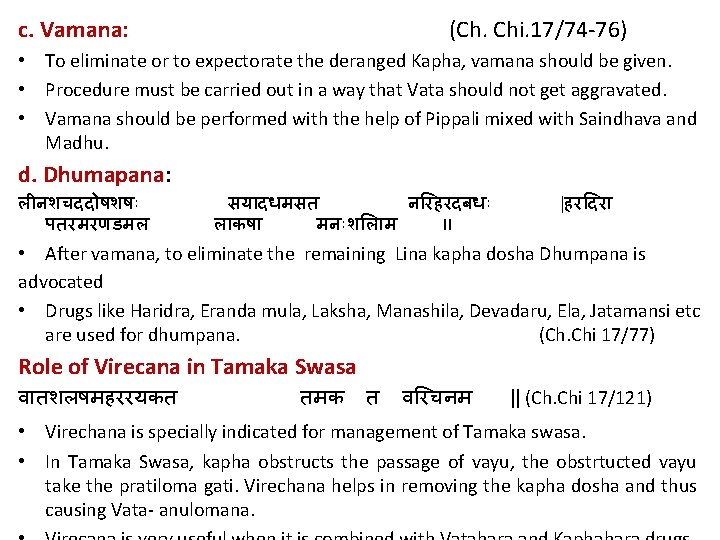
c. Vamana: (Ch. Chi. 17/74 -76) • To eliminate or to expectorate the deranged Kapha, vamana should be given. • Procedure must be carried out in a way that Vata should not get aggravated. • Vamana should be performed with the help of Pippali mixed with Saindhava and Madhu. d. Dhumapana: ल नशचदद षशष पतरमरणडमल सय दधमसत न रहरदबध ल कष मन श ल म II |हर दर • After vamana, to eliminate the remaining Lina kapha dosha Dhumpana is advocated • Drugs like Haridra, Eranda mula, Laksha, Manashila, Devadaru, Ela, Jatamansi etc are used for dhumpana. (Ch. Chi 17/77) Role of Virecana in Tamaka Swasa व तशलषमहररयकत तमक त व रचनम || (Ch. Chi 17/121) • Virechana is specially indicated for management of Tamaka swasa. • In Tamaka Swasa, kapha obstructs the passage of vayu, the obstrtucted vayu take the pratiloma gati. Virechana helps in removing the kapha dosha and thus causing Vata- anulomana.

Thanks
- Slides: 25