
Shunt Capacitor Switching For Power Factor Improvement Clayton
- Slides: 34
Shunt Capacitor Switching For Power Factor Improvement Clayton H Reid
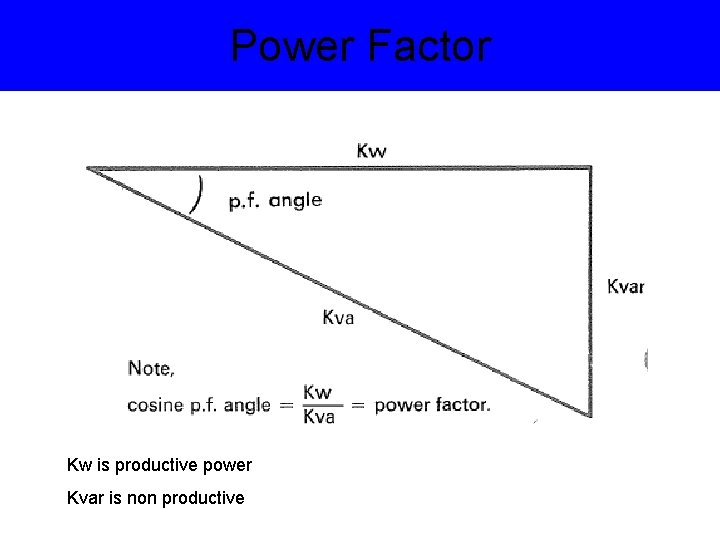
Power Factor Kw is productive power Kvar is non productive
Industrial Plant Electrical Load • Induction Motors • Induction Furnaces • Fluorescent Lighting
Advantages of Installing Capacitors • • • Improved Power Factor Released System Capacity Improved Motor and Lighting Performance Reduced Current and Losses Decreased Transformer Losses
Shunt-capacitor Banks • Automatic switching of capacitor banks • Voltage Control-a voltage sensitive relay is used which responds to changes in line voltage • Current Control-a current sensitive relay is used which responds to changes in line current • Kilovar Control-a kilovar relay is used which responds to changes in reactive loads
Capacitors Switched with Motor • Another means of obtaining automatic switching is to connect the capacitor to the motor and switch the motor and capacitor as a single unit
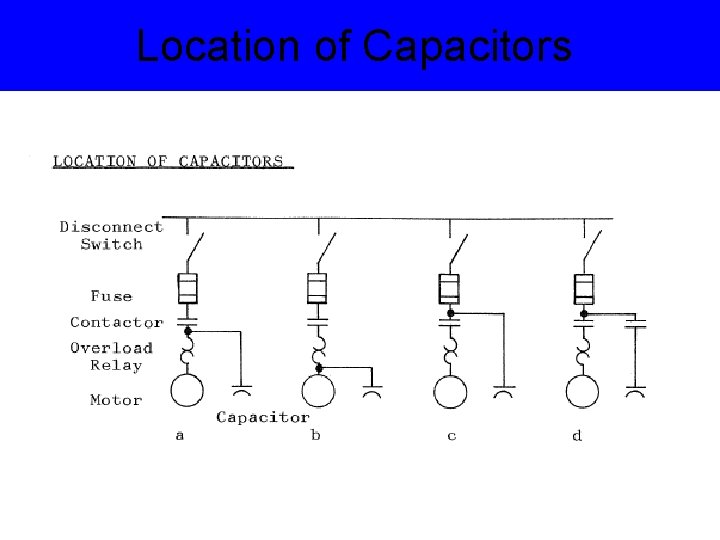
Capacitors Switched with Motor • The importance of selecting the correct size of capacitor to be switched with a given motor load • Location of capacitor connected points • Capacitor switching for special motors and for special motor-starting applications
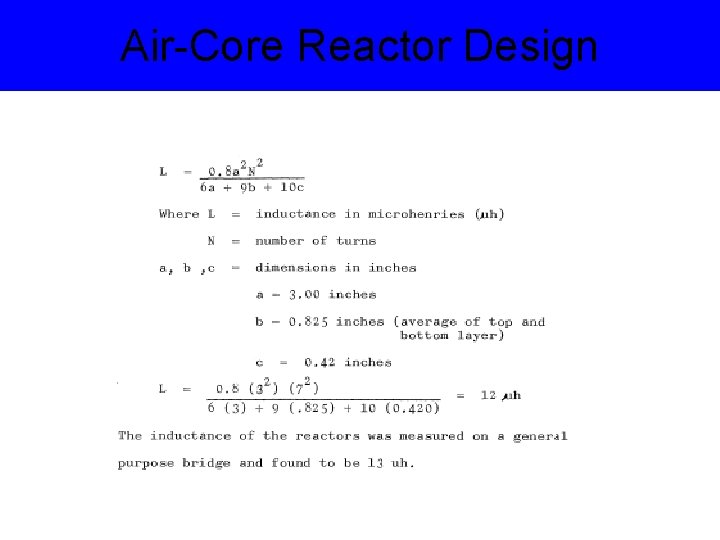
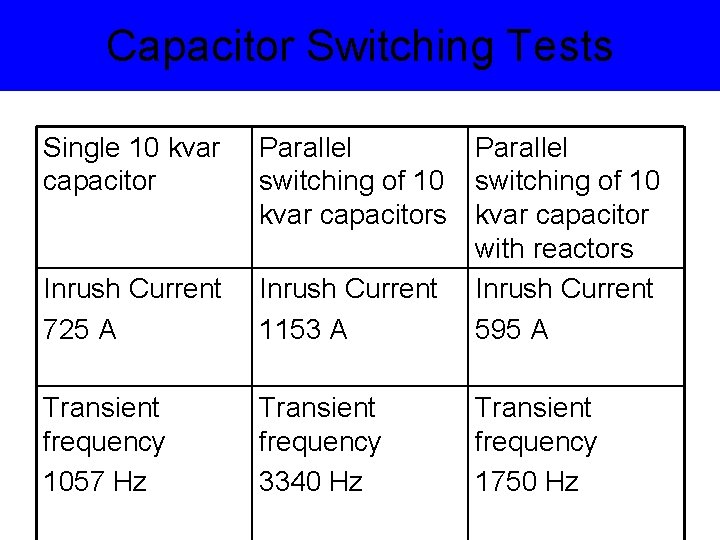
Capacitors Switched with Motor • Transient inrush current and frequency for the following cases: • When a single capacitor is energized on a system • When a capacitor is energized in parallel with capacitor banks already connected • Effect of transient currents on contactors • Use of air-core reactors to limit transient current in parallel switching of capacitors
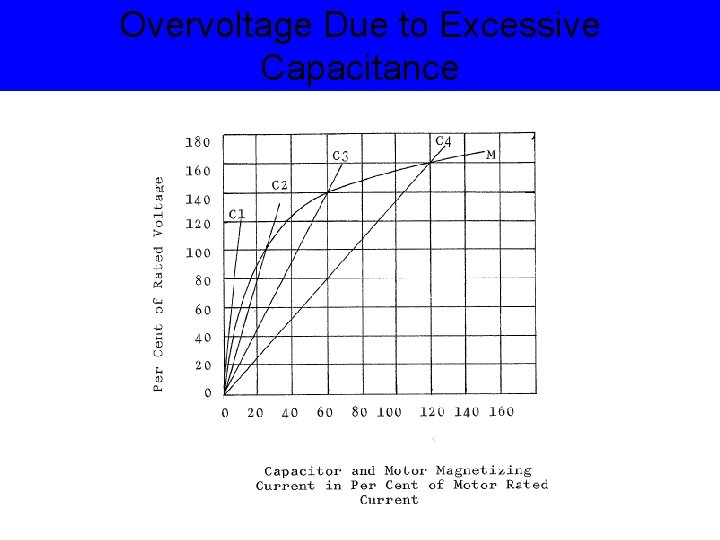
Overvoltage Due To Excessive Capacitance • Capacitor connected to the motor and starter de-energized, motor acts as an induction generator with shunt capacitor excitation
Maximum Voltage Generated • Size of capacitor • Speed of motor • No load characteristics
Overvoltage Due to Excessive Capacitance
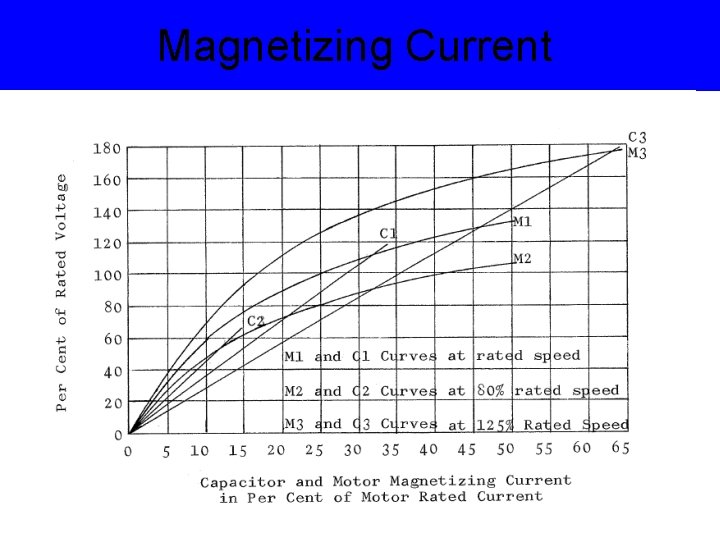
Magnetizing Current
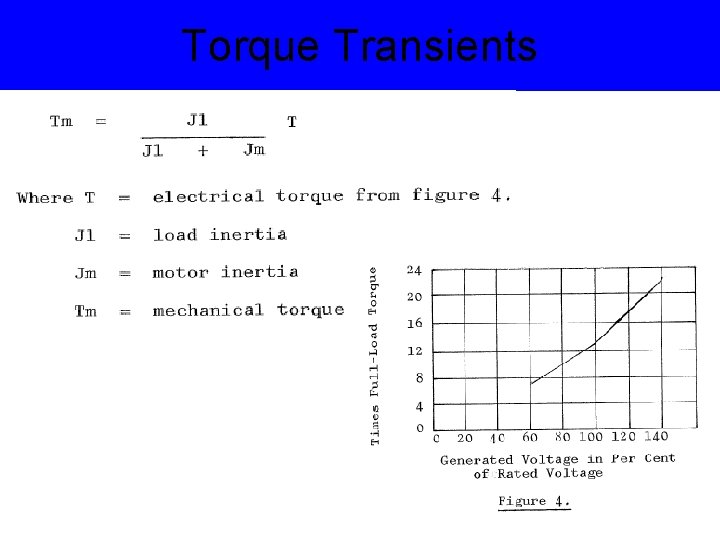
Torque Transients
Location of Capacitors
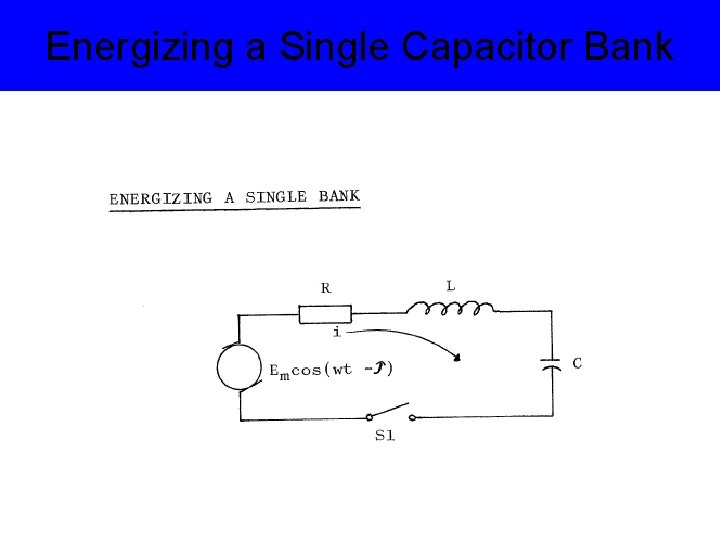
Energizing a Single Capacitor Bank
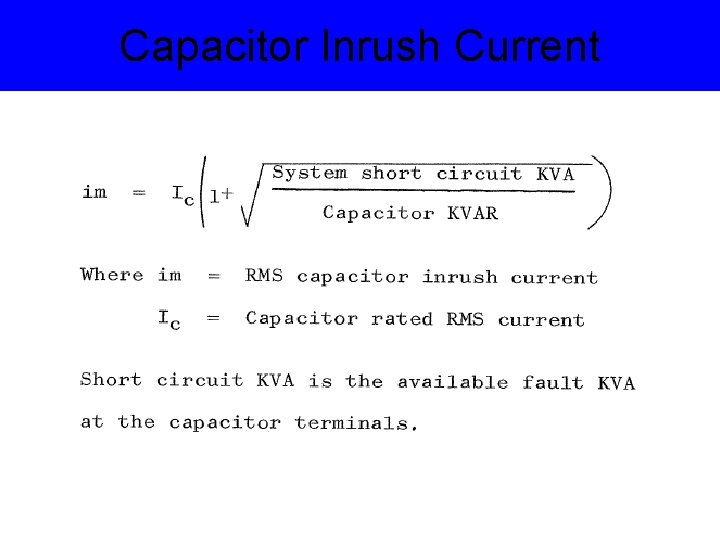
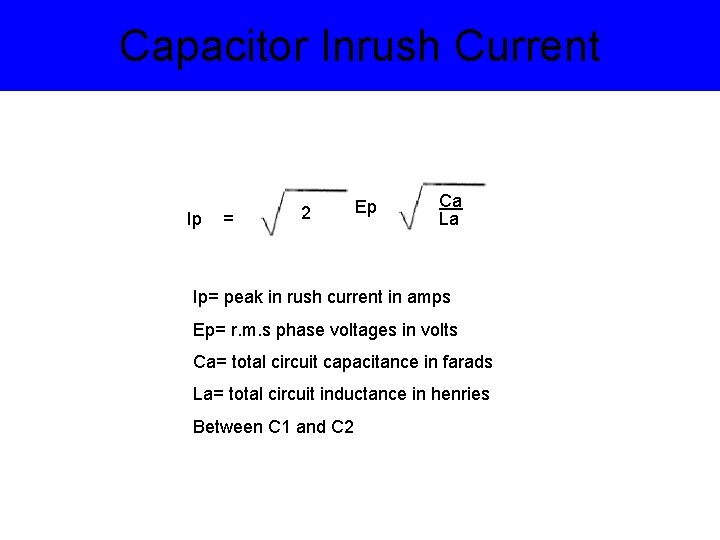
Capacitor Inrush Current
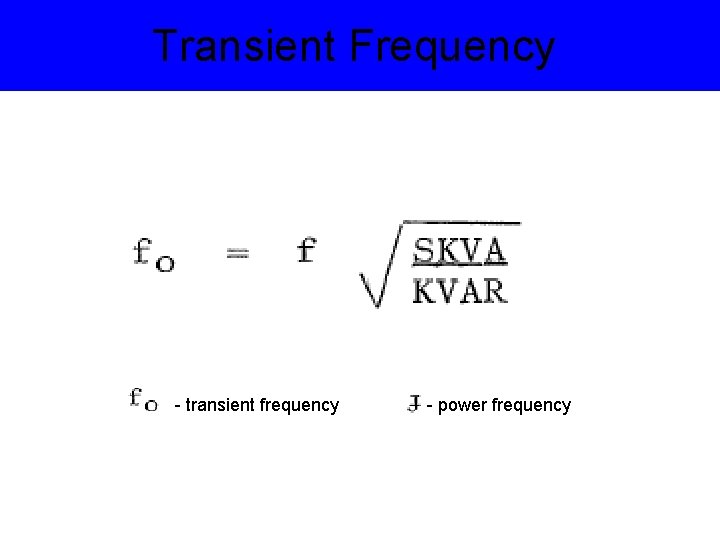
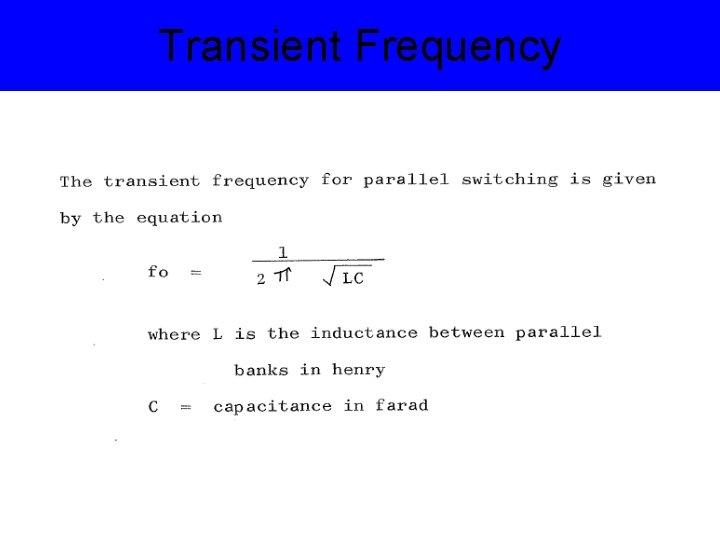
Transient Frequency - transient frequency - power frequency
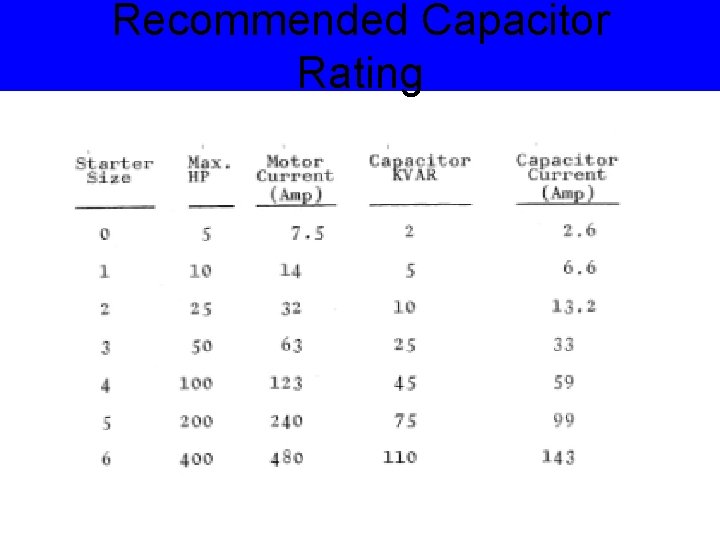
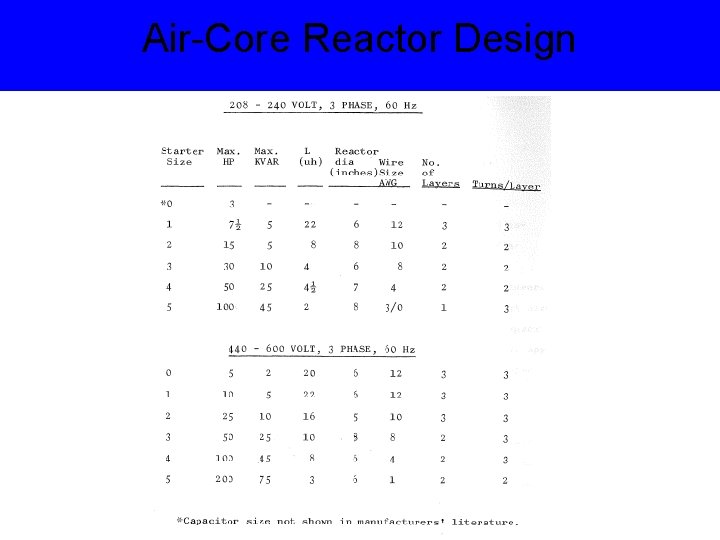
Recommended Capacitor Rating
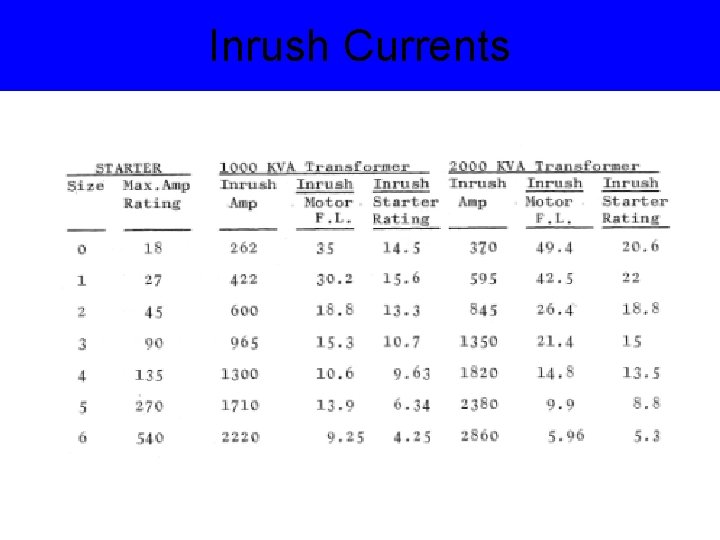
Inrush Currents
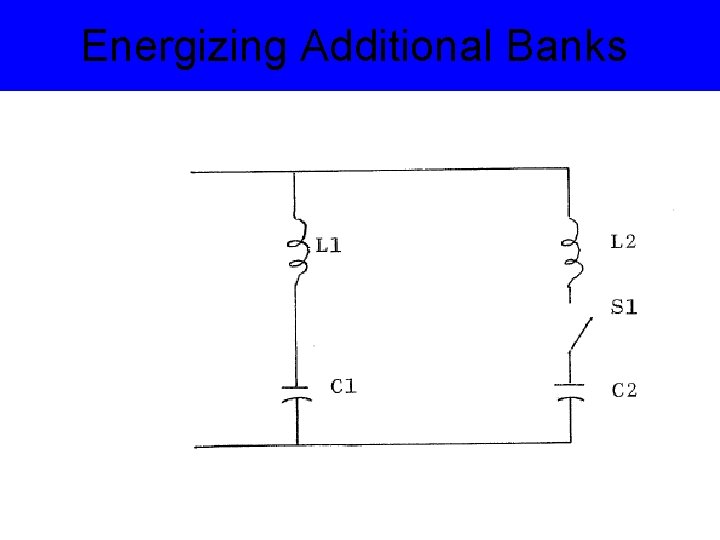
Energizing Additional Banks
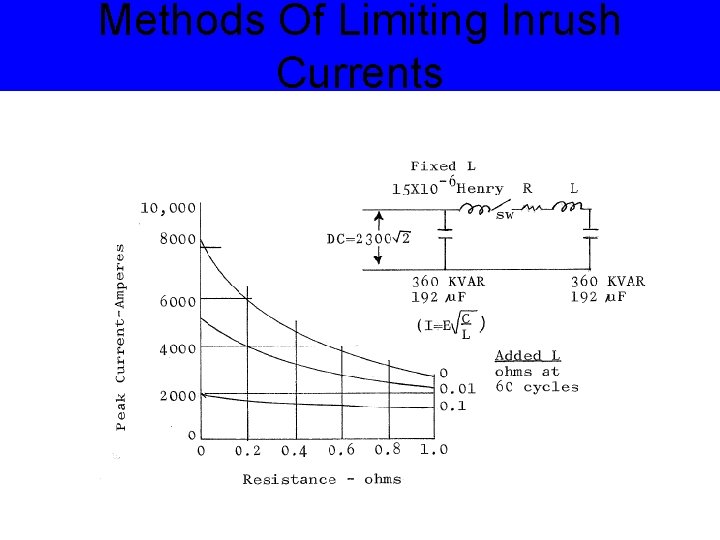
Capacitor Inrush Current Ip = 2 Ep Ca La Ip= peak in rush current in amps Ep= r. m. s phase voltages in volts Ca= total circuit capacitance in farads La= total circuit inductance in henries Between C 1 and C 2
Transient Frequency
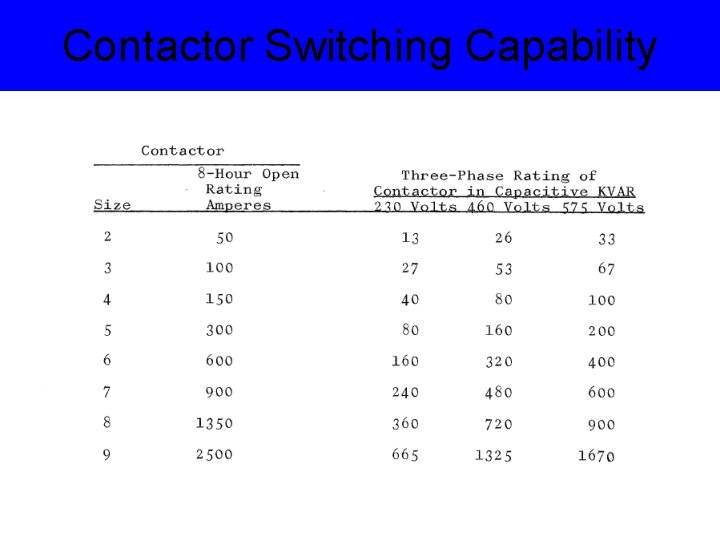
Contactor Switching Capability
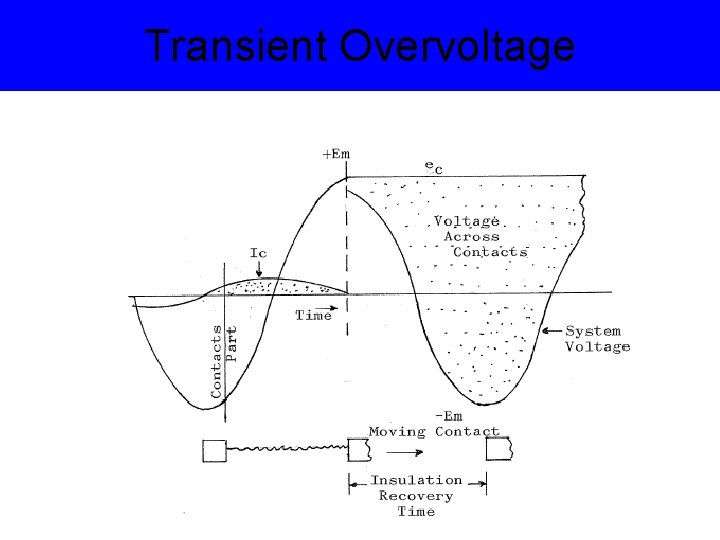
Transient Overvoltage
Methods Of Limiting Inrush Currents
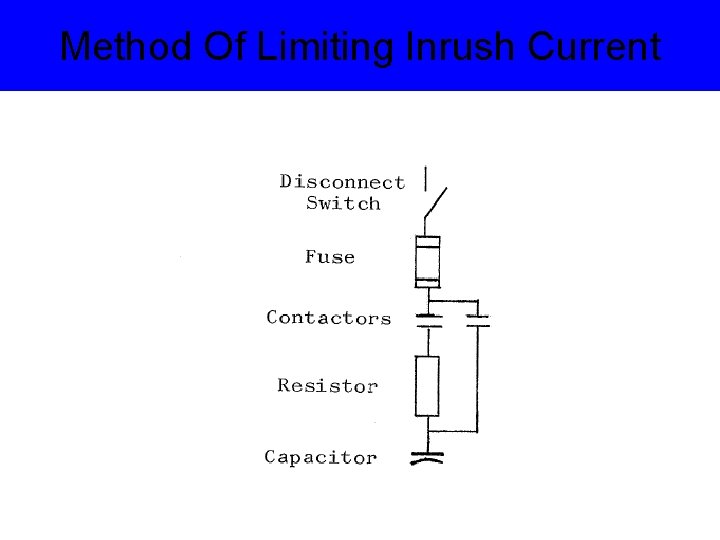
Method Of Limiting Inrush Current
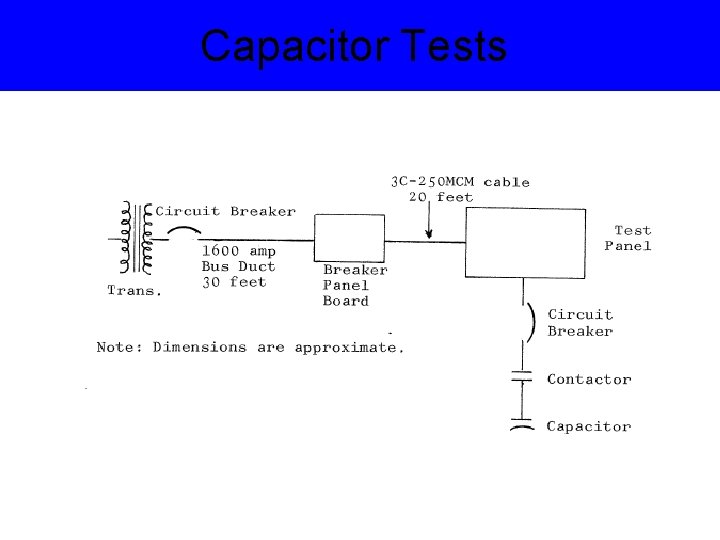
Capacitor Tests
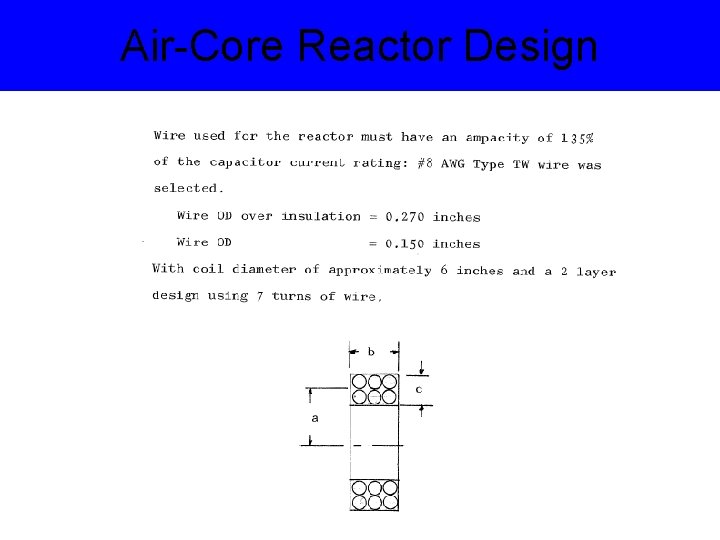
Air-Core Reactor Design
Air-Core Reactor Design
Air-Core Reactor Design
Capacitor Switching Tests Single 10 kvar capacitor Inrush Current 725 A Parallel switching of 10 kvar capacitors kvar capacitor with reactors Inrush Current 1153 A 595 A Transient frequency 1057 Hz Transient frequency 3340 Hz Transient frequency 1750 Hz
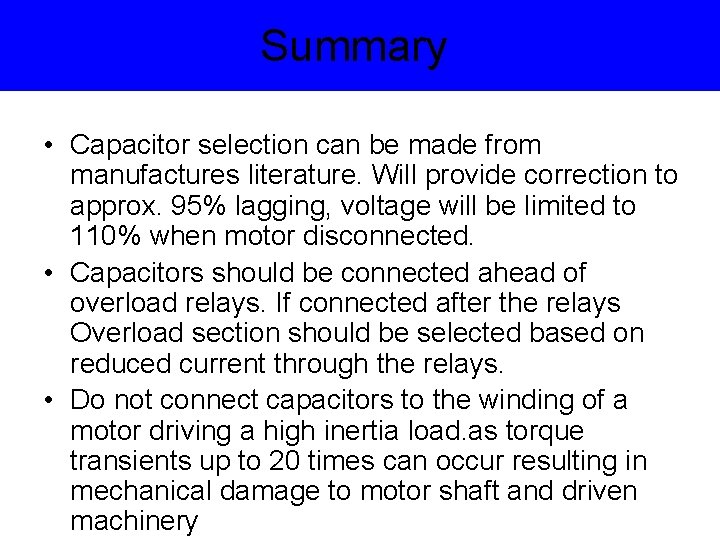
Summary • Capacitor selection can be made from manufactures literature. Will provide correction to approx. 95% lagging, voltage will be limited to 110% when motor disconnected. • Capacitors should be connected ahead of overload relays. If connected after the relays Overload section should be selected based on reduced current through the relays. • Do not connect capacitors to the winding of a motor driving a high inertia load. as torque transients up to 20 times can occur resulting in mechanical damage to motor shaft and driven machinery
Summary • To avoid torque transient problems for motor and driven machinery, capacitors should not be connected directly to the motor in the following : • a) any open transition reduced voltage starter • b) reversing starters, or starters which are used for jogging the motor • c) two speed motors • d) wye-delta motors • Use a separate contactor to switch the capacitor
Summary • When capacitors are installed in motor control centers additional inductance should be installed in series with the capacitors to limit transient charging current. This will reduce contact erosion in the contactor