
Show the overall energy change of a reaction
- Slides: 4
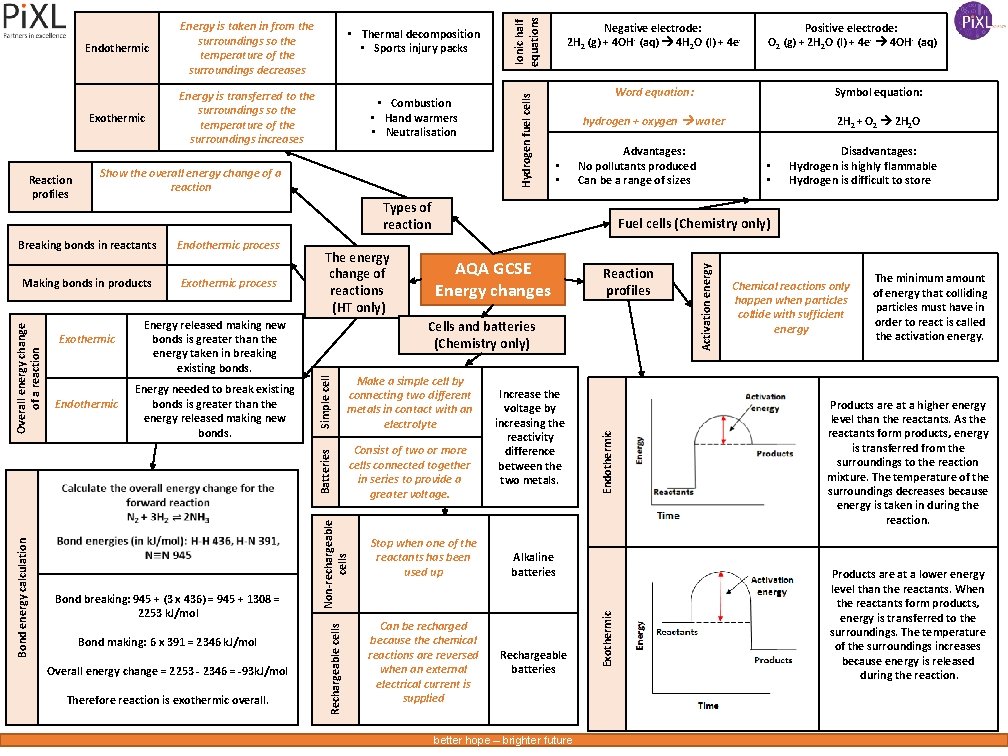
Show the overall energy change of a reaction Ionic half equations • • Symbol equation: hydrogen + oxygen water 2 H 2 + O 2 2 H 2 O Advantages: No pollutants produced Can be a range of sizes Bond breaking: 945 + (3 x 436) = 945 + 1308 = 2253 k. J/mol Bond making: 6 x 391 = 2346 k. J/mol Overall energy change = 2253 - 2346 = -93 k. J/mol Therefore reaction is exothermic overall. Simple cell Energy needed to break existing bonds is greater than the energy released making new bonds. Reaction profiles Cells and batteries (Chemistry only) Make a simple cell by connecting two different metals in contact with an electrolyte Batteries Endothermic Energy released making new bonds is greater than the energy taken in breaking existing bonds. Consist of two or more cells connected together in series to provide a greater voltage. Non-rechargeable cells Exothermic AQA GCSE Energy changes Stop when one of the reactants has been used up Can be recharged because the chemical reactions are reversed when an external electrical current is supplied Increase the voltage by increasing the reactivity difference between the two metals. Alkaline batteries Rechargeable batteries better hope – brighter future Activation energy Exothermic process • • Disadvantages: Hydrogen is highly flammable Hydrogen is difficult to store Fuel cells (Chemistry only) Endothermic Making bonds in products The energy change of reactions (HT only) Positive electrode: O 2 (g) + 2 H 2 O (l) + 4 e- 4 OH- (aq) Word equation: Exothermic Endothermic process Overall energy change of a reaction Negative electrode: 2 H 2 (g) + 4 OH - (aq) 4 H 2 O (l) + 4 e- Types of reaction Breaking bonds in reactants Bond energy calculation • Combustion • Hand warmers • Neutralisation Hydrogen fuel cells Exothermic Energy is transferred to the surroundings so the temperature of the surroundings increases • Thermal decomposition • Sports injury packs Rechargeable cells Reaction profiles Endothermic Energy is taken in from the surroundings so the temperature of the surroundings decreases Chemical reactions only happen when particles collide with sufficient energy The minimum amount of energy that colliding particles must have in order to react is called the activation energy. Products are at a higher energy level than the reactants. As the reactants form products, energy is transferred from the surroundings to the reaction mixture. The temperature of the surroundings decreases because energy is taken in during the reaction. Products are at a lower energy level than the reactants. When the reactants form products, energy is transferred to the surroundings. The temperature of the surroundings increases because energy is released during the reaction.
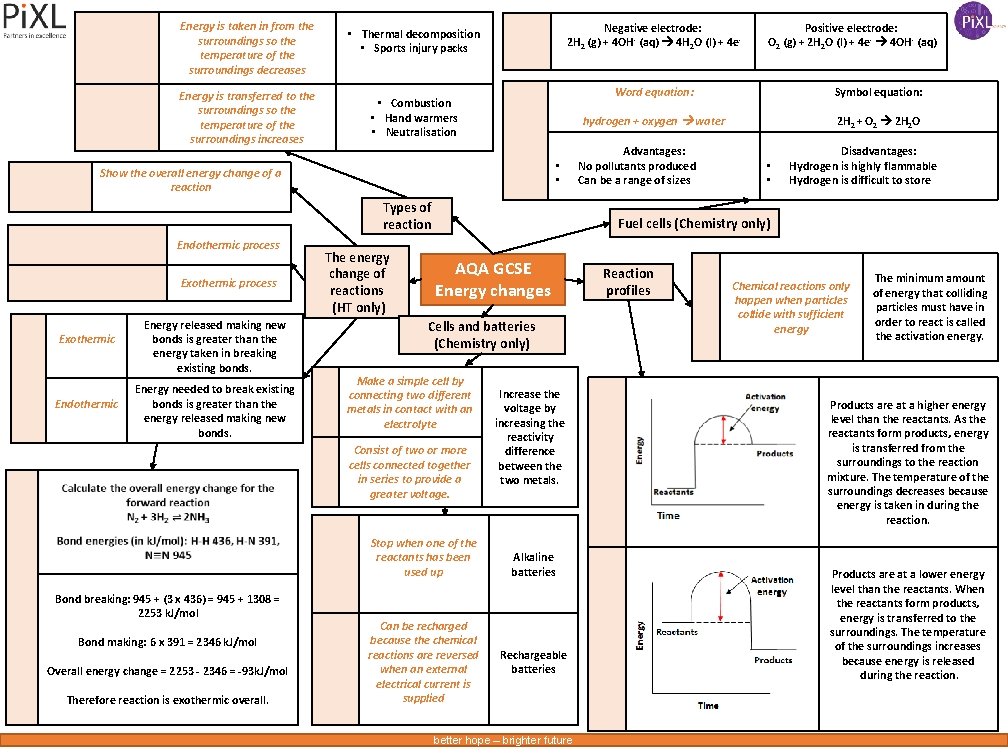
Energy is taken in from the surroundings so the temperature of the surroundings decreases Energy is transferred to the surroundings so the temperature of the surroundings increases Negative electrode: 2 H 2 (g) + 4 OH - (aq) 4 H 2 O (l) + 4 e- • Thermal decomposition • Sports injury packs • Combustion • Hand warmers • Neutralisation • • Show the overall energy change of a reaction Types of reaction Endothermic process Exothermic Endothermic Energy released making new bonds is greater than the energy taken in breaking existing bonds. Energy needed to break existing bonds is greater than the energy released making new bonds. The energy change of reactions (HT only) AQA GCSE Energy changes Cells and batteries (Chemistry only) Make a simple cell by connecting two different metals in contact with an electrolyte Stop when one of the reactants has been used up Bond making: 6 x 391 = 2346 k. J/mol Overall energy change = 2253 - 2346 = -93 k. J/mol Therefore reaction is exothermic overall. Word equation: Symbol equation: hydrogen + oxygen water 2 H 2 + O 2 2 H 2 O Advantages: No pollutants produced Can be a range of sizes • • Disadvantages: Hydrogen is highly flammable Hydrogen is difficult to store Fuel cells (Chemistry only) Consist of two or more cells connected together in series to provide a greater voltage. Bond breaking: 945 + (3 x 436) = 945 + 1308 = 2253 k. J/mol Positive electrode: O 2 (g) + 2 H 2 O (l) + 4 e- 4 OH- (aq) Can be recharged because the chemical reactions are reversed when an external electrical current is supplied Increase the voltage by increasing the reactivity difference between the two metals. Alkaline batteries Rechargeable batteries better hope – brighter future Reaction profiles Chemical reactions only happen when particles collide with sufficient energy The minimum amount of energy that colliding particles must have in order to react is called the activation energy. Products are at a higher energy level than the reactants. As the reactants form products, energy is transferred from the surroundings to the reaction mixture. The temperature of the surroundings decreases because energy is taken in during the reaction. Products are at a lower energy level than the reactants. When the reactants form products, energy is transferred to the surroundings. The temperature of the surroundings increases because energy is released during the reaction.
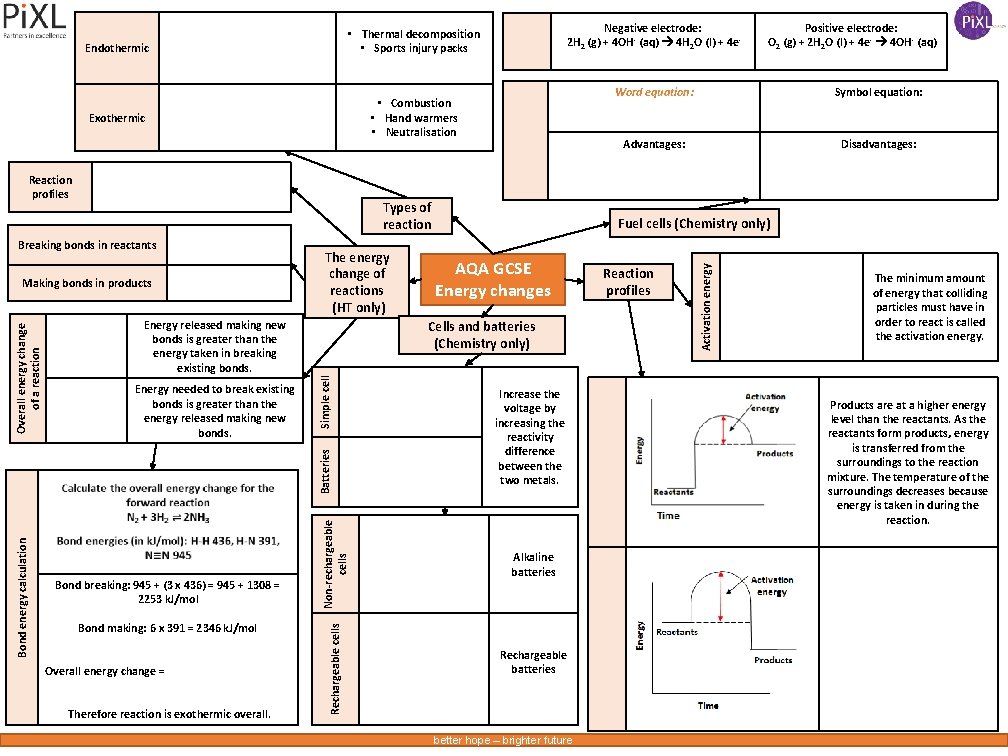
• Combustion • Hand warmers • Neutralisation Exothermic Reaction profiles Types of reaction Breaking bonds in reactants Energy released making new bonds is greater than the energy taken in breaking existing bonds. Simple cell Energy needed to break existing bonds is greater than the energy released making new bonds. Bond making: 6 x 391 = 2346 k. J/mol Overall energy change = Therefore reaction is exothermic overall. Non-rechargeable cells Rechargeable cells Bond breaking: 945 + (3 x 436) = 945 + 1308 = 2253 k. J/mol Symbol equation: Advantages: Disadvantages: Fuel cells (Chemistry only) AQA GCSE Energy changes Cells and batteries (Chemistry only) Batteries Overall energy change of a reaction Making bonds in products The energy change of reactions (HT only) Positive electrode: O 2 (g) + 2 H 2 O (l) + 4 e- 4 OH- (aq) Word equation: Increase the voltage by increasing the reactivity difference between the two metals. Alkaline batteries Rechargeable batteries better hope – brighter future Reaction profiles Activation energy Endothermic Bond energy calculation Negative electrode: 2 H 2 (g) + 4 OH - (aq) 4 H 2 O (l) + 4 e- • Thermal decomposition • Sports injury packs The minimum amount of energy that colliding particles must have in order to react is called the activation energy. Products are at a higher energy level than the reactants. As the reactants form products, energy is transferred from the surroundings to the reaction mixture. The temperature of the surroundings decreases because energy is taken in during the reaction.
Examples: Reaction profiles AQA GCSE Energy changes Cells and batteries (Chemistry only) Non-rechargeable cells Rechargeable cells Bond energy calculation Batteries Overall energy change of a reaction Making bonds in products The energy change of reactions (HT only) Example: better hope – brighter future Positive electrode: Word equation: Symbol equation: Advantages: Disadvantages: Fuel cells (Chemistry only) Simple cell Breaking bonds in reactants Types of reaction Negative electrode: Reaction profiles Activation energy Exothermic Ionic half equations Endothermic Hydrogen fuel cells Examples: