
Shoulder Joint Shoulder Glenohumeral Joint The shoulder joint

- Slides: 21
Shoulder Joint
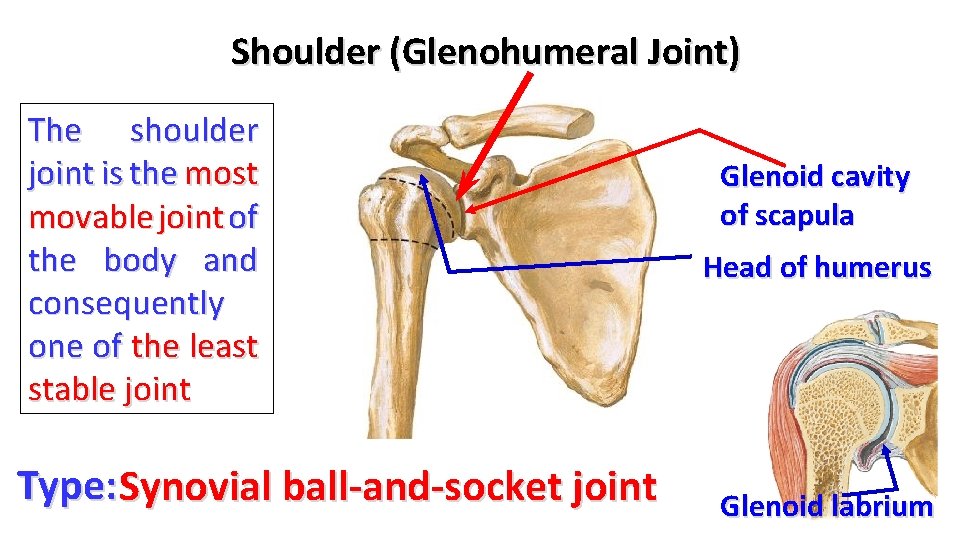
Shoulder (Glenohumeral Joint) The shoulder joint is the most movable joint of the body and consequently one of the least stable joint Type: Synovial ball-and-socket joint Glenoid cavity of scapula Head of humerus Glenoid labrium
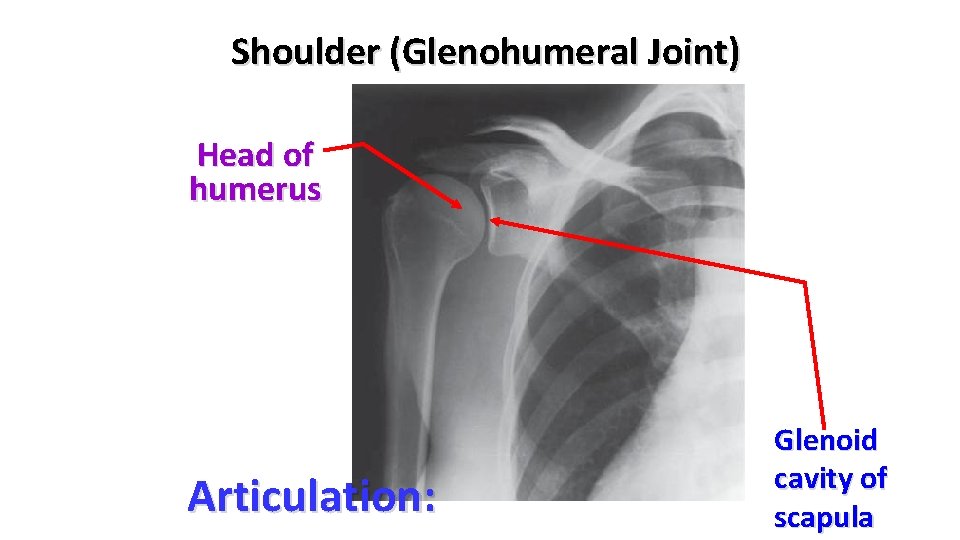
Shoulder (Glenohumeral Joint) Head of humerus Articulation: Glenoid cavity of scapula
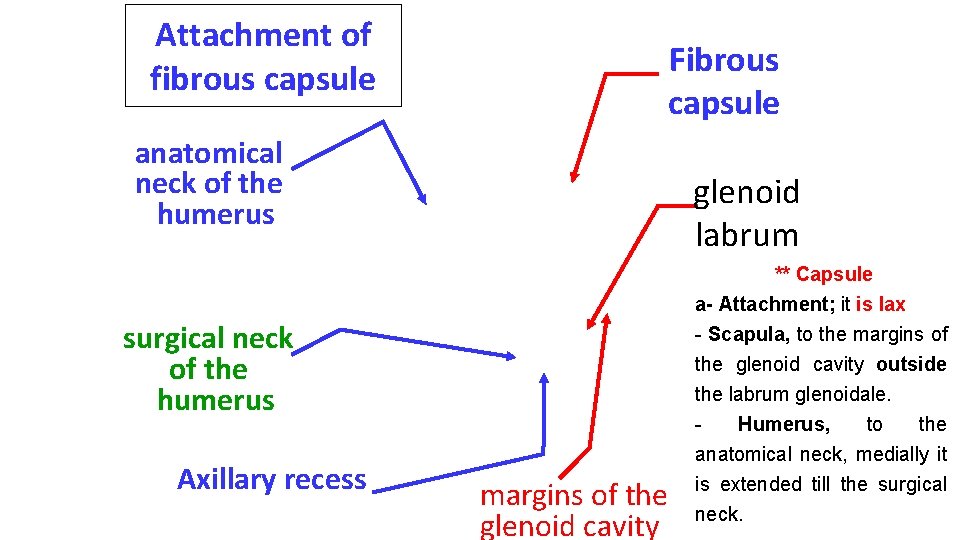
Attachment of fibrous capsule Fibrous capsule anatomical neck of the humerus glenoid labrum ** Capsule a- Attachment; it is lax Scapula, to the margins of the glenoid cavity outside surgical neck of the humerus Axillary recess margins of the glenoid cavity the labrum glenoidale. Humerus, to the anatomical neck, medially it is extended till the surgical neck.
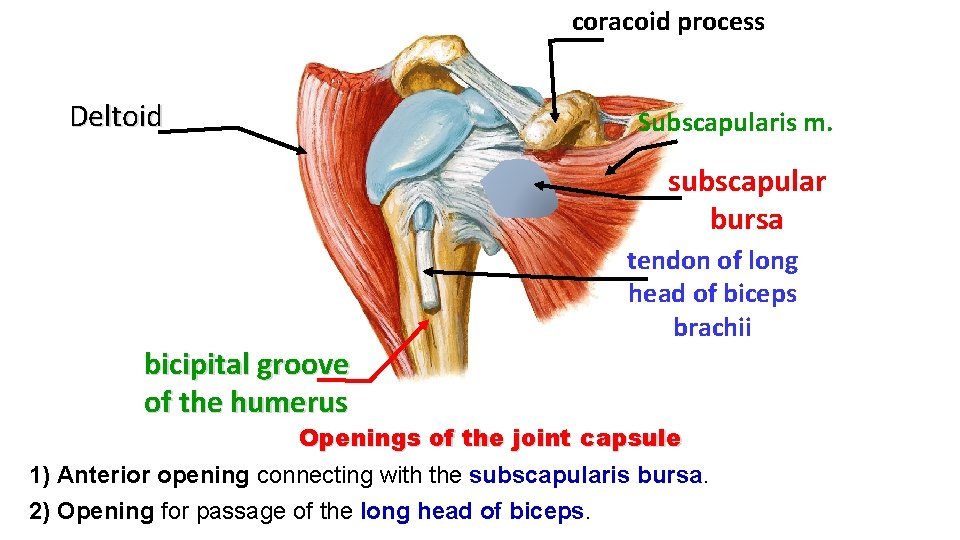
coracoid process Deltoid Subscapularis m. subscapular bursa bicipital groove of the humerus tendon of long head of biceps brachii Openings of the joint capsule 1) Anterior opening connecting with the subscapularis bursa. 2) Opening for passage of the long head of biceps.
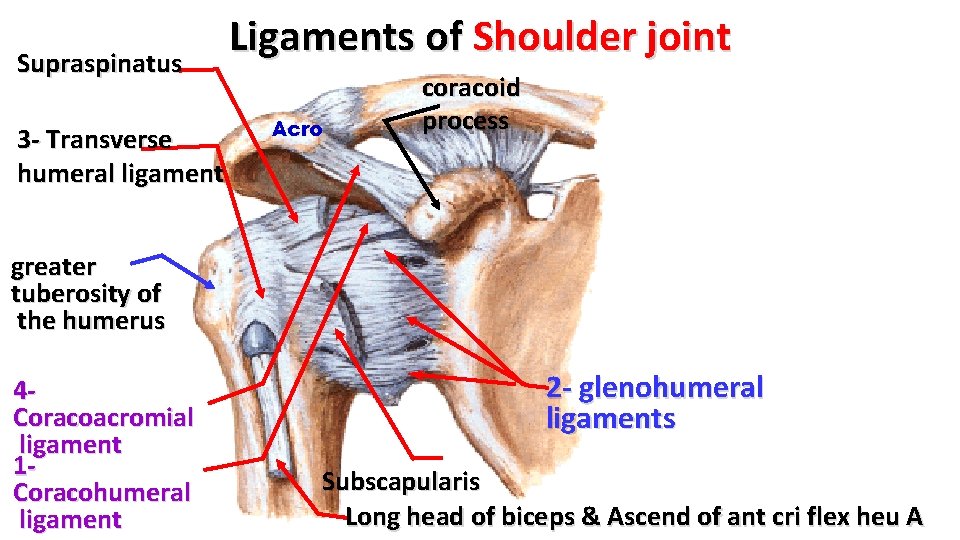
Supraspinatus 3 - Transverse humeral ligament Ligaments of Shoulder joint Acro coracoid process greater tuberosity of the humerus 4 Coracoacromial ligament 1 Coracohumeral ligament 2 - glenohumeral ligaments Subscapularis Long head of biceps & Ascend of ant cri flex heu A
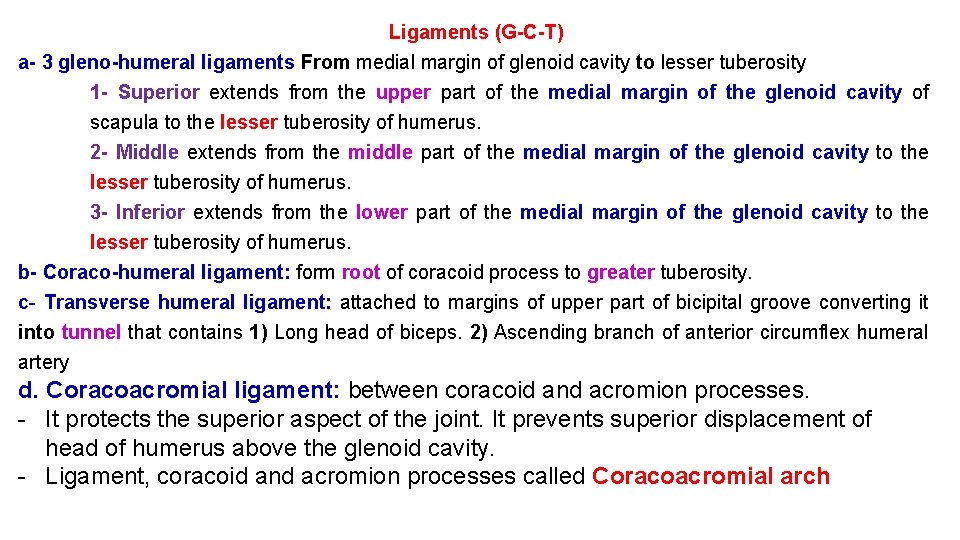
Ligaments (G-C-T) a- 3 gleno-humeral ligaments From medial margin of glenoid cavity to lesser tuberosity 1 - Superior extends from the upper part of the medial margin of the glenoid cavity of scapula to the lesser tuberosity of humerus. 2 - Middle extends from the middle part of the medial margin of the glenoid cavity to the lesser tuberosity of humerus. 3 - Inferior extends from the lower part of the medial margin of the glenoid cavity to the lesser tuberosity of humerus. b- Coraco-humeral ligament: form root of coracoid process to greater tuberosity. c Transverse humeral ligament: attached to margins of upper part of bicipital groove converting it into tunnel that contains 1) Long head of biceps. 2) Ascending branch of anterior circumflex humeral artery d. Coracoacromial ligament: between coracoid and acromion processes. It protects the superior aspect of the joint. It prevents superior displacement of head of humerus above the glenoid cavity. Ligament, coracoid and acromion processes called Coracoacromial arch
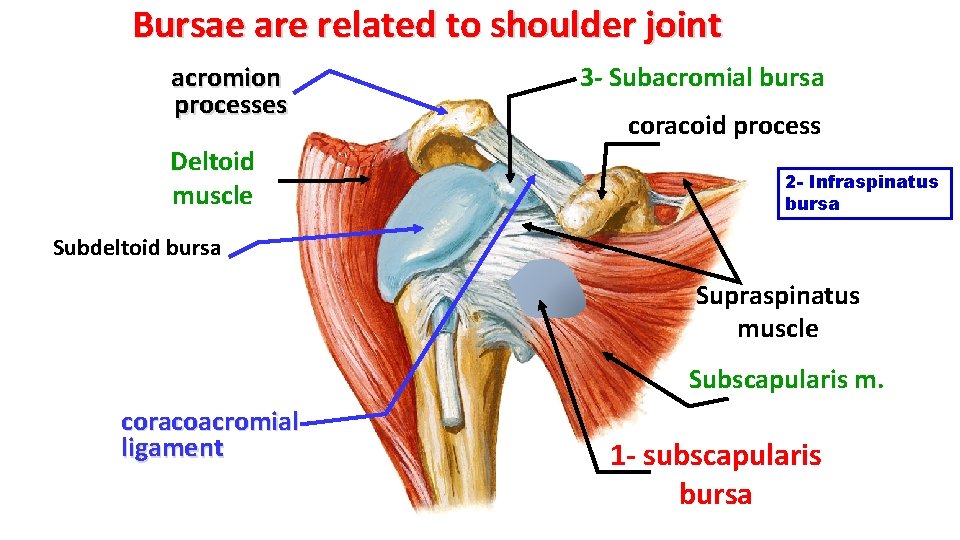
Bursae are related to shoulder joint acromion processes Deltoid muscle 3 - Subacromial bursa coracoid process 2 - Infraspinatus bursa Subdeltoid bursa Supraspinatus muscle Subscapularis m. coracoacromial ligament 1 - subscapularis bursa
** Bursae related to the joint 1 - Subscapularis bursa; between the tendon of subscapularis and capsule, and protects the tendon from friction against the neck of the scapula. It communicates with the joint cavity. 2 Infraspinatus bursa; between the tendon of infraspinatus and the capsule. It communicates with the joint cavity. 3 Subacromial bursa; It lies between the coracoacromial arch above, and supraspinatus tendon and joint capsule below. It continues downwards beneath the deltoid with Subdeltoid bursa. It is the largest synovial bursa in the body and facilitates the movements of supraspinatus tendon under the coracoacromial arch.
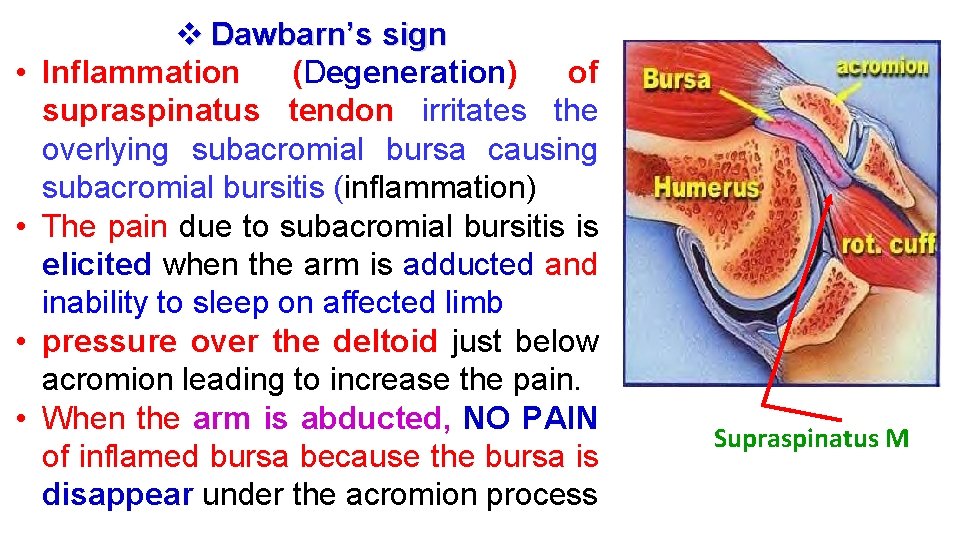
• • v Dawbarn’s sign Inflammation (Degeneration) of supraspinatus tendon irritates the overlying subacromial bursa causing subacromial bursitis (inflammation) The pain due to subacromial bursitis is elicited when the arm is adducted and inability to sleep on affected limb pressure over the deltoid just below acromion leading to increase the pain. When the arm is abducted, NO PAIN of inflamed bursa because the bursa is disappear under the acromion process Supraspinatus M
** Stability of shoulder joint: The shoulder joint is an unstable joint for the following factors; 1) Small shallow glenoid cavity. 2) The capsule is lax. 3) The ligaments are weak. 4) The inferior aspect not supported by muscles. ** Its stability depends on the following factors: 1 - Rotator cuff of muscles adherent to the capsule of the joint. 2 - Glenoid Labrium increases the depth of the cavity. 3 - Long head of biceps passes above the head of humerus intracapsular, hence prevents its upward displacement. 4 - Coracoacromial arch forms, the secondary socket of the joint and protects the joint from above and prevents the upward dislocation of the head of humerus. 5 - Long head of triceps plays an important role during abduction.
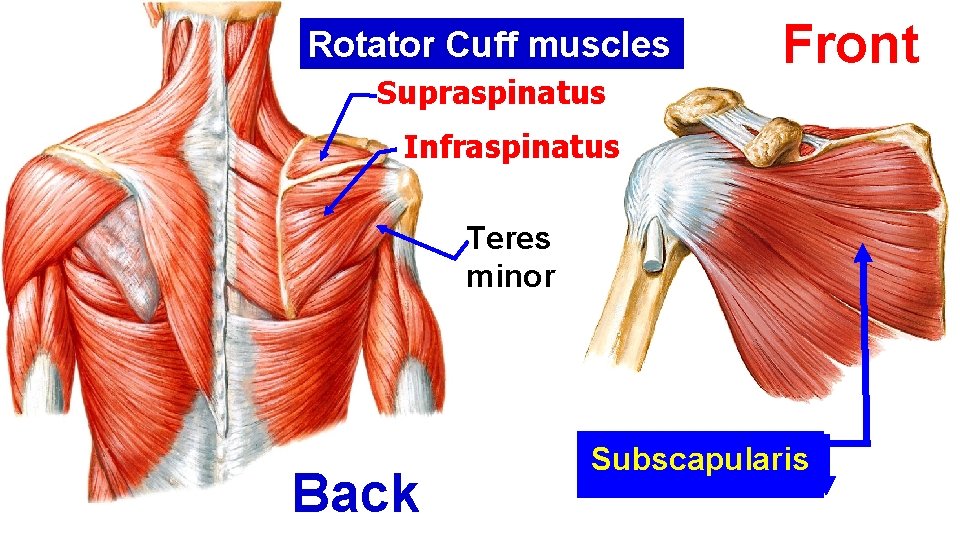
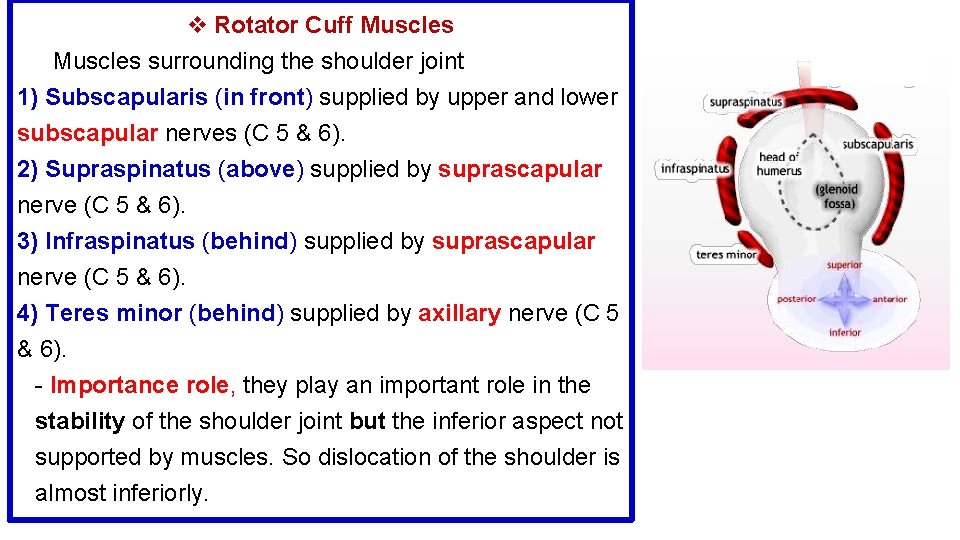
Rotator Cuff muscles Supraspinatus Front Infraspinatus Teres minor Back Subscapularis
v Rotator Cuff Muscles surrounding the shoulder joint 1) Subscapularis (in front) supplied by upper and lower subscapular nerves (C 5 & 6). 2) Supraspinatus (above) supplied by suprascapular nerve (C 5 & 6). 3) Infraspinatus (behind) supplied by suprascapular nerve (C 5 & 6). 4) Teres minor (behind) supplied by axillary nerve (C 5 & 6). Importance role, they play an important role in the stability of the shoulder joint but the inferior aspect not supported by muscles. So dislocation of the shoulder is almost inferiorly.
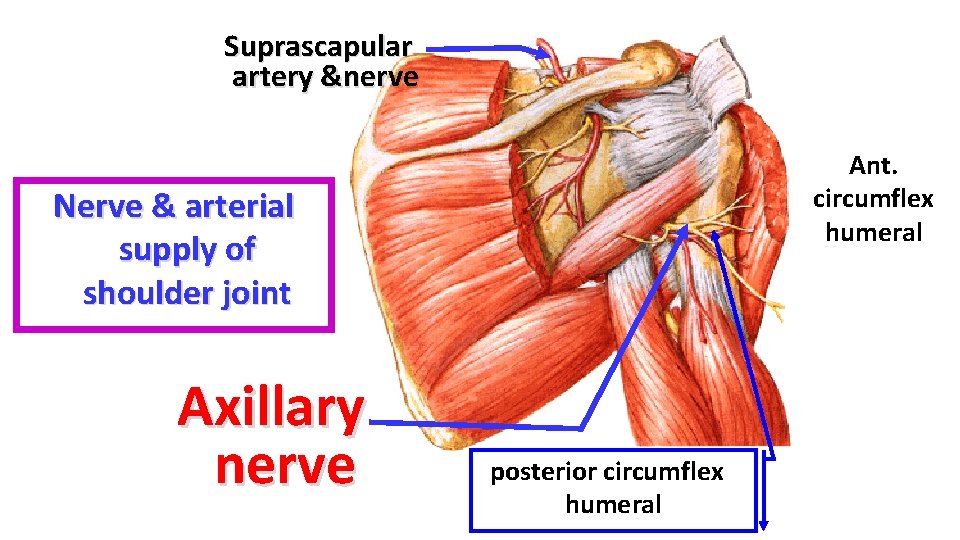
Suprascapular artery &nerve Ant. circumflex humeral Nerve & arterial supply of shoulder joint Axillary nerve posterior circumflex humeral
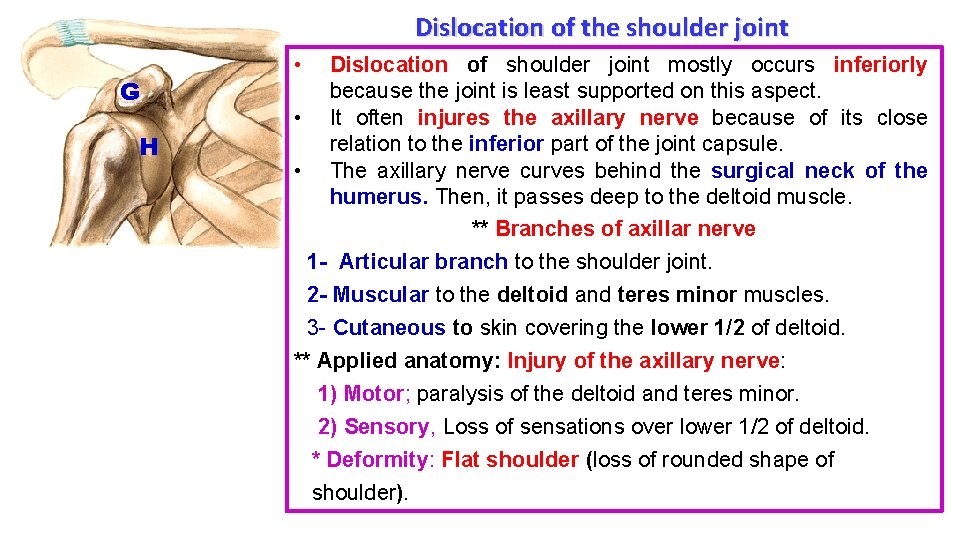
Dislocation of the shoulder joint G H • Dislocation of shoulder joint mostly occurs inferiorly because the joint is least supported on this aspect. • It often injures the axillary nerve because of its close relation to the inferior part of the joint capsule. • The axillary nerve curves behind the surgical neck of the humerus. Then, it passes deep to the deltoid muscle. ** Branches of axillar nerve 1 - Articular branch to the shoulder joint. 2 - Muscular to the deltoid and teres minor muscles. 3 Cutaneous to skin covering the lower 1/2 of deltoid. ** Applied anatomy: Injury of the axillary nerve: 1) Motor; paralysis of the deltoid and teres minor. 2) Sensory, Loss of sensations over lower 1/2 of deltoid. * Deformity: Flat shoulder (loss of rounded shape of shoulder).
** Movements of shoulder joint: v Abduction: a From 0 to 15 by supraspinatus muscle (suprascapular nerve). b From 15 to 90 by the middle fibers of the deltoid (axillary nerve). c More than 90 to 180 by the combined actions of the lower 5 digitations of serratus anterior (long thoracic nerve) and trapizus (spinal part of accessory nerve). After 90 degree of the abduction, the head of the humerus is locked by coracoacromial arch. S 0, the glenoid cavity rotates upward and lateral to raise the arm above the head. v Adduction: • a by the 3 muscles inserted into the bicipital groove: • 1 Pectoratis major. 2 Latissimus dorsi. 3 Teres major. • b 3 Rotator cuff muscles (Subscapularis, Infraspinatus and teres minor).
** Movements of shoulder joint: v Flexion (Muscles infront): Anterior fibers of the deltoid and Pectoralis major. Coracobra chialis and short head of biceps. v Extension (Muscles in the back): by Posterior fibers of the deltoid, teres major and latissimus dorsi. v Medial rotation by Anterior fibers of the deltoid. - 3 muscles inserted into bicipital groove (pectoralis major, latissimus dorsi, teres major) v Lateral rotation: by Posterior fibers of deltoid, infraspinatus and teres minor. v Circumduction: includes flexion, abduction, extension and adduction done in succession.
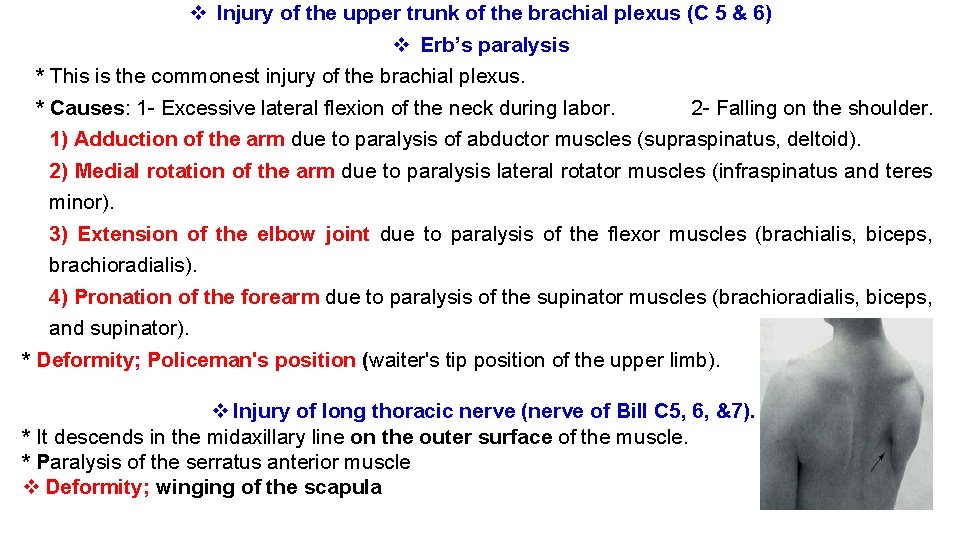
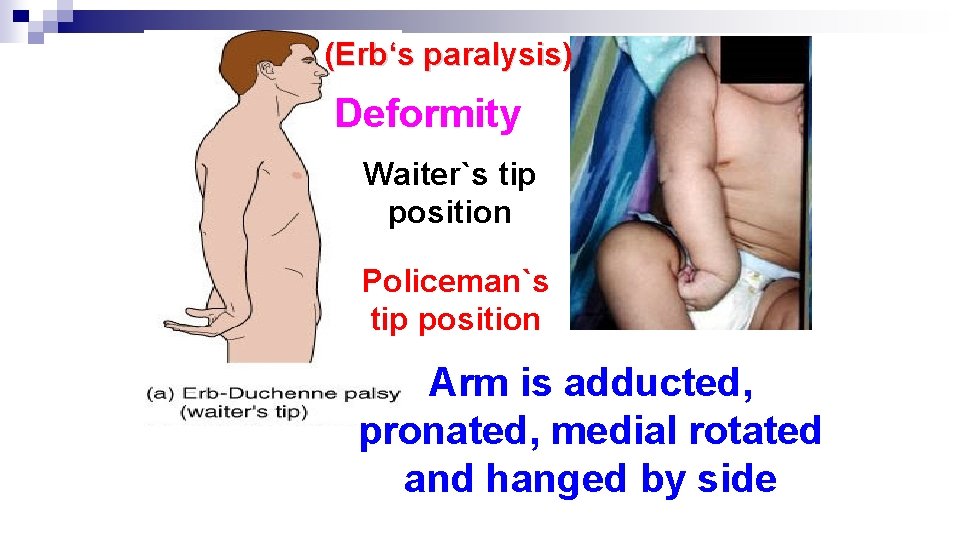
v Injury of the upper trunk of the brachial plexus (C 5 & 6) v Erb’s paralysis * This is the commonest injury of the brachial plexus. * Causes: 1 Excessive lateral flexion of the neck during labor. 2 Falling on the shoulder. 1) Adduction of the arm due to paralysis of abductor muscles (supraspinatus, deltoid). 2) Medial rotation of the arm due to paralysis lateral rotator muscles (infraspinatus and teres minor). 3) Extension of the elbow joint due to paralysis of the flexor muscles (brachialis, biceps, brachioradialis). 4) Pronation of the forearm due to paralysis of the supinator muscles (brachioradialis, biceps, and supinator). * Deformity; Policeman's position (waiter's tip position of the upper limb). v Injury of long thoracic nerve (nerve of Bill C 5, 6, &7). * It descends in the midaxillary line on the outer surface of the muscle. * Paralysis of the serratus anterior muscle v Deformity; winging of the scapula
(Erb‘s paralysis) Deformity Waiter`s tip position Policeman`s tip position Arm is adducted, pronated, medial rotated and hanged by side
Th ank Qu you est ion s I/Azzam 2004