
Shoulder Instability Therapy Role in NonOp and Operative
Shoulder Instability: Therapy Role in Non-Op and Operative Treatment Trevor R. Born, M. D. Sarasota Orthopedic Associates

Disclosure Statement No financial interest or contractual relationships with any commercial interest to disclose.
Potential Subjects to Discuss Case Report: IV Drug Abuser with 10 trigger fingers and how it cured their addiction Correlation of a Physician’s Beard with Patient Respect Lie Detectors: A Worker’s Compensation Adjuster’s Best Friend? Hoverboard injuries in the Villages: An Epidemic? Shoulder Instability and the Therapist’s Role
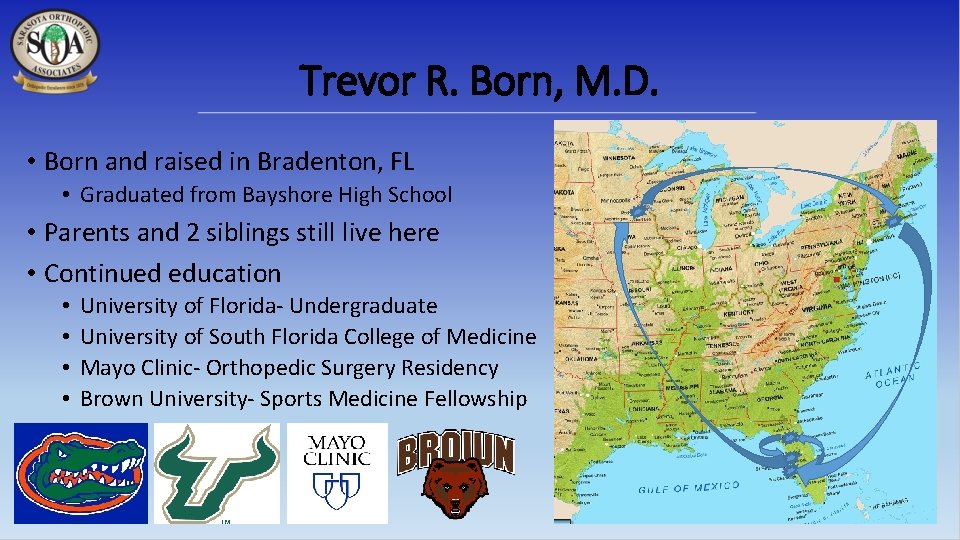
Trevor R. Born, M. D. • Born and raised in Bradenton, FL • Graduated from Bayshore High School • Parents and 2 siblings still live here • Continued education • • University of Florida- Undergraduate University of South Florida College of Medicine Mayo Clinic- Orthopedic Surgery Residency Brown University- Sports Medicine Fellowship
The Basics • If it popped out the front, don’t abduct/externally rotate the arm • If it popped out the back, don’t adduct/internally rotate the arm
Thank You
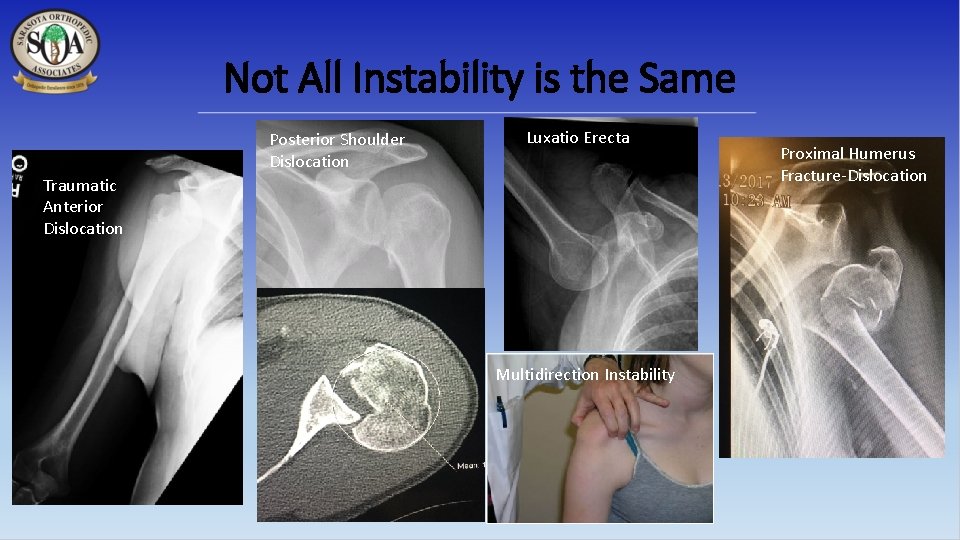
Not All Instability is the Same Posterior Shoulder Dislocation Luxatio Erecta Traumatic Anterior Dislocation Multidirection Instability Proximal Humerus Fracture-Dislocation
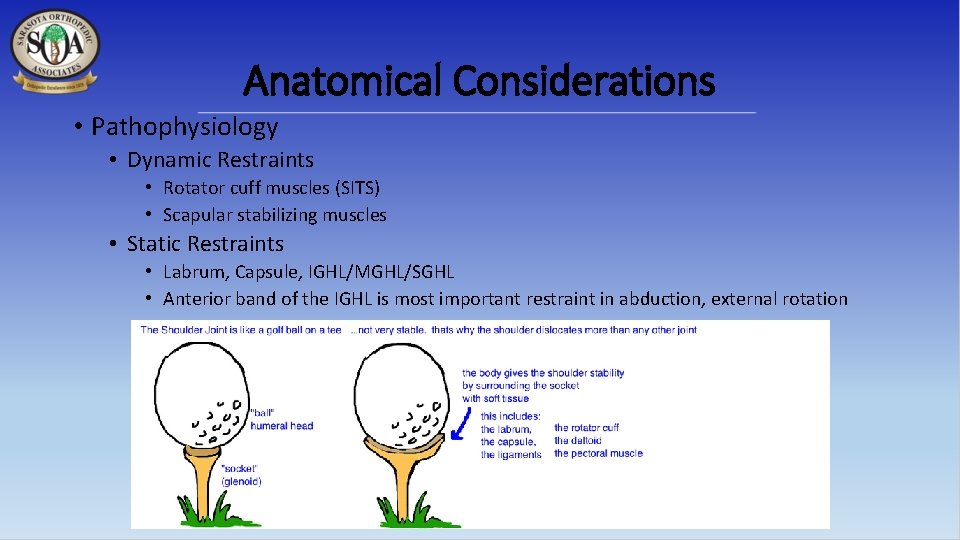
Anatomical Considerations • Pathophysiology • Dynamic Restraints • Rotator cuff muscles (SITS) • Scapular stabilizing muscles • Static Restraints • Labrum, Capsule, IGHL/MGHL/SGHL • Anterior band of the IGHL is most important restraint in abduction, external rotation
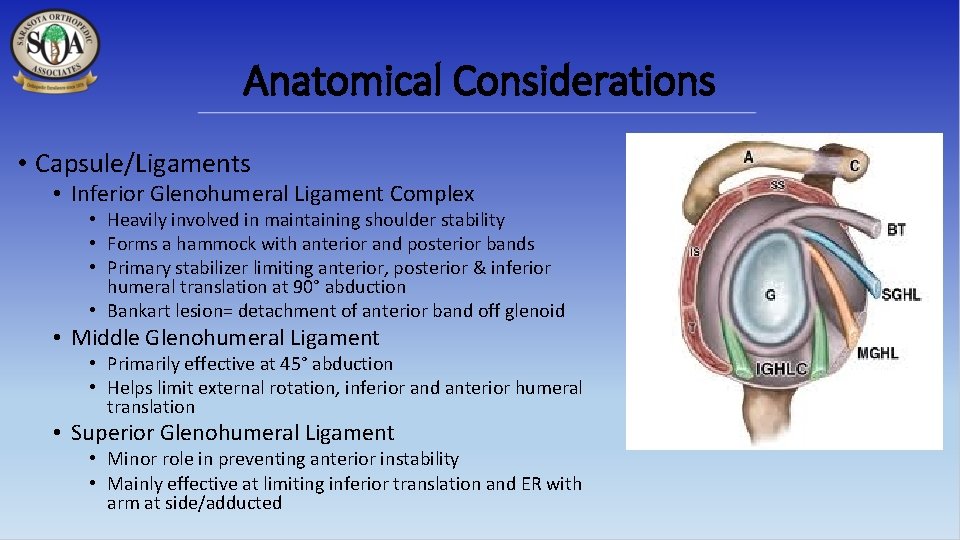
Anatomical Considerations • Capsule/Ligaments • Inferior Glenohumeral Ligament Complex • Heavily involved in maintaining shoulder stability • Forms a hammock with anterior and posterior bands • Primary stabilizer limiting anterior, posterior & inferior humeral translation at 90° abduction • Bankart lesion= detachment of anterior band off glenoid • Middle Glenohumeral Ligament • Primarily effective at 45° abduction • Helps limit external rotation, inferior and anterior humeral translation • Superior Glenohumeral Ligament • Minor role in preventing anterior instability • Mainly effective at limiting inferior translation and ER with arm at side/adducted
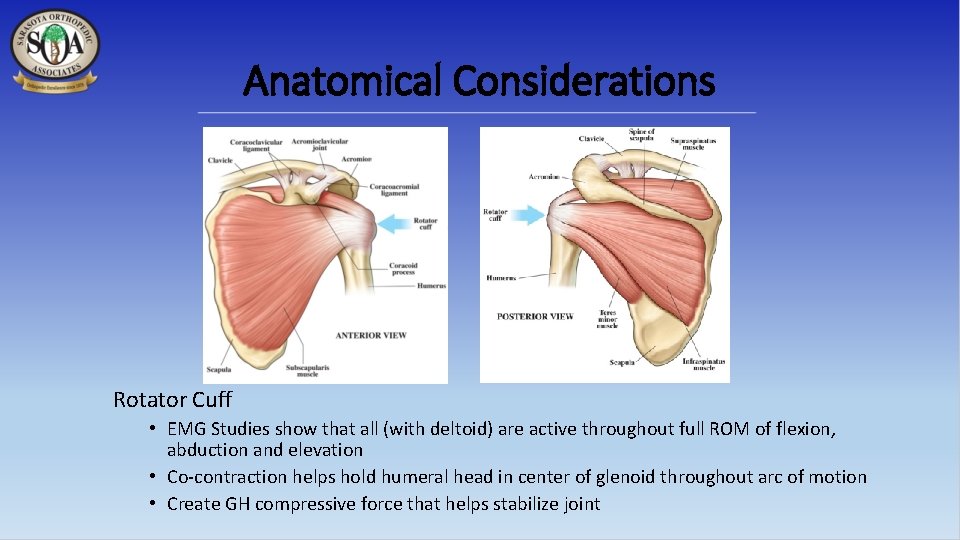
Anatomical Considerations Rotator Cuff • EMG Studies show that all (with deltoid) are active throughout full ROM of flexion, abduction and elevation • Co-contraction helps hold humeral head in center of glenoid throughout arc of motion • Create GH compressive force that helps stabilize joint
Anatomical Considerations • Scapulothoracic stability has been emphasized as an important component of GH stability. • Dysfunction can lead to failure of scapular rotation beneath the humeral head, permitting abnormal translation • Trapezius, serratus anterior and rhomboids all influence scapular movements
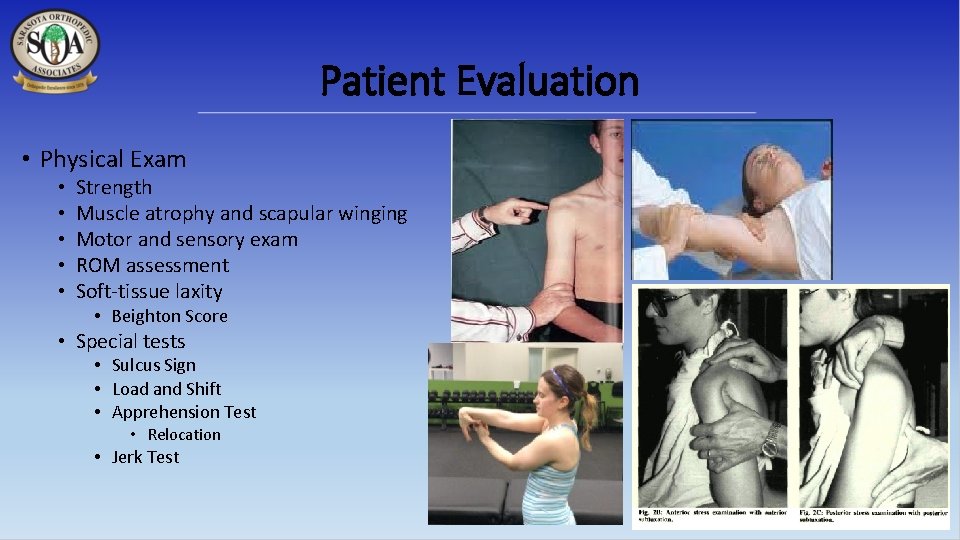
Patient Evaluation • Physical Exam • • • Strength Muscle atrophy and scapular winging Motor and sensory exam ROM assessment Soft-tissue laxity • Beighton Score • Special tests • Sulcus Sign • Load and Shift • Apprehension Test • Relocation • Jerk Test
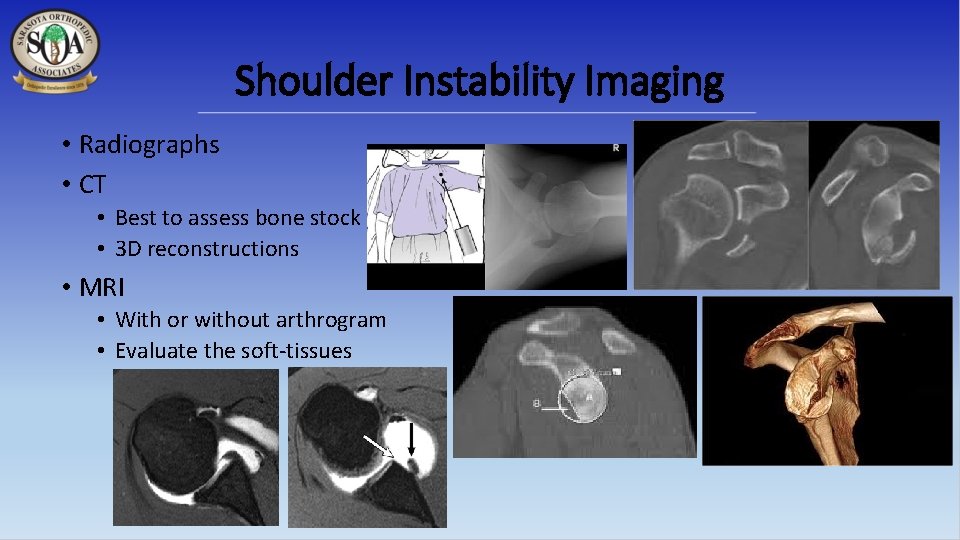
Shoulder Instability Imaging • Radiographs • CT • Best to assess bone stock • 3 D reconstructions • MRI • With or without arthrogram • Evaluate the soft-tissues
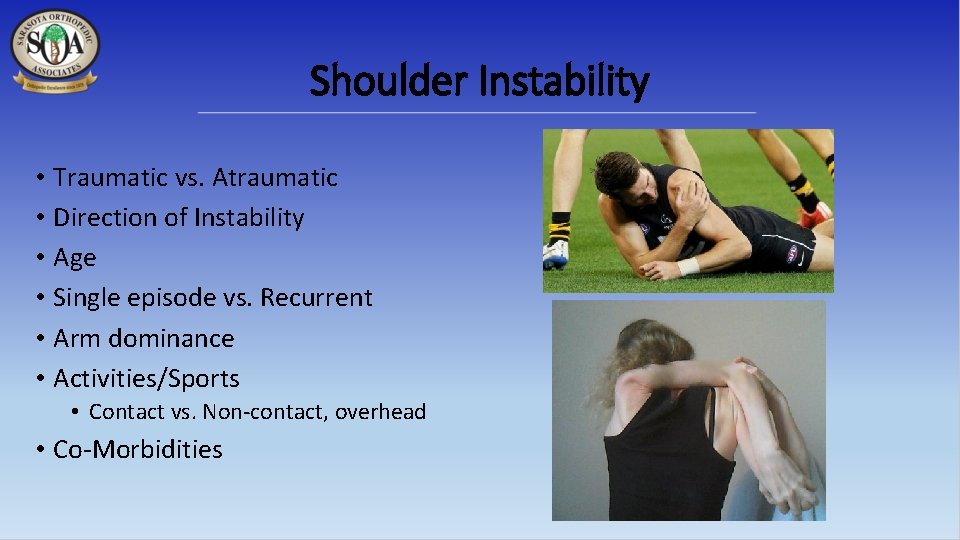
Shoulder Instability • Traumatic vs. Atraumatic • Direction of Instability • Age • Single episode vs. Recurrent • Arm dominance • Activities/Sports • Contact vs. Non-contact, overhead • Co-Morbidities
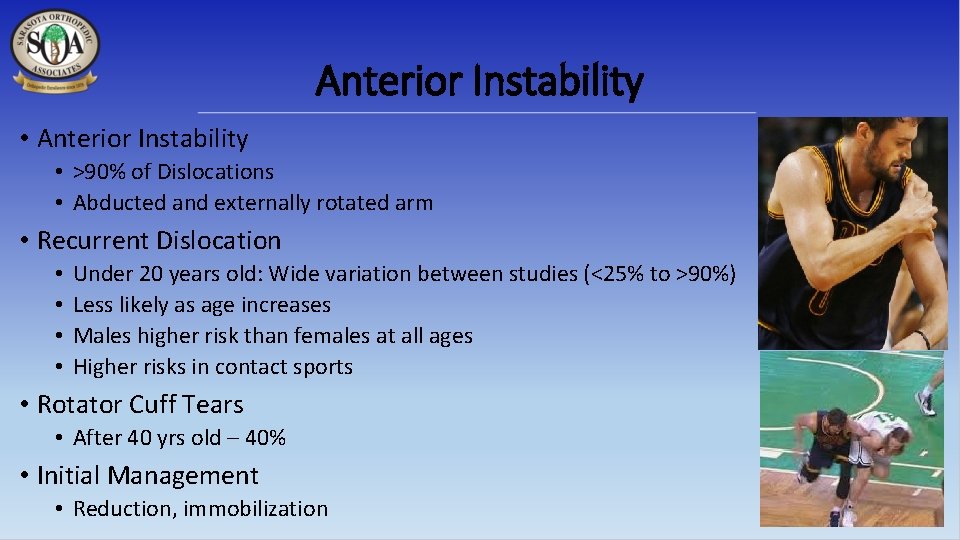
Anterior Instability • >90% of Dislocations • Abducted and externally rotated arm • Recurrent Dislocation • • Under 20 years old: Wide variation between studies (<25% to >90%) Less likely as age increases Males higher risk than females at all ages Higher risks in contact sports • Rotator Cuff Tears • After 40 yrs old – 40% • Initial Management • Reduction, immobilization
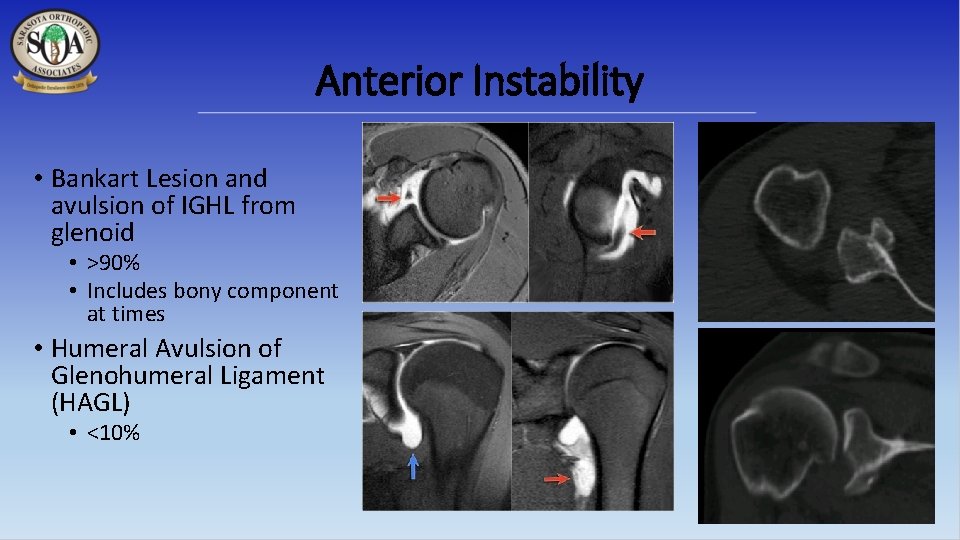
Anterior Instability • Bankart Lesion and avulsion of IGHL from glenoid • >90% • Includes bony component at times • Humeral Avulsion of Glenohumeral Ligament (HAGL) • <10%
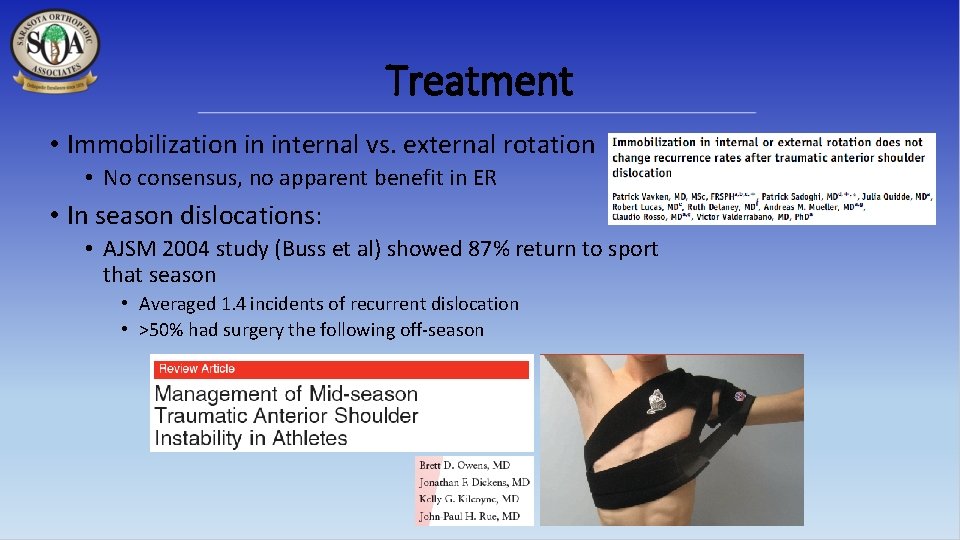
Treatment • Immobilization in internal vs. external rotation • No consensus, no apparent benefit in ER • In season dislocations: • AJSM 2004 study (Buss et al) showed 87% return to sport that season • Averaged 1. 4 incidents of recurrent dislocation • >50% had surgery the following off-season
Treatment • Risks with non-operative management in a first time dislocator, especially young male in contact sports • Recurrent instability • Damage to joint, glenoid over time necessitating open procedure • Reported correlation with number of dislocations and risk of failing surgical management • Arthropathy
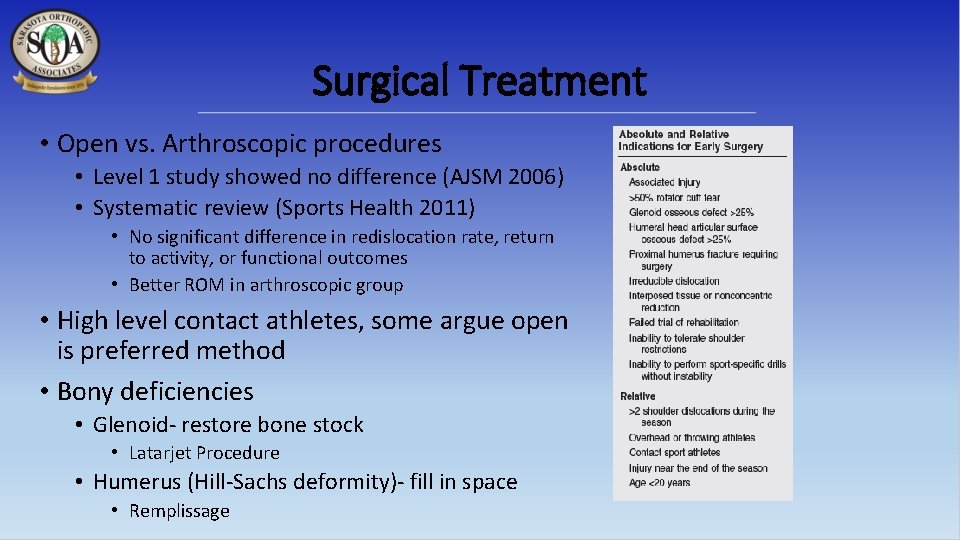
Surgical Treatment • Open vs. Arthroscopic procedures • Level 1 study showed no difference (AJSM 2006) • Systematic review (Sports Health 2011) • No significant difference in redislocation rate, return to activity, or functional outcomes • Better ROM in arthroscopic group • High level contact athletes, some argue open is preferred method • Bony deficiencies • Glenoid- restore bone stock • Latarjet Procedure • Humerus (Hill-Sachs deformity)- fill in space • Remplissage
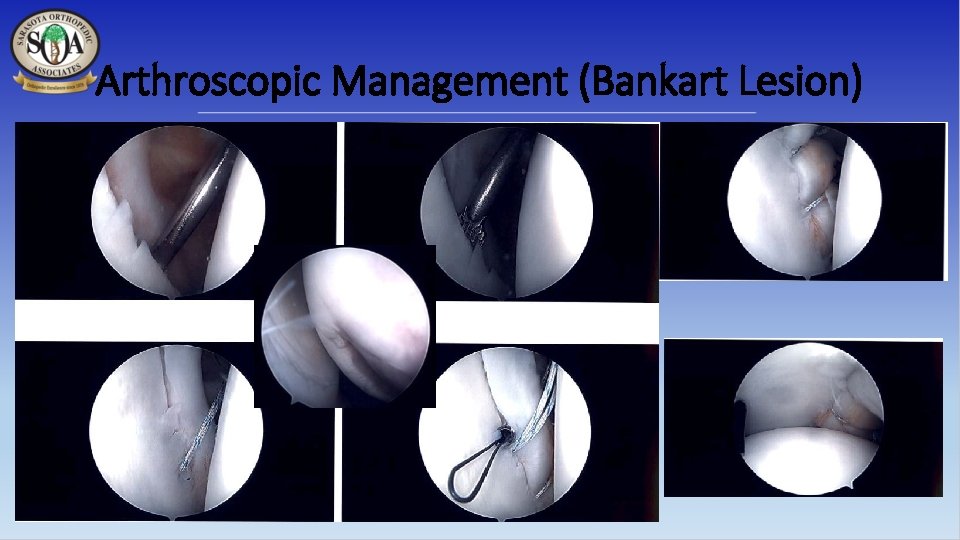
Arthroscopic Management (Bankart Lesion)
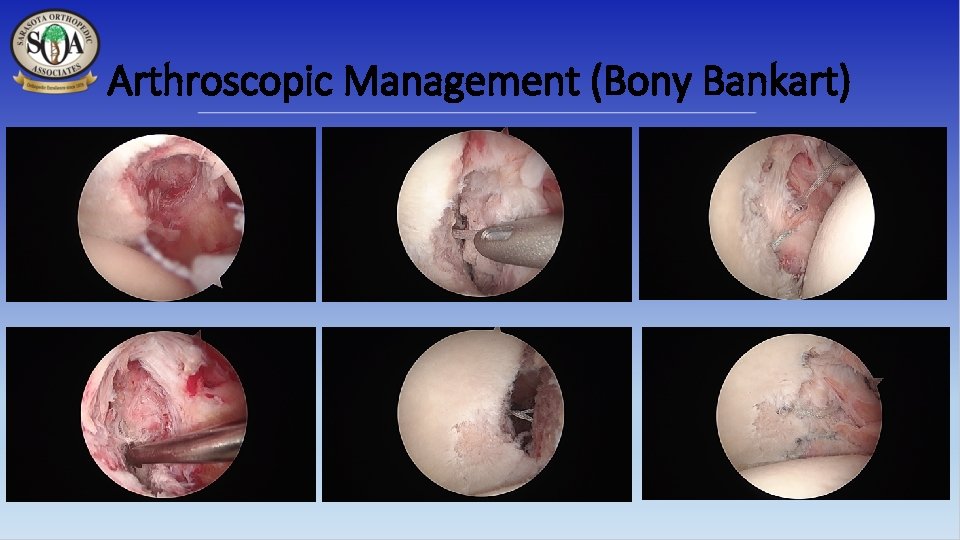
Arthroscopic Management (Bony Bankart)
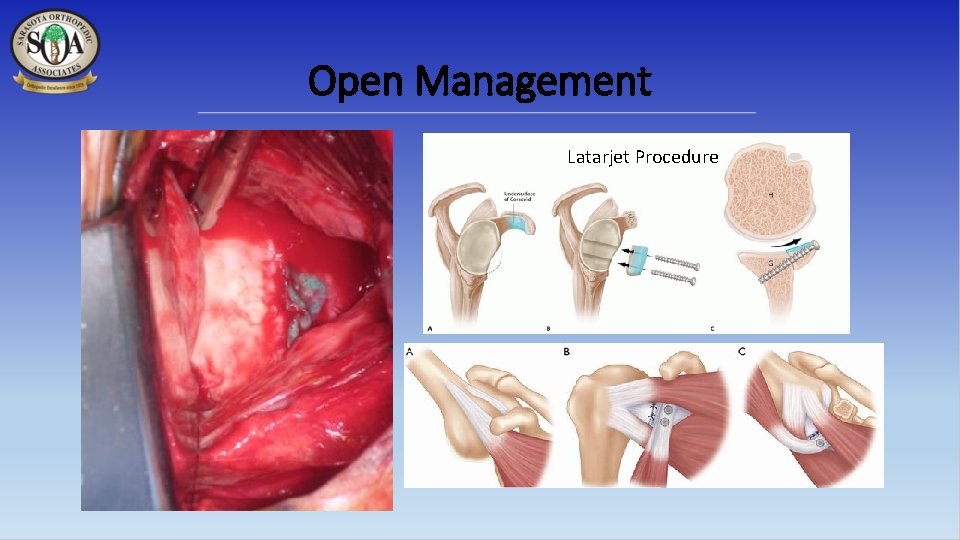
Open Management Latarjet Procedure
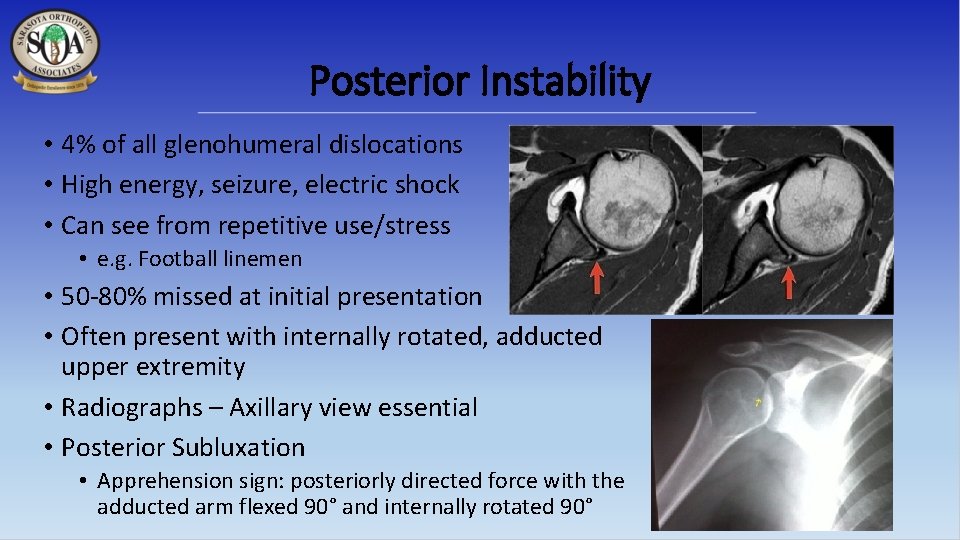
Posterior Instability • 4% of all glenohumeral dislocations • High energy, seizure, electric shock • Can see from repetitive use/stress • e. g. Football linemen • 50 -80% missed at initial presentation • Often present with internally rotated, adducted upper extremity • Radiographs – Axillary view essential • Posterior Subluxation • Apprehension sign: posteriorly directed force with the adducted arm flexed 90° and internally rotated 90°
Treatment • Reduction if needed • Traction, external rotation, abduction • Immobilization 4 -6 weeks in neutral rotation • Surgical stabilization for • • Chronic instability/dislocations Articular fractures >20% Large glenoid rim fractures Displaced lesser tuberosity fracture • Humeral head replacement • Chronic dislocations > 3 -6 months • Fracture of humeral head >50%
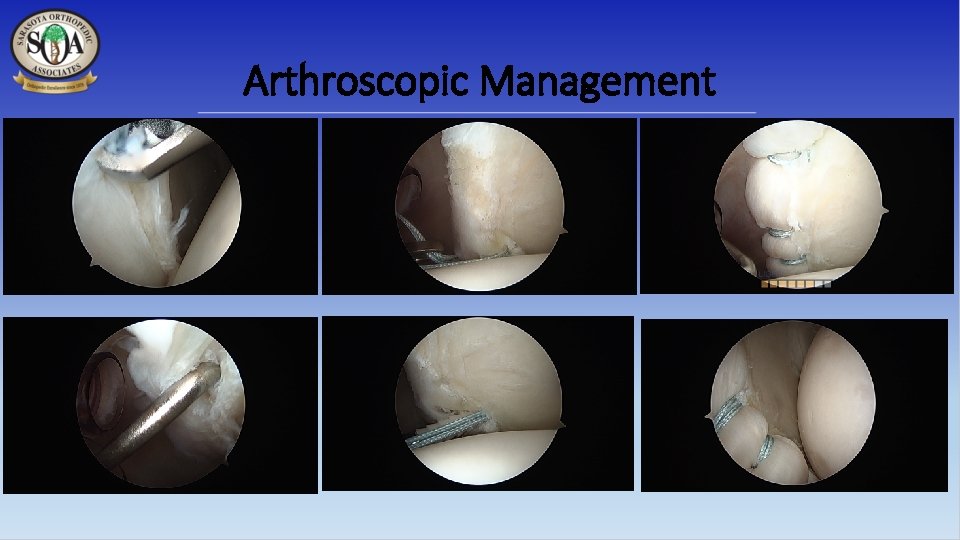
Arthroscopic Management
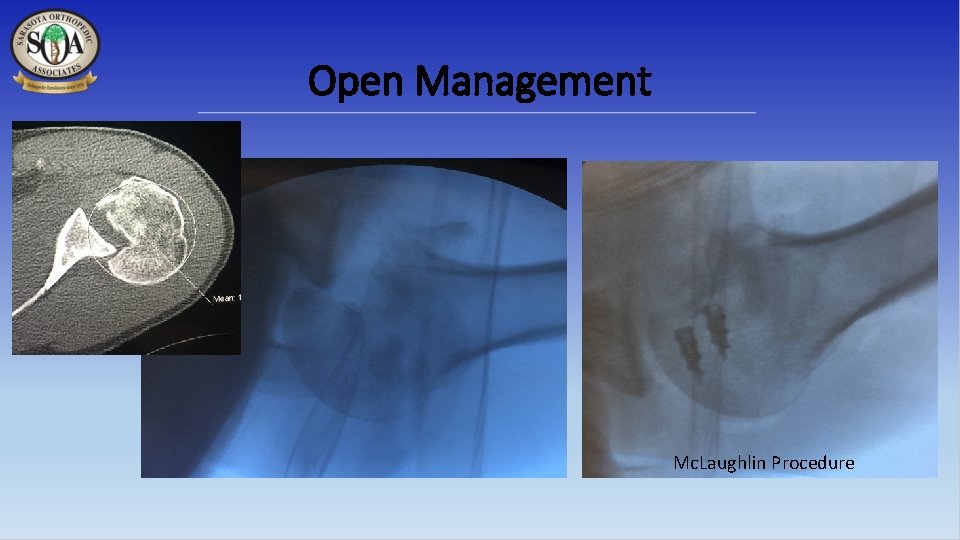
Open Management Mc. Laughlin Procedure
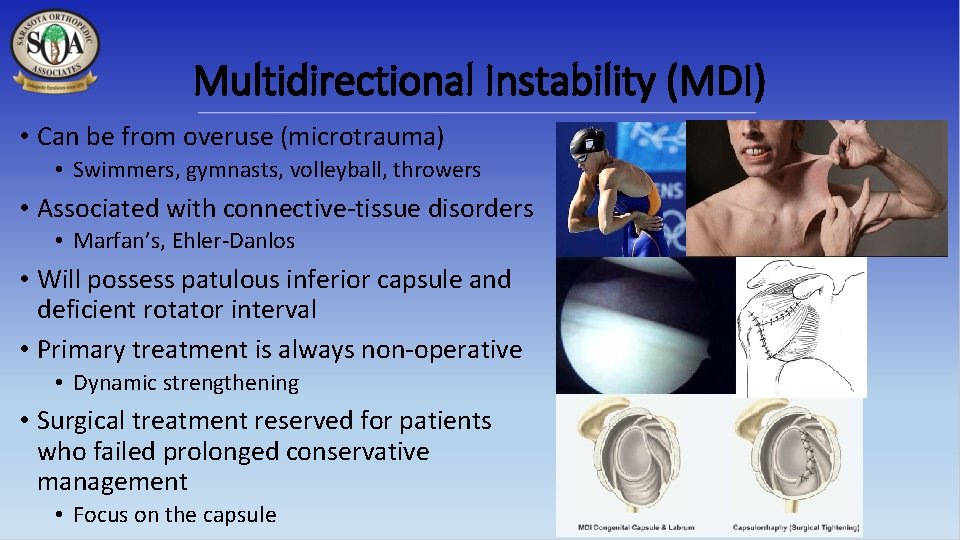
Multidirectional Instability (MDI) • Can be from overuse (microtrauma) • Swimmers, gymnasts, volleyball, throwers • Associated with connective-tissue disorders • Marfan’s, Ehler-Danlos • Will possess patulous inferior capsule and deficient rotator interval • Primary treatment is always non-operative • Dynamic strengthening • Surgical treatment reserved for patients who failed prolonged conservative management • Focus on the capsule
Non-operative and post-operative rehab will essentially follow similar principles
Rehabilitation • No scientific studies available to support one specific rehab regimen in preference to another • Key to pain-free shoulder function for sporting activities is functional stability or a balance between stabilizers of the shoulder and forces applied to the shoulder • Rehab should aim to optimize the performance of the dynamic stabilizers • Post-operatively, key is initial protection of repaired structures, followed by introduction of sequential strengthening/stabilization exercises
The Basics • If it popped out the front, don’t abduct/externally rotate the arm • If it popped out the back, don’t adduct/internally rotate the arm
Rehabilitation • Dynamic compression— 1 st mechanism of functional stability • Subscapularis co-contracts with infraspinatus and teres minor to center and compress humeral head into glenoid fossa • Interior fibers of rotator cuff co-contract with anterior deltoid to help keep head centered on glenoid • Dynamic ligament tension— 2 nd mechanism of functional stability • Rotator cuff tendons blend with shoulder capsule at their point of insertion and serve to tighten capsule on contraction • Reactive neuromuscular control— 3 rd mechanism of functional stability • Involves exercising the unstable shoulder in positions that maximally challenge dynamic stabilizers • Plyometrics helps to retrain neuromuscular control
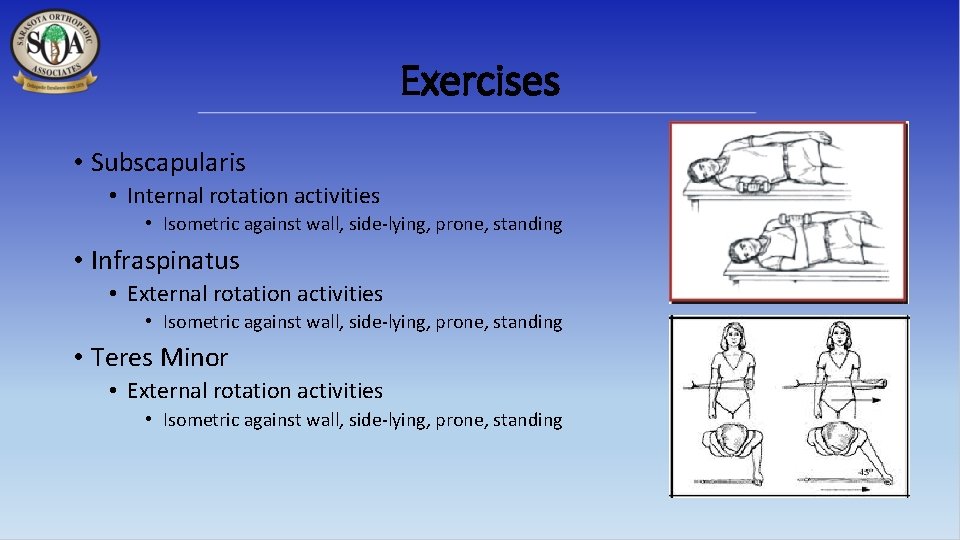
Exercises • Subscapularis • Internal rotation activities • Isometric against wall, side-lying, prone, standing • Infraspinatus • External rotation activities • Isometric against wall, side-lying, prone, standing • Teres Minor • External rotation activities • Isometric against wall, side-lying, prone, standing
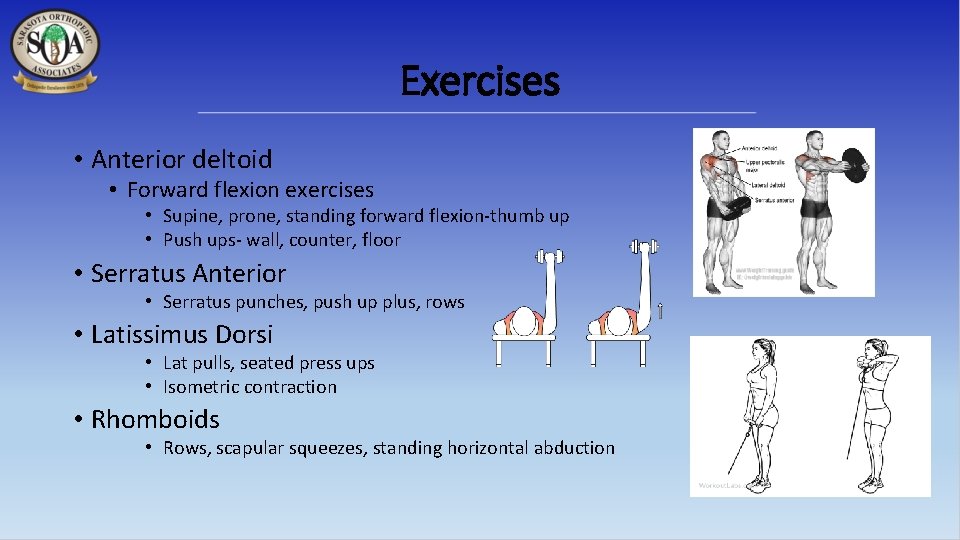
Exercises • Anterior deltoid • Forward flexion exercises • Supine, prone, standing forward flexion-thumb up • Push ups- wall, counter, floor • Serratus Anterior • Serratus punches, push up plus, rows • Latissimus Dorsi • Lat pulls, seated press ups • Isometric contraction • Rhomboids • Rows, scapular squeezes, standing horizontal abduction
It’s not just the ball and socket
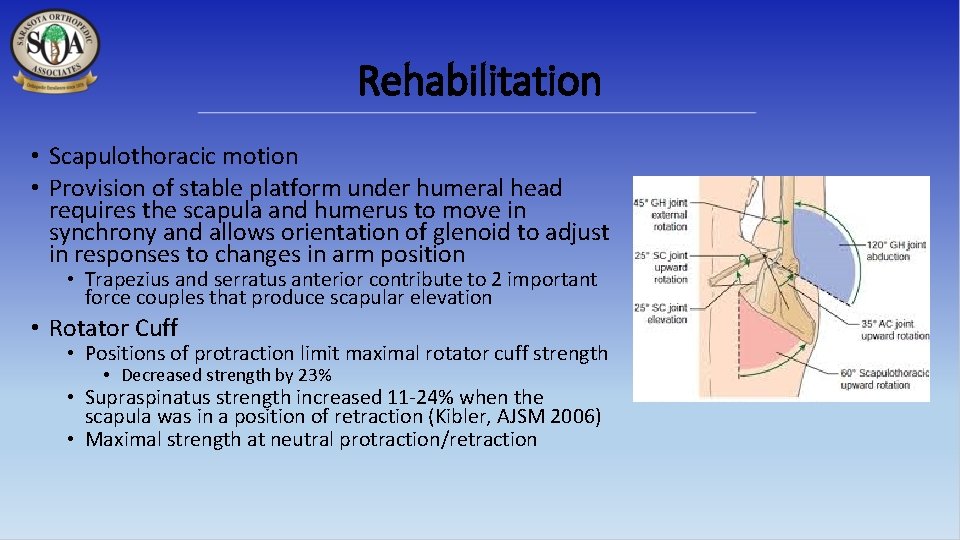
Rehabilitation • Scapulothoracic motion • Provision of stable platform under humeral head requires the scapula and humerus to move in synchrony and allows orientation of glenoid to adjust in responses to changes in arm position • Trapezius and serratus anterior contribute to 2 important force couples that produce scapular elevation • Rotator Cuff • Positions of protraction limit maximal rotator cuff strength • Decreased strength by 23% • Supraspinatus strength increased 11 -24% when the scapula was in a position of retraction (Kibler, AJSM 2006) • Maximal strength at neutral protraction/retraction
Scapular Dyskinesis • Multidirectional Instability • Altered biomechanics and muscle activation • Increased protraction of scapula often seen. • • Pectoralis minor and latissimus dorsi increase activation Lower trapezius and serratus anterior less active Results in hyperactive rotator cuff and biceps Humeral head migrates away from center • Correction of scapular positioning can successfully treat MDI
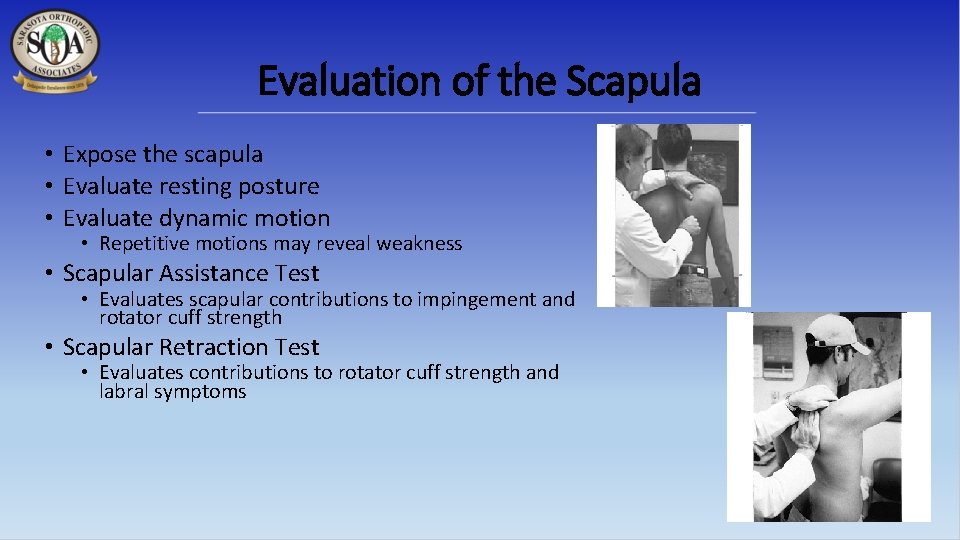
Evaluation of the Scapula • Expose the scapula • Evaluate resting posture • Evaluate dynamic motion • Repetitive motions may reveal weakness • Scapular Assistance Test • Evaluates scapular contributions to impingement and rotator cuff strength • Scapular Retraction Test • Evaluates contributions to rotator cuff strength and labral symptoms
Treatment of Scapular Dyskinesis • First must optimize surrounding anatomy • Treat any nerve dysfunction or structural injury • Rehab emphasis should “start proximally and end distally” • Core strength and stability • 3 -dimensional control of the scapula • Serratus anterior & lower trapezius strengthening • Acute Phase: Low row, inferior glide, Closed-Kinetic chain • Recovery Phase: lawnmower, robbery exercises, wall slides • Maintenance Phase: medicine ball toss, tubing plyometrics • Rotator cuff strengthening after scapula stabilized • Coordinate scapular motion with trunk and hip motion
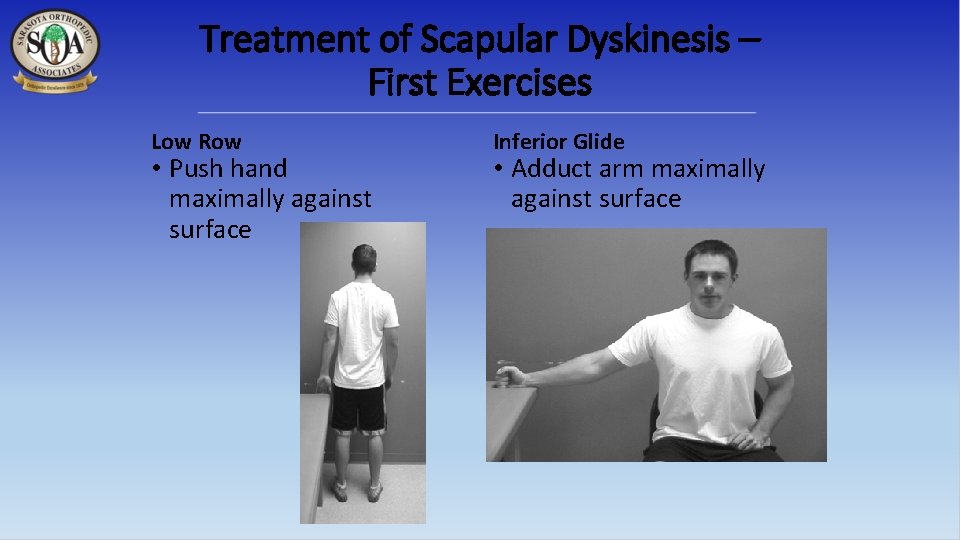
Treatment of Scapular Dyskinesis – First Exercises Low Row • Push hand maximally against surface Inferior Glide • Adduct arm maximally against surface
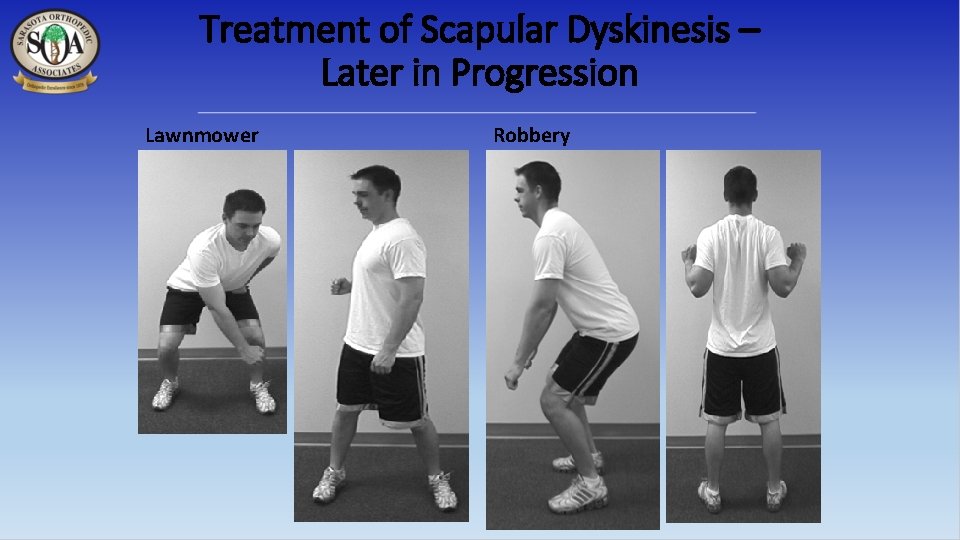
Treatment of Scapular Dyskinesis – Later in Progression Lawnmower Robbery
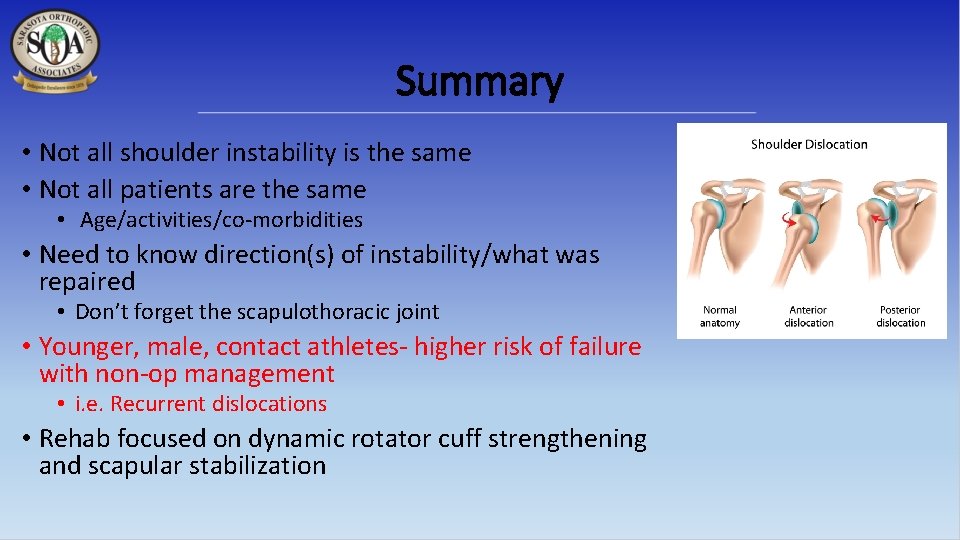
Summary • Not all shoulder instability is the same • Not all patients are the same • Age/activities/co-morbidities • Need to know direction(s) of instability/what was repaired • Don’t forget the scapulothoracic joint • Younger, male, contact athletes- higher risk of failure with non-op management • i. e. Recurrent dislocations • Rehab focused on dynamic rotator cuff strengthening and scapular stabilization
Shoulder Instability Pearls Do not need to immobilize in ER after anterior dislocation Patient had seizure, shoulder pain with “negative” x-ray and can’t ER think posterior dislocation Patient older than 40 with dislocation and can’t raise arm a few weeks after surgery rotator cuff tear Protect repaired structures early on during rehab, early isometrics Multidirectional instability ask about family history of connective tissue disorders
Thank You
- Slides: 45