
SHOULDER INJURIES Fractures Location Mechanism of Injury Fall
- Slides: 20
SHOULDER INJURIES
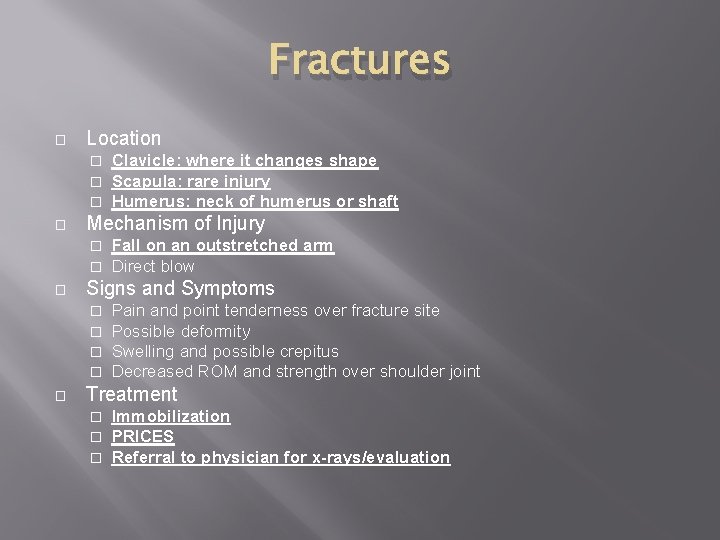
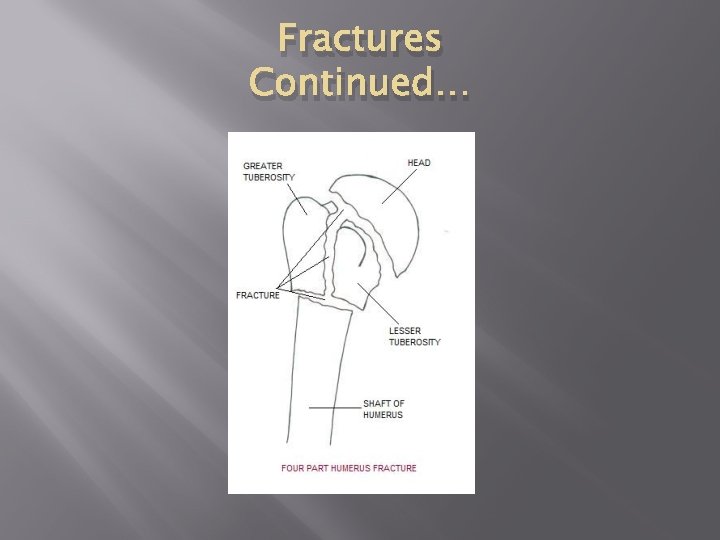
Fractures � Location � � Mechanism of Injury � � � Fall on an outstretched arm Direct blow Signs and Symptoms � � � Clavicle: where it changes shape Scapula: rare injury Humerus: neck of humerus or shaft Pain and point tenderness over fracture site Possible deformity Swelling and possible crepitus Decreased ROM and strength over shoulder joint Treatment � � � Immobilization PRICES Referral to physician for x-rays/evaluation
Fractures Continued…
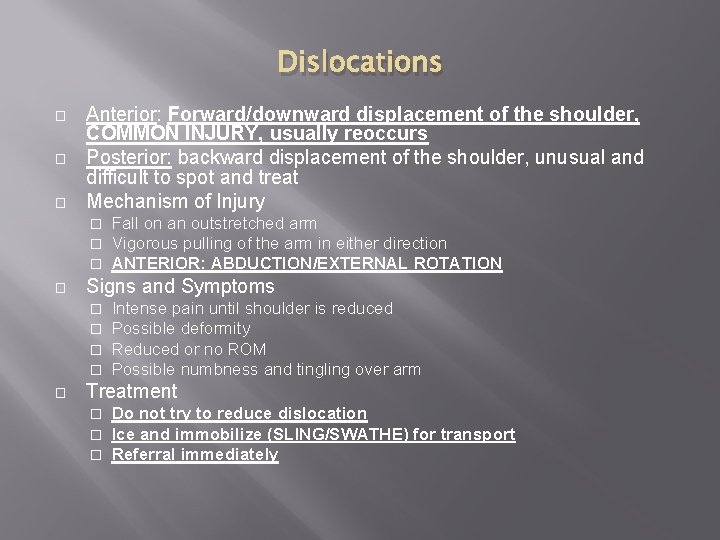
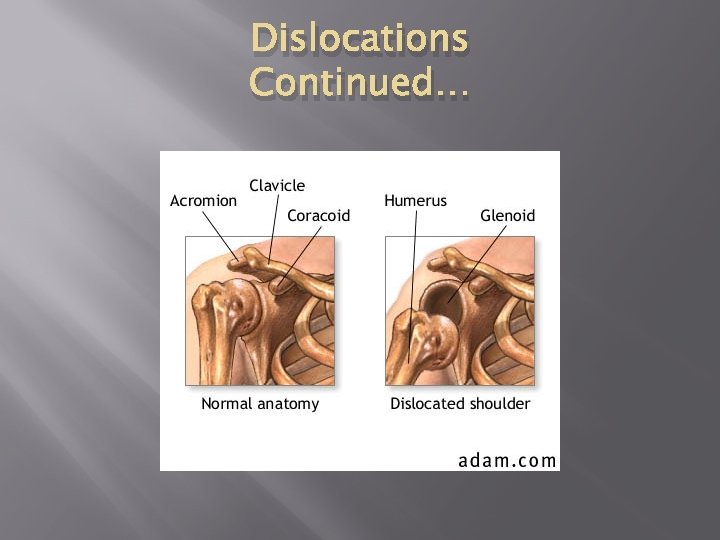
Dislocations � � � Anterior: Forward/downward displacement of the shoulder, COMMON INJURY, usually reoccurs Posterior: backward displacement of the shoulder, unusual and difficult to spot and treat Mechanism of Injury � � Signs and Symptoms � � � Fall on an outstretched arm Vigorous pulling of the arm in either direction ANTERIOR: ABDUCTION/EXTERNAL ROTATION Intense pain until shoulder is reduced Possible deformity Reduced or no ROM Possible numbness and tingling over arm Treatment � � � Do not try to reduce dislocation Ice and immobilize (SLING/SWATHE) for transport Referral immediately
Dislocations Continued…
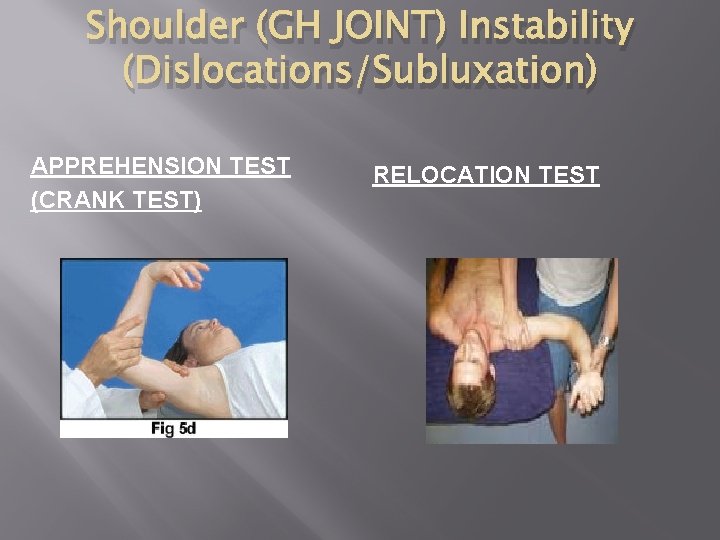
Apprehension Test � Apprehension test: This test puts the shoulder in a position where the patient may become apprehensive that it is about to dislocate. The examiner will want to know this and will look for signs that the patient is apprehensive. Lying on the back, the patient's arm is extended 90 o from the side and rotated clockwise ("externally rotated"). This is similar to the position your arm would be in if you were getting ready to throw a ball or wave to someone. From this position, the examiner will continue to externally rotate the patient's arm. This is the position that puts the most strain on the ligaments which stop normally stop the shoulder from dislocating anteriorly. If those ligaments are weak or damaged, the shoulder may feel like it is going to pop out of joint -- which is what the physician wants to know (Fig. 5 d).
Shoulder (GH JOINT) Instability (Dislocations/Subluxation) APPREHENSION TEST (CRANK TEST) RELOCATION TEST
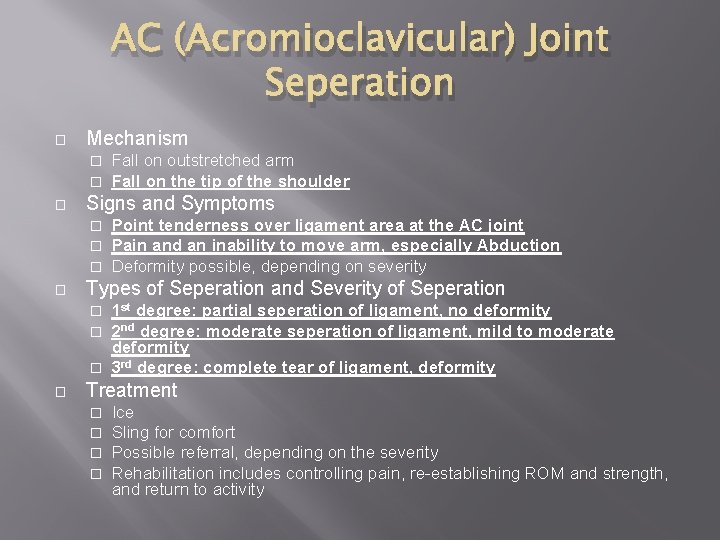
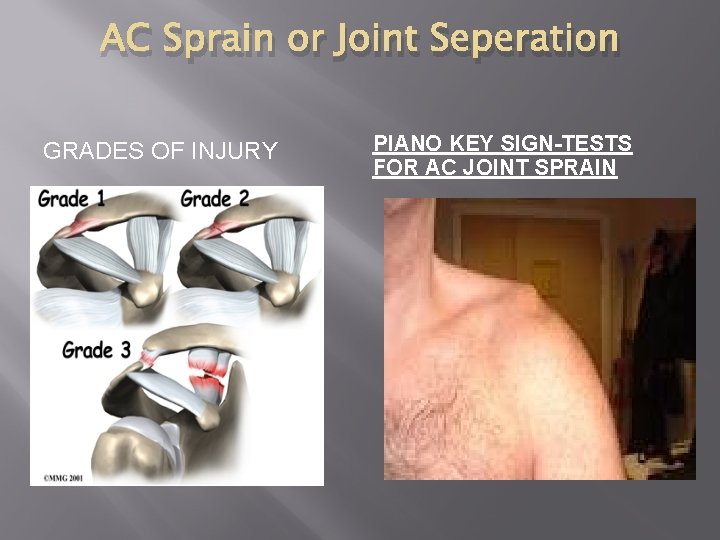
AC (Acromioclavicular) Joint Seperation � Mechanism � � � Signs and Symptoms � � Fall on outstretched arm Fall on the tip of the shoulder Point tenderness over ligament area at the AC joint Pain and an inability to move arm, especially Abduction Deformity possible, depending on severity Types of Seperation and Severity of Seperation 1 st degree: partial seperation of ligament, no deformity 2 nd degree: moderate seperation of ligament, mild to moderate deformity � 3 rd degree: complete tear of ligament, deformity � � � Treatment � � Ice Sling for comfort Possible referral, depending on the severity Rehabilitation includes controlling pain, re-establishing ROM and strength, and return to activity
AC Sprain or Joint Seperation GRADES OF INJURY PIANO KEY SIGN-TESTS FOR AC JOINT SPRAIN
Test of Acromioclavicular Joint Instability (Piano key sign) � The acromioclavicular joint is first palpated to determine if there is any displacement of the acromion process and the distal head of the clavicle. Next, pressure is applied to the distal clavicle in all four directions to determine stability and any associated increase in pain. Pressure is applied to the tip of the shoulder, which compresses the acromioclavicular joint and may also increase pain.
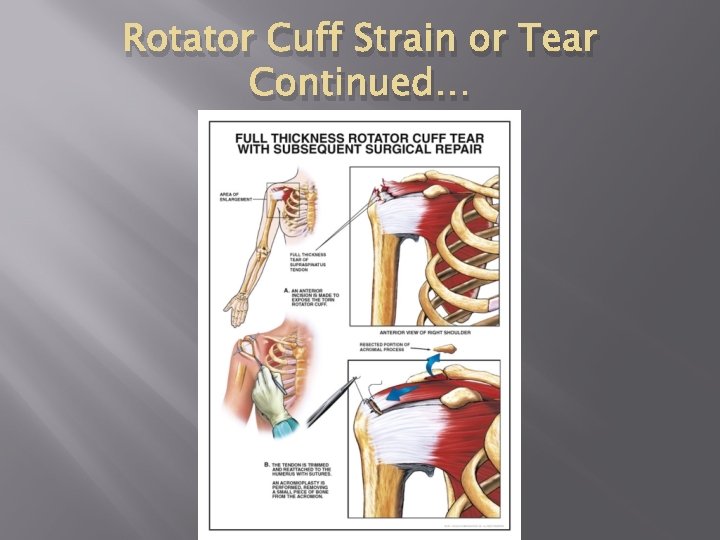
Rotator Cuff Strain or Tear (“SITS” Muscles) � � � Rotator Cuff Muscles: Supraspinatus, Infraspinatus, Teres Minor, Subscapularis Suprasinatus involved 75% of the time with rotator cuff injuries. Mechanism � � Signs and Symptoms � � � Fall on outstretched shoulder Lifting or throwing of heavy objects without proper warm-up Poor overhead mechanics Pain over shoulder joint, increases with ROM Point tenderness over shoulder Decreased ROM due to pain Muscular weakness possible, depending on severity Treatment � � � Rest Ice Stretching followed by strengthening exercises Proper techniques in overhand movement Referral if problem persists
Rotator Cuff Strain or Tear Continued…
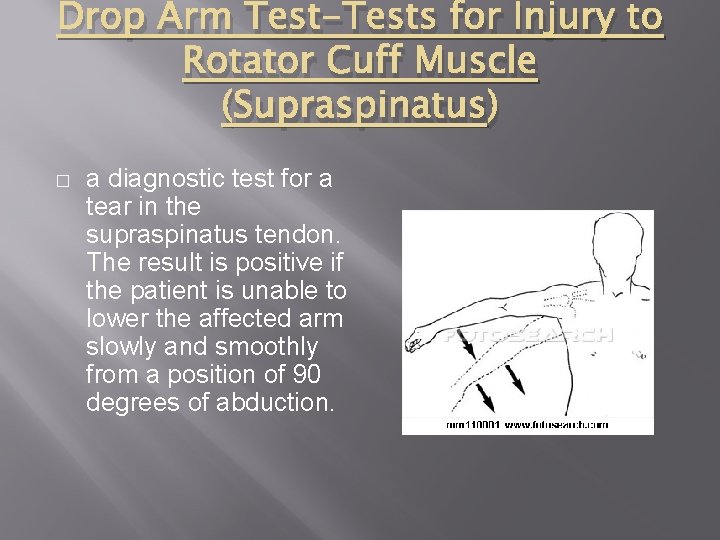
Drop Arm Test-Tests for Injury to Rotator Cuff Muscle (Supraspinatus) � a diagnostic test for a tear in the supraspinatus tendon. The result is positive if the patient is unable to lower the affected arm slowly and smoothly from a position of 90 degrees of abduction.
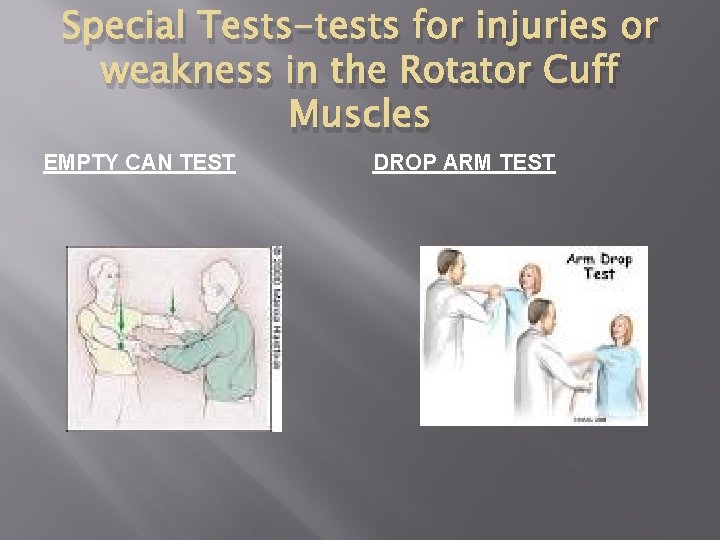
Special Tests-tests for injuries or weakness in the Rotator Cuff Muscles EMPTY CAN TEST DROP ARM TEST
Contusion to Upper Arm (Deltoid – Most Common) � � Precautions-prevent the possibility of myositis ossificans (calcium formation from repetitive trauma) Mechanism � � � Signs and Symptoms � � � Direct blow Fall on arm Point tenderness and swelling over area Pain on palpation and active ROM Bruising and possible limp in muscle belly Possible a decreased ROM Treatment � � � Ice Padding and protection Strengthening exercises
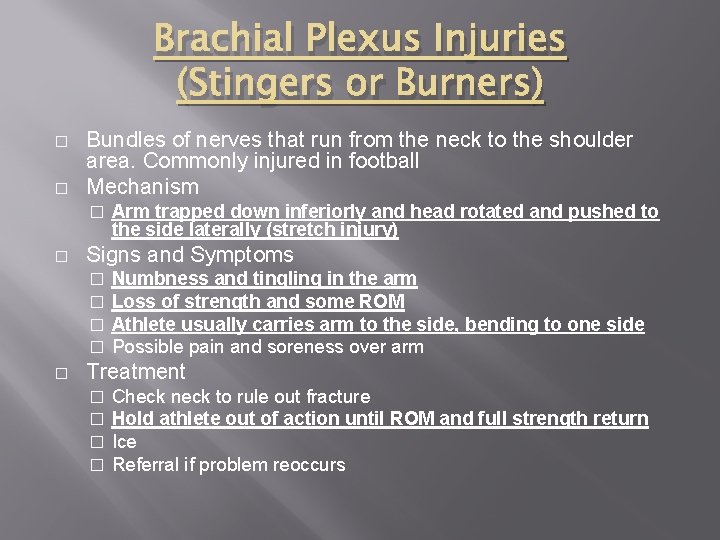
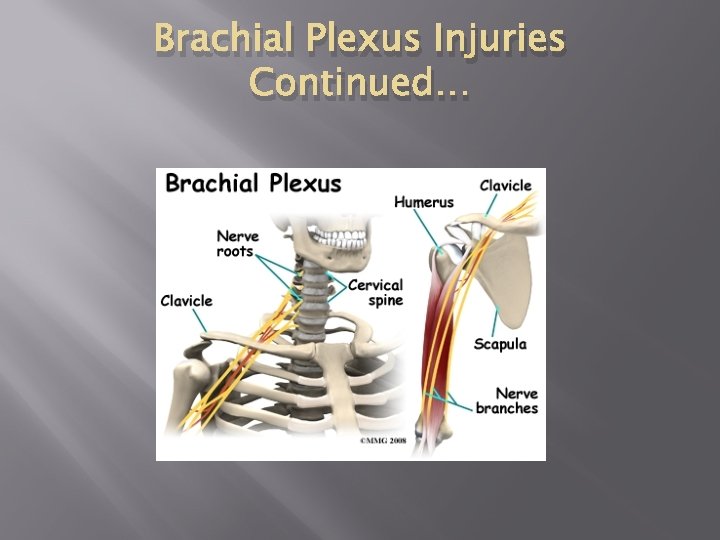
Brachial Plexus Injuries (Stingers or Burners) � � Bundles of nerves that run from the neck to the shoulder area. Commonly injured in football Mechanism � � Signs and Symptoms � � � Arm trapped down inferiorly and head rotated and pushed to the side laterally (stretch injury) Numbness and tingling in the arm Loss of strength and some ROM Athlete usually carries arm to the side, bending to one side Possible pain and soreness over arm Treatment � � Check neck to rule out fracture Hold athlete out of action until ROM and full strength return Ice Referral if problem reoccurs
Brachial Plexus Injuries Continued…
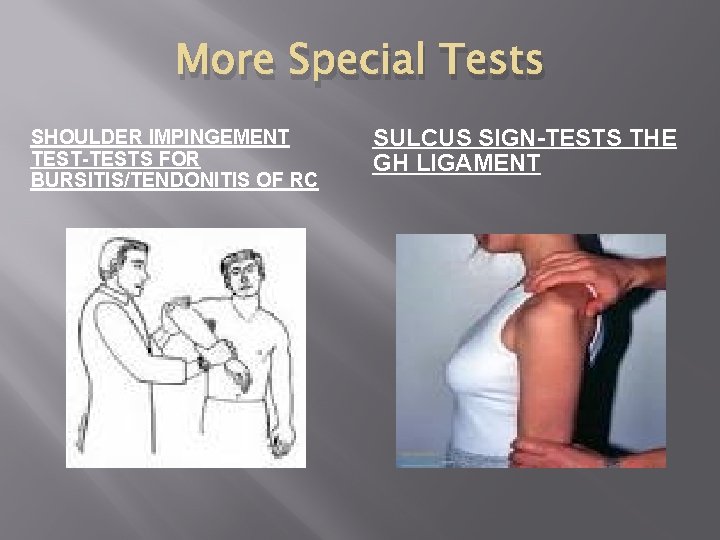
More Special Tests SHOULDER IMPINGEMENT TEST-TESTS FOR BURSITIS/TENDONITIS OF RC SULCUS SIGN-TESTS THE GH LIGAMENT
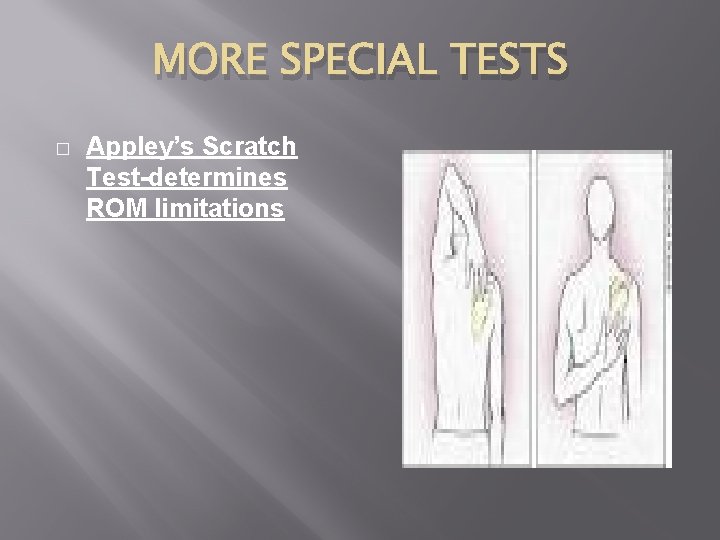
MORE SPECIAL TESTS � Appley’s Scratch Test-determines ROM limitations