
Shot Composition Rule of Thirds l An image
- Slides: 12
Shot Composition
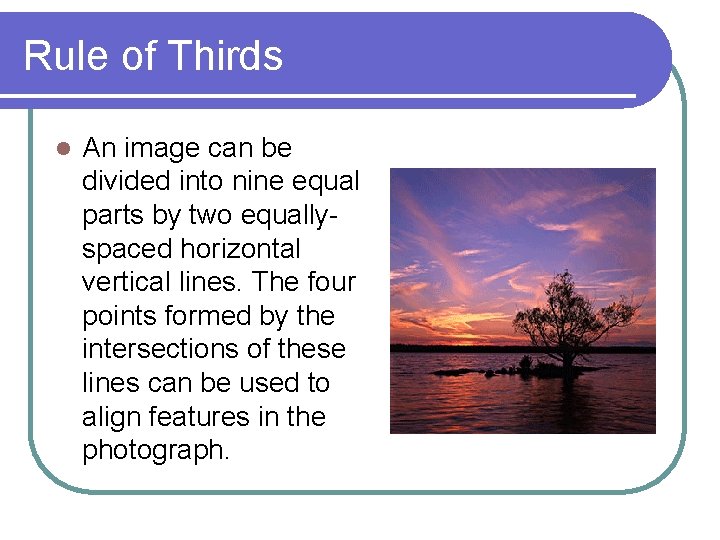
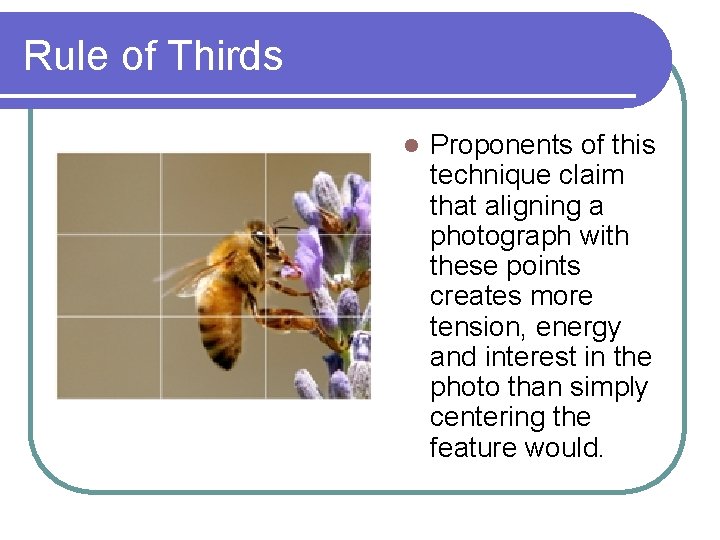
Rule of Thirds l An image can be divided into nine equal parts by two equallyspaced horizontal vertical lines. The four points formed by the intersections of these lines can be used to align features in the photograph.
Rule of Thirds l Proponents of this technique claim that aligning a photograph with these points creates more tension, energy and interest in the photo than simply centering the feature would.
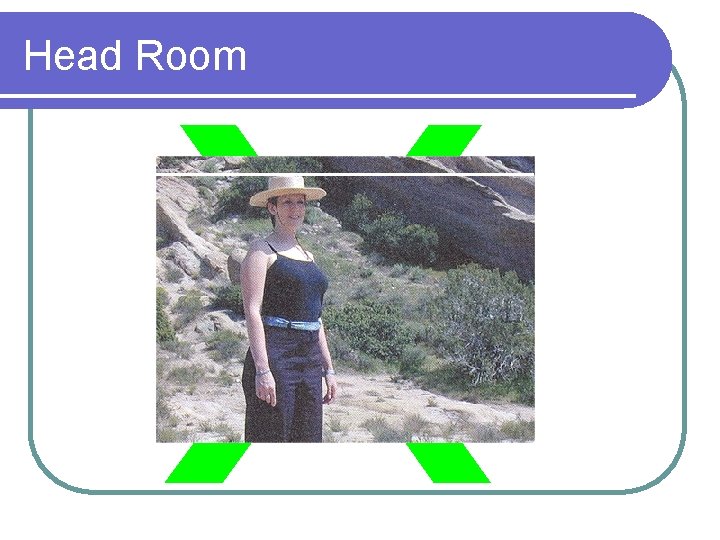
Head Room l When videotaping people, most beginners center the subject’s head in the frame because that is how we look at people with our own eyes. l Head room is positioning subjects at a pleasing distance from the top of the picture
X Head Room
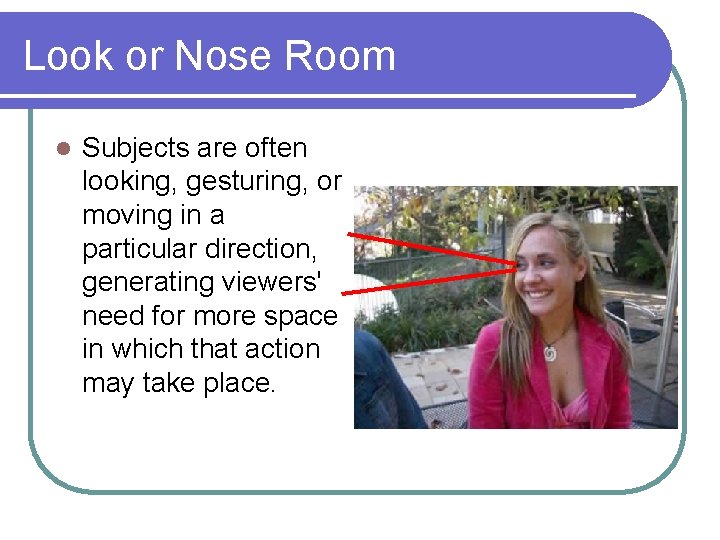
Look or Nose Room l Subjects are often looking, gesturing, or moving in a particular direction, generating viewers' need for more space in which that action may take place.
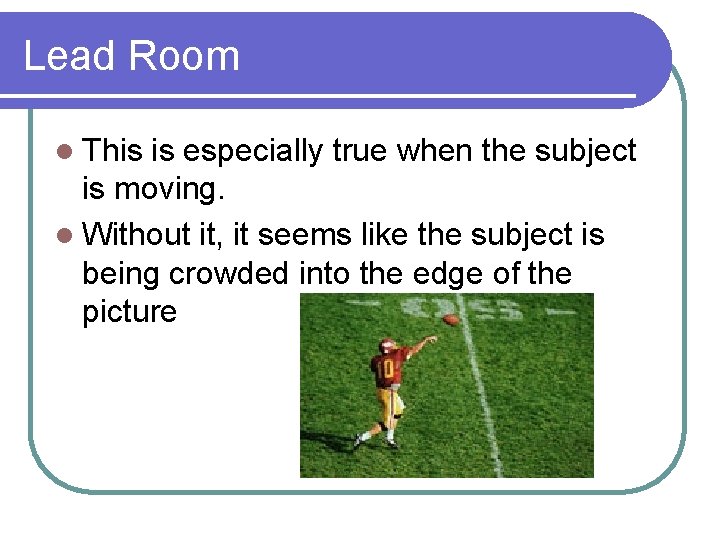
Lead Room l This is especially true when the subject is moving. l Without it, it seems like the subject is being crowded into the edge of the picture
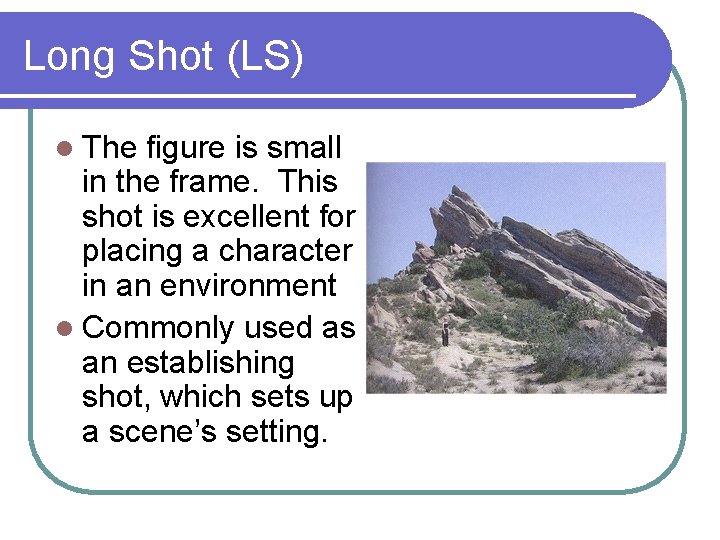
Long Shot (LS) l The figure is small in the frame. This shot is excellent for placing a character in an environment l Commonly used as an establishing shot, which sets up a scene’s setting.
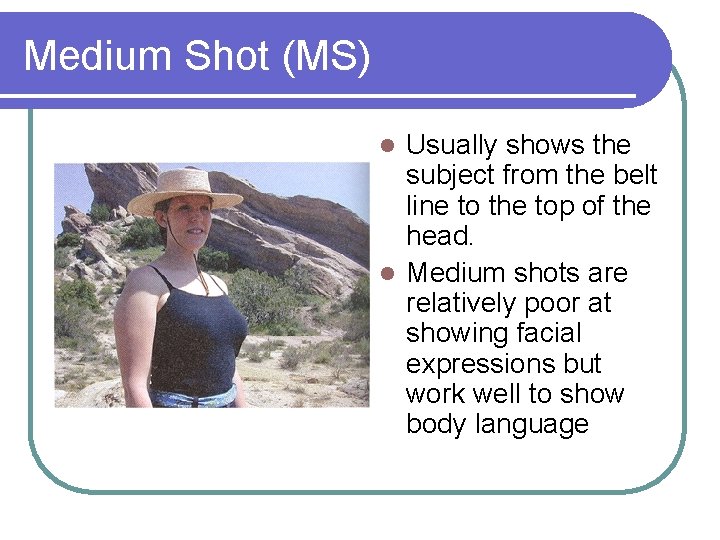
Medium Shot (MS) Usually shows the subject from the belt line to the top of the head. l Medium shots are relatively poor at showing facial expressions but work well to show body language l
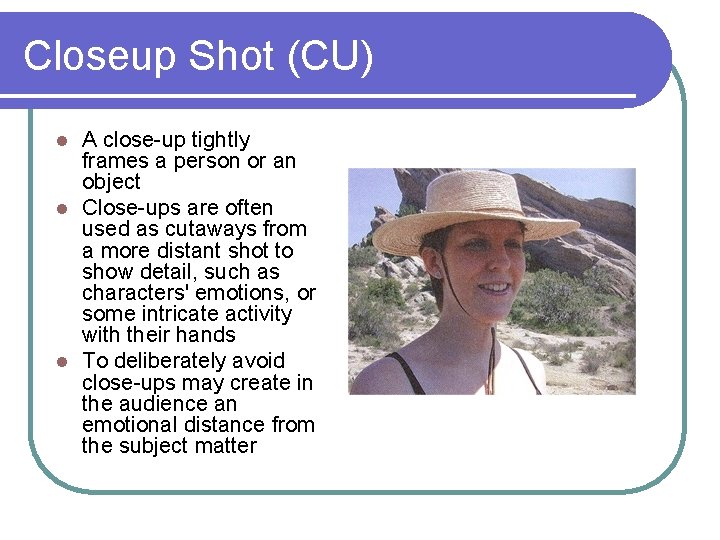
Closeup Shot (CU) A close-up tightly frames a person or an object l Close-ups are often used as cutaways from a more distant shot to show detail, such as characters' emotions, or some intricate activity with their hands l To deliberately avoid close-ups may create in the audience an emotional distance from the subject matter l
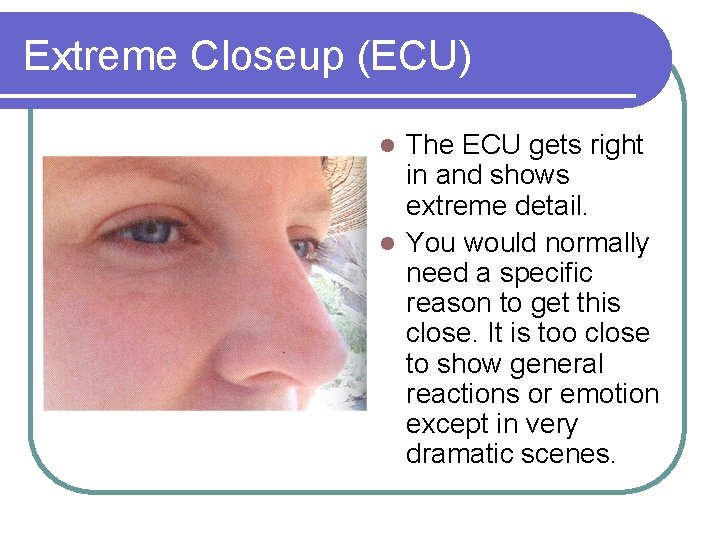
Extreme Closeup (ECU) The ECU gets right in and shows extreme detail. l You would normally need a specific reason to get this close. It is too close to show general reactions or emotion except in very dramatic scenes. l
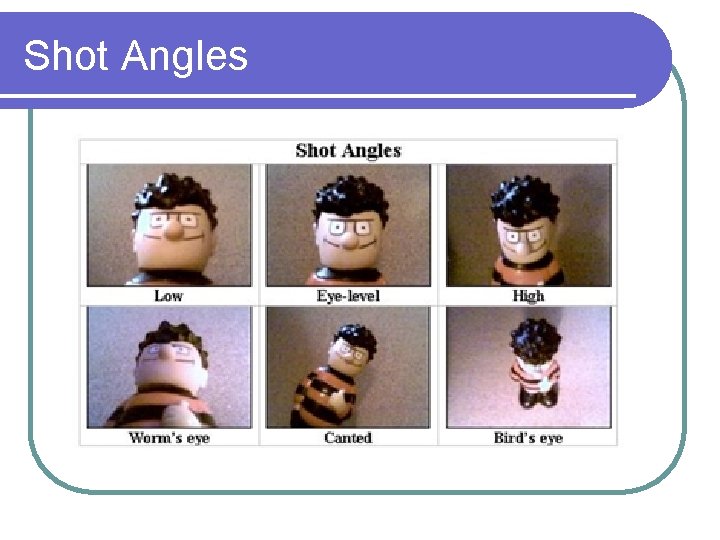
Shot Angles