
ShortTermLongTerm Memory Distinction Memory 2 Long Term Memory
- Slides: 10
Short-Term/Long-Term Memory Distinction Memory 2
Long Term Memory � Questions to Consider How does damage to the brain affect the ability to remember what has happened in the past and the ability to form new memories of ongoing experiences? � How are memories for personal experiences, like what you did last summer, different from memories for facts, like the capital of your state? � How do the different types of memory interact in our everyday experience? � How has memory loss been depicted in popular films? �
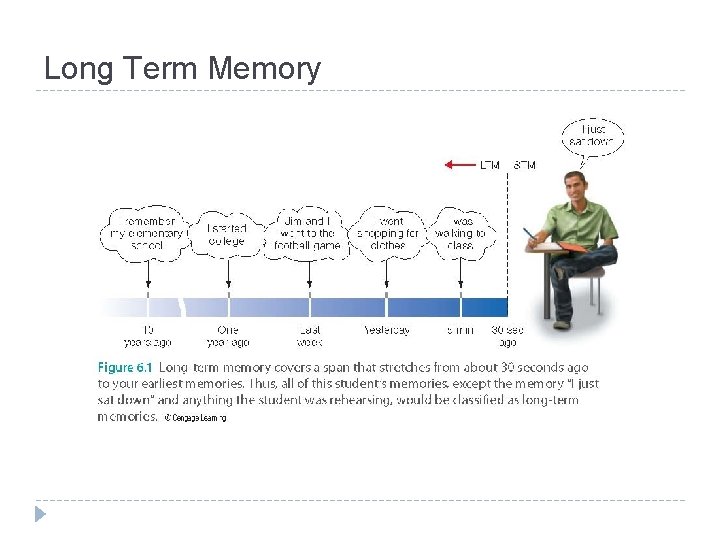
Long Term Memory
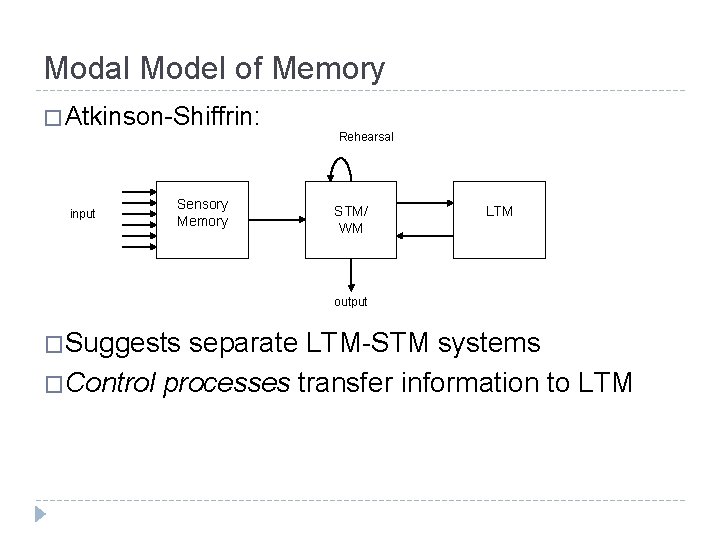
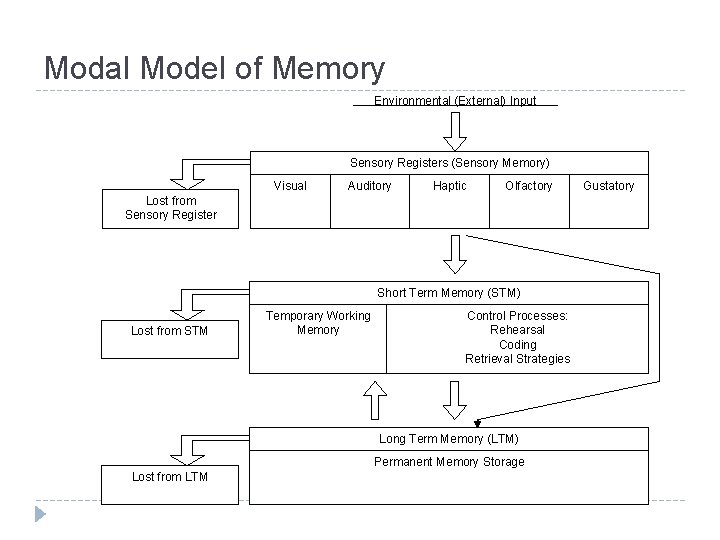
Modal Model of Memory � Atkinson-Shiffrin: Rehearsal input Sensory Memory STM/ WM LTM output �Suggests separate LTM-STM systems �Control processes transfer information to LTM
Modal Model of Memory Environmental (External) Input Sensory Registers (Sensory Memory) Visual Auditory Haptic Olfactory Lost from Sensory Register Short Term Memory (STM) Lost from STM Temporary Working Memory Control Processes: Rehearsal Coding Retrieval Strategies Long Term Memory (LTM) Permanent Memory Storage Lost from LTM Gustatory
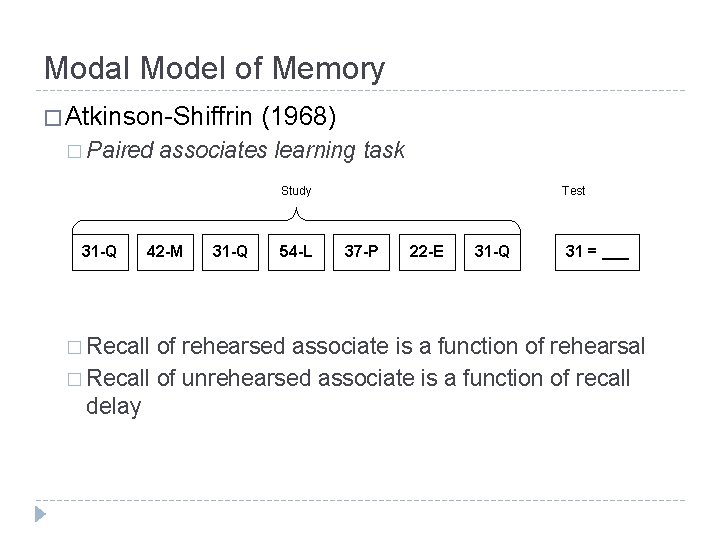
Modal Model of Memory � Atkinson-Shiffrin � Paired (1968) associates learning task Study 31 -Q 42 -M � Recall 31 -Q 54 -L Test 37 -P 22 -E 31 -Q 31 = ___ of rehearsed associate is a function of rehearsal � Recall of unrehearsed associate is a function of recall delay
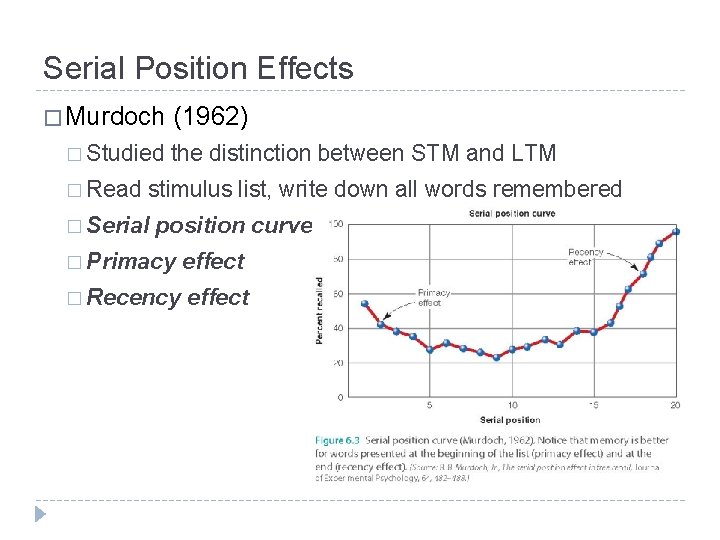
Serial Position Effects � Murdoch � Studied � Read (1962) the distinction between STM and LTM stimulus list, write down all words remembered � Serial position curve � Primacy effect � Recency effect
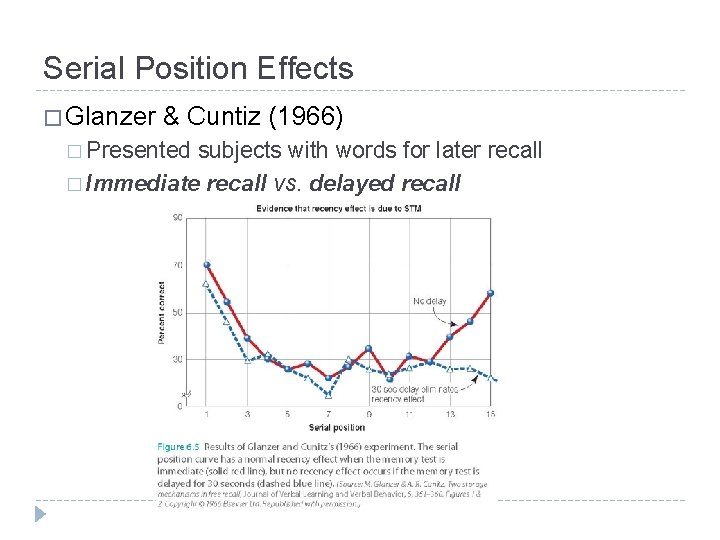
Serial Position Effects � Glanzer & Cuntiz (1966) � Presented subjects with words for later recall � Immediate recall vs. delayed recall
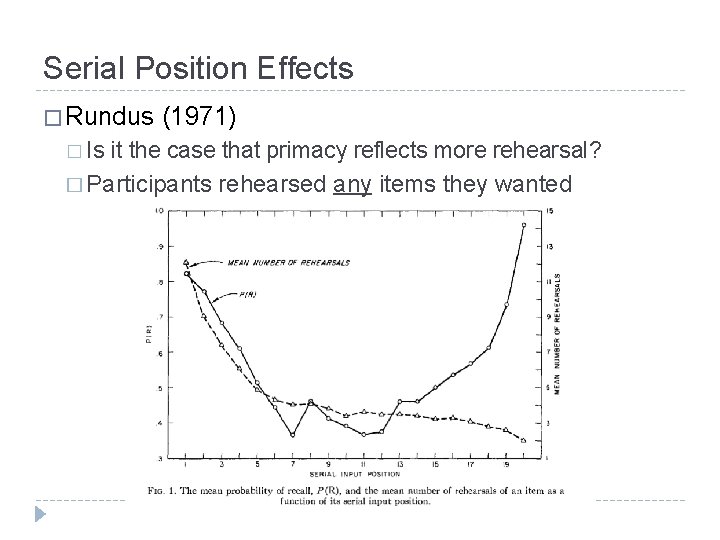
Serial Position Effects � Rundus � Is (1971) it the case that primacy reflects more rehearsal? � Participants rehearsed any items they wanted
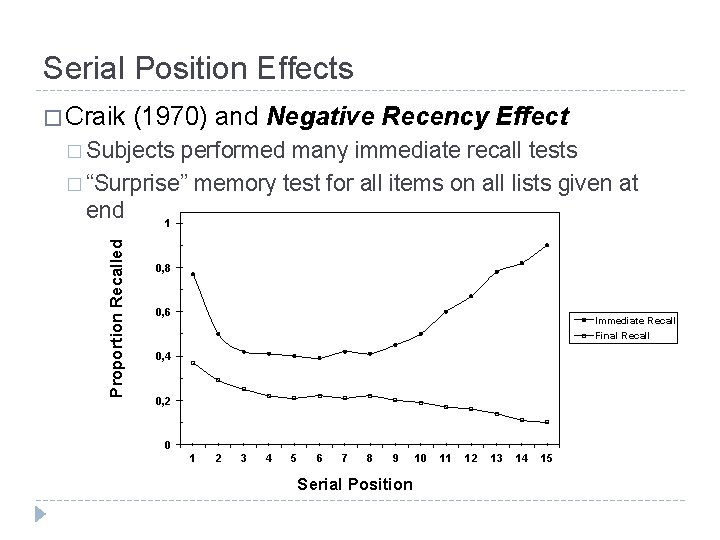
Serial Position Effects � Craik (1970) and Negative Recency Effect performed many immediate recall tests � “Surprise” memory test for all items on all lists given at end 1 Proportion Recalled � Subjects 0, 8 0, 6 Immediate Recall Final Recall 0, 4 0, 2 0 1 2 3 4 5 6 7 8 9 Serial Position 10 11 12 13 14 15