
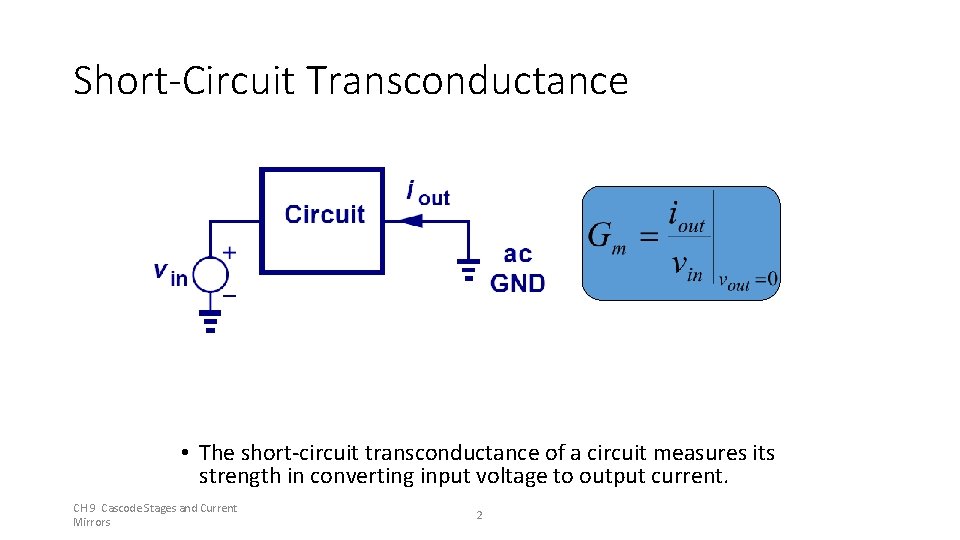
ShortCircuit Transconductance The shortcircuit transconductance of a circuit

- Slides: 18
Short-Circuit Transconductance • The short-circuit transconductance of a circuit measures its strength in converting input voltage to output current. CH 9 Cascode Stages and Current Mirrors 2
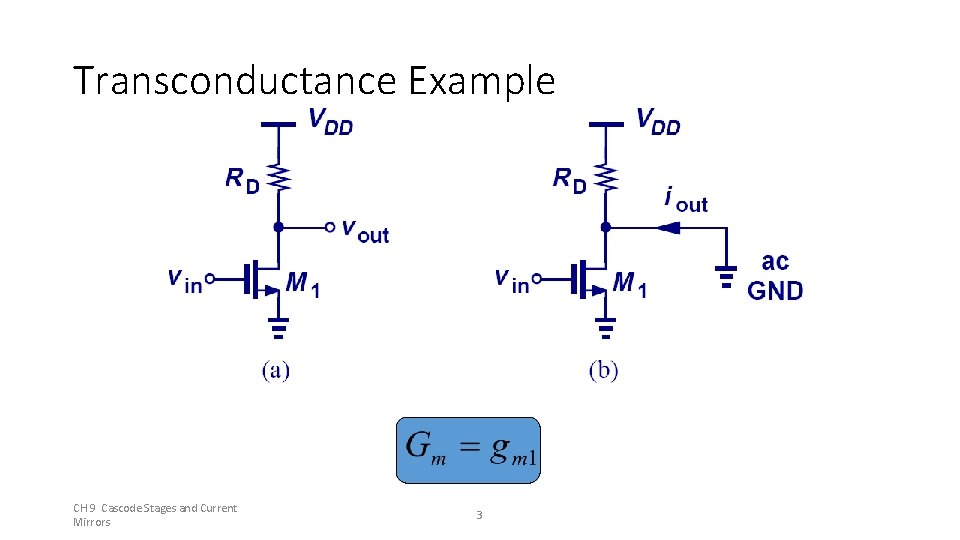
Transconductance Example CH 9 Cascode Stages and Current Mirrors 3
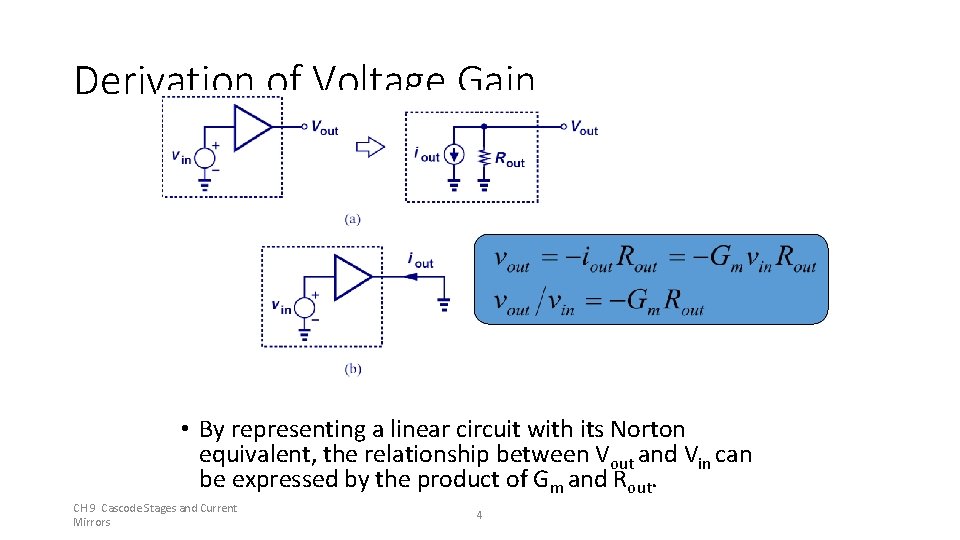
Derivation of Voltage Gain • By representing a linear circuit with its Norton equivalent, the relationship between Vout and Vin can be expressed by the product of Gm and Rout. CH 9 Cascode Stages and Current Mirrors 4
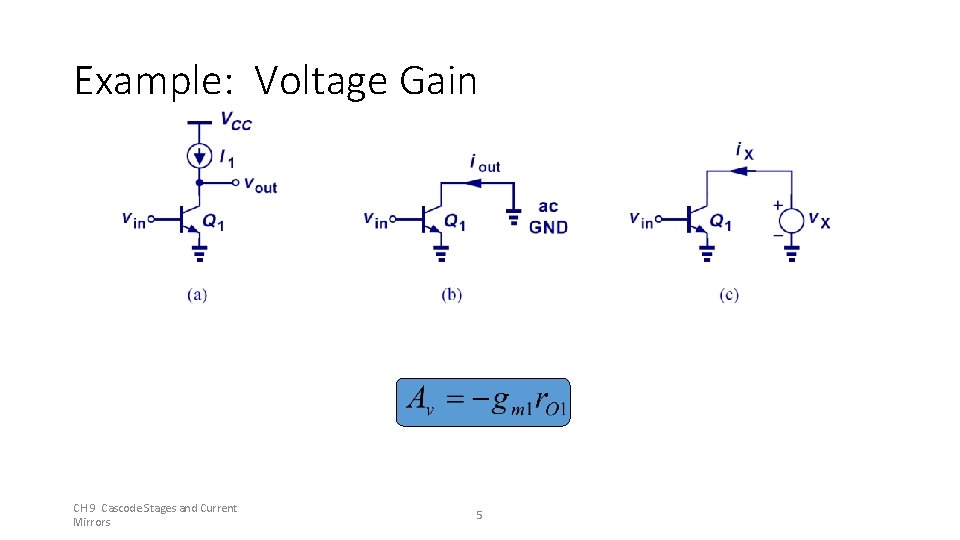
Example: Voltage Gain CH 9 Cascode Stages and Current Mirrors 5
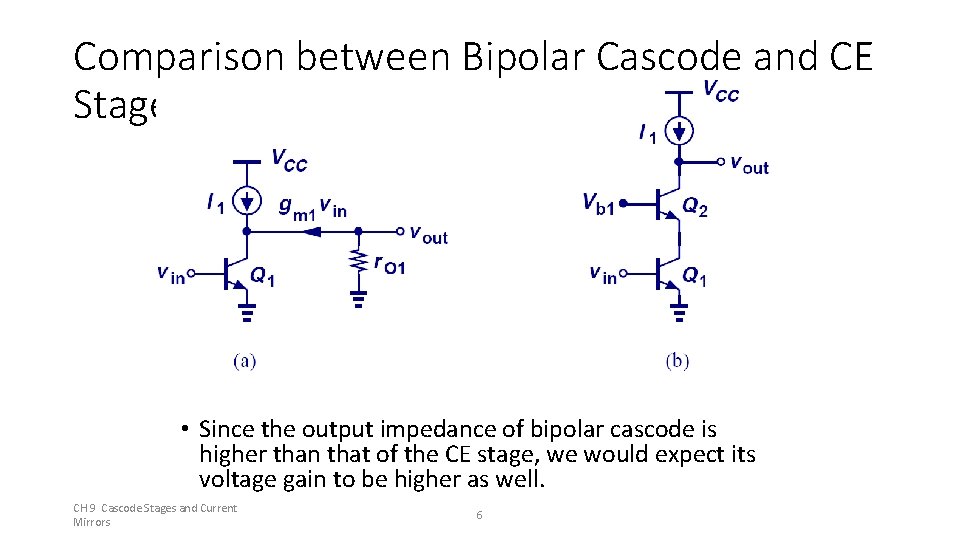
Comparison between Bipolar Cascode and CE Stage • Since the output impedance of bipolar cascode is higher than that of the CE stage, we would expect its voltage gain to be higher as well. CH 9 Cascode Stages and Current Mirrors 6
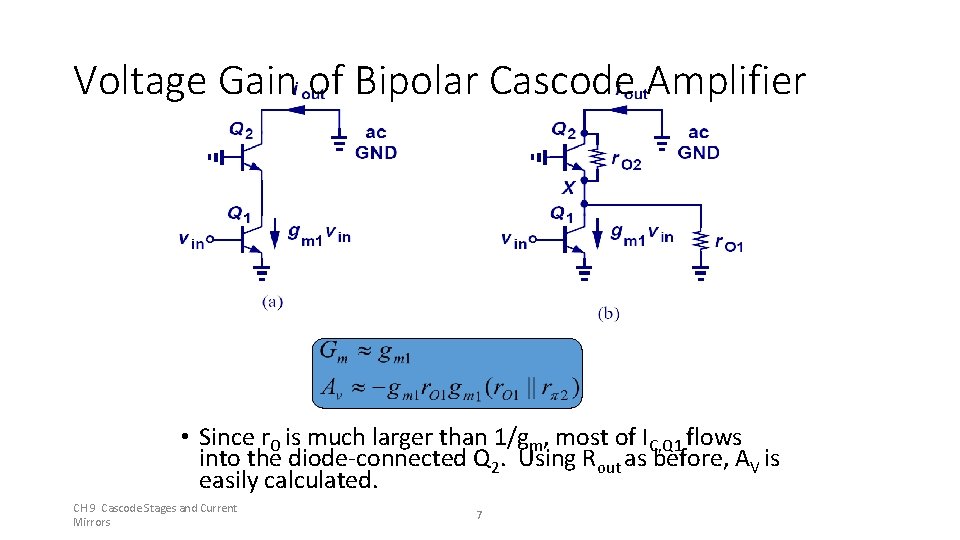
Voltage Gain of Bipolar Cascode Amplifier • Since r. O is much larger than 1/gm, most of IC, Q 1 flows into the diode-connected Q 2. Using Rout as before, AV is easily calculated. CH 9 Cascode Stages and Current Mirrors 7
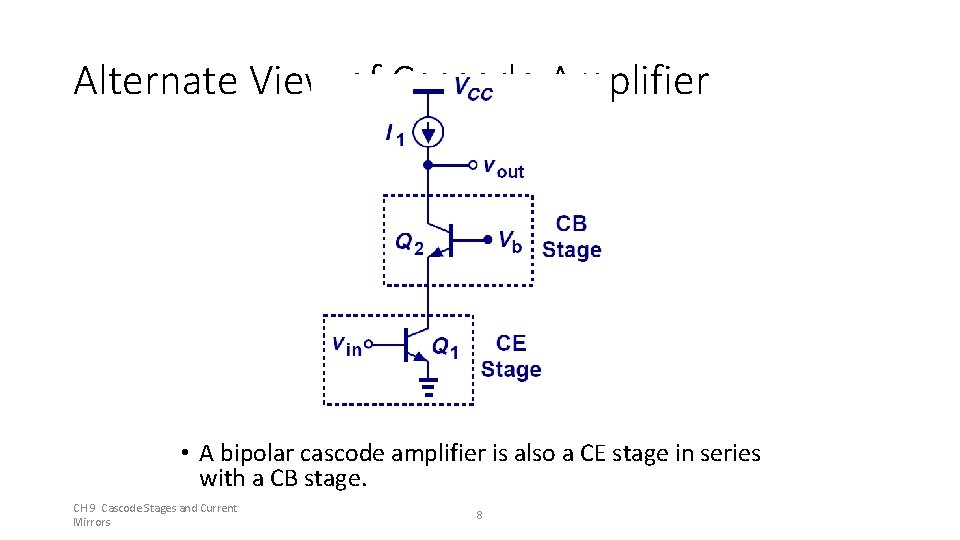
Alternate View of Cascode Amplifier • A bipolar cascode amplifier is also a CE stage in series with a CB stage. CH 9 Cascode Stages and Current Mirrors 8
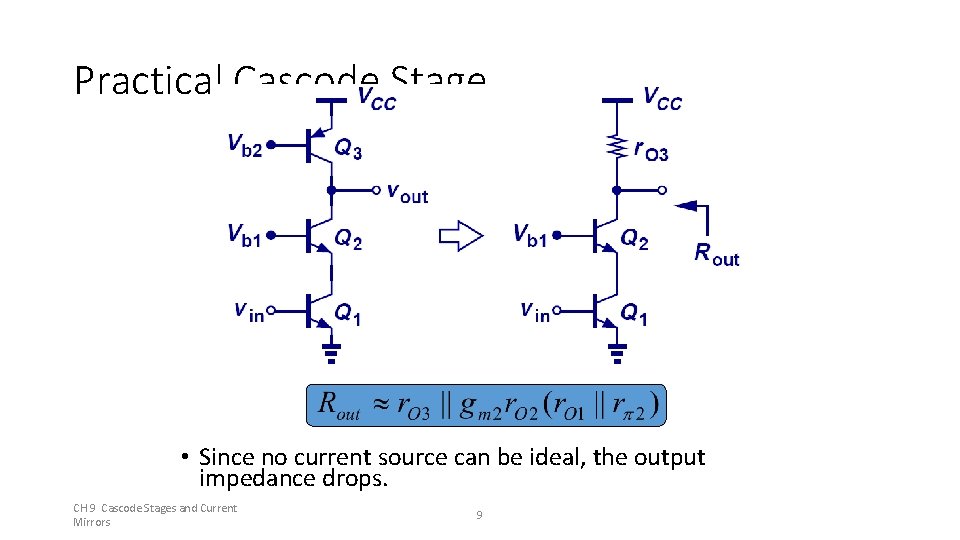
Practical Cascode Stage • Since no current source can be ideal, the output impedance drops. CH 9 Cascode Stages and Current Mirrors 9
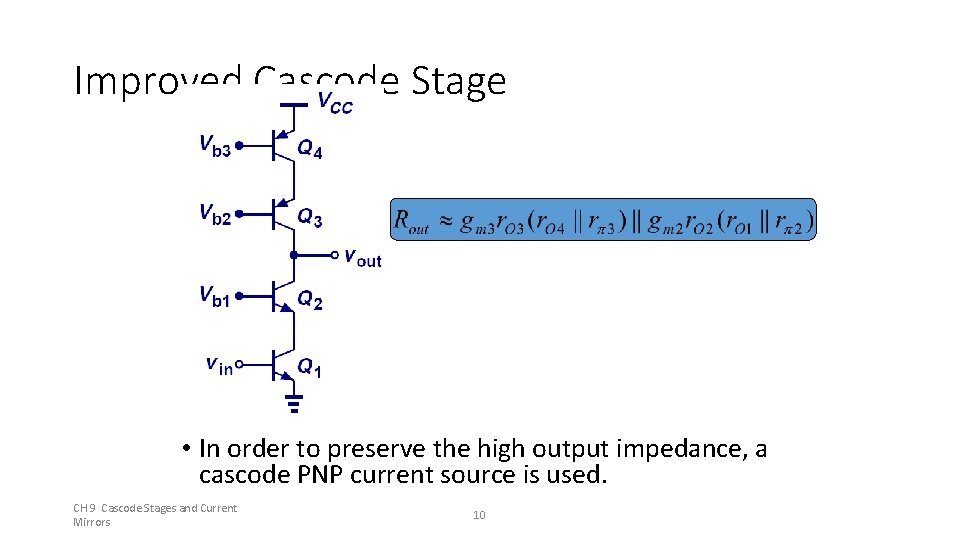
Improved Cascode Stage • In order to preserve the high output impedance, a cascode PNP current source is used. CH 9 Cascode Stages and Current Mirrors 10
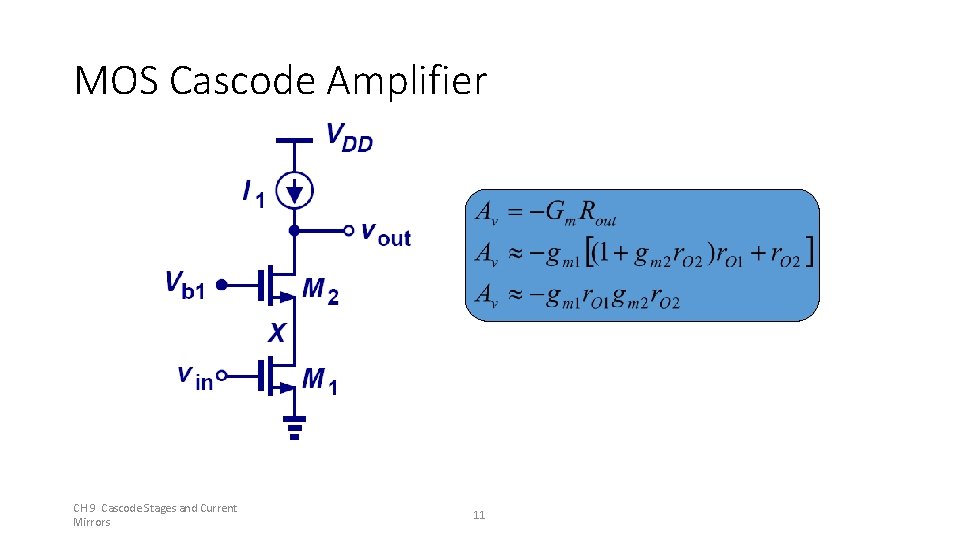
MOS Cascode Amplifier CH 9 Cascode Stages and Current Mirrors 11
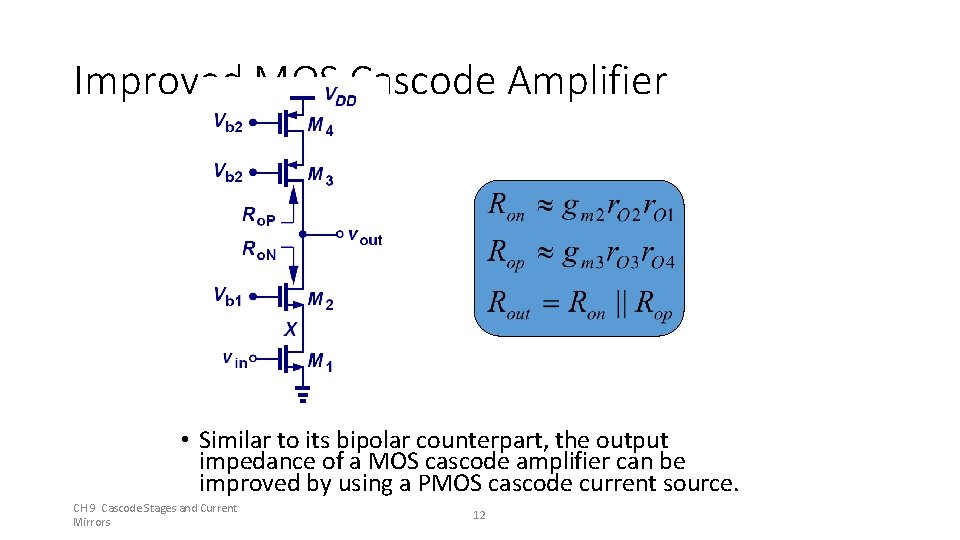
Improved MOS Cascode Amplifier • Similar to its bipolar counterpart, the output impedance of a MOS cascode amplifier can be improved by using a PMOS cascode current source. CH 9 Cascode Stages and Current Mirrors 12
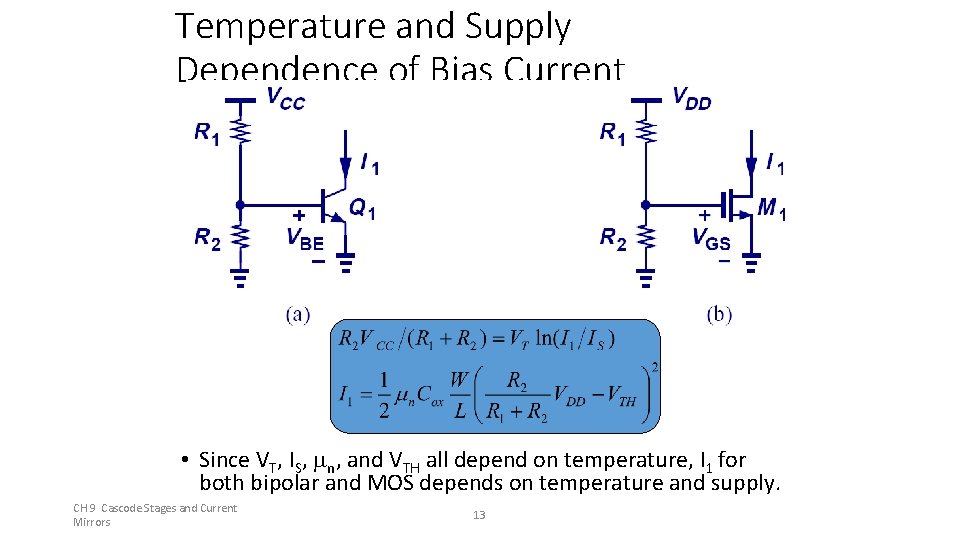
Temperature and Supply Dependence of Bias Current • Since VT, IS, n, and VTH all depend on temperature, I 1 for both bipolar and MOS depends on temperature and supply. CH 9 Cascode Stages and Current Mirrors 13
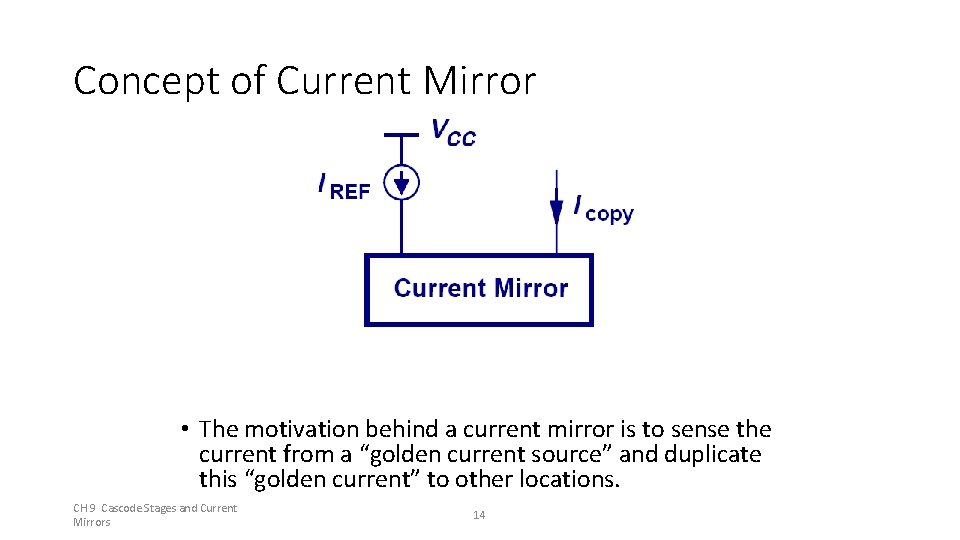
Concept of Current Mirror • The motivation behind a current mirror is to sense the current from a “golden current source” and duplicate this “golden current” to other locations. CH 9 Cascode Stages and Current Mirrors 14
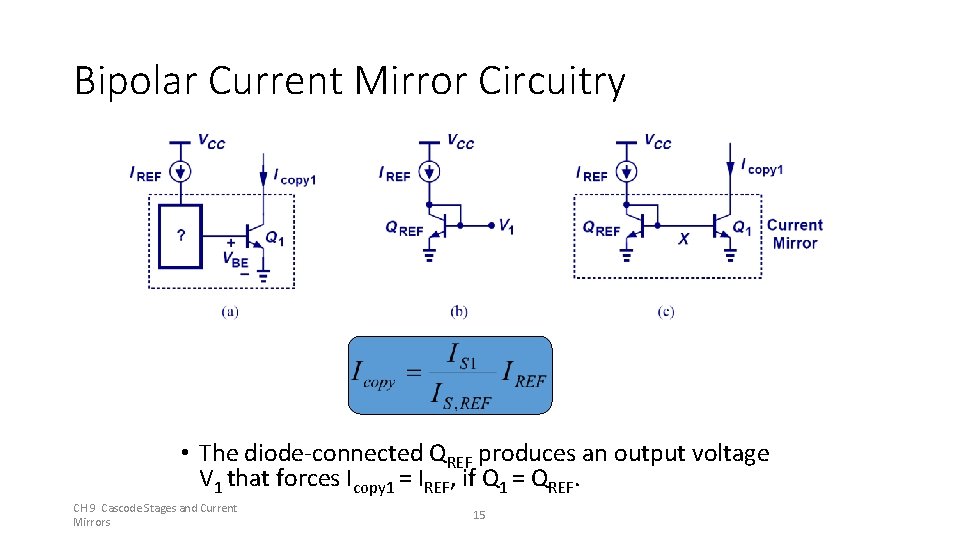
Bipolar Current Mirror Circuitry • The diode-connected QREF produces an output voltage V 1 that forces Icopy 1 = IREF, if Q 1 = QREF. CH 9 Cascode Stages and Current Mirrors 15
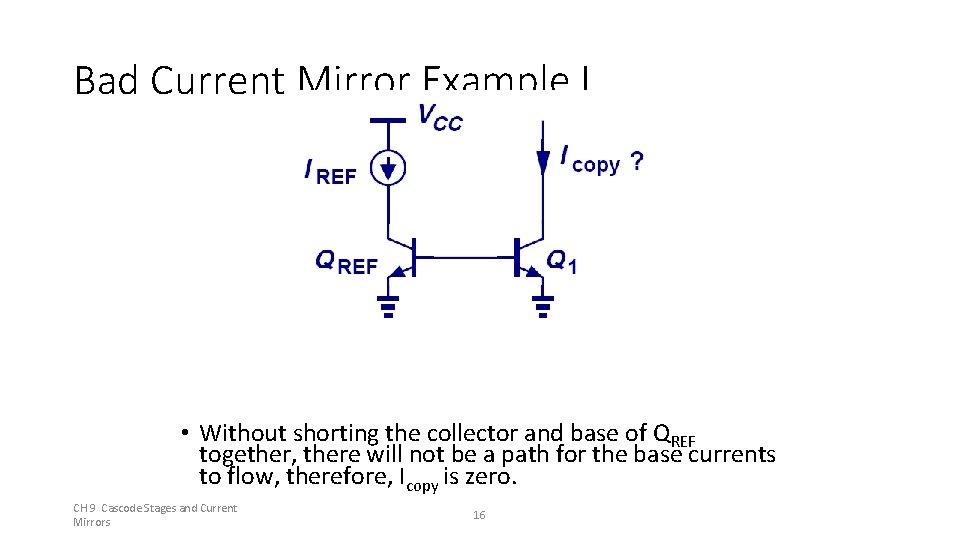
Bad Current Mirror Example I • Without shorting the collector and base of QREF together, there will not be a path for the base currents to flow, therefore, Icopy is zero. CH 9 Cascode Stages and Current Mirrors 16
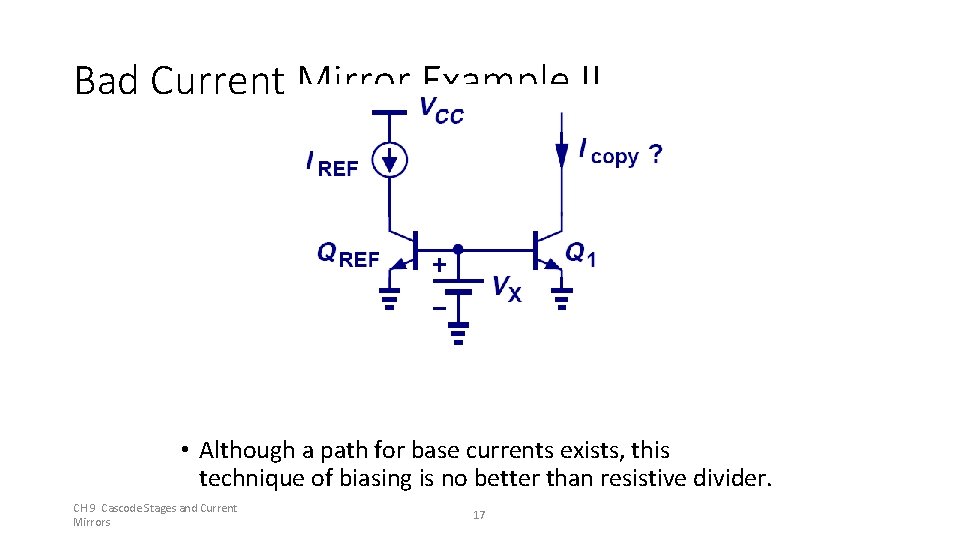
Bad Current Mirror Example II • Although a path for base currents exists, this technique of biasing is no better than resistive divider. CH 9 Cascode Stages and Current Mirrors 17
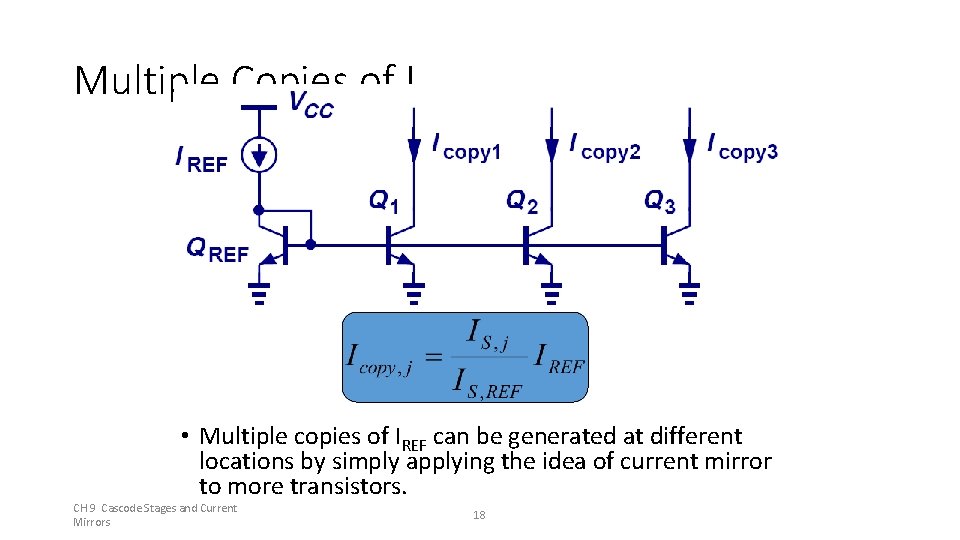
Multiple Copies of IREF • Multiple copies of IREF can be generated at different locations by simply applying the idea of current mirror to more transistors. CH 9 Cascode Stages and Current Mirrors 18